
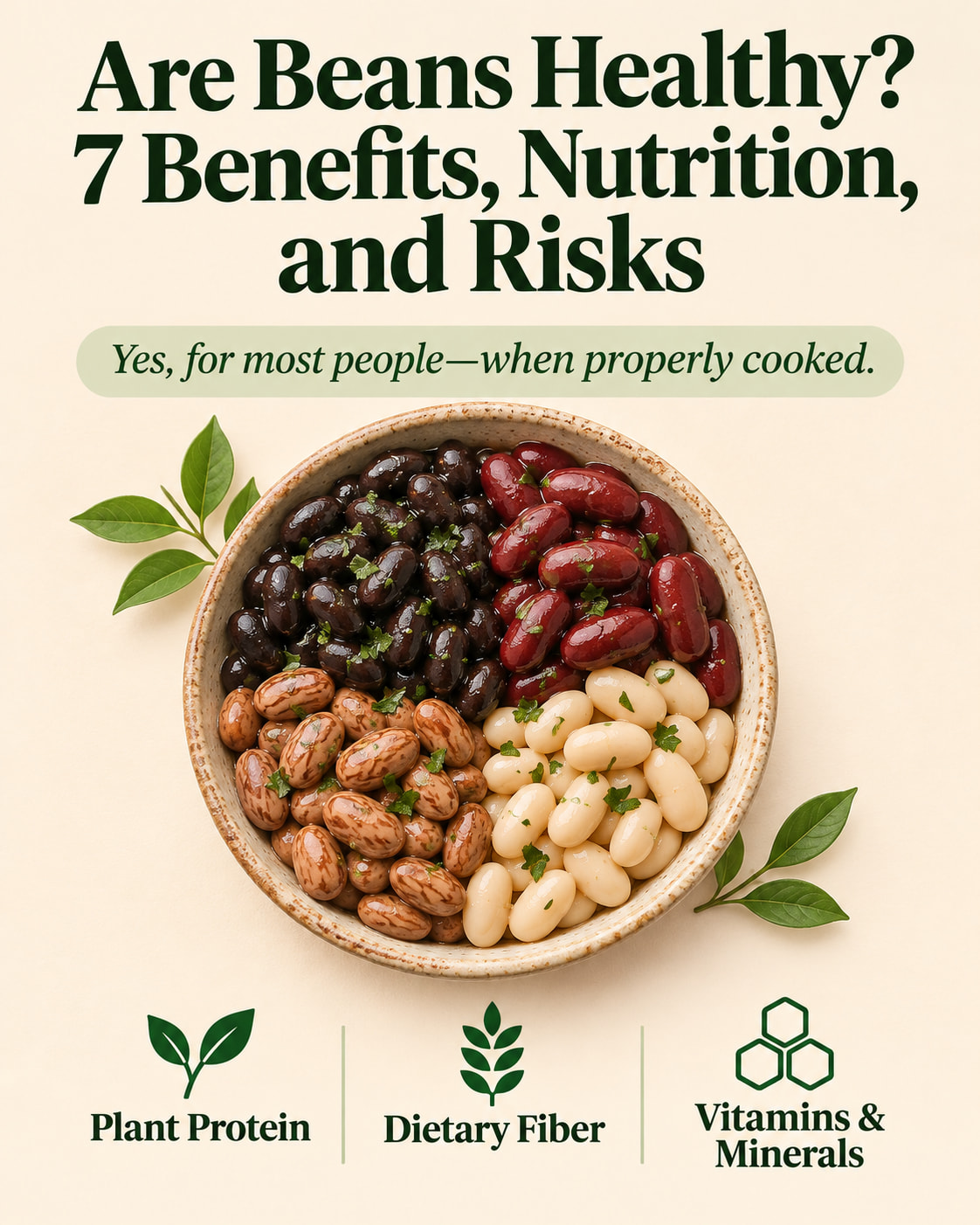
Yes—beans are healthy for most people when properly cooked. They provide fiber, plant protein, and important nutrients, and canned beans can be a nutritious choice alongside beans cooked from dry. The American Heart Association recommends beans and other legumes as part of a healthy eating pattern.
The main considerations are preparation, added ingredients, and digestive tolerance. Gas or bloating may call for smaller portions, while raw or undercooked kidney beans pose a separate food-safety risk. Certain allergies and medical conditions also require individualized guidance.
Here, “beans” primarily means mature beans such as black, pinto, kidney, navy, and cannellini beans—not green beans, bean extracts, or protein supplements.
Bean Nutrition at a Glance
A realistic serving shows why beans can contribute several nutrients at once. One-half cup of cooked black beans—approximately 86 grams—provides the following when boiled without salt:
| Nutrient | Approximate amount |
|---|---|
| Calories | 114 |
| Protein | 7.6 g |
| Total carbohydrate | 20.4 g |
| Fiber | 7.5 g |
| Total fat | 0.5 g |
| Folate | 128 mcg DFE |
| Iron | 1.8 mg |
| Magnesium | 60 mg |
| Potassium | 305 mg |
Source: Calculated from the USDA nutrient entry for cooked, unsalted black beans, Standard Reference Release 27 (2014). Values are rounded. DFE means dietary folate equivalents.
Are beans a protein or a carbohydrate? They provide both. In this example, total carbohydrate includes the fiber. The numbers describe cooked beans, not the same volume of dry beans, and should not be treated as the exact nutrition profile of every variety or canned product.
7 Benefits of Eating Beans
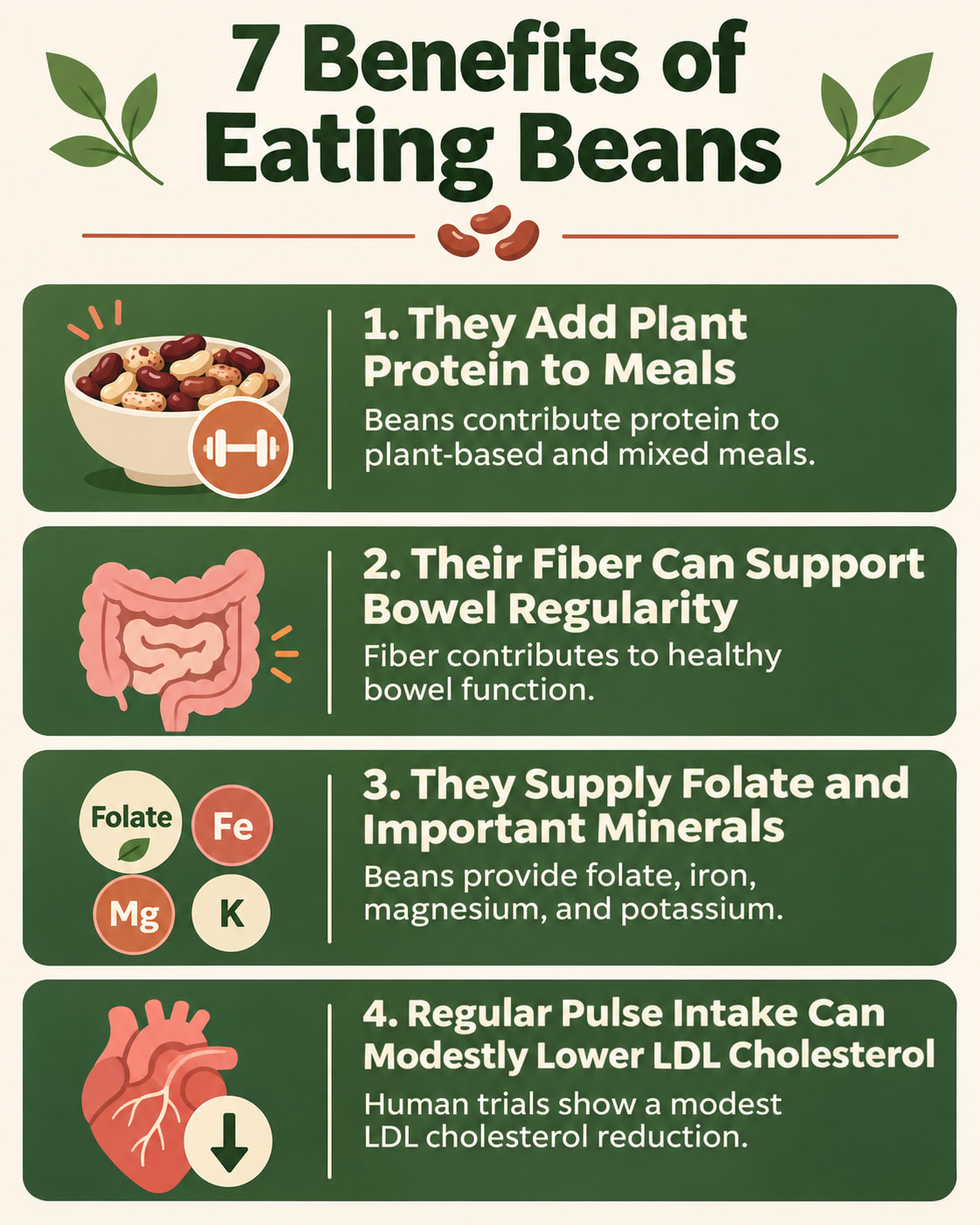
Some research examines beans specifically; other studies examine the broader group called pulses, which includes dried beans, lentils, chickpeas, and dried peas. Findings about that group should not be interpreted as identical results for every bean variety.
1. They Add Plant Protein to Meals
Many cooked beans provide roughly 6–8 grams of protein per half cup, according to the National Kidney Foundation’s bean nutrition guidance. That makes them a useful contributor to protein intake, whether you eat a plant-based diet or include animal foods.
You can build meals around beans or use them alongside other protein sources. For example, replace part of the meat in chili with kidney beans, or add white beans to a vegetable soup. A small scoop contributes protein, but it does not automatically supply all the protein a meal needs.
2. Their Fiber Can Support Bowel Regularity
Beans are one way to increase dietary fiber. Adequate fiber, together with enough fluid, can help make stools softer and easier to pass. The National Institute of Diabetes and Digestive and Kidney Diseases lists beans among useful fiber sources for people dealing with constipation.
More is not always better immediately. Increasing fiber gradually gives your digestive system time to adjust; suddenly eating large portions can increase gas and discomfort. Beans contribute to a fiber-rich diet, but they are not a guaranteed treatment for every cause of constipation.
3. They Supply Folate and Important Minerals
Beans contribute nutrients such as folate, iron, magnesium, and potassium—not just protein and fiber. The amounts vary, so eating a variety of foods remains more useful than relying on one bean to meet every nutritional need.
One practical detail concerns iron. Beans contain nonheme iron, which is generally less readily absorbed than the heme iron in animal foods. According to the NIH Office of Dietary Supplements, vitamin C improves nonheme-iron absorption, while phytate—a compound naturally present in beans and grains—can reduce it. Pairing a bean meal with vitamin-C-rich vegetables or fruit is a useful approach.
This is also why “antinutrient” claims need context: reduced absorption within a meal does not mean beans are nutritionally worthless or should automatically be avoided.
4. Regular Pulse Intake Can Modestly Lower LDL Cholesterol
A 2026 systematic review and meta-analysis combined 38 randomized trials involving 2,095 adults. Whole-pulse diets lowered LDL cholesterol by an average of 0.14 mmol/L—about 5 mg/dL—compared with control diets. The median intake was 130 grams daily, and the median study duration was six weeks.
That supports a modest cholesterol benefit, not a dramatic or guaranteed change. The researchers rated the overall LDL evidence as moderate certainty. The review also received support from the Alberta Pulse Growers Association, a funding relationship worth noting when interpreting its conclusions.
These trials measured cholesterol levels, not whether participants experienced fewer heart attacks. Beans can be part of a cholesterol-conscious eating pattern, but the findings do not establish them as a replacement for prescribed treatment.
5. They Can Produce a Smaller Blood Sugar Rise Than Some Other Starches
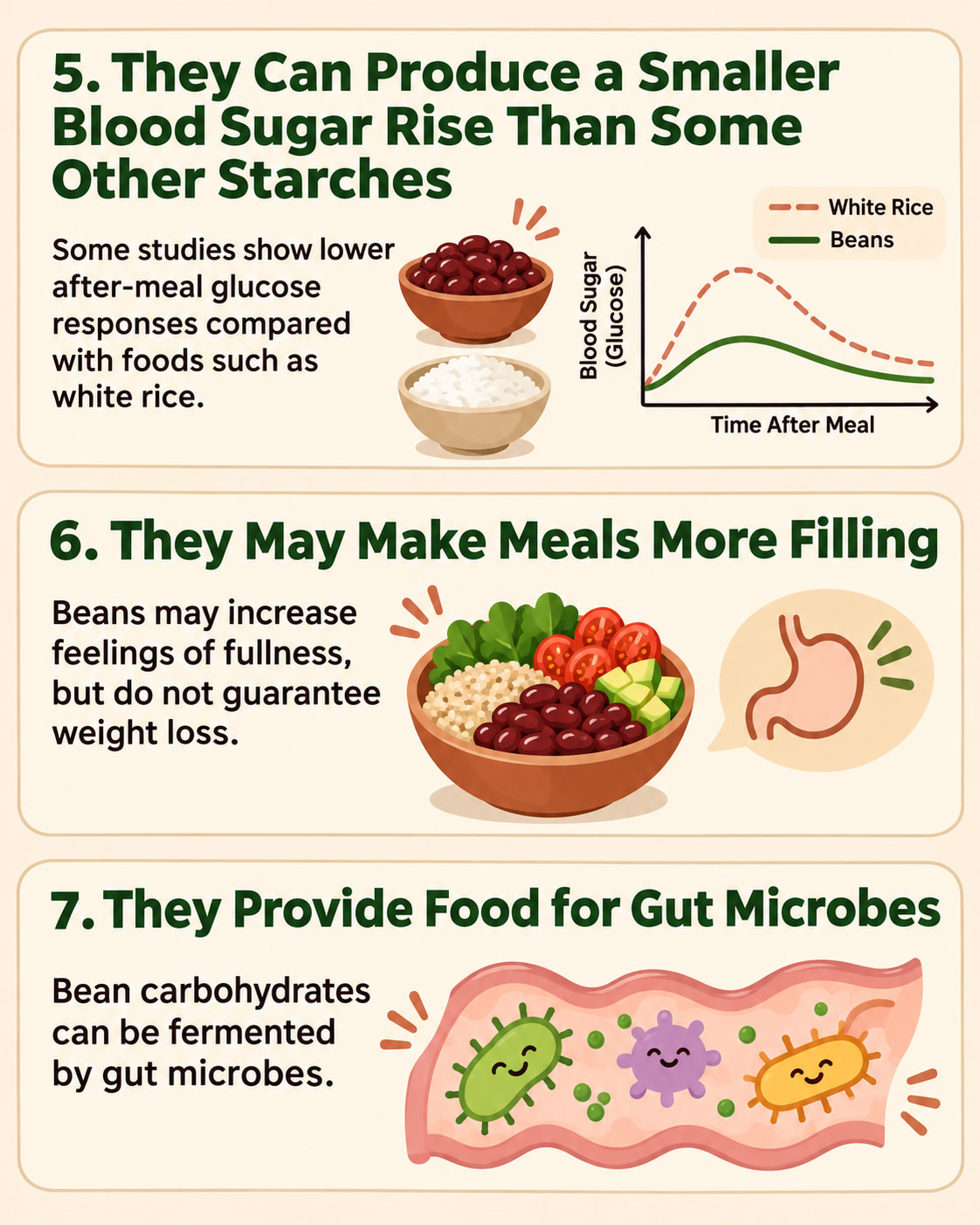
Beans contain carbohydrate, but their effect on blood sugar is not necessarily the same as an equal-carbohydrate portion of another food.
A systematic review published online in 2025 examined 40 short-term human intervention studies. In 28 studies, pulses or pulse products produced lower after-meal glucose responses than comparison foods, commonly white rice or wheat-flour products.
The comparison matters. These findings support trying beans in place of some other starch, rather than assuming that adding unlimited beans to an unchanged meal will lower blood sugar. Portions, preparation, and the rest of the meal still matter. Short-term glucose results also do not prove that beans prevent diabetes.
6. They May Make Meals More Filling
Beans may help a meal feel more satisfying, although the research is not uniform.
A 2014 meta-analysis of nine short-term feeding trials found greater reported fullness after pulse-containing meals than after comparison meals with the same calories. However, participants did not significantly reduce how much they ate at the next meal. The trials were also limited by small samples and narrow participant characteristics.
The newer review described above found mixed results for fullness and satiety. Feeling satisfied after a meal can be useful in its own right, but beans should not be presented as a guaranteed weight-loss food.
7. They Provide Food for Gut Microbes
Some carbohydrates in beans reach the large intestine, where gut microbes can use them. This helps explain the interest in beans as a food with prebiotic properties—meaning components that can nourish beneficial gut microbes.
In the 2023 BE GONE randomized trial, adults with obesity and a history of colorectal cancer or precancerous polyps added canned navy beans to their usual diets. During the eight-week bean phase, participants gradually increased to one cup daily. Among the 48 people who completed the study, researchers observed increased microbial diversity and changes in several bacterial groups.
This is promising, bean-specific evidence, but it came from a small, particular patient population. Microbiome changes do not establish that beans prevent cancer, “heal the gut,” or reliably relieve digestive symptoms in everyone.
Are Canned, Dried, Baked, and Refried Beans Healthy?
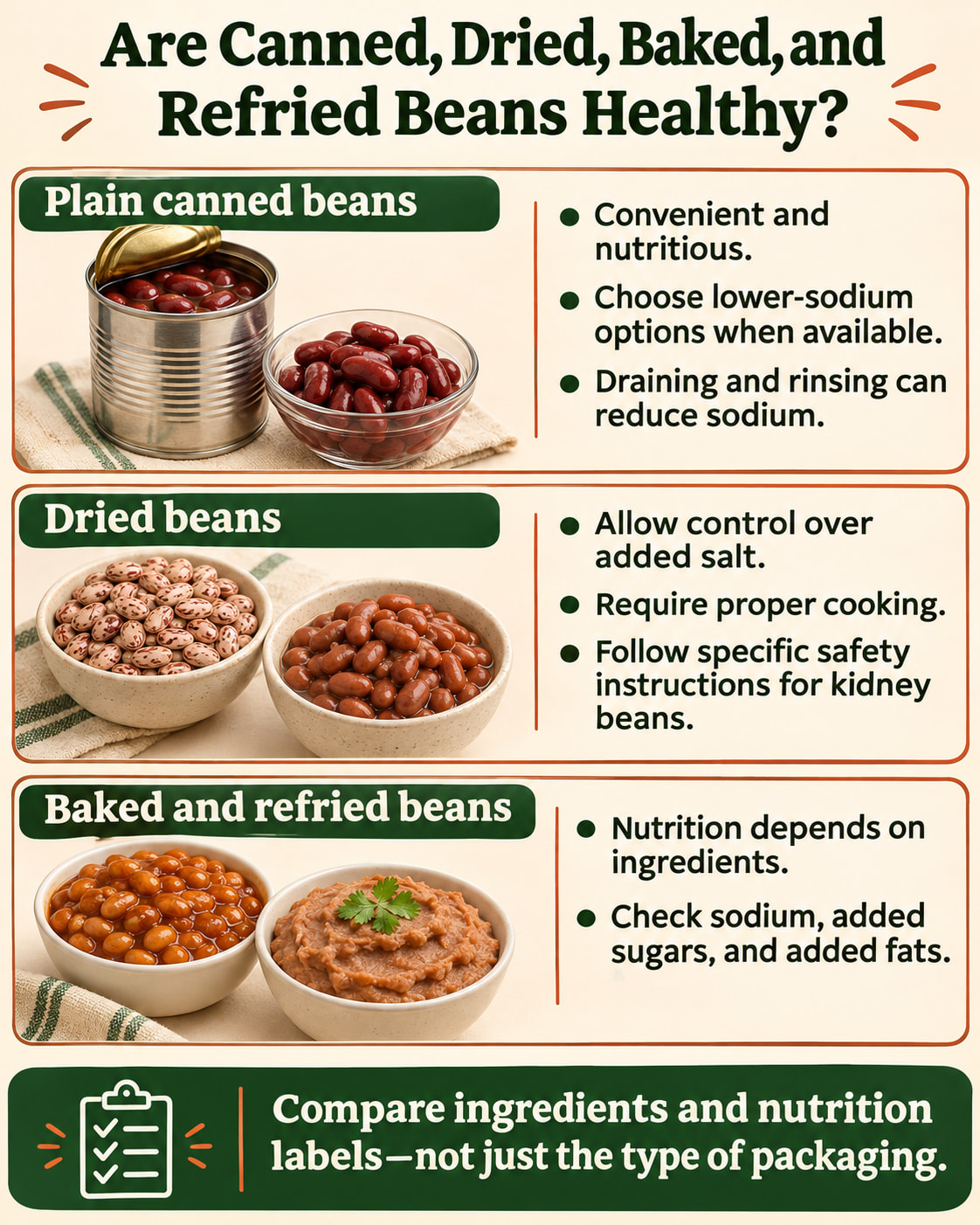
You do not need to cook beans from dry to make a nutritious choice. The ingredients and preparation are more useful considerations than simply whether beans come in a can.
Plain canned beans: Choose no-salt-added or lower-sodium versions when available. Draining and rinsing can remove some sodium from regular canned beans. The American Heart Association’s guidance includes canned beans as an option.
Dried beans: These let you control how much salt goes into the cooking water and finished dish. Proper preparation matters, especially for kidney beans; soaking alone is not enough to make them safe to eat.
Baked and refried beans: Evaluate the recipe or product rather than labeling the entire category unhealthy. For baked beans, check added sweeteners and sodium. For refried beans, consider sodium and the type and amount of added fat.
When comparing packaged versions, use the same serving size and look at sodium, saturated fat, and added sugars where listed. The FDA’s nutrition-label guide explains this approach. A label serving is a reference for the nutrition information—not a prescription for how much you must eat.
Potential Risks—and How to Reduce Them
Gas, Bloating, and IBS Symptoms
Gas after eating beans often reflects fermentation of their carbohydrates rather than an allergy. Large portions or a rapid increase in fiber can make symptoms more noticeable.
For general digestive comfort, introduce beans gradually instead of switching from rarely eating them to having large bowls. Reduce the portion when symptoms become uncomfortable rather than forcing yourself to keep increasing it. NIDDK’s dietary guidance supports adding fiber a little at a time.
People with irritable bowel syndrome may be sensitive to certain fermentable carbohydrates called FODMAPs. Monash University explains that canned beans, or beans that have been boiled and drained, can contain fewer of these carbohydrates because some move into the liquid. Draining and rinsing removes that liquid.
However, rinsing does not make every bean or portion low-FODMAP. The variety and amount still matter. A dietitian can help identify tolerable portions without unnecessarily eliminating the entire food group.
Lectins in Raw or Undercooked Beans
Do not eat raw or undercooked kidney beans. They can contain high levels of a lectin called phytohaemagglutinin, which can cause nausea, severe vomiting, and diarrhea. This is different from ordinary bean-related gas.
For dried kidney beans, follow the FDA’s preparation guidance:
- Soak for at least five hours in water.
- Discard the soaking water and add fresh water.
- Boil for at least 30 minutes, then continue cooking as needed until fully tender.
Do not rely on a slow cooker alone to cook dried red kidney beans. Health Canada warns that slow cookers may not reach sufficient temperatures to destroy the lectins. Commercially canned kidney beans have already received adequate heat treatment and do not require this soaking-and-boiling process.
Allergies and Individual Dietary Restrictions
Bean allergy: Hives, itching, swelling, or other suspected allergic symptoms need medical assessment rather than an experiment with smaller portions. Trouble breathing, throat swelling, or faintness after eating requires emergency care. Use prescribed epinephrine immediately when indicated by your emergency plan and call emergency services. Allergy UK notes that an allergy to one legume does not automatically mean an allergy to all legumes; a specialist can help determine what needs to be avoided.
Kidney disease: Beans are not automatically off-limits. Appropriate potassium and phosphorus intake depends on laboratory results, the stage of kidney disease, and treatment. The National Kidney Foundation recommends individualized planning, particularly when blood levels are elevated or someone receives dialysis. Follow your kidney-care team’s advice rather than excluding beans solely because they contain these minerals.
How Much Should You Eat—and How Can You Start?
A half-cup of cooked beans is a useful portion for planning a meal, not an amount everyone needs to eat. Likewise, the portions used in research are study conditions, not universal daily prescriptions.
When you are new to beans or prone to gas, two to four tablespoons with a meal is one practical starting example, not a clinically tested dose. Increase gradually according to comfort, consistent with guidance to introduce fiber slowly.
Try incorporating beans into meals you already enjoy:
- Stir black, pinto, or kidney beans into chili, replacing part of the meat.
- Add beans to a bowl with a grain, vegetables, and your preferred dressing.
- Mash white beans with olive oil, lemon, and herbs for a sandwich spread or dip.
Choose a preparation you enjoy and a portion you tolerate. Starting with a modest amount in a familiar meal is more useful than forcing a large daily serving or searching for one supposedly perfect bean.
This content is for informational purposes only and not medical advice.