
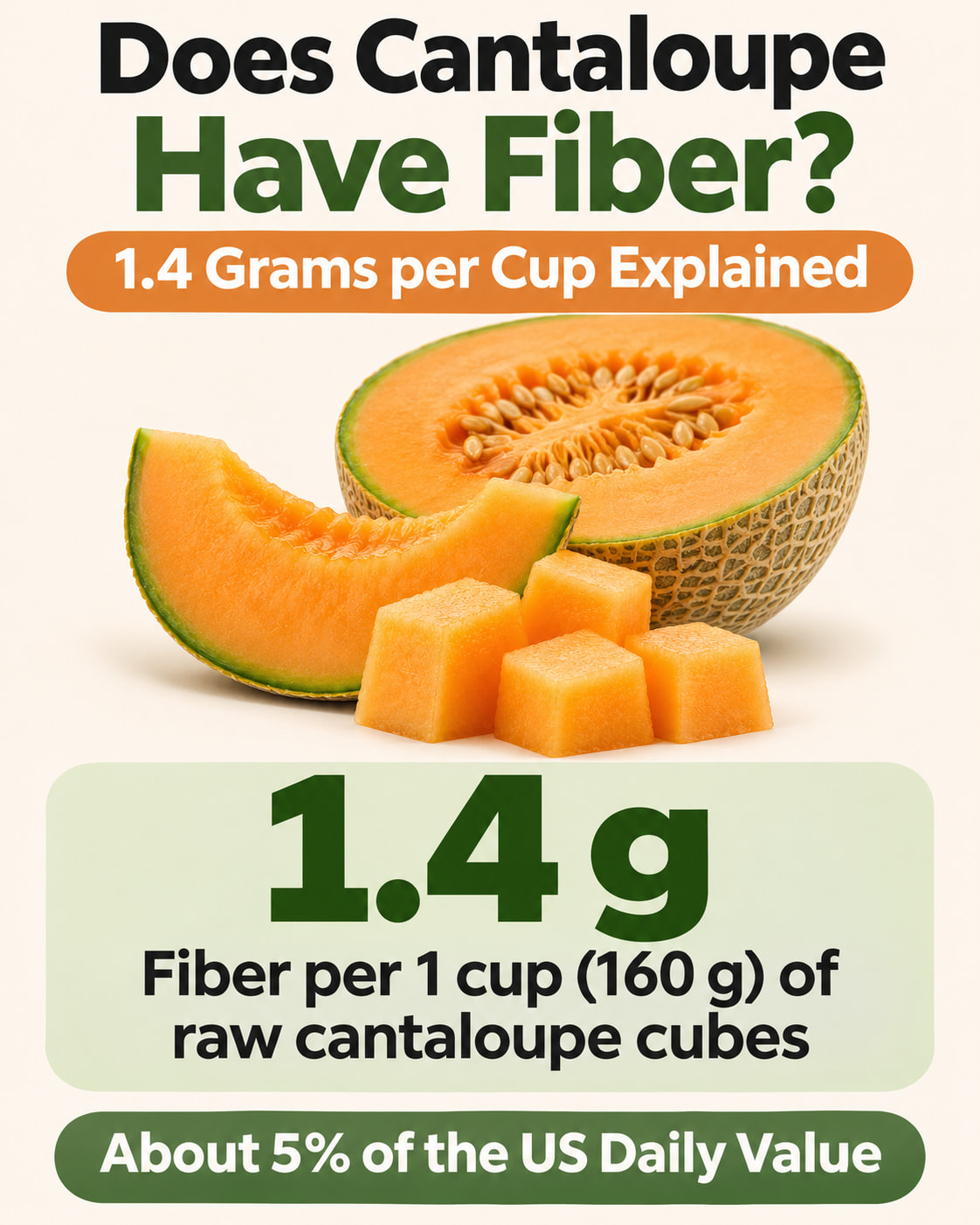
Yes—one cup of raw cantaloupe cubes, weighing about 160 grams, contains approximately 1.4 grams of dietary fiber. That is about 5% of the US Daily Value for fiber, so cantaloupe makes a modest contribution rather than qualifying as a high-fiber food. These amounts are based on USDA nutrient data and the FDA’s fiber Daily Value.
You do not need to skip cantaloupe because it contains less fiber than some other fruits. The useful question is how it fits alongside the other foods you eat.
How Much Fiber Is in Cantaloupe?
The following amounts refer to raw cantaloupe flesh, excluding the rind and seeds.
| Cantaloupe portion | Approximate weight | Dietary fiber |
|---|---|---|
| ½ cup, cubes | 80 g | 0.7 g |
| 100-gram portion | 100 g | 0.9 g |
| 1 cup, cubes | 160 g | 1.4 g |
| 1 cup, melon balls | 177 g | 1.6 g |
Source: USDA Standard Reference Release 28, published in 2015. The half-cup amount is calculated from the listed cup serving; values are rounded.
You may also see 1.44 grams per cup, as listed in University Hospitals’ cantaloupe nutrition table. That rounds to 1.4 grams.
The slightly higher amount for melon balls reflects a heavier listed cup serving—not a change in the fruit’s fiber concentration. When comparing nutrition figures, check both the preparation and the serving weight.
Is Cantaloupe High in Fiber?
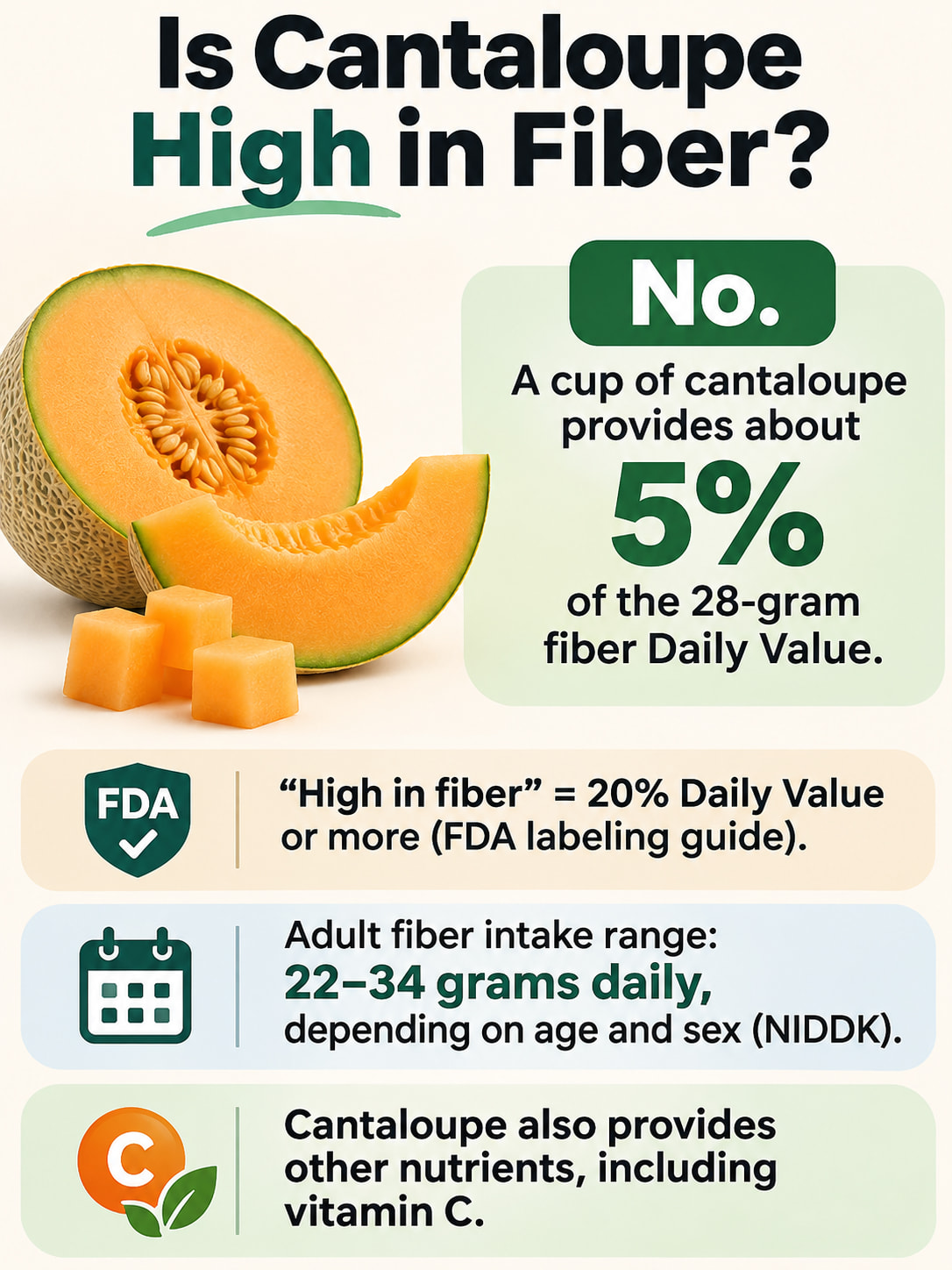
No. The FDA’s guide to the Nutrition Facts label considers 20% Daily Value or more per serving a high amount of a nutrient. A cup of cantaloupe provides only about 5% of the 28-gram fiber Daily Value. That makes “contains some fiber” more accurate than “fiber-rich.”
The Daily Value is a US labeling reference based on a 2,000-calorie diet, not an individualized target. The National Institute of Diabetes and Digestive and Kidney Diseases (NIDDK) gives an adult fiber intake range of 22–34 grams daily, depending on age and sex.
Fiber is also only one part of a food’s nutritional value. Cantaloupe provides other nutrients, including vitamin C. A modest fiber content does not make it a poor choice; it simply means you will need other foods to contribute more fiber throughout the day.
How Cantaloupe Compares With Other Fruits
Here is how common one-cup portions compare:
| Fruit | Portion | Approximate fiber |
|---|---|---|
| Cantaloupe | 1 cup, cubes | 1.4 g |
| Strawberries | 1 cup | 3.0 g |
| Blueberries | 1 cup | 3.6 g |
| Raspberries | 1 cup | 8.0 g |
Sources: USDA’s cantaloupe data and its Food Sources of Fiber handout, published in August 2024.
This compares portions by volume, not equal weights or equal calories. It helps show why adding berries to a fruit bowl can increase its fiber content without requiring a larger portion of cantaloupe.
Can Cantaloupe Help With Constipation?
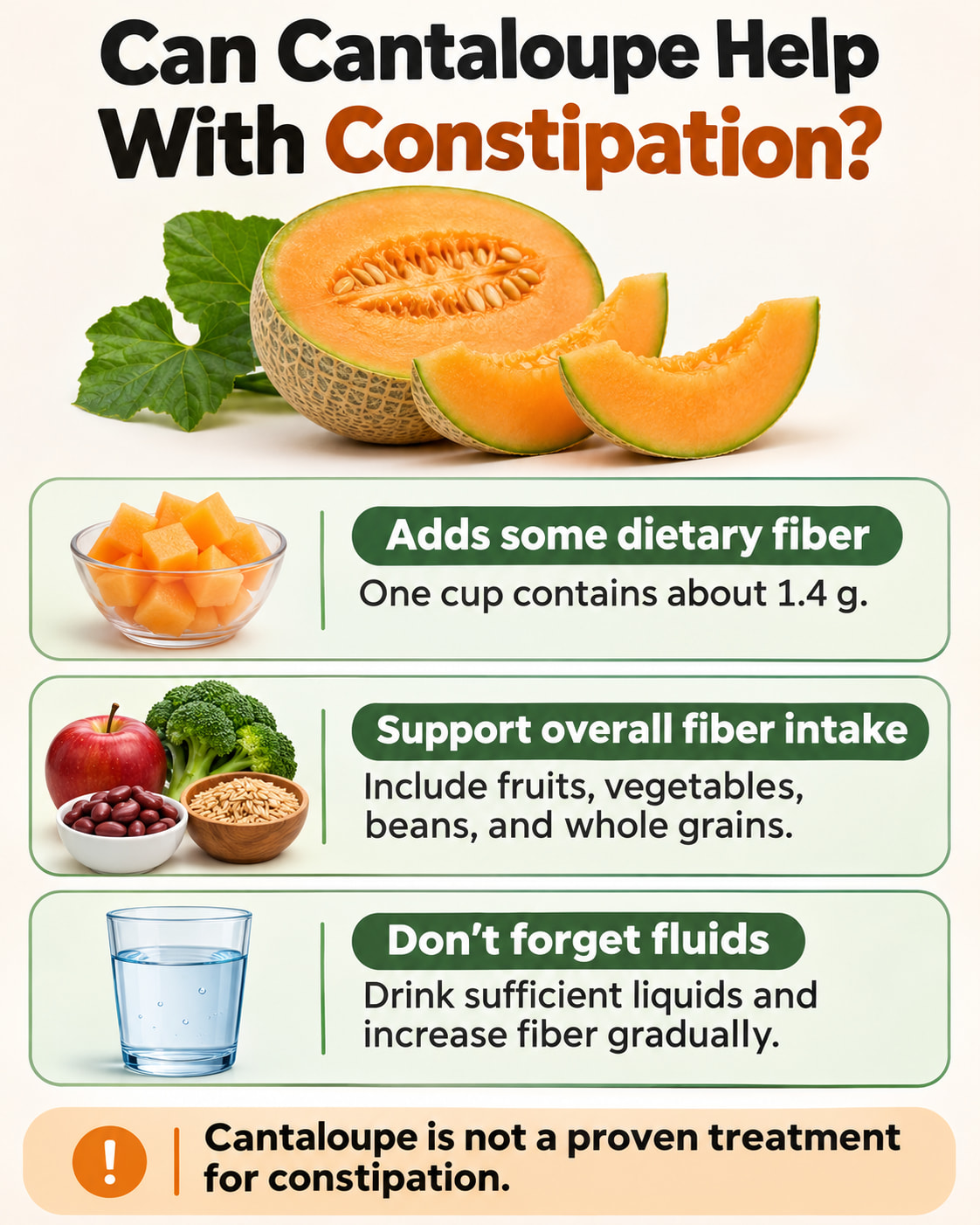
Cantaloupe can contribute to your overall fiber intake, but its fiber content does not establish that a serving treats constipation. General guidance about eating enough fiber should not be mistaken for evidence that this particular fruit works as a laxative.
NIDDK’s dietary guidance for constipation recommends getting enough fiber, drinking sufficient liquids, and adding fiber gradually so your body can adjust. It identifies whole grains, legumes, fruits, vegetables, and nuts as useful fiber sources. The practical approach is to build fiber into your overall eating pattern rather than rely on one food.
For example, cantaloupe can accompany oatmeal at breakfast or be combined with berries for a snack. Those combinations bring additional fiber sources into the meal without asking cantaloupe to do all the work.
If constipation does not improve with self-care, talk with a healthcare professional. Seek medical care promptly if constipation occurs with blood in the stool, constant abdominal pain, vomiting, or an inability to pass gas, as outlined in NIDDK’s constipation warning signs.
How to Add More Fiber to a Cantaloupe Snack
A simple option is to mix ½ cup of cantaloupe cubes with ½ cup of raspberries. Using the values above, that supplies approximately 0.7 grams plus 4 grams, or 4.7 grams of fiber combined. This is an estimate calculated from the ingredient amounts.
Another option is a cantaloupe-and-yogurt bowl topped with chopped almonds. The almonds add fiber, just as oatmeal would when served alongside the fruit. These are serving ideas, not special recipes you need to follow precisely.
Before preparing the fruit, Health Canada recommends scrubbing the whole melon under cool running water with a clean produce brush. Refrigerate cut melon and discard any that has been left at room temperature for more than two hours, or sooner in a warm location.
Whole Fruit, Smoothies, and Juice
Blending cantaloupe into a smoothie does not remove its fiber as long as you keep the edible flesh and pulp. Extracting juice and discarding the pulp is different: that removes much of the fruit’s fiber. Tufts’ explanation of blending versus juicing makes this distinction.
For a cantaloupe smoothie, remove the rind and seeds, blend the flesh, and leave the mixture unstrained. When estimating fiber, count the amount of fruit used and how many servings the recipe makes—not simply the final drink’s volume.
Cantaloupe’s fiber contribution is small, but it still counts. Enjoy it as part of a varied eating pattern, and pair it with higher-fiber foods when increasing fiber is your goal.
This content is for informational purposes only and not medical advice.