
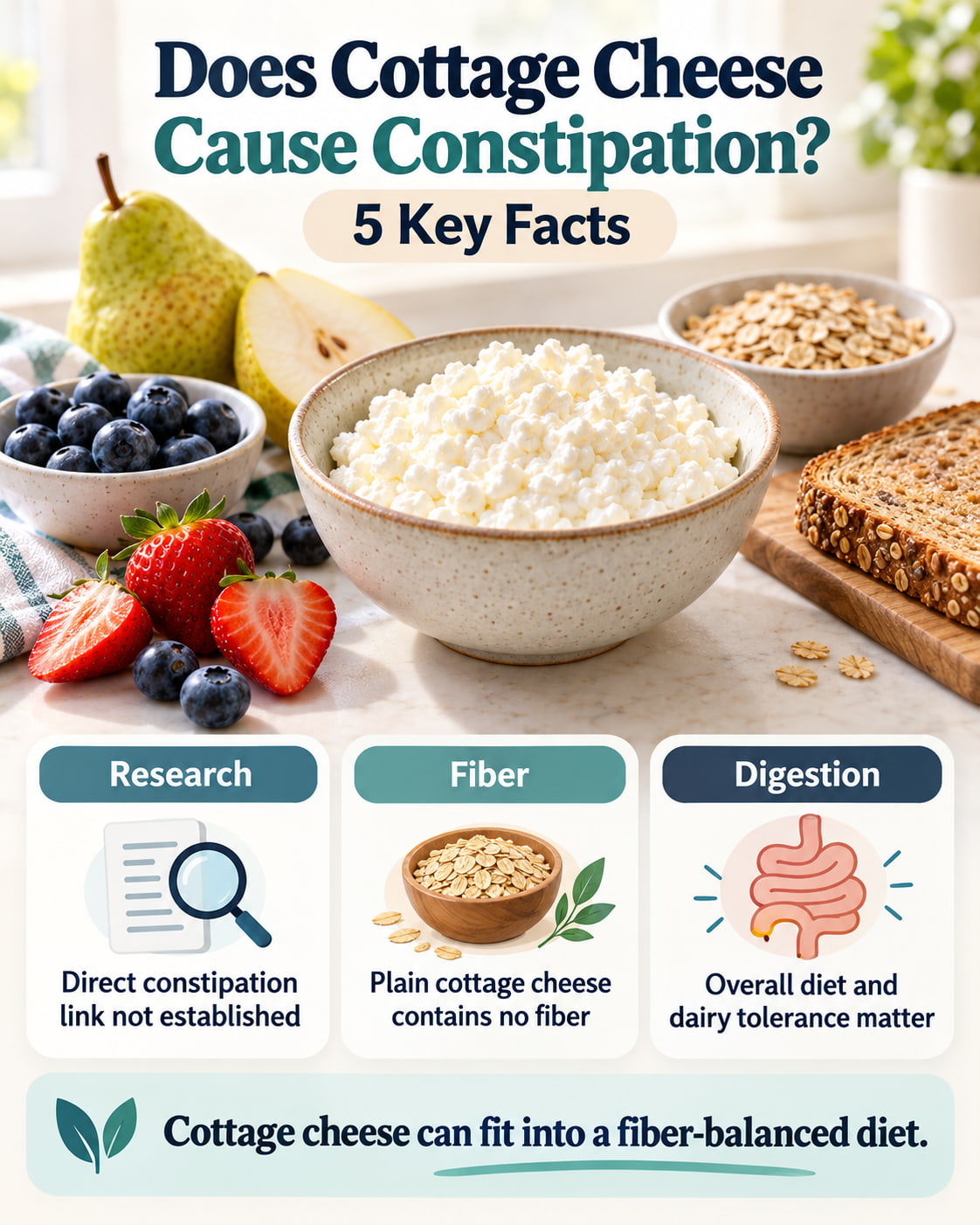
Cottage cheese is not an established direct cause of constipation, but its lack of fiber can matter if it replaces fiber-rich foods. Your overall diet and individual response to dairy are worth considering.
Understanding those differences can help you make practical food choices. Start by looking at your total fiber intake, what you eat with cottage cheese, and whether symptoms repeatedly follow dairy. Persistent constipation deserves attention beyond changing one food.
Does Cottage Cheese Cause Constipation? 5 Facts to Know
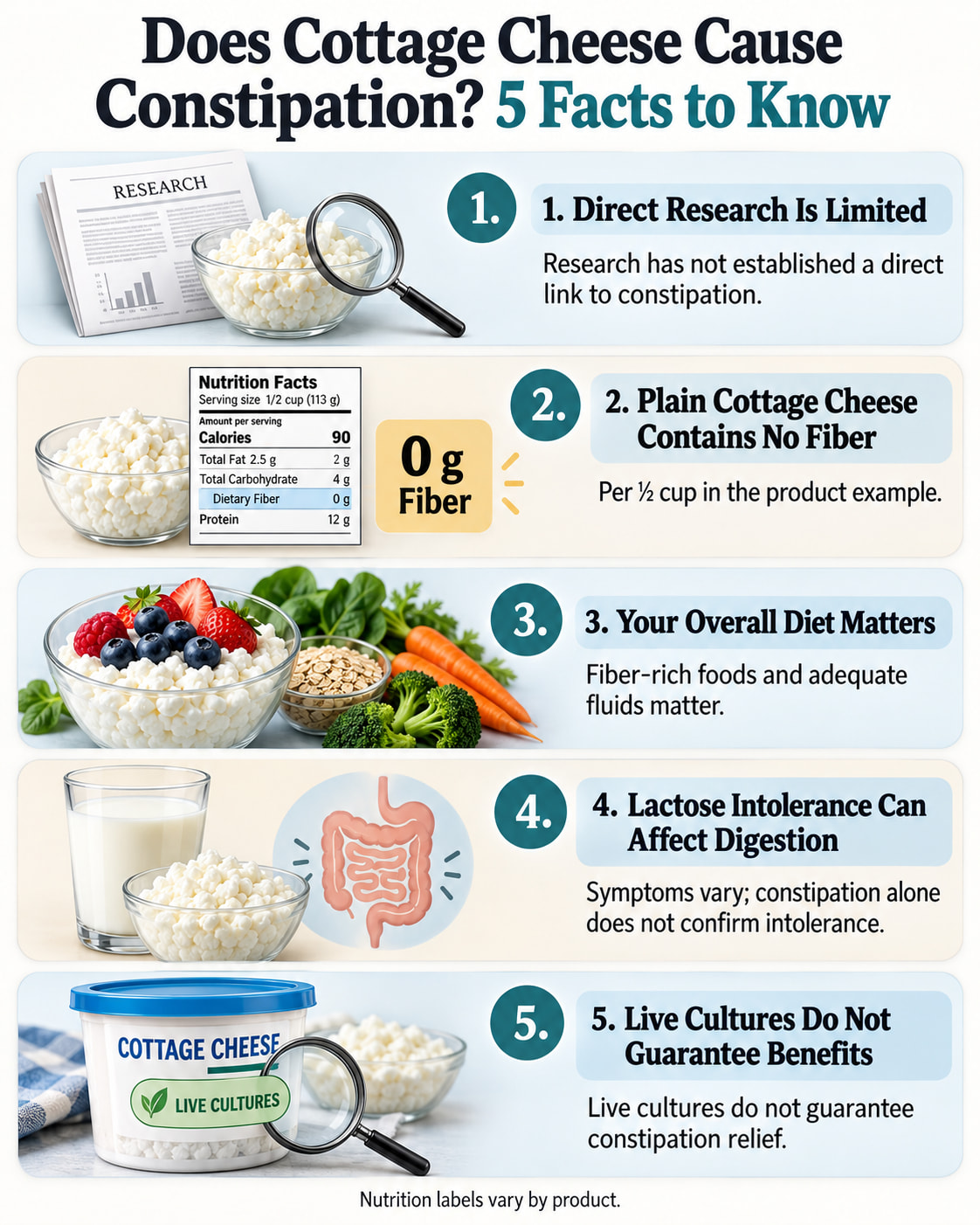
1. Direct Research Is Limited
Research specifically examining cottage cheese and bowel movements is limited.
A 2025 review of cottage cheese research, published in Critical Reviews in Food Science and Nutrition, found few high-quality human trials. Among the human studies it identified, none examined cottage cheese’s effects on gut health, gastrointestinal symptoms, or bowel movements.
That leaves an evidence gap. It does not prove that cottage cheese causes constipation, and it does not rule out individual digestive symptoms after eating it.
Claims that its protein, calcium, or fat directly causes constipation go beyond what this research establishes.
2. Plain Cottage Cheese Contains No Fiber
Plain cottage cheese can provide protein without contributing dietary fiber.
For example, Good Culture’s 2% cottage cheese label lists the following amounts per ½ cup, or 110 grams:
| Nutrient | Amount per ½ cup |
|---|---|
| Calories | 90 |
| Protein | 14 g |
| Dietary fiber | 0 g |
| Total fat | 2 g |
These are product-specific values. Check your own container because serving sizes and formulations vary.
The distinction matters: cottage cheese may contribute protein to a meal, but you need other foods to supply fiber. Having no fiber does not automatically make a food constipating.
3. Your Overall Diet Matters
According to NIDDK dietary guidance, adults generally need 22–34 grams of fiber daily, depending on age and sex. The agency recommends increasing fiber gradually and drinking enough liquids to help it work.
Consider what changes when you add cottage cheese to your routine. If it replaces oatmeal, fruit, beans, or whole-grain foods, your total fiber intake may fall. If you eat it alongside those foods, the effect on your overall diet is different.
Rather than focusing only on the cheese, consider whether your meals regularly include vegetables, fruit, legumes, and whole grains.
4. Lactose Intolerance Can Affect Digestion
Regular cottage cheese contains lactose, the natural sugar in milk. People who have trouble digesting lactose may develop symptoms after eating dairy.
The NHS lists lactose intolerance symptoms that include abdominal discomfort, bloating, gas, diarrhea, and constipation. Its guidance was reviewed in July 2026.
However, constipation alone does not establish lactose intolerance. Notice whether symptoms repeatedly occur after dairy and whether other digestive symptoms accompany them.
Lactose intolerance is also different from milk allergy. Lactose intolerance involves difficulty digesting milk sugar; milk allergy involves an immune response to milk proteins.
5. Live Cultures Do Not Guarantee Benefits
Some cottage cheese products contain live and active cultures. That does not establish that the product improves constipation.
The NIH Office of Dietary Supplements explains that fermented foods do not necessarily contain probiotics with proven health benefits. Any benefit depends on the microorganisms present and the amount consumed.
You can check the label for live cultures, but avoid assuming that a “cultured” product will make bowel movements more regular. Research on a particular probiotic cannot automatically be applied to every cottage cheese containing bacteria.
Ways to Add Fiber to a Cottage Cheese Meal
Serving cottage cheese with fiber-containing foods can help you build a more balanced meal. These combinations offer a practical starting point.
| Meal idea | Foods that contribute fiber |
|---|---|
| Cottage cheese with berries and sliced pear | Berries and pear |
| Cottage cheese on whole-grain toast with avocado | Whole-grain bread and avocado |
| A savory bowl with cottage cheese, chickpeas, and vegetables | Chickpeas and vegetables |
| Cottage cheese served alongside oatmeal and fruit | Oats and fruit |
Choose combinations you enjoy and tolerate.
Increase Fiber Gradually
If your usual meals contain little fiber, make changes gradually. For example, add fruit to a snack or include beans with one meal before making several changes at once.
A gradual approach can make the adjustment easier to tolerate. People with persistent digestive symptoms may benefit from guidance on which foods and amounts suit them.
Pay Attention to Fluids and Your Routine
Adequate fluid intake supports normal digestion and helps fiber work. Fluid needs vary, so there is no single amount that fits everyone. Follow any fluid limits recommended for a medical condition.
NIDDK also identifies regular physical activity and responding to the urge to have a bowel movement as useful parts of a constipation-management routine.
Keep a Simple Record if Symptoms Repeat
If you repeatedly notice problems after cottage cheese, record the portion, other foods eaten, symptoms, and bowel movements.
This can help you describe the pattern to a healthcare professional. A food-and-symptom record can provide context, but it does not diagnose lactose intolerance or prove that one food is responsible.
Is Lactose-Free Cottage Cheese a Better Option?
Lactose-free cottage cheese may be easier to tolerate when lactose is contributing to digestive symptoms. It is not automatically a solution for constipation.
For example, Good Culture’s lactose-free 2% cottage cheese still lists 0 grams of fiber per ½-cup serving. Removing lactose does not necessarily change the fiber content or address other reasons for constipation.
Lactose-free cottage cheese also remains a milk product. It should not be considered suitable for someone with a milk allergy simply because the lactose has been removed or broken down.
If dairy-related symptoms keep returning, discuss them with a healthcare professional or registered dietitian before making broad dietary restrictions.
When to Talk With a Healthcare Professional
Constipation can mean hard or difficult-to-pass stools, fewer than three bowel movements a week, or a feeling that you have not emptied completely.
Contact a healthcare professional if symptoms persist despite changes in your routine or keep returning. Other foods, medicines, supplements, and health conditions may need consideration.
According to NIDDK’s constipation guidance, seek prompt medical care when constipation occurs with:
- Blood in your stool or rectal bleeding.
- Constant abdominal pain.
- Inability to pass gas.
- Vomiting or fever.
- Unintentional weight loss.
Do not assume these symptoms are simply a reaction to cottage cheese.
Frequently Asked Questions
Can Eating Cottage Cheese Every Day Cause Constipation?
Eating it daily is not an established cause by itself. Consider whether it replaces fiber-containing foods and whether digestive symptoms repeatedly follow dairy. Frequency alone does not identify the cause.
How Much Cottage Cheese Is Too Much?
There is no established cottage cheese serving threshold that reliably predicts constipation. The ½-cup serving on many labels is a nutrition reference, not a guarantee that this amount will suit everyone.
Is Low-Fat Cottage Cheese Better for Constipation Than Full-Fat?
Research has not established that choosing low-fat cottage cheese prevents constipation. Both types generally contain no fiber, so changing the fat percentage alone does not increase your fiber intake.
Can Cottage Cheese Cause Bloating Instead of Constipation?
It may cause bloating in someone who does not tolerate its lactose well. Bloating and constipation are different symptoms, although they can occur together. Repeated symptoms after dairy are worth discussing with a healthcare professional.
Can You Eat Cottage Cheese While Constipated?
It can be part of a meal, particularly alongside foods that supply fiber. If dairy repeatedly appears to worsen your symptoms, discuss possible causes and suitable alternatives with a healthcare professional.
Should You Stop Eating All Dairy if You Are Constipated?
Constipation alone is not a reason to assume that every dairy food must be removed. Individual tolerance varies. A healthcare professional can help assess persistent symptoms and whether a dietary change is appropriate, especially before restricting a child’s diet.
Conclusion
Cottage cheese is not a proven direct cause of constipation, but it does not supply the fiber that a balanced eating pattern needs. Its role depends partly on what you eat with it, what it replaces, and how you tolerate dairy.
Start with one practical step: pair it with a fiber-containing food and review the rest of your meals. If constipation continues or concerning symptoms appear, seek medical guidance.
This content is for informational purposes only and not medical advice.
References
- Farsi and colleagues: Cottage cheese, a relatively underexplored cultured dairy product with potential health benefits? — Published online April 2025.
- Good Culture: Simply Cottage Cheese, 2% Milkfat — Product nutrition label.
- Good Culture: Simply Lactose-Free Cottage Cheese, 2% Milkfat — Product nutrition label.
- NIDDK: Eating, Diet, & Nutrition for Constipation.
- NIDDK: Treatment for Constipation.