
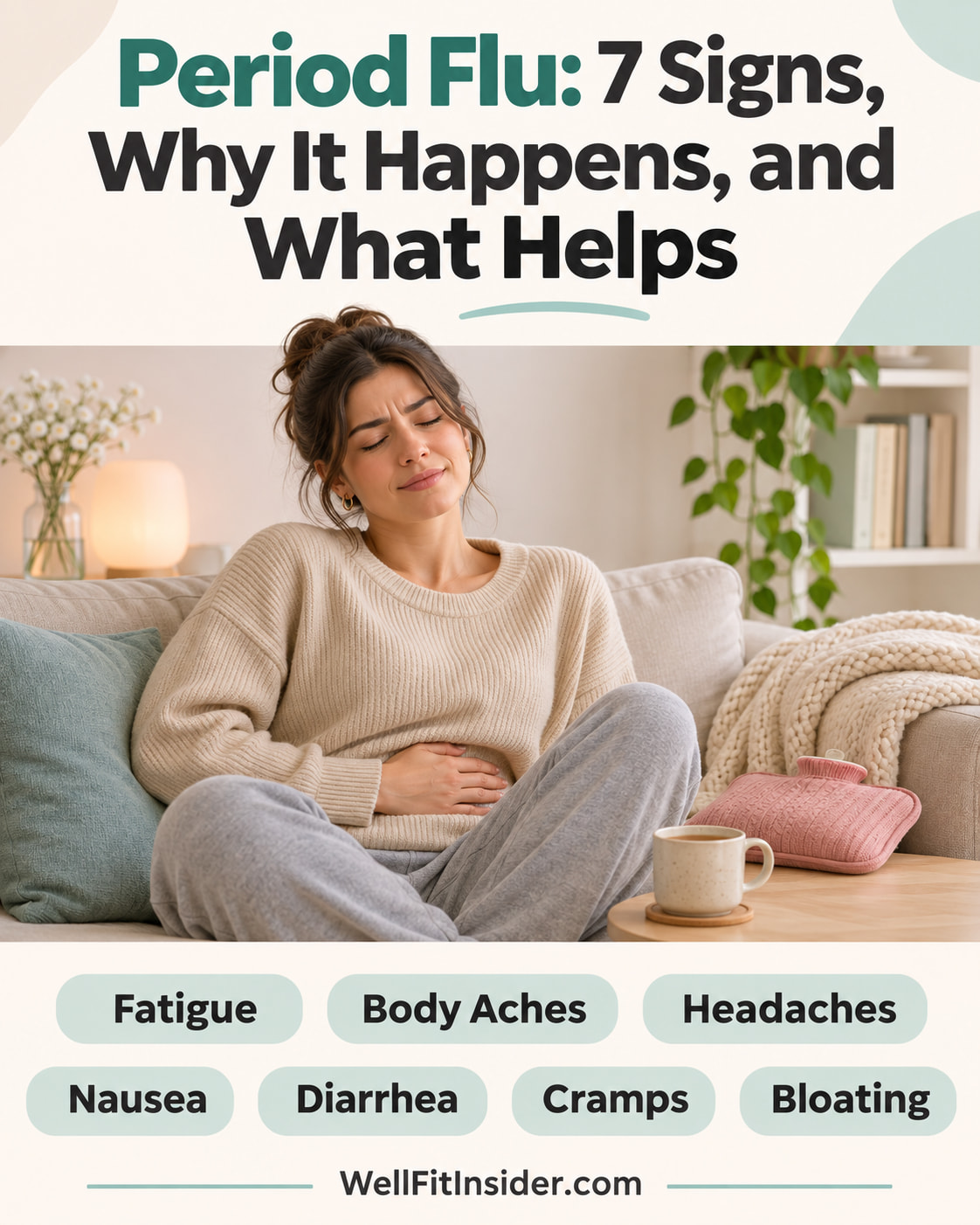
Period flu is an informal name for flu-like symptoms around your period, such as fatigue, body aches, headaches, nausea, and diarrhea. These symptoms can overlap with premenstrual syndrome (PMS) and menstrual cramps.
Understanding the timing can help you recognize a recurring pattern and decide when to seek care. Warmth, rest, gentle activity, and adequate fluids may support comfort, but a fever or new, severe symptoms deserve separate attention.
What Is Period Flu?
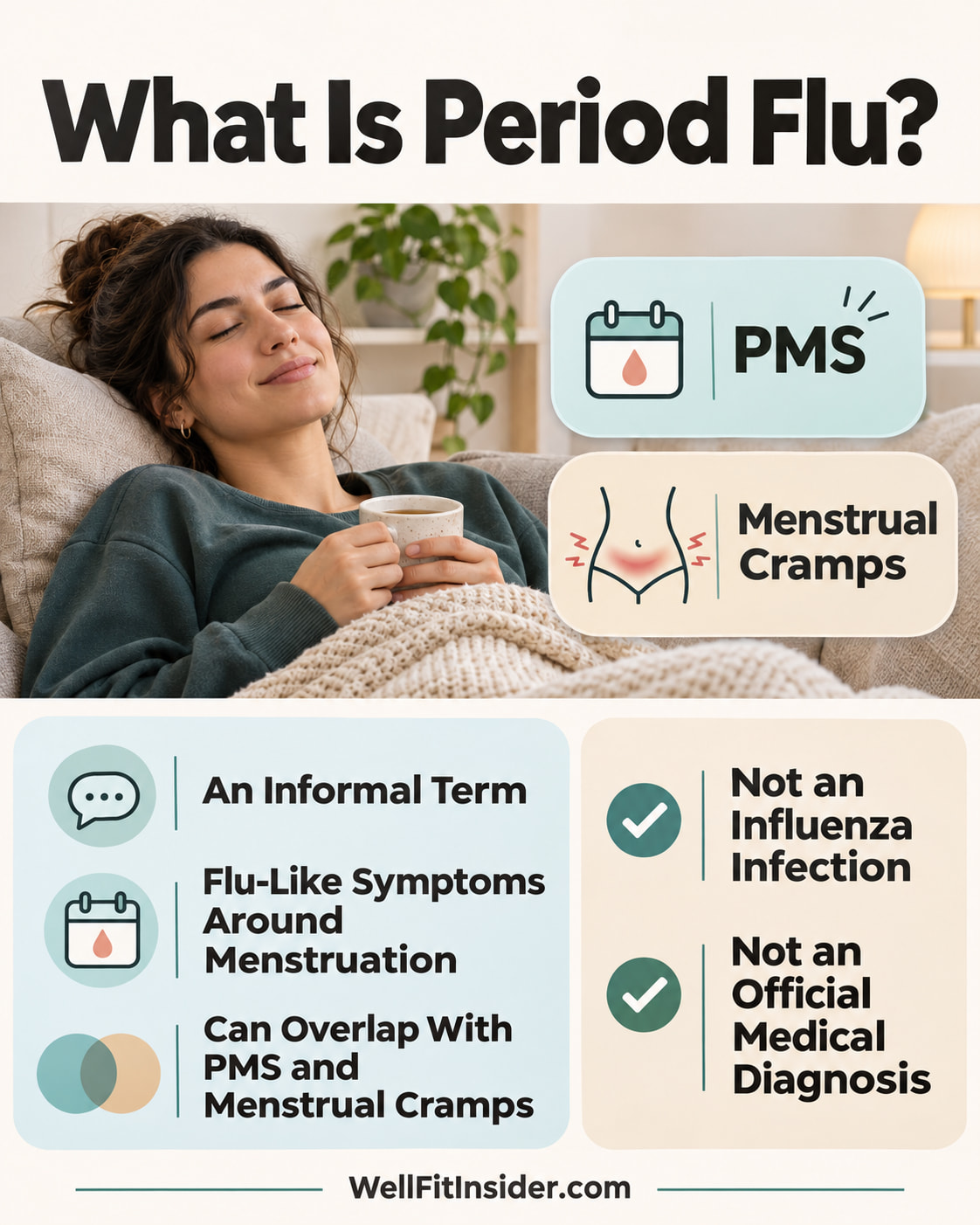
According to Cleveland Clinic, period flu is not an official medical diagnosis or an influenza infection. It is an everyday description of feeling unwell around menstruation.
Two recognized conditions help explain the overlap:
- PMS: Physical and emotional symptoms that occur before your period.
- Dysmenorrhea: The medical term for painful periods, which can include symptoms beyond cramps.
The symptoms are real, even though the name is informal. However, calling something “period flu” does not establish its cause. A recurring cycle pattern is useful information, but it cannot rule out another illness.
7 Possible Signs of Period Flu
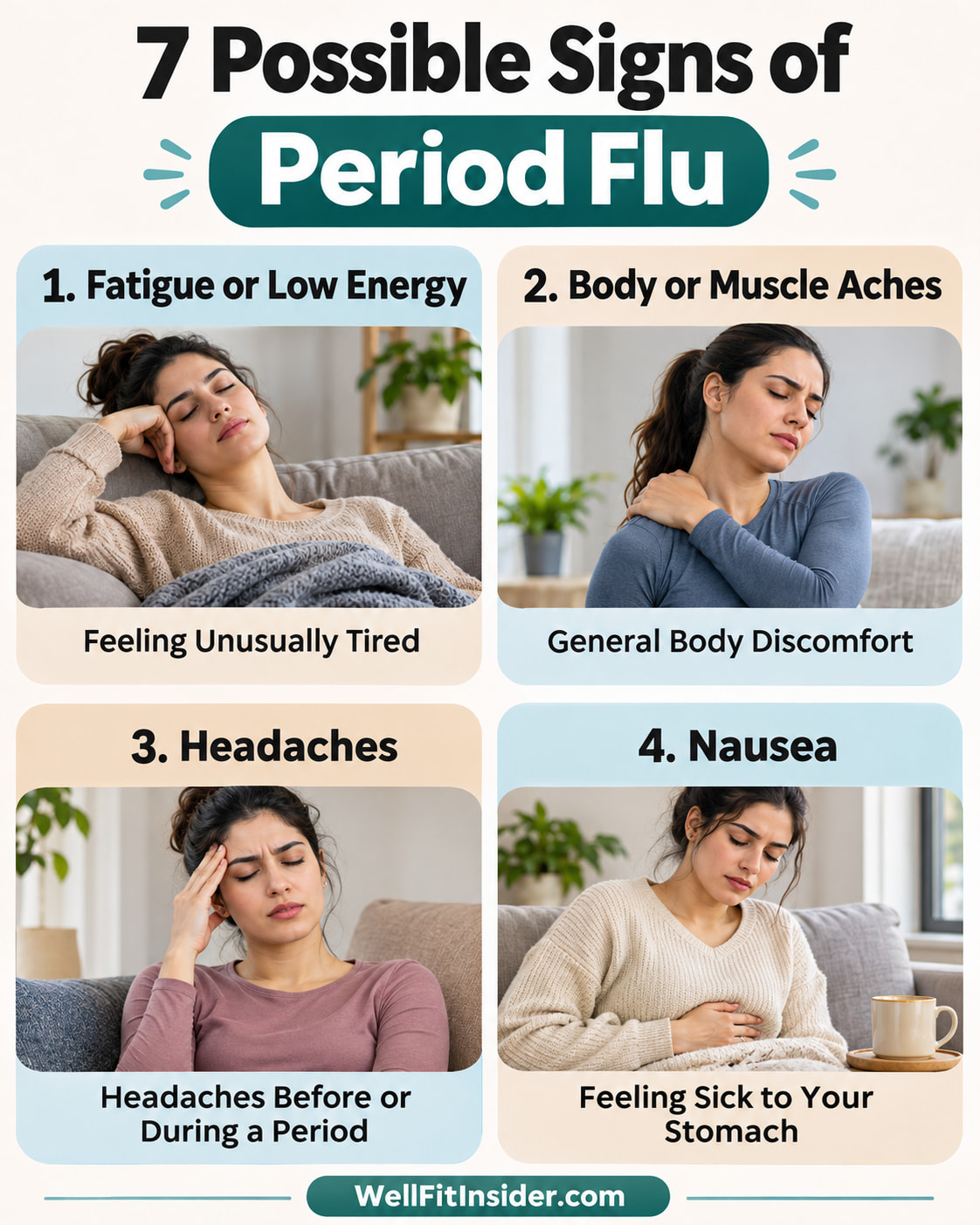
You may experience only a few of these symptoms. They are possible menstrual symptoms, not a checklist that confirms a diagnosis.
1. Fatigue or Low Energy
You may feel more tired than usual or notice that ordinary tasks take more effort. PMS can also involve sleep changes and difficulty concentrating.
Track whether the tiredness improves after your period begins or continues throughout the month.
2. Body or Muscle Aches
General aches can contribute to the feeling that you are coming down with something. They may occur alongside other PMS symptoms.
Notice whether the discomfort follows your usual menstrual pattern or feels new and different.
3. Headaches
Headaches can occur before or during a period. Some people also notice changes in an existing migraine pattern around menstruation.
Recording the timing and severity can help a clinician assess whether your headaches are related to your cycle.
4. Nausea
An unsettled stomach or feeling that you might vomit can accompany painful periods. Nausea may occur alongside cramps or other digestive changes.
Repeated vomiting, especially when you cannot keep fluids down, needs medical attention.
5. Diarrhea or Loose Stools
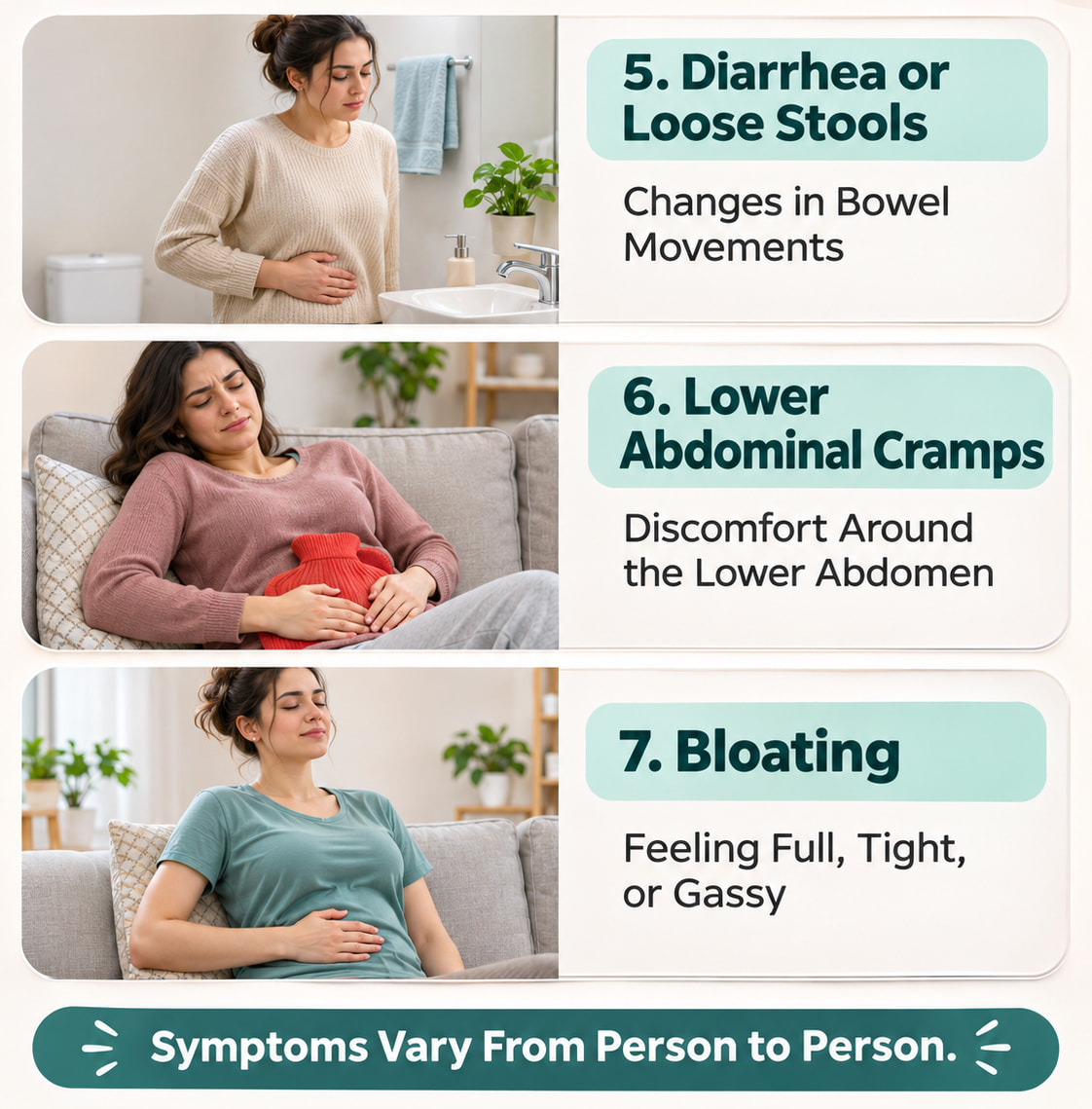
Some people notice looser stools or more frequent bowel movements around their period. Others experience constipation as part of PMS.
A familiar monthly pattern can be informative. Diarrhea that persists beyond that pattern should not automatically be blamed on menstruation.
6. Lower Abdominal Cramps
Menstrual cramps often begin just before or around the start of bleeding. The discomfort may spread to the lower back or thighs.
Cramps and generalized body aches can occur together, but they describe different types of discomfort.
7. Bloating
Your abdomen may feel full, tight, or gassy before your period. Bloating is a recognized PMS symptom and can add to an overall feeling of discomfort.
Cramps and bloating are associated menstrual symptoms; they are not defining signs of influenza.
Why Does Period Flu Happen?
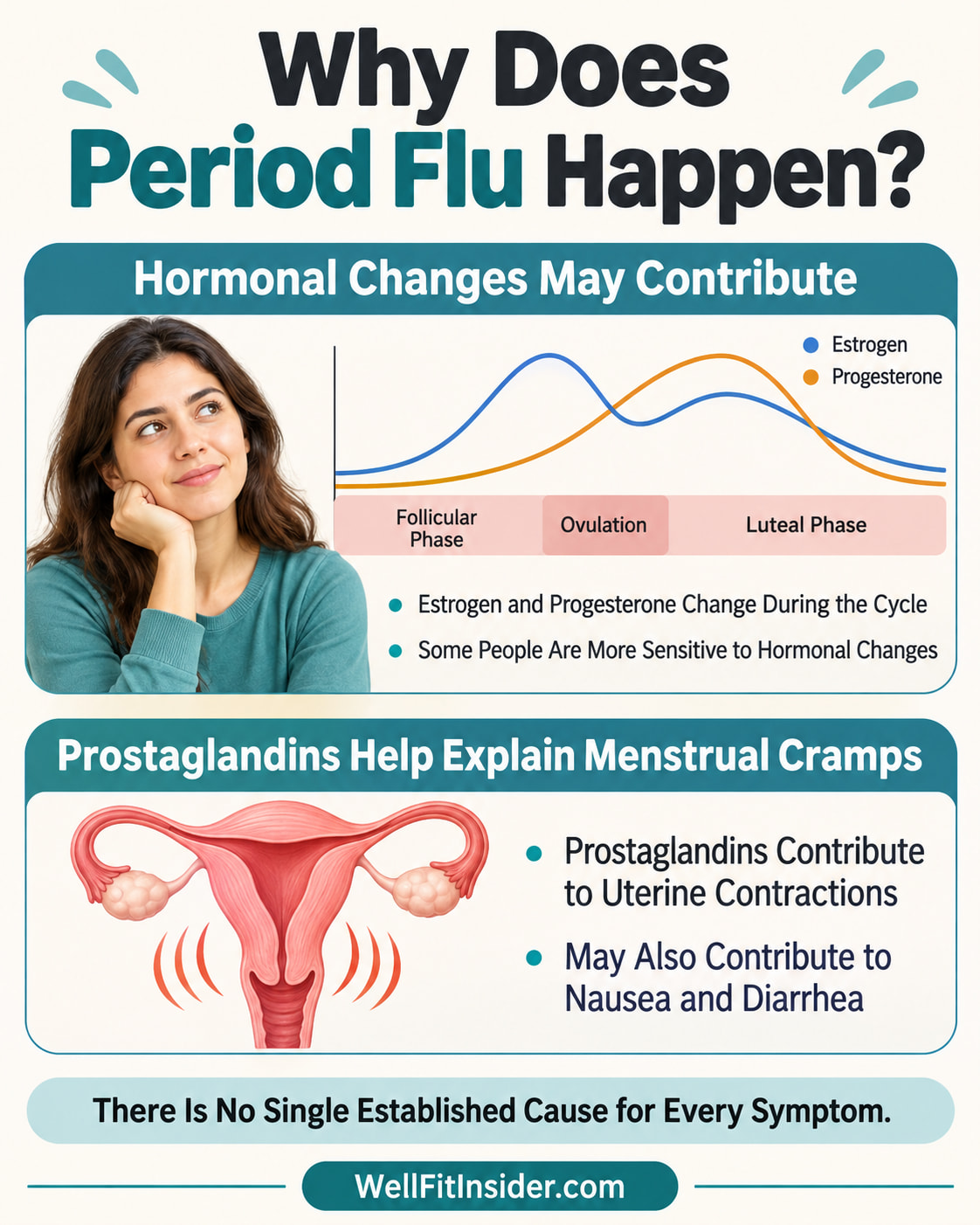
Hormonal Changes May Contribute
Researchers do not fully understand why PMS happens. Changes in estrogen and progesterone during the menstrual cycle may play a role, and some people are more sensitive to those changes than others.
This does not mean that everyone with symptoms has a hormone imbalance.
Prostaglandins Help Explain Menstrual Cramps
ACOG’s guidance on painful periods explains that prostaglandins are chemicals produced in the uterine lining. They cause the uterus to contract during menstruation.
Prostaglandin levels are high around the first day of bleeding and decrease as the lining sheds. This helps explain why cramps often ease after the first few days.
Prostaglandins may also contribute to nausea and diarrhea. However, there is no single established mechanism that explains every symptom described as period flu.
When Does Period Flu Start, and How Long Does It Last?
The timing depends on which symptoms you experience:
- PMS symptoms can develop after ovulation, during the week or two before your period. They generally improve within a few days after bleeding begins.
- Menstrual cramps usually occur just before or around the start of bleeding. Period pain commonly lasts up to three days.
There is no fixed duration for “period flu” as a whole. Symptoms do not have to stop immediately when bleeding starts, but ongoing or worsening symptoms deserve assessment.
For example, fatigue before a period followed by cramps on the first day is different from feeling unwell throughout the month. Record that distinction rather than assuming all symptoms have the same cause.
Period Flu vs. an Actual Infection
A menstrual period does not prevent you from getting a respiratory infection or stomach illness at the same time.
| Clue | Symptoms associated with menstruation | Possible infection |
|---|---|---|
| Timing | May recur at a similar point in your cycle | Can occur at any time |
| Common overlap | Fatigue, aches, and headaches | Fatigue, aches, and headaches |
| Other symptoms | Cramps, bloating, and familiar premenstrual changes | Cough, sore throat, or a runny or stuffy nose may suggest a respiratory illness |
| What the pattern tells you | Helps a clinician assess a cycle connection | Symptoms alone may not identify the infection |
CDC guidance explains that influenza can occur without a fever and cannot always be identified from symptoms alone. Testing may help when a clinician needs to establish the cause.
Do not use the timing of your period as proof that new symptoms are harmless.
What May Help With Period Flu Symptoms?
Comfort measures can support you while you monitor mild, familiar symptoms. Choose options that suit how you feel.
Use Warmth for Cramps
A warm bath or gentle heat on your lower abdomen may ease discomfort. NHS period-pain guidance recommends a heating pad or a hot-water bottle wrapped in a towel.
Follow the product’s instructions, protect your skin, and do not fall asleep with a heating pad on.
Make Room for Sleep and Gentle Movement
Adequate sleep can help you cope with fatigue and discomfort. Keep a consistent bedtime where possible and allow time to rest when you need it.
If you feel comfortable moving, try an easy walk or gentle yoga. Regular physical activity is included in PMS guidance, but you do not need to force a demanding workout when you feel unwell.
Drink Fluids and Eat Manageable Meals
If nausea makes drinking difficult, try small sips. Fluids help replace losses from diarrhea or vomiting; they do not resolve every menstrual symptom.
Eat when you feel able. Smaller meals may be easier to manage, and a balanced eating pattern is a reasonable foundation. You do not need a special detox or restrictive “hormone-balancing” diet.
Ask About Suitable Pain Relief
Some over-the-counter medicines, including NSAIDs such as ibuprofen or naproxen, may help menstrual cramps. They are not suitable for everyone.
Follow the label and ask a pharmacist or clinician about suitability if you have a history of stomach ulcers, kidney problems, medication allergies, bleeding problems, or possible pregnancy. Mention other medicines you take.
Do not combine ibuprofen with another NSAID, such as naproxen. Recurring symptoms that require frequent medication deserve a clinical review.
Track the Pattern
Keep a daily record for two to three months. A calendar, notebook, or app is enough. Note:
- When symptoms start and stop.
- The first day of bleeding.
- Symptom severity and effects on normal activities.
- Any measured fever.
- What you tried and whether it helped.
Bring the record to an appointment. You do not need to finish several months of tracking before seeking help for concerning symptoms.
When to Get Medical Help
Do Not Automatically Attribute Fever to Your Period
A temperature of 100.4°F (38°C) or higher is generally considered a fever. Feeling warm or chilled does not establish the cause.
A fever at this threshold alone is not automatically an emergency. However, one that persists, worsens, or occurs with pelvic pain or unusual discharge needs medical assessment.
Arrange an Appointment for Disruptive or Changing Symptoms
Contact a healthcare professional if:
- Symptoms repeatedly interfere with work, school, sleep, or everyday activities.
- Your periods become more painful, heavier, or irregular.
- Pain continues after your period or occurs at other times.
- You develop pain during sex, urination, or bowel movements.
Painful periods can sometimes be associated with conditions such as endometriosis or fibroids. An assessment can help identify the reason for a changing pattern.
Seek Prompt or Emergency Care When Needed
MedlinePlus guidance advises prompt medical contact for fever with pelvic pain, increased or foul-smelling discharge, or sudden or severe pain.
Also seek prompt care if you cannot keep fluids down or have pelvic pain when pregnancy is possible.
Seek emergency care for sudden severe pelvic pain, or pelvic pain accompanied by fainting, difficulty breathing, or heavy vaginal bleeding.
Toxic shock syndrome is rare, but possible signs include sudden fever, a sunburn-like rash, vomiting or diarrhea, dizziness, and fainting. If you develop sudden fever with a rash, marked dizziness, fainting, or significant vomiting or diarrhea during or shortly after tampon use, remove the tampon if it is still in place and seek medical attention immediately. Do not wait for every symptom to appear.
Frequently Asked Questions
Is Period Flu a Real Medical Condition?
The symptoms are real, but “period flu” is not an official diagnosis. A clinician may assess whether they relate to PMS, menstrual pain, or another cause.
How Long Does Period Flu Last?
There is no standard duration. Premenstrual symptoms generally ease within a few days after bleeding starts, while cramps commonly affect the first few days of a period.
Can Period Flu Happen Before Bleeding Starts?
Yes. PMS symptoms occur before menstruation and can begin after ovulation. Cramps may also start shortly before bleeding.
Can Your Period Cause a Fever?
Do not assume that a measured fever is caused by your period. A fever of 100.4°F (38°C) or higher, particularly with pelvic pain or worsening illness, needs separate consideration.
Is Period Flu Contagious?
Menstrual symptoms themselves are not contagious. However, an infection can occur at the same time, so new respiratory or digestive symptoms should not automatically be labeled period flu.
What Is the Difference Between Period Flu and PMS?
PMS includes a wider range of physical and emotional symptoms, such as breast tenderness, mood changes, and bloating. “Period flu” is an informal description that emphasizes feeling tired, achy, or sick.
When Should You See a Doctor for Period Flu Symptoms?
Arrange an appointment when symptoms repeatedly disrupt daily life or change from your usual pattern. Seek prompt help for fever with pelvic pain, persistent vomiting, or other warning signs described above.
Conclusion
Recognizing a menstrual pattern can help you understand your symptoms and prepare for difficult days. Start a simple symptom record, use comfortable measures such as warmth and rest, and discuss recurring problems with a healthcare professional. You do not have to accept symptoms that regularly interrupt your life.
This content is for informational purposes only and not medical advice.