

No single food causes acne in everyone, but higher glycemic eating patterns and cow’s milk may contribute to breakouts in some people. If you’re looking for foods that cause acne, understanding the evidence can help you make useful changes without unnecessarily restricting your diet.
Sugary drinks, refined grains, sweets, milk, whey protein, chocolate, and frequent fast-food meals are all worth discussing. However, the evidence differs between them, and several categories overlap.
You can start by noticing patterns, making one manageable swap, and keeping your meals balanced. Food changes can be part of the conversation about your skin, alongside appropriate acne care.
Foods That Cause Acne: What the Research Shows
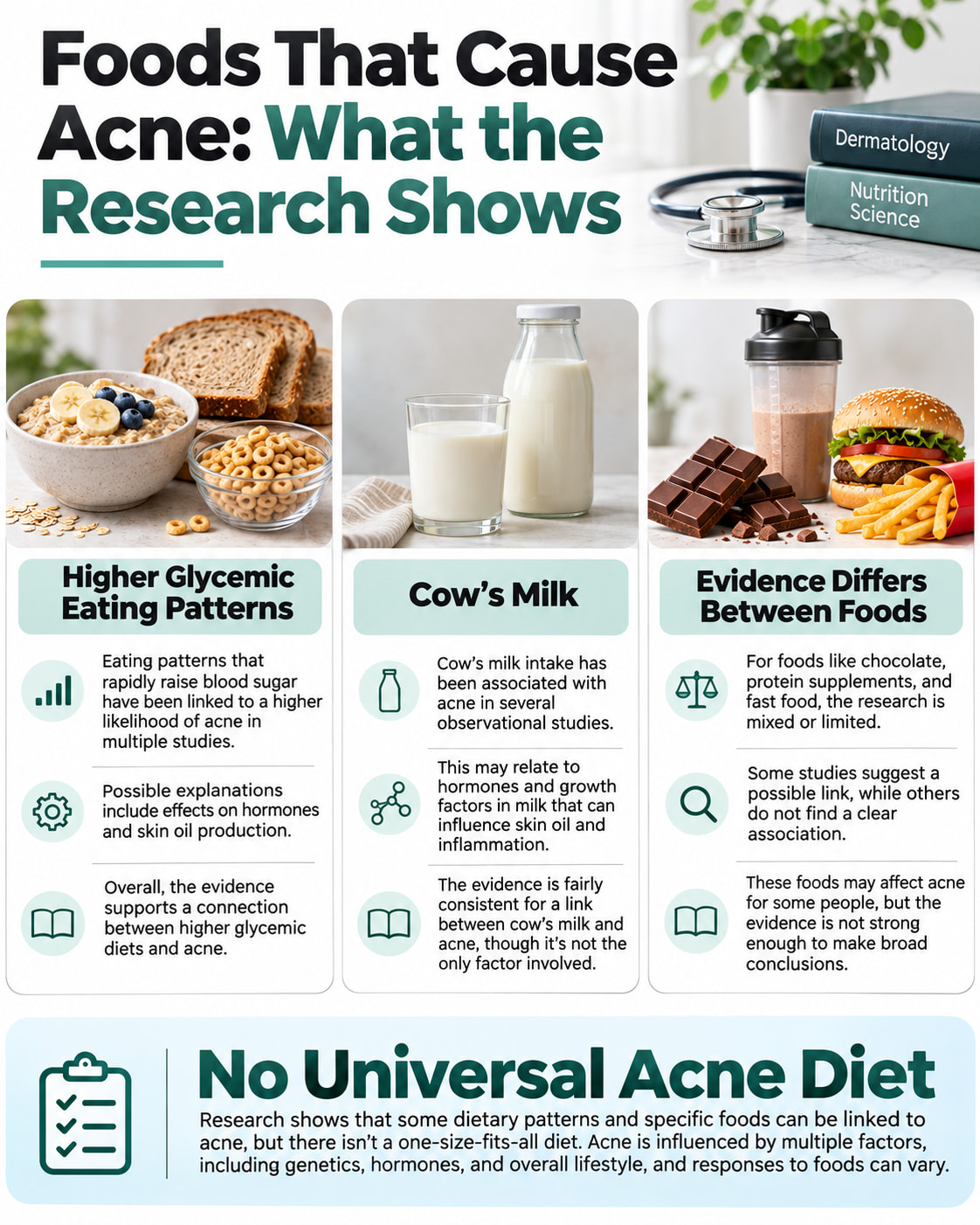
Acne develops when pores become clogged. Oil production, hormones, inflammation, and inherited susceptibility all play a role. Diet may influence this process, but a breakout does not automatically mean you ate the wrong food.
Much of the dietary research focuses on glycemic index and glycemic load. Glycemic index describes a carbohydrate food’s effect on blood sugar. Glycemic load also accounts for the amount of carbohydrate consumed.
A 2022 systematic review published in JAAD International found evidence linking higher glycemic eating patterns with acne. Findings about dairy were mixed. Some small dietary trials reported improvements, while other studies did not.
Research continues to produce differing results. An October 2026 case-control study involving 279 young adults found no independent association between dietary glycemic index and acne.
The American Academy of Dermatology’s 2024 guidance found insufficient evidence to recommend specific dietary changes for acne. That makes individual observation useful, while keeping expectations realistic.
7 Possible Food Triggers for Acne and Easy Swaps
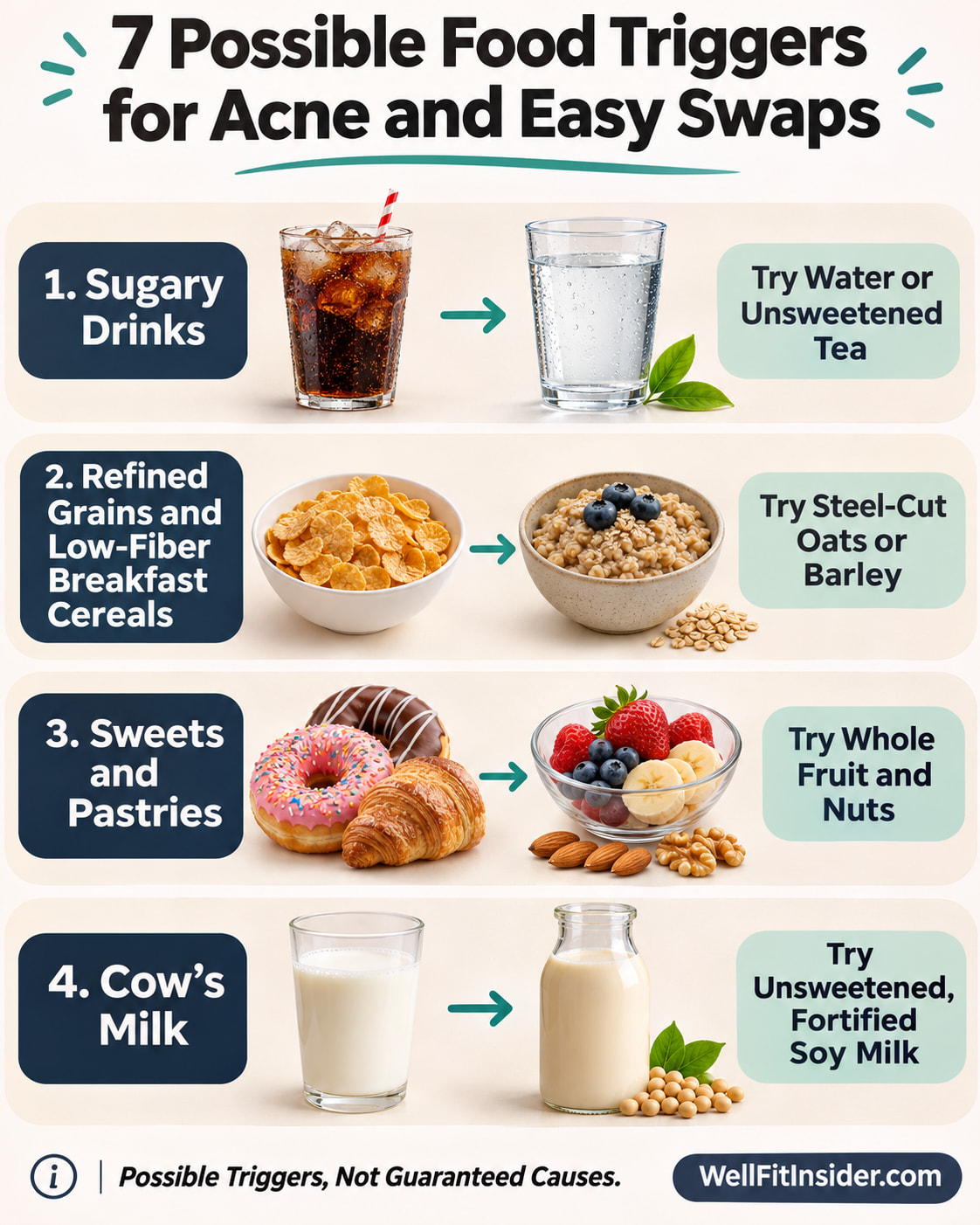
The following categories are possible contributors, not a list of foods everyone with acne must avoid. Sugary drinks, refined grains, and sweets share much of the same evidence about dietary patterns.
The suggested swaps are practical eating options. They have not each been proven to improve acne.
1. Sugary Drinks
Regular soda, sweetened tea, fruit-flavored drinks, and heavily sweetened coffee beverages can add substantial sugar to your day.
Observational research has linked sugary beverages with acne. For example, a May 2026 study in Frontiers in Public Health involving 1,299 adolescents found an association between sugar-sweetened beverages and acne. Because it was observational, it could not establish that the drinks caused the breakouts.
Try this swap: Replace one sugary drink you regularly have with water, unsweetened sparkling water, or unsweetened tea.
If you usually drink sweet tea with lunch, changing that one habit provides a straightforward starting point.
2. Refined Grains and Low-Fiber Breakfast Cereals
White bread, cornflakes, puffed-rice cereals, and similar refined starches can contribute to a higher glycemic eating pattern.
The research generally examines overall diets. It does not show that every serving of bread or rice causes a pimple. There is also no reason to assume you must eliminate carbohydrates to support your skin.
Try these swaps:
- Choose steel-cut oats instead of cornflakes or a sugary cereal.
- Replace part of a refined-grain serving with beans or barley.
- Build meals that include vegetables and a protein source alongside your starch.
The goal is a more varied meal, without turning one familiar food into something you must fear.
3. Sweets and Pastries
Cookies, doughnuts, cakes, and pastries often combine added sugar with refined flour. Frequent servings can contribute to the same dietary pattern discussed above.
A 2020 study published in JAMA Dermatology analyzed 24,452 adults and found an association between fatty and sugary products and current acne. Participants reported their acne status, and the study could not establish cause and effect.
Try this swap: Replace some usual sweet snacks with whole fruit and nuts, or oatmeal topped with fruit.
You do not have to make every dessert off-limits. Start with a habit you would find easy to change, and avoid assuming that an occasional sweet explains every breakout.
4. Cow’s Milk
Several observational studies have associated drinking cow’s milk with acne. Skim milk has received particular attention, although associations have also been reported for other milk types.
These findings do not prove that milk triggers acne in every person. Switching from skim milk to whole milk is not an established way to avoid breakouts, either.
Research on milk also should not be applied automatically to yogurt, cheese, and every other dairy product. Findings differ between products and populations.
Try this swap: If you choose to check whether milk affects your skin, unsweetened, fortified soy milk can be a practical alternative.
According to FDA guidance, plant-based beverages vary considerably in nutritional content. Compare protein, calcium, and vitamin D on the label, especially if the beverage will regularly replace milk.
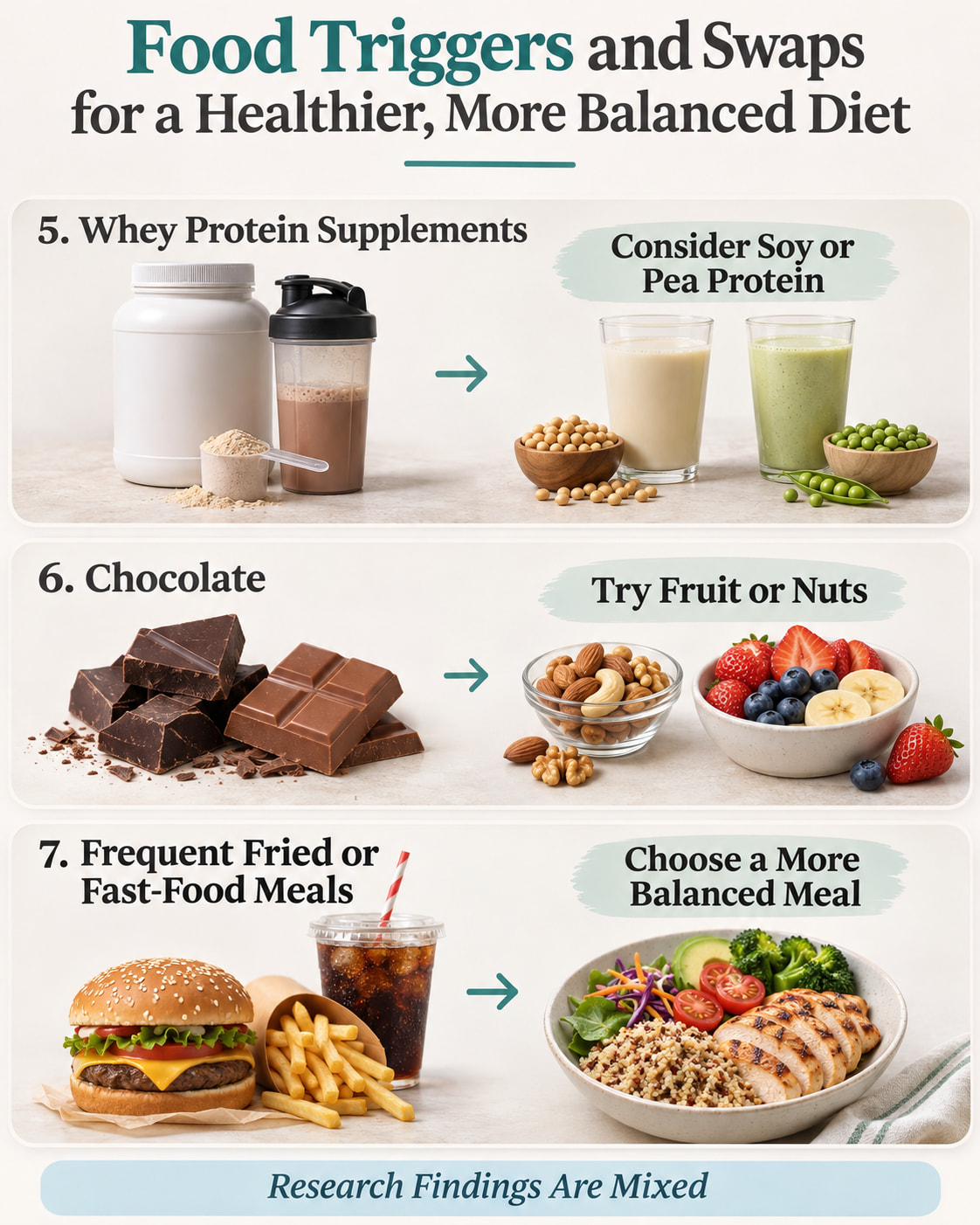
5. Whey Protein Supplements
Whey protein is often discussed as a possible acne trigger, particularly among people who notice breakouts after starting a new supplement. The research is mixed.
A 2024 observational study involving 201 male fitness-center attendees found whey use was more common among those with acne.
However, a 2024 randomized trial published in The Journal of Dermatology followed 49 young men with acne for six months. The whey group did not experience greater worsening than the group receiving a non-whey supplement.
Try this swap: If your breakouts began after introducing whey, you could consider a soy- or pea-based protein product while watching for a consistent pattern.
Compare protein amounts and ingredients so the alternative still meets your needs. Switching powders is an optional way to investigate a possible connection, not a proven solution for acne.
6. Chocolate
Chocolate research is limited, and the possible connection cannot simply be blamed on milk chocolate’s dairy content.
A 2024 study in Foods involved 92 adults, mostly women, who consumed 50 grams of 85% dark chocolate daily during a four-week period. Acne severity increased during chocolate consumption.
The study was short and did not establish which ingredients were responsible. Its findings cannot predict what an occasional piece of chocolate will do to your skin.
Try this swap: Choose fruit, fruit with nuts, or another non-chocolate snack if you want to investigate a recurring pattern.
Switching to dark chocolate does not guarantee fewer breakouts.
7. Frequent Fried or Fast-Food Meals
Some observational studies have associated frequent oily or fried foods with more severe acne. Other studies have found no significant association.
For example, research published in the January 2026 issue of Annals of Medicine and Surgery, involving 386 people with acne, did not find a significant adjusted association between fast-food intake and acne severity or scarring.
Fast-food meals can combine refined starches, sugary drinks, and other ingredients. That makes it difficult to identify which part of a meal, if any, contributes to breakouts.
Try this swap: Choose a meal with vegetables, beans or another protein source, a whole-grain side, and water.
You can also change one part of your usual order, such as replacing the sugary drink, without redesigning your entire diet.
How to Identify Foods That May Worsen Your Acne
A single breakout after a meal cannot tell you what caused it. If you suspect a connection, look for a recurring pattern while keeping the process simple.
Make One Change at a Time
Choose one food or drink you have regularly and make a manageable substitution. Changing several categories at once makes it harder to understand which change, if any, mattered.
For example, you might replace your daily sweetened drink while leaving the rest of your usual meals similar.
Keep a Brief Record
Write down relevant changes, such as:
- A new food habit or supplement.
- When your breakouts seem to worsen or improve.
- Changes in skin-care products.
- Stress or menstrual-cycle changes, when relevant.
You do not need to record every calorie or ingredient. A short note can help you discuss patterns with a dermatologist.
Allow Time Without Expecting a Guaranteed Result
There is no universally validated elimination period that proves a food is your acne trigger. Acne can fluctuate, and dietary studies generally observe changes over weeks.
Avoid deciding that a food is responsible because of one next-day pimple. If a dietary change does not reveal a clear pattern, be cautious about extending restrictions or adding more foods to an avoidance list.
Continue any clinician-recommended acne care while discussing dietary concerns.
Protect Your Nutrition
Removing several food groups can make it harder to meet your nutritional needs. If you plan a major dietary change, a registered dietitian can help you maintain balanced meals.
Extra support is useful for children and teenagers, people with limited diets, and anyone with a history of restrictive eating. NICE’s evidence review raises concerns about unnecessary restriction and unintended weight loss when evaluating diets for acne.
When to See a Dermatologist
Dietary changes should not delay help for acne that is painful, persistent, or leaving scars.
Seek medical advice if:
- You have deep, painful lumps.
- Breakouts are causing scars.
- Your acne is not improving with self-care.
- Your skin concerns are affecting your confidence or mental health.
These are reasons to seek care in current NHS guidance. A dermatologist can assess your acne and discuss appropriate options, including whether any suspected dietary pattern is worth exploring.
Frequently Asked Questions
Does Sugar Cause Acne?
Higher glycemic eating patterns and sugary drinks have been associated with acne, but that does not prove every sugary food causes breakouts. Focus on repeated habits and your overall diet. The research does not justify avoiding all foods containing naturally occurring sugar, including whole fruit.
Does Dairy Cause Acne, or Is the Evidence Mainly About Milk?
Much of the research focuses on cow’s milk. Findings about yogurt, cheese, and other dairy products are less consistent. There is no universal recommendation for everyone with acne to remove all dairy.
Can Whey Protein Cause Breakouts?
It may coincide with breakouts in some people, but research is conflicting. Observational studies have reported an association, while a small 2024 randomized trial did not find greater acne worsening with whey.
Is Dark Chocolate Better Than Milk Chocolate for Acne?
Dark chocolate is not a proven acne-safe alternative. Some research suggesting a connection with acne specifically involved dark chocolate. The cocoa percentage alone cannot predict how your skin will respond.
How Long Should You Watch for Changes After a Food Swap?
There is no fixed period that can confirm a food trigger for everyone. Look for a repeated pattern over time rather than a change after one meal. If acne is painful, persistent, or causing scars, seek care without waiting for a dietary experiment to work.
Can Changing Your Diet Clear Acne on Its Own?
Some people may notice improvement, but dietary changes do not reliably replace appropriate acne care. Current dermatology guidance does not support a universal acne diet. Balanced eating and individualized skin care can be discussed together with a healthcare professional.
Conclusion
Foods that cause acne are better understood as possible contributors whose effects vary between people. Higher glycemic eating patterns and milk deserve attention, while whey, chocolate, and fast-food findings require more caution.
Start with one practical swap that fits your routine, keep your meals balanced, and watch for a consistent pattern. If breakouts are painful, persistent, or leaving scars, make an appointment with a dermatologist.
This content is for informational purposes only and not medical advice.
References
- American Academy of Dermatology. Diet and acne overview.
- American Academy of Dermatology. Updated acne guidance, 2024.
- JAAD International, 2022. Diet and acne: A systematic review.
- Journal of Cosmetic Dermatology, 2026. Dietary glycemic index and acne in young adults.
- Frontiers in Public Health, 2026. Dietary patterns and acne among Shanghai adolescents.
- JAMA Dermatology, 2020. Adult acne and dietary behaviors in the NutriNet-Santé study.
- The Journal of Dermatology, 2024. Randomized trial of whey protein and male acne.