

Working out before bed can fit a healthy routine, but demanding exercise close to bedtime may disrupt sleep for some people. How hard you exercise, how long you train, and how much recovery time you leave all matter.
You do not necessarily need to give up evening workouts. A practical approach is to schedule harder sessions earlier when possible, keep late activity comfortable, and notice how your sleep responds. Caffeine, meals, and a rushed bedtime routine also deserve attention.
Is Working Out Before Bed Bad for Sleep?
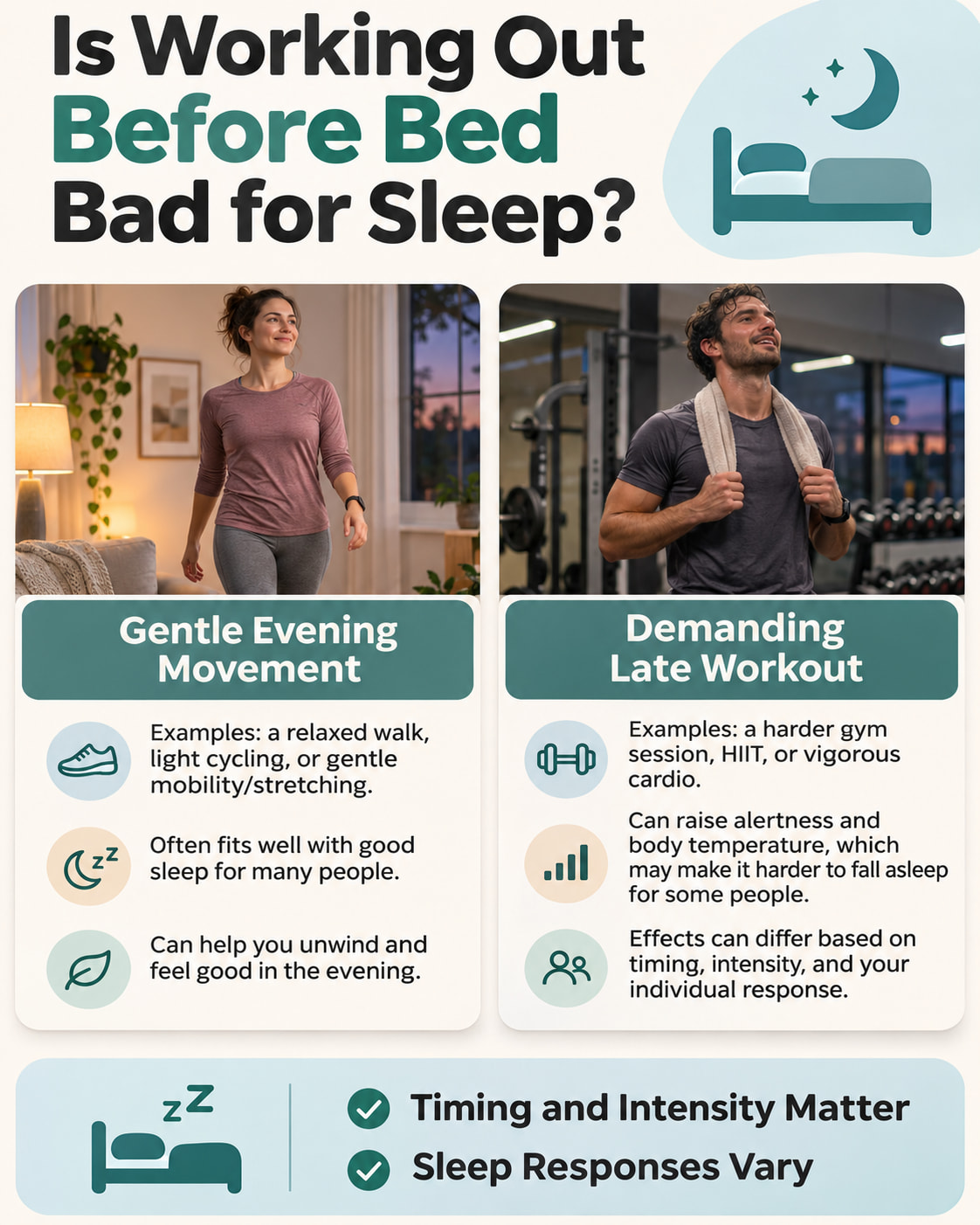
Evening exercise does not affect everyone the same way. A comfortable walk after dinner and an exhausting workout immediately before bed place different demands on your body.
A 2026 systematic review examined 25 studies comparing morning and evening exercise. It found no clear overall advantage for morning exercise across most sleep outcomes. However, evening exercise was associated with more time awake after initially falling asleep, with differences more apparent at higher intensities. The researchers cautioned that small studies may have influenced this finding.
This means an evening schedule can be workable, while the details of the session still deserve attention. Feeling well rested after your usual workout provides useful feedback; repeatedly sleeping poorly is a reason to reassess it.
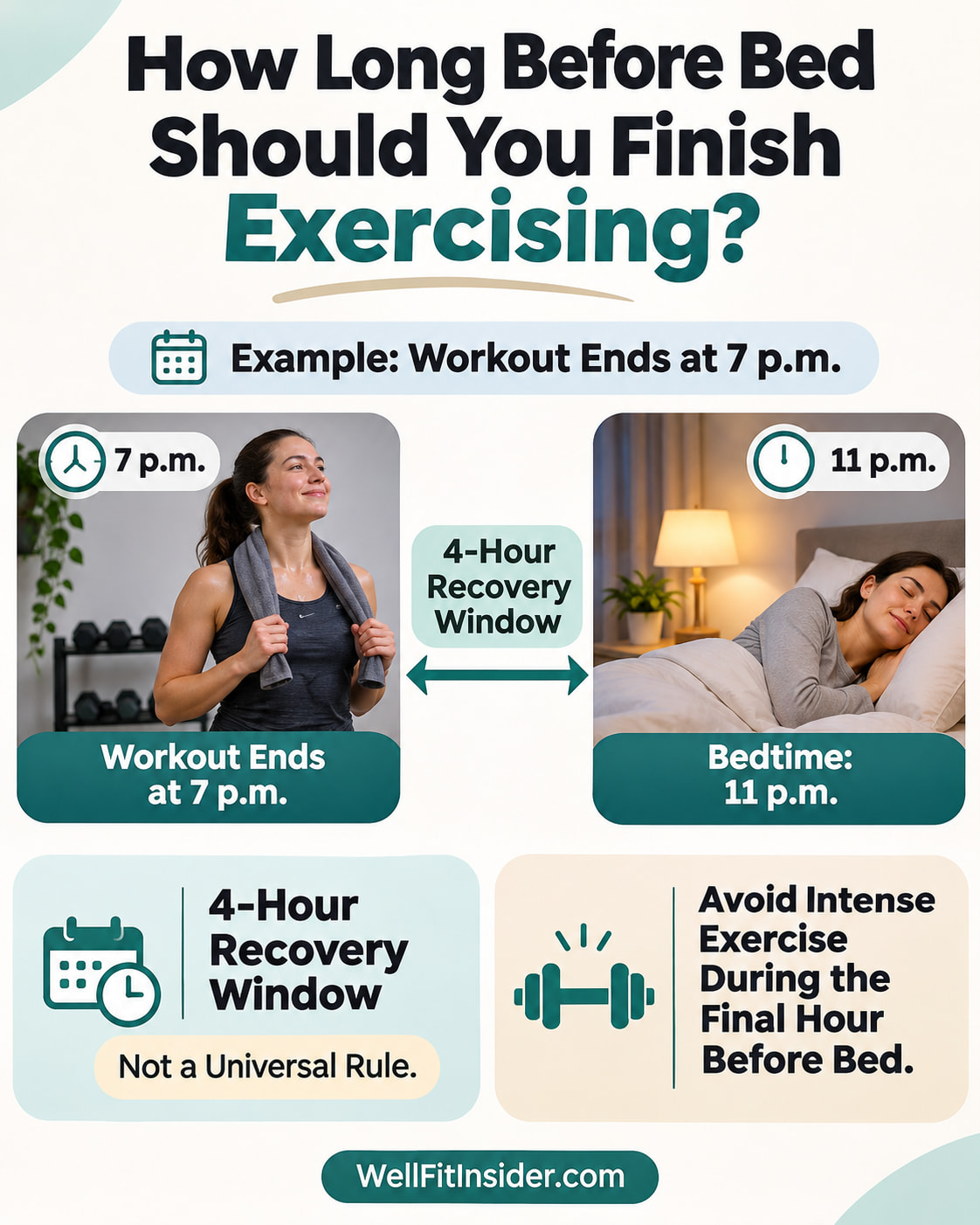
How Long Before Bed Should You Finish Exercising?
There is no single waiting period that works for every workout and every person.
An April 2025 study in Nature Communications analyzed 14,689 physically active people and more than four million nights of wearable data. Later exercise and greater exercise strain were associated with later sleep onset and shorter sleep.
The study found no association with the measured sleep changes when exercise ended at least four hours before sleep onset. Because it was observational, it cannot prove that late exercise caused those changes or establish a mandatory four-hour rule.
For a demanding session, allowing about four hours before expected sleep is a cautious option when your schedule permits. For example, finishing by 7 p.m. provides that window before an 11 p.m. bedtime.
The NHLBI’s sleep guidance also recommends avoiding intense exercise during the final hour before bed and using that time for quiet activities.
Finishing an hour before bed does not guarantee that every hard workout will leave your sleep unaffected. Use timing guidance as a starting point, then consider your own response.
7 Tips for Working Out Before Bed
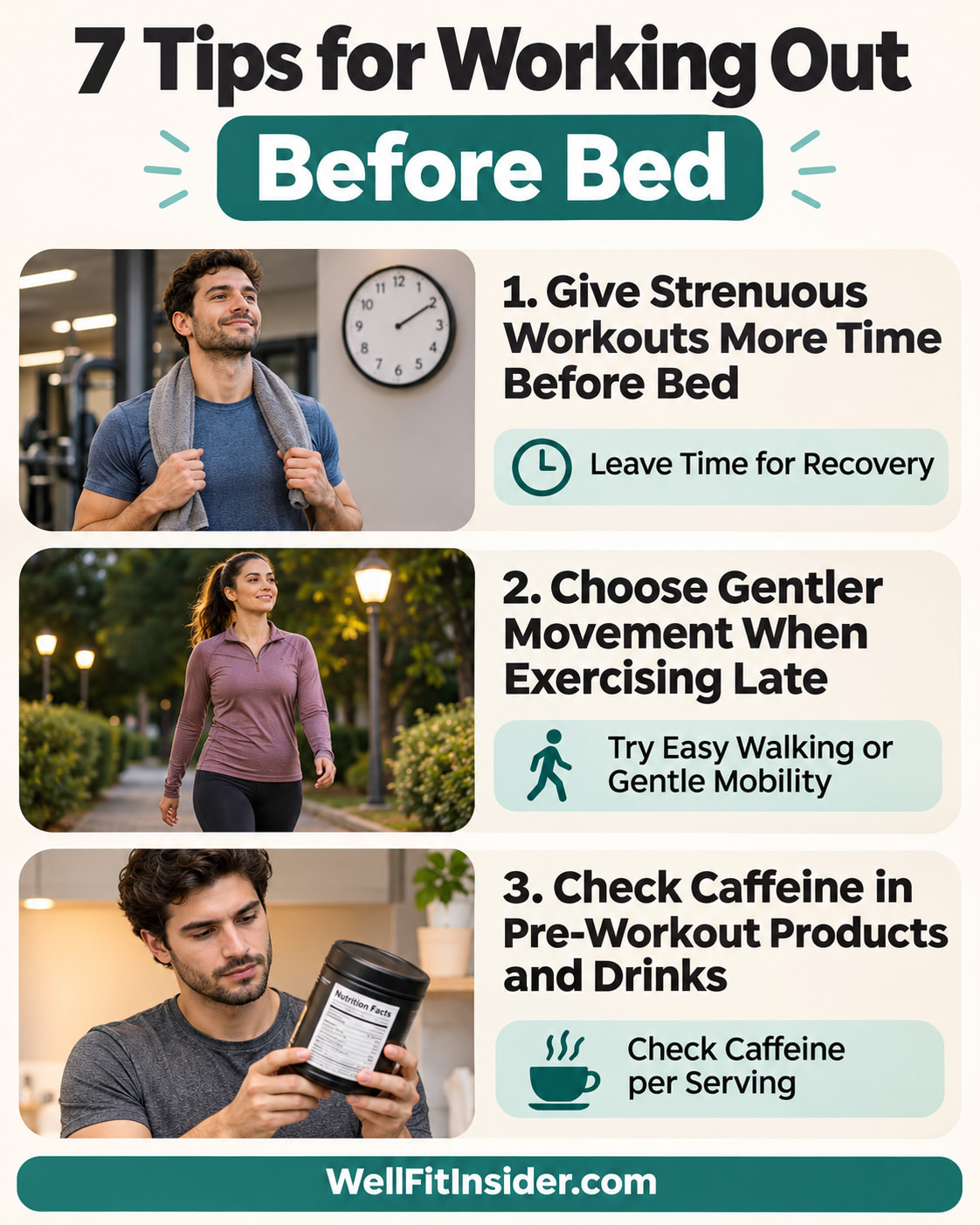
1. Give Strenuous Workouts More Time Before Bed
Plan backward from your usual bedtime. Include the workout itself, the trip home if needed, food, a shower, and time to relax.
If a demanding session leaves you rushing directly into bed, consider moving it earlier or placing it on a day with more flexibility. You can also shorten a session that would otherwise run late.
For example, if an evening class regularly pushes bedtime back, an earlier class or a shorter home session may fit your schedule better.
Keep your intended bedtime in the plan. Extending your evening to squeeze in more exercise can reduce the time available for sleep.
2. Choose Gentler Movement When Exercising Late
When the evening is almost over, consider activity that feels comfortable and manageable.
Possible options include:
- An easy walk.
- Gentle stretching within a comfortable range.
- Relaxed mobility movements.
- Easy cycling with light resistance.
Pay attention to how the activity actually feels. A class labeled “yoga” or a workout described as “low impact” can still be demanding. Choose the pace and difficulty based on your comfort, experience, and remaining time before bed.
3. Check Caffeine in Pre-Workout Products and Drinks
Look at what you consume before the workout as well as the workout itself. Coffee, energy drinks, and some pre-workout products contain caffeine.
Check the label for:
- Caffeine per serving.
- The number of servings you actually use.
- Other caffeinated products you have consumed that day.
Caffeine can interfere with sleep for hours, and people differ in their sensitivity. NHLBI notes that its effects can last up to eight hours. An afternoon serving may therefore matter even if you skip caffeine immediately before an evening session.
Avoid assuming that a product marketed for exercise will suit your bedtime schedule.
4. Cool Down and Leave Time to Wind Down
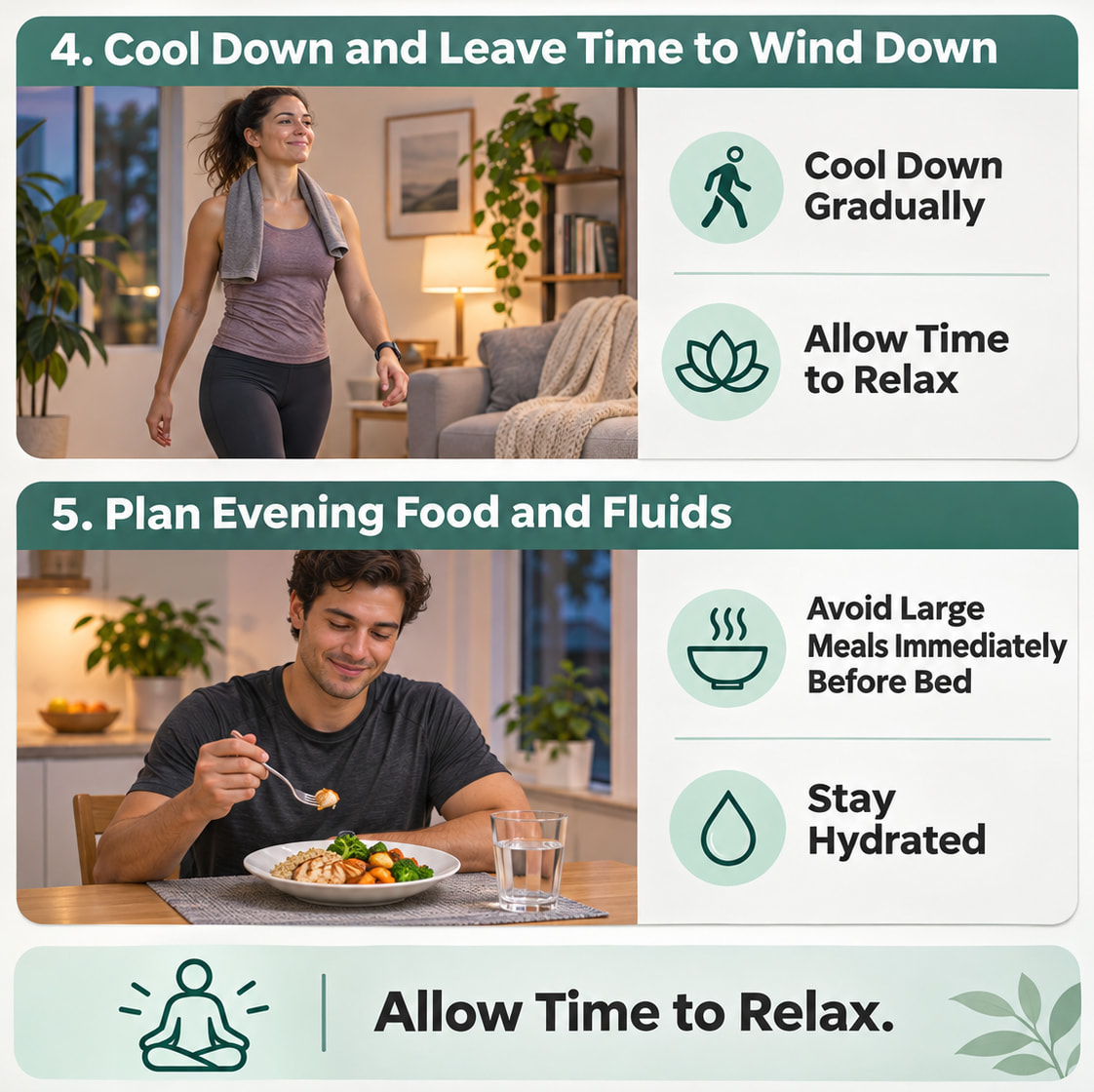
Finish exercise gradually instead of stopping abruptly at your hardest effort. The American Heart Association recommends slowing your walking pace for about 5–10 minutes after activity to let your heart rate decrease.
Then leave room for a calm transition toward bed. You might change into comfortable clothes, shower, lower the lights, and read something relaxing.
A cool-down is useful for ending exercise gradually. It does not guarantee that a hard late session will have no effect on sleep.
Keep the final part of the evening simple enough that finishing your workout does not start another hour of chores, messages, or scrolling.
5. Plan Evening Food and Fluids
Try to leave time for eating and drinking without making the final minutes before sleep feel rushed.
The American Academy of Sleep Medicine advises avoiding a large meal before bed. If you are hungry, a light snack is an option. It also recommends reducing fluid intake close to bedtime.
For an evening workout, the practical goal is to meet your needs without saving an unnecessarily large meal or excessive amount of fluid for lights-out.
Do not ignore thirst or deliberately underhydrate after exercise. If your current schedule repeatedly leaves you hungry or very thirsty at bedtime, review when you eat and drink during the evening.
6. Protect Your Bedtime and Sleep Environment
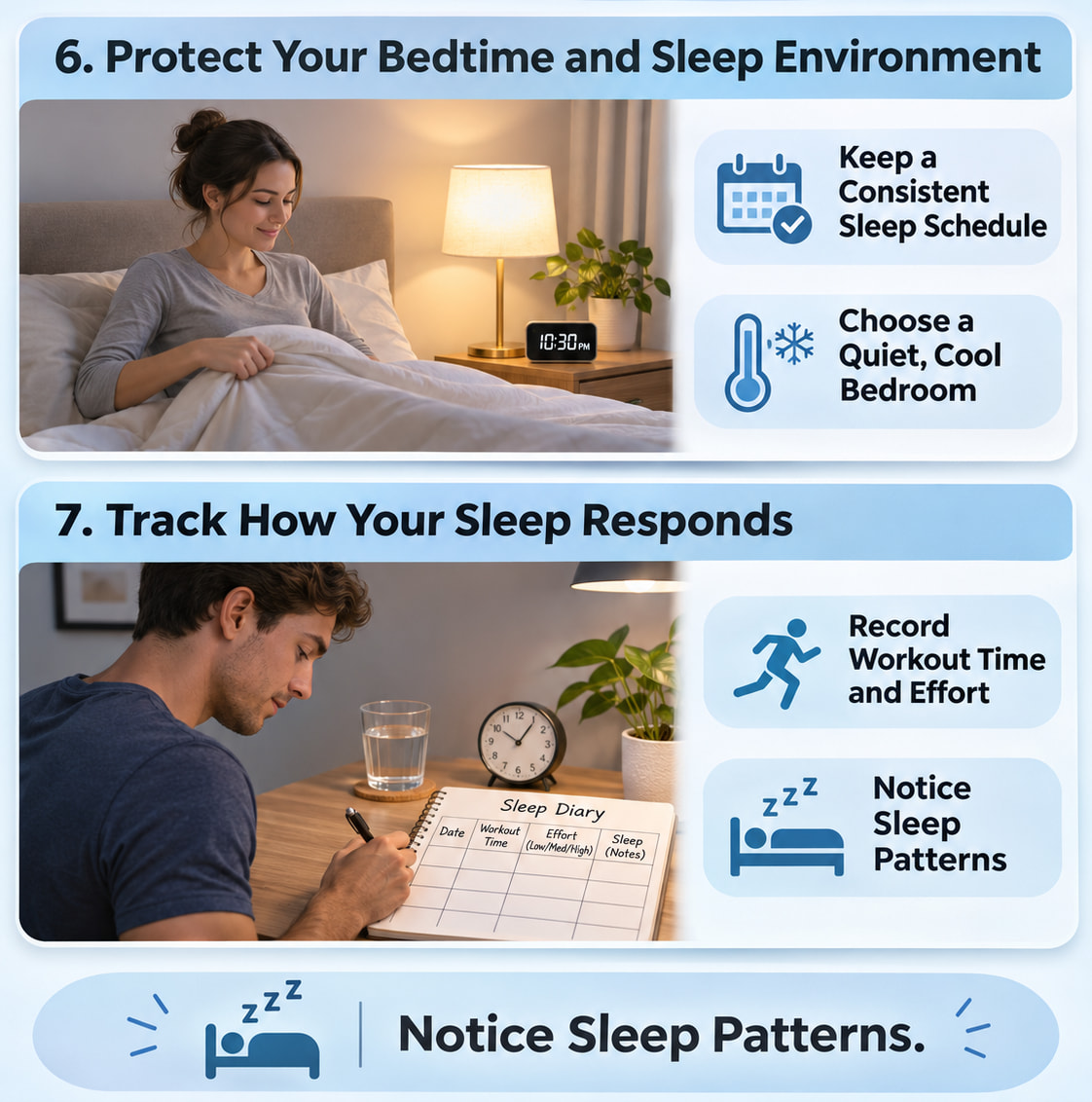
A workout routine should leave enough room for sleep. According to CDC guidance, adults ages 18–60 need at least seven hours a night; individual needs and recommendations for older adults vary.
Keep your bedtime and wake-up time reasonably consistent. CDC also recommends a quiet, cool bedroom and turning off electronic devices at least 30 minutes before bed.
If a late session regularly cuts your sleep short, adjust the session rather than repeatedly borrowing from your sleep time.
Prepare what you need beforehand when possible. Having clothes, a towel, and an evening snack ready can make the transition after exercise easier to manage.
7. Track How Your Sleep Responds
A brief diary can help you see patterns that are hard to remember from one night to the next.
The NHLBI recommends keeping a sleep diary for one to two weeks when evaluating sleep problems. It suggests recording sleep times, daytime sleepiness, exercise, caffeine, and alcohol.
For evening workouts, useful notes include:
| What to record | Example |
|---|---|
| Workout finishing time | 8:15 p.m. |
| Type and perceived effort | Easy cycling; felt comfortable |
| Caffeine use | Coffee at 2 p.m. |
| Bedtime and approximate time to fall asleep | Bed at 11 p.m.; about 20 minutes |
| Nighttime waking | Woke once |
| Next-day energy | Generally rested |
Look for repeated patterns. If harder or later sessions consistently coincide with worse sleep, try adjusting one factor, such as finishing earlier or reducing the effort.
A diary can guide a conversation with a healthcare professional, but it cannot diagnose a sleep disorder.
What If Evening Is Your Only Time to Exercise?
Build the routine around the time you actually have. You may be able to use a shorter session on workdays and reserve longer or more demanding workouts for days with an earlier opening.
For example, if you arrive home shortly before your usual bedtime, a brief comfortable walk may be easier to fit than a full gym session. On another day, you might have enough time for a longer workout and a relaxed evening afterward.
Aim for a schedule you can repeat while allowing adequate sleep. Avoid treating a missed late workout as something you must compensate for by staying up.
When to Get Help for Sleep Problems
Talk with a healthcare professional if you regularly struggle to fall asleep, wake repeatedly, or feel sleepy despite allowing enough time for sleep.
Seek guidance when poor sleep affects your work, concentration, mood, or daily activities. Also mention frequent loud snoring or waking up gasping, since workout timing may not explain those symptoms.
Bring your sleep diary if you have one. You do not need to complete a tracking period before asking for help.
Frequently Asked Questions
Is It Okay to Work Out 30 Minutes Before Bed?
A demanding workout that close to bedtime may leave little recovery time. NHLBI advises avoiding intense exercise in the final hour before bed. If you want to move, consider gentle activity that feels comfortable and does not delay your bedtime.
How Long Should You Wait to Sleep After a Workout?
There is no universal waiting period. Allow more recovery after demanding exercise and consider a longer gap if late sessions repeatedly coincide with poor sleep. You do not need to stay awake solely to satisfy an arbitrary countdown.
Is Lifting Weights Before Bed Bad for Sleep?
Weight training varies widely in effort and duration, so the label alone does not determine how it fits your evening. Consider how demanding the session feels, how late it finishes, and whether your sleep changes afterward. Avoid assuming that all strength workouts have the same effect.
Can a Short Walk Before Bed Help You Sleep?
An easy walk can be a practical way to include comfortable evening movement. It does not guarantee that you will fall asleep faster or sleep longer. Keep it manageable, leave time for your usual bedtime routine, and notice whether it suits you.
Why Do You Feel Tired but Unable to Sleep After Exercise?
Physical fatigue does not always mean you are ready to fall asleep. Consider whether the session was unusually demanding, whether you used caffeine, and whether your bedtime routine changed. Persistent difficulty sleeping deserves attention beyond adjusting exercise alone.
Is Morning Exercise Better Than Evening Exercise for Sleep?
Current research does not show a clear overall advantage for morning exercise across most sleep outcomes. An earlier workout may suit you if late sessions repeatedly interfere with sleep. Choose a sustainable schedule and adjust it when your sleep response suggests a change.
Conclusion
Working out before bed can fit your routine when the timing and effort leave room for recovery and sleep. Keep demanding sessions earlier when possible, pay attention to caffeine, and protect your usual bedtime.
For your next evening workout, choose one practical adjustment and note how you sleep afterward. Use that pattern to build a routine that fits your schedule and leaves you feeling rested.
This content is for informational purposes only and not medical advice.
References
- National Heart, Lung, and Blood Institute: Healthy sleep habits.
- American Heart Association: Warm up, cool down.
- American Academy of Sleep Medicine: Healthy sleep habits.
- Centers for Disease Control and Prevention: About sleep.
- National Heart, Lung, and Blood Institute: Sleep diaries and evaluation of insomnia.