
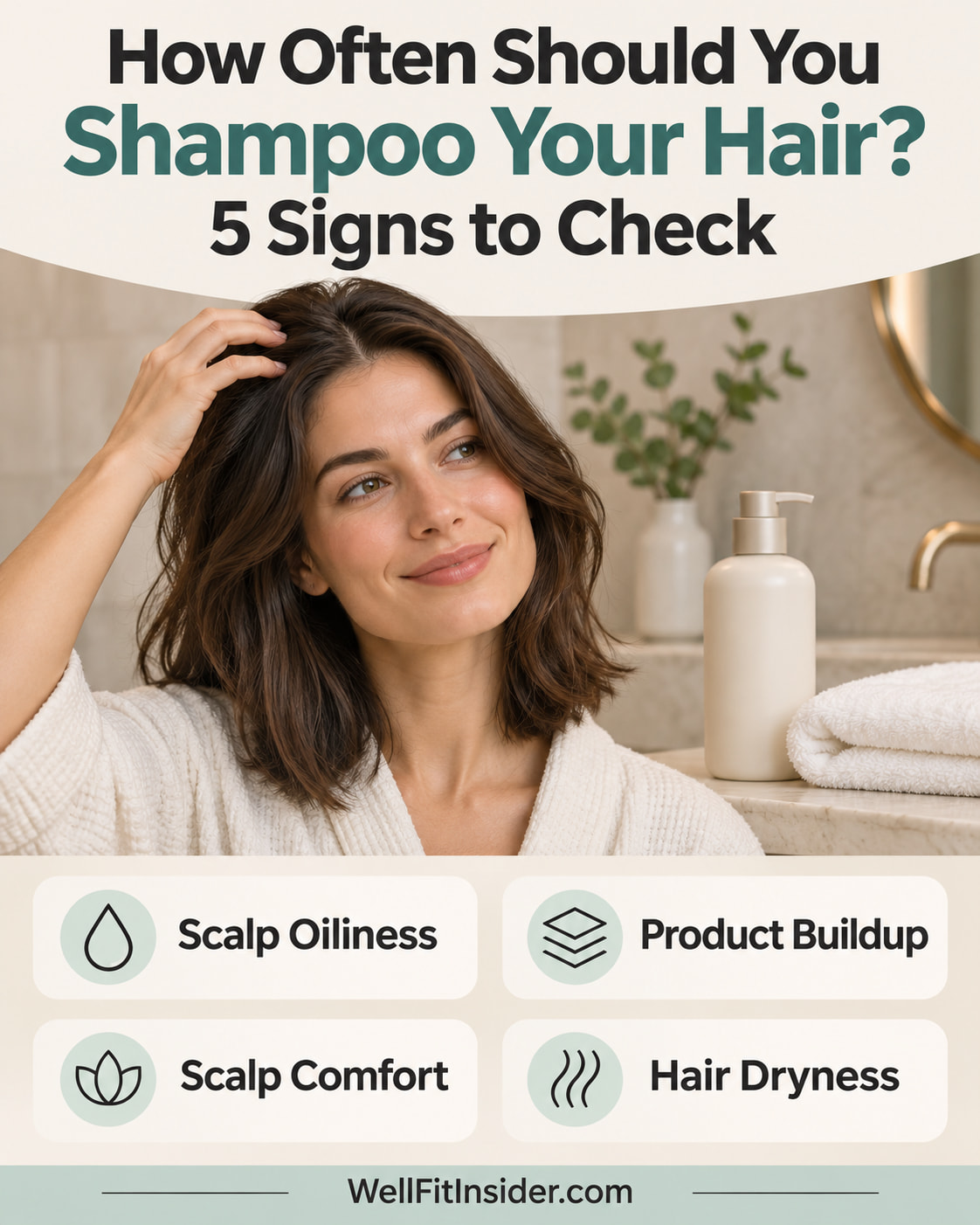
Shampoo when your scalp becomes oily or dirty: daily washing may suit fine, oily hair, while dry or tightly curled hair often needs less frequent cleansing. To decide how often you should shampoo your hair, consider your scalp, hair texture, products, and response to washing.
A useful routine keeps your scalp comfortable without repeatedly leaving your hair feeling parched. The five signs below can help you decide whether to wash sooner, use a gentler approach, or get persistent scalp symptoms checked.
How Often Should You Shampoo Your Hair Based on Hair Type?
The American Academy of Dermatology recommends basing washing frequency on how oily or dirty your hair becomes. Its guidance, updated in August 2024, allows for daily shampooing when straight hair and an oily scalp need it.
Use these suggestions as starting points:
| Hair or scalp situation | A practical starting point |
|---|---|
| Fine hair or roots that become oily quickly | Every one to two days may suit you; daily washing can be appropriate for an oily scalp. |
| Hair that stays comfortable with little oil or residue | Wash when needed instead of following a fixed number of days. |
| Dry, thick, curly, or coily hair | Less frequent washing may work better. Weekly or every other week suits some routines, with earlier washing when needed. |
| Dandruff or another scalp condition | Follow the shampoo label or your clinician’s instructions; your schedule may differ from general hair-care advice. |
For thick, curly hair, the AAD also advises washing at least once every two to three weeks. That does not mean everyone should wait that long. Oil, product residue, and scalp discomfort can make an earlier wash appropriate.
Your scalp’s cleansing needs and your hair’s conditioning needs may be different. Dry ends do not automatically mean you should leave oily roots unwashed.
5 Signs to Check When Deciding How Often to Shampoo Your Hair
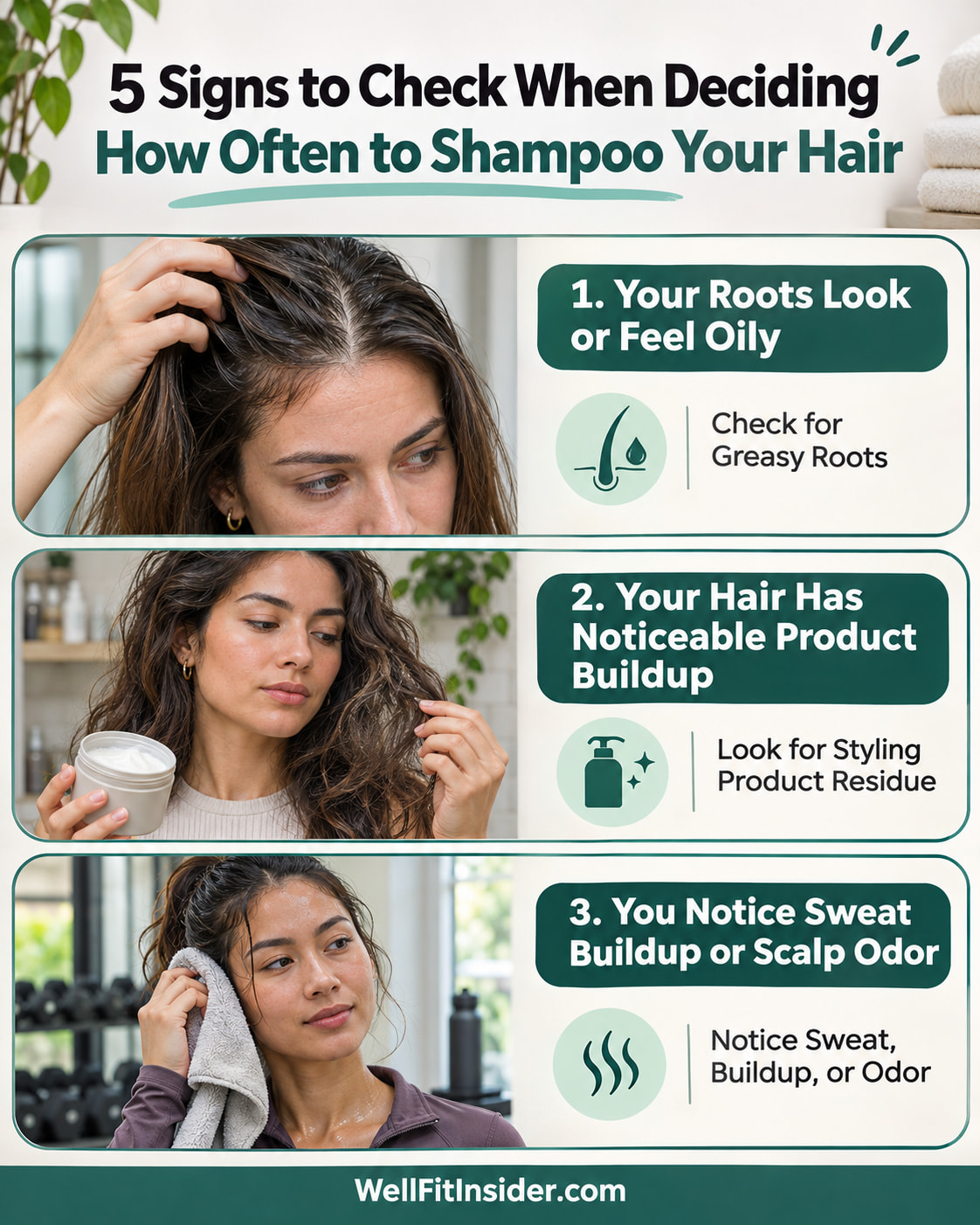
These observations can help you review your routine. They do not diagnose a scalp condition, and they do not all mean you need more shampoo.
1. Your Roots Look or Feel Oily
If your roots become noticeably greasy before your next planned wash, your schedule may be too spaced out for your scalp.
Check the roots rather than judging only the ends. Longer hair can feel dry at the tips even when oil has accumulated near the scalp.
Consider moving your next wash earlier and focusing the shampoo on your scalp. You do not need to follow someone else’s once-a-week routine if your roots consistently become oily much sooner.
2. Your Hair Has Noticeable Product Buildup
Gels, creams, oils, and other styling products can accumulate on your hair and scalp. Repeated dry-shampoo applications can also leave hair feeling stiff, gritty, or coated.
When residue becomes noticeable, consider both your washing schedule and how much product you use. Adding another layer may make it harder to tell whether your hair needs cleansing.
Shampoo and water remove residue that dry shampoo leaves behind. If buildup returns quickly, review the amount and number of products you apply between washes.
3. You Notice Sweat Buildup or Scalp Odor
Sweat can collect alongside oil, dead skin, and product residue. The CDC notes that this buildup can contribute to greasy hair and an unpleasant scalp odor.
If your scalp feels coated or develops an odor between washes, it is reasonable to reassess when you cleanse it.
However, a workout alone does not require shampooing. Cleveland Clinic’s dermatologist guidance explains that even daily exercise does not automatically mean you need daily hair washing. Consider the condition of your scalp afterward.
4. Your Scalp Is Itchy or Flaky
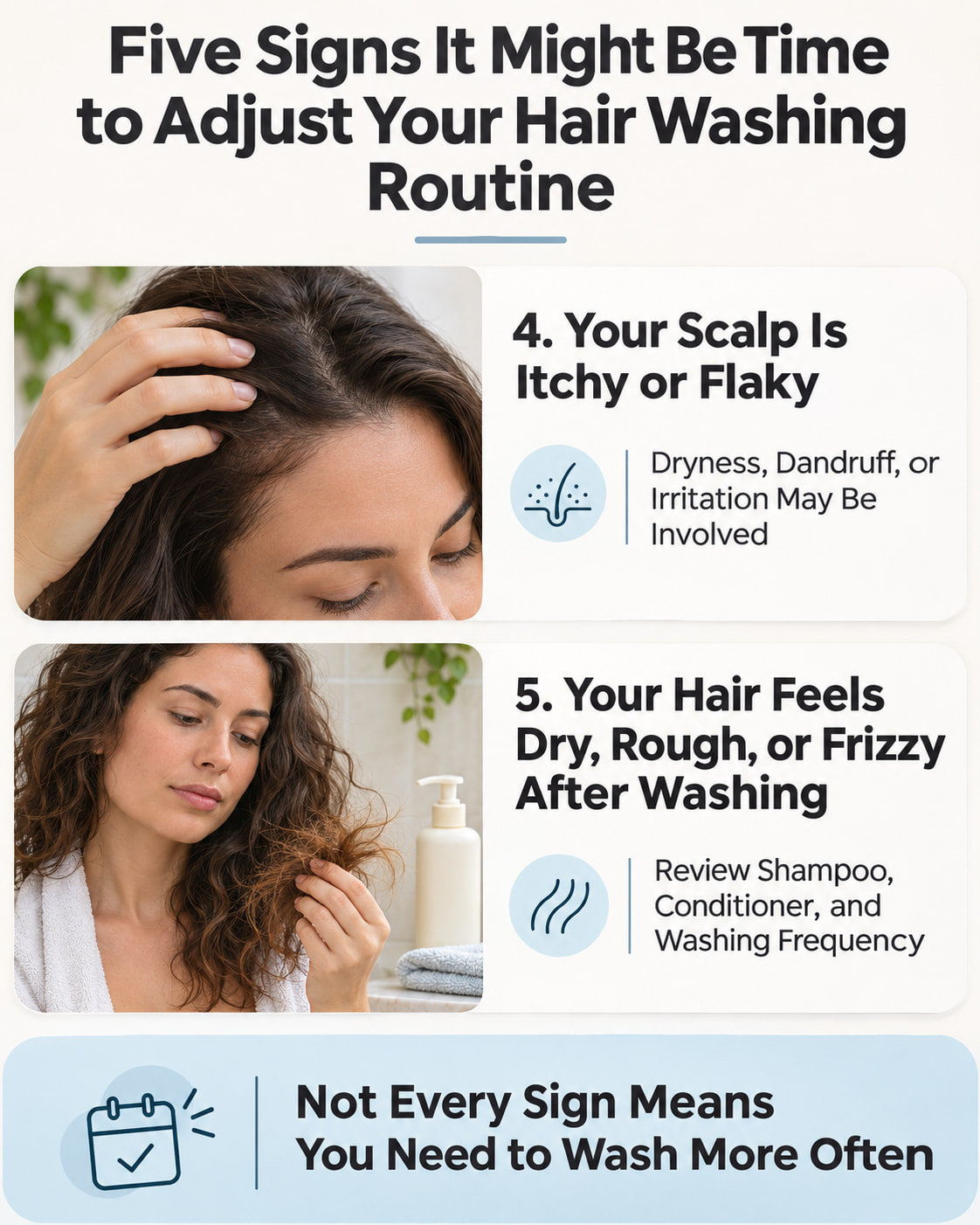
Itching and flakes need more thought than simply adding or skipping a wash.
Dandruff, dry skin, product irritation, and other scalp conditions can look similar. According to AAD scalp guidance, some hair-care products can dry or irritate the scalp, while dandruff may need a different approach.
Dandruff is not caused by poor hygiene, although flakes can become more noticeable when hair is washed infrequently.
If you use a dandruff shampoo, follow its directions, including any contact time before rinsing. Persistent symptoms deserve assessment instead of repeated changes to your washing schedule.
5. Your Hair Feels Dry, Rough, or Frizzy After Washing
Hair that regularly feels rough or difficult to manage after shampooing may need a gentler routine. The AAD notes that washing curly hair too often can leave it dry and frizzy.
Before deciding that you must wash less often, consider:
- Whether your shampoo suits your hair type.
- Whether you scrub shampoo through the full length of your hair.
- Whether you use conditioner after washing.
- Whether heat styling, coloring, or rough handling could also be contributing.
If your scalp stays comfortable but your hair feels overly dry, adjusting frequency may help. If your roots are oily and your ends are dry, focus on scalp cleansing and conditioning the lengths.
How to Adjust Your Shampoo Routine
Make One Small Change at a Time
As a practical experiment, change one part of your routine and notice the result over several washes.
For example, if you normally wash every third day but your roots become greasy on the second day, try washing a day earlier. If you shampoo daily despite little oil or residue and your hair feels dry, consider a gentler shampoo or a slightly longer interval.
Keeping other products consistent can make the effect easier to judge. Do not keep extending the interval if your scalp becomes uncomfortable.
Clean Your Scalp Gently
How you wash matters alongside how often you wash.
- Wet your hair and scalp thoroughly.
- Gently massage shampoo into the scalp.
- Rinse well, letting the lather pass through the lengths without aggressively rubbing them.
- Apply conditioner where your hair needs it.
- Gently absorb water with a towel rather than rubbing your hair dry.
For fine or straight hair, conditioner on the ends may be enough. Dry or curly hair may benefit from conditioning throughout its length.
Use Dry Shampoo Between Washes
Dry shampoo can make oily roots look fresher, but it does not replace cleansing with shampoo and water.
The AAD’s dry-shampoo guidance, updated in March 2024, recommends washing after one or two dry-shampoo uses. The dermatologists also acknowledge that there is no universal number that suits everyone.
Use only as much as needed and follow the label. If the product causes itching, burning, or irritation, stop using it.
Does Research Show an Ideal Shampoo Schedule?
Research does not establish one ideal schedule for every hair type.
A May 2026 study in Dermatology Research and Practice examined self-reported shampoo habits and hair concerns among 4,796 adults in Saudi Arabia. The researchers reported an association between more frequent washing and fewer reports of breakage and daily hair loss.
However, the study collected survey responses at one point in time. It could not prove that washing more often caused those differences or identify the best schedule for an individual.
Do not use those findings as a reason to shampoo more often to prevent hair loss. Your scalp’s condition, hair texture, and response to products remain more useful guides for everyday decisions.
When to See a Dermatologist About Scalp Symptoms
A change in shampoo frequency may not address an underlying scalp problem.
Seek medical advice if you have:
- Severe or persistent itching.
- A red, swollen, or painful scalp.
- Scaly patches with patchy hair loss.
- Flaky, itchy areas on your face or elsewhere on your body.
- Symptoms that continue despite appropriate product use.
NHS guidance advises getting medical advice if dandruff has not improved after about four weeks of anti-dandruff shampoo use. Do not wait for that period to pass if your scalp is painful, swollen, or very irritated.
Frequently Asked Questions
Is It Bad to Shampoo Your Hair Every Day?
Not necessarily. Daily shampooing can suit an oily scalp, particularly with fine or straight hair. If frequent washing leaves your hair dry or difficult to manage, review your products, technique, and schedule.
Is Washing Your Hair Once a Week Enough?
It can be enough for some thick, dry, curly, or coily hair. It may not suit a scalp that becomes greasy or develops noticeable residue much sooner. Let your scalp’s condition guide adjustments.
How Often Should You Shampoo Your Hair if It Is Curly?
There is no single schedule for all curls. Weekly or every-other-week washing works for some people, while others need cleansing sooner. Consider scalp oiliness, styling-product use, and how dry your hair becomes.
Should You Shampoo After Every Workout?
No. Exercise does not automatically require an extra shampoo. If your scalp remains comfortable without noticeable buildup or odor, your usual routine may be suitable. Adjust when the condition of your scalp changes.
Can You Shampoo Oily Roots When Your Ends Are Dry?
Yes. Apply shampoo mainly to your scalp and condition the lengths or ends. This lets you address oil at the roots without repeatedly scrubbing shampoo through the driest parts of your hair.
Does Washing More Often Prevent Hair Loss?
That has not been established for the general population. Shampoo-frequency research has limitations, and a washing schedule is not a solution for every cause of hair loss. New or patchy hair loss deserves professional assessment.
Conclusion
How often you should shampoo your hair depends on what your scalp and hair need. Check for oil, product residue, sweat or odor, itching or flakes, and dryness after washing.
Before your next wash, choose one small adjustment based on what you notice. Aim for a comfortable scalp and manageable hair, and get persistent symptoms checked rather than repeatedly changing your schedule.
This content is for informational purposes only and not medical advice.
References
- American Academy of Dermatology: Healthy hair tips.
- Cleveland Clinic: How often to wash your hair.
- American Academy of Dermatology: Curly hair care.
- American Academy of Dermatology: Black hair care.
- CDC: Hair and scalp hygiene.
- American Academy of Dermatology: Dry scalp and related conditions.
- American Academy of Dermatology: Dandruff guidance.