
The 80/20 diet is a flexible eating approach where you eat mostly nutrient-dense foods about 80% of the time and leave about 20% room for favorite foods. It is not about being perfect, banning dessert, or following strict food rules.
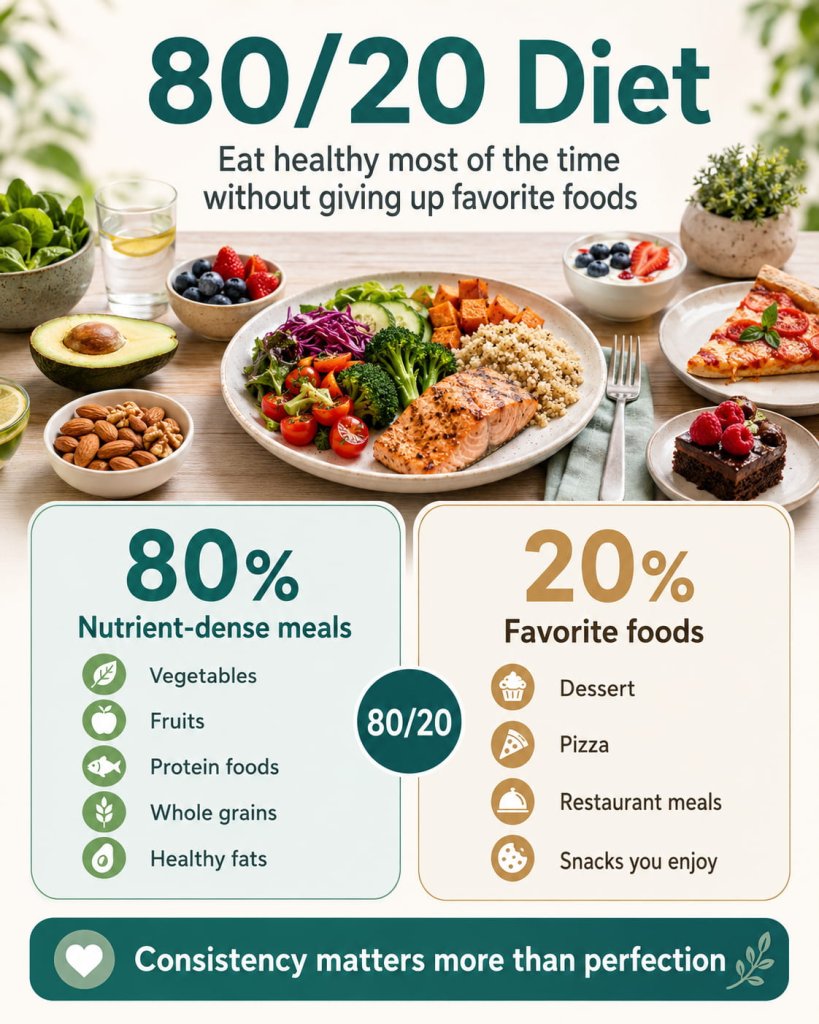
The 80/20 diet can help make healthy eating feel more realistic because it focuses on consistency instead of restriction. Most of your meals come from protein foods, vegetables, fruits, whole grains, healthy fats, and dairy or fortified alternatives, while the remaining portion allows flexibility for foods you enjoy.
What Is the 80/20 Diet?
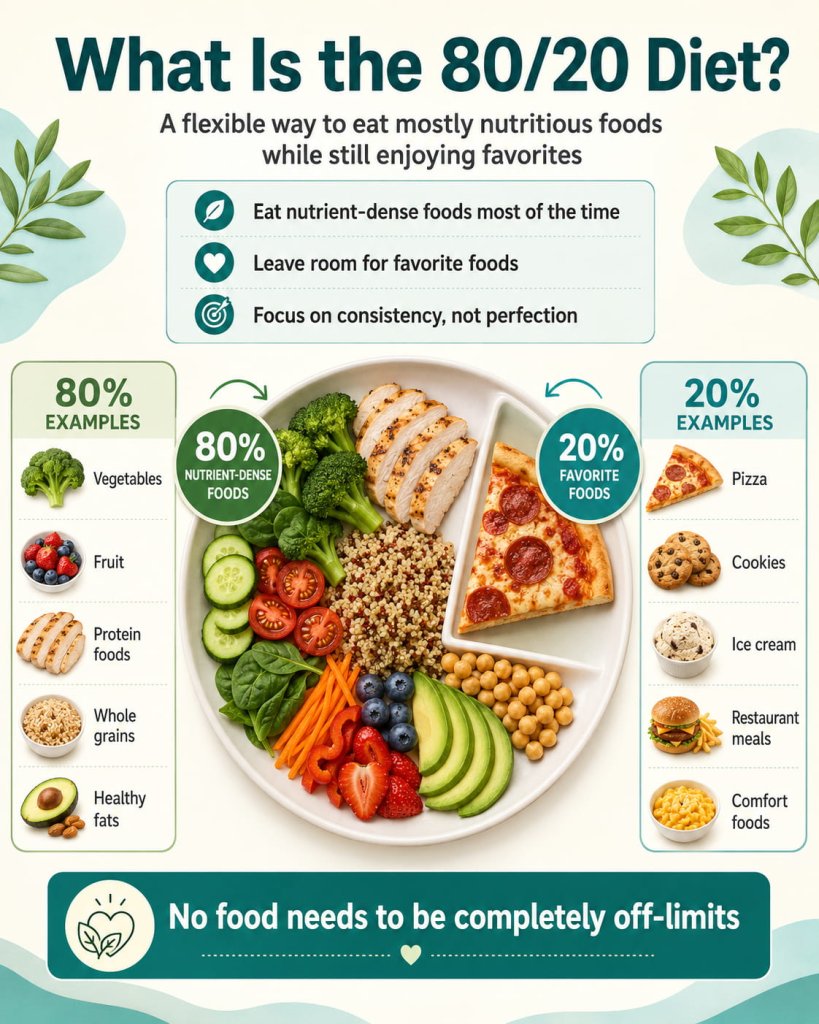
The 80/20 diet is a balanced eating style built around one simple idea:
Eat nutritious, health-supporting foods most of the time, but leave space for fun foods, social meals, and cravings in reasonable portions.
For example, the “80%” may include meals like grilled chicken with vegetables and rice, Greek yogurt with fruit, oatmeal with nuts, salmon with potatoes, or a bean-and-vegetable bowl.
The “20%” may include pizza, ice cream, cookies, fries, a restaurant meal, or another food you enjoy.
This approach fits well with current healthy eating guidance because the CDC emphasizes eating patterns built around vegetables, fruits, protein foods, whole grains, healthy fats, and dairy without added sugars, while keeping added sugars, sodium, saturated fats, trans fats, and cholesterol lower overall.
How the 80/20 Diet Works
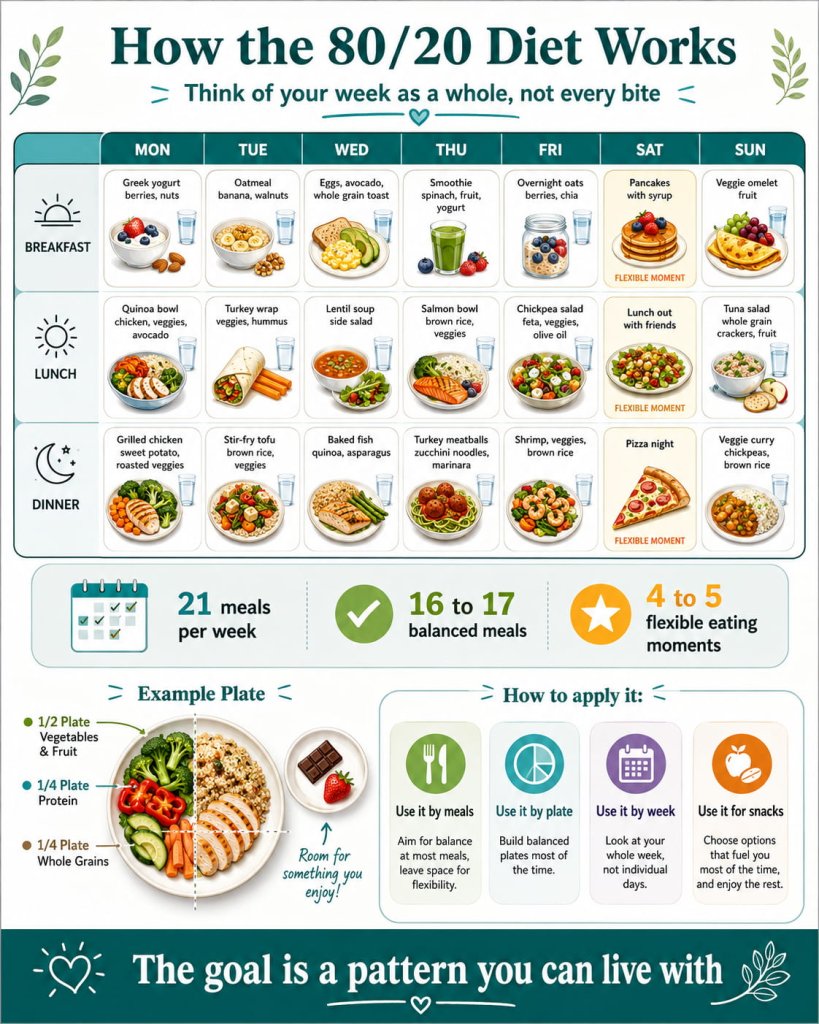
The 80/20 diet works best when you use it as a flexible pattern, not a strict math rule.
You do not need to calculate every bite. Instead, think of your week as a whole. If most of your meals are balanced and nutrient-dense, a few favorite foods can fit without ruining your progress.
Here are simple ways to apply it:
- If you eat 21 meals per week, about 16 to 17 meals can be more nutrient-focused.
- The remaining 4 to 5 eating moments can include more flexible choices.
- You can also use the 80/20 idea within a single plate, such as mostly whole foods with a small dessert afterward.
- You can apply it to snacks by choosing mostly fruit, yogurt, nuts, eggs, or whole-grain options, while still enjoying chips or sweets sometimes.
The point is not to “earn” treats. The point is to build a healthy eating pattern you can actually live with.
Does 80/20 Mean Calories, Meals, or Food Choices?
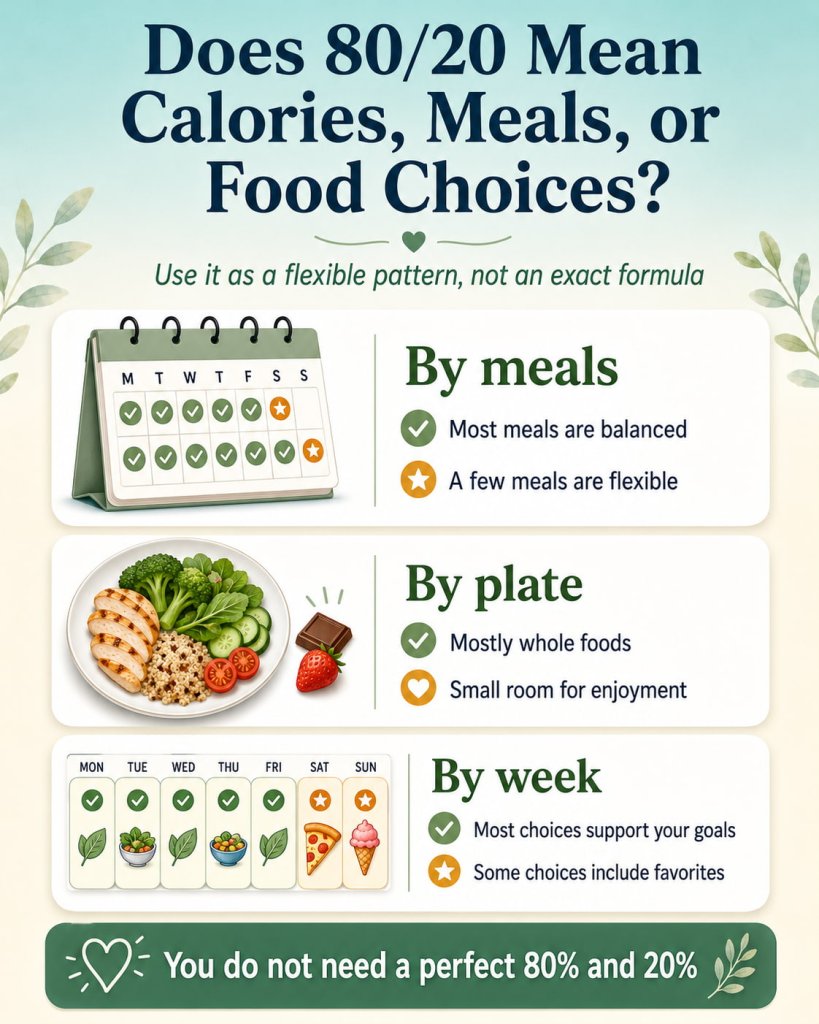
The 80/20 diet can be applied in different ways, but for most people, it works best as a flexible weekly pattern rather than an exact calorie formula.
You can use it by meals, snacks, or overall food choices:
- By meals: Most meals are balanced and nutrient-dense, with a few flexible meals each week.
- By plate: Most of your plate is built from whole foods, with a smaller portion of something you enjoy.
- By week: Most of your weekly eating pattern supports your health goals, while some meals include favorite foods.
You do not need to calculate a perfect 80% and 20%. The goal is to make healthy eating feel consistent, realistic, and less stressful.
What Counts as the 80 Percent?
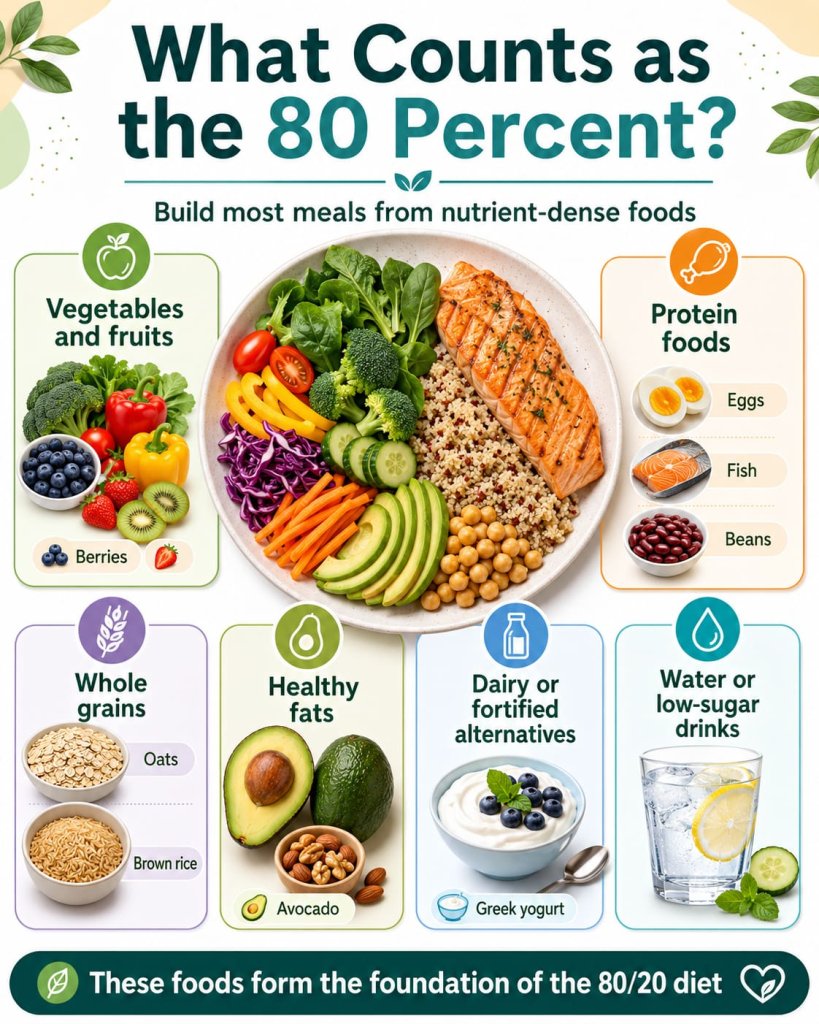
The 80% side of the 80/20 diet should be made up of foods that help you meet your nutrient needs and support daily energy, digestion, heart health, and overall wellness.
Good choices include:
- Vegetables, such as leafy greens, carrots, peppers, broccoli, tomatoes, and squash
- Fruits, such as berries, apples, oranges, bananas, mangoes, and melon
- Protein foods, such as eggs, fish, poultry, lean meat, tofu, beans, lentils, Greek yogurt, nuts, and seeds
- Whole grains, such as oats, brown rice, quinoa, whole-wheat bread, and whole-grain pasta
- Healthy fats, such as avocado, olive oil, nuts, seeds, and fatty fish
- Dairy or fortified alternatives, such as milk, yogurt, kefir, soy milk, or calcium-fortified options
- Water, unsweetened tea, or other low-sugar drinks
The Dietary Guidelines for Americans are the official U.S. federal nutrition guidance and emphasize healthy dietary patterns built around nutrient-dense foods and drinks.
What Counts as the 20 Percent?
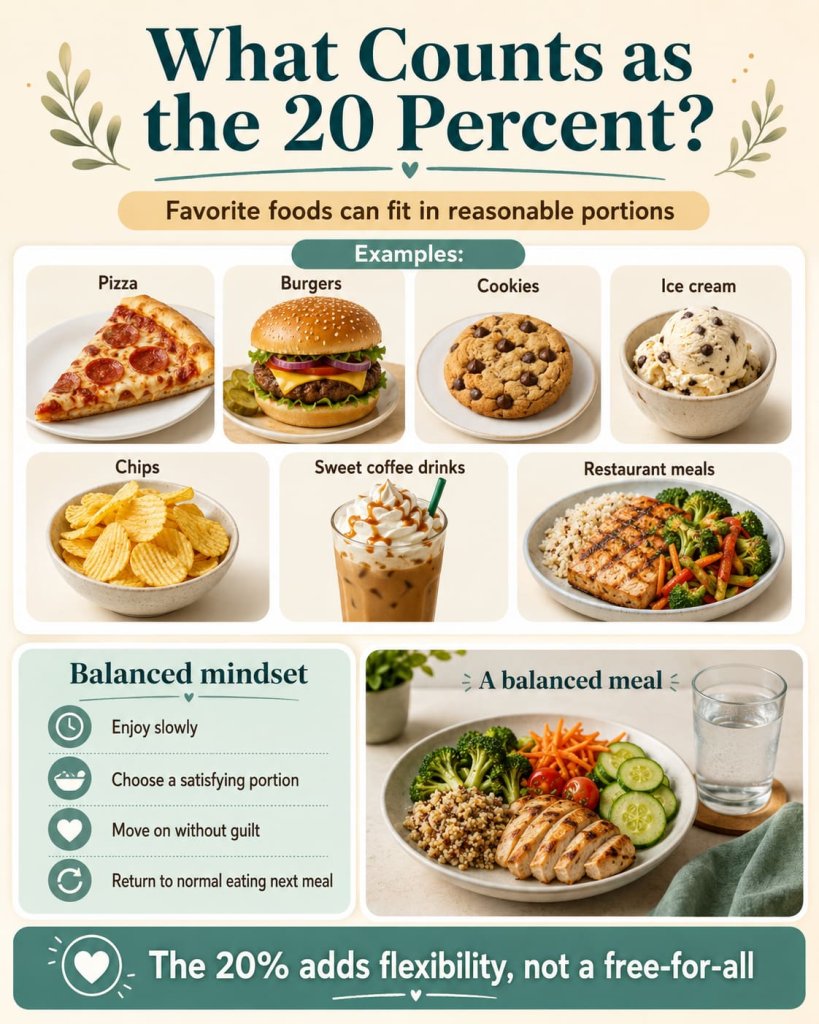
The 20% side is where flexibility comes in. These are foods you enjoy that may be higher in added sugar, saturated fat, sodium, or refined carbohydrates.
Examples include:
- Pizza
- Burgers
- Fries
- Cookies
- Cake
- Ice cream
- Candy
- Chips
- Sweet coffee drinks
- Restaurant meals
- Holiday foods
- Comfort foods
These foods are not “bad.” They simply should not make up most of your eating pattern.
A helpful mindset is this: enjoy them slowly, choose a portion that feels satisfying, and move on without guilt.
The 80/20 Diet Is Not a Cheat Day Plan
The 80/20 diet is often confused with cheat meals or cheat days, but they are not the same thing.
A cheat day can create an all-or-nothing mindset. It may make people feel like they are either “on plan” or “off plan.” That can lead to guilt, overeating, or restarting every Monday.
The 80/20 diet is more balanced. It says favorite foods can fit inside a healthy lifestyle without needing to be treated as a mistake.
Cleveland Clinic dietitians have also explained that “cheat day” language can encourage an unhealthy relationship with food, and a more balanced mindset may be better for long-term consistency.
Benefits of the 80/20 Diet
The biggest benefit of the 80/20 diet is that it feels realistic. Many people struggle with very strict diets because they remove too many foods, require too much tracking, or do not fit normal life.
The 80/20 diet may help you:
- Build consistency without perfection
- Eat more whole, nutrient-dense foods
- Reduce guilt around favorite foods
- Make room for social eating
- Avoid extreme restriction
- Support long-term healthy habits
- Learn portion awareness
- Improve food balance without banning entire food groups
Research indexed in PubMed has examined flexible and rigid dietary restraint, and flexible eating patterns may be easier for some people to maintain than highly rigid dieting.
Is the 80/20 Diet Good for Weight Loss?
The 80/20 diet may support weight loss for some people, but it does not guarantee weight loss.
Weight change depends on your overall calorie intake, activity level, sleep, medications, health conditions, stress, age, and consistency. You can follow the 80/20 diet and still eat more calories than your body uses, especially if the 20% portion becomes too large or too frequent.
The NIDDK explains that a healthy eating plan you can maintain over time is important for weight loss or weight maintenance, and physical activity can help the body use more calories and maintain weight loss.
For weight loss, the 80/20 diet works best when you also pay attention to:
- Portion sizes
- Protein at meals
- Fiber-rich foods
- Liquid calories
- Snack frequency
- Eating when you are actually hungry
- Regular physical activity
- Sleep and stress management
Do not use the 80/20 diet as a crash diet. It should feel steady, flexible, and sustainable.
Pair the 80/20 Diet With Healthy Lifestyle Habits
Food choices matter, but the 80/20 diet works best as part of a bigger health routine.
Helpful habits include:
- Regular walking, cycling, swimming, strength training, or another activity you enjoy
- Enough sleep
- Stress management
- Consistent meal timing
- Drinking enough water
- Limiting frequent sugary drinks
You do not need a perfect routine. Start with one habit you can repeat most days, then build from there.
How to Build an 80/20 Diet Plate
A simple 80/20 plate does not need to be complicated.
For most meals, try this structure:
- Fill half your plate with vegetables or fruit.
- Add a protein food.
- Add a whole grain or starchy carbohydrate.
- Add a small amount of healthy fat.
- Choose water or a low-sugar drink most of the time.
Example plates:
| Meal | 80/20 Diet Example |
|---|---|
| Breakfast | Oatmeal with berries, nuts, and Greek yogurt |
| Lunch | Chicken, rice, vegetables, avocado, and salsa |
| Dinner | Salmon, potatoes, salad, and olive oil dressing |
| Snack | Apple with peanut butter |
| Flexible choice | A cookie, slice of pizza, small dessert, or favorite snack |
This keeps the foundation nutritious while still leaving space for enjoyment.
Simple Portion Guide for the 80/20 Diet
You do not have to weigh every food to use the 80/20 diet. A simple portion guide can help you build balanced meals without making eating feel complicated.
For many meals, aim for:
- Protein: About one palm-sized portion
- Vegetables or fruit: About one to two fists
- Carbohydrates: About one cupped-hand portion
- Healthy fats: About one thumb-sized portion
These are general starting points, not strict rules. Your needs may be higher or lower depending on your age, body size, activity level, health goals, and medical needs.
How to Use the 20 Percent Without Overdoing It
The 20% part works best when it is intentional. It should feel enjoyable, not like a free-for-all.
Try these tips:
- Pick foods you truly enjoy instead of eating treats just because they are available.
- Eat slowly so the food feels satisfying.
- Avoid saving all your treats for one huge eating episode.
- Pair treats with balanced meals when possible.
- Keep portions realistic.
- Do not skip meals to “make room” for treats.
- Return to normal eating at the next meal.
For example, having pizza with a side salad is more balanced than eating pizza while skipping vegetables all day. Having dessert after a protein-rich dinner may feel more satisfying than eating sweets when you are overly hungry.
Use Hunger and Fullness Cues
The 80/20 diet works better when you pay attention to how your body feels, not just what is on your plate.
Before eating, ask yourself:
- Am I physically hungry, bored, stressed, or just eating because food is nearby?
- Would a balanced meal feel better than a snack right now?
- Am I eating fast, distracted, or past the point of comfort?
During meals, slow down when possible. Try to stop when you feel comfortably satisfied, not overly full. This can make the 20% more enjoyable and help the 80% feel less restrictive.
80/20 Diet Example Day
Here is a simple example of what an 80/20 diet day could look like.
| Time | Meal |
|---|---|
| Breakfast | Scrambled eggs, whole-grain toast, fruit, and water |
| Snack | Greek yogurt with berries |
| Lunch | Turkey or tofu wrap with vegetables and a side of fruit |
| Snack | Nuts or hummus with carrots |
| Dinner | Chicken, beans, or fish with rice and vegetables |
| Flexible food | A small bowl of ice cream or a few cookies |
This is only an example. Your meals can change based on your culture, budget, schedule, preferences, and health needs.
Common Mistakes to Avoid
The 80/20 diet is simple, but a few mistakes can make it less helpful.
Turning the 20 Percent Into a Binge
The 20% is not meant to be an entire day of overeating. It is planned flexibility. Favorite foods can fit, but portions still matter.
Eating Too Little During the 80 Percent
The 80% should be nourishing, not punishing. If your meals are too small or too low in carbohydrates, protein, or fat, cravings may feel stronger later.
Labeling Foods as Good or Bad
Food guilt can make eating feel stressful. A better approach is to think in terms of “more often” and “less often” foods.
Ignoring Protein and Fiber
Protein and fiber can help meals feel more filling. Include foods like eggs, yogurt, fish, poultry, tofu, beans, lentils, vegetables, fruits, oats, and whole grains.
Drinking Too Many Calories
Sweet coffee drinks, soda, juice drinks, and alcohol can add extra calories quickly. The American Heart Association recommends choosing foods with less sodium, added sugars, and saturated fat.
Label Reading Tips for the 80/20 Diet
Nutrition labels can help you make smarter choices without obsessing over every number.
The FDA lists Daily Values on the Nutrition Facts label, including 2,300 mg sodium, 20 g saturated fat, 28 g fiber, and 50 g added sugars based on a 2,000-calorie daily diet.
Use labels to compare foods and look for options that are:
- Higher in fiber
- Lower in added sugars
- Lower in sodium
- Lower in saturated fat
- Made with more recognizable whole-food ingredients
You do not need to choose the “perfect” product every time. Just aim for better choices most of the time.
Who Should Be Careful With the 80/20 Diet?
The 80/20 diet is flexible, but it is not right for everyone in the same way.
Talk with a registered dietitian, doctor, or qualified healthcare professional if you:
- Have diabetes or blood sugar concerns
- Have kidney disease
- Have heart disease or high blood pressure
- Are pregnant or breastfeeding
- Have food allergies or celiac disease
- Have a history of an eating disorder or disordered eating
- Are following a medically prescribed diet
- Need nutrition support for a child or teen
- Are taking medications affected by food intake
For teens, the focus should be on balanced meals, regular eating, enough energy, and supportive guidance from a trusted adult or clinician. Strict dieting, skipping meals, or trying to shrink the body quickly can be harmful.
When the 80/20 Diet May Not Work Well
The 80/20 diet may not be the best fit if it turns into another strict rule or makes you feel anxious about food.
It may also be less helpful if:
- You feel guilty whenever you eat foods from the 20% side
- You use the 20% as permission to overeat until uncomfortable
- You skip meals to “save up” for treats
- You struggle to return to normal eating after flexible meals
- You feel the need to track every bite perfectly
In those cases, a less numbers-based approach may be better. Working with a registered dietitian can also help, especially if food rules, guilt, or binge-restrict cycles are a concern.
80/20 Diet for Busy People
The 80/20 diet can work well for busy schedules because it does not require perfect cooking.
Try keeping simple staples ready:
- Eggs
- Greek yogurt
- Fruit
- Pre-washed salad greens
- Frozen vegetables
- Canned beans
- Canned tuna or salmon
- Rotisserie chicken
- Tofu
- Oats
- Rice cups
- Whole-grain bread or wraps
- Nuts and seeds
Fast meal ideas:
- Greek yogurt, fruit, and granola
- Eggs with toast and fruit
- Tuna or chickpea salad wrap
- Rice bowl with beans, vegetables, and avocado
- Rotisserie chicken with salad and potatoes
- Smoothie with yogurt, fruit, and peanut butter
- Soup with whole-grain bread
This makes the 80% easier to follow, even when life is busy.
Make the 80/20 Diet Fit Your Culture and Budget
The 80/20 diet does not require expensive “clean eating” foods. It can work with many traditional meals, family recipes, and budget-friendly staples.
Affordable 80% foods can include:
- Rice, oats, potatoes, or whole-grain bread
- Beans, lentils, eggs, canned fish, tofu, or chicken
- Frozen vegetables
- Seasonal fruits
- Plain yogurt or fortified milk alternatives
- Nuts, seeds, or peanut butter in small portions
You can also adjust familiar meals instead of replacing them completely. For example, add vegetables to rice dishes, include a protein source with noodles, choose grilled or baked options more often, or enjoy dessert in a smaller portion after a balanced meal.
Frequently Asked Questions
Can you eat junk food on the 80/20 diet?
Yes, but it should fit into the 20% portion. The goal is to enjoy favorite foods in reasonable amounts while keeping most of your meals nutrient-dense.
Do you have to track calories on the 80/20 diet?
Not always. Some people do well with simple meal structure and portion awareness. Others may need more guidance, especially for weight loss, athletic goals, or medical needs.
Is the 80/20 diet good for beginners?
Yes, it can be beginner-friendly because it does not require banning foods or following complicated rules. Start by improving one meal at a time.
What foods should I eat most often?
Eat protein foods, vegetables, fruits, whole grains, healthy fats, and dairy or fortified alternatives most often. These foods help form the 80% foundation.
Can the 80/20 diet help stop cravings?
It may help some people feel less restricted because favorite foods are allowed. However, cravings can also be affected by sleep, stress, meal timing, under-eating, and habits.
Is the 80/20 diet healthy?
It can be healthy when the 80% is built around nutrient-dense foods and the 20% is enjoyed in reasonable portions. It may not be enough for people who need a specific medical nutrition plan.
Conclusion
The 80/20 diet is a realistic way to eat healthy without giving up favorite foods. Instead of chasing perfection, it helps you build a strong foundation of nutritious meals while still leaving room for pizza, dessert, restaurant meals, and social occasions.
Start small. Build balanced meals most of the time, enjoy your favorite foods without guilt, and focus on consistency over strict rules.
References
- CDC — Tips for Healthy Eating for a Healthy Weight
- Dietary Guidelines for Americans — Current Dietary Guidelines
- Cleveland Clinic — Why You Should Ditch the Term Cheat Day
- FDA — How to Understand and Use the Nutrition Facts Label
- American Heart Association — Diet and Lifestyle Recommendations
- NIDDK — Eating and Physical Activity to Lose or Maintain Weight
- PubMed — Validation of the Flexible and Rigid Control Dimensions of Dietary Restraint
- PubMed — Rigid vs. Flexible Dieting and Eating Disorder Symptoms