
The best high-protein nuts include peanuts, almonds, pistachios, cashews, walnuts, hazelnuts, Brazil nuts, pine nuts, pili nuts, pecans, macadamia nuts, and chestnuts. When ranked by protein per 1-ounce serving, peanuts, almonds, pistachios, and cashews usually come out on top.
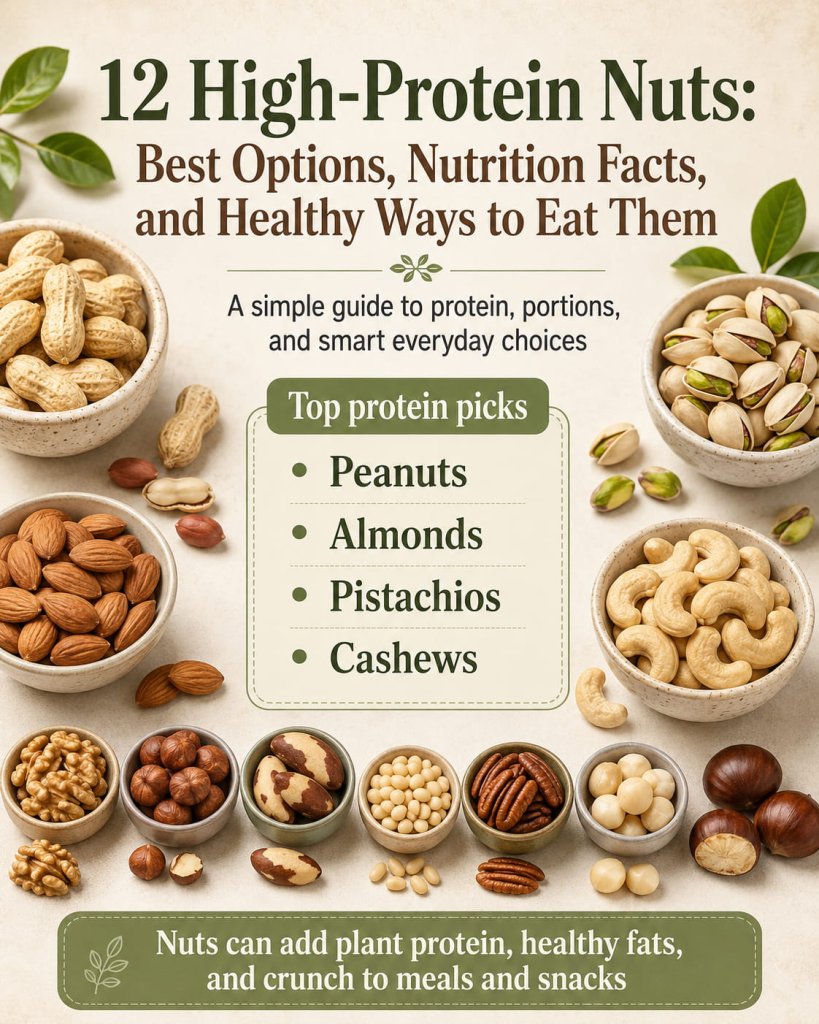
Nuts are useful because they provide plant-based protein along with healthy fats, fiber, vitamins, minerals, and antioxidants. They are also easy to add to snacks, oatmeal, yogurt, salads, smoothies, trail mix, and homemade energy bites.
The key is portion size. Nuts are nutrient-dense, but they are also calorie-dense. A small handful, or about 1 ounce, is the standard serving size used by many nutrition resources.
12 High-Protein Nuts Ranked by Protein
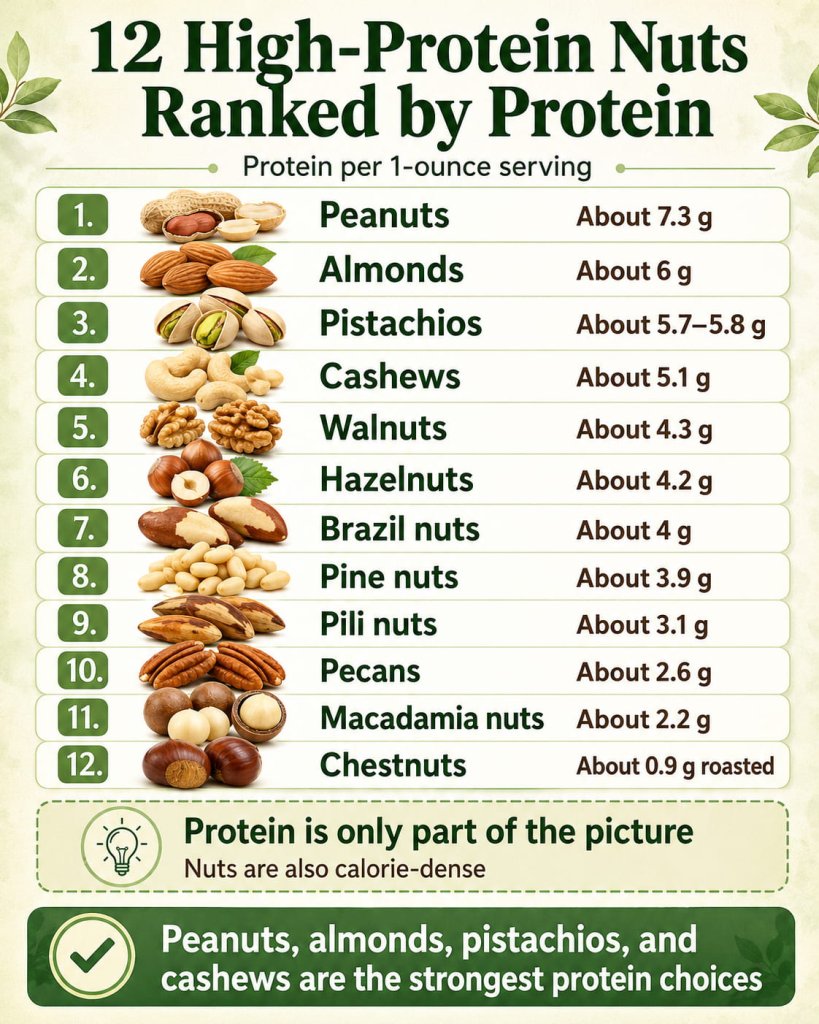
The protein numbers below are approximate and based on a 1-ounce serving. Values can vary slightly by brand, variety, roasting method, and whether the nuts are raw, roasted, salted, or flavored. For the most accurate nutrition comparison, use plain nuts and check the label.
According to USDA FoodData Central, nutrient values can vary by food type, processing method, and data source, so these numbers should be used as practical averages rather than exact values for every product.
| Rank | Nut or nut-like food | Protein per 1 oz | Best use |
|---|---|---|---|
| 1 | Peanuts | About 7.3 g | Snacks, peanut butter, trail mix |
| 2 | Almonds | About 6 g | Snacks, oatmeal, yogurt, salads |
| 3 | Pistachios | About 5.7–5.8 g | Snacks, toppings, homemade mixes |
| 4 | Cashews | About 5.1 g | Stir-fries, sauces, snacks |
| 5 | Walnuts | About 4.3 g | Oatmeal, salads, baking |
| 6 | Hazelnuts | About 4.2 g | Yogurt, baking, snack mixes |
| 7 | Brazil nuts | About 4 g | Small portions, mixed nuts |
| 8 | Pine nuts | About 3.9 g | Pesto, salads, grain bowls |
| 9 | Pili nuts | About 3.1 g | Low-carb snacks, mixed nuts |
| 10 | Pecans | About 2.6 g | Oatmeal, salads, baking |
| 11 | Macadamia nuts | About 2.2 g | Snacks, baking, chopped toppings |
| 12 | Chestnuts | About 0.9 g roasted | Seasonal dishes, soups, stuffing |
Protein is only one part of the comparison. Nuts are also calorie-dense, so the “best” high-protein nut is not always the one with the highest protein number alone. Peanuts, almonds, pistachios, and cashews give the strongest protein return for a typical 1-ounce serving, while pecans, macadamias, and pine nuts are better viewed as healthy-fat foods that add some protein on the side.
For weight management, muscle-building snacks, or higher-protein meal planning, pair nuts with another protein-rich food instead of relying on nuts alone. Greek yogurt with almonds, oatmeal with peanut butter, or a salad with pistachios and grilled chicken will usually be more filling than nuts by themselves.
Peanuts rank highest, but they are technically legumes, not tree nuts. Many people still group them with nuts because they are eaten in similar ways and have a similar nutrition role.
What Counts as a High-Protein Nut?
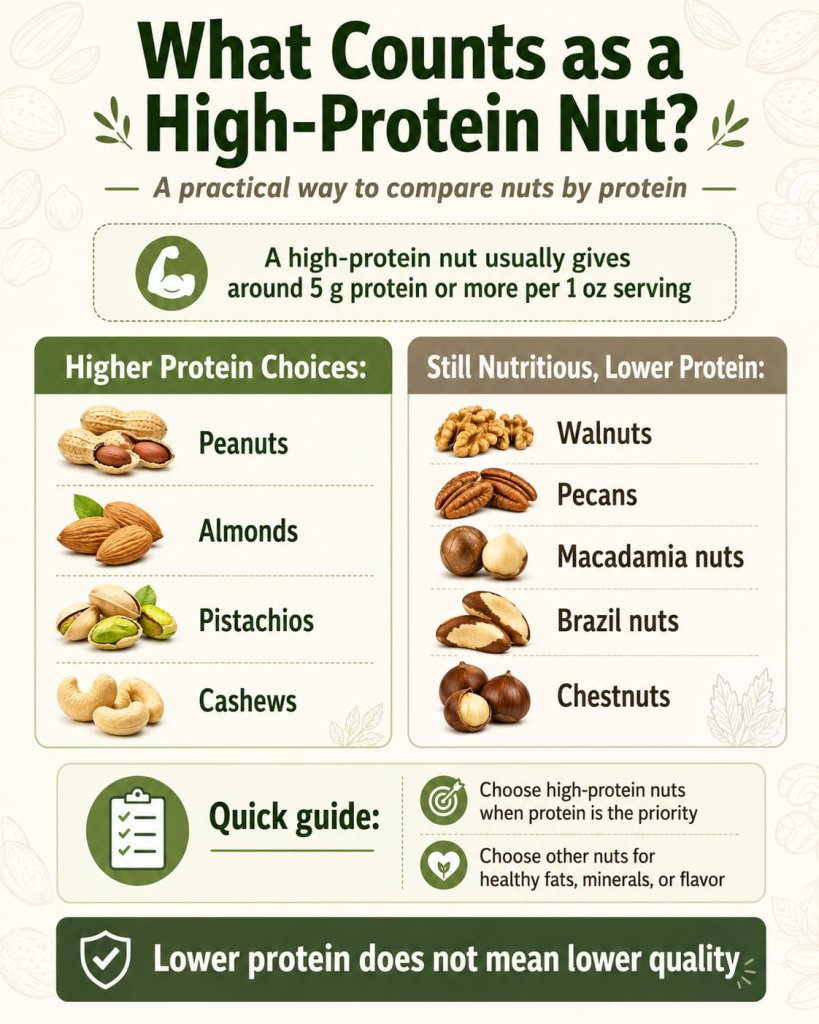
A high-protein nut is usually one that gives you around 5 grams of protein or more per 1-ounce serving. By that standard, peanuts, almonds, pistachios, and cashews are the strongest choices on this list.
That does not mean lower-protein nuts are unhealthy. Walnuts, pecans, macadamia nuts, Brazil nuts, and chestnuts still provide useful nutrients. They simply are not the most protein-dense choices.
For a practical approach:
- Choose peanuts, almonds, pistachios, or cashews when protein is the priority.
- Choose walnuts when you want more plant-based omega-3 ALA.
- Choose Brazil nuts in very small portions for selenium.
- Choose pecans or macadamias for flavor and healthy fats, not maximum protein.
- Choose chestnuts when you want a lower-fat, starchier nut option.
Best High-Protein Nuts to Eat More Often
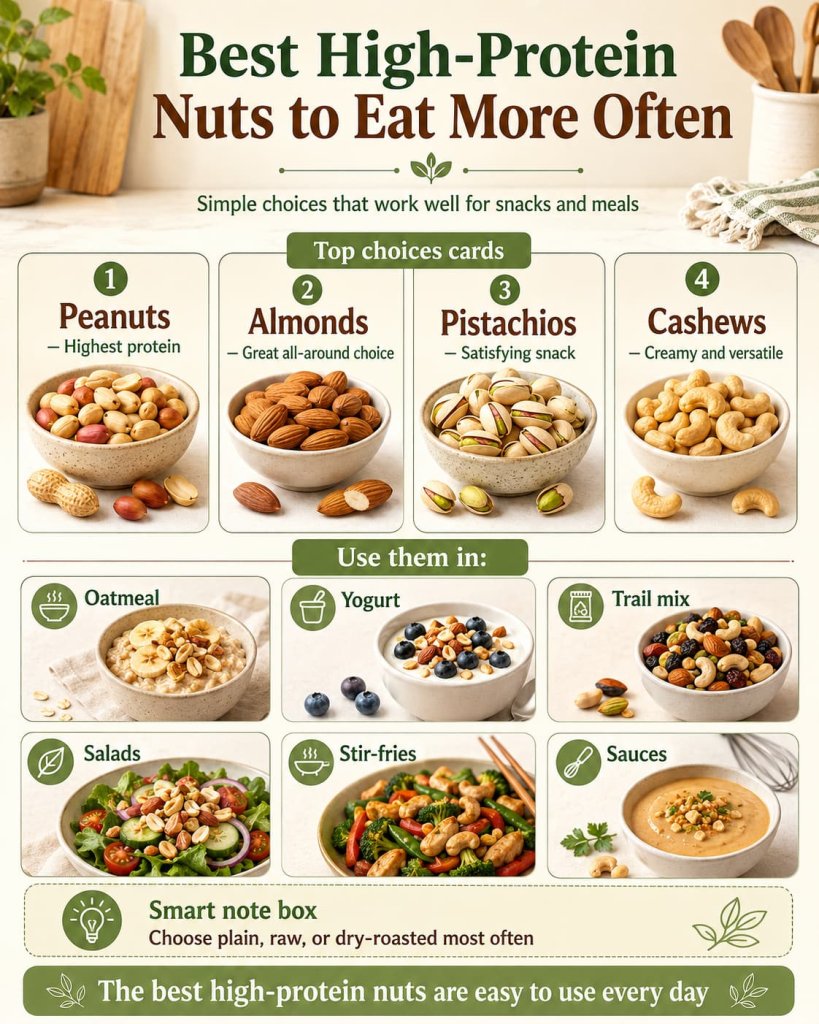
1. Peanuts
Peanuts provide about 7.3 grams of protein per ounce, making them one of the highest-protein options in the nut aisle.
They are budget-friendly, easy to find, and versatile. You can eat them roasted, add them to trail mix, or use natural peanut butter on whole-grain toast, apple slices, or oatmeal.
The main thing to watch is added salt, sugar, and oils. Choose plain roasted peanuts or peanut butter with a simple ingredient list when possible.
2. Almonds
Almonds provide about 6 grams of protein per ounce. They are one of the best all-around nuts because they also contain fiber, vitamin E, magnesium, and unsaturated fats.
They work well as a snack, but they are also easy to add to meals. Try sliced almonds on oatmeal, chopped almonds in yogurt, or almond butter spread on whole-grain toast.
Almonds are filling, but portion size still matters. A small handful is usually enough for one serving.
3. Pistachios
Pistachios provide about 5.7 to 5.8 grams of protein per ounce. They are a strong choice if you want a snack that feels satisfying without needing a large portion.
In-shell pistachios can also help slow down snacking because you have to open each shell. That can make it easier to notice how much you are eating.
Choose unsalted or lightly salted pistachios more often, especially if you are watching sodium intake.
4. Cashews
Cashews provide about 5.1 grams of protein per ounce. They have a creamy texture and mild flavor, which makes them useful in both sweet and savory meals.
You can add cashews to stir-fries, grain bowls, curries, and homemade sauces. Blended cashews can also make creamy dairy-free sauces, although they still contain calories and fat like other nuts.
For everyday use, plain roasted or raw cashews are better than heavily salted or sugar-coated versions.
5. Walnuts
Walnuts provide about 4.3 grams of protein per ounce. They are not the highest-protein nut, but they stand out because they contain alpha-linolenic acid, also called ALA, a plant-based omega-3 fat.
The American Heart Association notes that nuts provide protein, fats, fiber, vitamins, minerals, and antioxidants, and recommends keeping portions moderate because a serving is about 1 ounce of whole nuts.
Walnuts work well in oatmeal, salads, yogurt bowls, baked goods, and homemade trail mix.
6. Hazelnuts
Hazelnuts provide about 4.2 grams of protein per ounce. They also contain healthy fats, fiber, and vitamin E.
They have a naturally rich flavor, so a small amount can add texture and taste to meals. Use chopped hazelnuts in oatmeal, yogurt, fruit bowls, or roasted vegetable dishes.
Be careful with chocolate-hazelnut spreads. Many are high in added sugar and do not provide the same nutrition profile as plain hazelnuts.
7. Brazil Nuts
Brazil nuts provide about 4 grams of protein per ounce, but their biggest nutrition feature is selenium.
This is one nut where more is not always better. The NIH Office of Dietary Supplements states that the adult recommended dietary allowance for selenium is 55 micrograms per day, while the adult tolerable upper intake level is 400 micrograms per day. Brazil nuts can be extremely high in selenium, so eating too many regularly can push intake too high.
A practical serving is often just 1 to 2 Brazil nuts, not a full handful every day.
8. Pine Nuts
Pine nuts provide about 3.9 grams of protein per ounce. They are commonly used in pesto, salads, pasta dishes, and Mediterranean-style meals.
They are small but calorie-dense, so a tablespoon or two can be enough when using them as a topping.
Pine nuts are not usually eaten in large handfuls like almonds or pistachios, but they can still add protein, texture, and healthy fats to meals.
9. Pili Nuts
Pili nuts provide about 3.1 grams of protein per ounce. They are rich, buttery, and higher in fat than many other nuts.
They are popular in some low-carb eating patterns, but they are not the best choice if your main goal is getting the most protein per calorie. Their strength is flavor and texture, not maximum protein density.
Use them in small portions as part of a mixed nut snack or chopped topping.
10. Pecans
Pecans provide about 2.6 grams of protein per ounce. They are lower in protein than almonds, pistachios, cashews, and peanuts, but they still contain healthy fats and useful minerals.
Pecans are often used in sweet recipes, but plain pecans can also work in salads, oatmeal, roasted vegetables, and homemade snack mixes.
For a healthier choice, choose plain pecans more often than candied pecans or dessert-style pecan mixes.
11. Macadamia Nuts
Macadamia nuts provide about 2.2 grams of protein per ounce. They are one of the lower-protein nuts on this list, but they are rich in monounsaturated fats.
Because macadamias are calorie-dense and easy to overeat, small portions work best. Try them chopped over yogurt, mixed into homemade granola, or paired with fruit.
They are best viewed as a healthy-fat nut rather than a high-protein nut.
12. Chestnuts
Chestnuts provide much less protein than most other nuts, with about 0.9 grams of protein per ounce when roasted.
They are different because they are lower in fat and higher in carbohydrates than most nuts. Their texture is softer and starchier, which makes them useful in seasonal dishes, soups, stuffing, and roasted snacks.
Chestnuts belong on the list for completeness, but they should not be your first choice if your goal is higher protein.
How Much Protein Do Nuts Really Add?
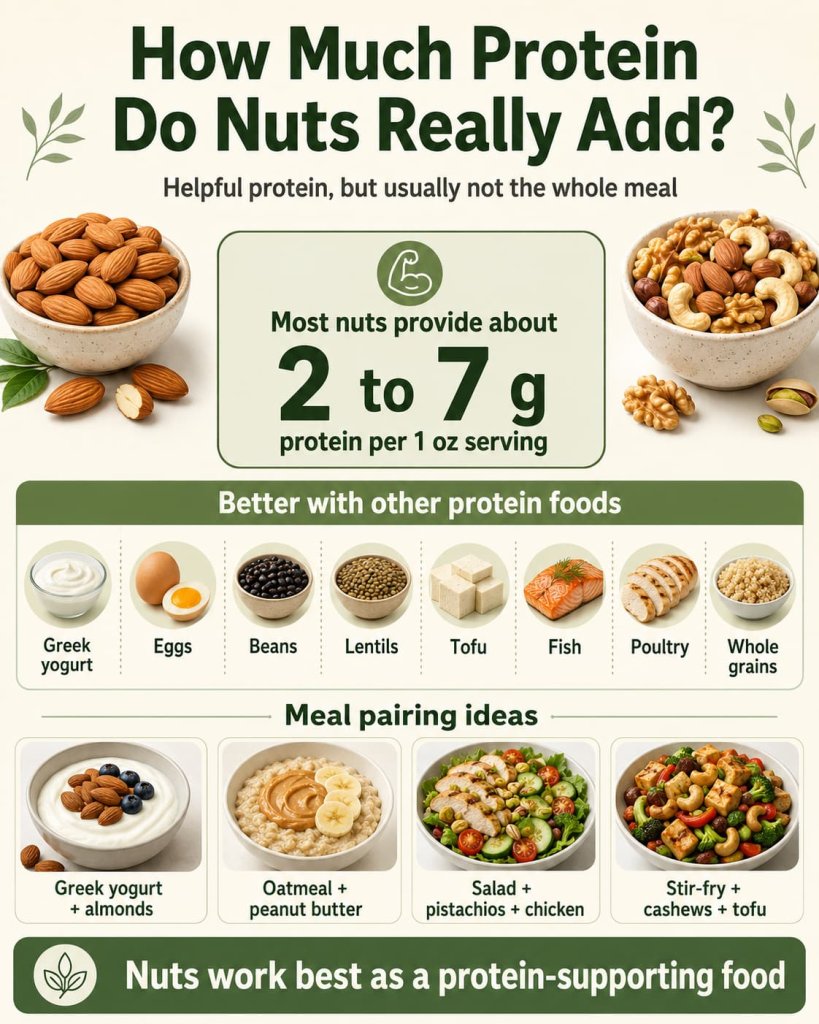
Nuts can help increase daily protein intake, but they should not be your only protein source.
A 1-ounce serving usually provides about 2 to 7 grams of protein depending on the nut. That is helpful, but it is usually less than what you would get from larger servings of Greek yogurt, eggs, fish, poultry, beans, lentils, tofu, or lean meats.
Nuts work best as a protein-supporting food, not the main protein source for every meal.
For example:
- Add almonds to Greek yogurt for more protein, fiber, and crunch.
- Add peanuts to oatmeal for a more filling breakfast.
- Add pistachios to a snack plate with fruit and cheese.
- Add cashews to tofu or chicken stir-fry.
- Add walnuts to a salad with beans or grilled fish.
This gives you a better mix of protein, fiber, fats, and micronutrients.
How to Eat High-Protein Nuts in a Healthy Way
Nuts can be part of a healthy eating pattern when you choose the right type and keep portions realistic.
The Mayo Clinic recommends choosing raw or dry-roasted nuts instead of nuts cooked in oil and notes that one serving is a small handful, or 1 ounce, of whole nuts.
Here are simple ways to use nuts well:
- Choose plain, raw, or dry-roasted nuts most often.
- Pick unsalted or lightly salted options when possible.
- Avoid candy-coated nuts for everyday snacking.
- Watch added sugar in flavored nut mixes and nut butters.
- Pair nuts with fruit, yogurt, oats, or whole grains for a balanced snack.
- Use chopped nuts as a topping instead of eating straight from a large bag.
- Measure a small handful if you tend to overeat them.
Nut butters can count too, but the serving size is different. A common serving is about 2 tablespoons, and it is easy to use more than that without noticing. Choose peanut butter, almond butter, or cashew butter with simple ingredients, and check the label for added sugar, hydrogenated oils, and excess sodium.
Store nuts properly to keep them fresh. Because nuts contain natural fats, they can develop stale or bitter flavors over time, especially in heat, light, or humidity. Keep them in a sealed container, and store larger bags in the refrigerator or freezer if you will not finish them quickly.
Easy Ways to Add High-Protein Nuts to Meals
You do not need complicated recipes to get more nuts into your diet. Small additions can make meals more satisfying.
Try these simple ideas:
- Stir peanut butter into oatmeal.
- Add chopped almonds to Greek yogurt.
- Sprinkle pistachios over a smoothie bowl.
- Toss cashews into a vegetable stir-fry.
- Add walnuts to a chicken, tuna, or bean salad.
- Use pine nuts in pesto or grain bowls.
- Add hazelnuts to fruit and yogurt.
- Mix peanuts, almonds, and pistachios for a higher-protein trail mix.
For a balanced snack, pair nuts with another food that adds fiber or protein, such as fruit, whole-grain crackers, yogurt, cottage cheese, or roasted chickpeas.
Best High-Protein Nuts by Goal
Different nuts work better for different needs. Here is a simple way to choose:
| Goal | Best options | Why they fit |
|---|---|---|
| Highest protein | Peanuts, almonds, pistachios, cashews | They provide the most protein per 1-ounce serving |
| Heart-healthy snack | Walnuts, almonds, pistachios | They provide unsaturated fats and useful nutrients |
| Lower-sodium snack | Unsalted almonds, walnuts, pistachios, cashews | They help limit added sodium |
| Topping for meals | Almonds, walnuts, pine nuts, pistachios | They add crunch, flavor, and nutrients without needing a large portion |
| Small-portion mineral boost | Brazil nuts | They are rich in selenium, so only a small amount is needed |
| Lower-protein but flavorful option | Pecans, macadamias, chestnuts | They are useful for taste and texture, but not the top protein choices |
Who Should Be Careful With Nuts?
Nuts are healthy for many people, but they are not safe or ideal for everyone.
The FDA lists peanuts and tree nuts among the major food allergens in the United States. Food labels must identify major allergen sources, including the specific type of tree nut, such as almonds, walnuts, or pecans.
Be careful with nuts if you:
- Have a peanut or tree nut allergy.
- Have been told to avoid nuts by a healthcare professional.
- Need to limit sodium and usually buy salted nuts.
- Have trouble controlling portions with calorie-dense snacks.
- Are giving nuts to young children, since whole nuts can be a choking risk.
- Eat Brazil nuts often, because selenium can become too high.
People with allergies should avoid their trigger foods completely and read labels carefully. Cross-contact can also happen in factories, bakeries, bulk bins, and mixed nut products.
Are Nuts Good for a Healthy Diet?
Yes, nuts can fit well into a healthy diet when eaten in moderate portions.
The current Dietary Guidelines for Americans emphasizes whole, nutritious foods and limiting highly processed foods, added sugars, and refined carbohydrates. Plain nuts fit better with that approach than sugary snack mixes, candy-coated nuts, or heavily processed nut products.
The best choice depends on your goal:
- For more protein: peanuts, almonds, pistachios, and cashews.
- For omega-3 ALA: walnuts.
- For selenium: Brazil nuts in small amounts.
- For flavor and healthy fats: pecans, hazelnuts, macadamias, and pine nuts.
- For a starchier, lower-fat option: chestnuts.
FAQs About High-Protein Nuts
Which nut has the most protein?
Peanuts have the most protein on this list, with about 7.3 grams per 1-ounce serving. However, peanuts are technically legumes. Among true tree nuts, almonds and pistachios are two of the highest-protein choices.
Are almonds or pistachios higher in protein?
Almonds are usually slightly higher, with about 6 grams of protein per ounce. Pistachios are close behind, with about 5.7 to 5.8 grams per ounce.
Are walnuts high in protein?
Walnuts contain some protein, about 4.3 grams per ounce, but they are not the highest-protein nut. Their standout feature is healthy fat, especially plant-based omega-3 ALA.
Are cashews a good protein snack?
Yes, cashews can be a good protein-supporting snack, with about 5.1 grams of protein per ounce. They are also creamy and versatile, but they are calorie-dense, so a small handful is a reasonable serving.
Are nuts enough protein for a meal?
Usually, no. Nuts can add protein, but most people need a larger protein source at meals. Pair nuts with foods like Greek yogurt, eggs, beans, lentils, tofu, fish, poultry, or whole grains for a more complete meal.
Should I eat nuts every day?
Many people can eat nuts daily in moderate portions, especially plain or dry-roasted varieties. A typical serving is about 1 ounce. People with nut allergies or specific medical restrictions should avoid nuts or follow professional guidance.
Conclusion
The best high-protein nuts are peanuts, almonds, pistachios, and cashews, but all 12 options can fit into a healthy diet in different ways. Choose plain or dry-roasted nuts most often, keep portions moderate, and pair them with other protein-rich foods when you want a more filling meal.
For the smartest choice, use nuts as part of a balanced eating pattern rather than relying on them as your only protein source.