
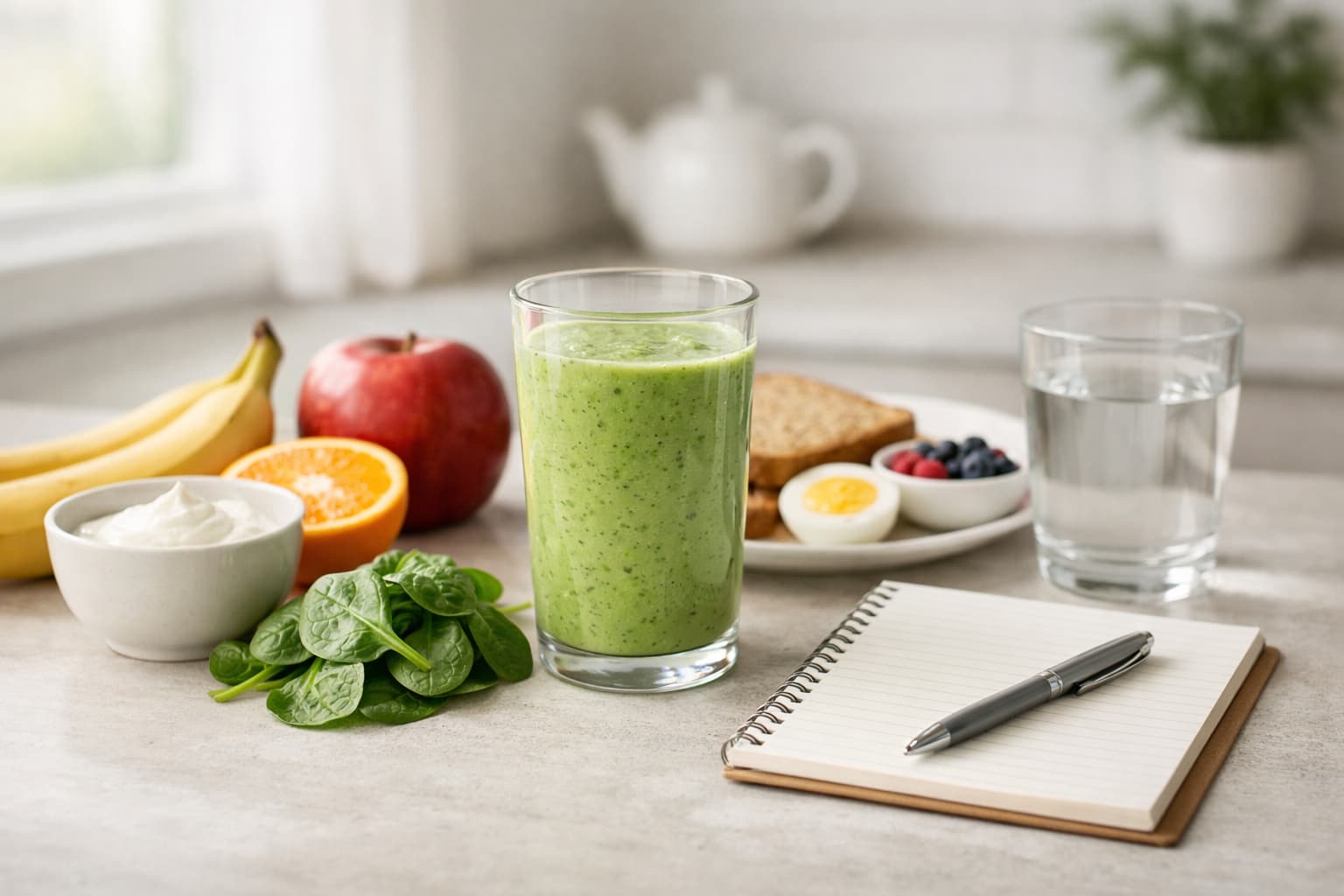
Yes, smoothies can be healthy when they are made with whole fruits, vegetables, and mostly unsweetened ingredients. The catch is that smoothies can also turn into high-sugar, high-calorie drinks fast, especially when they include juice, sweetened yogurt, syrups, or oversized portions. Understanding that difference matters because a smoothie can be a smart meal component, a practical snack, or an easy way to add produce to your day, but it should be built carefully. According to the Centers for Disease Control and Prevention and the U.S. Food and Drug Administration, too much added sugar can raise health risks, and added sugars should stay below 10% of total daily calories.
The Short Answer on Whether Smoothies Are Healthy
A smoothie is healthiest when it works like a balanced food, not like dessert in a cup. In practical terms, that usually means using fruit, adding vegetables, choosing an unsweetened liquid base, and keeping an eye on portion size. The American Heart Association notes that some drinks that seem healthy can still be high in calories and added sugar, including smoothies with sweetened ingredients.
What Makes a Smoothie Healthy
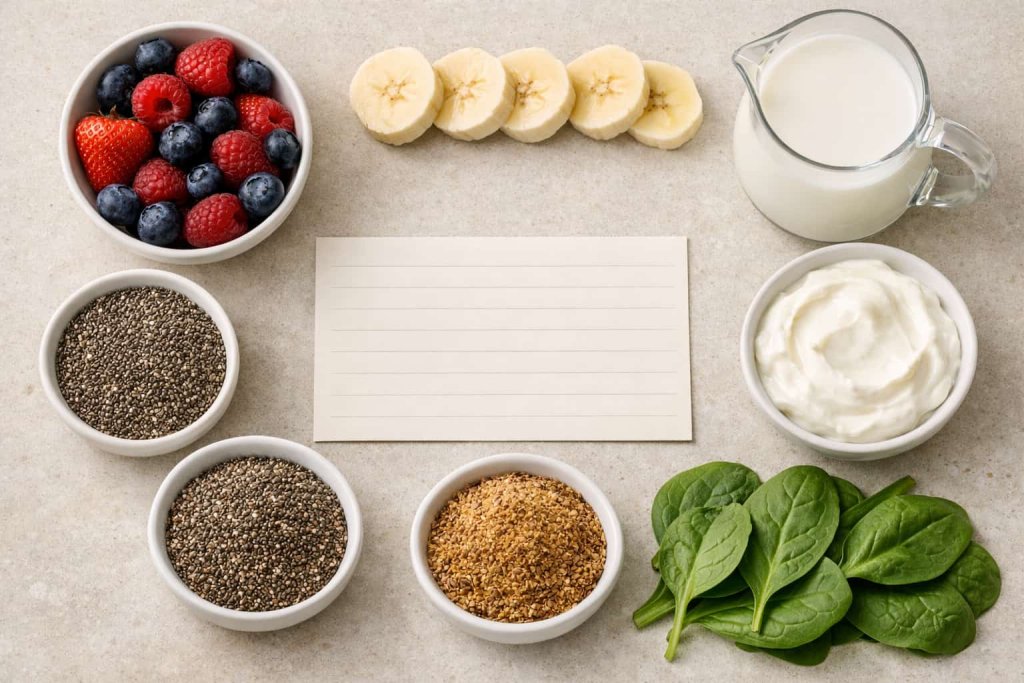
A healthy smoothie usually has a simple structure:
- whole fruit
- optional vegetables
- a protein-rich or calcium-rich base such as milk, fortified soy milk, or plain yogurt
- little to no added sugar
- a realistic serving size
The MyPlate guidance notes that smoothies made with milk or yogurt and fruit can provide several food groups, and MyPlate also suggests add-ins like spinach, kale, avocado, ground flaxseed, or oatmeal to improve nutrition.
Whole fruit gives smoothies more nutritional value
Using whole fruit is usually a better starting point than using lots of juice. The Centers for Disease Control and Prevention says to choose whole fruits over fruit drinks and juices because juice has lost fiber. Whole fruit can also help with fullness, which is one reason a smoothie built with fruit pieces is usually a better option than one based mostly on juice.
Vegetables can improve the nutrient profile
Vegetables such as spinach, kale, or even frozen cauliflower can add volume and nutrients without making the smoothie as sweet as a fruit-only blend. MyPlate specifically recommends adding greens like spinach or kale to smoothies for extra nutritional value.
The liquid base matters
A smoothie made with water, unsweetened milk, fortified soy milk, or plain yogurt is usually a smarter choice than one built around sweetened beverages. MyPlate smoothie examples commonly use milk or yogurt, which helps keep the drink closer to a balanced food than a sweet drink.
Balance helps it feel more like food
Adding protein or fat can make a smoothie more balanced. This could mean plain Greek yogurt, milk, fortified soy milk, nut butter, chia seeds, or ground flaxseed. MyPlate includes smoothie recipes built with yogurt, milk, and peanut butter, showing how a smoothie can be made more filling instead of being mostly fruit and sweetener.
The Main Risks and Downsides
Smoothies are not automatically unhealthy, but there are a few common problems that make them less helpful.
Added sugar can climb quickly
This is one of the biggest issues with smoothies, especially store-bought options and homemade recipes that use juice, flavored yogurt, honey, agave, or syrups. The U.S. Food and Drug Administration says added sugars are listed on the Nutrition Facts label to help people make informed choices. The same guidance states that less than 10% of daily calories should come from added sugars. The American Heart Association also warns that bottled smoothies can be loaded with added sugars and that one container may hold more than one serving.
Smoothies can be easy to overdrink
Because smoothies are liquid, it is often easier to drink a large amount quickly. That matters because calories from fruit, yogurt, nut butter, oats, seeds, and sweeteners can stack up fast. The American Heart Association specifically advises checking both added sugar per serving and serving size because one bottle or container may contain multiple servings.
Another reason portion size matters is that drinking food is often quicker than eating it. Some people find that a smoothie is less satisfying than eating the same ingredients in whole or less processed form, which can make it easier to feel hungry again sooner.
Some commercial smoothies are closer to sweet drinks than meals
A product labeled as a fruit smoothie may still be heavy on fruit juice concentrate, purées, sweeteners, and large portions. The American Heart Association says some drinks that seem healthy may still be high in calories and added sugar, and the U.S. Food and Drug Administration says consumers should use the Nutrition Facts label to compare serving size, calories, and added sugars.
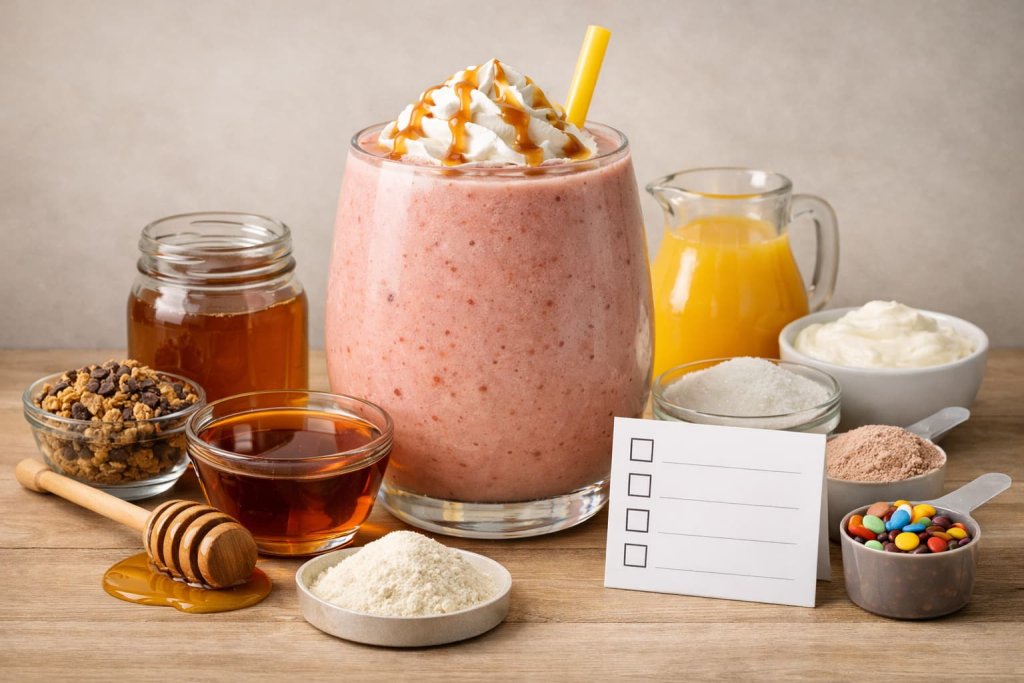
Common ingredients that can make smoothies less healthy
Some smoothie ingredients sound harmless but can raise sugar or calories fast. Watch for:
- fruit juice or juice concentrate
- flavored yogurt instead of plain yogurt
- honey, agave, maple syrup, or other sweeteners
- large amounts of nut butter
- oversized scoops of protein powder
- ice cream, frozen yogurt, or sweetened creamers
- very large portions of dried fruit
These ingredients are not always off-limits, but they can change a smoothie from a balanced option into a drink that feels more like dessert.
Are Smoothies Healthy for Weight Loss?
Smoothies can fit into a weight-loss plan, but they are not automatically a weight-loss food. They tend to work best when they are portion-aware and balanced with protein, fiber-rich ingredients, and little added sugar. They can work poorly when they are very large or made with several calorie-dense extras. The Centers for Disease Control and Prevention says Americans consume too much added sugar and recommends staying under 10% of daily calories from added sugars, while the American Heart Association explains that reducing added sugars can help lower overall calorie intake.
A better approach is to think of a smoothie as either:
- a light meal with protein, fruit, and maybe vegetables, or
- a snack with a modest portion
That approach is more practical than assuming every smoothie is healthy just because it contains fruit.
Are Store-Bought Smoothies Healthy?
Some are, but many are not ideal. Store-bought smoothies can be convenient, but they are worth checking carefully because they may contain:
- more than one serving per bottle
- added sugars
- sweetened yogurt or juice concentrates
- large calorie totals
The U.S. Food and Drug Administration says the label should be used to check serving size, calories, and added sugars, and the American Heart Association says drinks that seem good for you, including bottled smoothies, may be loaded with added sugars.
What to check on the label
Look at:
- serving size
- servings per container
- total calories
- added sugars
- ingredient list
The U.S. Food and Drug Administration explains that added sugars on the label include sugars added during processing, along with sugars from syrups, honey, and concentrated fruit or vegetable juices.
Homemade Smoothies vs. Store-Bought Smoothies
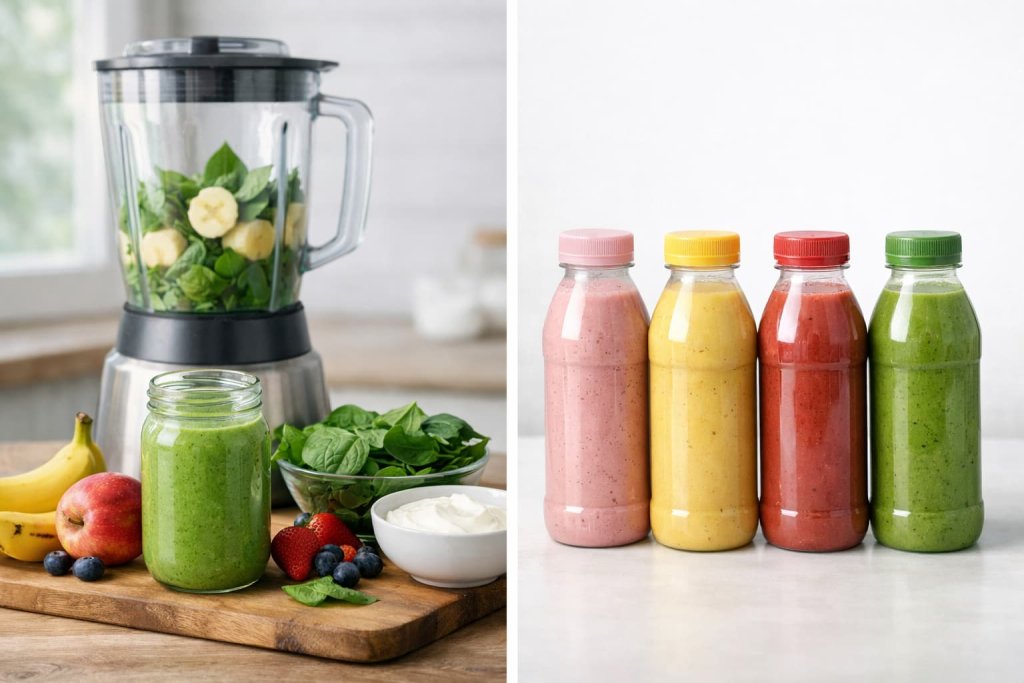
Homemade smoothies are usually easier to control because you decide exactly what goes in them. That makes it easier to use whole fruit, keep portions reasonable, and avoid added sugars. Store-bought smoothies can still be convenient, but they are more likely to contain large portions, fruit juice concentrates, sweetened yogurt, or multiple servings in one bottle.
In general, homemade smoothies are often the better choice when you want:
- more whole-food ingredients
- less added sugar
- better portion control
- more flexibility to add protein or vegetables
Store-bought smoothies may work when you are busy, but checking the label still matters. A smoothie that sounds healthy can still be high in calories or added sugar. In many cases, the difference between a healthier smoothie and a less healthy one is not whether it is homemade or packaged, but whether it is built from mostly whole, unsweetened ingredients.
Smart Tips for Making Healthier Smoothies
Start with fruit, not juice
Using frozen or fresh fruit is usually the simplest way to keep the smoothie more balanced. The Centers for Disease Control and Prevention recommends choosing whole fruit over juice because you miss the fiber with juice, and MyPlate resources also suggest using frozen fruit in smoothies.
Add vegetables without overthinking it
Spinach, kale, and frozen cauliflower are easy options because they blend well. MyPlate specifically suggests adding spinach or kale for extra nutritional value.
Choose an unsweetened base
Water, plain milk, fortified soy milk, or plain yogurt are usually better than sweetened drinks. MyPlate smoothie guidance regularly uses milk or yogurt rather than dessert-style bases.
Keep sweeteners minimal
Honey, maple syrup, agave, and similar ingredients all count as added sugars on food labels. The U.S. Food and Drug Administration says added sugars include sugars from syrups and honey, and the American Heart Association advises checking ingredient lists for terms like syrup, concentrated fruit juice, and honey.
Watch portion size
A smoothie does not have to be huge to be useful. The American Heart Association notes that one bottle may contain multiple servings, which can double or triple the added sugars you are getting.
Be careful with powders and boosters
Protein powders and other add-ins can be useful, but they are not always necessary. If you use them, keep the ingredient list simple. The U.S. Food and Drug Administration says the agency does not approve dietary supplements for safety and effectiveness before they are sold, and supplements are regulated differently from conventional foods.
A Simple Formula for a Better Smoothie
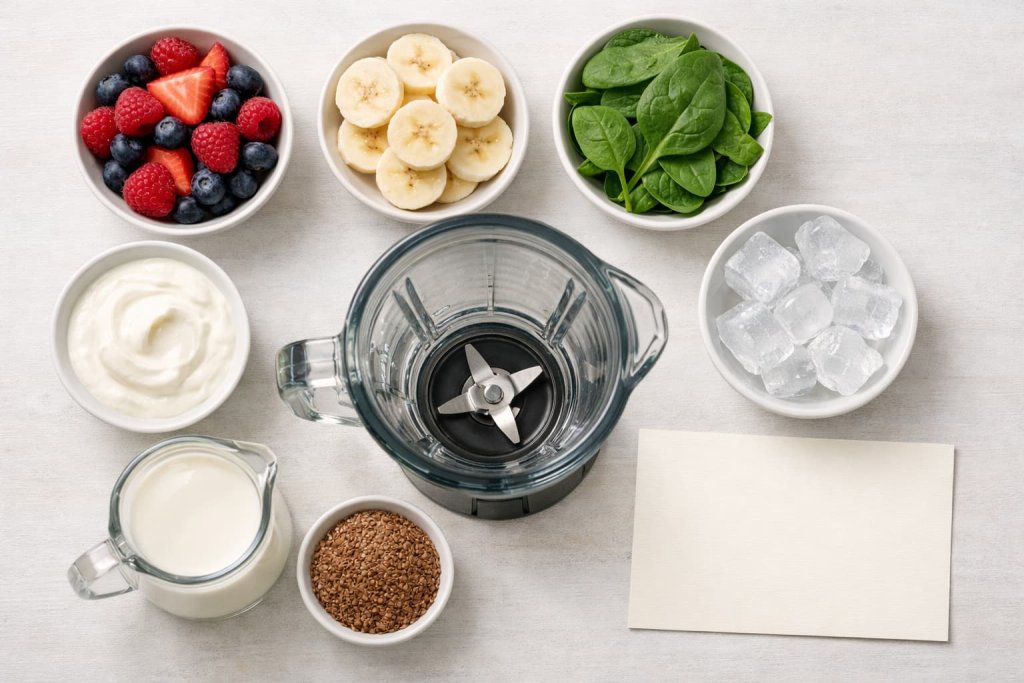
A practical smoothie formula looks like this:
- 1 to 1½ cups fruit
- 1 handful of greens or another vegetable
- 1 cup plain milk, fortified soy milk, or plain yogurt
- optional: a small amount of nut butter, chia, flax, or oats
- ice or water as needed
This general structure aligns with MyPlate-style smoothie examples that combine fruit with milk or yogurt and optional nutrient-dense add-ins.
For example, a balanced smoothie could include plain Greek yogurt, frozen berries, a handful of spinach, milk or fortified soy milk, and a spoonful of ground flaxseed. That kind of combination gives you fruit, a protein source, and extra nutrients without relying on juice or a lot of added sweeteners.
When Smoothies Can Be a Smart Choice
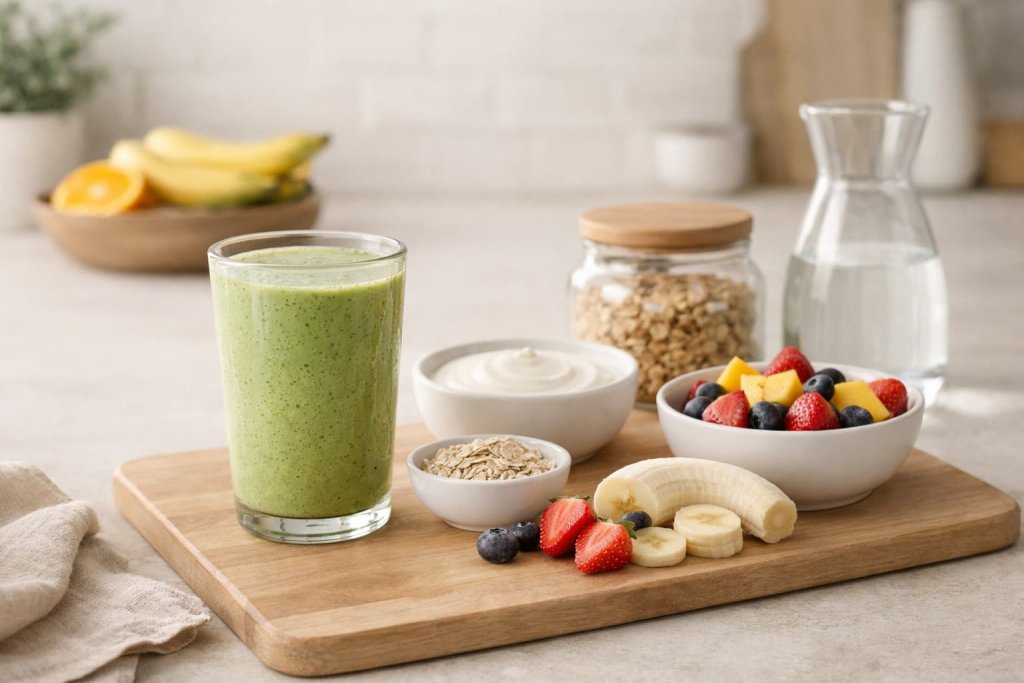
Smoothies can be especially useful when you need a quick breakfast, an easy snack, or a simple way to include more fruit and vegetables in your day. They may also help when chewing is uncomfortable or when a full meal does not sound appealing.
They tend to work best when they support an already balanced eating pattern, rather than replacing most whole foods. A well-built smoothie can be a practical option, but it is usually most helpful when used with intention instead of by default.
Who Should Be More Careful With Smoothies?
Some people may want to be more selective with ingredients and portions:
- people watching added sugar intake
- people trying to manage blood sugar
- people using smoothies as meal replacements too often
- people using multiple supplement powders or herbal add-ins
Guidance from the Centers for Disease Control and Prevention emphasizes limiting added sugar and choosing whole fruit instead of juice, while U.S. Food and Drug Administration guidance on supplements is a reminder that powders and boosters are not reviewed the same way as regular foods before sale.
Final Verdict on Are Smoothies Healthy
Smoothies can absolutely be healthy, but they are healthiest when they are built like real food. Whole fruit, vegetables, plain dairy or fortified soy, and sensible portions make a big difference. On the other hand, smoothies that rely on juice, sweeteners, oversized portions, or lots of add-ins can become more like sugary drinks than balanced meals. Checking labels, keeping added sugar low, and using mostly whole ingredients are the smartest ways to make smoothies work for you. Guidance from the Centers for Disease Control and Prevention, the U.S. Food and Drug Administration, the American Heart Association, and MyPlate all points in that same direction.
FAQs
Are smoothies healthier than juice?
Usually, yes, if the smoothie is made with whole fruit and not a lot of added sugar. Centers for Disease Control and Prevention guidance says whole fruit is a better choice than juice because juice loses fiber.
Can a smoothie replace a meal?
It can sometimes replace a meal if it includes enough protein and other satisfying ingredients, but many smoothies are too low in protein or too high in sugar to work well as a full meal. MyPlate examples suggest smoothies can include several food groups when built with fruit plus milk or yogurt.
Are fruit-only smoothies healthy?
They can still provide vitamins and fruit intake, but they are usually more balanced when they also include protein and sometimes vegetables. MyPlate resources encourage nutrient-dense add-ins like spinach, kale, avocado, flaxseed, or oatmeal.
Are bottled smoothies healthy?
Some are reasonable, but many are high in added sugar or contain more than one serving per bottle. The American Heart Association and the U.S. Food and Drug Administration both recommend checking serving size and added sugars first.
Is honey in a smoothie healthy?
Honey may sound natural, but the U.S. Food and Drug Administration counts honey as an added sugar when it is added to foods or drinks. It is better used sparingly.
What is the healthiest liquid for a smoothie?
That depends on your needs, but water, plain milk, fortified soy milk, and plain yogurt are usually better choices than sweetened beverages. MyPlate smoothie guidance commonly uses milk or yogurt.
Are smoothies good for kids?
They can be, especially when they use whole fruit and mostly unsweetened ingredients. The Centers for Disease Control and Prevention also favors whole fruit over juice for children.
Conclusion
Smoothies are healthy when you make them intentionally. Build them around whole fruit, keep added sugar low, add vegetables when you can, and do not let portion size get out of hand. That simple approach can turn smoothies into a practical part of a balanced diet instead of a sugar-heavy extra. Before you buy one or blend one, check what is really going into the cup.