
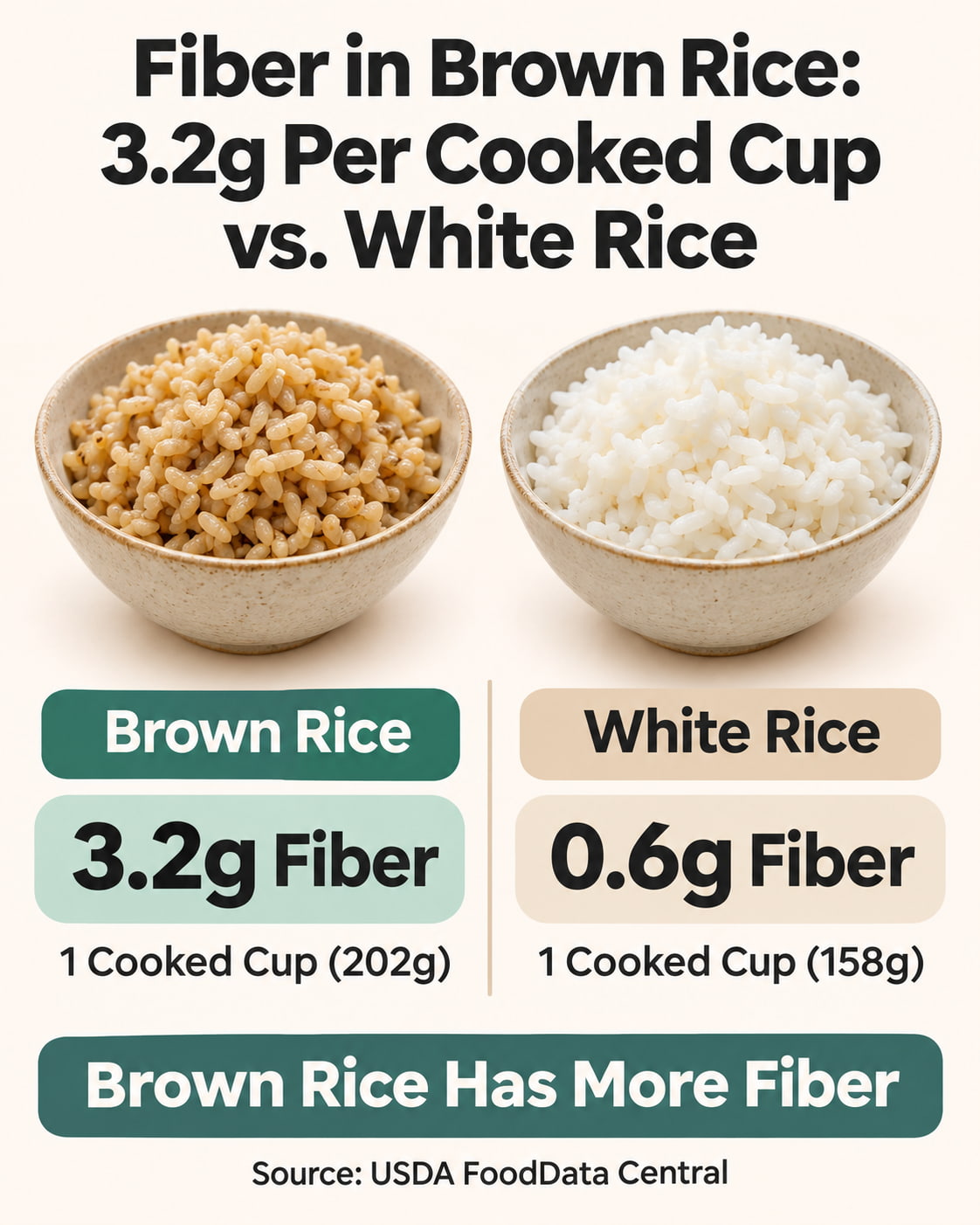
One cup of cooked long-grain brown rice (202 g) contains about 3.2 g of fiber, compared with about 0.6 g in a cup of cooked long-grain white rice (158 g). These figures come from USDA’s reference entries for brown rice and white rice.
The amount of fiber in brown rice depends on the variety and serving weight. Knowing whether you are measuring cooked or dry rice helps you compare portions accurately. Brown rice can contribute to your daily fiber intake, especially when you pair it with beans, lentils, or vegetables.
How Much Fiber Is in Brown Rice?
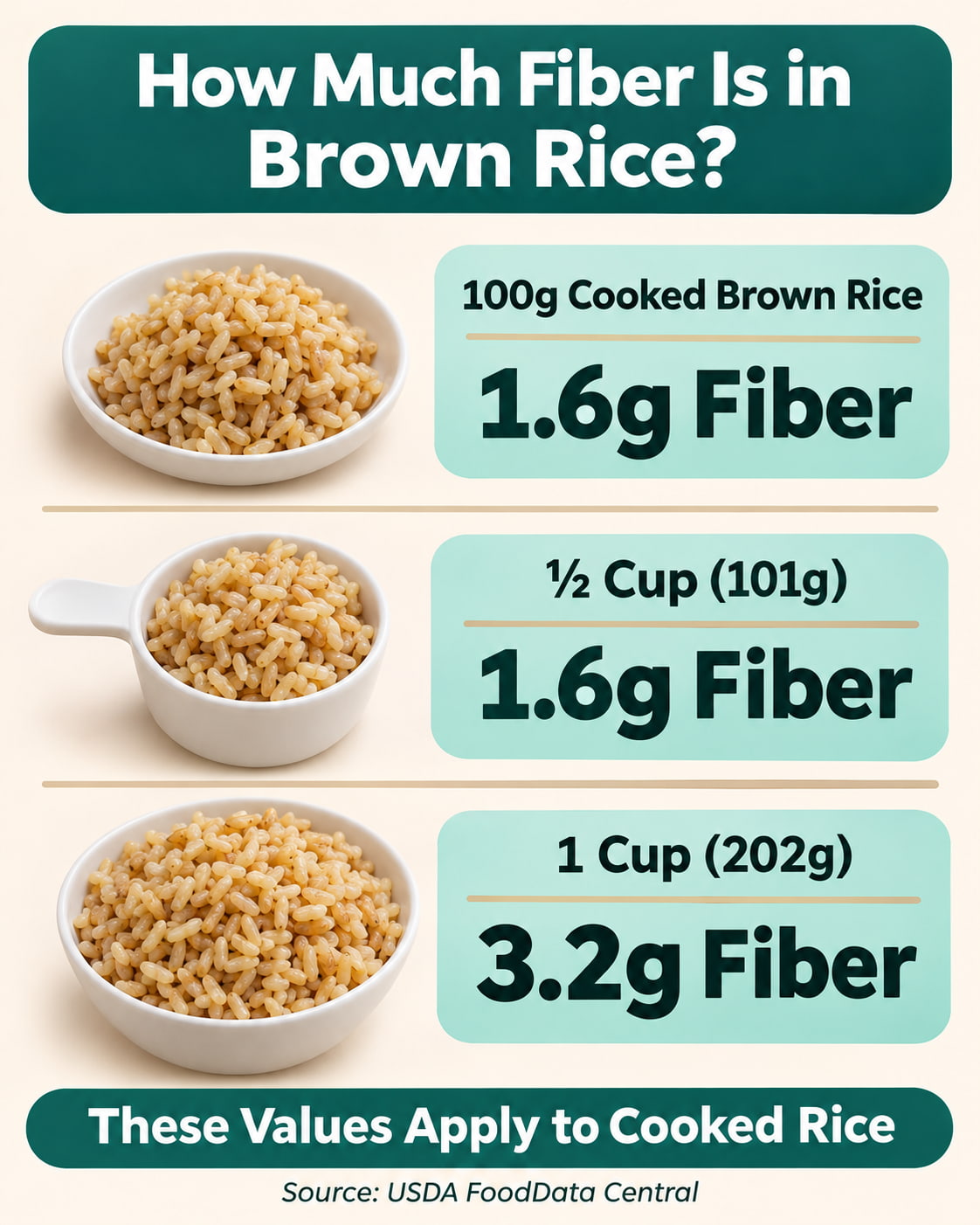
USDA’s cooked long-grain brown rice entry provides 1.6 g of fiber per 100 g. Its listed one-cup serving weighs 202 g and supplies approximately 3.2 g.
A half-cup portion weighs about 101 g in this reference and provides approximately 1.6 g of fiber.
These numbers apply to cooked rice. A cup of dry rice contains a different amount of grain, so its nutrition information cannot be substituted for a cooked-cup measurement.
For packaged rice, check the serving size and whether the label describes the product dry or prepared. Use that information when counting the fiber in your portion.
Fiber in Brown Rice vs. White Rice
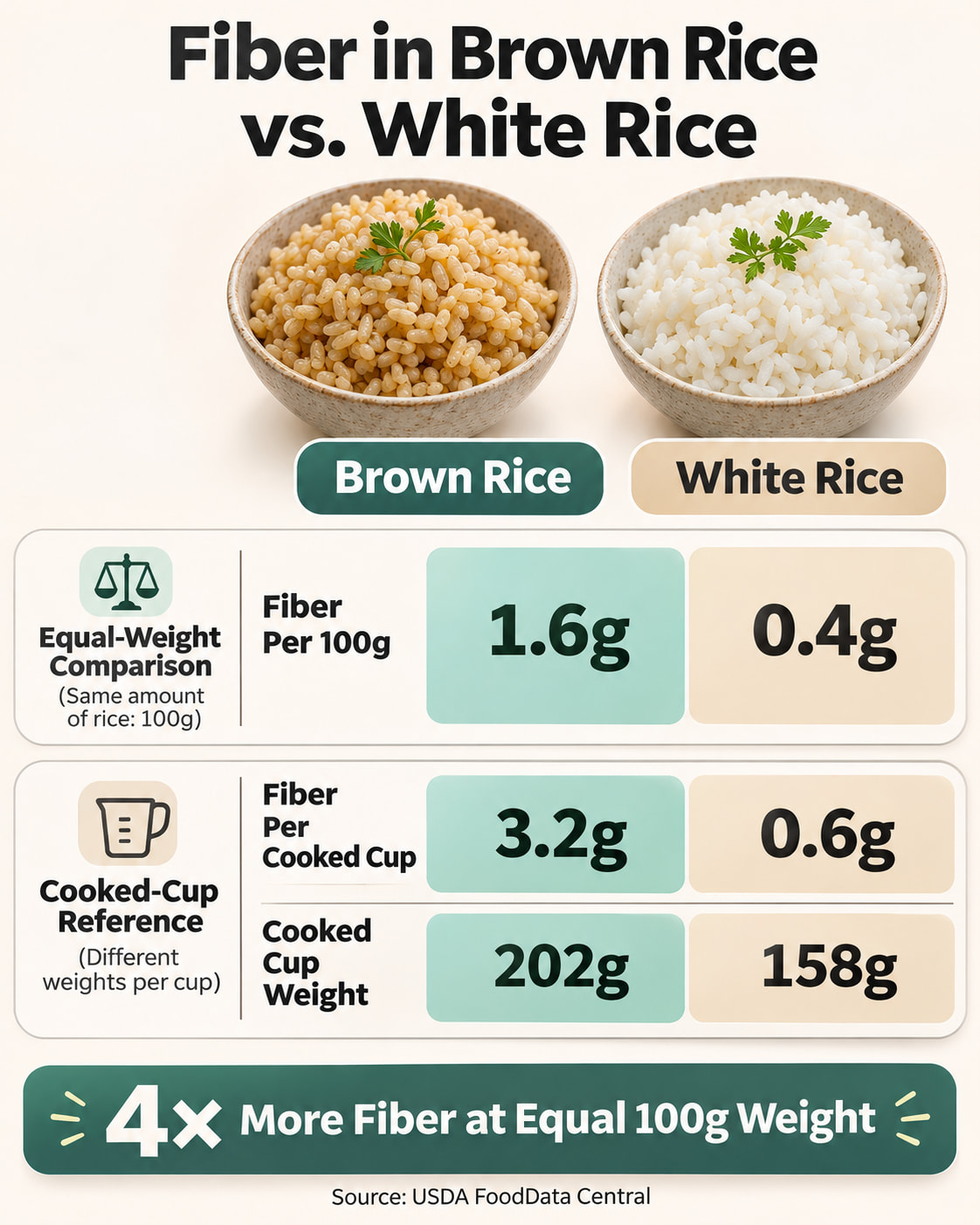
Brown rice provides more fiber than white rice in the USDA entries below. Comparing both equal weights and cup servings helps show the difference clearly.
| Cooked portion | Long-grain brown rice | Long-grain white rice |
|---|---|---|
| 100 g | 1.6 g fiber | 0.4 g fiber |
| ½ cup | 1.6 g fiber in 101 g of rice | 0.3 g fiber in 79 g of rice |
| 1 cup | 3.2 g fiber in 202 g of rice | 0.6 g fiber in 158 g of rice |
Values use USDA’s SR Legacy reference records, published in FoodData Central in April 2019 and checked on November, 2026. Fiber amounts are rounded.
At an equal cooked weight of 100 g, the brown-rice entry provides four times as much fiber as the white-rice entry.
Comparing the listed cups gives approximately five times as much fiber, or about 2.6 g more per cup. That larger ratio partly reflects the different cup weights: 202 g for brown rice and 158 g for white rice.
For everyday meals, the practical takeaway is straightforward: switching to brown rice can increase the fiber in your rice portion.
Why Does Brown Rice Have More Fiber?
Brown rice is a whole grain. It retains the bran, germ, and endosperm, and the bran contains much of the grain’s fiber.
White rice undergoes milling that removes the bran and germ. This reduces its fiber content.
According to USDA’s whole-grain guidance, enrichment adds back certain B vitamins and iron after processing. It does not replace the fiber removed during milling.
Why Brown Rice Fiber Numbers Vary
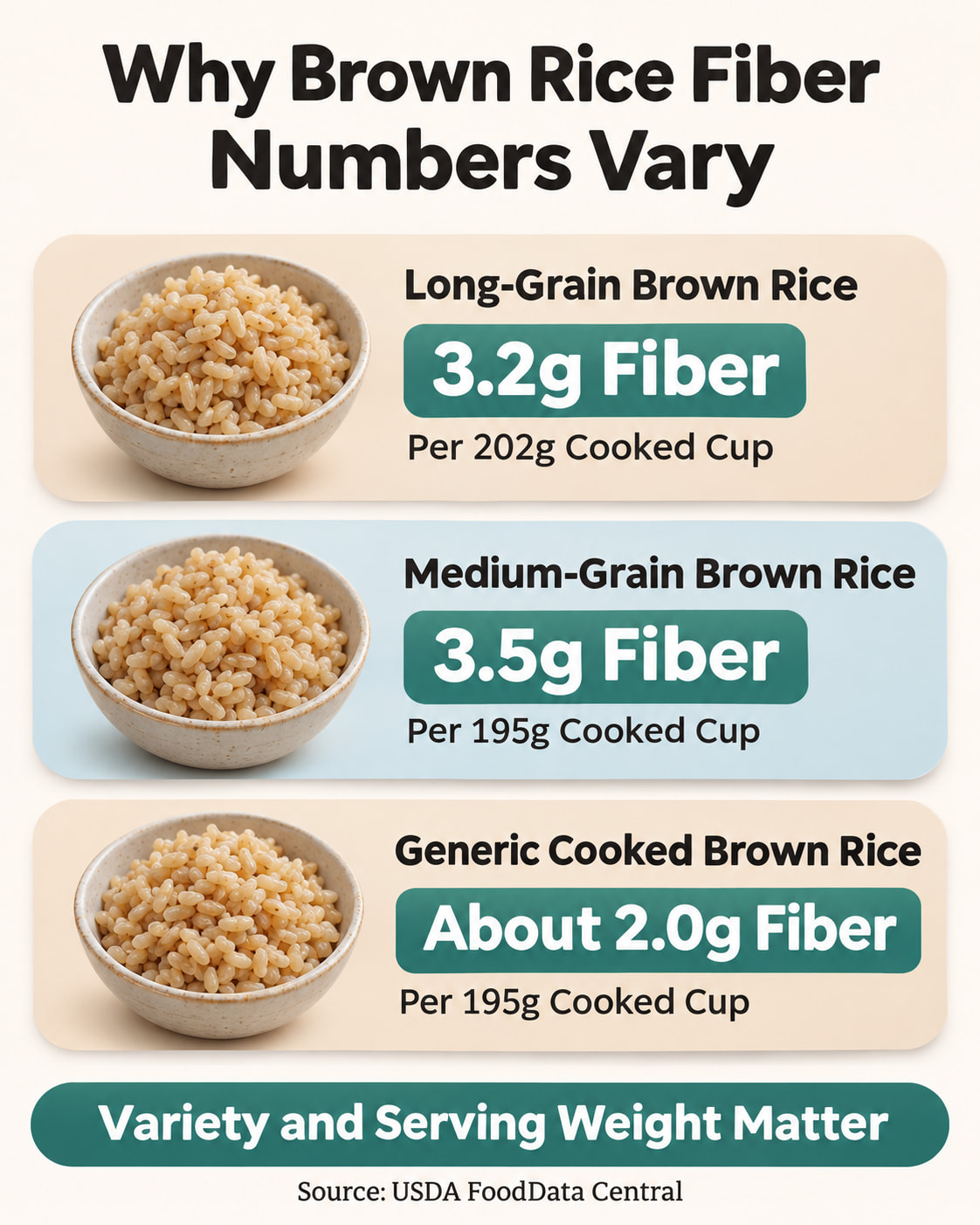
You may see different fiber amounts on nutrition websites or rice packages. A different number does not automatically mean the information is incorrect.
For example, USDA lists:
- About 3.2 g per cup: Cooked long-grain brown rice, with a reference cup weighing 202 g.
- About 3.5 g per cup: Cooked medium-grain brown rice, with a reference cup weighing 195 g.
- About 2.0 g per cup: A separate generic entry for brown rice cooked with no added fat, published in USDA’s 2024 survey dataset, with a 195 g cup.
These are different food records. The headline figure in this article consistently uses the cooked long-grain reference.
Treat 3.2 g as a useful reference value rather than an exact amount for every cup of brown rice. For a specific product, check its Nutrition Facts label and match the listed serving size to the amount you eat.
Is Brown Rice High in Fiber?
Brown rice contributes fiber, but a typical portion supplies a modest share of the daily total.
The FDA’s Daily Value guidance lists 28 g of dietary fiber as the daily labeling reference. Using the unrounded USDA figures:
| Portion of cooked long-grain brown rice | Fiber | Approximate share of the Daily Value |
|---|---|---|
| ½ cup | 1.6 g | 6% |
| 1 cup | 3.2 g | 12% |
The FDA’s general label-reading guide considers 20% of the Daily Value or more per serving high in a nutrient. This one-cup portion falls below that benchmark.
Brown rice therefore works well as one contributor to your fiber intake. You will still need other fiber-containing foods throughout the day.
How Brown Rice Fits Into Your Daily Fiber Intake
The National Institute of Diabetes and Digestive and Kidney Diseases lists an adult fiber intake range of 22–34 g per day, depending on age and sex. Its fiber and hydration guidance also recommends increasing fiber gradually and drinking enough liquids to help it work effectively.
The FDA’s 28 g Daily Value is a useful reference for comparing food labels. Your individual needs may differ.
Brown rice can help contribute to those needs, but variety matters. Other sources include:
- Beans, lentils, and chickpeas.
- Vegetables such as broccoli, peas, and carrots.
- Fruits such as pears, apples with their skin, and berries.
- Other whole grains.
- Nuts.
Can Brown Rice Support Bowel Regularity?
Brown rice supplies dietary fiber, so it can contribute to an eating pattern that supports regular bowel movements.
However, eating one serving does not guarantee relief from constipation. Your overall fiber intake, fluid intake, and individual circumstances matter.
If you are increasing fiber, make changes gradually. Adding several fiber-containing foods across your meals can be more manageable than making a large change all at once.
Easy Ways to Add More Fiber to a Rice Meal
You can build a meal with several sources of fiber while keeping rice as a familiar base.
Add Beans or Lentils
Combine brown rice with black beans, chickpeas, kidney beans, or lentils. Try a rice-and-bean bowl, a lentil curry over rice, or a chickpea and vegetable skillet.
These combinations add another fiber-containing food to the meal. Check the portions and product labels if you want to calculate an exact total.
Include Vegetables
Stir cooked peas and carrots into rice, or serve it alongside broccoli or other vegetables.
A simple bowl can include brown rice, beans or lentils, and vegetables. Adjust the amounts to your appetite and dietary needs.
Try a Gradual Swap
If you prefer the taste or texture of white rice, start by mixing prepared white and brown rice.
You can adjust the mixture over time. Follow each product’s cooking directions, then combine the cooked rice in the proportions you enjoy.
Check the Label on Rice Blends
For instant rice, microwave pouches, and mixed-grain products, read the serving size and dietary fiber line.
Compare similar prepared portions. A label based on a small dry serving and another based on a cooked cup can be difficult to compare without checking their stated yields.
Frequently Asked Questions
How Much Fiber Is in Half a Cup of Brown Rice?
Half a cup of cooked long-grain brown rice provides approximately 1.6 g of fiber, using USDA’s reference weight of 101 g. Other varieties and products may differ.
How Much Fiber Is in 100 Grams of Brown Rice?
USDA’s cooked long-grain brown rice entry contains 1.6 g of fiber per 100 g. This figure applies to cooked rice.
Why Do Some Sources Say Brown Rice Has 3.5 g of Fiber?
USDA’s cooked medium-grain brown rice entry provides about 3.5 g per 195 g cup. The 3.2 g figure comes from a different entry for cooked long-grain brown rice, with a 202 g cup.
Is White Rice Completely Free of Fiber?
No. The cooked long-grain white rice entry used here provides approximately 0.4 g per 100 g, or 0.6 g per 158 g cup. That is a small amount compared with the selected brown-rice entry.
Does Enriched White Rice Have Fiber Added Back?
Standard enrichment replaces certain B vitamins and iron. It does not restore the fiber removed during milling. Check the label if a particular product contains added ingredients or added fiber.
Does Instant Brown Rice Have the Same Amount of Fiber?
The amount depends on the product and serving size. Check the Nutrition Facts label and whether it refers to dry or prepared rice. Compare equivalent cooked portions whenever possible.
Conclusion
The fiber in brown rice is about 3.2 g per cooked cup of long-grain rice, or 1.6 g per half cup, using the USDA reference portions. It provides more fiber than the white-rice entry compared here, while making a modest contribution to daily needs.
At your next rice-based meal, check the serving size and try adding beans, lentils, or vegetables to increase the meal’s fiber.
This content is for informational purposes only and not medical advice.
References
- USDA FoodData Central: Cooked Long-Grain Brown Rice
- USDA FoodData Central: Cooked Enriched Long-Grain White Rice
- USDA FoodData Central: Cooked Medium-Grain Brown Rice
- USDA FoodData Central: Brown Rice, Cooked, No Added Fat
- USDA: Brown Rice Household Food Fact Sheet
- FDA: Daily Value on the Nutrition and Supplement Facts Labels
- NIDDK: Eating, Diet, and Nutrition for Constipation