
Yes, you can build a filling, high-protein breakfast without eggs by using foods like Greek yogurt, cottage cheese, tofu, fortified soy milk or yogurt, beans, lentils, nut butters, seeds, and whole grains. Official guidance from MedlinePlus and USDA MyPlate supports all of those as practical protein sources, and MyPlate also recommends building meals around a mix of protein, whole grains, fruit, vegetables, and dairy or fortified soy alternatives.
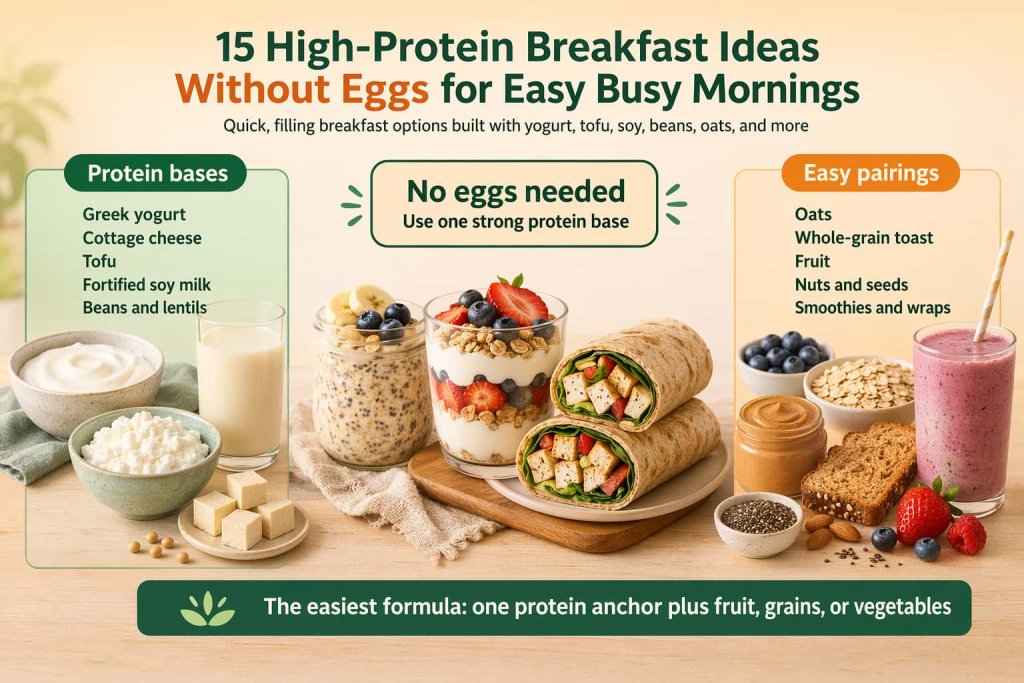
That matters because breakfast does not need to revolve around eggs to be balanced or satisfying. A smart egg-free breakfast usually follows one simple pattern: choose one main protein source, add a whole grain or fruit, keep added sugar in check, and make it easy enough to repeat on busy mornings. The FDA and American Heart Association also recommend paying attention to sodium, saturated fat, and added sugars when choosing packaged foods.
How to build high protein breakfast ideas without eggs
A practical egg-free breakfast usually works best when you combine:
- one main protein food
- one whole grain or fruit
- one optional extra for staying power, such as nuts, seeds, or nut butter
USDA MyPlate recommends varying your protein routine, moving toward low-fat dairy or fortified soy alternatives, and making half your grains whole grains. MedlinePlus also notes that you can get protein from both animal and plant foods, and that eating different plant proteins across the day helps cover essential amino acids.
What makes a breakfast truly high protein?
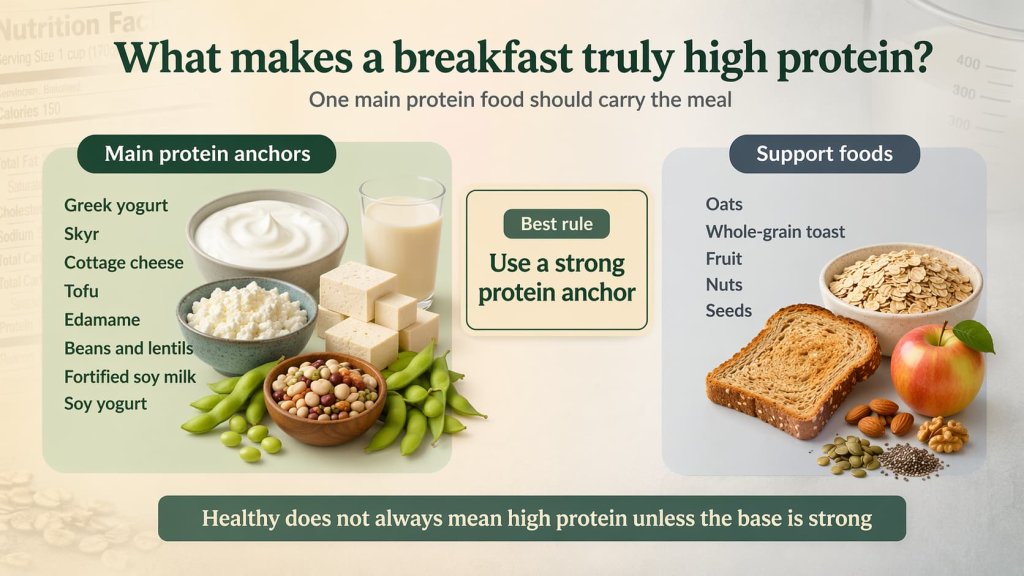
A breakfast usually feels truly high protein when one main protein food does most of the work. Oats, toast, fruit, nuts, and seeds can help round out the meal, but they often do not make breakfast high in protein on their own.
In real life, the easiest protein anchors are foods like Greek yogurt, skyr, cottage cheese, tofu, edamame, beans, lentils, fortified soy milk, and soy yogurt. Then you can use oats, whole-grain toast, fruit, nuts, or seeds as the support pieces rather than the main protein source.
Why this matters: a bowl of oatmeal with a few toppings may be healthy, but it is not always as protein-rich as readers expect unless you build it around a stronger base.
15 high protein breakfast ideas without eggs for easy busy mornings
1. Greek yogurt parfait with berries and nuts
Layer plain Greek yogurt with berries, chopped nuts, and a spoonful of oats or granola. This is one of the fastest high-protein breakfast ideas without eggs because it takes only a few minutes and travels well in a jar.
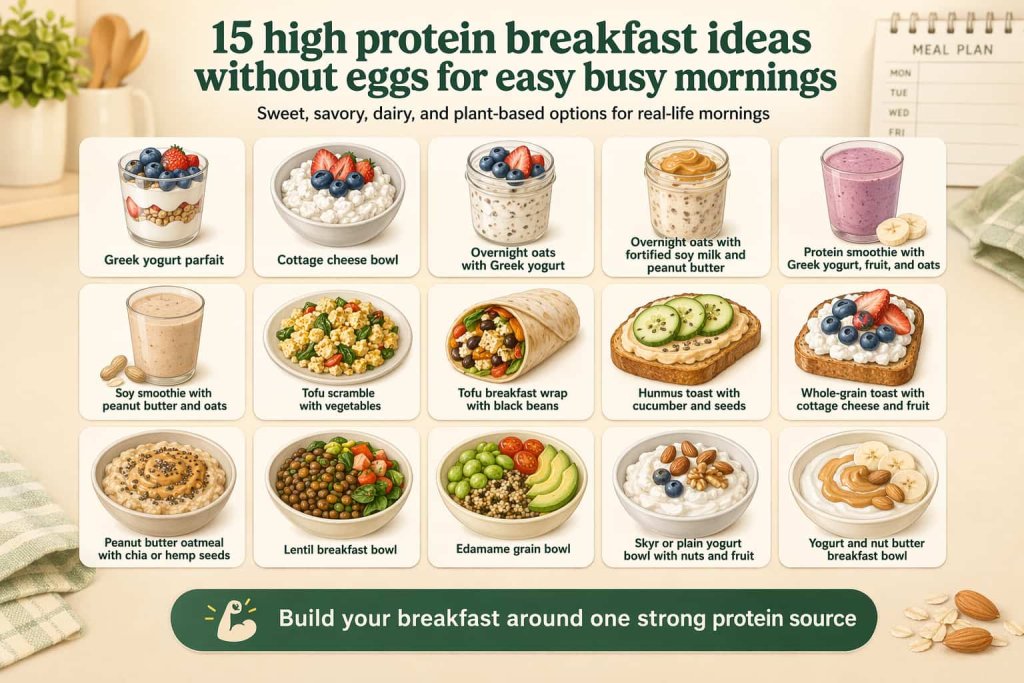
2. Cottage cheese bowl with fruit and chia seeds
Top cottage cheese with pineapple, peaches, berries, or sliced pear. Add chia seeds or pumpkin seeds for extra texture and a little more staying power.
3. Overnight oats with Greek yogurt
Mix oats, milk, Greek yogurt, cinnamon, and fruit the night before. In the morning, breakfast is already done.
4. Overnight oats with fortified soy milk and peanut butter
This is a strong dairy-free option for busy mornings. Stir oats with fortified soy milk, peanut butter, and banana slices, then refrigerate overnight.
5. Protein smoothie with Greek yogurt, fruit, and oats
Blend Greek yogurt with frozen berries, a banana, and a small handful of oats. It is quick, portable, and easy to adjust based on what you have at home.
6. Soy smoothie with peanut butter and oats
Blend fortified soy milk with peanut butter, oats, and banana. USDA MyPlate treats fortified soy milk and yogurt as dairy alternatives, which makes soy one of the most practical egg-free breakfast bases.
Not all plant milks work the same way here. Fortified soy milk is usually the strongest non-dairy choice when protein matters, while many almond, rice, coconut, and some oat milks are much lower in protein unless the label says otherwise. If you are building oats, smoothies, or overnight oats around plant milk, check the Nutrition Facts label instead of assuming all non-dairy options are equal.
7. Tofu scramble with vegetables
Cook crumbled tofu with spinach, onions, peppers, and seasonings. This gives you an egg-free savory breakfast that still feels familiar and works well for meal prep.
8. Tofu breakfast wrap with black beans
Wrap tofu scramble and black beans in a whole-grain tortilla with salsa and avocado. This is especially helpful when you want something more substantial than yogurt or oats.
9. Hummus toast with cucumber and seeds
Spread hummus on whole-grain toast, then add sliced cucumber, tomatoes, and a sprinkle of hemp or sesame seeds. It is simple, savory, and much better balanced than plain toast alone.
10. Whole-grain toast with cottage cheese and fruit
Use cottage cheese as a high-protein topping instead of butter or jam. Add fruit on the side or right on top, depending on whether you want sweet or savory.
11. Peanut butter oatmeal with chia or hemp seeds
Stir peanut butter into hot oatmeal, then add chia or hemp seeds and sliced banana. USDA notes that peanut butter counts toward the protein foods group, while oats help you build the meal around a whole-grain base.
12. Lentil breakfast bowl
Use cooked lentils with sautéed vegetables and leftover roasted potatoes or brown rice. Lentils are an easy way to make breakfast more filling without relying on meat or eggs.
13. Edamame grain bowl
Pair shelled edamame with quinoa or brown rice and leftover vegetables. This is a strong plant-based breakfast when you want something savory and make-ahead friendly.
14. Skyr or plain yogurt bowl with nuts and fruit
Skyr and plain yogurt work much like Greek yogurt for breakfast. Keep the toppings simple so the meal stays lower in added sugar.
15. Yogurt and nut butter breakfast bowl
Stir a spoonful of peanut or almond butter into plain yogurt, then top with berries and seeds. This is one of the easiest no-cook high-protein breakfast ideas without eggs when time is tight.
How to make these breakfast ideas more protein-forward
A few of the ideas above become more convincingly high protein when you pair them with a second protein food. This is especially helpful for oatmeal, toast, hummus, or nut butter-based breakfasts.
Try upgrades like these:
- pair hummus toast with Greek yogurt or soy yogurt on the side
- make oatmeal with Greek yogurt or fortified soy milk instead of relying only on oats
- add edamame, beans, or tofu to wraps and grain bowls
- use cottage cheese or skyr on toast instead of using nut butter alone
- blend smoothies with Greek yogurt or fortified soy milk so the drink has a stronger protein base
This keeps the breakfast more filling and makes the “high protein” label more accurate.
Best foods to keep on hand for high protein breakfast ideas without eggs
The most useful staples are:
- Greek yogurt, skyr, cottage cheese, or plain yogurt
- fortified soy milk or soy yogurt
- tofu and edamame
- beans, lentils, and hummus
- peanut butter or other nut and seed butters
- oats, whole-grain bread, or whole-grain tortillas
- nuts and seeds for toppings
These choices fit well with MyPlate and MedlinePlus guidance because they help you vary protein sources and build balanced meals without leaning on processed breakfast meats. The American Heart Association recommends choosing mostly plant sources of protein and minimizing processed meat, while also favoring low-fat or fat-free dairy products over full-fat versions.
How to make busy-morning breakfasts easier
The easiest way to stay consistent is to use a small rotation instead of trying something new every day.
Try this:
- prep overnight oats two or three nights at a time
- wash fruit in advance
- keep single-serve containers of yogurt or cottage cheese ready
- batch-cook tofu, lentils, or beans for savory breakfasts
- freeze smoothie packs with fruit and oats already portioned
That approach matches USDA’s practical breakfast advice well: build simple meals from familiar foods and make healthy choices easier to repeat.
How to choose packaged breakfast foods
Packaged breakfast foods can look high in protein but still come with a lot of sodium, saturated fat, or added sugar. The FDA says the Nutrition Facts label can help you compare products, and as a general rule, 5% Daily Value or less is low while 20% Daily Value or more is high. FDA lists 50 grams as the Daily Value for protein and added sugars on a 2,000-calorie diet, while sodium has a Daily Value of 2,300 milligrams.
When you read the label:
- check the serving size first
- compare protein per serving, not per package
- look for lower sodium and lower saturated fat
- keep added sugar modest, especially in yogurt, cereal, granola, and bars
- read the ingredient list, not just the front of the package
The American Heart Association recommends limiting added sugars to about 25 grams per day for most women and 36 grams per day for men. It also advises choosing packaged foods with less sodium, added sugar, and saturated fat.
Are these breakfasts enough protein?
There is no single perfect breakfast protein number for everyone. According to MedlinePlus, healthy adults generally get about 10% to 35% of total calories from protein, and individual needs vary based on age, overall calorie intake, and activity level. That is why the most useful goal at breakfast is not chasing one exact number. It is building a meal that includes a clear protein source instead of relying only on refined carbs.
In practice, breakfasts tend to feel more balanced when the protein is the base, not just a topping. For example, a spoonful of peanut butter on toast can help, but pairing it with yogurt, fortified soy milk, cottage cheese, tofu, or beans usually makes the meal more complete.
Common mistakes with high protein breakfast ideas without eggs
Relying on only one small protein add-on
Nuts, seeds, or peanut butter can help, but they often work better as part of the breakfast rather than the whole protein plan. USDA ounce-equivalent guidance shows that small amounts of nut butter, hummus, or beans do count toward protein foods, but they work best when used intentionally within a full meal.
Choosing flavored products without checking sugar
Flavored yogurts, cereal cups, granola, and breakfast bars can add up quickly in added sugar. The FDA and the American Heart Association both recommend checking labels closely.
Forgetting the rest of the meal
Protein matters, but breakfast still works best when it includes whole grains, fruit, or vegetables too. MyPlate guidance is built around the overall meal pattern, not one nutrient by itself.
FAQ
Can you get enough protein without eggs?
Yes. MedlinePlus says protein can come from dairy foods, soy, beans, legumes, nut butters, and some grains, and you do not need animal products to get all the protein you need.
What is the easiest high-protein breakfast without eggs?
For most busy mornings, the simplest options are Greek yogurt parfaits, cottage cheese bowls, overnight oats with yogurt or soy milk, and smoothies built around yogurt or fortified soy milk. They are fast, portable, and easy to repeat.
Is peanut butter a good breakfast protein by itself?
It can help, but it usually works better combined with another protein source or with a more complete meal. USDA counts 1 tablespoon of peanut butter as 1 ounce-equivalent in the protein foods group, so it is useful, but not always enough to carry the whole breakfast by itself.
What is the best dairy-free option?
Fortified soy milk or soy yogurt is one of the strongest dairy-free options because USDA MyPlate includes fortified soy alternatives in the dairy group.
Who may need to customize these breakfast ideas
These breakfast ideas work well for many people, but a few readers may need to personalize them.
- If you have been told to limit protein because of kidney disease or another medical condition, follow your clinician’s or dietitian’s advice rather than increasing protein on your own.
- If you need to watch sodium, compare labels on cottage cheese, flavored yogurt, plant-based breakfast products, wraps, and packaged savory foods.
- If you have a dairy, soy, peanut, or tree nut allergy, choose alternatives that fit your needs instead of forcing a specific ingredient.
- If you are trying to stay full longer, focus on the full meal pattern: protein plus fiber-rich foods like fruit, vegetables, oats, beans, or whole grains.
Conclusion
High-protein breakfast ideas without eggs can be simple, affordable, and realistic for busy mornings. Start with one dependable protein source like Greek yogurt, cottage cheese, tofu, fortified soy milk, beans, or peanut butter, then add a whole grain, fruit, or vegetables to round out the meal. Keep labels in mind, prep a few options ahead, and build a short list of breakfasts you can repeat easily. That is usually what makes a healthy breakfast routine stick.
References
- USDA MyPlate — Protein Foods Group
- MedlinePlus — Dietary Proteins
- U.S. Food and Drug Administration — Daily Value on the Nutrition and Supplement Facts Labels
- American Heart Association — Diet and Lifestyle Recommendations
- American Heart Association — Added Sugars