
Butter has about 102 calories per tablespoon, 34 calories per teaspoon, and 717 calories per 100 grams. That makes it a calorie-dense ingredient, so small portions matter more than many people realize. If you are trying to understand how butter fits into a healthy diet, the key things to know are serving size, total fat, saturated fat, and how often you use it.
Butter is common in cooking, baking, and spreading, so it can add up quickly without drawing much attention. Knowing the calorie count, nutrition profile, and when to be more careful can help you make smarter daily choices.
How Many Calories in Butter?
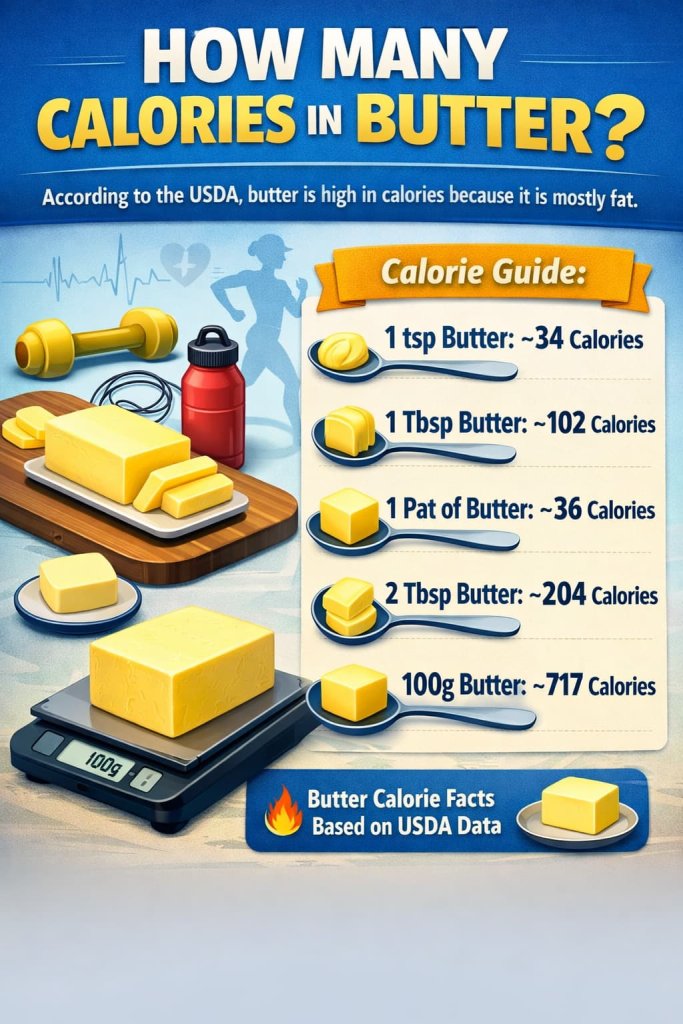
According to the USDA, plain butter is high in calories because it is mostly fat.
Here is the most practical calorie guide for everyday use:
- 1 teaspoon butter: about 34 calories
- 1 tablespoon butter: about 102 calories
- 1 pat butter: about 36 calories
- 2 tablespoons butter: about 204 calories
- 100 grams butter: about 717 calories
These numbers are based on standard butter values used in USDA nutrition data.
Butter Nutrition Profile
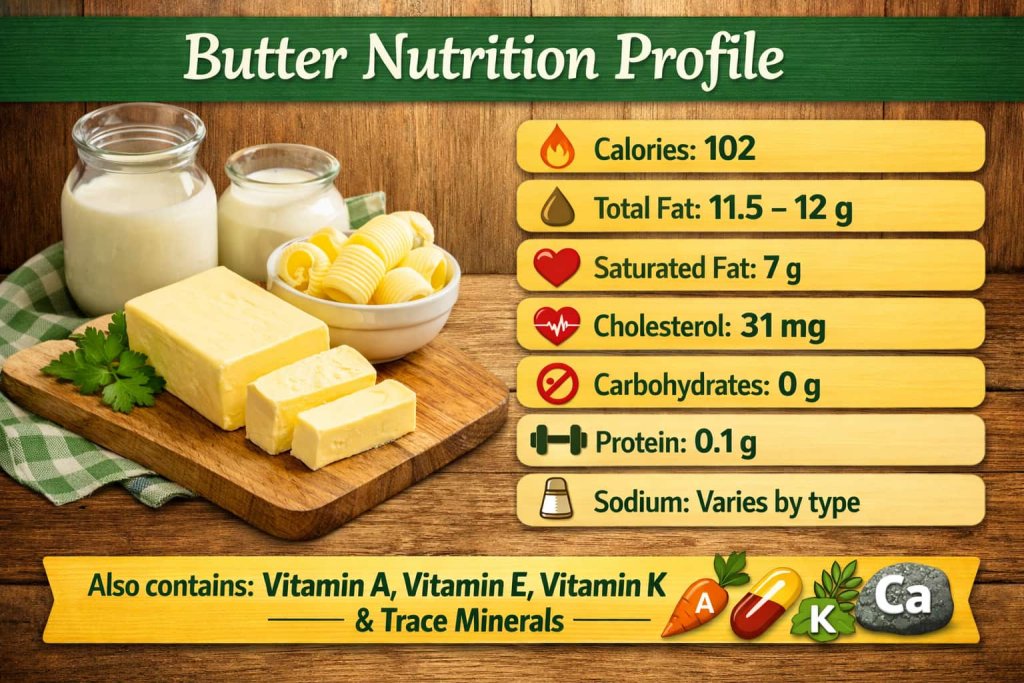
A typical 1 tablespoon serving of butter provides roughly:
- Calories: 102
- Total fat: about 11.5 to 12 grams
- Saturated fat: about 7 grams
- Cholesterol: about 31 milligrams
- Carbohydrates: 0 grams
- Protein: about 0.1 grams
- Sodium: varies by type
- Vitamin A: a small but meaningful amount
According to U.S. Dairy, butter also provides small amounts of vitamin E, vitamin K, and trace minerals such as calcium.
Nutrition Profile Table for Butter
| Serving size | Calories | Total fat | Saturated fat | Cholesterol | Carbs | Protein |
|---|---|---|---|---|---|---|
| 1 teaspoon | 34 | about 3.8 g | about 2.3 g | about 10 mg | 0 g | trace |
| 1 tablespoon | 102 | about 11.5–12 g | about 7 g | about 31 mg | 0 g | about 0.1 g |
| 2 tablespoons | 204 | about 23–24 g | about 14 g | about 62 mg | 0 g | about 0.2 g |
| 100 grams | 717 | about 81 g | about 51 g | varies by database entry | about 0 g | about 0.9 g |
Why Butter Has So Many Calories
Butter is calorie-dense because nearly all of its calories come from fat. Fat provides 9 calories per gram, which is more than double the calories provided by protein or carbohydrate.
That is why even a small amount of butter can raise the calorie total of toast, vegetables, rice, potatoes, or baked goods faster than people expect.
Salted vs Unsalted Butter Calories
The calorie difference between salted and unsalted butter is usually very small. In most practical meal planning, they are close enough that calories are not the main issue.
The more important difference is sodium. U.S. Dairy notes that butter can range from about 2 milligrams of sodium per tablespoon in unsalted butter to about 90 milligrams in salted butter.
If you are mainly counting calories, salted and unsalted butter are very similar. If you are watching sodium, the type matters more.
Standard Serving Size for Butter
The FDA uses 1 tablespoon as the standard reference amount customarily consumed for butter on nutrition labels. That matters because many people use more than 1 tablespoon at a time without realizing it.
For example:
- 1 tablespoon: about 102 calories
- 2 tablespoons: about 204 calories
- 3 tablespoons: about 306 calories
That can make a noticeable difference in coffee drinks, toast, cooking fats, mashed potatoes, and baked recipes.
Is Butter Good for Weight Management?
Butter can fit into a weight-management plan, but it is not a low-calorie food. Because it is concentrated in both calories and fat, it works best as a small flavor ingredient rather than a large daily add-on.
For many people, butter is easier to manage when you:
- measure it instead of guessing
- use a teaspoon when possible
- spread it thinly
- balance it with foods that are filling, such as vegetables, beans, potatoes, oats, or lean protein
- pay attention to how much cooking fat is already in the meal
Butter itself does not automatically cause weight gain. Total calorie intake over time matters more. Still, because butter adds calories quickly and does not add much volume, it can make calorie control harder if portions are not measured.
Key Nutrients in Butter
Butter is not usually eaten as a major nutrient source, but it does contribute a few nutrients.
The main nutrient highlight is vitamin A. Butter also contains small amounts of:
- vitamin E
- vitamin K
- cholesterol
- trace calcium
- small amounts of other fat-related compounds naturally present in dairy fat
From a nutrition standpoint, butter is better thought of as a fat source with a small vitamin contribution, rather than a broad nutrient-dense food.
Saturated Fat in Butter Matters Too
Calories are only part of the picture. Butter is also high in saturated fat.
The Dietary Guidelines for Americans recommend keeping saturated fat to less than 10% of daily calories starting at age 2. The American Heart Association recommends limiting saturated fat to less than 6% of total calories for better heart health.
That does not mean you can never eat butter. It means butter is usually best used in moderation, especially if the rest of your diet already includes other foods high in saturated fat.
Who Should Be a Little More Careful With Butter
Some people may want to be more mindful about portion size and frequency.
People trying to lose weight
Because butter is calorie-dense, extra spoonfuls can quietly add a lot of calories across the day.
People with high LDL cholesterol or heart disease risk
Butter is rich in saturated fat, which can raise LDL cholesterol in some people.
People watching sodium
Salted butter contains much more sodium than unsalted butter.
People eating large portions of high-fat foods already
If a meal already includes cheese, fatty meat, cream sauces, or pastries, adding butter can push both calories and saturated fat higher.
Can Butter Still Fit in a Healthy Diet?
Yes, for many people it can. Butter can fit into a healthy eating pattern when it is used in reasonable amounts and balanced with mostly nutrient-dense foods.
A few practical examples:
- A thin layer on whole-grain toast is different from several heavy pats
- A small amount used for flavoring vegetables is different from a buttery cream sauce
- Butter used occasionally is different from large daily amounts added across many meals
This is why portion awareness matters more than labeling butter as completely good or completely bad.
Butter vs Other Cooking Fats
For calorie purposes, butter is not dramatically different from many oils per tablespoon. The main difference is the type of fat.
Butter is higher in saturated fat, while many plant oils are higher in unsaturated fats. For people focused on heart health, using some unsaturated oils in place of butter may be a helpful strategy.
That said, the best choice depends on the overall meal, how much you use, and your health goals.
Common Questions About Butter Calories
How many calories are in 1 tablespoon of butter?
About 102 calories.
How many calories are in 1 teaspoon of butter?
About 34 calories.
How many calories are in a pat of butter?
A typical pat has about 36 calories, though restaurant pats can vary slightly.
Is butter fattening?
Butter is not uniquely fattening on its own, but it is easy to overeat because it is high in calories and used in small, easy-to-ignore amounts.
Is butter okay during weight loss?
It can be, as long as portions are controlled and it fits within your overall calorie target.
The Bottom Line
Butter has about 102 calories per tablespoon, so it is a small food with a big calorie impact. It also contains a substantial amount of saturated fat, which matters for heart health as well as overall diet quality.
If you enjoy butter, the most practical approach is simple: use it intentionally, measure portions when needed, and keep the rest of your diet balanced with more filling, nutrient-dense foods.
Sources/References
- USDA — FoodData Central
- U.S. Dairy — Butter Nutrition Facts & Benefits
- FDA — Reference Amounts Customarily Consumed
- Dietary Guidelines for Americans — Dietary Guidelines for Americans, 2020–2025
- American Heart Association — Saturated Fats