
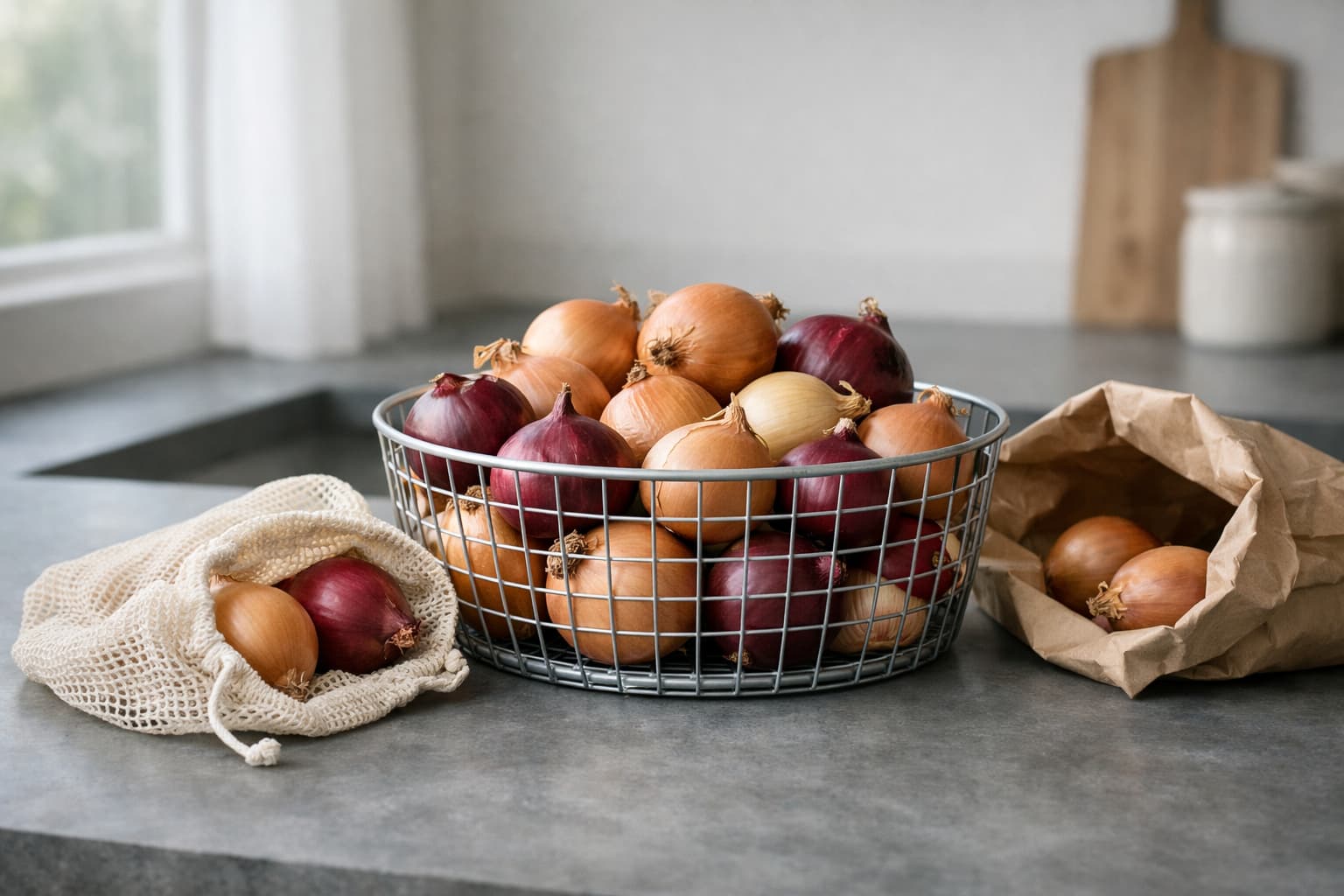
How to store onions depends on whether they’re whole, cut, or cooked: keep whole dry onions in a cool, dry, dark, well-ventilated spot, and refrigerate cut or cooked onions promptly in a sealed container at 40°F (4°C) or below. Getting onion storage right helps you reduce food waste, keep flavor and texture better, and lower food-safety risks when onions are cut or cooked, based on guidance from the National Onion Association.
Quick answer summary
- Whole (dry bulb) onions: cool, dry, dark, good airflow; avoid plastic bags
- Cut onions: sealed container + fridge (40°F/4°C or below); use within about 7–10 days for best safety/quality guidance
- Cooked onions (leftovers): refrigerate promptly; many leftovers are best used within 3–4 days based on USDA Food Safety and Inspection Service guidance
- Fridge target: keep your refrigerator at or below 40°F (4°C), as the U.S. Food and Drug Administration advises
How to store whole onions the right way
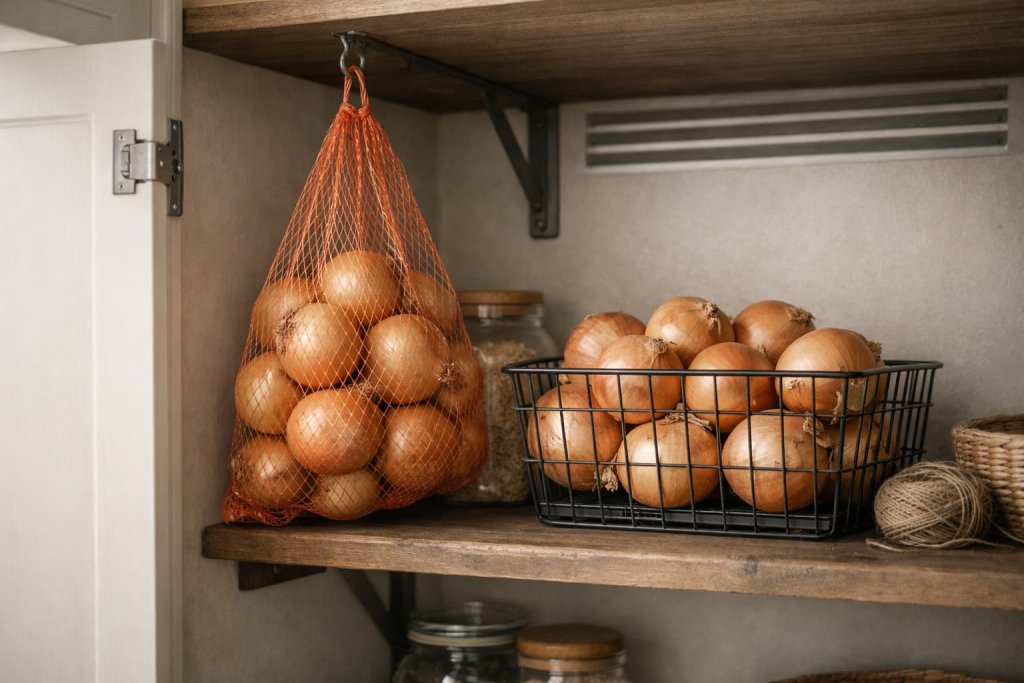
Whole dry bulb onions (yellow, white, red) last best when you store them like a pantry staple—not like fresh herbs.
Not all onions store the same way. This section applies to “dry bulb” onions (yellow, white, and red) that are cured and sold with papery skins, while more delicate onions like scallions (green onions) and higher-moisture sweet onions usually need refrigeration sooner to stay fresh.
Best place to store whole onions
Store whole onions in a spot that is:
- Cool
- Dry
- Dark
- Well-ventilated (airflow matters)
The National Onion Association recommends a cool, dry, well-ventilated area and notes a typical storage temperature range of 45–55°F (7–13°C) for onions, and also warns against plastic bags because reduced air circulation can shorten shelf life.
To keep onions in good shape longer, store them away from common heat and moisture sources such as the stove, oven, dishwasher vent, sink cabinet, direct sunlight, and any area that feels humid or warm most of the day.
The containers that work best
Choose breathable options:
- Mesh bag
- Wire basket
- Open bowl
- Paper bag left open at the top (better airflow than plastic)
Avoid:
- Sealed plastic bags
- Airtight bins (unless they’re very vented)
- Storing near moisture sources (dishwasher vent, sink cabinet)
How long do whole onions last
Shelf life varies by onion type, temperature, humidity, and how “cured” the onion is. As a practical range, the Michigan State University Extension notes that under cool, dry storage conditions (often described in the 35–55°F range with controlled humidity), onions can store for about 1 to 8 months, depending on variety and conditions.
How to store onions in the fridge (and when you should)
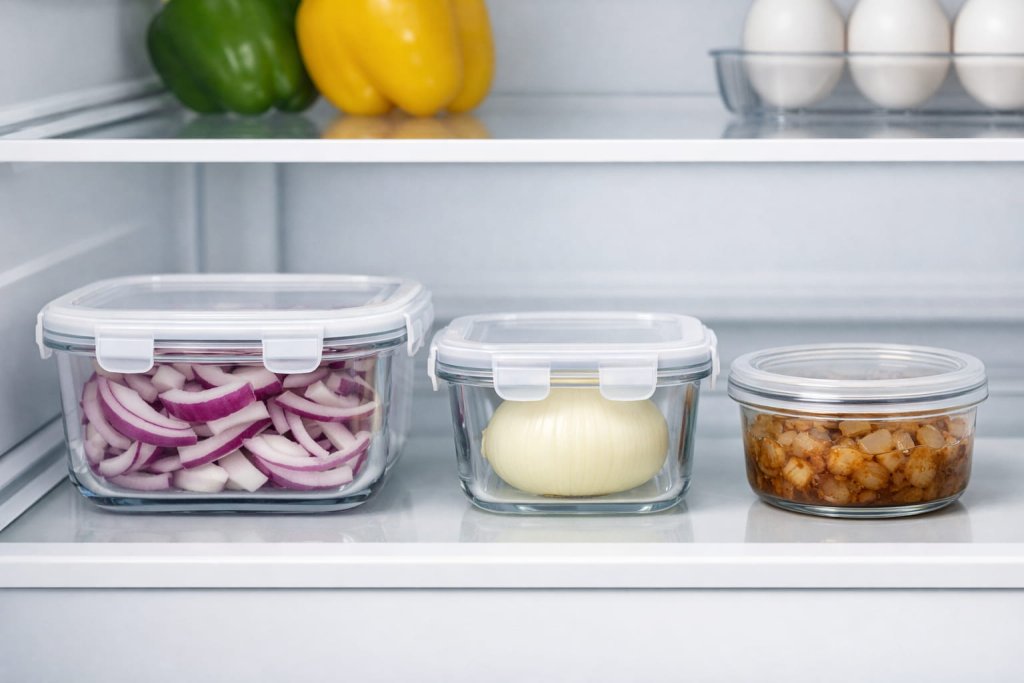
Refrigeration is mainly for onions that are cut, cooked, or extra-perishable.
Some kitchens are simply too warm or humid for long pantry storage. If your home regularly runs hot, you don’t have a cool ventilated spot, or you’re storing sweet onions that spoil quickly, refrigeration can be the more practical choice—just keep them dry and sealed once cut to prevent moisture problems.
Store cut onions safely (halved, sliced, chopped)
Once an onion is cut, treat it like other cut produce:
- Place in a sealed container (or tightly wrapped)
- Refrigerate promptly
- Keep the fridge at 40°F (4°C) or below
How long can cut onions stay in the fridge? Many practical storage guides (including onion-industry guidance) indicate cut onions keep for several days when sealed and refrigerated; for best safety and quality, plan to use cut onions within about a week, and discard sooner if you notice off odors, slime, or mold.
For food safety, don’t leave cut onions sitting at room temperature for long—refrigerate them promptly after prep, using the same “don’t leave perishable foods out for more than 2 hours” rule of thumb described by USDA Food Safety and Inspection Service.
How to store peeled whole onions
If you’ve peeled an onion but haven’t cut it yet, treat it like cut produce: place it in a sealed container or wrap it tightly and store it in the refrigerator. Use it sooner rather than later, and discard it if you notice slime, mold, or an off smell.
Store cooked onions and onion leftovers
Cooked onions (caramelized onions, sautéed onions, onion-based dishes) should be cooled and refrigerated promptly in a covered container.
For best odor control and quality, use a truly airtight container (glass or hard plastic with a tight lid). If you’re using a bag instead, press out excess air before sealing to reduce odor transfer and freezer burn if you plan to freeze later.
For leftovers in general, USDA Food Safety and Inspection Service guidance commonly recommends using refrigerated leftovers within 3 to 4 days.
How to store green onions and sweet onions
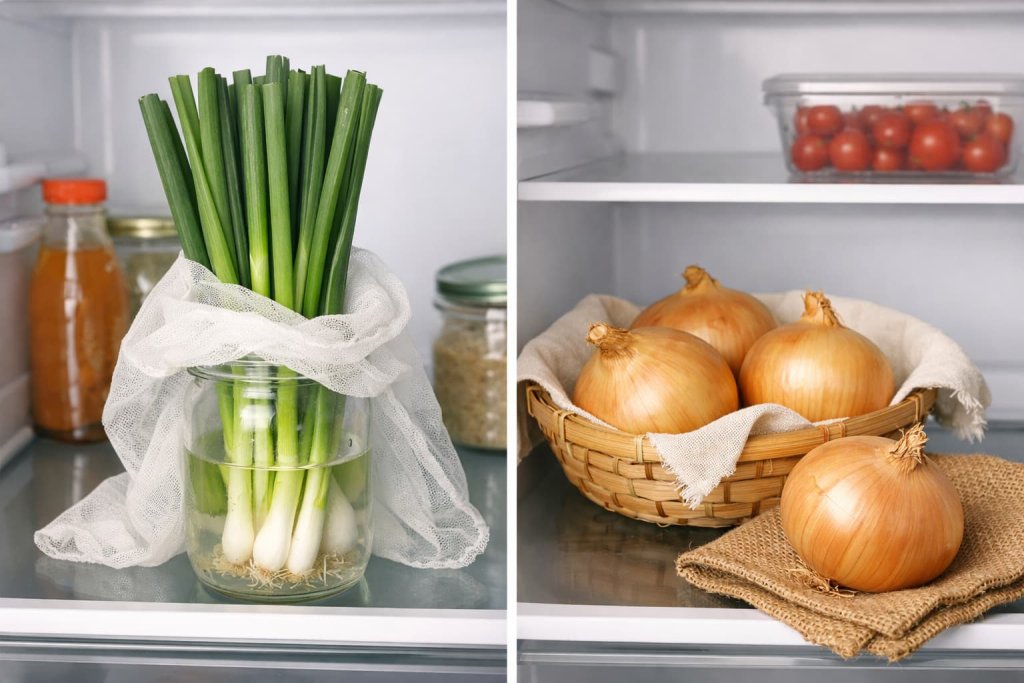
Not all onions behave the same.
Green onions (scallions)
Green onions are more like leafy produce:
- Store in the refrigerator
- Keep them dry (excess moisture speeds slime/rot)
- Use a breathable bag or a container with a paper towel to manage moisture
Sweet onions
Sweet onions (like Vidalia-style) are higher in moisture and tend to spoil faster at room temperature. Many people get better results storing sweet onions in the fridge (whole or cut), keeping them dry and separated from strong-odor foods.
Freezing onions for longer storage
Freezing is great when you want to reduce waste.
Best way to freeze onions
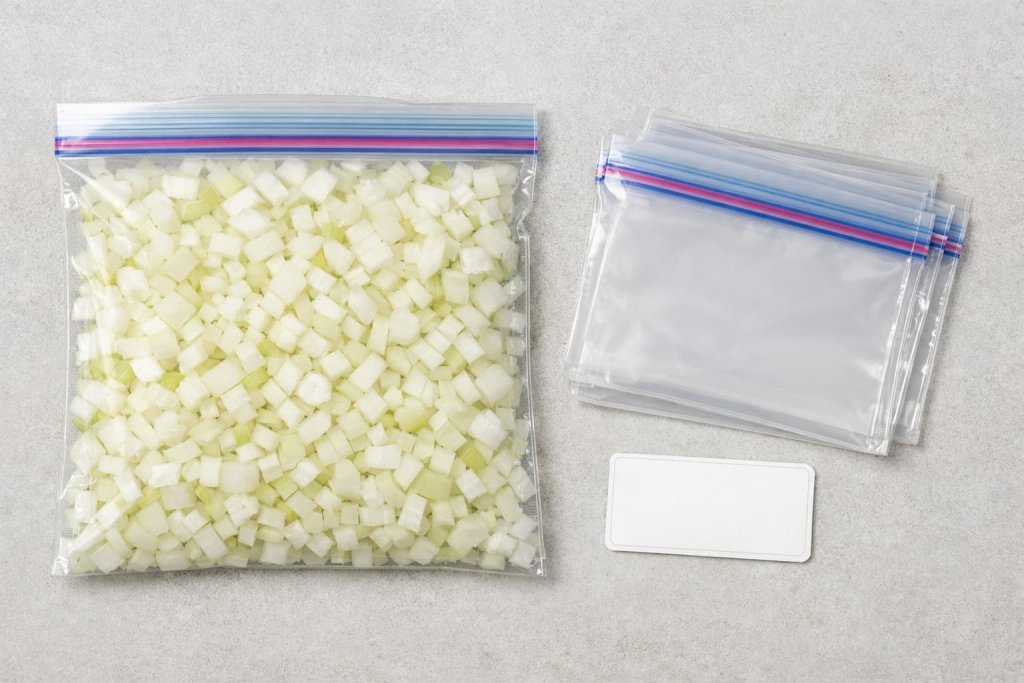
- Peel and chop/slice
- Freeze in a thin layer first (optional) so pieces don’t clump
- Transfer to an airtight freezer bag/container
Michigan State University Extension includes freezing as a preservation option for onions, and it’s especially useful when you plan to cook with them later.
Pro tip: freeze chopped onions flat in a thin layer in a zip-style bag so they break apart easily—then you can pour out only what you need for cooking without thawing the whole bag.
Important: frozen onions soften after thawing, so they’re best for:
- Soups
- Sauces
- Stir-fries
- Casseroles
How to store onions without ruining other produce
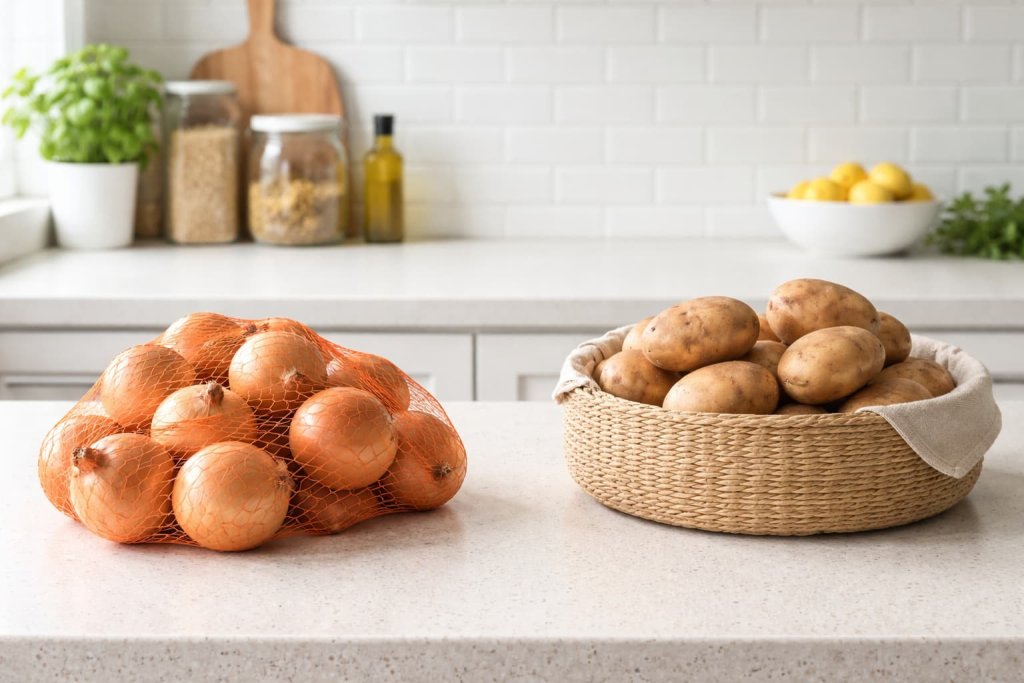
Keep onions away from potatoes
A common kitchen mistake is storing onions and potatoes together. Onion storage guidance notes onions shouldn’t be stored with potatoes or other produce that adds moisture—because moisture and poor airflow can reduce onion shelf life.
Keep onions away from humid produce drawers
Produce drawers often hold higher humidity. Whole onions do better with airflow and dryness, so a ventilated pantry area is usually better than the crisper drawer.
Storage mistakes that make onions spoil faster
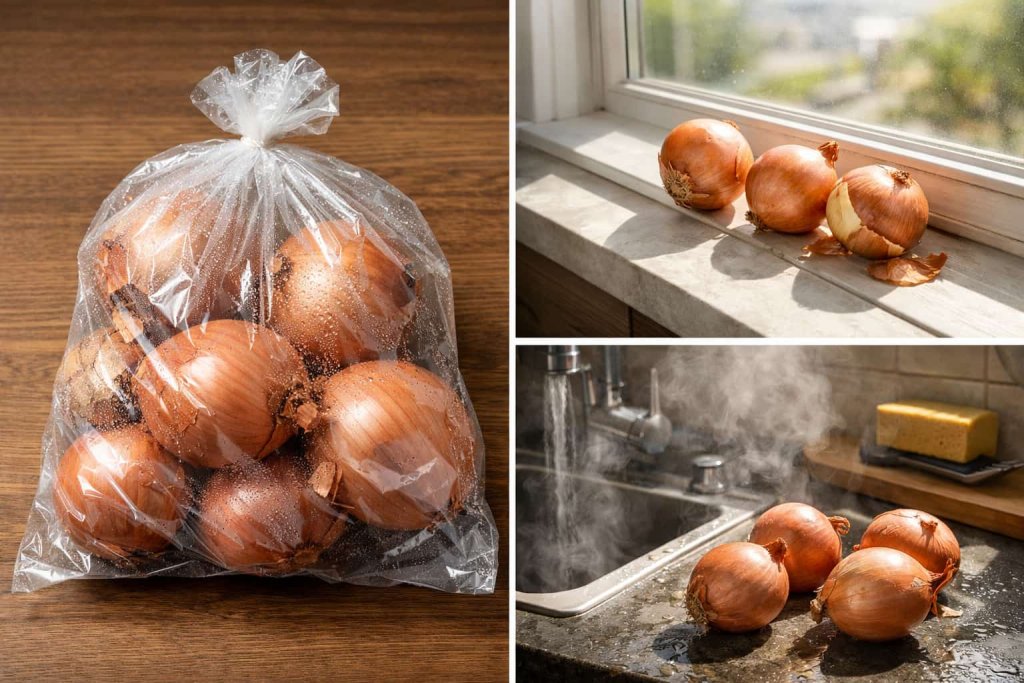
Avoid these high-impact mistakes:
- Storing whole onions in sealed plastic bags (low airflow)
- Keeping onions in warm, bright areas (heat/light can push sprouting)
- Refrigerating whole dry onions and then leaving them out repeatedly (temperature swings can create condensation and speed spoilage)
- Storing damaged onions with good ones (spoilage spreads faster)
What to do if your onions are sprouting, soft, or moldy
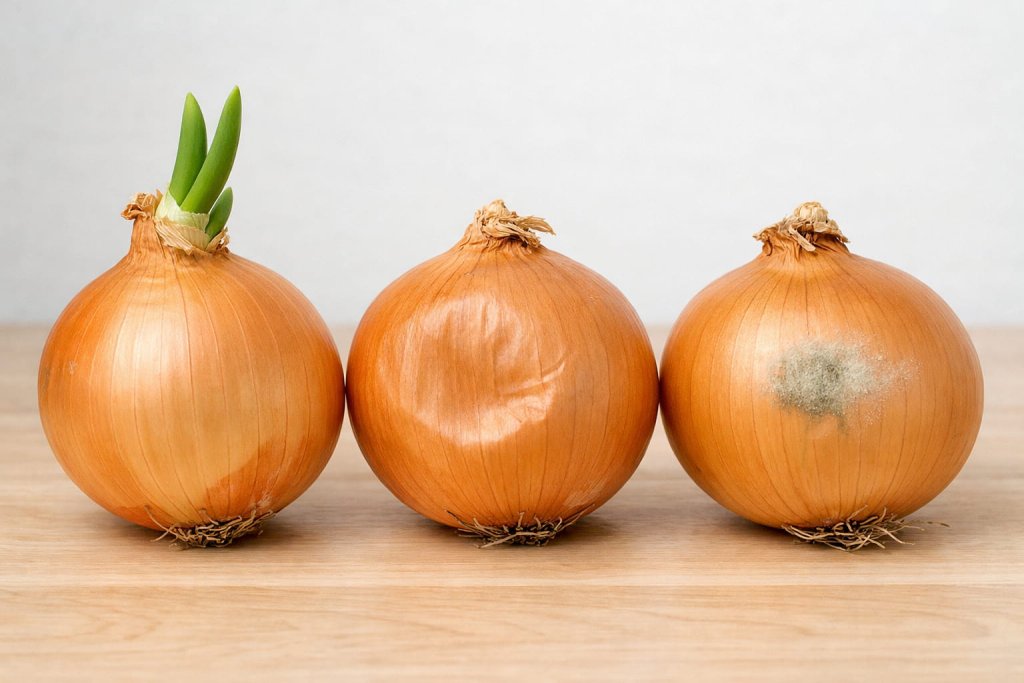
Use this quick decision guide:
- Sprouting, still firm, no mold: usually okay to use soon; remove the sprout if you prefer the flavor
- Soft spots or leaking: discard (quality is gone; spoilage risk rises)
- Visible mold: discard the onion
When in doubt, prioritize safety over saving a few cents of produce.
How to tell if onions are still good
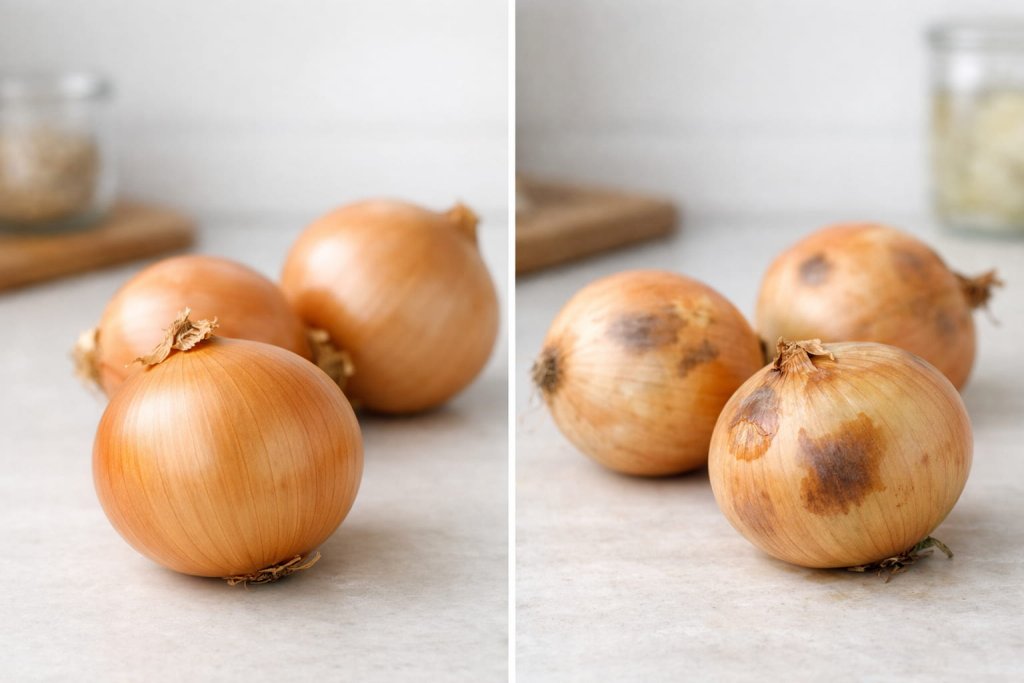
Fresh whole onions should be:
- Firm
- Dry outer skin
- No dark mold
- No wet or mushy areas
- No strong “sour” odor
Cut/cooked onions should be discarded if you notice:
- Slime
- Mold
- Off or sour smell
- Unusual discoloration
Simple table: how to store onions by type
| Onion type | Best storage location | Container | Typical time guide |
|---|---|---|---|
| Whole dry bulb (yellow/white/red) | Cool, dry, dark, ventilated | Mesh bag/basket | Weeks to months, depending on conditions |
| Sweet onions | Fridge often works best | Dry, breathable wrap/container | Shorter than dry onions |
| Green onions | Fridge | Bag/container + paper towel | Best used within several days |
| Cut onions | Fridge (≤40°F/4°C) | Sealed container | Use within about a week for best safety/quality |
| Cooked onions | Fridge (≤40°F/4°C) | Covered container | 3–4 days |
| Frozen onions | Freezer | Airtight bag/container | Best quality within months |
People Also Ask about how to store onions
Should onions be stored in the refrigerator?
Whole dry bulb onions usually do best in a cool, dry, ventilated spot, while cut or cooked onions should be refrigerated promptly at 40°F (4°C) or below.
Can you store onions in a plastic bag?
It’s not ideal for whole onions. Reduced airflow can shorten shelf life, so breathable storage is preferred.
How long do cut onions last in the fridge?
If sealed and kept cold (≤40°F/4°C), cut onions can last several days; for best safety and quality, aim to use them within about a week and discard earlier if anything seems off.
How long do cooked onions last in the fridge?
Use cooked onions and onion leftovers within 3–4 days in the refrigerator.
Can you freeze onions?
Yes. Frozen onions are best used in cooked dishes because texture softens after freezing.
FAQs
1) How to store onions after cutting them in half?
Put the cut side down in a sealed container (or wrap tightly), refrigerate promptly, and keep your fridge at 40°F (4°C) or below.
2) How to store onions so they don’t smell in the fridge?
Use a truly airtight container (glass or hard plastic with a tight lid). This protects other foods from odor transfer and helps the onion stay fresher.
3) How to store onions long term without a cellar?
Choose the coolest, driest indoor spot you have (away from the stove and sunlight) and use a mesh bag or ventilated basket for airflow.
4) How to store caramelized onions?
Cool them quickly, refrigerate in a covered container, and use within 3–4 days (or freeze for longer).
5) Should you wash onions before storing them?
No—extra moisture can shorten shelf life. Keep them dry, and wash only right before use.
6) Can you store onions and garlic together?
Often yes, as long as the storage area is cool, dry, dark, and well-ventilated (the same environment both prefer). Avoid sealing either in plastic.
7) What’s the safest fridge temperature for storing cut onions?
Keep the refrigerator at or below 40°F (4°C).
Conclusion
If you remember one rule, make it this: whole dry onions like airflow and dryness, while cut or cooked onions belong in the fridge fast. Set up a ventilated onion spot, keep your fridge at the right temperature, and freeze extra chopped onions to cut waste and make cooking easier.