
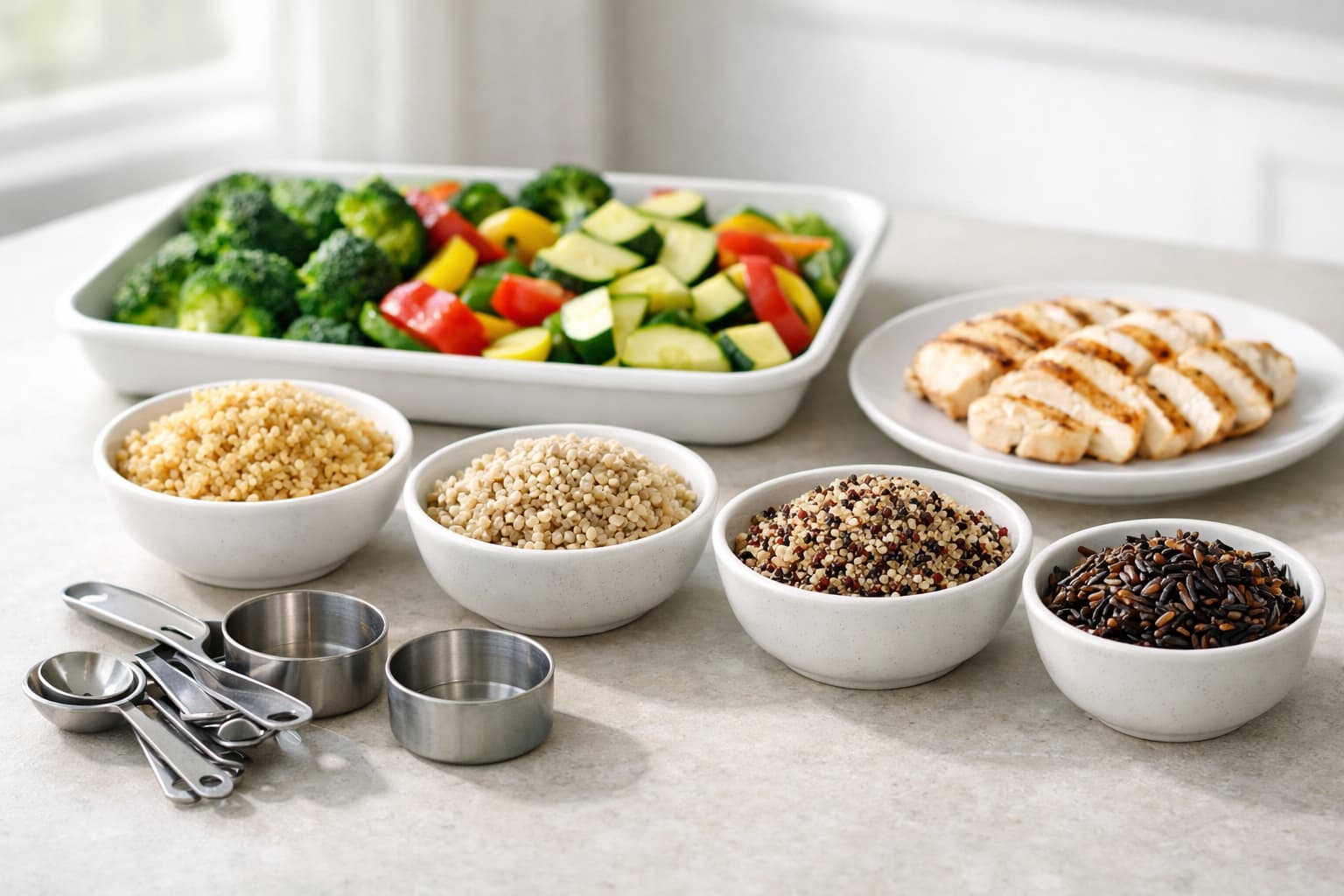
Low carb grains are best thought of as smaller portions of higher-fiber whole grains—not “keto-low” foods. Most grains still contain meaningful carbs, but the right type, serving size, and meal pairing can help you keep carbs more manageable while still getting fiber and nutrients. (cdn.realfood.gov)
In this guide, you’ll get:
- A realistic “low carb grains” definition
- The 11 best grain picks for everyday meals
- A clear label-reading method (total carbs first)
- Portion sizes and simple swaps that work in real life
Quick clarity: what “low carb grains” should mean
Most grains are not low-carb in the strict sense. What usually works better is:
- Choosing whole, higher-fiber grains more often
- Keeping portions to 1/4–1/2 cup cooked (depending on your needs)
- Pairing grains with protein + non-starchy veggies + healthy fat to improve fullness and meal balance
The newest U.S. dietary guidance still emphasizes whole grains and reducing highly processed refined carbs overall, which supports the “better grain + better portion” approach. For the official document, see the Dietary Guidelines for Americans 2025–2030. (cdn.realfood.gov)
Use this simple “lower-carb grain portion” rule
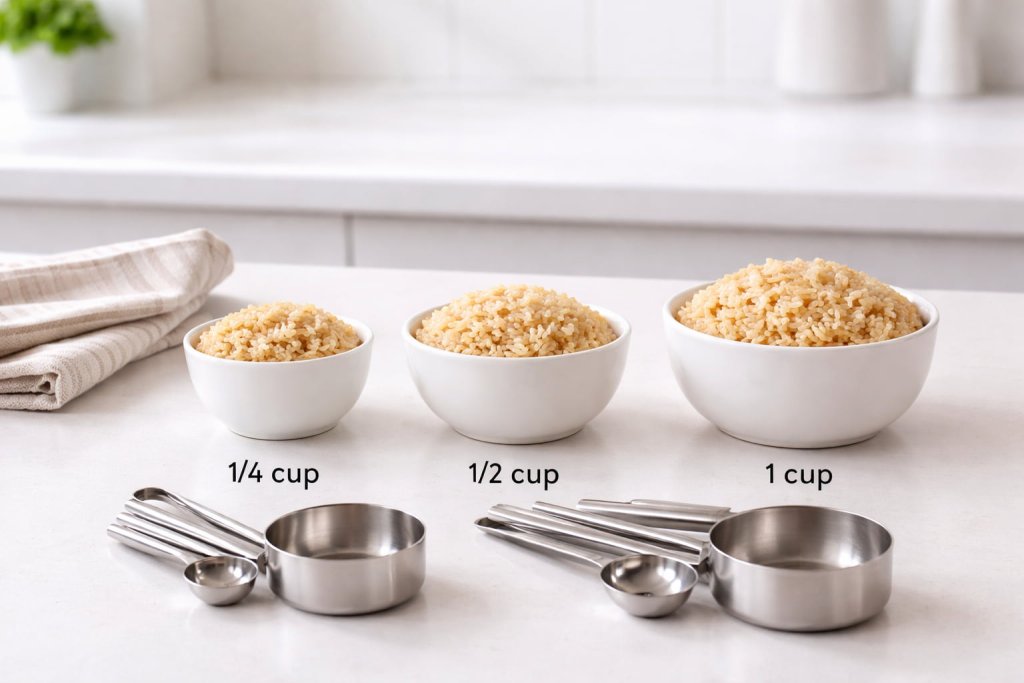
If your goal is to keep carbs lower without cutting grains entirely:
- Standard starting point: 1/2 cup cooked grain
- More carb-sensitive meals: 1/4 cup cooked grain
- When you’re very active: 1/2–1 cup cooked grain may still fit, depending on your total day
Tip: Think of grains as a side, not the base of the plate.
The 11 best low carb grains picks (realistic, everyday options)
Below are “smart picks” that tend to work well because they’re commonly available, easy to cook, and often bring more fiber and texture than refined grains. (Carb and fiber values can vary by brand and cooking method; use your package label and trusted nutrient databases for specifics.)
1) Bulgur
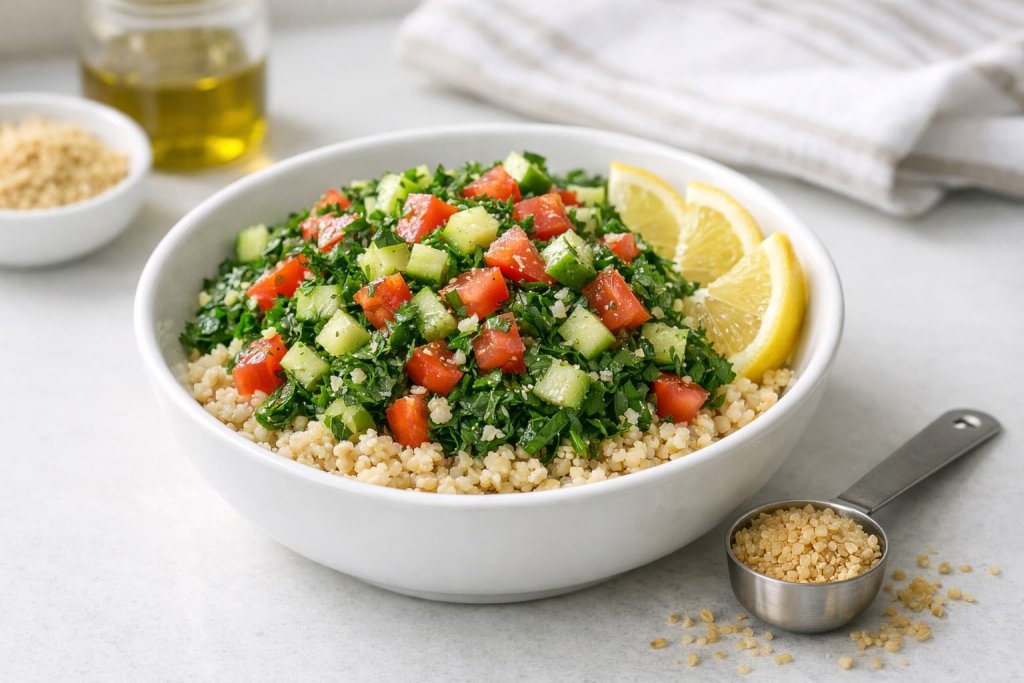
Bulgur is a quick-cooking whole wheat grain that’s easy to portion and often feels satisfying in smaller servings. It works well in:
- Grain-and-greens bowls
- Tabouli-style salads
- Soup add-ins (a little goes far)
2) Steel-cut or rolled oats (unsweetened)
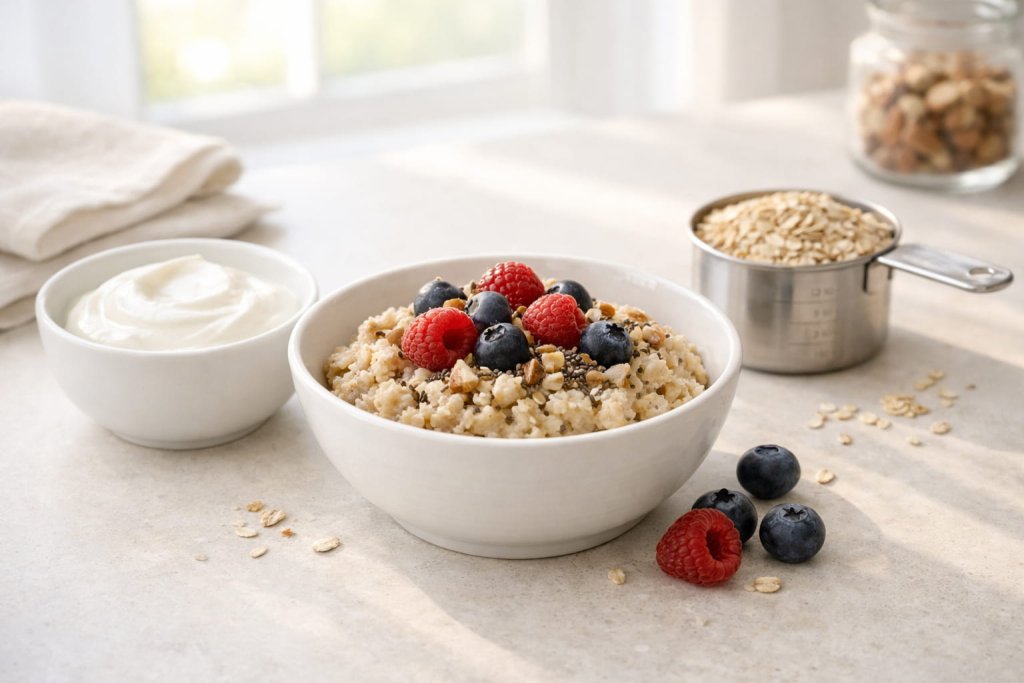
Oats can fit a lower-carb pattern when you:
- Keep the portion modest
- Skip added sugars
- Add protein (Greek yogurt, eggs, or whey) and berries for fiber
A common reference portion is 1/2 cup cooked oats, which can be a practical “lower-carb” serving compared to large breakfast bowls. (fns-prod.azureedge.us)
3) Barley
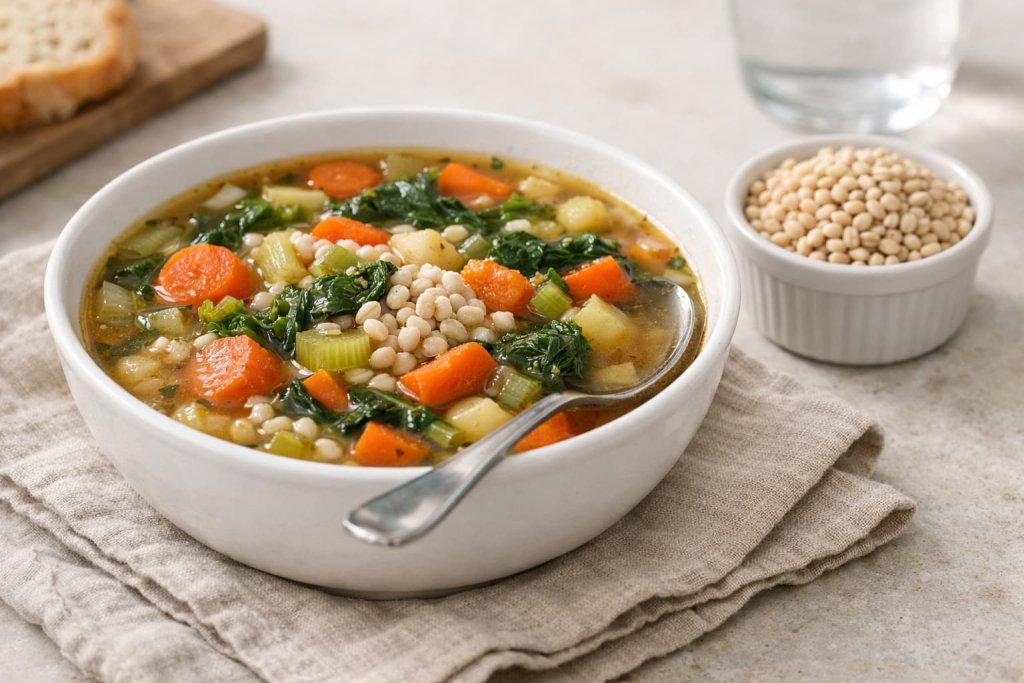
Barley is fiber-forward and great in soups and stews, where a smaller amount still adds body. Try it:
- In vegetable soup instead of pasta
- As a base under roasted veggies and chicken
4) Quinoa (portion-controlled)
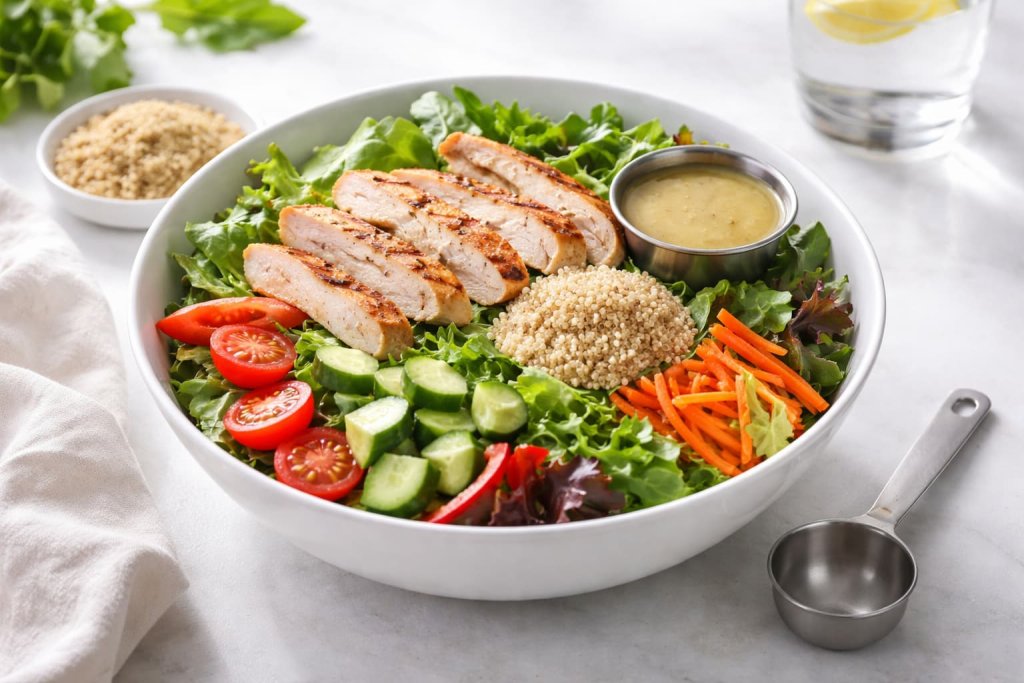
Quinoa isn’t low-carb, but it can be a smart pick because it’s versatile and easy to measure. Use:
- 1/4–1/2 cup cooked under a big salad
- Mixed with cauliflower rice to cut the grain portion in half
5) Wild rice (use as a “mix-in”)
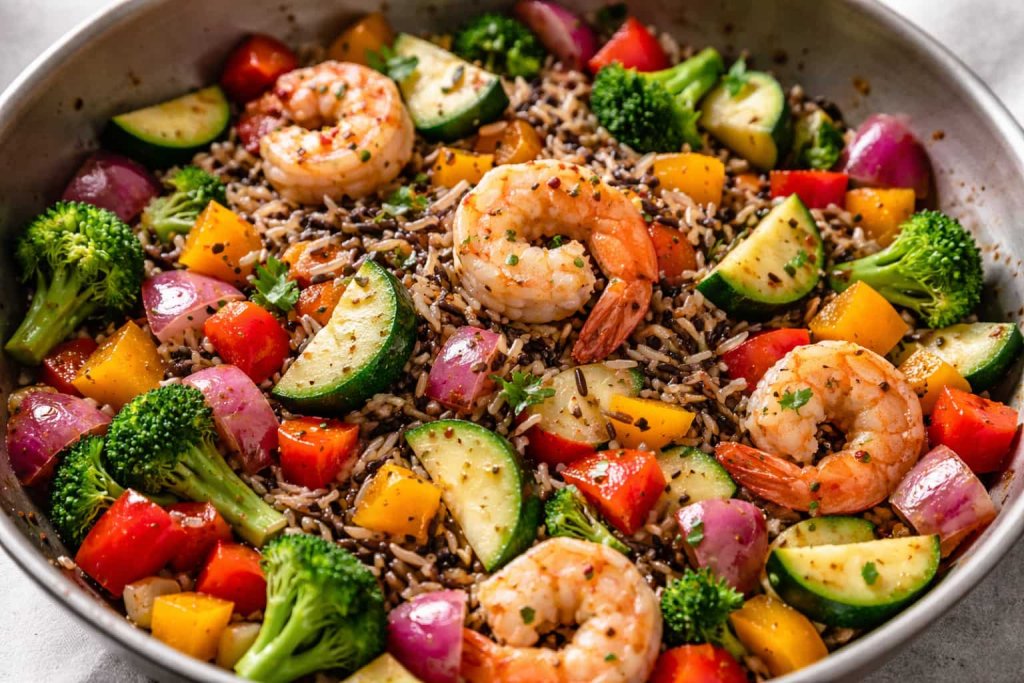
Wild rice is often used as a blend. Treat it as a texture booster:
- Add 2–4 tablespoons to salads or soups
- Mix into sautéed veggies with protein
6) Buckwheat (kasha)
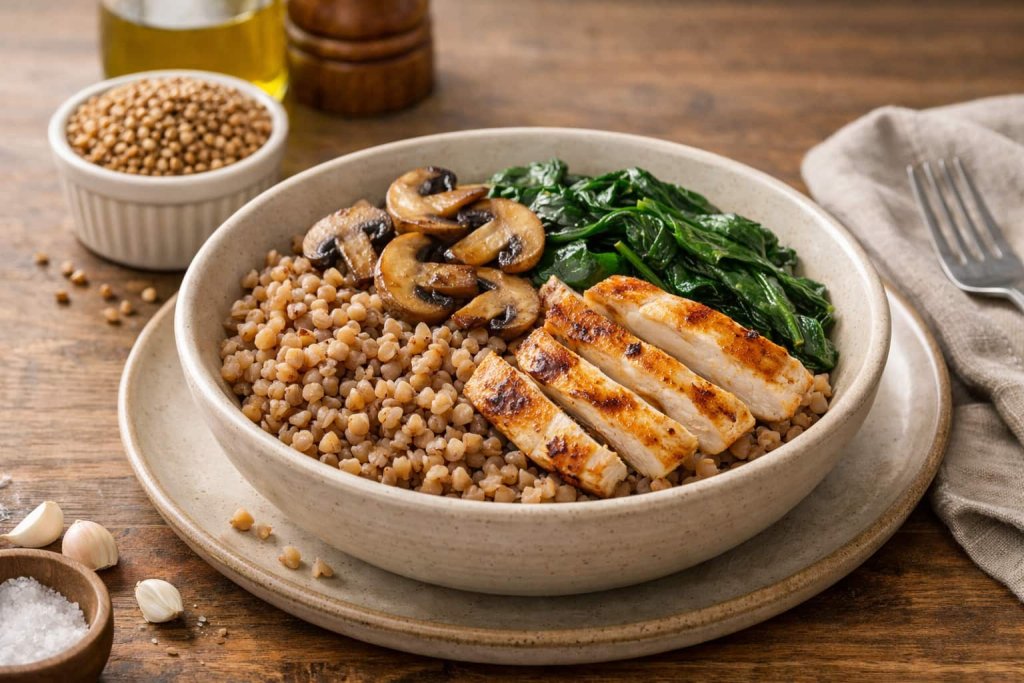
Despite the name, buckwheat isn’t wheat. Kasha has a nutty taste and works well in:
- Warm bowls with mushrooms and chicken
- Simple breakfast “porridge” (unsweetened)
7) Farro (keep servings small)
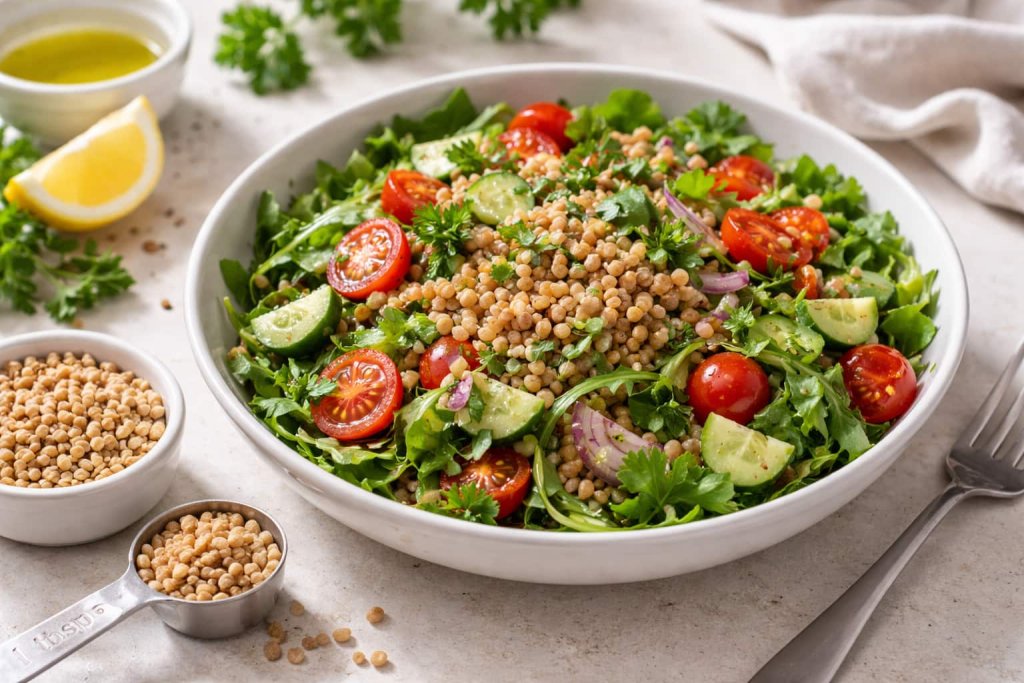
Farro is chewy and satisfying, which helps you feel content with less. Best use:
- 1/4 cup cooked tossed into big salads
- In soups as a hearty spoonful
8) Millet
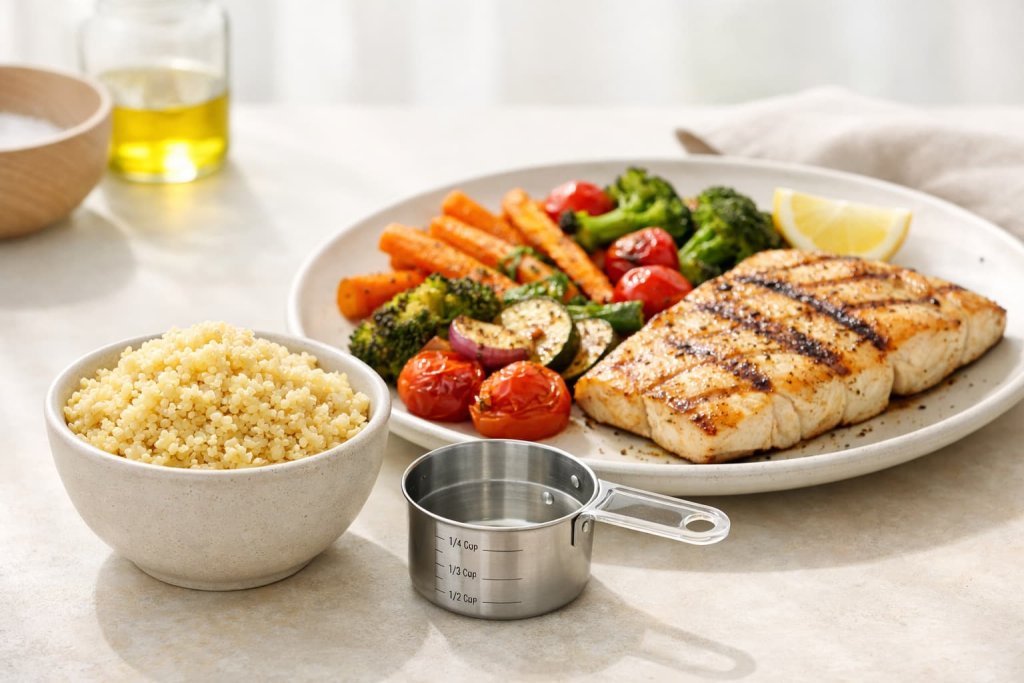
Millet is mild and cooks like rice. It’s useful when you want a neutral grain but still keep portions controlled:
- 1/4–1/2 cup cooked as a side
- Mixed with chopped vegetables and herbs
9) Amaranth
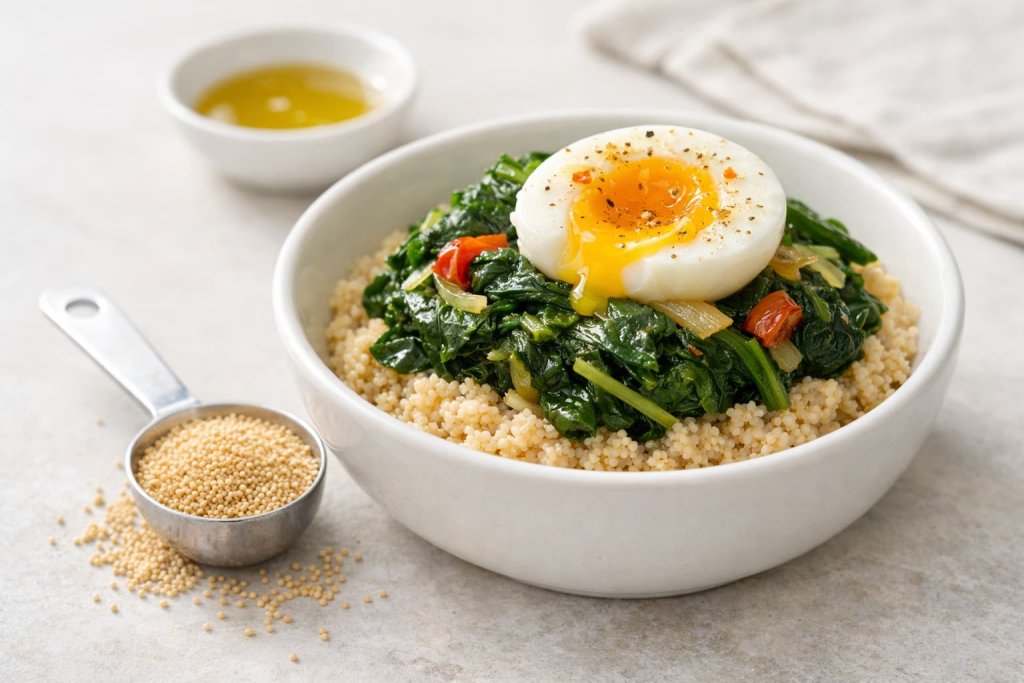
Amaranth cooks into a porridge-like texture and can be filling. It works best:
- As a small base under savory toppings
- Or as a breakfast option with cinnamon and berries (no added sugar)
10) Teff
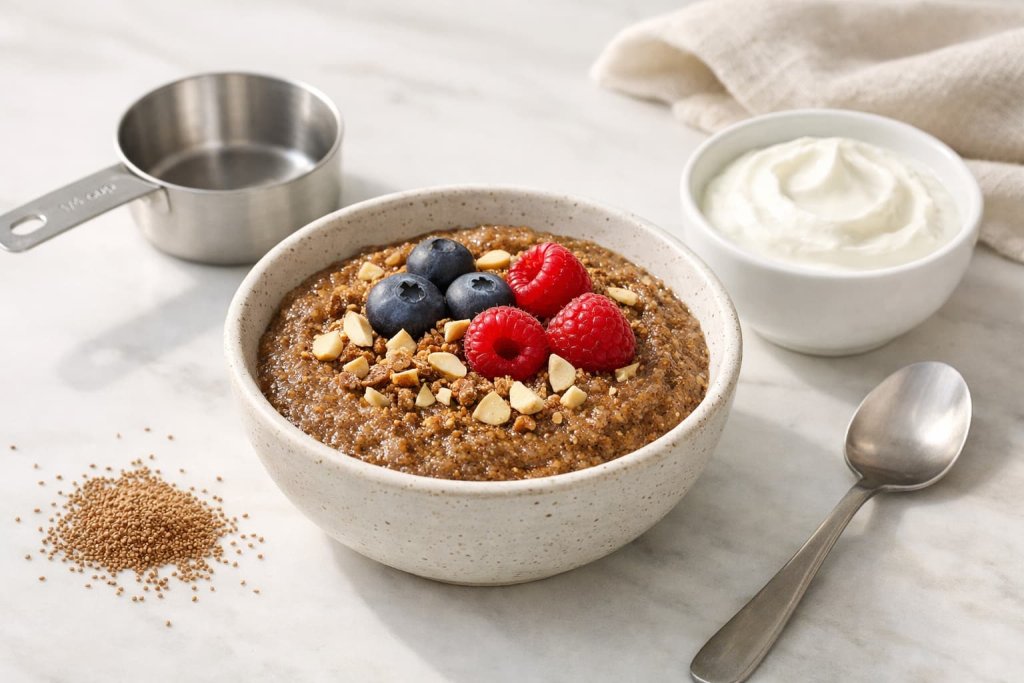
Teff has a richer flavor and is commonly used in porridge or as flour in some cuisines. A small cooked portion can add variety without relying on refined grains.
11) “Grain blends” you portion on purpose
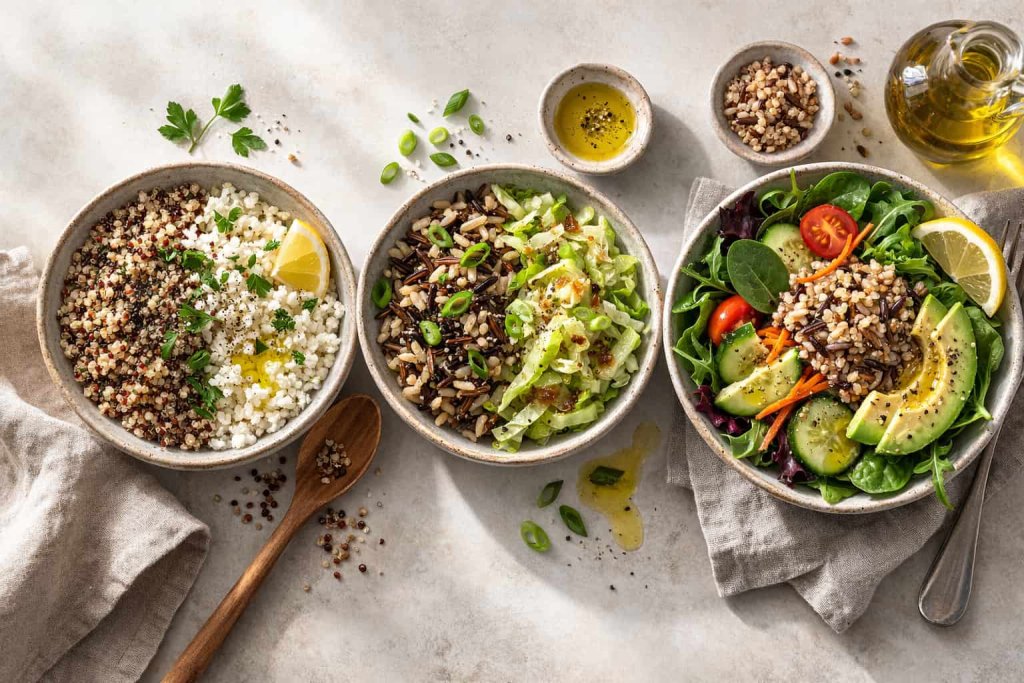
A practical strategy is blending grains with lower-carb ingredients:
- 50/50 quinoa + cauliflower rice
- 75/25 sautéed cabbage “rice” + wild rice blend
- Big salad + 2–4 tablespoons cooked grain for texture
Table: Low Carb Grains at a Glance (Portion-Based)
| Low carb grains pick | Best “lower-carb” cooked portion | Best use | Why it’s a smart pick |
|---|---|---|---|
| Bulgur | 1/4–1/2 cup | Salads, soups, bowls | Satisfying texture in smaller servings |
| Oats (unsweetened) | 1/2 cup | Breakfast, snack bowls | Easy to portion; pairs well with protein |
| Barley | 1/4–1/2 cup | Soups, stews, side dish | Works well as a small “thickener” grain |
| Quinoa | 1/4–1/2 cup | Bowls, salads | Versatile; easy to measure and prep |
| Wild rice (or blends) | 2–4 Tbsp to 1/2 cup | Mix-in for salads/soups | Strong texture so you can use less |
| Buckwheat (kasha) | 1/4–1/2 cup | Warm bowls, porridge | Nutty flavor; good variety option |
| Farro | 1/4 cup | Salads, soups | Chewy, filling mouthfeel in small portions |
| Millet | 1/4–1/2 cup | Side dish, veggie mixes | Mild flavor; easy swap for rice |
| Amaranth | 1/4–1/2 cup | Savory porridge, bowls | Dense texture; can feel filling |
| Teff | 1/4–1/2 cup | Porridge, side base | Rich flavor; easy to keep portions small |
| Grain blends (50/50) | 1/2 cup total | Bowls, meal prep | Half-grain + half-veg lowers carbs fast |
Best “low carb grains” table for real-life serving sizes
Instead of comparing huge 1-cup servings, compare the portions people actually use in lower-carb meals.
Use this table as a planning guide, then confirm with your package Nutrition Facts and reputable nutrient databases like USDA FoodData Central. (fdc.nal.usda.gov)
| Portion style | Cooked grain amount | Why it works |
|---|---|---|
| “Texture add-in” | 2–4 Tbsp | Adds chew + flavor with minimal carbs |
| “Lower-carb side” | 1/4 cup | Keeps grains present but not dominant |
| “Balanced bowl base” | 1/2 cup | Still moderate if the meal is veggie- and protein-heavy |
| “Active day portion” | 3/4–1 cup | Often fine when balanced and matched to your needs |
Net carbs vs total carbs: what matters most
If you see “net carbs” on packaging, be careful. The safest approach is to use Total Carbohydrate first.
The American Diabetes Association explains that “net carbs” are typically calculated by subtracting fiber and some sugar alcohols, but the math isn’t always accurate and can still affect blood glucose for some people. (diabetes.org)
How to read labels for low carb grains (fast method)
Use the label the same way every time:
- Check serving size
- Many products list a serving smaller than what people actually eat.
- Start with Total Carbohydrate
- Compare similar foods using grams per serving and % Daily Value.
- Then check fiber
- Higher fiber often helps with fullness and can make a smaller portion feel more satisfying.
The U.S. Food and Drug Administration notes the Daily Value for total carbohydrate is 275g/day (based on a 2,000-calorie diet) and recommends comparing foods using %DV. (accessdata.fda.gov)
The “low carb grains” plate formula (so you don’t feel deprived)
To keep grains in your life without carb overload, build meals like this:
- Half plate: non-starchy vegetables (salad, broccoli, peppers, zucchini)
- Quarter plate: protein (fish, chicken, tofu, beans if they fit your plan)
- Small side: 1/4–1/2 cup cooked grain
- Add fat for satisfaction: olive oil, avocado, nuts, seeds
This is the simplest way to make grains work for weight goals, blood sugar goals, or “I just feel better lower-carb” goals—without turning meals into math.
Table: Easy Low-Carb Grain Swaps (Real-Life Meals)
| If you usually eat… | Try this swap | What to do |
|---|---|---|
| 1–2 cups rice bowl | 1/2 cauliflower rice + 1/4 cup cooked grain | Keep grain as a “mix-in,” not the base |
| Big pasta side | Roasted veggies + 1/4 cup barley or bulgur | Add grain only for texture |
| Large oatmeal bowl | 1/2 cup cooked oats + Greek yogurt/eggs | Add protein; skip added sugar |
| Burrito bowl base | Lettuce + fajita veggies + 2–4 Tbsp cooked grain | Use grain as a topper |
| Soup with noodles | Barley or bulgur (small scoop) | Add at the end; measure portions |
Common mistakes that make “low carb grains” backfire
- Using a grain as the whole base (big rice bowls, huge oatmeal portions)
- Choosing “multigrain” but not truly whole grain
- Adding sugar (sweetened oatmeal packets, sugary granola, sweet sauces)
- Forgetting liquids add carbs (sweetened coffee drinks + grain breakfast = surprise total)
People Also Ask about low carb grains
Are there any truly low-carb grains?
Most grains are not truly low-carb. A “low carb grains” approach usually means smaller portions and choosing higher-fiber whole grains more often.
What’s the best low carb grain substitute for rice?
For the lowest-carb swap, use cauliflower rice or shredded cabbage “rice.” If you still want a grain, use a wild rice blend as a small mix-in.
Is oatmeal OK on a low-carb diet?
Often yes—if it’s unsweetened and portion-controlled (commonly 1/2 cup cooked as a starting point) and paired with protein and berries.
Should I count net carbs or total carbs?
For most people, Total Carbohydrate is the safest starting point, especially when comparing foods and portions. “Net carbs” can be inconsistent across products.
What grain is best for fullness?
Many people find barley, bulgur, and oats more filling in smaller portions, especially when the meal includes protein and vegetables.
FAQs
1) Can I eat grains and still lose weight?
Yes—many people do best with small portions of grains inside a protein- and veggie-forward meal pattern.
2) What’s a good cooked grain portion if I’m trying to reduce carbs?
A common starting range is 1/4–1/2 cup cooked per meal, adjusted to your goals and activity.
3) Are “keto grains” real?
Usually, “keto” grain products are grain-like substitutes (often made from seeds, fiber blends, or flours). Use the label and your total daily plan to decide.
4) Is quinoa better than rice for low carb eating?
Quinoa and rice can be similar in carbs. Quinoa can still fit if you keep portions smaller and build a balanced plate.
5) What’s the easiest way to make grains work at dinner?
Use grains as a side: roast vegetables + protein + 1/4 cup cooked grain with olive oil and herbs.
6) Do whole grains always spike blood sugar less?
Responses vary. Portion size, the rest of the meal (protein/fat/fiber), and individual factors all matter.
7) What if I have diabetes or take glucose-lowering medication?
It’s smart to discuss carbohydrate targets and meal patterns with your clinician or a registered dietitian, especially if medications can raise the risk of low blood sugar.
Conclusion
“Low carb grains” works best when you stop hunting for a magically low-carb grain and focus on what actually moves the needle: whole grains, smaller servings, smart pairings, and consistent label-reading. Start with 1/4–1/2 cup cooked, pick one of the 11 options above, and build your plate around protein and vegetables so your meal feels satisfying.
This content is for informational purposes only and not medical advice.
Sources/References
- USDA FoodData Central
- U.S. Food and Drug Administration: Interactive Nutrition Facts Label Total Carbohydrate; Daily Value guidance
- American Diabetes Association: Get to Know Carbs; Making Sense of Food Labels
- Dietary Guidelines for Americans 2025–2030