
Most liquid chlorophyll benefits promoted online—including weight loss, clearer skin, and “detox”—are not backed by strong human evidence for drinking the supplement. Some research is promising, but it often involves different preparations or specific medical situations. As MD Anderson’s chlorophyll guidance explains, evidence for many supplement claims remains limited.
Understanding that distinction can help you avoid unrealistic expectations and unnecessary spending. Before trying chlorophyll drops, check what they contain, review the copper amount, and consider whether your goal calls for medical advice rather than another supplement.
What Is Liquid Chlorophyll?
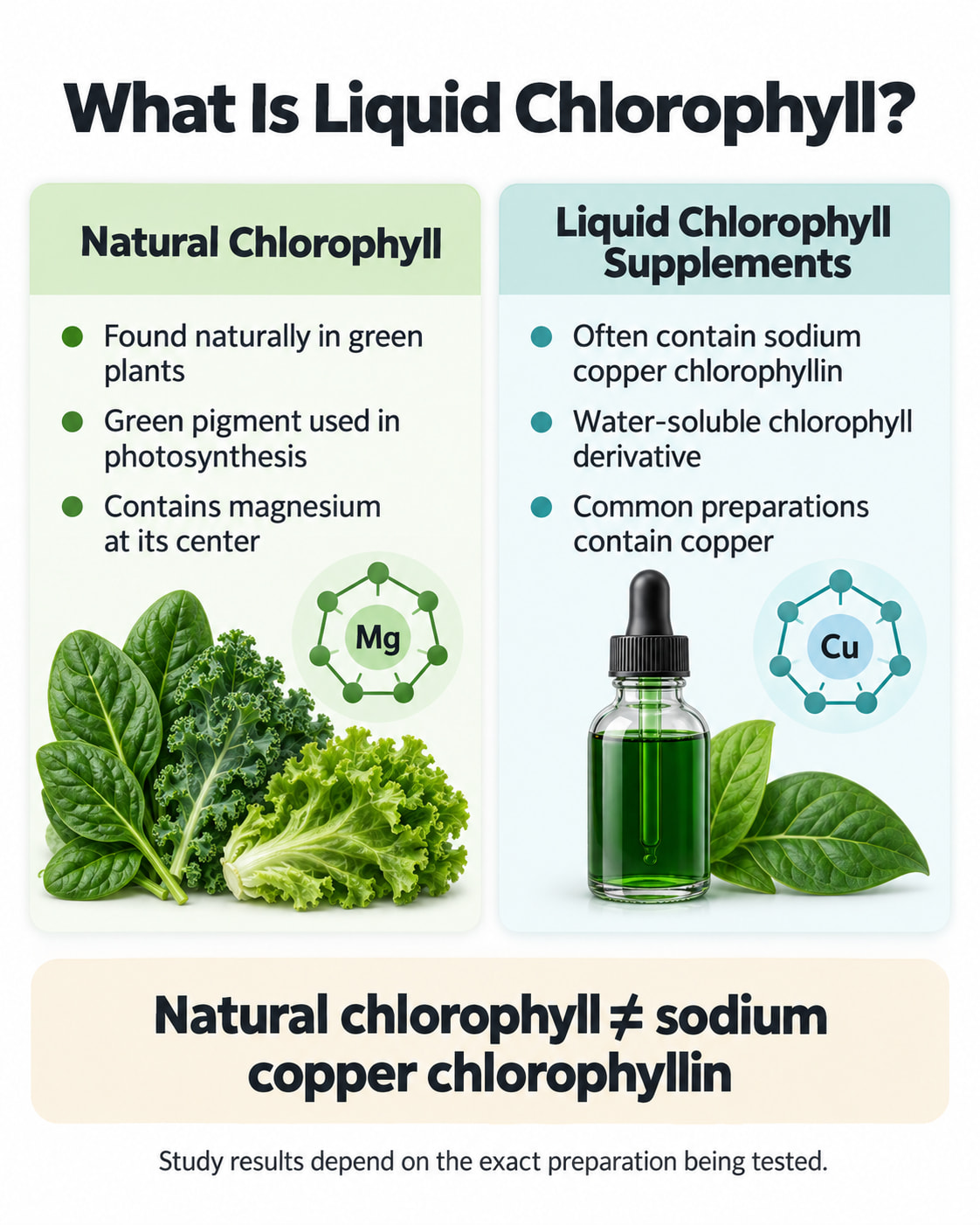
Chlorophyll is the green pigment plants use during photosynthesis. However, most supplements marketed as liquid chlorophyll contain sodium copper chlorophyllin, a modified, water-soluble derivative. Natural chlorophyll contains magnesium at its center; the common copper chlorophyllin preparation contains copper instead.
You may see “chlorophyllin copper complex” or “sodium copper chlorophyllin” on the label. These ingredients are related to plant chlorophyll, but they are not identical to it.
This matters when interpreting research: results from a skin gel, plant extract, or particular tablet formulation do not automatically apply to drops added to drinking water.
Liquid Chlorophyll Benefits: What Does the Evidence Show?
Liquid Chlorophyll Benefits for Skin
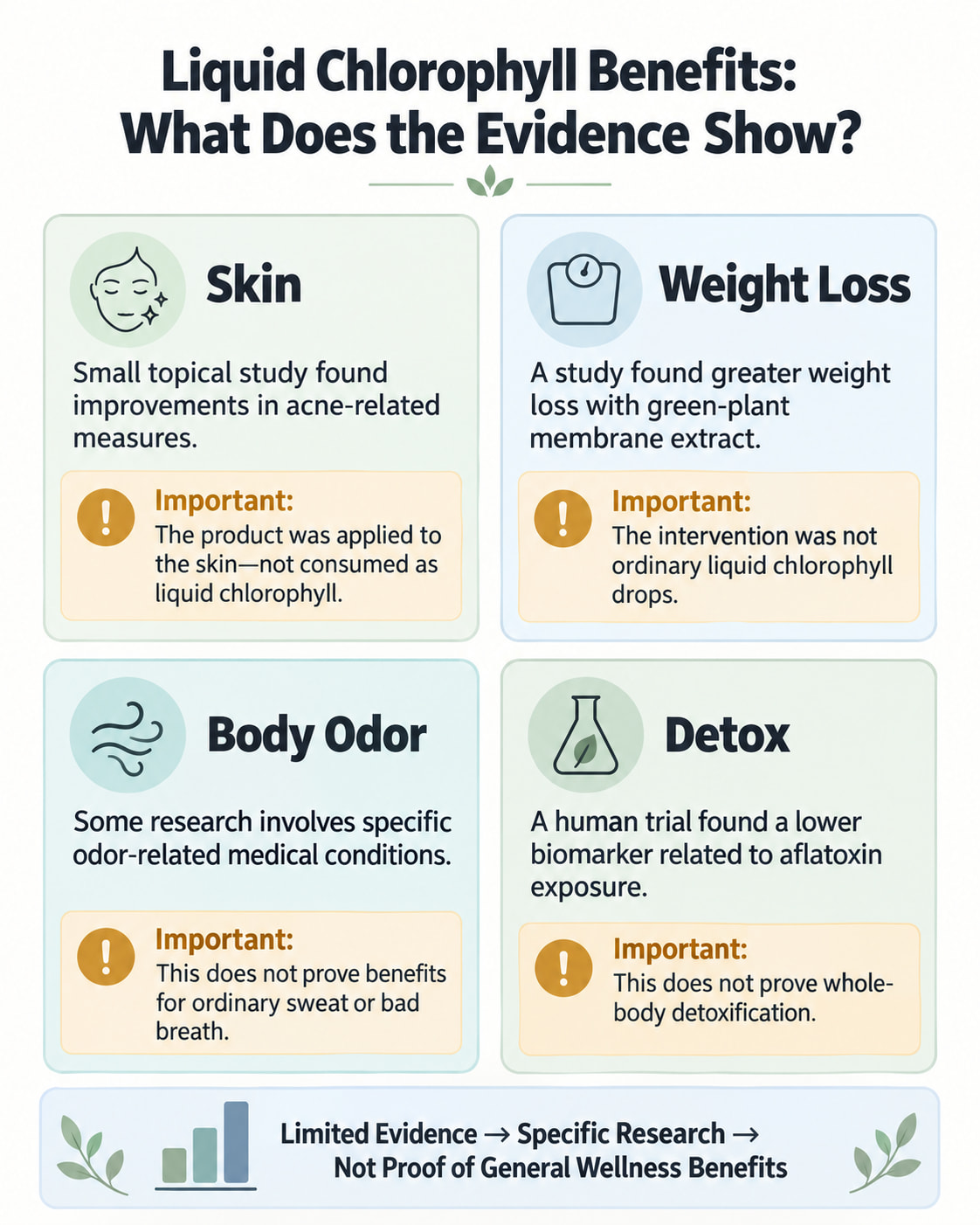
A 2015 pilot study reported improvements in several acne and skin-appearance measures among 10 people who applied a sodium copper chlorophyllin gel twice daily for three weeks. The study was small and lacked a placebo comparison group.
The crucial detail is how the product was used: participants applied it to their skin. They did not drink chlorophyll water.
These preliminary findings do not establish that oral chlorophyll drops reduce breakouts, shrink pores, or improve skin texture. A positive result from a topical preparation is not evidence that swallowing a related ingredient produces the same effect.
Does Liquid Chlorophyll Help With Weight Loss?
A 2014 randomized study found greater weight loss among women taking a green-plant membrane extract than among those taking a placebo. The 12-week study involved 38 women and used 5 grams of the extract daily. Both groups also received instructions about eating patterns and increasing physical activity.
However, the extract contained plant membranes known as thylakoids, not isolated chlorophyll or ordinary chlorophyllin drops.
The study therefore cannot establish that chlorophyll itself caused the additional weight loss. It also does not show that adding a few drops to water reduces appetite or body fat. The product studied matters as much as the result.
Can Chlorophyll Reduce Body Odor?
There is some human research involving particular odor-related conditions.
A small study published in Life Sciences in 2004 examined copper chlorophyllin in people with trimethylaminuria, a metabolic disorder associated with an odor-producing compound called trimethylamine. Researchers reported lower concentrations of this compound in urine after supplementation. That is a specific finding—not proof of reliable benefits for ordinary sweat or bad breath.
The FDA also recognizes limited internal-deodorant uses for chlorophyllin copper complex under its OTC drug monograph. These concern odor from a colostomy or ileostomy and fecal odor associated with incontinence. They are not a blanket endorsement of chlorophyll supplements for whole-body freshness.
Does Liquid Chlorophyll Detox Your Body?
One frequently cited study provides a useful example of how a real finding can become an exaggerated claim.
A randomized trial published in 2001 found that chlorophyllin reduced a urinary marker of aflatoxin-related DNA damage in adults exposed to aflatoxin through food. Aflatoxin is a toxin produced by certain molds. The trial enrolled 180 adults and compared chlorophyllin tablets with a placebo.
At 12 weeks, the chlorophyllin group had a 55% lower median level of the measured urinary biomarker.
That result does not mean participants had 55% less cancer risk or that their bodies were “55% cleaner.” The study measured a specific marker related to one exposure. It did not establish general detoxification, heavy-metal removal, or cancer prevention from everyday chlorophyll drops.
What About Antioxidants, Digestion, and Energy?
Laboratory findings suggest antioxidant activity, but this does not establish a noticeable health benefit from drinking chlorophyll water. Evidence for improving everyday digestion or energy is also limited.
Some gut-health research involves experimental models rather than large, well-controlled human trials. Those findings are not enough to promise relief from bloating or constipation, or to describe chlorophyll as a proven way to improve the gut microbiome.
Has Newer Research Changed the Picture?
Research is continuing. A study published in the January 2026 issue of Phytomedicine investigated high-dose sodium copper chlorophyllin in healthy male volunteers and reported favorable tolerability under the trial conditions.
That adds early safety and pharmacology information. It does not establish long-term safety for every population or demonstrate that retail drops improve skin, weight, or general wellness. Research doses should not be copied into a personal supplement routine.
Liquid Chlorophyll Side Effects and Risks
Digestive Symptoms and Discoloration
Reported effects include nausea, abdominal cramps, diarrhea, and green discoloration of stools or urine. Persistent digestive symptoms are not evidence that a supplement is “detoxing” your body.
Stop using a nonessential supplement and contact a healthcare professional when symptoms persist or worsen. Nature’s Way’s product directions, for example, specifically advise discontinuing use and consulting a professional when cramps or diarrhea continue.
Possible Sun Sensitivity
Cleveland Clinic lists sunburn among possible side effects. However, the frequency of sun-related reactions with commercial oral products is not well established. New or unusual skin reactions deserve medical advice rather than an assumption that the supplement is harmless because it comes from plants.
Copper Content Can Be Significant
Some liquid chlorophyll products contain substantial amounts of copper.
For example, Nature’s Way’s Chlorofresh label lists 132 milligrams of chlorophyllin and 6 milligrams of copper per two-tablespoon serving. Those are separate measurements: 132 milligrams of chlorophyllin does not mean 132 milligrams of copper.
For comparison, NIH lists a copper recommended dietary allowance of 0.9 milligrams daily for most adults, with higher requirements during pregnancy and breastfeeding. The adult upper intake level is 10 milligrams daily from food and supplements combined.
The upper limit is not a target. Check for copper in multivitamins and other products before combining supplements, and do not assume that every chlorophyll brand contains the same amount.
Certain Stool Tests May Be Affected
Oral chlorophyllin may cause false-positive results on guaiac-based fecal occult blood tests. This does not apply to every stool test. Tell the clinician ordering testing about your supplements.
Who Should Avoid Liquid Chlorophyll or Get Advice First?
During pregnancy or breastfeeding, avoid chlorophyll supplements unless your healthcare professional specifically recommends them. Their safety in these populations has not been established. This caution does not mean ordinary green vegetables should be avoided.
People with Wilson disease or a prescribed copper restriction should not start copper-containing chlorophyllin without specialist guidance. Wilson disease impairs copper clearance and increases the risk of harmful accumulation.
Children, people taking medications, and those managing chronic conditions should also have the exact product reviewed before use. NIH recommends discussing supplements with healthcare professionals and notes that many have not been adequately studied in children.
Bring the bottle or a clear photograph of the Supplement Facts panel. That is more useful than asking whether “chlorophyll” is safe without identifying the ingredients and serving size.
Liquid Chlorophyll Dosage: Is There a Recommended Amount?
There is no established daily dose of liquid chlorophyll proven to deliver the commonly advertised skin, weight-loss, or general wellness benefits. The studies discussed above used different preparations for different purposes.
You may encounter recommendations of 100–300 milligrams daily online. The FDA’s internal-deodorant monograph includes directions of 100–200 milligrams daily in divided doses, with a maximum of 300 milligrams for its specified uses. Those are indication-specific OTC drug directions—not an FDA-recommended wellness dose for liquid supplements.
Do not transfer the number of drops or tablespoons from one brand to another. Supplement serving sizes are set by manufacturers and are not universally standardized. Follow the exact label and seek professional guidance about whether the product is appropriate at all.
How to Evaluate a Liquid Chlorophyll Product
The FDA explains in its dietary supplement guidance that supplements are not approved by the agency before marketing. Manufacturers must still meet applicable safety, labeling, and manufacturing requirements. “Not approved before sale” is accurate; “not regulated at all” is not.
Before purchasing, check three things:
- Ingredients and amounts: Identify the form of chlorophyllin, serving size, copper content, and additional ingredients. Review calories and carbohydrates rather than assuming the product contains only pigment and water.
- Independent quality testing: Third-party testing can help verify ingredients and check for contaminants. It does not prove effectiveness or guarantee safety for every person.
- Directions and storage: Follow product-specific measuring, dilution, and storage instructions. Refrigeration requirements can matter after opening.
Current Price Example
As checked on September, 2026, Nature’s Way displayed $14.99 for a 16-fluid-ounce bottle of Chlorofresh Liquid Chlorophyll, before applicable discounts, shipping, or taxes. This is a price-and-label example, not an endorsement. Prices and availability can change.
A low price, appealing flavor, or quality seal cannot substitute for evidence that a product will achieve your goal.
Is Food a Better Way to Get Chlorophyll?
For everyday nutrition, green vegetables provide more than their pigment. Spinach, broccoli, and other greens contain natural chlorophyll alongside fiber, vitamins, and minerals. Frozen vegetables also contain chlorophyll. A supplement does not replace these foods.
Practical options include adding spinach to eggs or beans, serving broccoli with dinner, or keeping frozen greens available for soups. Choose vegetables you enjoy and can use consistently.
You do not need to chase a particular chlorophyll amount. A varied eating pattern is more useful than focusing on one isolated plant compound.
Frequently Asked Questions About Liquid Chlorophyll Benefits
Is It Safe to Drink Liquid Chlorophyll Every Day?
Daily use is not automatically appropriate. The product’s ingredients, copper content, dose, and your health history matter. Favorable tolerability in a controlled trial does not establish indefinite safety for every consumer.
How Long Does Liquid Chlorophyll Take to Work?
There is no evidence-based timeline for improved skin, weight, or energy from everyday liquid drops. The three-week topical skin study cannot be used to promise results after three weeks of drinking chlorophyll water.
Are There Special Liquid Chlorophyll Benefits for Women?
The research discussed here does not establish a women-specific benefit from liquid drops. The weight-loss trial involving women used green-plant membranes, not a standard liquid chlorophyll supplement.
Can Liquid Chlorophyll Make Your Stool Green?
Yes. Green stool or urine can occur. This color change does not demonstrate that the supplement is improving your health.
Does Liquid Chlorophyll Need to Be Refrigerated?
Check the exact product label. Nature’s Way’s Chlorofresh directions require refrigeration after opening, but you should not assume every product has identical storage instructions.
Can Chlorophyll Drops Replace Eating Vegetables?
No. They do not replace the fiber and range of nutrients supplied by vegetables. Their green color does not make them nutritionally equivalent to a serving of greens.
Conclusion
Liquid chlorophyll is an interesting research subject, but common wellness claims exceed what everyday supplement studies have established. Limited findings for specific preparations should not become promises of clearer skin, weight loss, or whole-body detoxification.
Before buying, compare the claim with the evidence, check the copper content, and discuss the exact product with a healthcare professional. Keep vegetables—not chlorophyll drops—as the foundation of getting more greens into your diet.
This content is for informational purposes only and not medical advice.
References
- UT MD Anderson Cancer Center. 6 Things to Know About Chlorophyll.
- Cleveland Clinic. Can Chlorophyll Supplements Benefit Your Health?.
- Oregon State University, Linus Pauling Institute. Chlorophyll and Metallo-Chlorophyll Derivatives.
- Stephens TJ, McCook JP, Herndon JH Jr. Pilot Study of Topical Copper Chlorophyllin Complex in Subjects With Facial Acne and Large Pores.
- Montelius C, et al. Body Weight Loss, Reduced Urge for Palatable Food and Increased Release of GLP-1 Through Daily Supplementation With Green-Plant Membranes for Three Months in Overweight Women.
- Yamazaki H, et al. Effects of the Dietary Supplements, Activated Charcoal and Copper Chlorophyllin, on Urinary Excretion of Trimethylamine in Japanese Trimethylaminuria Patients.