
How many calories should I eat to lose weight? Start with your estimated maintenance calories and subtract an appropriate calorie deficit—not a fixed calorie limit copied from someone else. Your needs depend on factors such as your age, height, weight, sex, and activity level, according to the FDA.
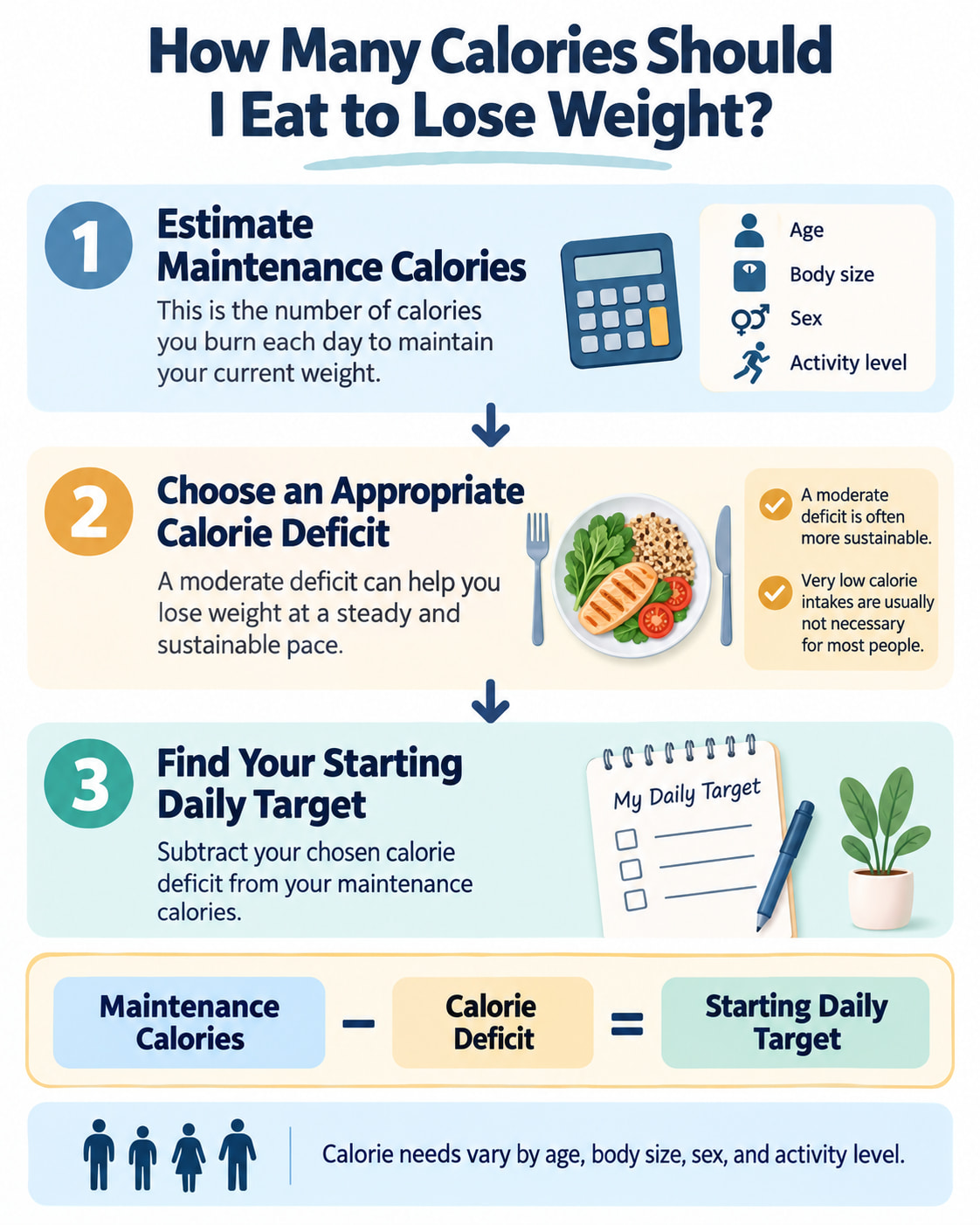
For example, an estimated maintenance intake of 2,200 calories minus a 400-calorie reduction gives a starting target of 1,800 calories per day. That is an illustration, not a recommendation for everyone.
An appropriate target should support progress while leaving room for adequate nutrition. The calculation is a starting point; choosing a sustainable eating plan and reviewing how it works are equally important, according to NIDDK.
How Many Calories Should I Eat to Lose Weight Each Day?
Your maintenance calories are the estimated calories needed to keep your current weight stable at your usual activity level. A weight-loss target is an intake below that estimate.
The basic calculation is:
Estimated maintenance calories − Individualized calorie deficit = Starting daily calorie target
Here are three hypothetical examples:
| Estimated maintenance calories | Illustrative daily reduction | Calculated daily intake |
|---|---|---|
| 2,000 | 250 | 1,750 |
| 2,200 | 400 | 1,800 |
| 2,600 | 500 | 2,100 |
These examples demonstrate the arithmetic. They do not establish the right maintenance estimate or deficit for you.
Do not automatically use 2,000 calories as your maintenance level. The FDA explains that 2,000 calories is a general reference for nutrition advice. Your actual needs may be higher or lower.
How to Calculate Your Daily Calorie Target for Weight Loss
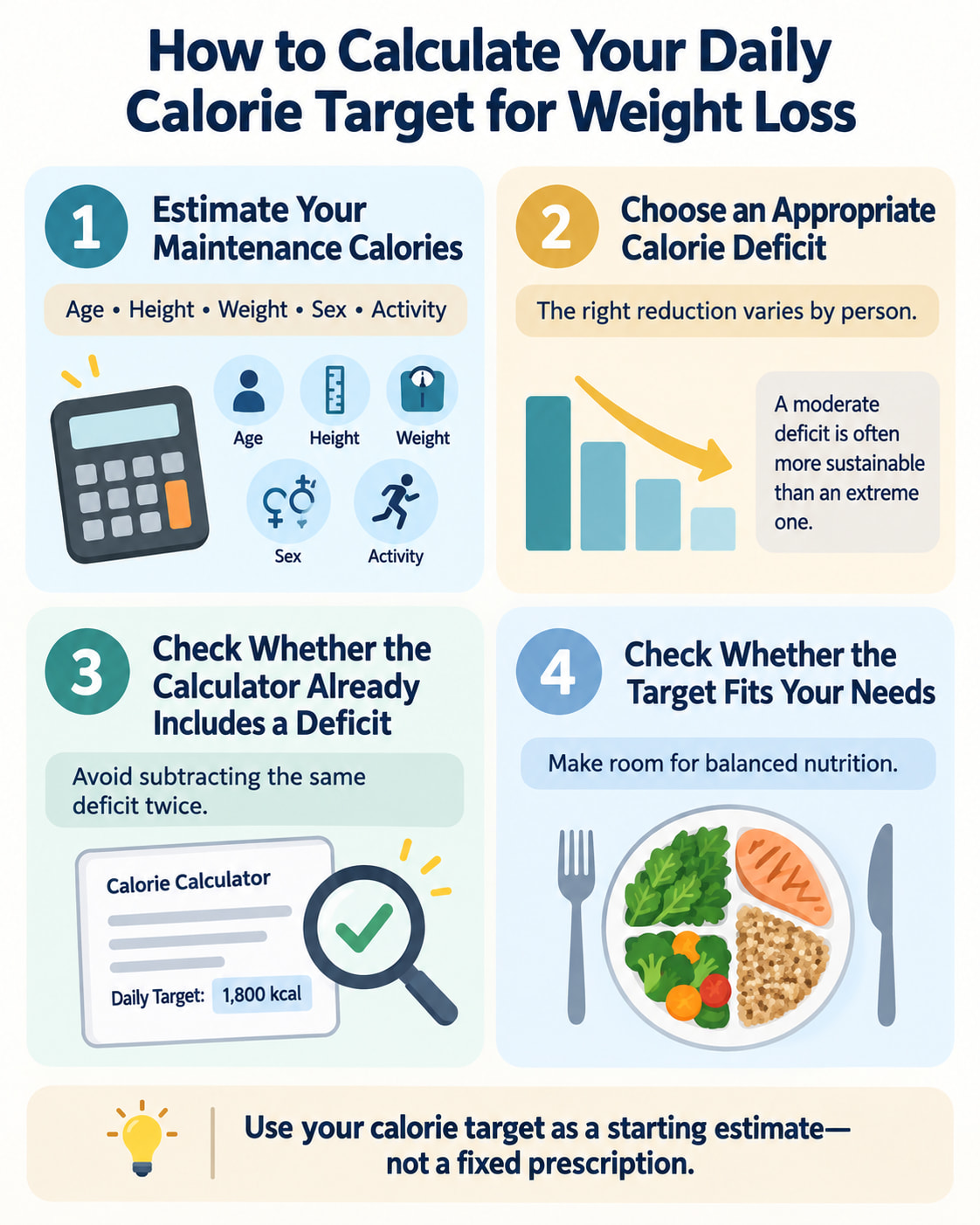
1. Estimate Your Maintenance Calories
According to the NIDDK Body Weight Planner instructions, its estimates use your weight, height, age, sex, and physical activity level. It provides separate calorie estimates for maintaining your current weight, reaching a goal, and maintaining that goal afterward.
Enter an activity level that reflects your normal routine—not the exercise schedule you hope to follow. According to NIDDK, someone with a physically demanding job may have different needs from someone of similar size who spends most of the day sitting.
The planner is intended for adults age 18 and older. It is not intended for children, adolescents, or people who are pregnant or breastfeeding.
2. Choose an Appropriate Calorie Deficit
The AHA/ACC/TOS 2013 clinical guideline includes daily deficits of 500 or 750 calories among options for adults with overweight or obesity. These are clinical approaches, not mandatory reductions for everyone.
The resulting intake matters as much as the size of the reduction. Subtracting 500 calories from a high maintenance estimate is different from subtracting it from an already modest one.
A smaller reduction or a longer timeline may be more appropriate when a larger deficit would make adequate nutrition difficult. NICE guidance deliberately avoids specifying one deficit for everyone and emphasizes an individualized approach.
Remember that a 500-calorie deficit means eating 500 calories below maintenance—not eating only 500 calories in a day.
3. Check Whether the Calculator Already Includes a Deficit
Read the result carefully. A maintenance estimate and a weight-loss intake estimate are not interchangeable.
Do not subtract another deficit from a calculator’s “reach your goal” intake. That result already represents the estimated intake for the goal and activity assumptions you entered.
For example, subtracting another 500 calories from a calculator-generated 1,800-calorie weight-loss target would produce 1,300 calories. That would be an additional reduction, not a correction to the original calculation.
4. Check Whether the Target Fits Your Needs
Before focusing on the number, consider whether the eating plan works in practice. Can you build balanced meals, accommodate your food preferences, and follow it around work and family commitments?
NIDDK guidance emphasizes choosing a plan that fits your health needs, preferences, and circumstances. A registered dietitian can help translate a calorie estimate into an appropriate eating pattern.
A number that looks reasonable on a screen still needs to work in your everyday life.
Is 1,200 or 1,500 Calories Enough to Lose Weight?
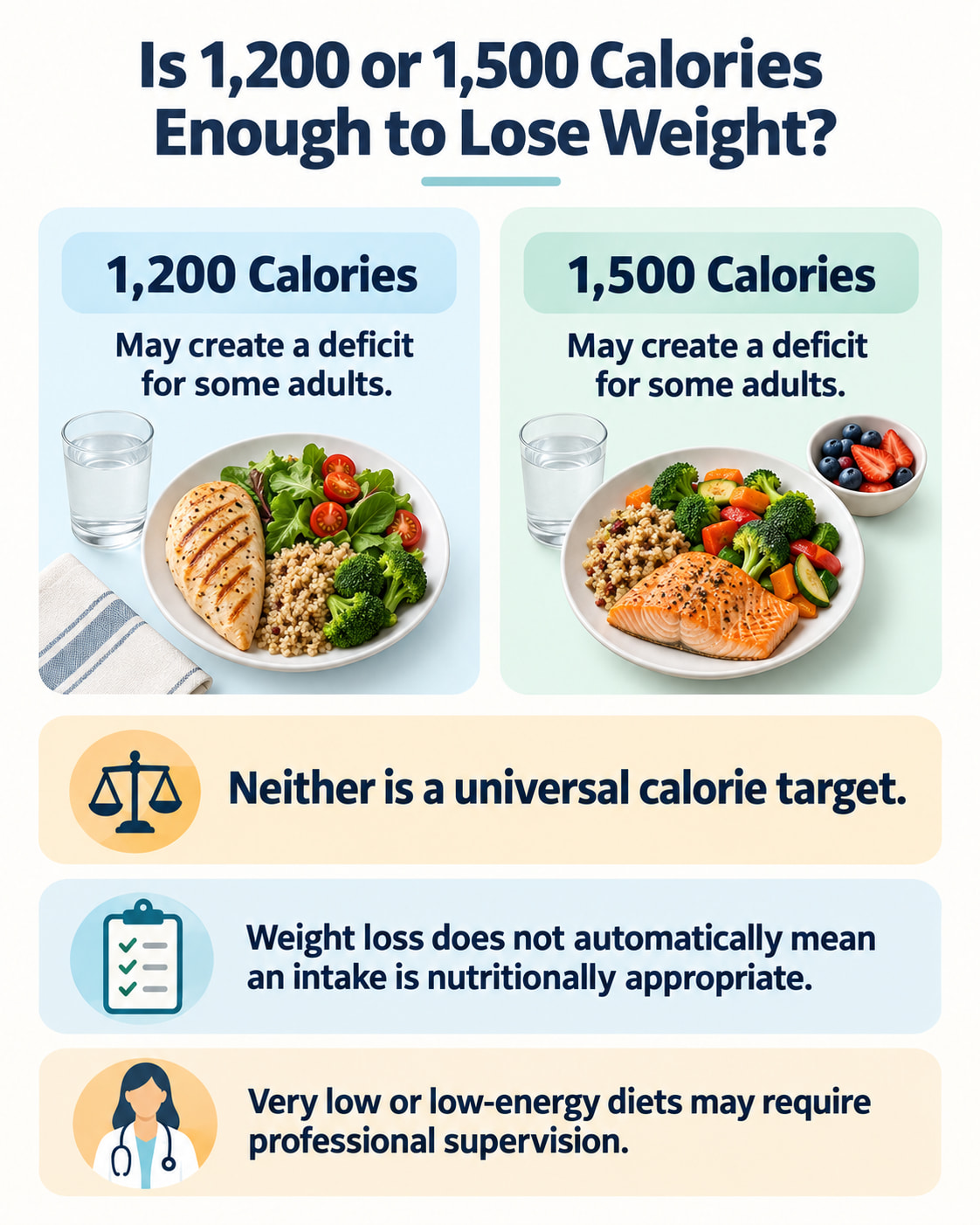
Either intake could create a deficit for some adults. However, an intake that produces weight loss is not automatically nutritionally appropriate.
In its 2025 recommendations, NICE guidance on low-energy diets places 800–1,200-calorie diets within supported clinical programs for specified groups. These diets should be nutritionally complete, supervised, and limited to no more than 12 weeks. Diets below 800 calories have more restricted clinical indications.
These are not ordinary long-term, self-directed diet recommendations.
Likewise, 1,500 calories is not a universal target or safety threshold. Your body size, activity, health, and nutritional needs still matter. According to the FDA, a smaller, less active adult and a larger, highly active adult should not automatically receive the same target.
Instead of asking whether a popular calorie number “works,” ask whether it creates an appropriate reduction for you.
How Quickly Should You Expect to Lose Weight?
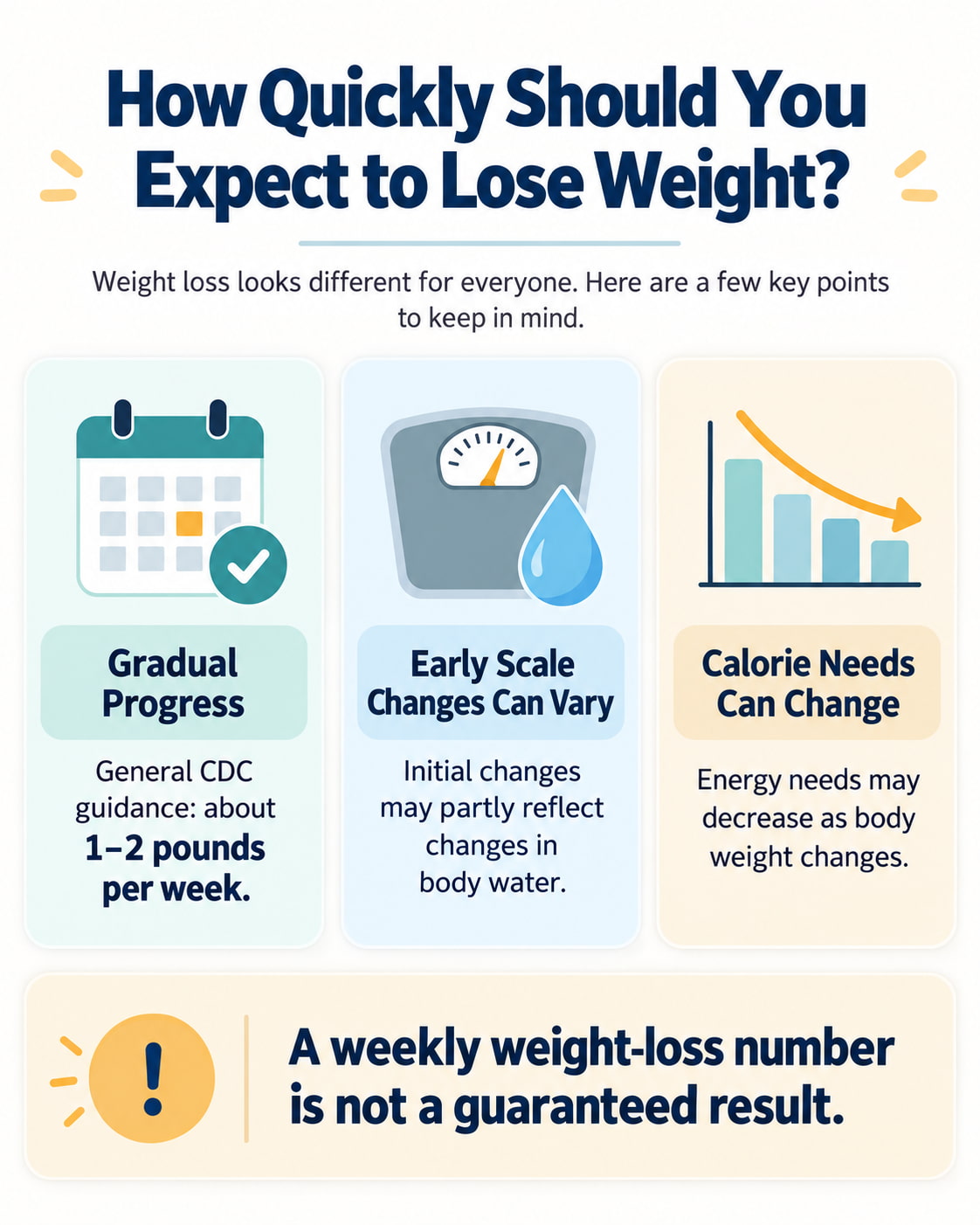
The CDC weight-loss guidance, dated January 17, 2025, describes gradual loss of about 1–2 pounds per week as more likely to be maintained than faster loss. This is general guidance, not a guaranteed result or a requirement to lose two pounds every week.
Early scale changes can also be misleading. Mayo Clinic explains that some initial weight loss comes from water associated with stored carbohydrate, rather than body fat alone. That early pace may not continue.
Your calorie needs can also decrease as your weight decreases. Consequently, an intake that initially produces weight loss may eventually produce slower progress or maintenance, according to NIDDK.
Do not keep cutting calories simply to reproduce your fastest week. Review the longer-term pattern and the suitability of your plan.
How to Make Your Daily Calorie Target Practical
Build Meals Around Nutrition, Not Just Numbers
A reduced-calorie eating plan still needs variety. NIDDK recommends including protein foods, vegetables, fruit, whole grains, and other foods that meet your nutritional needs. Options include beans, lentils, tofu, eggs, fish, poultry, dairy or suitable fortified alternatives, and sources of unsaturated fat.
For example, a lunch could include a rice-and-bean bowl with vegetables and yogurt, or chicken with roasted vegetables and a whole-grain side. Adjust portions to your needs rather than assuming every meal must be as small as possible.
You do not need an entirely new menu. Start with familiar meals and identify manageable changes.
Account for Portions, Drinks, and Additions
According to NIDDK, check whether a food label lists calories per serving or per package. Your portion may contain more than one serving.
For example, a snack with 180 calories per serving contains 360 calories when you eat two servings.
When reviewing intake, include drinks and additions such as milk in coffee, cooking oil, dressings, and sauces. The CDC notes that recording everything you consume for a few days can help you understand your current pattern before making changes.
Use that information to improve your estimate—not to judge foods or label a day as a failure.
Plan Around Your Routine
Make the plan easier to follow on busy days. Keep a convenient lunch option available, decide what you will eat after a late shift, or prepare an extra portion of dinner for the next day.
NIDDK guidance recommends identifying barriers and planning around them. It also emphasizes that setbacks are expected and do not mean you have failed.
Choose changes you can repeat, rather than relying on an unusually strict week.
How to Know Whether Your Calorie Target Is Working
Look at Progress Over Time
NIDDK describes weekly weight checks and regular feedback as useful parts of a supported weight-management program. Daily weighing is not necessary to use that approach.
Also consider whether your meals are manageable and whether the plan fits your routine. A calorie target should be reviewed alongside your experience—not in isolation.
Review the Estimate Before Cutting More
When weight has stopped trending downward over several weeks, revisit your food and activity records. Check whether portions, drinks, or activity levels differ from the assumptions behind your original estimate. Mayo Clinic notes that weight-loss plateaus can also occur as energy needs change.
Make the next step deliberate. For example, you might correct a serving-size misunderstanding or update an activity estimate before deciding that you need a lower intake.
If further restriction would make balanced eating difficult, discuss the plan and goal with a healthcare professional instead. A plateau is a reason to reassess, not an instruction to keep eating less.
Pay Attention to How You Feel
Persistent weakness, exhaustion, difficulty concentrating, or unexplained weight loss deserve medical attention. According to the NHS, these symptoms can occur with inadequate nutrition, but they can also have other causes. Do not assume that feeling unwell is a normal requirement of weight loss.
When to Get Professional Help Setting Your Calorie Intake
Speak with a healthcare professional or registered dietitian when a medical condition affects your food needs or when you take medication that may need monitoring during weight loss. The AHA/ACC/TOS clinical guideline specifically highlights diabetes medicines that can cause low blood sugar and blood-pressure medicines. Do not adjust medication on your own.
Get individualized support rather than starting a restrictive plan when you have a current or previous eating disorder. According to the NIMH, preoccupation with calorie control, episodes of loss-of-control eating, or exercising to compensate for food are also reasons to seek help. Eating disorders can affect people at any body weight.
Professional guidance can help clarify whether weight loss is appropriate and how to pursue your health goals without unnecessary restriction.
Frequently Asked Questions
Can I Lose Weight Eating 2,000 Calories a Day?
Yes, when 2,000 calories is below your actual maintenance needs. For example, against a hypothetical maintenance level of 2,400 calories, it represents a 400-calorie deficit. Against maintenance of 2,000 calories, it does not. The FDA 2,000-calorie reference is not a personalized requirement.
Do Women and Men Need Different Calorie Targets?
Sex is one factor used in estimating calorie needs, but it is not enough to determine a target. Age, height, weight, and activity also matter. The FDA guidance supports avoiding a calorie target based on only one personal characteristic.
Should I Eat Back the Calories I Burn During Exercise?
Not automatically. When your calorie estimate already includes your usual workouts, adding those exercise calories again double-counts the activity. Check the calculator’s assumptions before adjusting intake.
Do I Have to Count Calories Every Day?
No. NIDDK explains that measuring and counting food does not need to be lifelong. Some people use it temporarily to learn portion sizes, then rely on familiar meals and eating patterns. Tracking should be useful, not a source of distress.
What Should I Do if I Exceed My Calorie Target One Day?
Return to your regular eating pattern rather than treating the day as a failure. Consider whether planning, meal timing, or circumstances made the target difficult to follow. NIDDK recommends learning from setbacks and resuming your routine.
How Often Should I Recalculate My Calorie Needs?
Revisit the estimate when your weight or usual activity changes enough that the original assumptions no longer fit. Reassessment is also useful when progress consistently differs from expectations. According to NIDDK, your calorie needs at a lower weight may differ from your starting needs.
Conclusion
The right daily calorie intake for weight loss is an individualized starting estimate—not the lowest number you can tolerate.
Start by estimating your maintenance needs, choose an appropriate reduction, and check whether the resulting eating plan is practical and nutritionally balanced. Review progress before making further changes. When the calculation leaves you unsure, bring it to a registered dietitian who can help turn the number into a workable plan.
References
- FDA: How to Understand and Use the Nutrition Facts Label.
- NIDDK: Body Weight Planner.
- AHA/ACC/TOS: Guideline for the Management of Overweight and Obesity in Adults.
- NICE: Overweight and Obesity Management.
- CDC: Steps for Losing Weight.
- NIDDK: Choosing a Safe & Successful Weight-loss Program.
- NIDDK: Eating & Physical Activity to Lose or Maintain Weight.
- NIDDK: Food Portions: Choosing Just Enough for You.
- NIDDK: Changing Your Habits for Better Health.
- Mayo Clinic: Getting Past a Weight-Loss Plateau.
- NHS: Symptoms of Malnutrition.
- NIMH: Eating Disorders: What You Need to Know.
This content is for informational purposes only and not medical advice.