
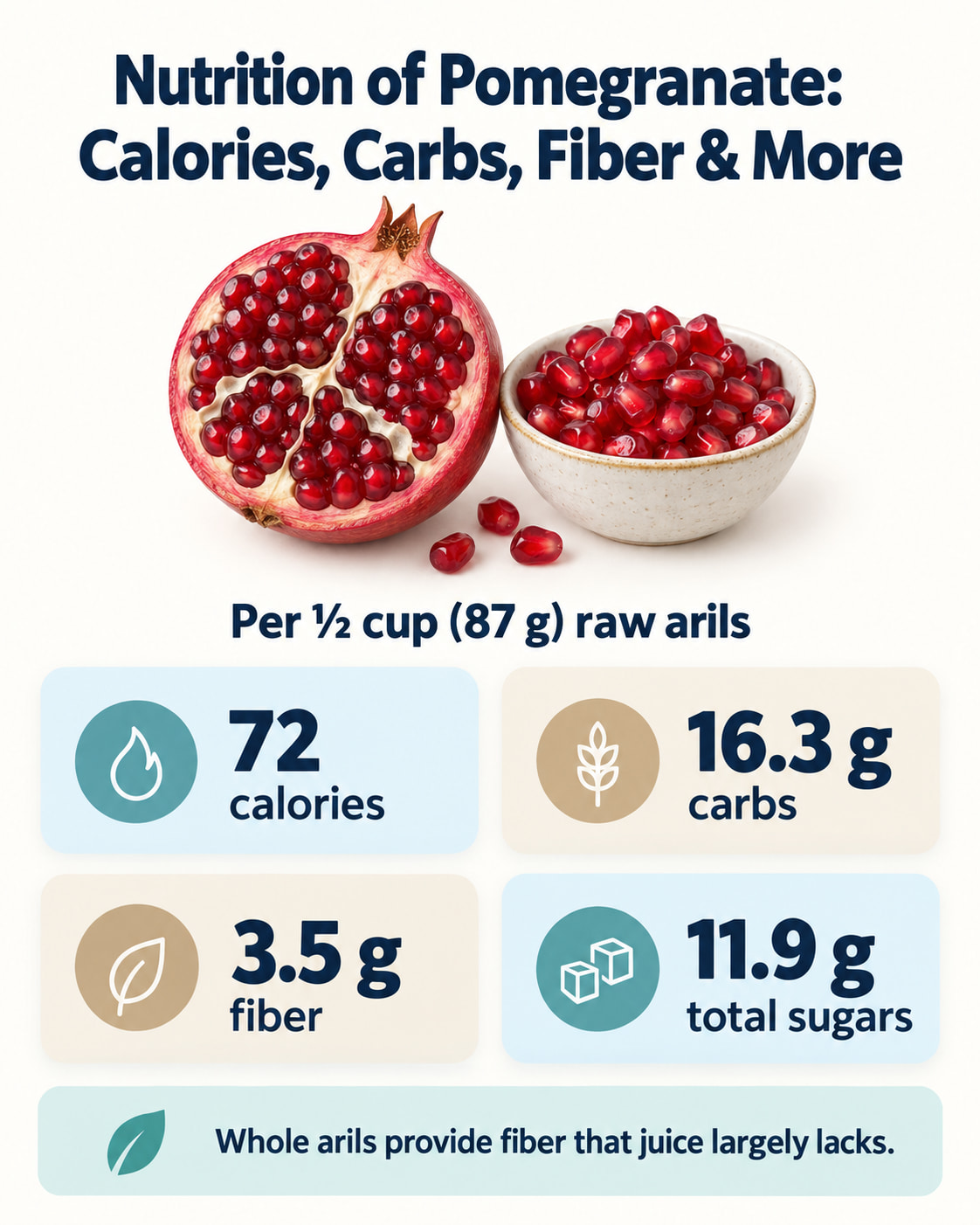
Understanding the nutrition of pomegranate starts with the serving size. A ½-cup serving of raw pomegranate arils—about 87 grams—provides approximately 72 calories, 16.3 grams of carbohydrates, 3.5 grams of fiber, and 11.9 grams of naturally occurring sugar.
The edible arils also contribute vitamins and minerals, but whole fruit and bottled juice have different nutritional profiles. Knowing those differences can help you compare portions, read labels, and choose the form that fits your meals.
Nutrition of Pomegranate at a Glance
The table below uses USDA food-composition data for raw pomegranate. These amounts refer to the edible arils—the seeds and their juicy coverings—not the peel or the weight of an unopened fruit. Both the inner seed and its surrounding flesh are edible.
| Nutrient | Per 100 grams | Per ½ cup—87 grams | Per 1 cup—174 grams |
|---|---|---|---|
| Calories | 83 | 72 | 144 |
| Total carbohydrates | 18.7 g | 16.3 g | 32.5 g |
| Dietary fiber | 4.0 g | 3.5 g | 7.0 g |
| Total sugars | 13.7 g | 11.9 g | 23.8 g |
| Protein | 1.7 g | 1.5 g | 2.9 g |
| Total fat | 1.2 g | 1.0 g | 2.0 g |
| Vitamin C | 10.2 mg | 8.9 mg | 17.7 mg |
| Vitamin K | 16.4 mcg | 14.3 mcg | 28.5 mcg |
| Folate | 38 mcg DFE | 33 mcg DFE | 66 mcg DFE |
| Potassium | 236 mg | 205 mg | 411 mg |
| Copper | 0.158 mg | 0.137 mg | 0.275 mg |
| Magnesium | 12 mg | 10.4 mg | 20.9 mg |
| Iron | 0.30 mg | 0.26 mg | 0.52 mg |
Source: USDA FoodData Central, “Pomegranates, raw,” FDC ID 169134, cross-checked through reproduced database records. Serving amounts are calculated and rounded independently. DFE means dietary folate equivalents.
Calories in Pomegranate
Plain pomegranate arils contain approximately 83 calories per 100 grams. The calorie total increases with the amount you eat, so weighing the edible portion is more useful than relying on “one pomegranate,” which is not a fixed serving size.
For example, a bowl containing 200 grams of arils would provide about 166 calories. This is a calculation from the USDA reference value, not the calorie count of every whole pomegranate.
Use a measuring cup or kitchen scale when portion accuracy matters. Measure after removing the peel and membranes so you are counting only the part you plan to eat.
Carbs, Sugar, and Fiber in Pomegranate
Carbohydrates and Naturally Occurring Sugar
Pomegranate’s carbohydrates include both sugar and fiber. When tracking carbohydrates, start with total carbohydrates, rather than the sugar number alone. The American Diabetes Association explains that total carbohydrate on a food label includes sugars, starches, and fiber.
Plain, unsweetened arils contain naturally occurring sugar, not added sugar. FDA guidance explains that sugars naturally present in fruit are different from sweeteners added during processing or preparation. There is no established Daily Value for total sugars.
That distinction does not make fruit sugar-free. It means you should consider the whole food and your portion instead of judging it by the sugar number alone.
Fiber in Pomegranate
A cup of arils supplies approximately 7 grams of fiber—about 25% of the FDA Daily Value of 28 grams. A half-cup portion provides roughly half that amount.
Fiber supports bowel regularity and can help you feel full. These are benefits of getting enough dietary fiber overall, not proof that pomegranate alone will resolve a digestive problem.
Increase fiber gradually when your usual intake is low. A sudden increase can cause gas, bloating, or other digestive discomfort.
Vitamins and Minerals in Pomegranate
Pomegranate’s notable micronutrient contributions include copper, vitamin K, vitamin C, and folate. Using FDA Daily Values, a 1-cup serving provides approximately:
| Nutrient | Approximate Daily Value per cup |
|---|---|
| Copper | 31% |
| Vitamin K | 24% |
| Vitamin C | 20% |
| Folate | 17% |
| Potassium | 9% |
Percentages are calculated from unrounded nutrient amounts. Daily Values are general labeling references, not individualized nutrient prescriptions.
Vitamin C supports normal immune function and collagen production. It also helps your body absorb iron from plant foods. Pomegranate contributes this nutrient, but it does not supply a full day’s vitamin C in an ordinary serving.
Potassium is another useful contribution, although the amount does not make pomegranate an exceptionally concentrated potassium source. Think of it as one food contributing to your overall intake.
Nutrition of Pomegranate Arils vs. Juice
Pomegranate juice is not nutritionally identical to the whole fruit. The biggest practical difference is fiber: the arils retain much more of it.
The following comparison uses USDA reference entries for raw arils and bottled pomegranate juice. Both portions measure one cup, but their weights differ.
| Nutrient | Raw arils: 1 cup—174 grams | Bottled juice: 1 cup—249 grams |
|---|---|---|
| Calories | 144 | 134 |
| Total carbohydrates | 32.5 g | 32.7 g |
| Total sugars | 23.8 g | 31.5 g |
| Dietary fiber | 7.0 g | About 0.25 g |
| Vitamin C | 17.7 mg | About 0.25 mg |
These are reference-food values, not the nutrition facts for every bottled product.
In this comparison, juice has slightly fewer calories per cup, but more sugar and almost none of the arils’ fiber. That is why comparing calories alone does not tell the whole story.
The vitamin C difference also matters. Do not assume that bottled juice provides the raw fruit’s vitamin C content. Some beverages are fortified, so check the product’s label rather than relying on a general claim about pomegranate.
When shopping, compare the serving size, total carbohydrates, total sugars, and added sugars. Remember that “no added sugar” does not mean “sugar-free.”
Potential Health Benefits of Pomegranate
Pomegranate’s nutrient content is well established. Claims about specific health outcomes require more caution.
The NCCIH evidence summary, updated in April 2025, states that pomegranate juice or extract may help reduce blood pressure, but further research is needed. Clear effects on cholesterol have not been demonstrated. Many human studies have examined juice rather than whole arils.
A 2025 randomized trial reported a reduction in systolic blood pressure in an extract group after 12 weeks. The study used 740 milligrams of extract daily; 76 adults aged 55–70 completed it, and it received industry funding. These findings do not establish that a normal serving of arils produces the same effect.
The practical takeaway is to enjoy pomegranate as food—not to use it as a replacement for prescribed care or assume that larger amounts provide greater benefits.
How Much Pomegranate Should You Eat?
A ½-cup portion is a convenient starting point, not a required daily amount or a medical dose. You can use it as a snack, a topping, or part of a meal.
Choose the amount around your appetite and eating plan. For carbohydrate counting, use the portion-specific figures in the nutrition table rather than treating an entire bowl as a standard serving. Fruit can fit into a diabetes eating plan, but its carbohydrates still count.
When increasing your overall fiber intake, begin with a smaller portion and build gradually according to your comfort.
How to Eat and Store Pomegranate
How to Remove the Arils
Wash the outside of the fruit under running water before cutting it. Start with clean hands, a clean knife, and a clean cutting board; do not wash fruit with soap or detergent.
Cut off the crown and lightly score the peel into sections. Gently separate the sections in a bowl of water, then loosen the arils with your fingers. The arils sink while much of the peel and membrane floats, making it easier to skim away the unwanted pieces and drain the fruit.
Simple Ways to Add Pomegranate to Meals
Try stirring a measured portion into plain yogurt or oatmeal, scattering it over a salad, or adding it to a grain bowl. You can also serve the arils on their own.
For a simple breakfast, combine plain yogurt, oats, and pomegranate arils. For a savory option, try a lentil salad with cucumber, herbs, and a small handful of arils.
Refrigeration and Freezing
Utah State University Extension advises refrigerating fresh arils or fresh juice and using them within five days. Keep the refrigerator at 40°F or below, and follow package directions for purchased products.
To freeze arils, spread them in a single layer on a tray. Once frozen, transfer them to a freezer-safe container or bag. The extension recommends using frozen pomegranate within one year.
Who Should Be Careful With Pomegranate?
Digestive sensitivity: Some people experience digestive symptoms after consuming pomegranate. Large increases in dietary fiber can also cause discomfort, so adjust portions gradually.
Food allergies: Allergic reactions to pomegranate have been reported. Stop eating it and seek medical guidance after a suspected reaction. Wheezing, breathing difficulty, or other serious symptoms after eating require emergency care.
Extracts and other plant parts: Edible arils are different from concentrated supplements, peel preparations, roots, and stems. NCCIH cautions that consuming large amounts of the root, stem, or peel may be harmful. Discuss herbal products with a clinician or pharmacist when taking medication. Safety information for non-juice preparations during pregnancy and breastfeeding is limited.
Frequently Asked Questions
Can You Eat the Seeds Inside Pomegranate Arils?
Yes. Both the crunchy inner seed and its juicy covering are edible. The nutrition figures for raw arils refer to eating these parts together, not just sucking out the juice.
Can People With Diabetes Eat Pomegranate?
Yes. The American Diabetes Association advises that fruit can fit into a diabetes eating plan. Choose a portion that fits your carbohydrate goals, and count its total carbohydrates as part of the meal.
Is Pomegranate High in Iron?
No. A cup of arils provides about 0.52 milligrams of iron—approximately 3% of the FDA Daily Value. It contributes a little iron but should not be relied on as an iron-rich food.
Are Frozen Pomegranate Arils a Good Option?
Plain frozen arils are a practical fruit option. The American Diabetes Association includes unsweetened frozen fruit among its recommended choices. Check the ingredient list for added sweeteners and follow the package’s storage and preparation instructions.
Is Pomegranate Good for Weight Loss?
Pomegranate can fit into a weight-management eating pattern, and dietary fiber may help with fullness. However, no single fruit guarantees weight loss. Portion size and your overall eating pattern matter more than adding one particular food.
How Many Calories Are in One Whole Pomegranate?
The number depends on how much edible fruit it yields. For a useful estimate, remove the peel and weigh the arils. Each 100 grams provides about 83 calories, so 200 grams of edible arils would supply approximately 166 calories.
The Bottom Line
Pomegranate arils provide fiber, naturally occurring carbohydrates, and several vitamins and minerals. Whole arils and bottled juice are not interchangeable, especially when it comes to fiber.
Start with a measured portion, choose plain products, and try adding the arils to a meal you already enjoy. Use pomegranate to add variety—not as a shortcut to a particular health outcome.
This content is for informational purposes only and not medical advice.
References
- USDA FoodData Central: Pomegranates, raw—FDC 169134 and Pomegranate juice, bottled—FDC 167787. Values were cross-checked through MyFoodData’s raw pomegranate record, bottled juice record, and Happy Forks’ raw pomegranate nutrient data.
- FDA: Daily Value on the Nutrition and Supplement Facts Labels and Added Sugars on the Nutrition Facts Label.
- NIH Office of Dietary Supplements: Vitamin C: Fact Sheet for Consumers.
- CDC: Fiber: The Carb That Helps You Manage Diabetes.
- NCCIH: Pomegranate: Usefulness and Safety.
- Farhat G, et al.: Effects of Pomegranate Extract on Inflammatory Markers and Cardiometabolic Risk Factors in Adults Aged 55–70 Years: A Randomised Controlled Parallel Trial. Nutrients. 2025;17(7):1235.
- American Diabetes Association: Best Fruit Choices for Diabetes and How to Read Nutrition Labels.
- Utah State University Extension: How to Preserve Pomegranates.
- FDA: Selecting and Serving Produce Safely.
- MedlinePlus: Food Allergy.