
Foods high in iron can support energy by helping your body make hemoglobin, the protein that carries oxygen in your blood, but they will not fix every cause of fatigue. That is why it helps to know which foods give you the most iron, how to absorb more of it, and when low energy may need medical follow-up. According to the NIH Office of Dietary Supplements, iron also helps make myoglobin, which delivers oxygen to muscles. The World Health Organization reports that anemia remains very common worldwide, including among women of reproductive age and during pregnancy.
If your diet is low in iron, or if you lose iron through heavy periods, pregnancy, blood donation, or certain digestive conditions, eating more iron-rich foods can be a smart first step. Below, you will find the best foods high in iron, the difference between heme and nonheme iron, simple ways to improve absorption, and signs that food alone may not be enough.
Why foods high in iron matter for energy
Iron matters because your body needs it to move oxygen where it is needed. When iron intake or iron stores are too low, you can develop iron deficiency or iron-deficiency anemia, which may lead to tiredness, dizziness, pale skin, shortness of breath, and reduced exercise tolerance. That is the real reason foods high in iron are often linked with better energy. They help support normal oxygen delivery, especially if low iron is part of the problem.
How much iron do you need each day
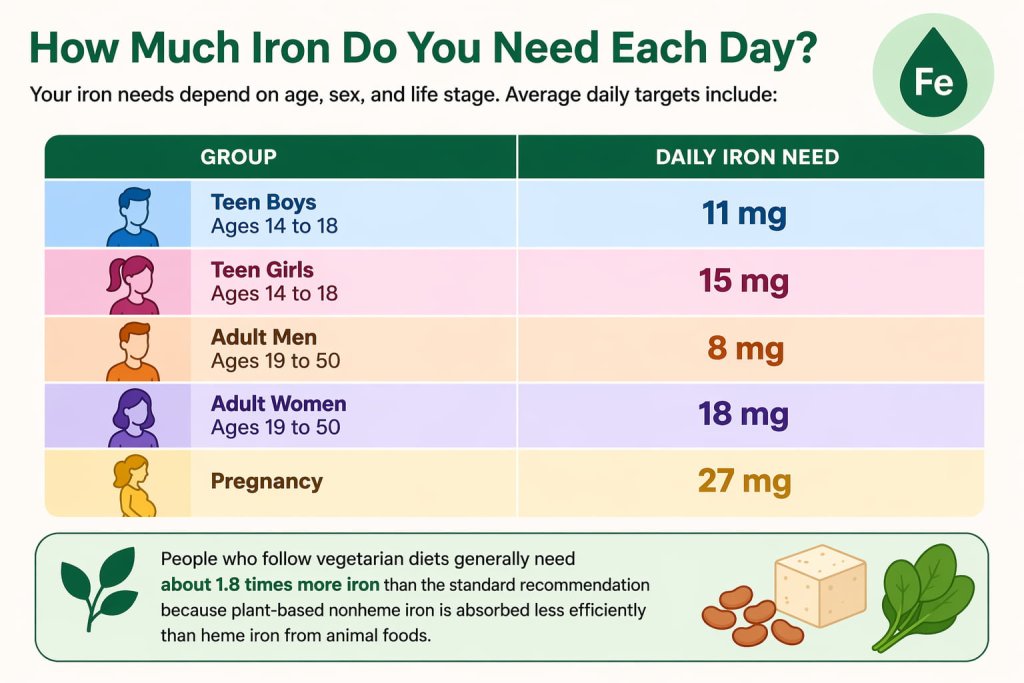
Your iron needs depend on age, sex, and life stage. Average daily targets include:
- Teen boys ages 14 to 18: 11 mg
- Teen girls ages 14 to 18: 15 mg
- Adult men ages 19 to 50: 8 mg
- Adult women ages 19 to 50: 18 mg
- Pregnancy: 27 mg
People who follow vegetarian diets generally need about 1.8 times more iron than the standard recommendation because plant-based nonheme iron is absorbed less efficiently than heme iron from animal foods.
Heme vs. nonheme iron
Not all iron is absorbed the same way.
Heme iron comes from animal foods such as meat and seafood. It is generally absorbed better and is less affected by other parts of the meal. Nonheme iron comes from beans, lentils, tofu, spinach, fortified grains, nuts, and other plant foods.
That does not mean plant foods are poor choices. It just means they work best when you use smart meal pairings, such as adding vitamin C-rich foods or choosing fortified products regularly.
14 foods high in iron
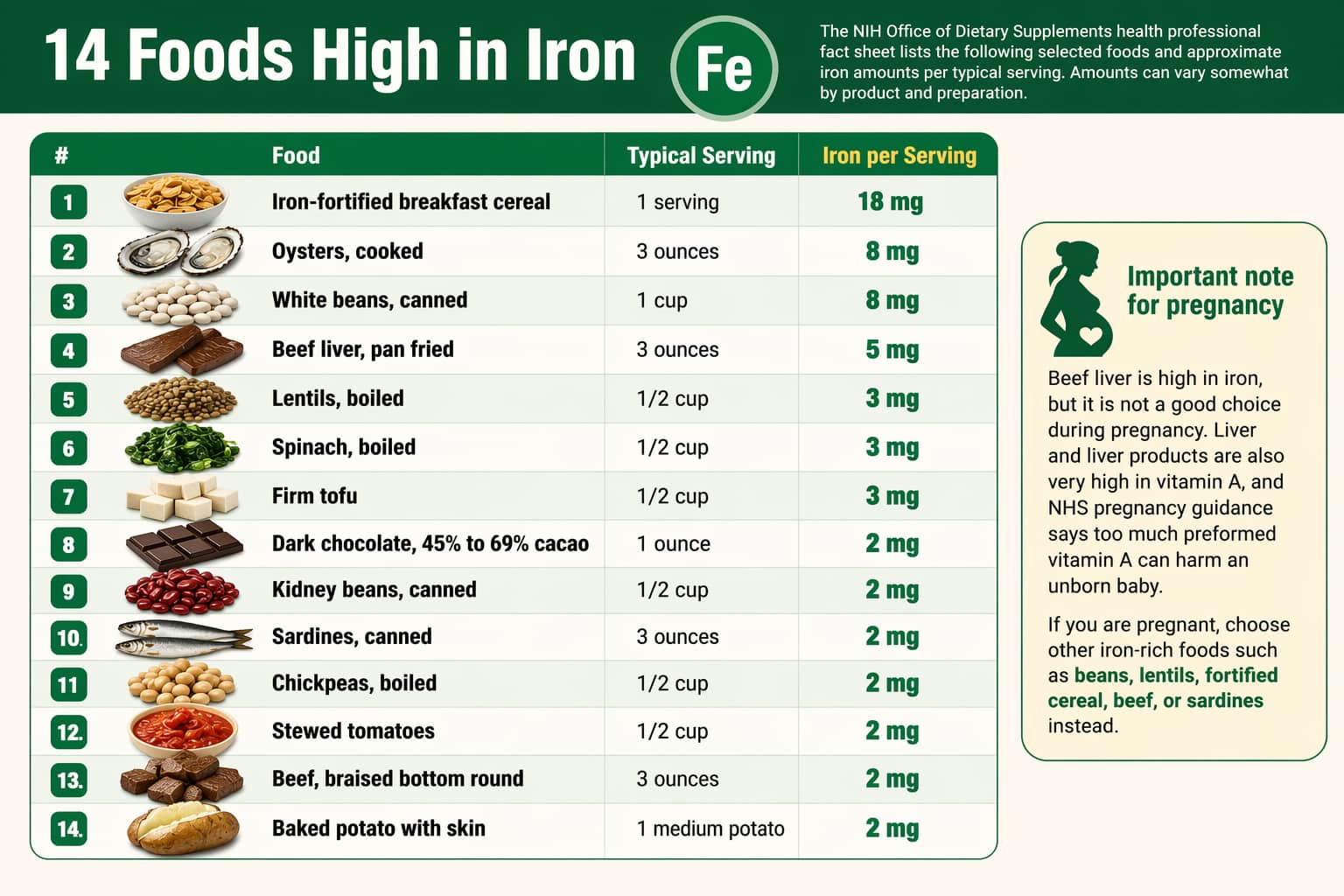
The NIH Office of Dietary Supplements health professional fact sheet lists the following selected foods and approximate iron amounts per typical serving. Amounts can vary somewhat by product and preparation.
| Food | Typical serving | Iron per serving |
|---|---|---|
| Iron-fortified breakfast cereal | 1 serving | 18 mg |
| Oysters, cooked | 3 ounces | 8 mg |
| White beans, canned | 1 cup | 8 mg |
| Beef liver, pan fried | 3 ounces | 5 mg |
| Lentils, boiled | 1/2 cup | 3 mg |
| Spinach, boiled | 1/2 cup | 3 mg |
| Firm tofu | 1/2 cup | 3 mg |
| Dark chocolate, 45% to 69% cacao | 1 ounce | 2 mg |
| Kidney beans, canned | 1/2 cup | 2 mg |
| Sardines, canned | 3 ounces | 2 mg |
| Chickpeas, boiled | 1/2 cup | 2 mg |
| Stewed tomatoes | 1/2 cup | 2 mg |
| Beef, braised bottom round | 3 ounces | 2 mg |
| Baked potato with skin | 1 medium potato | 2 mg |
Important note for pregnancy: Beef liver is high in iron, but it is not a good choice during pregnancy. Liver and liver products are also very high in vitamin A, and NHS pregnancy guidance says too much preformed vitamin A can harm an unborn baby. If you are pregnant, choose other iron-rich foods such as beans, lentils, fortified cereal, beef, or sardines instead.
Best animal-based foods high in iron
If you eat animal foods, oysters, beef liver, sardines, and beef give you heme iron, which is easier to absorb. These can be especially useful when you are trying to raise iron intake without eating a very large volume of food. Fortified cereal is also one of the fastest ways to get a high amount of iron in one serving.
Best plant-based foods high in iron
White beans, lentils, tofu, chickpeas, kidney beans, spinach, tomatoes, and potatoes all help. For many people, the most practical plant-based strategy is to combine legumes or tofu with fortified cereal or bread, then add vitamin C-rich produce to the same meal.
How to absorb more iron from your meals
You do not just need iron on the plate. You also want your body to absorb it well.
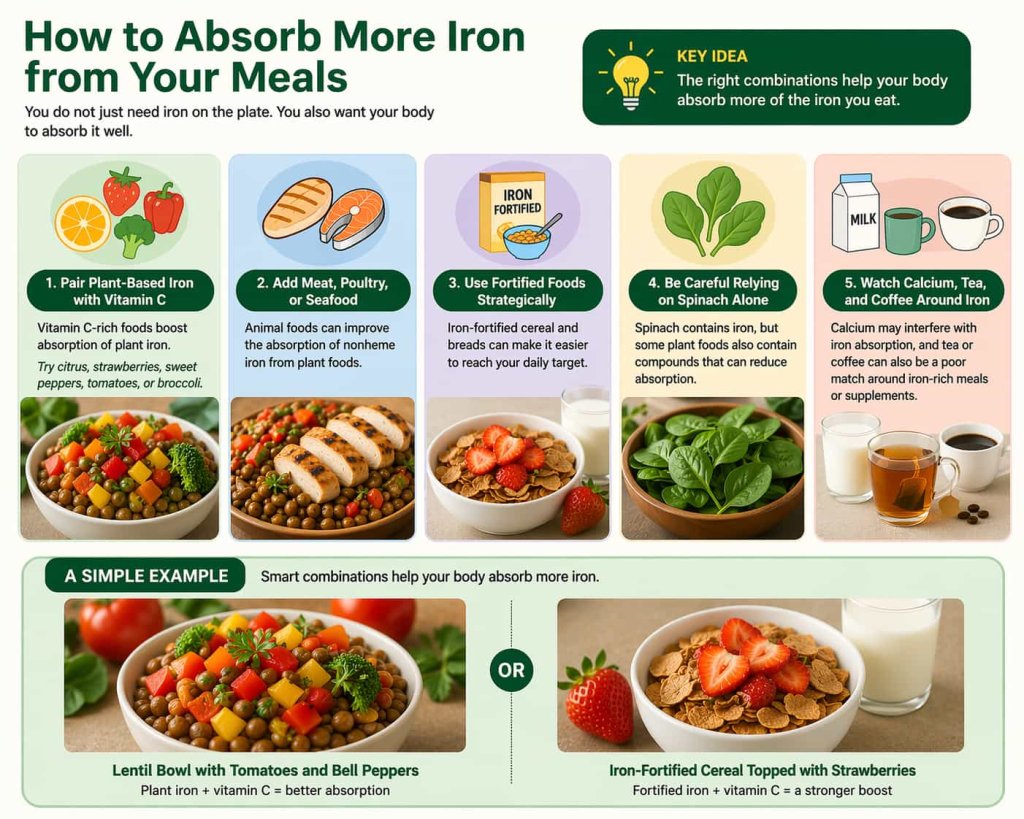
- Pair plant-based iron with vitamin C-rich foods such as citrus, strawberries, sweet peppers, tomatoes, or broccoli.
- If you eat animal foods, adding meat, poultry, or seafood to a meal can improve absorption of nonheme iron.
- Use fortified foods strategically. Iron-fortified cereal and breads can make it easier to reach your daily target.
- Be careful about relying on spinach alone. It contains iron, but some plant foods also contain compounds that can reduce absorption.
- Calcium may interfere with iron absorption, and tea or coffee can also be a poor match around iron-rich meals or supplements.
A simple example is a lentil bowl with tomatoes and bell peppers, or fortified cereal topped with strawberries. Those combinations make more sense nutritionally than eating iron foods in isolation.
Easy meal combinations that help you absorb more iron
Try simple pairings like these:
- Iron-fortified cereal with strawberries or orange slices
- Lentil soup with tomatoes and bell peppers
- Tofu stir-fry with broccoli and red peppers
- White bean salad with lemon juice and tomatoes
- Beef or sardines with a baked potato and a tomato-based side
These combinations work because vitamin C helps your body absorb more nonheme iron, and animal proteins can also improve absorption from plant foods. For better absorption, try not to have tea, coffee, calcium supplements, or large amounts of dairy at the same time as your iron-rich meal.
Signs you may not be getting enough iron
Low iron does not always cause symptoms right away. But as deficiency gets worse, common symptoms can include:
- Fatigue
- Dizziness or lightheadedness
- Pale skin
- Cold hands and feet
- Shortness of breath
- Reduced physical performance
The National Heart, Lung, and Blood Institute notes that mild or moderate iron-deficiency anemia may have no symptoms at first, so it is possible to feel off for a while before realizing iron is involved.
When to ask about iron testing
If fatigue, dizziness, shortness of breath, poor exercise tolerance, or heavy periods keep coming back, it is worth asking a clinician whether you need testing instead of guessing. According to the National Heart, Lung, and Blood Institute, iron deficiency is commonly evaluated with blood work such as a complete blood count, hemoglobin, blood iron, and ferritin. That matters because you can have low iron before full anemia shows up, and not every case of low energy is caused by iron.
Who is more likely to need extra attention to iron intake
Some groups are more likely to run low on iron or lose iron faster than they replace it.
- Teen girls and women with heavy periods
- Pregnant women and teens
- Infants, especially if premature or low birth weight
- Frequent blood donors
- People with gastrointestinal disorders or other conditions that reduce absorption
- Endurance athletes
- People with ongoing blood loss or chronic inflammation
These risk patterns are why fatigue should not automatically be blamed on poor diet alone. Heavy menstrual bleeding, celiac disease, inflammatory bowel disease, ulcers, and other medical issues can all be part of the picture.
When food may not be enough
Food is the foundation, but sometimes it is not enough on its own. If you have very heavy periods, ongoing digestive symptoms, known anemia, pregnancy, or significant fatigue, it is better to ask a clinician whether you need testing instead of guessing.
That is also important because iron supplements are not harmless. High doses can cause stomach upset, constipation, nausea, abdominal pain, vomiting, and diarrhea, and the tolerable upper intake level for teens ages 14 to 18 and adults is 45 mg per day unless a clinician recommends more. Iron supplements can also interact with levodopa, levothyroxine, proton pump inhibitors, and calcium.
The MedlinePlus guide to taking iron supplements also notes that taking more iron than your body needs can cause serious medical problems. Supplements can help when iron deficiency is confirmed, but feeling tired alone is not enough reason to start taking them on your own.
Who should be careful with extra iron
More iron is not always better. If you have hemochromatosis, iron overload, certain liver conditions, or you have been told your iron levels are already high, do not start iron supplements or intentionally increase fortified iron products without medical advice. The National Institute of Diabetes and Digestive and Kidney Diseases notes that people with iron overload are often advised to avoid iron supplements, and sometimes vitamin C supplements as well, because vitamin C can increase iron absorption.
FAQ about foods high in iron
What foods help iron absorb better?
Vitamin C-rich foods help most. Good examples include oranges, strawberries, tomatoes, broccoli, and sweet peppers. Meat, poultry, and seafood can also improve absorption of nonheme iron from plant foods.
Are plant-based foods high in iron enough?
They can be, but you need to be more intentional. Fortified cereal, beans, lentils, tofu, and other plant foods can absolutely contribute meaningful iron. The key is that nonheme iron is less bioavailable, so vegetarians generally need more total iron and benefit from pairing those foods with vitamin C-rich produce.
Is spinach a good source of iron?
Yes, spinach contains iron, but it is not the whole story. It is a healthy food, but it is not a magic fix for low iron by itself because some compounds in spinach can reduce how much iron your body absorbs.
Should you take an iron supplement for low energy?
Not without a reason. Low energy can come from many causes, and iron supplements can cause side effects or interact with medications. If you suspect low iron, it is smarter to ask a clinician whether you need testing and whether food alone is likely to be enough.
Conclusion
The best foods high in iron are the ones you will actually eat consistently and pair wisely. Fortified cereal, oysters, beans, lentils, tofu, beef, sardines, spinach, and potatoes can all help raise intake. Pair plant-based iron with vitamin C, pay attention to symptoms, and do not ignore heavy periods or digestive issues that may point to a deeper cause.
If you are building your meals around better energy, start with two or three iron-rich foods you can repeat each week, then make them easier to absorb with smart pairings.
This content is for informational purposes only and not medical advice.
References
- NIH Office of Dietary Supplements — Iron Fact Sheet for Consumers
- NIH Office of Dietary Supplements — Iron Fact Sheet for Health Professionals
- World Health Organization — Anaemia in women and children
- National Heart, Lung, and Blood Institute — Iron-Deficiency Anemia
- MedlinePlus — Taking iron supplements
- NHS — Foods to avoid in pregnancy
- National Institute of Diabetes and Digestive and Kidney Diseases — Hemochromatosis