
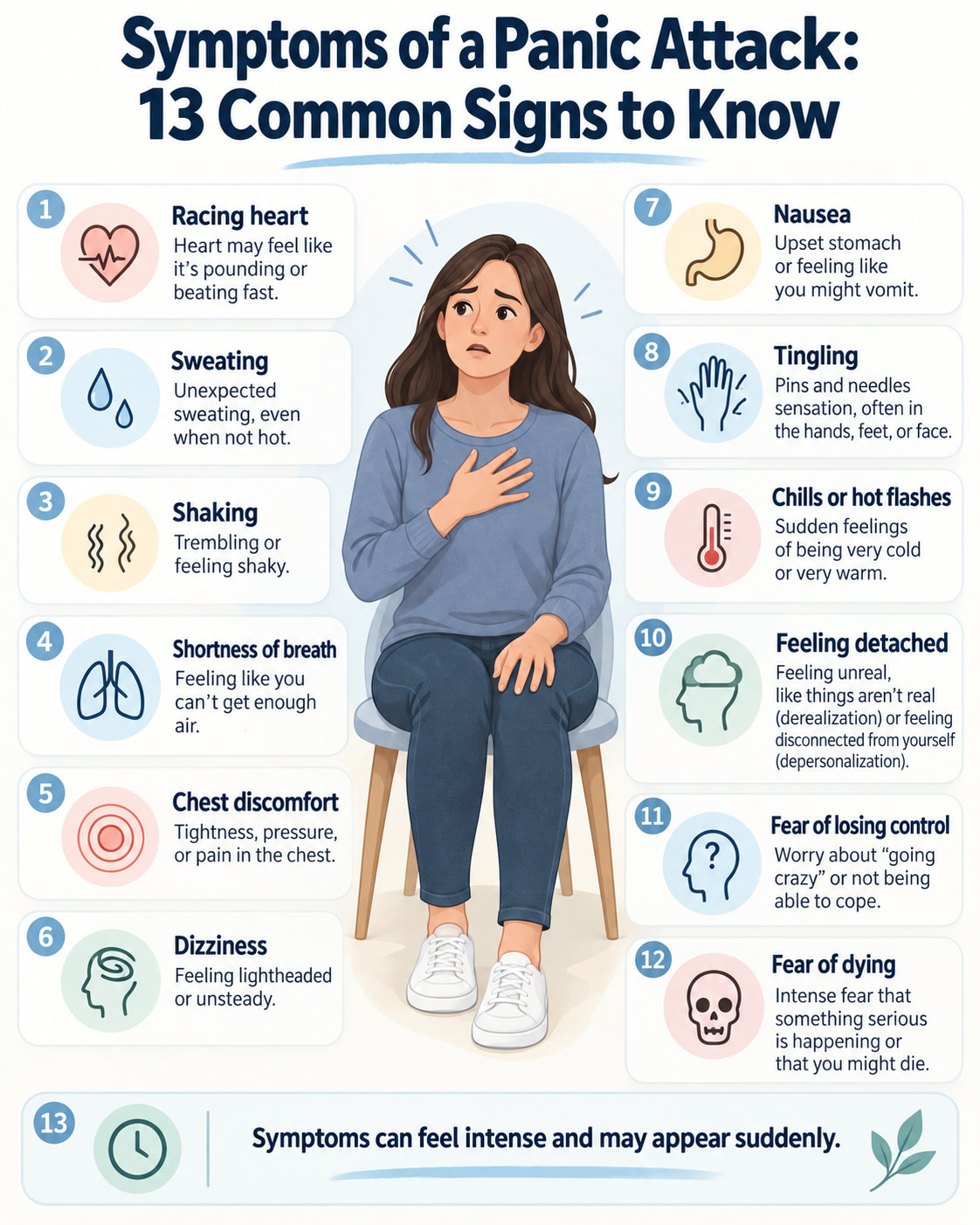
The symptoms of a panic attack can include a racing heart, sweating, shaking, shortness of breath, chest discomfort, dizziness, and overwhelming fear. These physical and emotional symptoms can appear suddenly and feel intensely alarming.
Knowing the signs can help you describe what happened and seek appropriate support. However, recognizing symptoms is not the same as identifying their cause. The National Institute of Mental Health also emphasizes that having a panic attack does not automatically mean you have panic disorder.
Get urgent help for possible emergency symptoms. New or unexplained chest pressure or pain, discomfort spreading to an arm, jaw, or back, or significant breathing difficulty should not be dismissed as anxiety. The American Heart Association recommends calling 911 for suspected heart-attack symptoms, even when you are unsure. Outside the United States, call your local emergency number.
What Is a Panic Attack?
A panic attack is a sudden episode of intense fear or discomfort accompanied by physical sensations, distressing thoughts, or both. It is a distinct episode rather than simply a period of everyday worry.
One way to understand panic is that the body’s alarm response becomes activated when there is no immediate danger. That response can produce very real physical sensations. The experience is not “just in your head,” even when fear is an important part of it.
13 Common Symptoms of a Panic Attack
The following categories reflect the American Psychiatric Association’s symptom guidance, physician-reviewed in May 2026. Several symptoms may occur together, but you do not need to experience every item on the list. The numbering is for organization, not a ranking of frequency or severity.
1. A Racing or Pounding Heart
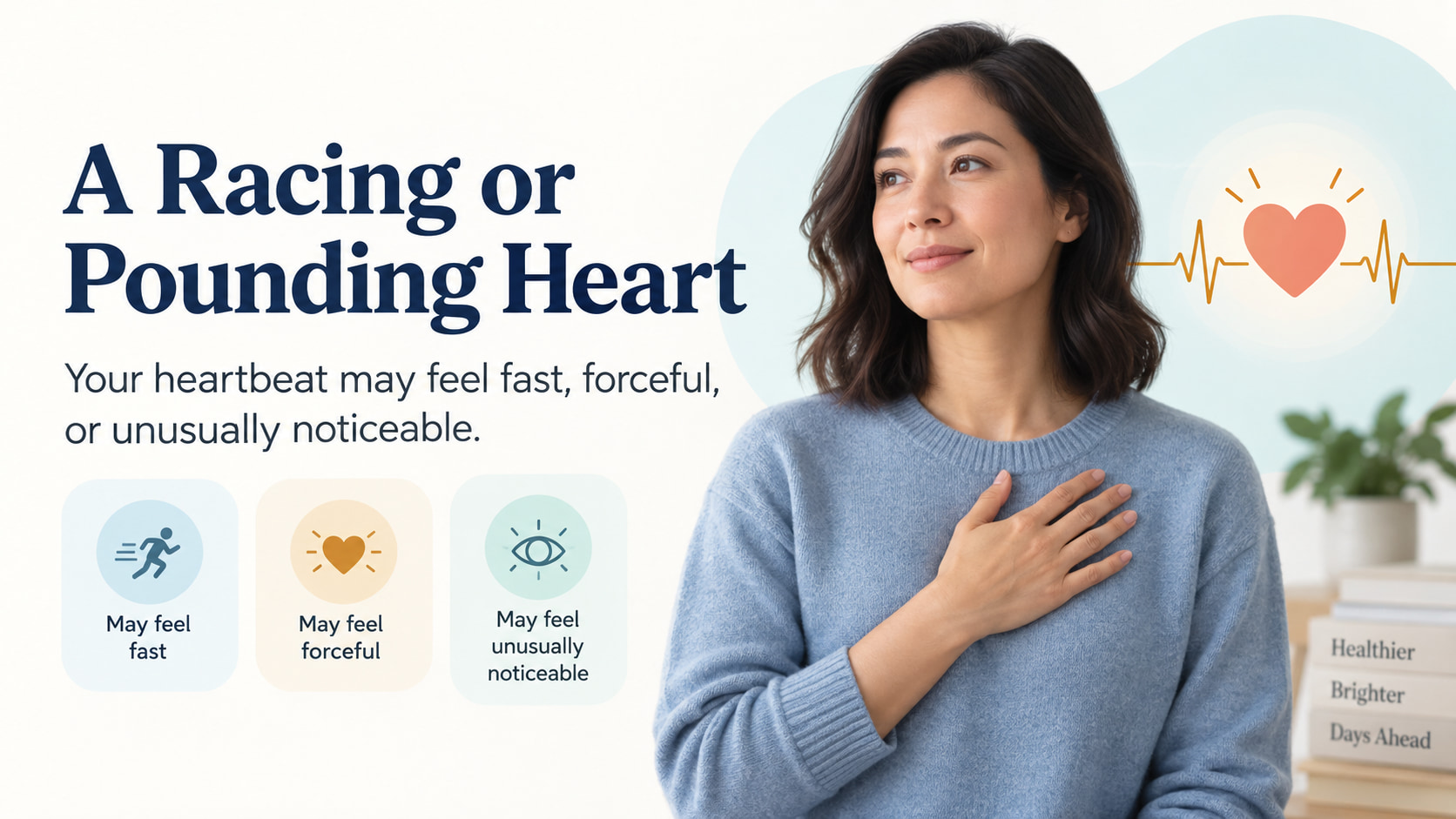
Your heartbeat may feel unusually fast, forceful, or noticeable. You might describe it as racing or pounding in your chest. These sensations are often called palpitations, and they can occur alongside other panic symptoms.
2. Sweating
Sweating may start suddenly during the episode. It can accompany the surge of fear, a pounding heart, or shaking, rather than occurring as an isolated symptom.
3. Trembling or Shaking
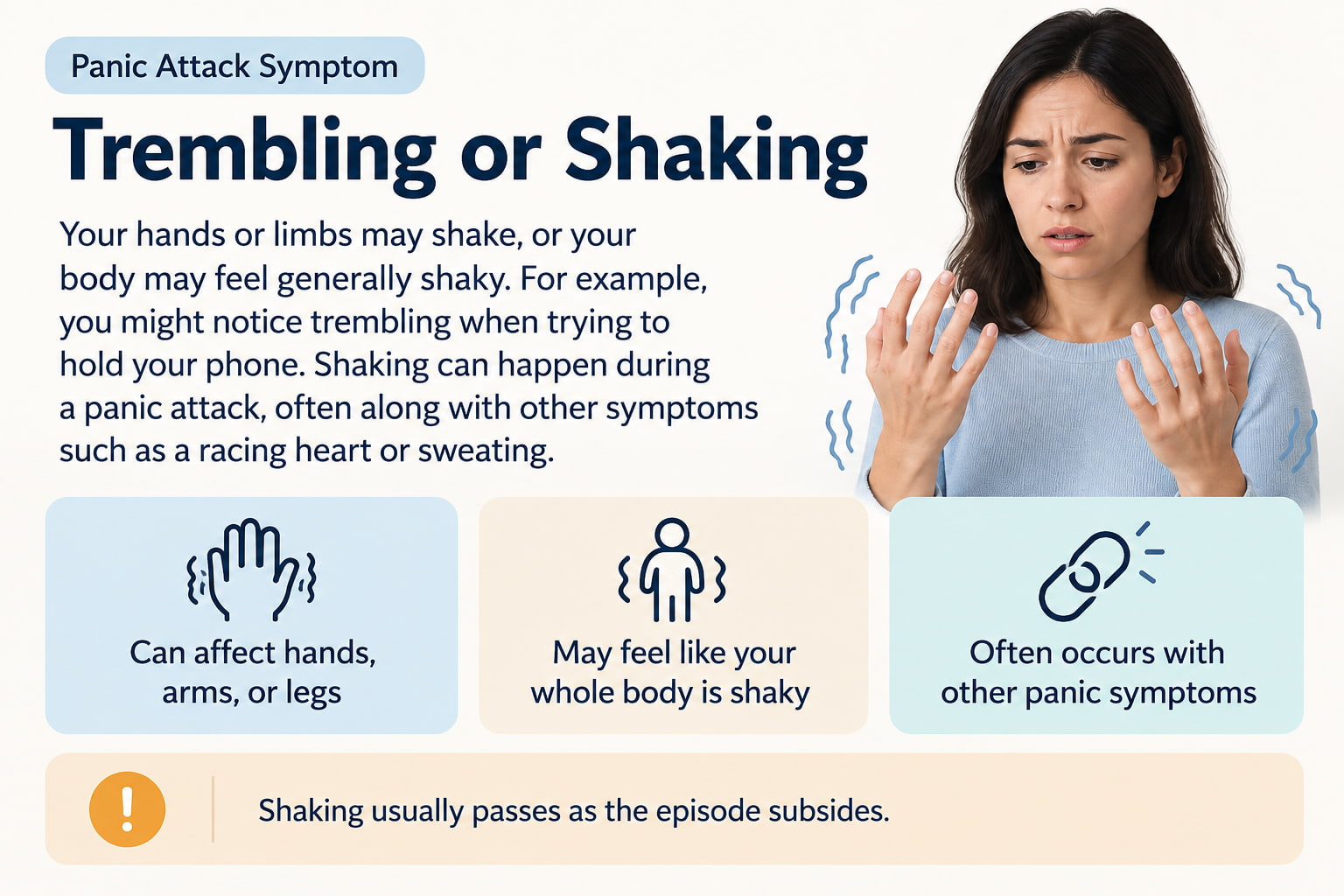
Your hands or limbs may shake, or your body may feel generally shaky. For example, you might notice trembling when trying to hold your phone. Shaking and sweating can happen during the same episode.
4. Shortness of Breath or a Smothering Feeling
You may feel unable to get a satisfying breath or as though you cannot get enough air. Some people also breathe rapidly. This breathing discomfort can be particularly frightening when it appears suddenly.
5. A Choking Sensation
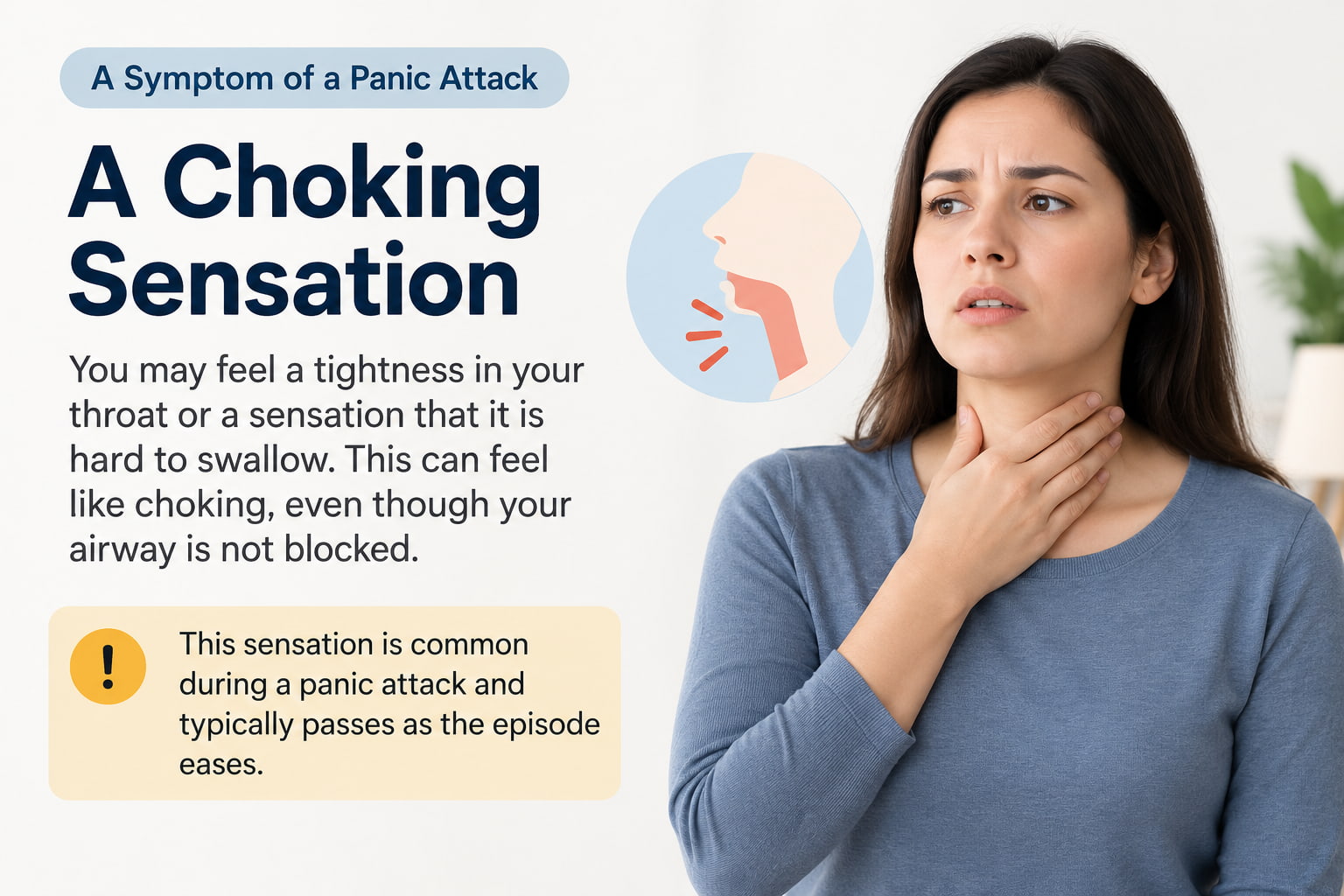
You may feel as though your throat is constricted or that you are choking. This is a recognized panic symptom, separate from—but potentially occurring alongside—the sensation of not getting enough air.
6. Chest Pain or Discomfort
Chest pain or discomfort can occur during a panic attack. However, the presence of fear or other familiar panic symptoms does not establish that panic is the cause.
Do not use this symptom list to rule out a heart problem. Follow the American Heart Association’s emergency guidance for possible heart-attack symptoms.
7. Nausea or Abdominal Discomfort
Your stomach may feel queasy, unsettled, or uncomfortable. Nausea can accompany the broader episode of fear and physical distress, even when stomach discomfort is not the first symptom you notice.
8. Dizziness, Lightheadedness, or Feeling Faint
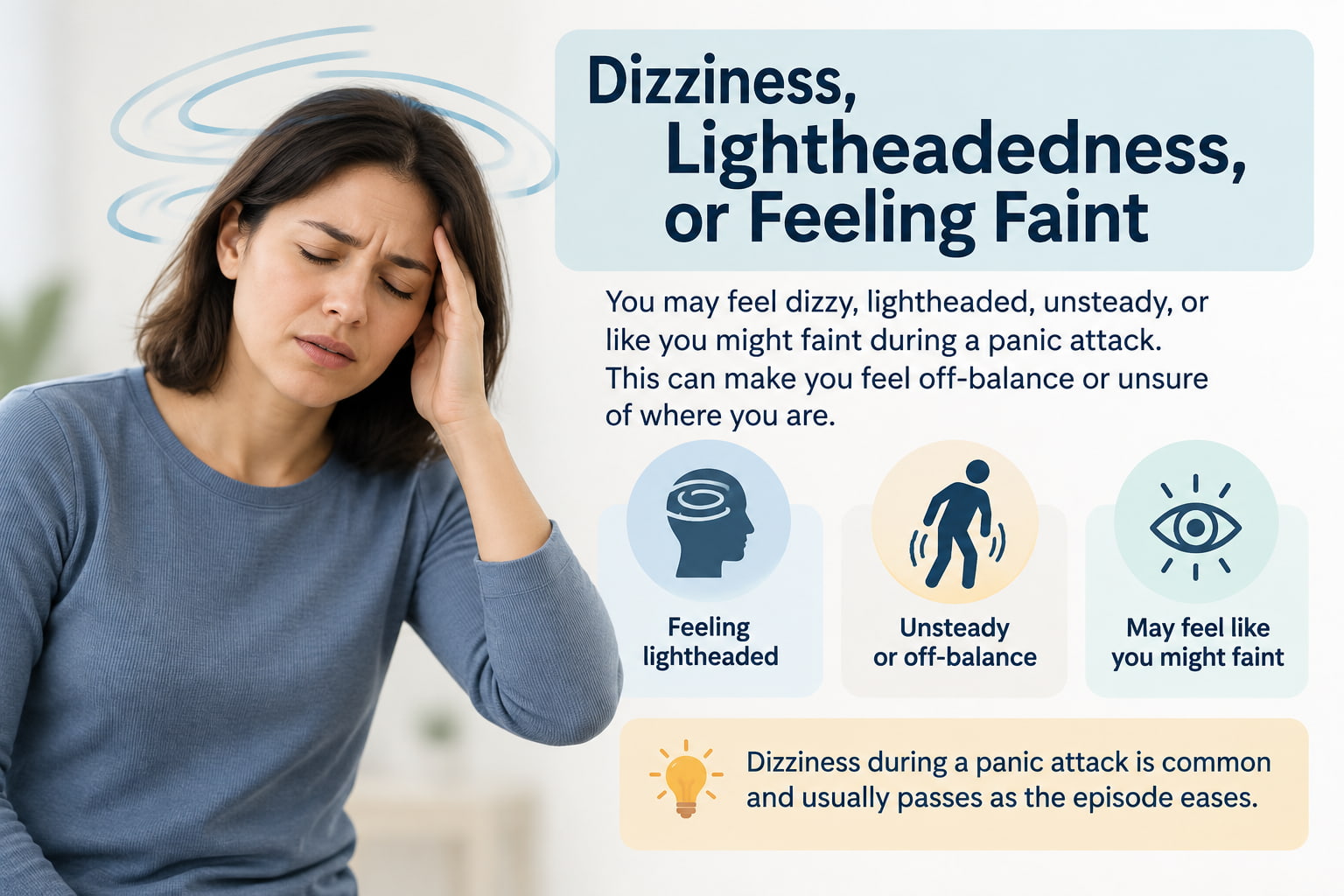
You may feel woozy, unsteady, or as though you might faint. These sensations can occur with a pounding heart, sweating, or breathing discomfort, making the experience feel especially unsettling.
9. Chills or Hot Flashes
A panic attack may involve sudden feelings of cold or heat. Some people notice chills, while others feel unusually hot. These belong to one recognized symptom category rather than two separate signs.
10. Numbness or Tingling
You may notice pins-and-needles sensations or numbness, particularly in your hands, feet, or face. These sensations can occur during panic, but their presence alone cannot identify the cause.
11. Feeling Detached or as if Things Are Unreal
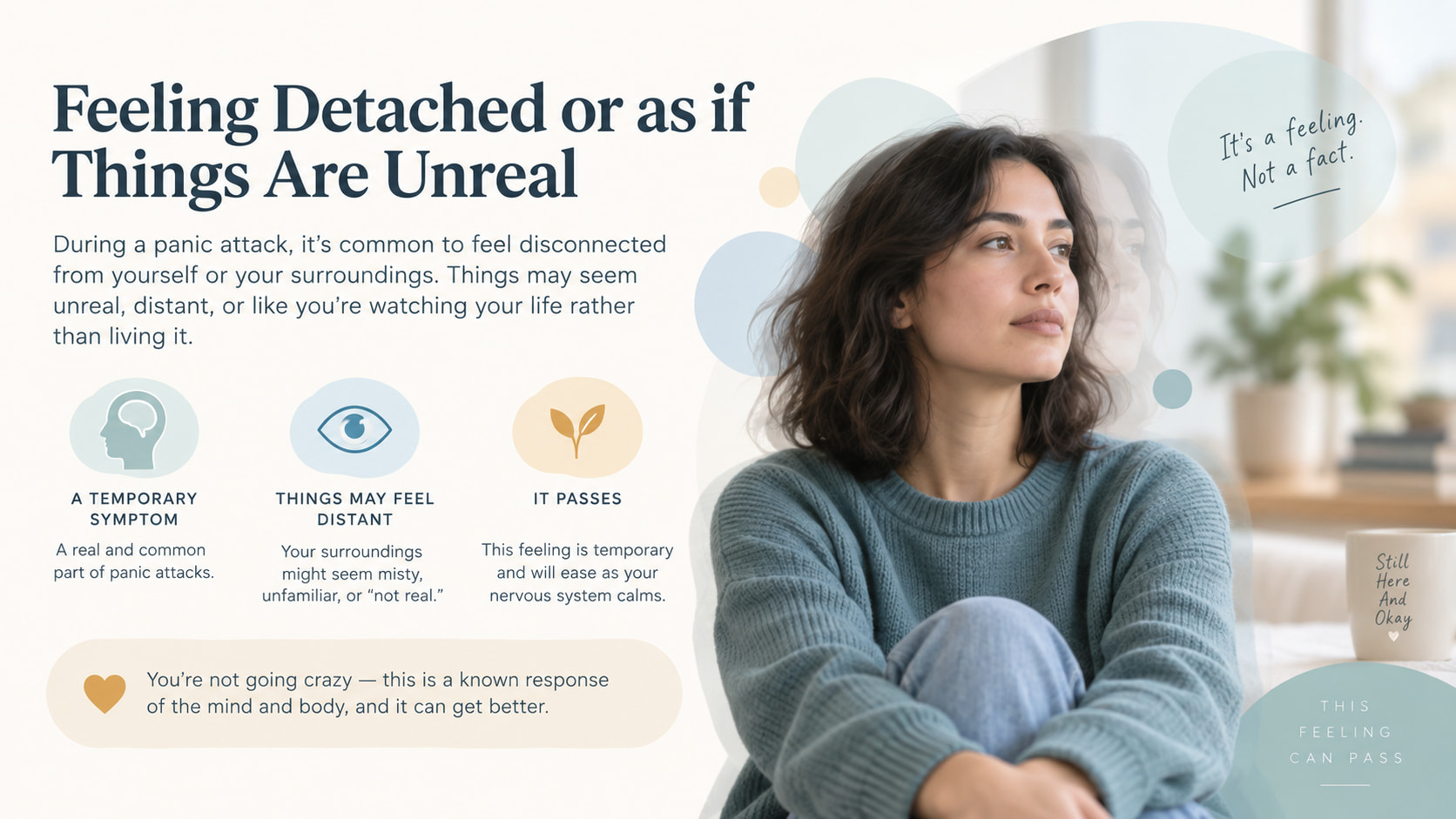
You may feel disconnected from yourself or find that your surroundings seem strange or unreal. Clinicians use two terms for these experiences: depersonalization, meaning detachment from yourself, and derealization, meaning a sense that the world around you is unreal. Both can occur during panic.
For example, you might describe feeling removed from an otherwise familiar room rather than feeling fully present in it.
12. Fear of Losing Control
You may become intensely afraid that you cannot control what happens next or how you will respond. The recognized symptom is the fear of losing control—not proof that you will actually lose control.
13. Fear of Dying
A panic attack can bring an overwhelming fear that you are about to die or that something catastrophic is happening. The physical sensations may make that fear feel convincing, especially during an unfamiliar episode.
How Long Does a Panic Attack Last?
Panic symptoms usually reach their most intense point within minutes. According to NHS guidance on panic disorder, most attacks last 5–20 minutes, although some last up to an hour. The intense peak and the full period of symptoms are not necessarily the same length.
There is no stopwatch rule that can confirm panic. Do not wait for a typical panic-attack duration to pass before seeking help for possible emergency symptoms. Heart-attack discomfort can persist or go away and return.
Panic Attack vs. Panic Disorder: What Is the Difference?
A panic attack is an episode. Panic disorder is a condition involving recurrent, unexpected panic attacks, with at least one attack followed by a month or more of persistent worry about further attacks or their consequences, or significant behavior changes intended to avoid them. Clinicians also consider whether another condition or substance better explains the symptoms.
For example, someone might begin avoiding shopping or exercise because they fear another attack. The one-month diagnostic timeframe is not an instruction to wait before asking for help. Distressing episodes deserve attention even without a panic-disorder diagnosis.
Can Panic Attack Symptoms Resemble a Medical Emergency?
Yes. Panic can resemble a heart attack, and feeling anxious does not rule out a medical problem. Symptoms such as chest discomfort, sweating, nausea, and shortness of breath overlap. A symptom checklist cannot reliably separate these causes at home.
Even after a previous panic diagnosis, new or substantially different symptoms should not automatically be attributed to anxiety. A healthcare professional may need to consider heart, thyroid, breathing, or other problems based on your symptoms and history.
What to Do During a Panic Attack
The following coping options are most appropriate for a familiar episode previously assessed as panic, without new or concerning symptoms. They are not a substitute for medical evaluation when the cause is uncertain.
Stay Somewhere Safe and Comfortable
When it is safe to do so, stay where you are rather than immediately rushing away. Remind yourself that a familiar panic episode is temporary. A simple phrase such as “This feels frightening, but I have experienced it before” may be easier to use than trying to reason through every sensation.
Let Your Breathing Become Gentle and Regular
Avoid trying to force large breaths. The NHS breathing guidance, reviewed in June 2026, recommends breathing comfortably and without strain.
Try breathing gently through your nose and letting the breath leave through your mouth. A slow count may help you find a rhythm, but you do not need to reach a particular number. Keep your position comfortable and loosen restrictive clothing when practical.
Focus on Something Outside the Panic
Try directing your attention toward something you can see, hear, or touch. For example, notice the texture of your chair or describe a nearby object. This gives you a simple task instead of continually checking each symptom.
These are coping options, not a test you must pass. There is no guaranteed technique that immediately stops every panic attack.
When to Seek Professional Help
Arrange a medical evaluation after a first unexplained episode or whenever you are unsure what caused your symptoms. Seek support for recurring attacks, persistent fear of another episode, or avoidance that is affecting daily life.
An assessment may include your symptom history, a physical examination, and selected tests when needed. Depending on the situation, a clinician may check for heart or thyroid problems and ask about medications, supplements, alcohol, or other substances.
What Support May Involve
Care may include cognitive behavioral therapy, medication, or both. NIMH guidance on panic disorder describes cognitive behavioral therapy as a commonly used treatment that can help people respond differently to panic-related thoughts, sensations, and behaviors. The choice depends on your needs, preferences, and medical situation; a qualified clinician can explain the benefits and risks.
Before an appointment, write down when episodes happen, what you experience, how long they last, and whether anything seems to trigger them. Bring a list of medications and supplements. These details can make the conversation more useful.
Frequently Asked Questions
Can You Have a Panic Attack Without an Obvious Reason?
Yes. Unexpected attacks occur without an apparent trigger. Other attacks happen in response to a feared situation or object. Both patterns are recognized, so an obvious trigger is not required for every panic attack.
Can a Panic Attack Wake You From Sleep?
Yes. Panic attacks can occur during sleep, not only during stressful daytime situations. A nighttime episode still needs appropriate assessment when it is new or the cause is unclear.
Do You Need All 13 Symptoms to Have a Panic Attack?
No. The clinical definition includes a sudden surge of intense fear or discomfort with at least four recognized symptoms. However, counting symptoms cannot confirm their cause, and having fewer symptoms is not a reason to ignore distress or avoid medical assessment.
Can You Feel Tired After a Panic Attack?
Yes. You may feel fatigued or worn out after the episode subsides. The most intense symptoms can settle before you feel fully recovered.
What Is the Difference Between a Panic Attack and an Anxiety Attack?
“Panic attack” has a defined clinical meaning. “Anxiety attack” is an informal term without a specific definition in the DSM-5-TR diagnostic manual. People may use it to describe intense anxiety or a panic attack, so describing the actual symptoms is more useful than relying on the label.
Conclusion
Recognizing the symptoms of a panic attack can help you explain your experience, but it cannot replace an assessment of the cause. Support is available for episodes that recur or disrupt daily life.
Write down what happened and arrange a healthcare appointment if the symptoms are unexplained or recurring. Seek emergency help for possible medical-emergency symptoms rather than assuming they are panic.
This content is for informational purposes only and not medical advice.
References
- American Psychiatric Association: What Are Anxiety Disorders?
- National Institute of Mental Health: Panic Disorder—What You Need to Know
- American Heart Association: Warning Signs of a Heart Attack
- MedlinePlus: Panic Disorder
- Mayo Clinic: Panic Attacks and Panic Disorder—Symptoms and Causes
- Mayo Clinic: Panic Attacks and Panic Disorder—Diagnosis and Treatment
- NHS: Panic Disorder
- NHS: Breathing Exercises for Stress
- Merck Manual: Panic Attacks and Panic Disorder