
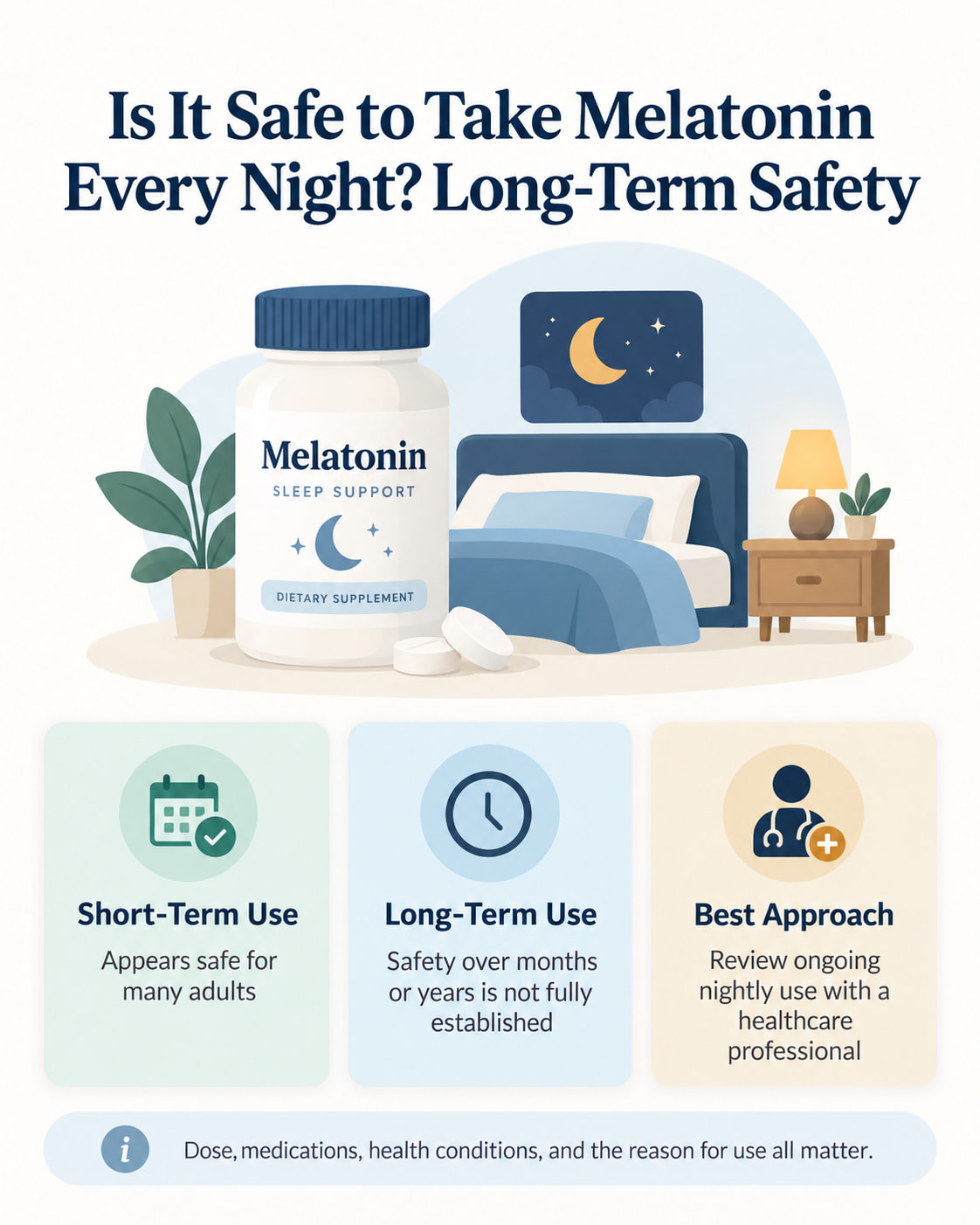
Is it safe to take melatonin every night? Short-term use appears safe for many adults, but the safety of nightly use over months or years is not fully established. The National Center for Complementary and Integrative Health identifies limited long-term safety information as an important concern.
That distinction matters when an occasional sleep aid becomes a nightly habit. Before continuing indefinitely, review why you take melatonin, whether it actually helps, and whether your dose or other medications create concerns. Persistent sleep problems also deserve attention beyond choosing a supplement.
Is It Safe to Take Melatonin Every Night Long Term?
Some research offers reassurance about several months of use. However, that does not establish safety for every product, dose, or person over many years.
What Longer Studies Show
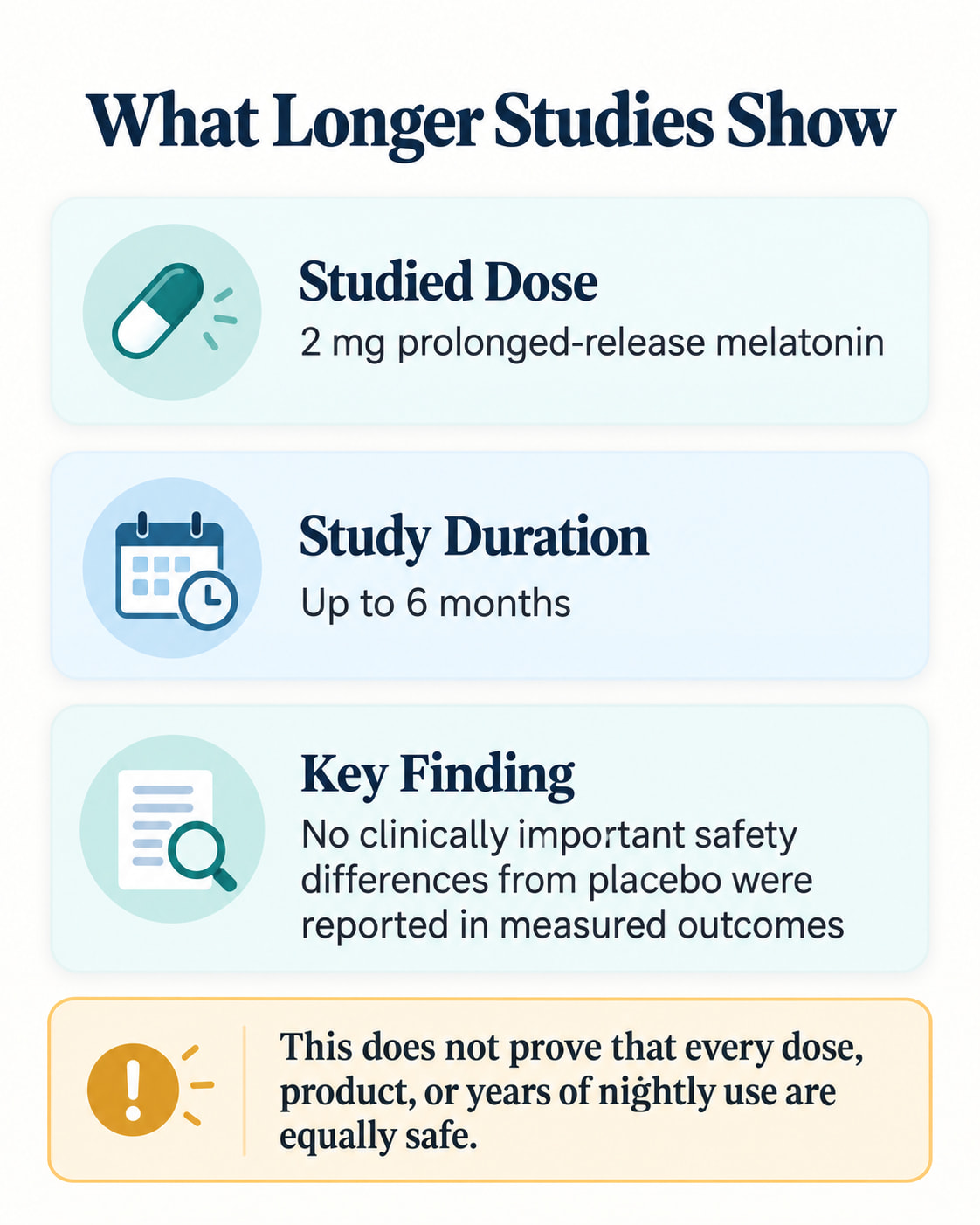
A randomized trial published in BMC Medicine in 2010 studied nightly 2 mg prolonged-release melatonin, including a six-month extension. Researchers reported no clinically important differences from placebo in the safety outcomes they measured and no signs of tolerance during continued use.
There are important limits. The manufacturer funded the study, and participants were carefully selected. People with several other sleep disorders, psychiatric conditions, and potentially interacting medications were excluded. Results for this particular formulation cannot establish that higher-dose gummies or years of unsupervised use are equally safe.
The practical distinction is limited reassurance within a studied setting—not a guarantee of indefinite safety.
Does Melatonin Increase Heart Failure Risk?
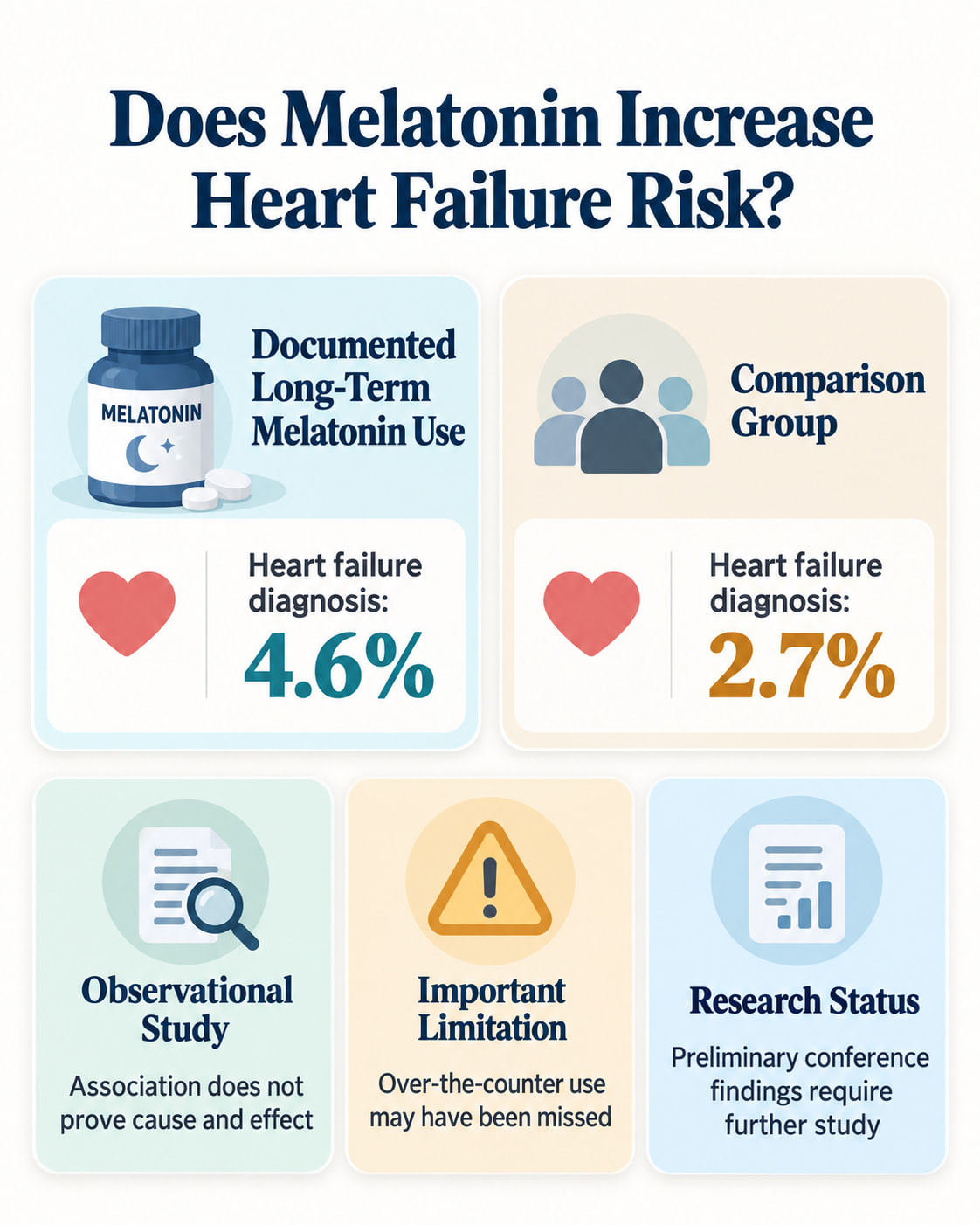
A study highlighted by the American Heart Association in November 2025 raised questions about long-term use. Researchers examined records from 130,828 adults with insomnia. Over five years, heart failure was diagnosed in 4.6% of the group with documented long-term melatonin use, compared with 2.7% of the comparison group.
This association does not prove that melatonin causes heart failure. At presentation, the findings were a preliminary conference abstract, not a peer-reviewed full paper. Researchers could not reliably capture all over-the-counter use and lacked information about factors such as insomnia severity. Those limitations could influence the results.
The finding supports further investigation. It does not establish that someone who takes melatonin nightly has damaged their heart.
When Can Melatonin Help With Sleep?
Melatonin is a hormone involved in your body’s sleep-wake timing. Supplements may help with jet lag and certain conditions involving a delayed sleep schedule. These uses differ from ongoing difficulty falling asleep or staying asleep despite having an appropriate opportunity to sleep.
For chronic insomnia, the American Academy of Sleep Medicine’s medication guideline gives a weak recommendation against routine melatonin use. Its 2026 guideline reiterates that earlier recommendation and the limitations of the evidence. This does not mean melatonin never helps an individual; it means the evidence does not support making it a standard solution for chronic insomnia.
A useful question is: Are you addressing a sleep-timing problem, or using melatonin because you do not know why you cannot sleep?
How Much Melatonin Should You Take, and When?
There is no single dose proven safe for everyone to take nightly indefinitely. A product labeled “5 mg” or “10 mg” does not establish that you need that amount or should keep taking it long term.
For short-term use, Johns Hopkins Medicine discusses 1–3 mg about two hours before bedtime. This is general educational guidance—not a personalized dose or proof of long-term safety. Your reason for taking melatonin and the formulation matter.
Immediate-release and prolonged-release products also have different instructions. Ask a pharmacist or clinician to review the exact product rather than assuming all tablets, liquids, and gummies are interchangeable. Follow the relevant directions, and do not add an extra dose to make up for one you missed.
How Long Should You Keep Taking It?
Short-term recommendations usually involve a planned course and reassessment, not automatic refills forever.
For context, NHS guidance for UK prescription melatonin describes usual short courses of one to four weeks, sometimes extending to 13 weeks. Specialists may recommend longer use for particular sleep problems. These prescription schedules are not universal limits or dosing instructions for U.S. supplements.
Johns Hopkins Medicine advises reassessing use when melatonin has not helped after a week or two. For someone already following a clinician’s plan, that is a reason to contact the prescriber rather than independently changing the plan.
Melatonin Side Effects and Medication Interactions
Side Effects to Watch For
Melatonin can cause daytime sleepiness, headache, dizziness, nausea, stomach discomfort, irritability, and unusual dreams. A side effect does not need to be severe to make the supplement unsuitable for your routine.
For example, falling asleep sooner is not a useful trade-off if you feel too sleepy to drive safely the next morning. Do not drive or operate machinery while sleepy or dizzy, and ask a clinician or pharmacist about symptoms that persist or interfere with daily activities.
Medicines and Substances That Need Review
Tell your pharmacist about all prescription medicines, over-the-counter products, and supplements you use. Important examples include:
| Medicine or substance | Main concern |
|---|---|
| Other sleep medicines, benzodiazepines, opioids, and sedating herbal products | Sedating effects can combine and increase drowsiness. |
| Warfarin and certain antidepressants, including fluvoxamine | Potential interactions require professional review. |
| Blood pressure medicines and estrogen-containing contraceptives or hormone therapy | These can interact with melatonin or affect its effects. |
This is not a complete interaction list. A pharmacist can check your specific medicines and doses.
Avoid combining melatonin with alcohol. NHS guidance warns that the combination can cause excessive sleepiness and difficulty waking.
Who Should Talk to a Doctor Before Taking Melatonin?
Some people need extra caution even when considering a short course.
Children and teenagers: Speak with their healthcare professional before starting melatonin. Long-term effects remain uncertain. Store supplements securely, especially gummies, out of children’s reach and sight.
Pregnant or breastfeeding people: Get individualized advice. Melatonin is not usually recommended during pregnancy because information about its effects on babies is limited. Breastfeeding decisions also need professional review.
Older adults and people with epilepsy: Melatonin may remain active longer in older adults and contribute to daytime drowsiness. People with epilepsy should use it under medical supervision.
People with liver disease, kidney disease, or autoimmune conditions: Discuss suitability before use. A previous allergic reaction to melatonin or its ingredients also needs attention.
Why Melatonin Supplement Quality Matters
In the United States, melatonin is sold as a dietary supplement. The FDA does not approve dietary supplements for safety and effectiveness before they are sold. However, supplements are not completely unregulated: manufacturing, labeling, and enforcement requirements still apply.
A 2023 JAMA study of melatonin gummies found that 22 of 25 tested products were inaccurately labeled. Among products containing detectable melatonin, measured amounts ranged from 74% to 347% of the labeled quantity. One product contained no detectable melatonin.
This was a small product sample, not a finding about every melatonin supplement. Still, it shows why the number on a label may not always reflect the amount taken.
Ask a pharmacist about independently verified products. Quality seals from organizations such as USP or NSF can help assess manufacturing and ingredient quality, but they do not prove that a supplement is effective or safe for you to take indefinitely.
What to Do If You Already Take Melatonin Every Night
Make the next step a review, not an automatic dose increase.
- Bring the actual product information. Save the label or take a photo showing the ingredients, serving size, and amount of melatonin. Include any other nighttime products you take. A healthcare professional can review potential duplication and interactions.
- Keep a sleep diary for one to two weeks. Record bedtime, wake time, awakenings, naps, and daytime sleepiness. Add when you take melatonin, caffeine, and alcohol. This gives your clinician more useful information than simply saying, “I sleep badly.”
- Describe both benefits and drawbacks. Explain whether you fall asleep sooner, wake less often, or function better during the day. Also report morning grogginess, dizziness, or other symptoms.
- Agree on a follow-up plan. Ask whether continued use makes sense, when to reassess it, and how to stop when appropriate. Long-term users should discuss stopping with a doctor or pharmacist rather than assuming everyone needs the same approach.
What Helps With Ongoing Insomnia?
Cognitive behavioral therapy for insomnia, or CBT-I, is a first-line option for chronic insomnia. The AASM guideline published in April 2026 supports starting with CBT-I alone in most circumstances, while recognizing that some people may benefit from a clinician-guided combination with medication.
CBT-I is more than advice to avoid screens or take a warm bath. It is a structured approach that addresses sleep-related worry, time spent awake in bed, and patterns that make sleep difficult. Programs commonly run for six to eight weeks and may be available in person, by telephone, or online.
Consistent sleep and wake times, a dark and quiet bedroom, and avoiding caffeine or alcohol close to bedtime can support better sleep. However, sleep hygiene alone should not be presented as sufficient care for chronic insomnia.
Ask specifically about CBT-I rather than assuming your only alternatives are melatonin or another sleep product.
When to Seek Medical Advice
Arrange an evaluation when poor sleep affects your work, concentration, mood, or daily functioning. Insomnia is considered chronic when it occurs at least three nights a week for three months or longer, but you do not need to wait three months to ask for help.
Also mention loud snoring, witnessed breathing pauses, waking up gasping, or substantial daytime sleepiness. These can be signs of sleep apnea and may warrant a sleep study.
Seek emergency care for difficulty breathing or sudden swelling of the lips, tongue, mouth, or throat after taking melatonin, as these may indicate a serious allergic reaction.
Frequently Asked Questions
Is 5 mg or 10 mg of Melatonin Safe Every Night?
Neither strength should be assumed safe for indefinite use. Higher strength does not establish a better or more appropriate sleep plan. Ask a clinician or pharmacist to review the amount, formulation, and reason for continued use.
Is Melatonin Addictive?
Addiction is unlikely when melatonin is taken as prescribed, according to NHS guidance. However, low addiction risk does not establish long-term safety or mean that an ongoing sleep problem no longer needs assessment.
Can You Stop Taking Melatonin Suddenly?
The six-month prolonged-release trial did not find withdrawal symptoms after stopping its studied product. Still, people who have used melatonin long term should discuss discontinuation with a doctor or pharmacist, especially when it is part of a prescribed sleep plan.
Should You Take Breaks From Melatonin?
A clinician may recommend occasional use or a trial without melatonin to assess whether you still need it. Taking breaks should not be treated as a guarantee of long-term safety. Follow a plan based on your sleep problem rather than an arbitrary cycling schedule.
Can You Take Another Dose if You Wake Up During the Night?
Do not automatically take another dose. NHS guidance advises skipping a missed bedtime dose and resuming the following night, rather than doubling up. Follow the instructions for your particular product or prescription.
Can Melatonin Cause Vivid Dreams or Nightmares?
Unusual dreams are a recognized side effect. Speak with a clinician or pharmacist when dreams are distressing, persist, or interfere with sleep rather than increasing the dose to try to sleep through them.
The Bottom Line
Melatonin should have a clear purpose and a review plan—not become something you take indefinitely without reassessment. For persistent insomnia, evidence-based care includes CBT-I and evaluation for contributing sleep or health problems.
Start by documenting your sleep and bringing your melatonin label to a clinician or pharmacist. The goal is better sleep and better daytime functioning, not simply taking a sleep supplement every night.
This content is for informational purposes only and not medical advice.
References
- National Center for Complementary and Integrative Health: Melatonin: What You Need to Know.
- BMC Medicine: Six-month randomized trial of prolonged-release melatonin.
- American Heart Association: Preliminary research on long-term melatonin use and heart outcomes.
- JAMA: Quantity of Melatonin and CBD in Melatonin Gummies Sold in the US.
- U.S. Food and Drug Administration: FDA 101: Dietary Supplements.
- Johns Hopkins Medicine: Melatonin for Sleep: Does It Work?.