
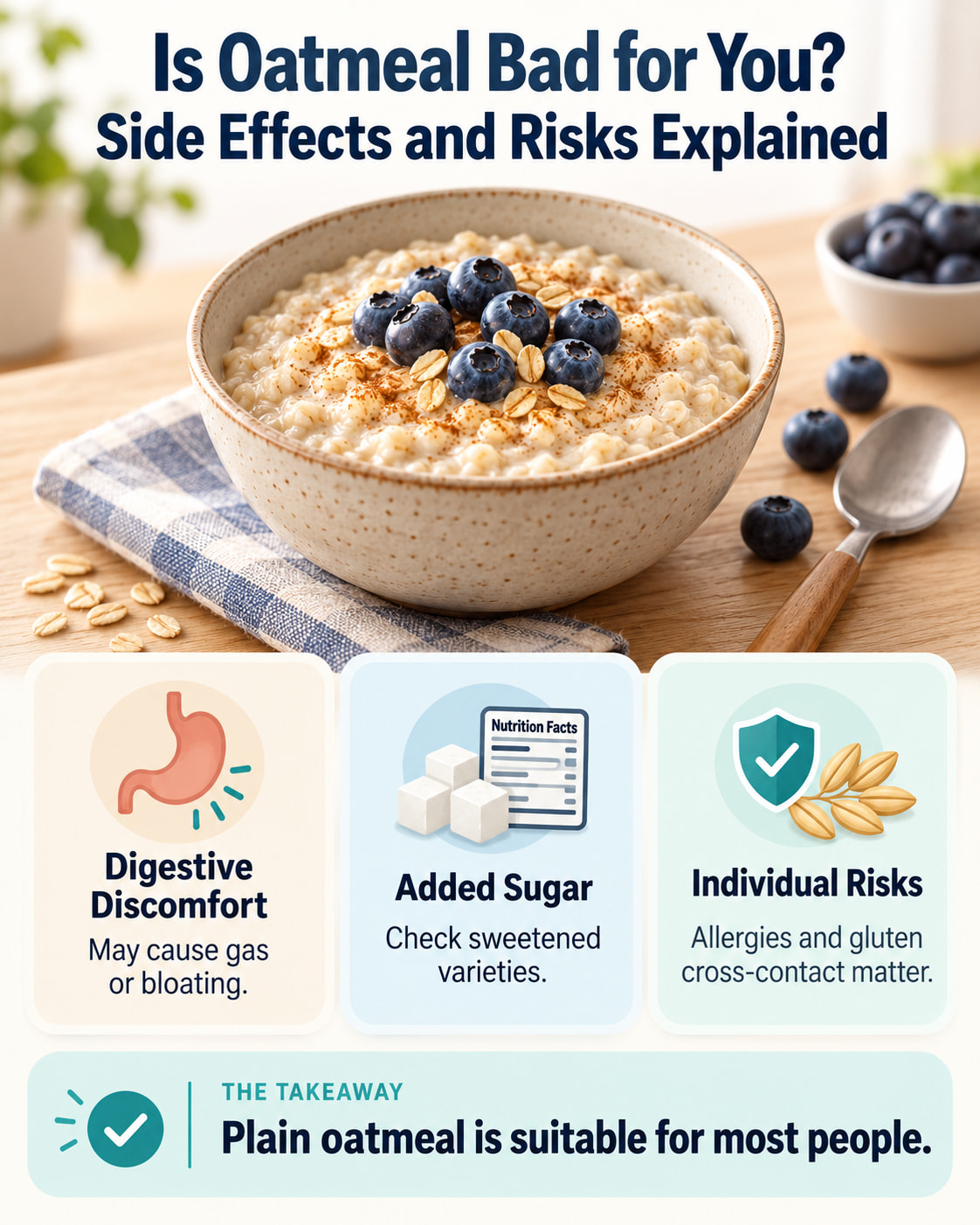
Oatmeal is not bad for most people, but it can cause digestive discomfort and may need extra care if you have celiac disease, an oat allergy, or certain dietary restrictions. Portion size, added sugar, and preparation also affect how oatmeal fits your needs.
You usually do not need to give up oatmeal simply because it contains carbohydrates or compounds called antinutrients. A more useful approach is to check what is in your bowl, notice how you feel after eating it, and understand the situations that require medical advice.
Is Oatmeal Bad for You?
Plain oatmeal can fit a balanced eating pattern. The CDC includes old-fashioned and steel-cut oats among whole-grain choices, and diabetes guidance does not recommend that everyone avoid them.
However, a food can be suitable for most people and still cause problems for an individual. A large serving may feel uncomfortable when you are not used to much fiber. A sweetened packet may contribute more added sugar than you expect. Oats that have contacted wheat, barley, or rye may be unsuitable for someone with celiac disease.
The question is whether the type, amount, and preparation work for you.
Possible Side Effects and Risks of Oatmeal
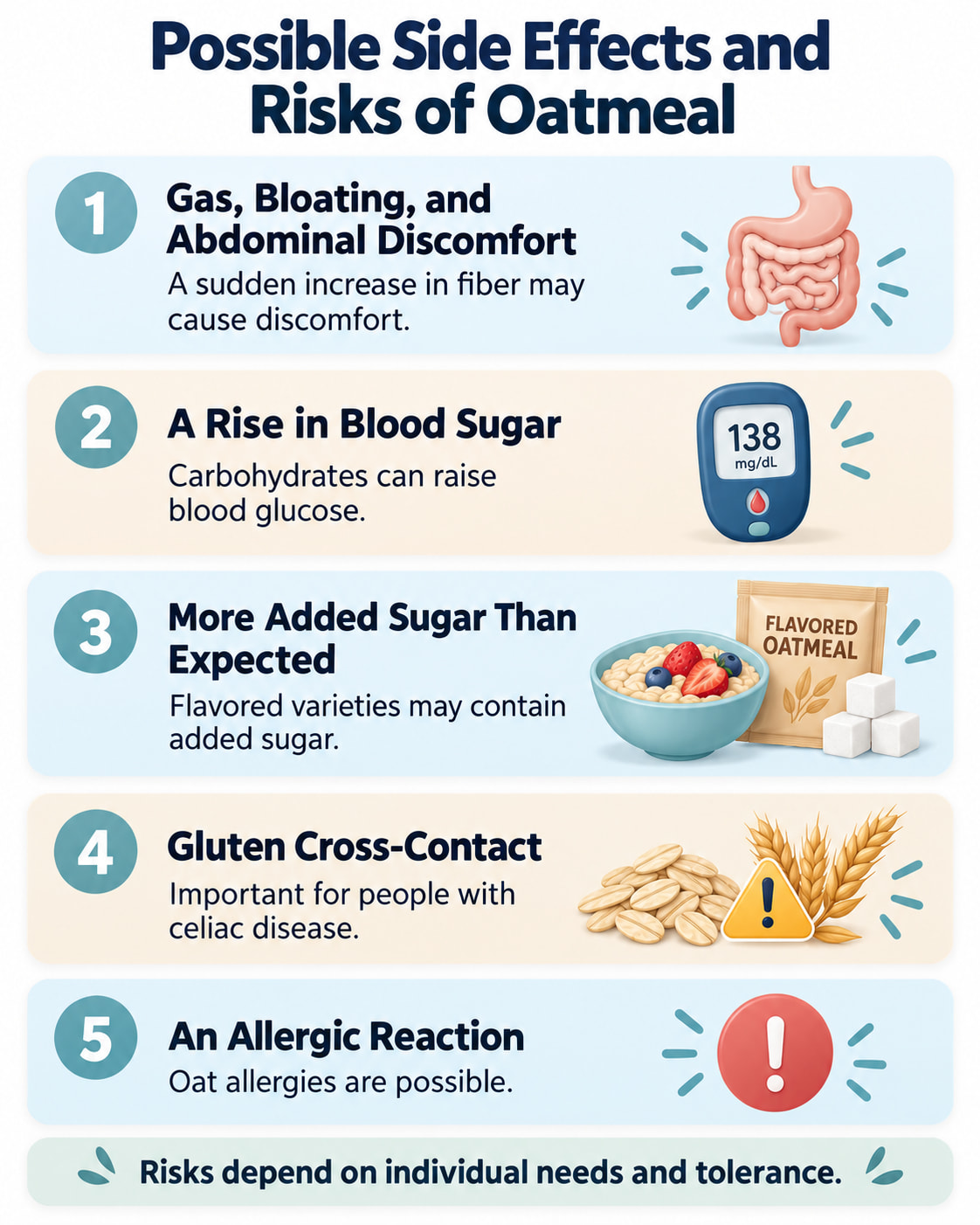
1. Gas, Bloating, and Abdominal Discomfort
Oats contain fiber. Increasing your fiber intake quickly can cause gas, bloating, or cramps, particularly if your usual diet contains relatively little fiber.
According to MedlinePlus guidance on fiber, gradually adding fiber may reduce digestive discomfort as your body adjusts.
Consider the entire meal, too. Milk can cause symptoms in people with lactose intolerance, and some sweeteners or other ingredients may contribute to bloating. Symptoms after a bowl of oatmeal do not automatically mean the oats are responsible.
For mild discomfort, try a smaller portion and simpler ingredients. Persistent symptoms deserve evaluation rather than repeated food restrictions.
2. A Rise in Blood Sugar
Oatmeal contains carbohydrates, so blood glucose can rise after eating it. The amount eaten, processing, and other foods in the meal affect the response.
A 2021 systematic review funded by PepsiCo covered 10 publications. It found that intact oat kernels and thick flakes produced lower post-meal glucose responses than refined-grain comparison foods. Thin, quick, and instant flakes did not show the same significant advantage. The review assessed meal responses; it did not establish that instant oatmeal causes diabetes.
The American Diabetes Association’s cereal guidance, published in 2026, includes rolled and steel-cut oatmeal as options and advises checking serving size and total carbohydrates.
If you manage diabetes, use your usual monitoring and meal-planning guidance to assess how oatmeal fits. A “no added sugar” label does not mean the food contains no carbohydrates.
3. More Added Sugar Than Expected
Plain oats and sweetened oatmeal products can have different nutritional profiles. Flavored packets, syrups, honey, and sweetened toppings may add considerable sugar to the meal.
Check the Added Sugars line on the Nutrition Facts label. FDA guidance considers 5% Daily Value or less per serving low and 20% or more high.
For example, 10 grams of added sugar equals 20% of the label’s 50-gram Daily Value. That Daily Value is a labeling reference, not a target you need to reach.
Honey and maple syrup count as added sugars when used to sweeten oatmeal. Sugar naturally present in whole fruit or plain milk is classified differently.
4. Gluten Cross-Contact
Oats do not naturally contain the gluten proteins found in wheat, barley, and rye. However, contact with these grains during growing, transport, or processing can introduce gluten.
NIDDK guidance on celiac disease says most people with the condition can tolerate moderate amounts of gluten-free oats. It recommends discussing their inclusion with a doctor or registered dietitian.
In the United States, oats labeled gluten-free must contain less than 20 parts per million of gluten and meet the other applicable FDA labeling requirements. Third-party certification is optional.
Some people also react to avenin, an oat protein. If symptoms continue despite choosing gluten-free oats, seek advice instead of assuming that the label rules out every possible problem.
5. An Allergic Reaction
An oat allergy is possible. Published case reports describe severe reactions, although they do not tell us how common oat allergy is.
Food-allergy symptoms can include hives, swelling, wheezing, vomiting, or trouble breathing. Gas or bloating alone does not establish an allergy.
A gluten-free oat product still contains oats, so it is unsuitable for someone with an oat allergy. Milk, nuts, and other ingredients in oatmeal can also be allergens.
If you suspect an allergic reaction, stop eating the suspected food and seek medical advice. Do not deliberately try it again at home to confirm the reaction.
Who May Need to Limit or Avoid Oatmeal?
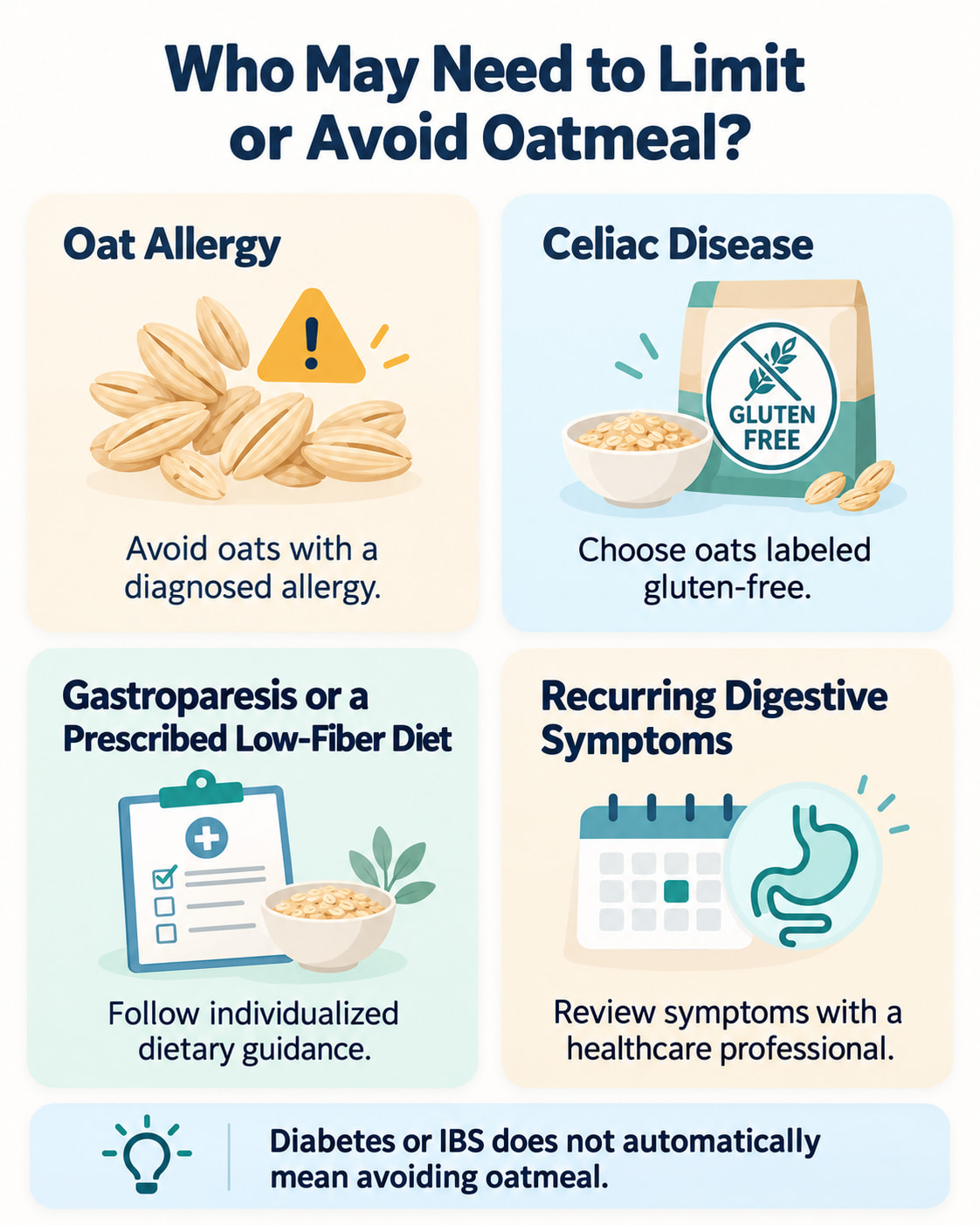
Extra care is appropriate if you have:
- A diagnosed oat allergy: Avoid oats and follow your allergy care plan.
- Celiac disease: Choose oats labeled gluten-free and discuss persistent symptoms with your care team.
- Gastroparesis or a prescribed low-fiber diet: Ask whether oatmeal fits your specific plan. NIDDK advises lower-fiber foods for many people with gastroparesis, which involves delayed stomach emptying.
- Recurring symptoms after eating oatmeal: Review the portion and ingredients with a healthcare professional or registered dietitian.
Diabetes and irritable bowel syndrome do not automatically mean you must avoid oatmeal. Individual portions and tolerance matter. NIDDK identifies oat products as sources of soluble fiber, which may be helpful for some people with IBS.
Is Instant Oatmeal Bad for You?
Instant oatmeal is not automatically unhealthy. Plain instant oats and a heavily sweetened flavored packet can be quite different.
Faster preparation may suit your routine. The useful step is to compare ingredients and nutrition labels rather than judging the product by the word “instant.”
| Oatmeal option | What to check |
|---|---|
| Plain steel-cut or rolled oats | Your serving size and any ingredients you add |
| Plain quick or instant oats | Total carbohydrates, fiber, and whether the ingredients include added sweeteners |
| Flavored instant oatmeal | Added sugar per serving and how many packets you eat |
| Prepared oatmeal cups | Serving size, total carbohydrates, and included toppings |
Processing can influence digestion, but it does not provide a complete picture of the meal. You do not need a fixed glycemic-index ranking to make a useful comparison: start with the label, your portion, and your individual needs.
Should You Worry About Antinutrients or Pesticides in Oatmeal?
Phytate and Mineral Absorption
Oats contain phytate, a naturally occurring compound also found in other grains and plant foods. It can reduce the absorption of some minerals from a meal.
The NIH Office of Dietary Supplements explains that phytate can reduce nonheme iron absorption. However, it also notes that the effects of absorption inhibitors and enhancers are reduced within a typical varied Western diet and have little effect on most people’s iron status.
That does not mean oatmeal strips minerals from your body or that a normal serving causes a deficiency. If you have diagnosed iron deficiency or a very restricted diet, your overall eating pattern deserves individual attention.
Soaking oats changes their texture, but you should not assume that ordinary overnight soaking eliminates all phytate.
Pesticide Residues
Reports that detect pesticide residues can sound alarming. Detection alone, however, does not establish that eating a food at typical amounts causes harm.
EPA evaluates pesticide residues using toxicity, residue levels, and estimated exposure from food and other sources. These assessments also have to account for children and other population groups.
Research and regulatory reviews continue. A residue report should be interpreted in context, rather than used to make a blanket claim that oatmeal is toxic.
How to Prepare Oatmeal With Fewer Problems
Measure Your Starting Portion
Use the serving information on the package as a reference, then consider your appetite and nutrition needs.
Measure oats before cooking when the label lists a dry serving. The same volume of dry oats and cooked oatmeal represents different amounts of food because cooking adds water.
There is no single oatmeal serving that is ideal for everyone.
Increase Fiber Gradually
If oatmeal is a new addition to your routine, start with an amount you tolerate. Avoid making several large fiber increases at once, such as combining a large bowl with generous amounts of bran and seeds.
Drink fluids regularly to help fiber work properly. If you have a prescribed fluid limit, follow that guidance.
Build a Balanced Meal
Choose additions that suit your needs and that you tolerate. Options include plain yogurt, berries, a small amount of nuts or seeds, or eggs served alongside the oatmeal.
The CDC recommends including a protein source with carbohydrate-containing meals. This can support fullness and help moderate the blood glucose response.
Adjust sweeteners deliberately. Adding honey, sweetened milk, and a sugary topping to an already flavored packet can increase the meal’s added sugar.
Refrigerate Overnight Oats
Food-safety guidance from N.C. Cooperative Extension recommends refrigerating overnight oats, including mixtures made with water.
Use a clean, food-safe container and follow the product’s preparation instructions. Do not leave oats mixed with liquid on the counter overnight. Cool cooked oatmeal promptly and refrigerate it if you plan to eat it later.
Notice Patterns Without Self-Diagnosing
If you repeatedly feel uncomfortable after oatmeal, note the amount, additions, timing, and symptoms. This information can help a clinician or dietitian assess possible explanations.
Small portion adjustments are reasonable for mild digestive discomfort. Suspected allergy or severe symptoms require medical assessment.
When to Seek Medical Advice
Get medical advice if symptoms repeatedly follow oatmeal, interfere with eating, or continue despite simple adjustments. Unexplained weight loss or ongoing digestive problems also deserve evaluation.
Seek urgent medical care for sudden severe abdominal pain, blood in the stool, or persistent vomiting with an inability to keep fluids down.
Call 911 or your local emergency number for trouble breathing, throat or tongue swelling, or fainting after eating. Follow your prescribed emergency plan, including prompt epinephrine use if applicable. MedlinePlus explains these precautions in its food-allergy guidance.
If you think you might have celiac disease, discuss testing before starting a gluten-free diet. Removing gluten beforehand can affect test accuracy.
Frequently Asked Questions
Is Eating Oatmeal Every Day Bad for You?
Eating oatmeal daily is generally reasonable if you tolerate it and it fits your dietary needs. Keep the rest of your diet varied, and consider portions and additions. Daily intake does not override an allergy or a prescribed dietary restriction.
How Much Oatmeal Is Too Much?
There is no universal cutoff. An amount may be unsuitable if it causes discomfort, does not fit your carbohydrate needs, or crowds out other foods. Start with the package serving information and adjust to your needs rather than treating it as a required amount.
Can Oatmeal Cause Constipation?
Oatmeal is generally a source of fiber that can support bowel regularity. NIDDK includes it among fiber-containing foods for constipation and recommends adequate fluids and gradual fiber increases. Persistent constipation should not automatically be blamed on oatmeal.
Should People With Diabetes Avoid Oatmeal?
Not automatically. Oatmeal can fit a diabetes eating plan, but total carbohydrates and portion size matter. Choose and prepare it according to your individual plan, and use your usual glucose-monitoring guidance rather than assuming every oat product has the same effect.
Are Gluten-Free Oats Safe for Everyone?
No. A gluten-free label addresses gluten content; it does not remove oat proteins or prevent an oat allergy. Most people with celiac disease tolerate gluten-free oats, but individual symptoms and clinical advice still matter.
Does Oatmeal Cause Inflammation?
Research does not support calling oatmeal generally inflammatory. A 2021 review of 23 randomized trials found no significant overall changes in the four systemic inflammatory markers analyzed. Some subgroup findings suggested reductions. Celiac disease and food allergy remain separate considerations.
Can You Eat Oats Without Cooking Them?
Some oat products are intended for preparations such as refrigerated overnight oats. Follow the package instructions rather than assuming every raw grain product is ready to eat. Keep oats mixed with liquid refrigerated and avoid leaving them at room temperature overnight.
Conclusion
Oatmeal works well for many people, but individual tolerance and preparation matter. Check your portion and added sugar, refrigerate overnight oats, and follow condition-specific advice when needed.
For your next bowl, start with the label and a portion that suits you. If symptoms keep returning, seek guidance instead of repeatedly cutting out foods on your own.
This content is for informational purposes only and not medical advice.
References
- MedlinePlus: Fiber.
- CDC: Choosing Healthy Carbs.
- American Diabetes Association: Can I Eat Cereal and Manage Prediabetes or Diabetes?.
- The Journal of Nutrition: Oats, Processing, and Post-Meal Glucose Responses.
- FDA: Added Sugars on the Nutrition Facts Label.
- NIDDK: Eating, Diet, and Nutrition for Celiac Disease.
- FDA: Questions and Answers on Gluten-Free Food Labeling.
- Society for the Study of Celiac Disease: Consuming Oats on a Gluten-Free Diet.