
Shilajit for women may help in a few specific areas, but the evidence is still limited. The strongest human research is in postmenopausal bone support, while skin-related and sexual-function findings are early and should not be overstated. Understanding the difference between promising research and marketing claims matters because shilajit products can vary widely, and contamination with heavy metals is a real safety concern. The safest way to approach this topic is to look at the actual human studies, understand who might benefit, and know when extra caution is smart.
What Is Shilajit?
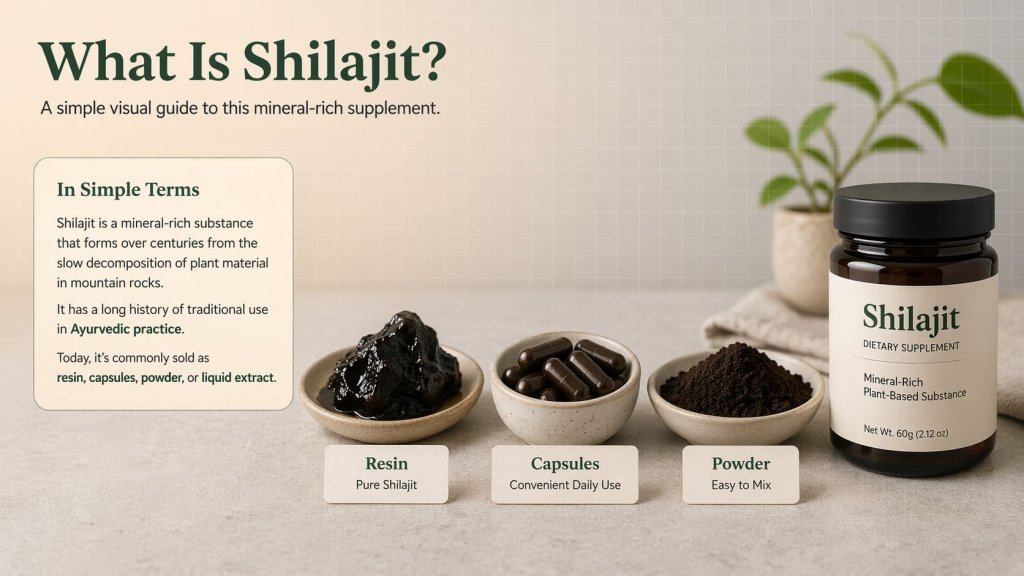
Shilajit is a natural mineral-rich substance traditionally used in Ayurvedic practice. It is often sold as resin, capsules, powder, or liquid extract. In the U.S., it is typically marketed as a dietary supplement, not an approved medicine, which matters because supplements do not go through FDA premarket approval the way drugs do. The FDA and the NIH Office of Dietary Supplements both explain that manufacturers are responsible for safety and labeling before marketing.
Shilajit for Women: What the Best Research Actually Shows
Most online claims about shilajit for women are much broader than the evidence supports. Right now, the best way to describe the research is this:
- most studies are small
- not all studies are in women
- different products may not be comparable
- the best women-specific evidence is in postmenopausal bone health
- other possible benefits are still preliminary
Postmenopausal bone support is the strongest evidence
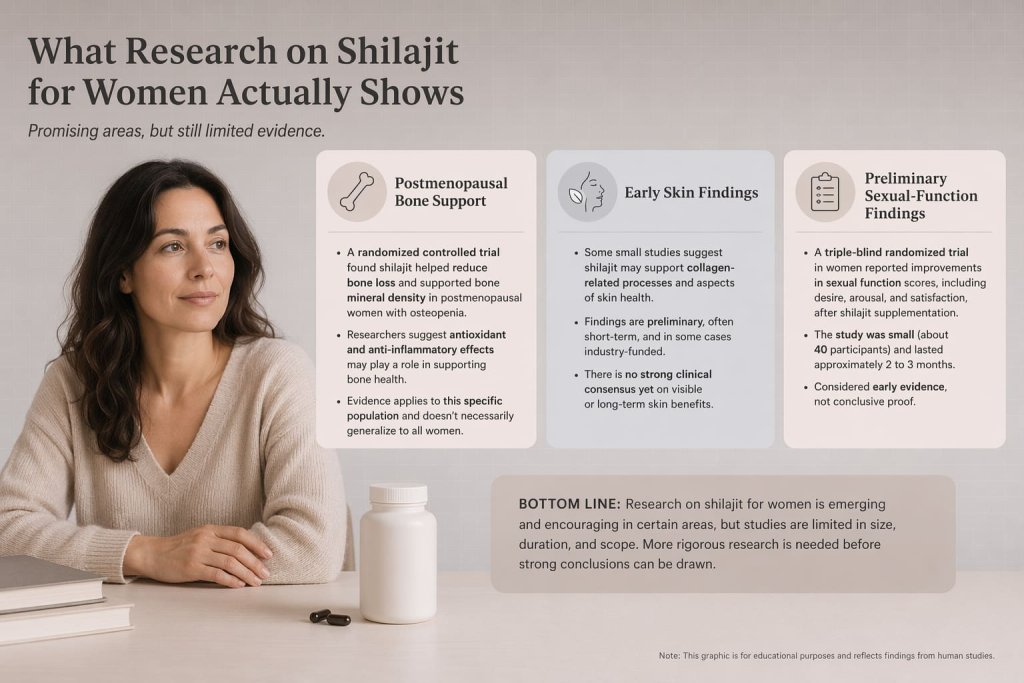
The strongest women-specific study was a randomized, double-blind, placebo-controlled trial published in Phytomedicine. It followed postmenopausal women with osteopenia and found that daily supplementation with a standardized shilajit extract helped preserve bone mineral density, with benefits reported at the lumbar spine and femoral neck. The study also linked those effects to lower inflammation and oxidative stress markers. This does not prove that every shilajit product will protect bone, but it does make bone support the most evidence-based angle for women, especially after menopause.
Why this matters:
- it is the best-designed women-focused trial found
- it looked at a clinically meaningful issue
- it focused on postmenopausal women, not a mixed population
Skin support has early but limited evidence
A 2019 study in healthy adult women reported that 14 weeks of shilajit supplementation was not associated with reported adverse effects during the study period, and the higher-dose group showed improved skin microperfusion compared with baseline or placebo. That is interesting, but it is still early evidence. It supports cautious wording such as “may support skin health” rather than strong anti-aging claims.
Sexual function findings are promising but still preliminary
A 2023 triple-blind, placebo-controlled trial in reproductive-aged women found that oral shilajit tablets at 200 mg twice daily for 60 days improved total sexual function scores in women who completed the study. However, the same trial did not find a statistically significant improvement in sexual quality of life. The study was small, and that means the findings are not strong enough to support sweeping claims about libido, fertility, or hormone balance.
Why the Research Needs a Careful Reading
Not all shilajit studies should be treated as equal proof. A big limitation is that the human research base is still small, and not all studies used the same type or quality of shilajit product. That means results from one standardized extract cannot automatically be applied to every resin, capsule, or powder sold online. Some reviews and safety resources also note that parts of the research base may be influenced by supplement-company funding. For readers, the practical takeaway is simple: shilajit has some promising signals for women, but the evidence is still too limited for broad, confident claims.
Potential Benefits of Shilajit for Women
Based on current human evidence, the most realistic potential benefits are narrow and conditional.
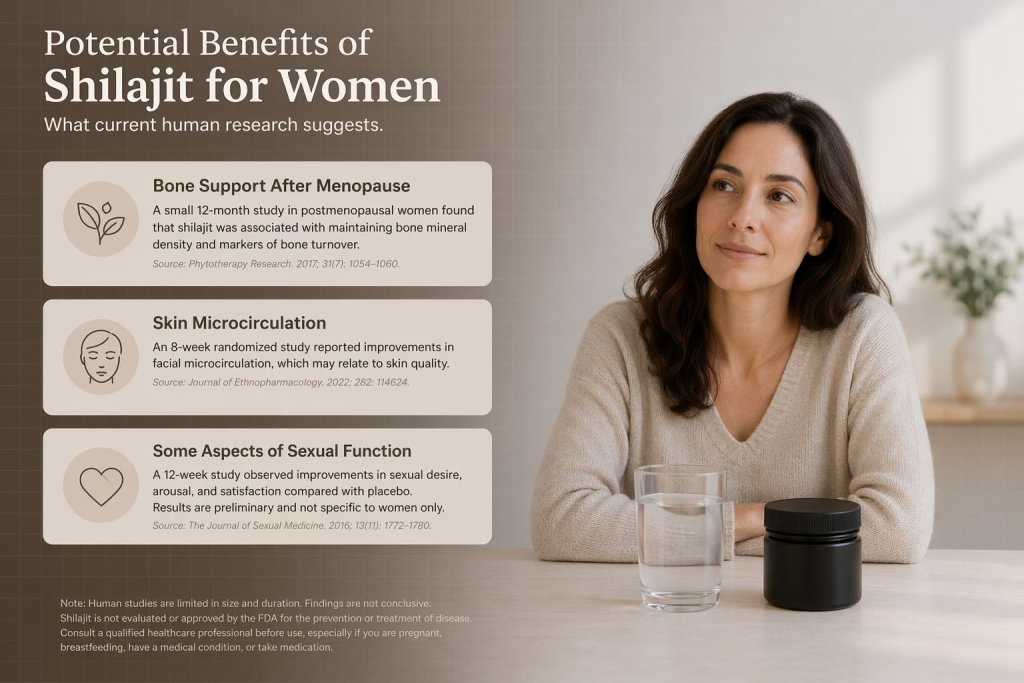
May support bone health after menopause
The benefit was studied specifically in postmenopausal women with osteopenia, not in all women generally. That distinction matters. If you are evaluating shilajit for midlife or postmenopausal health concerns, this is the strongest area of evidence.
May support skin microcirculation
The skin study suggests a possible effect on skin perfusion at higher doses in healthy women. That is not the same as proving wrinkle reduction, collagen rebuilding, or visible anti-aging benefits across the board. It is best presented as an early signal, not a settled fact.
May help some aspects of sexual function
The 2023 clinical trial suggests possible benefit in sexual function scores, but the evidence is still limited. This should stay in the “may help” category, especially because the study did not show a significant improvement in sexual quality of life and did not establish broad hormone effects.
What Is Not Well Proven About Shilajit for Women?
This is where many articles get too aggressive. Current evidence does not firmly prove that shilajit:
- balances female hormones
- improves fertility
- helps with PCOS
- causes weight loss
- relieves menopause symptoms broadly
- works as a general energy fix for all women
Some of these ideas come from traditional use, animal research, or marketing language, but that is not the same as strong human evidence in women. The more accurate message is that shilajit has a few promising signals, not a long list of proven female-health effects.
Is Shilajit Safe for Women?
The FDA warned in December 2025 that certain unapproved Ayurvedic products may contain harmful levels of heavy metals and may cause heavy metal poisoning. The agency listed possible effects such as high blood pressure, kidney injury, fatigue, gastrointestinal distress, and neurologic symptoms. FDA also notes that if heavy metals are in a mother’s body, they may pass into breast milk.
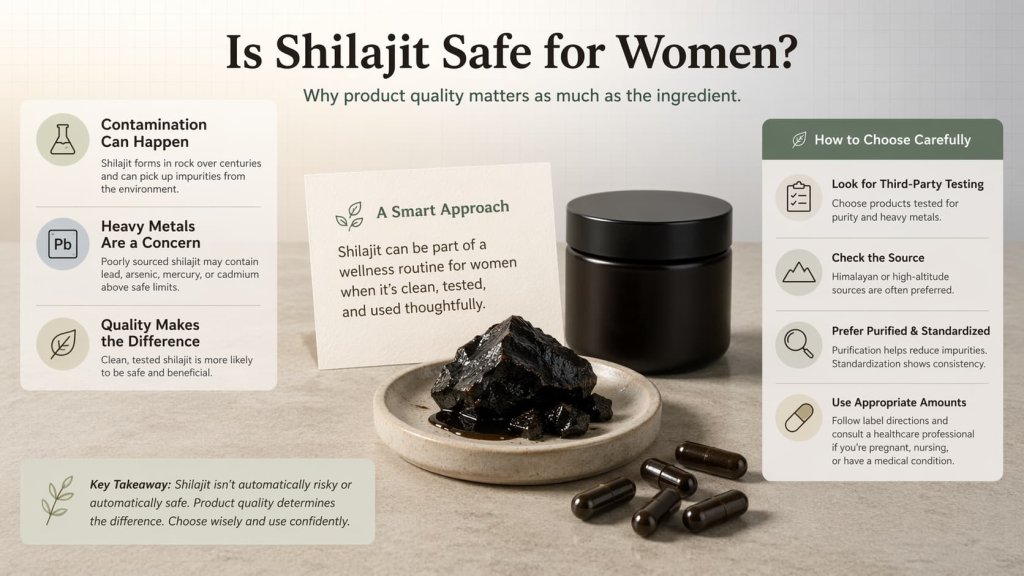
The OPSS article on shilajit also says suspected adverse effects have included allergic reactions, increased blood pressure, disorientation, dizziness, and cognitive problems, while noting that short-term use of up to 500 mg of shilajit extract has appeared safe in some studies. That means safety is not just about the ingredient itself. It is also about product quality, contamination, dose, and the specific extract used.
When to Stop Using Shilajit and Get Medical Advice
Stop using the product and seek medical advice promptly if you develop unusual symptoms after starting shilajit, especially dizziness, confusion, severe stomach symptoms, allergic-type reactions, or signs that concern you. This matters because possible side effects linked to shilajit and contaminated Ayurvedic products can overlap with symptoms of heavy metal exposure. If someone has already used an Ayurvedic product and may be experiencing symptoms of toxicity, it is reasonable to contact a clinician or poison center rather than simply switching brands and continuing.
Who Should Be Careful Before Using Shilajit?
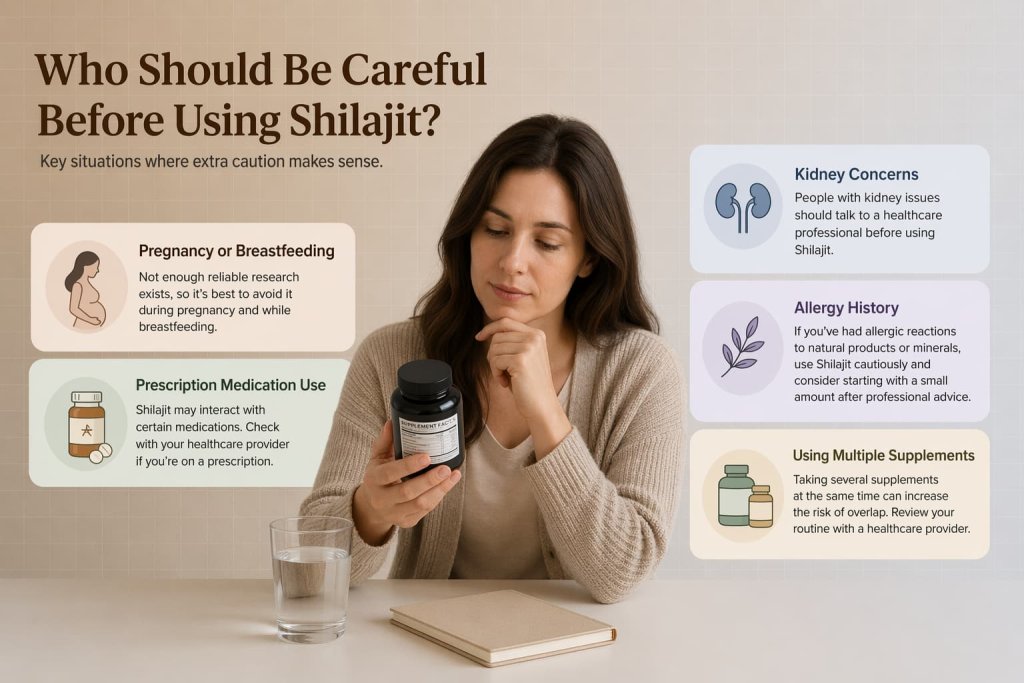
Extra caution makes sense for:
- pregnant or breastfeeding women
- women taking prescription medicines
- women with kidney concerns or a history of heavy metal exposure
- anyone with a history of allergic reactions to supplements or herbal products
- women preparing for surgery or using multiple supplements at once
The FDA advises consumers to talk with a doctor, pharmacist, or other health professional before using a dietary supplement because some supplements can interact with medicines or other supplements. That is especially important when the product category itself has contamination concerns.
Pregnancy and breastfeeding deserve extra caution for two separate reasons. First, many dietary supplements have not been well tested for safety during these periods. Second, contamination matters even more here because the FDA warns that heavy metals can pass into breast milk. For that reason, this is not a supplement category to approach casually during pregnancy or while nursing.
How to Choose a Shilajit Product More Carefully
No supplement choice is risk-free, but these steps can help lower risk.
Check for independent quality testing
The NIH Office of Dietary Supplements says some independent organizations offer quality testing and allow products that pass to display a seal. Examples listed include ConsumerLab.com, NSF International, and U.S. Pharmacopeia. These seals do not prove that a product is effective, but they can provide some reassurance about manufacturing quality and contaminants.
A third-party seal is helpful, but it should not be treated as proof that a product works or that it is risk-free for every user. What it can do is increase confidence that the product was independently checked for quality and manufacturing standards. That matters with shilajit because ingredient variability and contamination are part of the main safety concern. If a product does not clearly show independent testing or gives only vague purity claims, that is a reason to be more cautious, not less.
Avoid disease-cure marketing
The FDA says products sold as supplements cannot legally be marketed to treat, prevent, or cure disease. Big promises such as “reverses osteoporosis,” “balances hormones instantly,” or “treats infertility” should be treated as red flags.
Read the label closely
Look for:
- the exact ingredient form
- the dose per serving
- whether the product uses a standardized extract
- manufacturer contact details
- batch testing or contaminant testing information
How Much Shilajit for Women Has Been Studied?
There is no universal best dose for all women. That said, the women-specific studies found in current research used these approximate amounts:
- postmenopausal bone study: 250 mg or 500 mg daily of a standardized extract
- skin study: 125 mg or 250 mg twice daily
- sexual function study: 200 mg twice daily for 60 days
These study doses should not be treated as a personal recommendation. Different products vary, and the quality of one brand may not match the product used in a study.
Should Women Take Shilajit?
For most readers, the most honest answer is: possibly, but only with realistic expectations and careful product selection. Shilajit looks most promising for postmenopausal bone support, and there are early signals for skin support and sexual function. But the research is still limited, and safety depends heavily on product quality.
If you are considering it, the safest path is to:
- talk with your clinician first
- choose a product with independent quality testing when possible
- avoid exaggerated claims
- stop use and get medical advice if you notice unusual symptoms
Frequently Asked Questions About Shilajit for Women
Can shilajit help with menopause?
It may help in one specific menopause-related area: bone support in postmenopausal women with osteopenia. That does not mean it is proven to relieve all menopause symptoms.
Is shilajit good for women’s hormones?
There is not enough strong human evidence to say that shilajit broadly balances women’s hormones. That claim is much stronger than the current research supports.
Can shilajit improve female libido?
A small clinical trial found improvement in sexual function scores, but not in sexual quality of life. So the evidence is promising but still limited.
Is shilajit safe during pregnancy or breastfeeding?
Extra caution is warranted. Some Ayurvedic products may contain harmful heavy metals, and heavy metals may pass into breast milk. Many dietary supplements also have limited safety data during pregnancy and nursing.
Can shilajit help with skin health?
There is early evidence that higher-dose supplementation improved skin microperfusion in healthy adult women over 14 weeks. That is not the same as proving major cosmetic benefits.
How do I choose a safer shilajit supplement?
Start with label transparency, avoid disease-treatment claims, and look for independent quality testing such as NSF or USP when available.
Does FDA approve shilajit supplements?
No. The FDA does not approve dietary supplements before they are marketed the way it approves drugs.
Final Thoughts on Shilajit for Women
Shilajit for women is not a miracle supplement, but it is not empty hype either. The best evidence points to possible bone-support benefits after menopause, with earlier and weaker evidence for skin microcirculation and sexual function. The biggest issue is not just whether shilajit may help. It is whether the product is well-made, accurately labeled, and free from harmful contamination. That is why safety, quality, and realistic expectations should lead the conversation.
If you are considering shilajit, focus on evidence, not advertising. A careful, informed approach is far more useful than broad promises.
This content is for informational purposes only and not medical advice.
References
- OPSS: Why Third-Party Certification Is Important for Dietary Supplements
- Phytomedicine study on shilajit and bone mineral density in postmenopausal women
- Journal of the American College of Nutrition study on shilajit and skin microperfusion in women
- Traditional Medicine Research trial on shilajit and sexual function in reproductive-aged women