
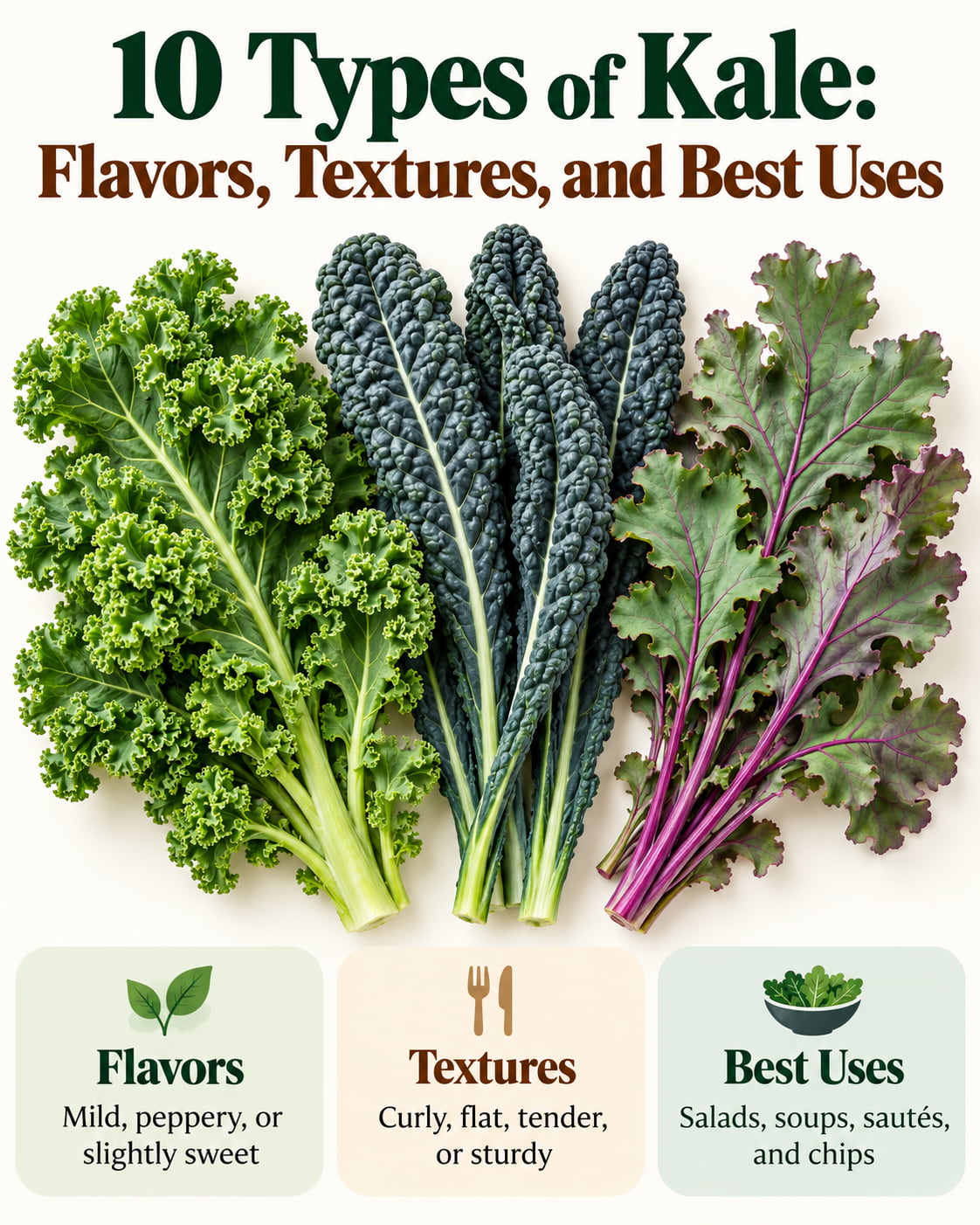
Types of kale include curly, lacinato, Russian, Siberian, and Portuguese forms, along with named varieties such as Redbor, Scarlet, and Dazzling Blue. Their leaves differ in shape, tenderness, and flavor, which can help you choose one for a salad, a tray of kale chips, or a pot of soup.
You do not need to recognize every variety to cook kale well. Start with the leaf texture, remove thick stems when needed, and match the preparation to how tender the leaves are.
What Are the Different Types of Kale?
Kale is a leafy vegetable in the cabbage family. Its leaves may be tightly curled, gently frilled, flat, or puckered, with colors ranging from green to purple.
This guide includes both broad kale types and named cultivars, which are cultivated varieties within those groups. For example, Redbor and Scarlet are curly varieties, while Dazzling Blue belongs to the lacinato group.
Leaf age matters, too. In its May 2026 guide, NC State Extension explains that young leaves suit salads, while larger, older leaves are chewier and often benefit from cooking. Cold weather can also make kale taste sweeter.
10 Types of Kale and How to Use Them
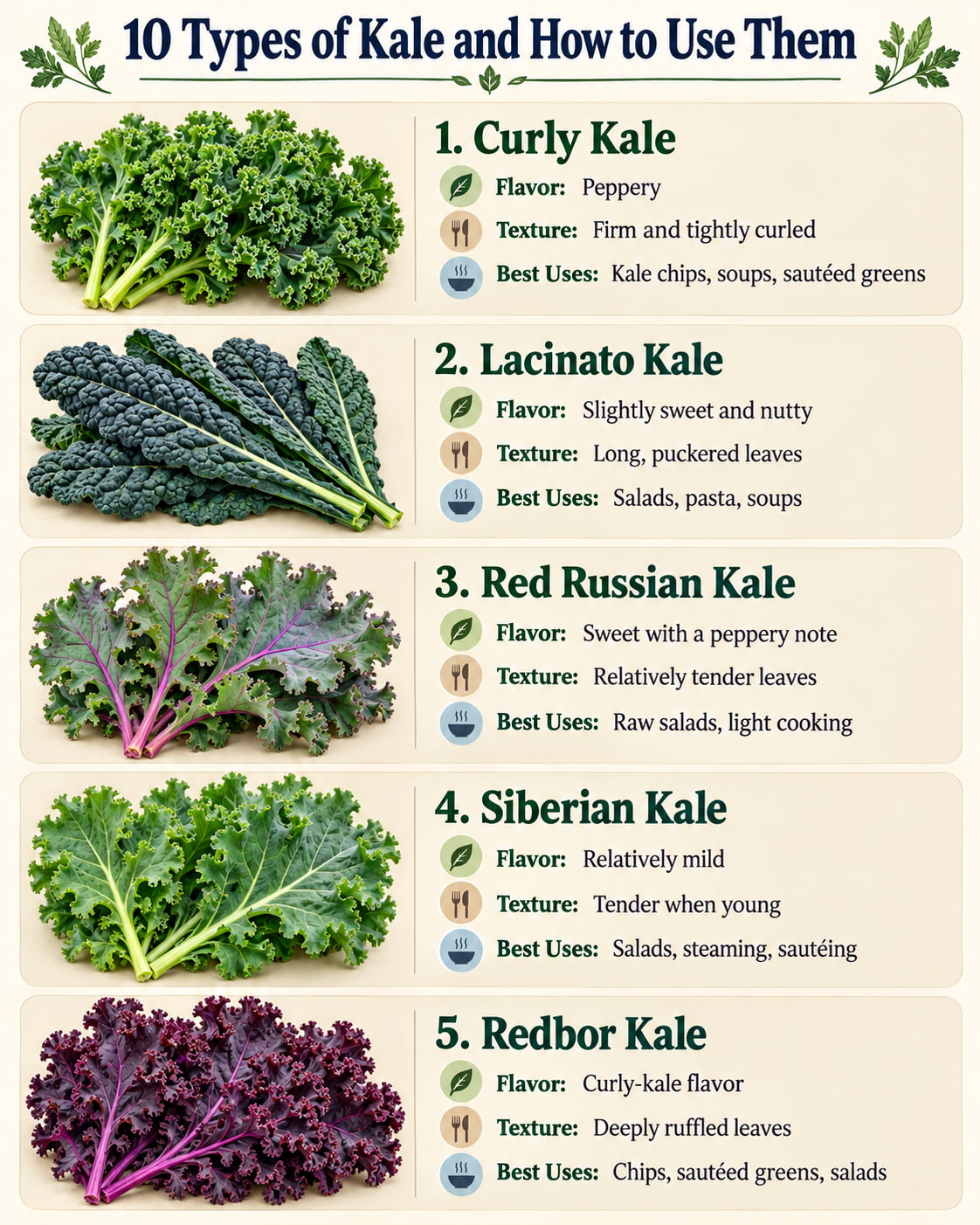
The uses below are practical suggestions based on each type’s leaf texture. There is plenty of overlap, so you can usually adapt a recipe to the kale you have.
1. Curly Kale
Curly kale has tightly ruffled green leaves and substantial central stems. Its peppery flavor and firm texture make it a useful choice when you want the greens to have some bite.
It can work in a raw salad, but the leaves usually benefit from trimming and softening first.
Best uses: Kale chips, sautéed greens, and hearty soups.
Preparation tip: For chips, remove thick stems, dry the leaves thoroughly, and coat them lightly with oil. Spread them in one layer so the pieces have room to crisp.
2. Lacinato Kale
Lacinato kale is also called Tuscan or dinosaur kale. Look for long, narrow, dark blue-green leaves with a puckered surface.
Its flavor is often described as slightly sweet and nutty. The leaves work well cut into ribbons, although the central stalk can still be tough.
Best uses: Thinly sliced salads, bean soups, pasta, and sautéed greens.
Preparation tip: Strip away the thickest stems, stack a few leaves, and slice across them. Try the ribbons in a white bean soup or tossed through pasta with olive oil and garlic.
3. Red Russian Kale
Red Russian kale has relatively flat, lobed leaves with purple stems and veins. Its leaves are generally more tender than those of frilly kale, with a sweet flavor and some peppery character.
That tenderness makes young Red Russian leaves a good starting point if you find mature curly kale too chewy.
Best uses: Raw salads and lightly cooked side dishes.
Preparation tip: Check the stems separately from the leaves. Tender foliage can still have a thick stalk. Remove substantial stems before chopping the leaves into a salad.
4. Siberian Kale
Siberian kale generally has broad green leaves with frilled edges. Improved Dwarf Siberian is one named variety you may encounter.
Russian-Siberian kales tend to be relatively tender and less biting than many European kale types. The texture still changes as the leaves mature.
Best uses: Young-leaf salads, steamed greens, and quick sautés.
Preparation tip: Use small leaves in a mixed salad. Chop larger leaves and cook them until they reach the tenderness you prefer.
5. Redbor Kale
Redbor is a curly variety with deeply frilled, purple-red to burgundy leaves. Its color makes it easy to distinguish from green curly kale.
Use it much as you would other curly varieties. Its flavor and leaf color can develop further in cold weather.
Best uses: Sautéed greens, kale chips, and finely chopped salads.
Preparation tip: For a raw dish, trim the heavy stems and slice the leaves finely. Try pairing the frilled leaves with thinly sliced apples or shredded carrots for contrasting textures.
6. Scarlet Kale
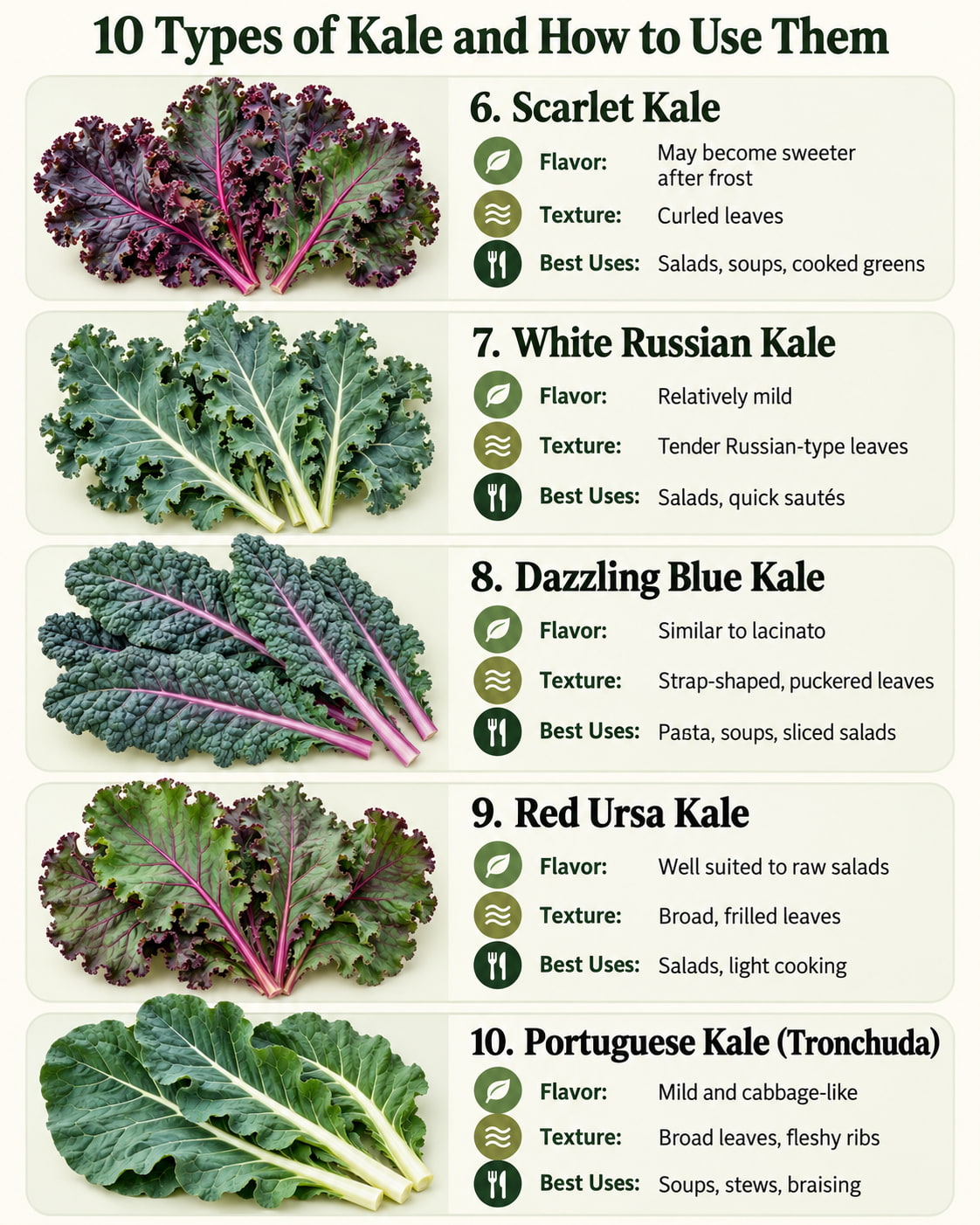
Scarlet kale has curled maroon or purple-green leaves, often highlighted by pinkish-red veins. It is an edible variety with a decorative appearance.
Its flavor can become sweeter after frost. Choose young leaves for fresh dishes and cook more mature leaves according to their texture.
Best uses: Young-leaf salads, soups, and cooked greens.
Preparation tip: Treat Scarlet like a curly cooking green. Chop larger leaves into manageable pieces before adding them to soup or a skillet.
7. White Russian Kale
White Russian kale has toothed blue-green leaves with pale stems and veins. Its leaf shape and tenderness resemble Red Russian, while its lighter ribs give it a different appearance.
It belongs to the relatively mild Russian-Siberian group and works particularly well in salads and light cooking.
Best uses: Mixed salads, quick sautés, and warm grain bowls.
Preparation tip: Try folding chopped young leaves into a warm grain dish near the end of cooking. Taste a piece before continuing so you can keep the texture you enjoy.
8. Dazzling Blue Kale
Dazzling Blue is a lacinato-type variety with blue-green, strap-shaped leaves and a pink midrib. Its gently puckered leaves provide an easy visual clue.
Its flavor resembles lacinato, so you can use the two in similar dishes.
Best uses: Sliced salads, pasta, sautéed greens, and soups.
Preparation tip: Trim substantial stems and slice the leaves into ribbons. If a recipe calls for Tuscan or dinosaur kale, Dazzling Blue is a practical substitute.
9. Red Ursa Kale
Red Ursa combines broad, Siberian-style frills with coloring associated with Red Russian kale. The leaves bring a fuller, frilled texture to a salad.
Growers particularly recommend its raw flavor, especially in young leaves from established plants.
Best uses: Leafy salads and light cooking.
Preparation tip: Mix young Red Ursa leaves with flatter salad greens for variety in texture. Chop larger leaves before giving them a brief sauté.
10. Portuguese Kale (Tronchuda)
Portuguese kale sold as Tronchuda has broad, paddle-shaped leaves and prominent, fleshy ribs. The Tronchuda Beira selection is described as mild and tender, with a more cabbage-like character than many other kales.
Its broad leaves make it a useful option for substantial cooked dishes.
Best uses: Braising, stir-frying, soups, and stews.
Preparation tip: Separate thick ribs from the leafy portions and chop them. Start cooking the ribs first, then add the leaves, checking each for tenderness.
Which Type of Kale Is Best for Your Recipe?
Use this quick guide as a starting point. The age and condition of the leaves can matter as much as the variety name.
| What you are making | Good starting choices | Helpful preparation |
|---|---|---|
| Raw salad | Young Red Russian, White Russian, Siberian, or Red Ursa | Remove substantial stems and taste a leaf before dressing. |
| Kale chips | Curly kale or Redbor | Dry thoroughly and spread in a single layer. |
| Soup or stew | Lacinato, Portuguese kale, or mature curly varieties | Chop into manageable pieces and simmer to your preferred tenderness. |
| Quick sauté | Young Russian-type leaves, lacinato, or Siberian kale | Keep pieces similar in size and check tenderness as they cook. |
If you are buying kale for the first time, choose the freshest bunch that suits your recipe. A familiar variety prepared well is a useful place to start.
How to Choose, Prepare, and Store Kale
Choose Fresh, Firm Leaves
Look for firm leaves with the color expected for that variety. Purple leaves are normal for varieties such as Redbor; yellowing and wilting are signs of declining quality.
For raw dishes, look for smaller, tender leaves when you have a choice. Larger leaves can be useful for cooking.
Wash Kale Safely
Follow FDA produce-safety guidance:
- Wash unwashed kale thoroughly under running water.
- Avoid soap, detergent, and commercial produce washes.
- Dry leaves with a clean towel.
- Keep kale and preparation surfaces separate from raw meat and its juices.
Products labeled “pre-washed” or “ready-to-eat” can be used without washing again. Washing reduces surface bacteria but does not eliminate every possible contaminant.
Adjust the Preparation to the Leaves
Remove thick central stems when you want a tender salad. Slice sturdy leaves finely, then gently massage them with a little dressing until they soften.
For cooking, chop leaves into similarly sized pieces. Check them as they cook and stop when they reach the texture you prefer.
Refrigerate Kale Promptly
Keep kale refrigerated at 40°F or below. Purdue Extension recommends storing fresh kale in a plastic bag in the crisper drawer for up to five days.
Oregon State University’s Food Hero advises keeping stored kale dry because moisture increases spoilage. If you wash it ahead of time, dry it thoroughly before refrigerating.
Storage times are quality guides. Discard kale that looks rotten, and follow handling directions on packaged greens.
Are Some Types of Kale More Nutritious?
Kale provides fiber and nutrients including vitamins A, C, and K. However, a variety’s name or leaf color does not establish that it is the healthiest choice.
A USDA-associated study published in 2024 found differences in nutrient composition in Darkibor kale grown at different farms. It was a small pilot study of one variety, so it cannot rank the 10 types in this guide.
Choose kale based on freshness, taste, and how you plan to prepare it. Enjoying different vegetables is a practical approach without needing to identify one winning variety.
If you take warfarin: NIH guidance recommends keeping vitamin K intake consistent. Discuss major changes in your intake of kale or other vitamin K-rich foods with your healthcare professional.
Frequently Asked Questions
Is Tuscan Kale the Same as Lacinato Kale?
Yes. Tuscan, lacinato, and dinosaur kale are commonly used names for the same elongated, puckered-leaf type. You can generally use these names interchangeably when shopping for a recipe.
Is Baby Kale a Different Variety?
Baby kale describes kale harvested while its leaves and stems are small and tender. It can come from different varieties. Check the package if you want to know which variety or mixture you are buying.
Which Type of Kale Tastes the Least Bitter?
Young Russian-Siberian leaves are often a good starting point for a milder flavor. Lacinato is also commonly described as slightly sweet. There is no guaranteed least-bitter option because leaf age and growing conditions affect taste.
Can You Eat Kale Raw?
Yes, the culinary kale varieties in this guide can be eaten raw. Follow safe washing and handling guidance, and choose tender leaves for a more pleasant texture. Finely slicing and massaging sturdy leaves can make them easier to enjoy in salads.
Can You Eat Kale Stems?
Yes. Kale stems can be edible but tough. Remove them from salads when needed, chop them finely, and cook them in soups or other dishes. Discard particularly woody portions if they remain unpleasantly fibrous.
Can You Substitute One Type of Kale for Another?
Usually, yes. Adjust the preparation to the leaves: sturdy kale may need finer slicing or longer cooking, while tender young leaves may need less time. For recipes where texture matters, taste as you cook.
Conclusion
The different types of kale give you options for everything from tender salads to hearty soups. Curly varieties suit chips and cooked greens, Russian types offer tender leaves for fresh dishes, and lacinato and Portuguese kale provide useful options for everyday cooking.
Choose one variety for your next meal, pay attention to the stems and leaf texture, and adjust the preparation until it suits your taste.
This content is for informational purposes only and not medical advice.
References
- UMass Extension: Produce Spotlight on Kale
- NC State Extension: Kale
- Purdue Extension: Kale FoodLink
- Oregon State University Food Hero: Kale Basics
- Wild Garden Seed: Russian-Siberian Kale
- Johnny’s Selected Seeds: Redbor Kale
- Johnny’s Selected Seeds: White Russian Kale
- Chicago Botanic Garden: Scarlet Kale
- West Coast Seeds: Scarlet Kale