
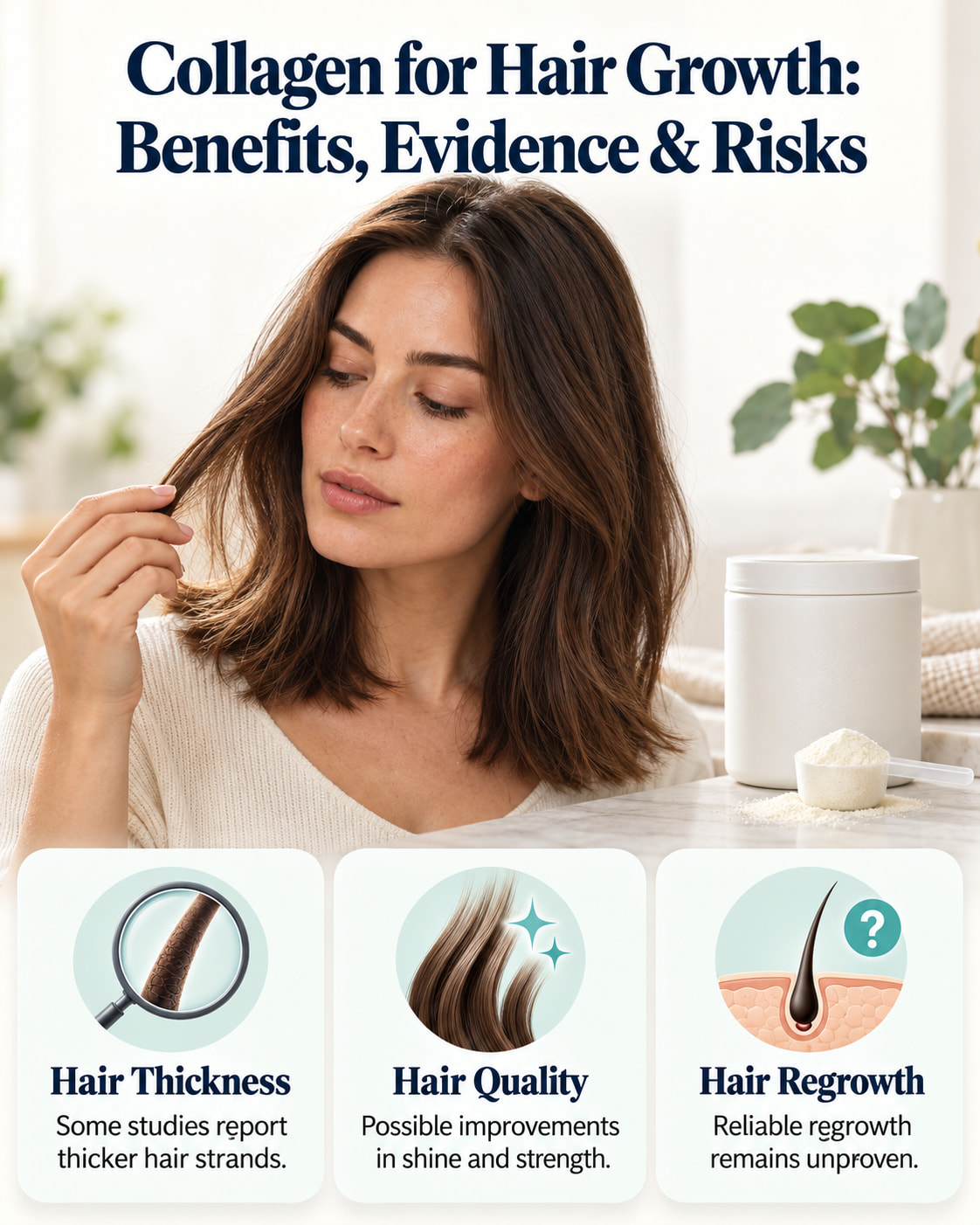
Collagen for hair growth has promising but limited evidence. Some studies suggest that specific collagen peptide supplements may improve hair thickness, strength, or appearance, but they have not established collagen as a reliable solution for hair loss.
That distinction matters when you are deciding whether a supplement is worth trying. Hair that looks shinier or has thicker strands is not necessarily growing faster or replacing lost hair.
Understanding the research, checking the ingredients, and identifying the cause of thinning can help you make a more informed choice.
What Is Collagen, and How Is It Related to Hair?
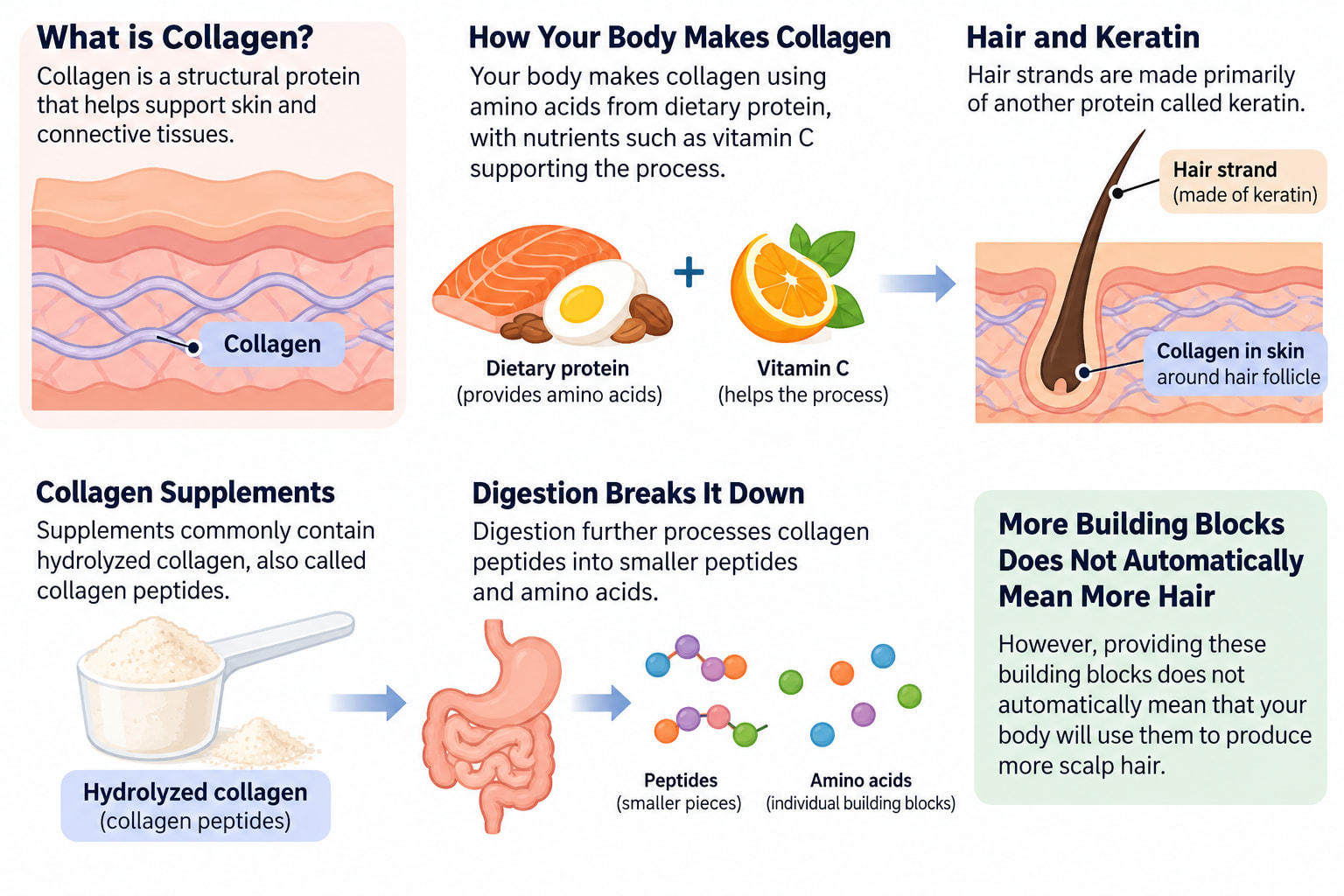
Collagen is a structural protein that helps support skin and connective tissues. Your body makes it using amino acids from dietary protein, with nutrients such as vitamin C supporting the process.
Hair strands are made primarily of another protein called keratin. Collagen’s role in the skin around hair follicles is one reason researchers are interested in its possible effects on hair.
Supplements commonly contain hydrolyzed collagen, also called collagen peptides. This means the collagen has been broken into smaller pieces. Digestion further processes these into peptides and amino acids.
However, providing these building blocks does not automatically mean that your body will use them to produce more scalp hair.
Does Collagen for Hair Growth Actually Work?
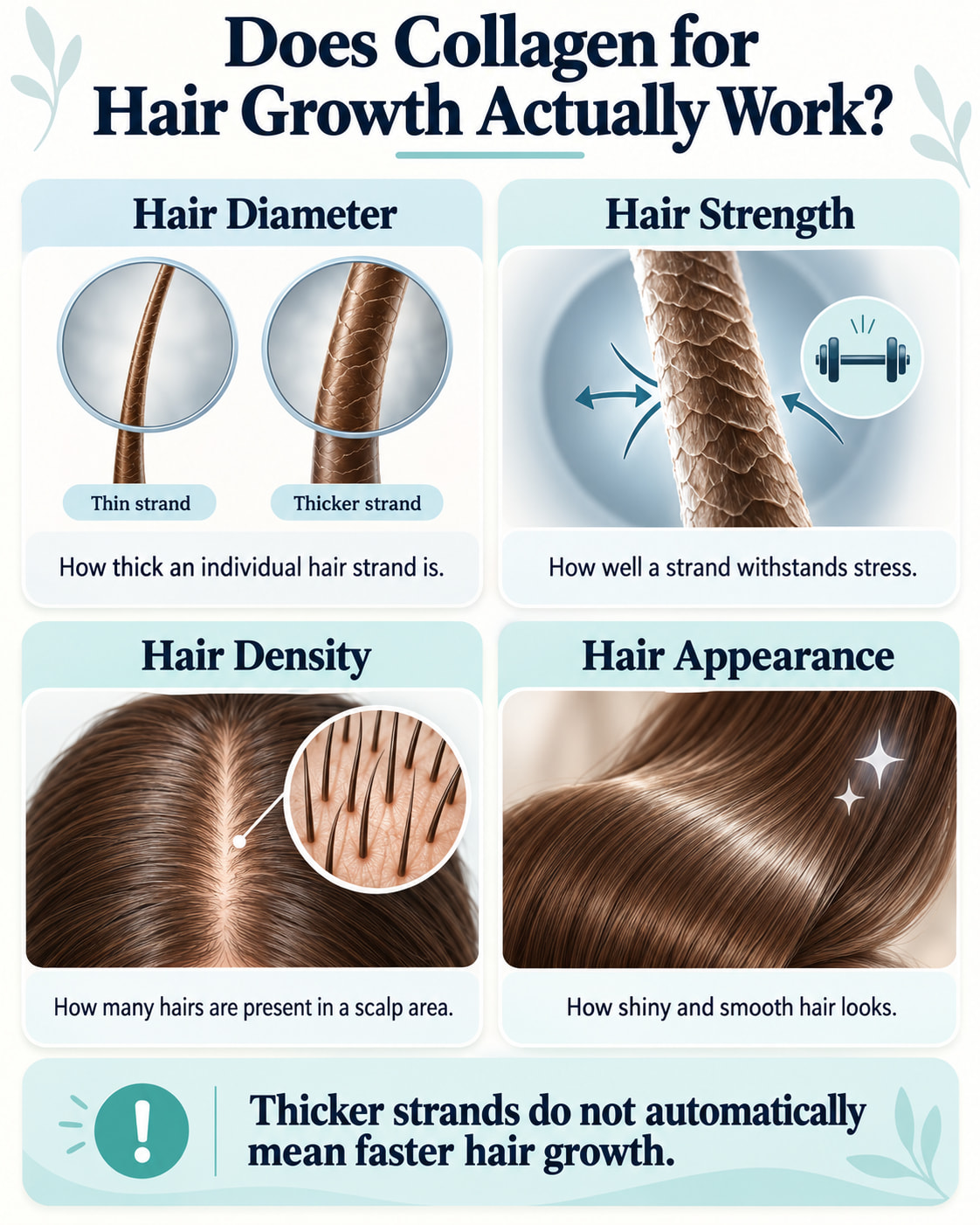
Some clinical trials have reported improvements in hair condition. The most encouraging findings involve strand thickness, shine, and strength. One newer trial also reported increased hair density.
These measurements describe different things:
- Hair diameter: How thick an individual strand is.
- Hair strength: How well a strand withstands mechanical stress.
- Hair density: How many hairs are present within an area of scalp.
- Hair appearance: How shiny, smooth, or healthy hair looks.
A benefit in one measurement does not establish a benefit in all the others. For example, thicker strands can make hair look fuller without demonstrating faster growth.
Recent Human Studies
Research published through October 2026 includes the following trials:
| Study | What was studied | Main finding and limitation |
|---|---|---|
| January 2026: 100 adults with damaged hair | A specific fish-derived collagen peptide product, 2 grams daily for 24 weeks, compared with placebo | Researchers reported improvements in shine, strength, diameter, and density. The main outcomes concerned hair appearance and mechanical properties; this was not proof of effectiveness for diagnosed alopecia. |
| March 2026: 114 women with self-reported thinning and cellulite | A specific fish-derived collagen peptide preparation, 1 gram daily for 24 weeks, compared with placebo | Hair diameter increased significantly. This finding does not establish that additional hairs grew or that an underlying hair-loss condition improved. |
| August 2026: Adults with damaged hair without alopecia | A specific collagen peptide product, 3 grams daily for 24 weeks, compared with placebo | Researchers reported improvements in gloss, strength, diameter, and hair-condition ratings. The participants did not have alopecia. |
| July 2024: 140 adults enrolled in a skin, scalp, and hair study | Marine collagen plus vitamin C for 12 weeks, compared with placebo | Hair appearance improved, but the difference in hair counts was not statistically significant. The trial was funded by the product’s manufacturer. |
The January 2026 trial reported improved density, but its findings do not establish that other collagen preparations will produce the same results.
Why the Evidence Is Still Limited
The studies differ in their participants, ingredients, and measurements. Some examine damaged hair rather than a diagnosed hair-loss condition. Others include additional ingredients or have ties to supplement manufacturers.
A July 2026 narrative review identified broader limitations in this research and called for longer, independently funded trials with standardized outcomes. A narrative review summarizes research; it does not establish a single dependable benefit for every product.
For now, the evidence suggests possible improvements in hair quality. Reliable regrowth, long-term benefits, and the best approach for specific causes of hair loss remain uncertain.
How Much Collagen Should You Take, and for How Long?
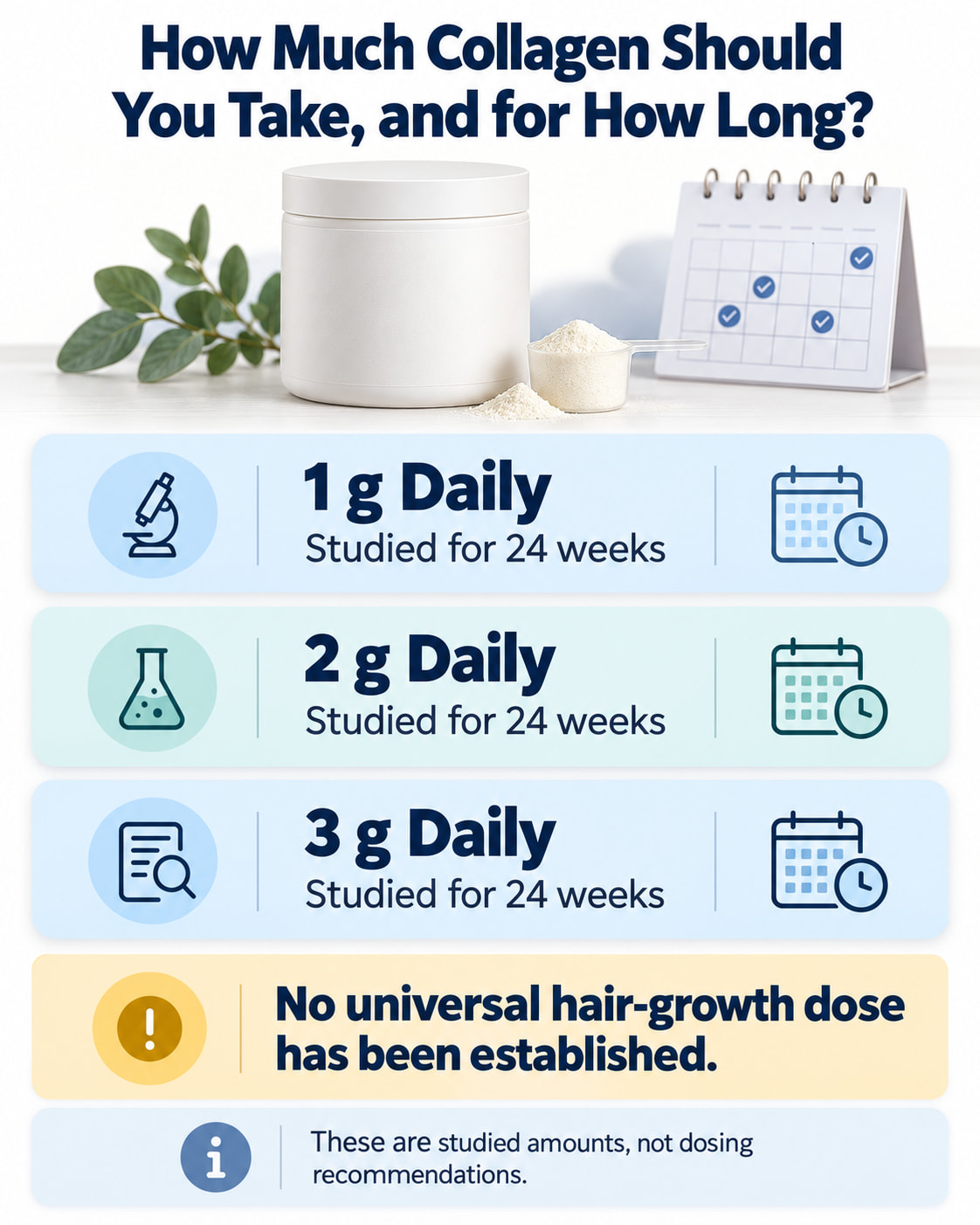
There is no established universal collagen dose for hair growth.
The three 2026 trials above used 1–3 grams daily for 24 weeks, but they tested specific peptide preparations. Those amounts should not be treated as a prescription for every powder, capsule, or gummy.
The duration also matters. A 24-week study does not support promises of visibly faster growth within a few days. It also does not mean everyone will see a benefit after six months.
If you decide to try a supplement:
- Follow the product’s serving instructions.
- Review the full formula, including added vitamins and minerals.
- Ask a clinician or pharmacist about the product if you take medication or have relevant health conditions.
- Avoid increasing the serving size in an attempt to speed up results.
Persistent or worsening hair loss deserves an evaluation rather than a prolonged wait for a supplement to work.
Collagen Side Effects and Risks
Collagen products are not risk-free. Both the collagen source and other ingredients can affect whether a product is suitable for you.
Digestive Discomfort
Some people experience gastrointestinal side effects when taking collagen supplements. Tolerance can also vary with the product’s additional ingredients.
If you develop a suspected reaction, stop using the product and ask a healthcare professional for advice.
Allergic Reactions
Common collagen sources include fish, cattle, pigs, and chicken. Check the label carefully if you have a food allergy.
Fish-derived collagen can trigger allergic reactions in susceptible people. Published case reports include a confirmed serious reaction to fish-collagen gummies. These reports establish that reactions are possible, but they do not show how frequently they occur.
Too Much of Added Vitamins or Minerals
Some collagen supplements are combined with nutrients marketed for hair, skin, and nails.
According to American Academy of Dermatology guidance, excessive selenium, vitamin A, and vitamin E intake has been linked to hair loss.
Check for overlap if you already take a multivitamin or another hair supplement. More nutrients are not automatically helpful when your intake is already adequate.
Biotin and Blood-Test Interference
Some collagen blends contain biotin. NIH guidance on biotin explains that amounts above recommended intakes can cause inaccurate results in certain laboratory tests, including thyroid tests.
Tell your healthcare team about biotin-containing products before testing. Follow their instructions about whether and when to pause a supplement.
Pregnancy, Breastfeeding, and Medical Conditions
Many supplements have not been adequately studied during pregnancy or breastfeeding. Discuss a collagen product with your clinician before using it during these stages.
Individual guidance is also useful if you take medication or have a condition requiring a prescribed limit on protein intake. The full formula matters because added ingredients may carry their own risks.
How to Evaluate a Collagen Supplement
The FDA’s supplement guidance explains that dietary supplements are not approved for safety and effectiveness before sale. Manufacturers have legal responsibilities, and the FDA oversees manufacturing, labeling, and enforcement.
When comparing products, focus on the following:
- Collagen source: Identify whether the product uses fish, bovine, porcine, or other collagen, and review allergen information.
- Amount per serving: Check how much collagen the recommended serving actually provides.
- Additional ingredients: Review vitamins, minerals, botanicals, flavorings, and other components.
- Independent quality testing: Testing programs such as NSF or USP can help assess manufacturing standards, labeled contents, and contaminants. They do not prove that a product promotes hair growth.
- Relevant research: Check whether a company’s claims concern the exact product or ingredient being sold, and whether the research measured hair outcomes.
Be cautious with products promising rapid regrowth or guaranteed results. A claim about skin hydration does not establish a benefit for scalp hair.
Other Ways to Support Healthy Hair
Meet Your Nutritional Needs
Insufficient protein, iron, or overall calorie intake can contribute to hair loss. A varied eating pattern that meets your needs provides a better foundation than relying on one supplement.
Include protein-containing foods you enjoy and a variety of fruits, vegetables, and other nutrient-rich foods. Vitamin C supports normal collagen production, but extra vitamin C is not a proven shortcut to faster hair growth.
If a deficiency is suspected, a clinician can decide whether testing or targeted supplementation is appropriate. Avoid starting high-dose iron, zinc, or other nutrients simply because a product is marketed for hair.
Handle Hair Gently
Hair care can help limit avoidable damage. Use comfortable hairstyles, reduce excessive heat styling, and brush or comb gently.
These habits support the condition of existing hair. They should not be expected to resolve every cause of thinning or shedding.
Understand the Cause of Hair Loss
Hair loss can have different causes, so the most useful next step depends on what is happening.
A dermatologist can assess your scalp, review your health and medication history, and order tests when appropriate. The findings may point to a nutritional issue, a scalp condition, or another explanation that requires a different approach.
When to See a Dermatologist About Hair Loss
Arrange an evaluation if you notice:
- Sudden or patchy hair loss.
- Persistent or progressively worsening thinning.
- Scalp pain, burning, or marked itching.
- Scaling, redness, or sores alongside hair loss.
These signs can occur with conditions that need specific attention. You do not need to try collagen first before seeking help.
It is also reasonable to ask for an assessment when gradual thinning concerns you, even without scalp symptoms.
Frequently Asked Questions
Can Collagen Help With Thinning Hair?
Some studies suggest that particular collagen peptide products may increase strand thickness or improve hair condition. However, evidence for reliable regrowth remains limited. Whether a supplement is useful also depends on why your hair is thinning.
Does Collagen Make Hair Grow Faster?
Current research has not established collagen as a reliable way to increase hair-growth speed. Findings about shine, strength, or strand diameter should not be interpreted as proof of faster growth.
Is Marine Collagen Better Than Bovine Collagen for Hair?
The studies discussed here do not establish that marine collagen is better than bovine collagen for hair growth. Product composition, allergens, quality, and the relevance of the research are more useful considerations than source-based marketing alone.
Is Collagen Better Than Biotin for Hair Growth?
There is not enough evidence to establish collagen as superior to biotin. Biotin supplementation is most relevant when a deficiency or another specific indication is identified. Neither supplement is a universal answer to hair loss.
Should You Take Collagen Every Day for Hair?
Several studies used daily supplementation, but that does not establish that everyone needs daily collagen. There is no universally recommended hair-growth dose. Consider the product, your health, and professional guidance before deciding on ongoing use.
Do Collagen Gummies Work as Well as Powders?
The trials described above do not establish that gummies, powders, or capsules are equally effective for hair. Products may differ in their collagen amount and added ingredients. Compare the complete serving and formula, rather than assuming the format predicts results.
Do You Need a Collagen Supplement for Healthy Hair?
No. Your body makes collagen, and adequate nutrition supports normal hair health. A supplement has not been shown to be necessary for everyone. If you have thinning or shedding, identifying the cause is more useful than assuming collagen is missing.
Conclusion
Collagen may offer benefits for hair thickness or condition, but the evidence is still developing. It should not replace an evaluation of persistent hair loss.
Start by reviewing your nutrition, hair-care habits, and any changes in shedding or scalp health. If you are considering a supplement, bring its ingredient label to a dermatologist, clinician, or pharmacist so you can discuss whether it fits your situation.
This content is for informational purposes only and not medical advice.
References
- Biełach-Bazyluk and colleagues, 2026. Narrative review of collagen supplementation and skin, hair, and nails.
- American Academy of Dermatology. Hair-loss management tips, diagnosis and care, and signs and symptoms.
- U.S. Food and Drug Administration. Dietary supplement safety and regulation.
- NIH Office of Dietary Supplements. Biotin fact sheet, vitamin C fact sheet, and supplement quality and safety.
- Cleveland Clinic. Collagen supplements and hair and keratin’s role in hair.
- Harvard Health Publishing, 2023. Collagen sources and digestion.
- Ueno and colleagues, 2020. Confirmed allergic reaction to fish-collagen gummies.