
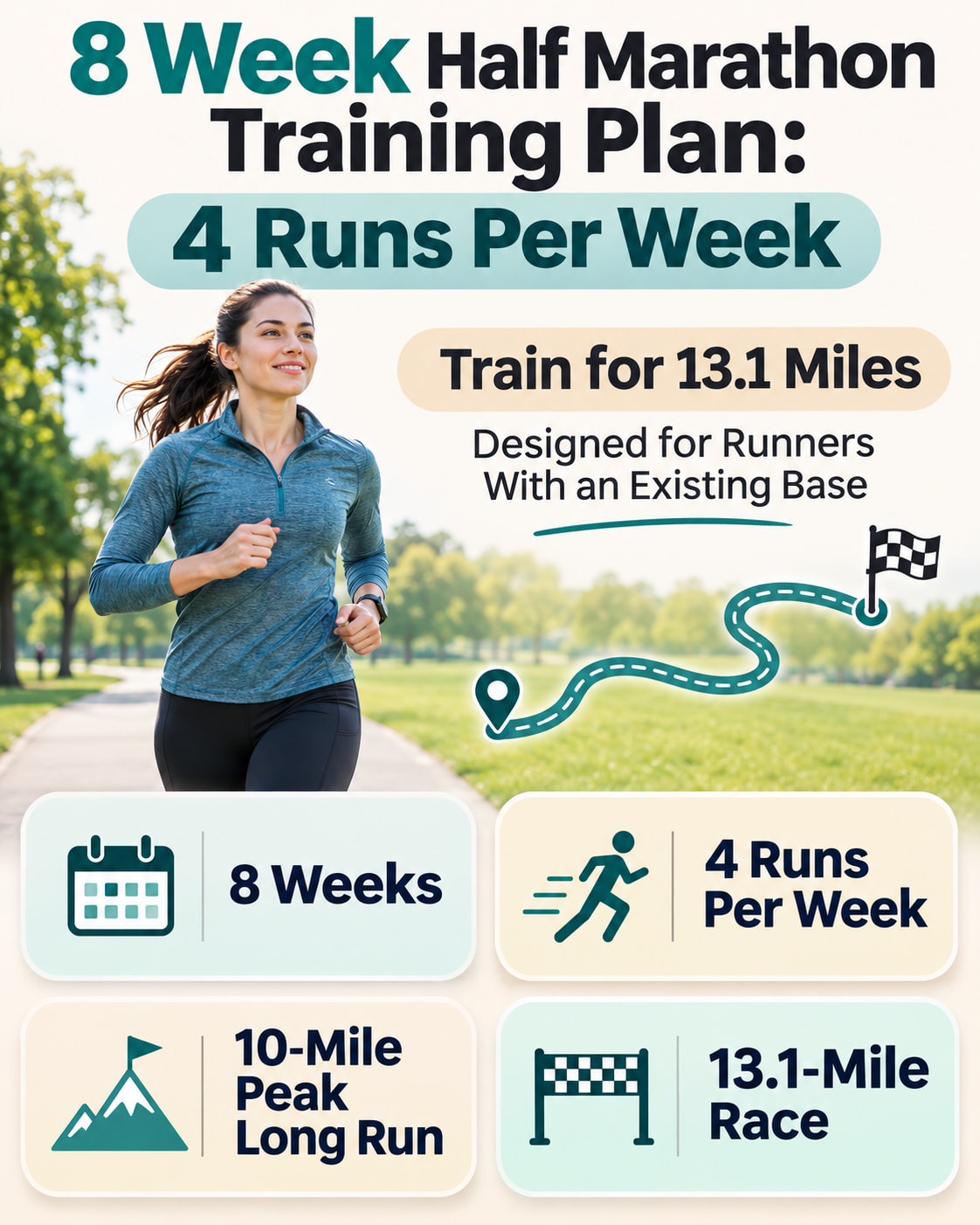
This 8 week half marathon training plan uses four runs per week and is designed for runners who already average 15–20 miles weekly and can comfortably complete a 7-mile long run. It builds to a 10-mile long run, includes a lighter week, and reduces training before race day.
Preparing for 13.1 miles (21.1 kilometers) takes both consistent running and recovery. The schedule below gives you three shorter runs, one long run, and room for rest. The goal is to prepare for completing the distance without making every workout a hard effort.
Who Should Follow This 8 Week Half Marathon Training Plan?

This plan assumes you:
- Have been running three to four days per week consistently.
- Have maintained roughly 15–20 weekly miles for several weeks.
- Have recently completed about 7 miles at a comfortable effort.
- Can recover between runs without ongoing pain or changes in your stride.
- Can make time for four weekly runs and the longer weekend sessions.
These are starting assumptions for this particular schedule, not a medical fitness test. If Week 1 would substantially increase your current training, allow more preparation time.
You can be a first-time half marathon runner and still fit these requirements. If you are new to running, begin with a shorter-distance or run-walk program before attempting this schedule.
If you are returning from an injury or have a health condition that affects exercise, get individual guidance about an appropriate starting point.
8 Week Half Marathon Training Plan: Weekly Schedule
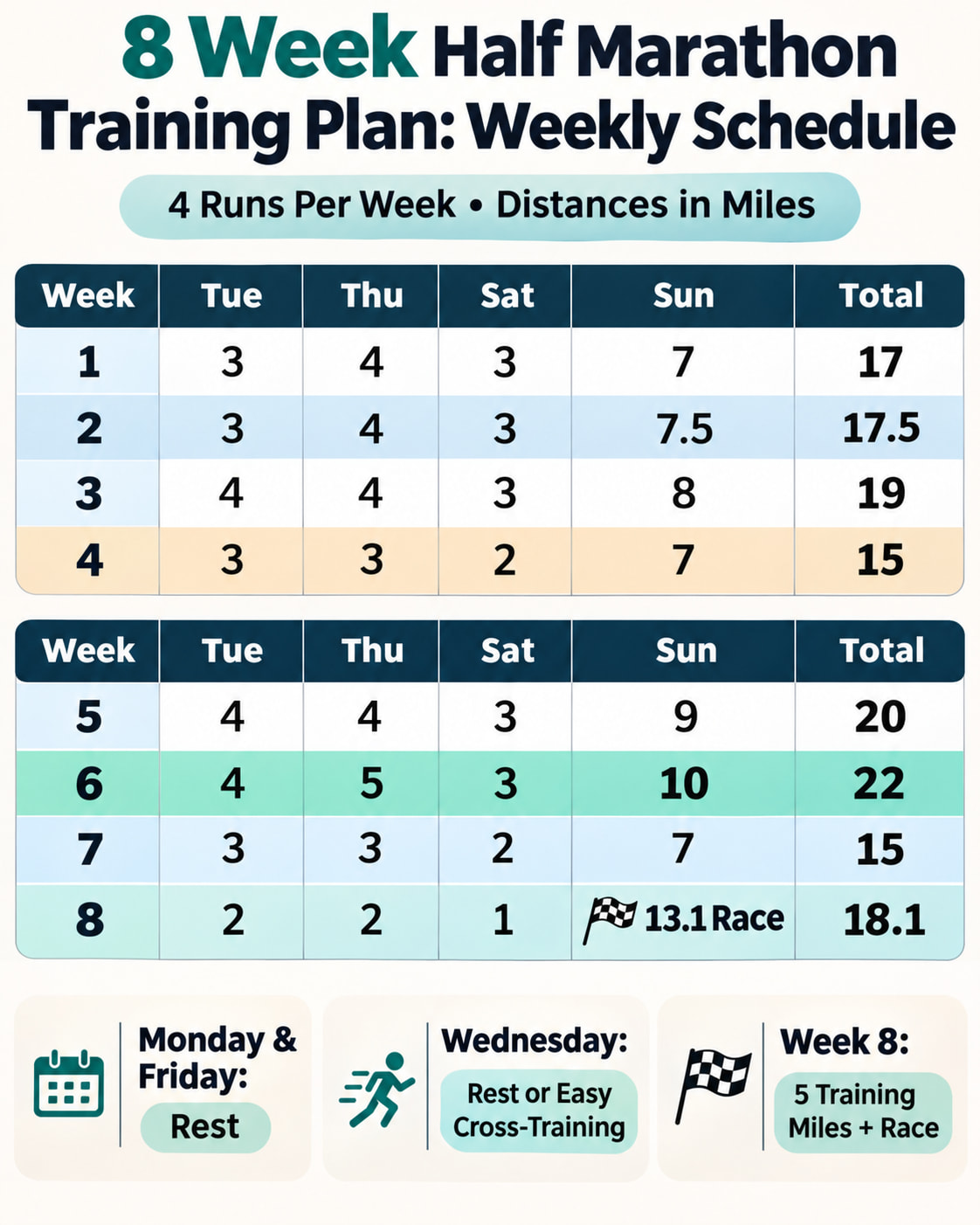
All distances below are in miles. Every training run can be completed at an easy, conversational effort. The race is on Sunday of Week 8.
Use these non-running days throughout the plan:
- Monday: Rest.
- Wednesday: Rest or optional easy cross-training.
- Friday: Rest.
Any running used to warm up or cool down counts toward the listed distance.
| Week | Tuesday | Thursday | Saturday | Sunday long run | Weekly total |
|---|---|---|---|---|---|
| 1 | 3 | 4 | 3 | 7 | 17 |
| 2 | 3 | 4 | 3 | 7.5 | 17.5 |
| 3 | 4 | 4 | 3 | 8 | 19 |
| 4 | 3 | 3 | 2 | 7 | 15 |
| 5 | 4 | 4 | 3 | 9 | 20 |
| 6 | 4 | 5 | 3 | 10 | 22 |
| 7 | 3 | 3 | 2 | 7 | 15 |
| 8 | 2 | 2 | 1 | 13.1-mile race | 18.1, including the race |
Week 8 contains only 5 training miles before the race. The race counts as the fourth run.
Saturday and Sunday are consecutive running days. Keep Saturday comfortable and short, and shorten or skip it if you are not recovering well. Four runs are the planned routine, not a quota to complete through pain or illness.
How the Eight Weeks Fit Together
- Weeks 1–3 establish consistency. Settle into the schedule and keep the shorter runs easy as your long run increases.
- Week 4 reduces the workload. The drop to 15 miles gives you a lighter week before the longest training sessions.
- Weeks 5–6 are the main endurance weeks. Use the longer runs to practice your planned breakfast, fuel, fluids, clothing, and any walking breaks.
- Weeks 7–8 reduce training before the race. Follow the shorter distances instead of adding extra miles to test your fitness.
How Fast Should You Run?
Easy Runs
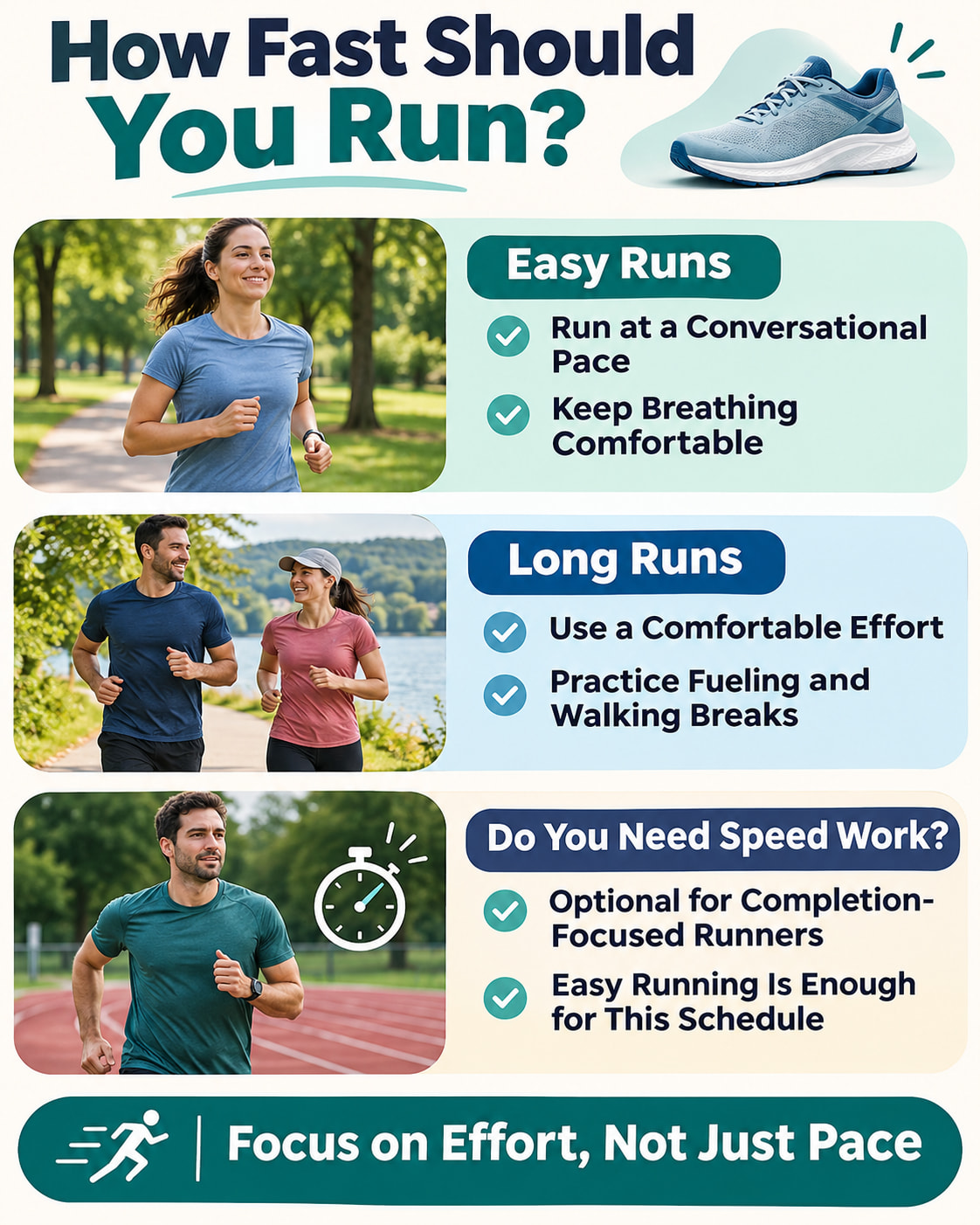
Run at an effort that allows comfortable conversation. Your breathing should feel controlled, and you should finish with enough energy to continue a little farther.
A particular pace on your watch is less important than the effort. Slow down when hills, heat, humidity, or fatigue make the same speed feel harder.
Start with a few minutes of brisk walking or very easy jogging. Gradually settle into your normal easy effort.
Long Runs
Use a comfortable effort for long runs too. They are an opportunity to practice spending longer on your feet, including your fueling and pacing routine.
Start gently. Avoid turning the final miles into a race because you feel pressure to reach a particular average pace.
You may use planned walking breaks. For example, you could alternate four minutes of running with one minute of walking if that pattern already feels manageable. Practice your chosen approach during training and include the walking distance in the scheduled total.
Do You Need Speed Work?
Structured speed work is optional for a completion-focused plan. All the training runs in this schedule can stay easy.
If your goal is a specific finishing time, you may need a more individualized plan that accounts for your current pace, previous training, and experience with faster workouts.
How to Build Long Runs Without Forcing Progress
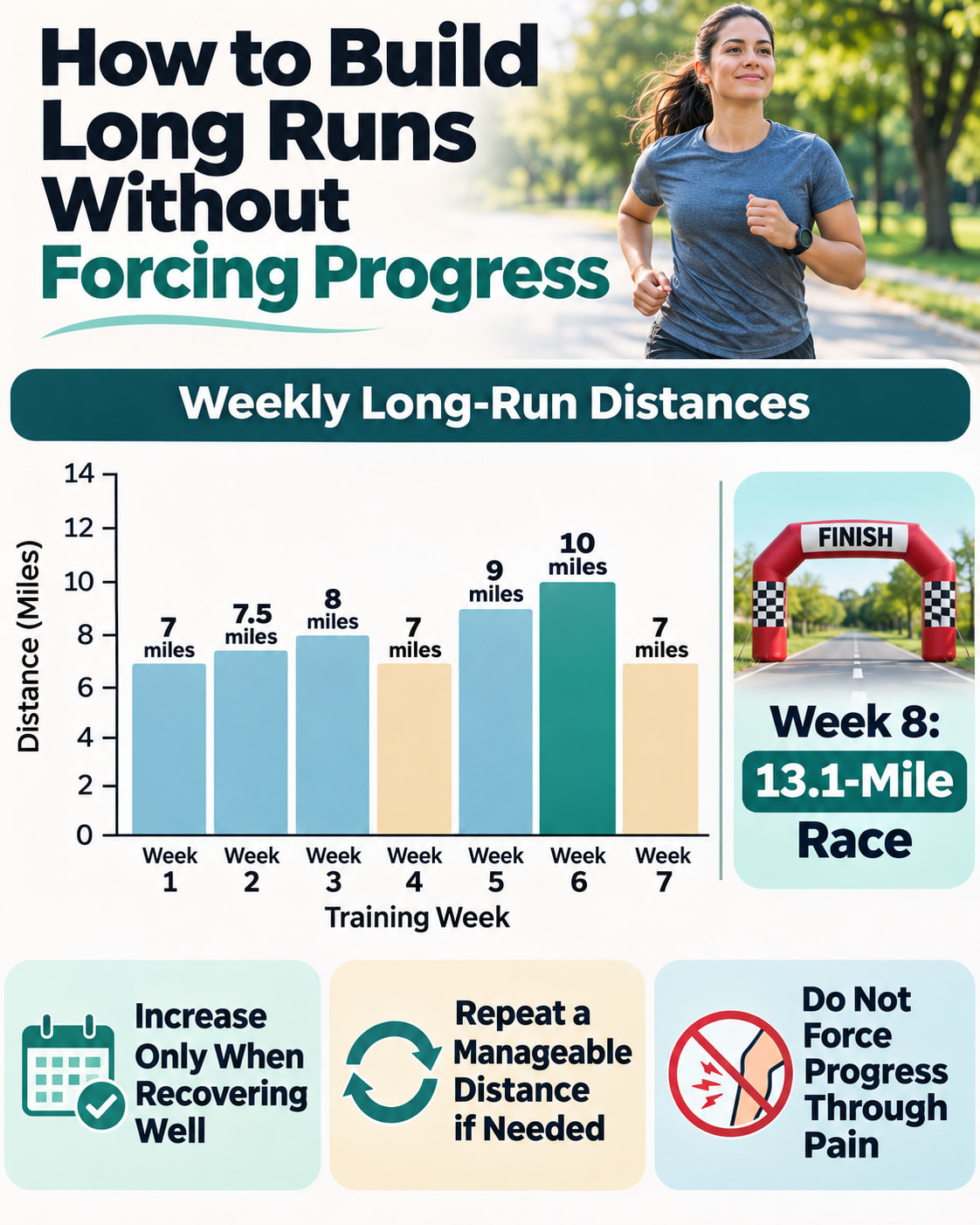
The long runs progress from 7 miles to 10 miles, with a lighter week in between. Each increase depends on how you respond to the previous workload.
A 2025 running study involving 5,205 runners found higher overuse-injury rates when a single run exceeded the runner’s longest run in the previous 30 days by more than 10%. The study was observational and does not establish a universally safe percentage increase.
This schedule includes new longest runs. It should not be treated as a guaranteed safe progression or a rigid deadline.
Before increasing your long run, ask:
- Did the previous distance feel controlled?
- Has any soreness settled enough that your normal walking and running stride are unchanged?
- Are you recovering between sessions?
- Can you complete your shorter runs without struggling through unusual fatigue?
If the answer is no, repeat a manageable distance or reduce the workload. If you need extra weeks, extend the preparation period or reconsider the race date.
Do You Need to Run 13.1 Miles Before Race Day?
You do not have to cover the full race distance during training. For example, Hal Higdon’s Novice 1 program peaks at 10 miles, although that program lasts 12 weeks.
The 10-mile peak here leaves another 3.1 miles for race day. Completing that training run does not automatically establish race readiness. Your consistency, recovery, overall workload, and ability to manage the effort all matter.
If the longest runs leave you exhausted or unable to recover for subsequent sessions, reassess the plan.
Rest Days, Cross-Training, and Strength Work
Keep Monday and Friday as rest days. Normal daily movement is fine; there is no need to fill every available day with exercise.
On Wednesday, an optional 20–30 minutes of easy cycling, swimming, or walking can fit if you feel recovered. Choose rest when another workout would add to your fatigue.
If you already strength train, keep a small amount of familiar work in your routine. Short sessions after Tuesday or Thursday runs can help preserve separate recovery days.
A simple session might include:
- Squats or sit-to-stands.
- Step-ups.
- Hip hinges or glute bridges.
- Calf raises.
- Side planks.
Use manageable resistance and avoid exhausting your legs. If strength work is new, start with a small amount and assess how you feel before adding more. Reduce it when it interferes with your running or recovery.
When Should You Stop or Get Advice?
Stop a run if pain develops suddenly, becomes severe, or makes you change your stride. Hospital for Special Surgery’s running guidance, published in May 2026, recommends stopping for these warning signs and getting appropriate professional assessment.
Do not use the schedule as a reason to run through worsening symptoms. Persistent fatigue, repeated difficulty recovering, or pain that returns during each run also warrants reassessing the workload.
What to Eat and Drink During Training
Before and After Runs
Practice a familiar meal or snack before longer runs. Options might include oatmeal, toast, or a banana, depending on what you tolerate and how much time you have to digest it.
Afterward, eat a meal or snack containing carbohydrate and protein. Examples include yogurt with fruit and cereal, or a sandwich with a protein filling.
During Longer Runs
The Australian Institute of Sport’s fueling guidance recommends 30–60 grams of carbohydrate per hour for endurance exercise lasting 1–2.5 hours.
Practice during training. Check product labels and count carbohydrate from gels, drinks, chews, and food together.
For example, two gels containing 25 grams each provide 50 grams of carbohydrate. A sports drink would add to that total.
AIS lists higher intakes, up to 90 grams per hour, for events lasting more than approximately 2.5–3 hours. Those higher amounts require a practiced, tolerable strategy; avoid introducing them for the first time on race day.
Hydration
Practice drinking during long runs so you understand what works in the conditions you expect.
The Wilderness Medical Society’s hydration guidance supports drinking according to thirst or using an individualized plan developed during training. Avoid forcing large amounts of fluid.
There is no single fluid amount that fits every runner, weather condition, or running duration. Electrolyte products also do not make excessive drinking safe.
How to Adjust Your 8 Week Half Marathon Training Plan
If You Miss One Short Run
Continue with the schedule when you are ready. Leave the missed miles behind instead of adding them to the next workout.
If You Miss a Long Run
Base your next long run on what you actually completed recently. Do not automatically jump to the next distance in the table.
For example, if your last comfortable long run was 8 miles and you missed the planned 9-mile run, reassess before attempting 10 miles.
If You Miss Several Runs or Become Ill
Return with a manageable easy run once you are well enough. Reconsider the remaining workload instead of squeezing missed sessions into fewer days.
A longer interruption may mean choosing a later race or changing your participation plans.
If You Need Different Running Days
You can shift the weekly pattern to fit work, family commitments, or a Saturday race. Preserve the recovery spacing and keep the shorter run before the long run easy.
If a change would bunch several demanding sessions together, reduce the workload.
How to Taper and Prepare for Race Day
Week 7 reduces mileage from 22 to 15 miles. Week 8 has three short runs totaling 5 miles before the race.
The purpose is to arrive with less accumulated fatigue. Keep your familiar routine while reducing the amount of running.
During the final week:
- Follow the short distances in the schedule.
- Avoid an extra long run or unfamiliar hard workout.
- Use familiar meals, shoes, socks, and clothing.
- Review transportation, packet pickup, the course, aid stations, and the event’s time limit.
- Pack the fuel you have practiced using.
Race-Day Pacing
Start at a controlled effort. Give yourself time to settle into your breathing and rhythm before considering a faster pace.
Use any walking breaks you practiced. Keep fueling and drinking consistent with your rehearsed approach, adjusting for conditions.
Assess how you feel as the race progresses. The goal of this plan is to prepare for the distance; it does not promise a particular finishing time.
Frequently Asked Questions
Can I Train for a Half Marathon in Eight Weeks From Scratch?
This schedule assumes an existing running base. If you are starting from no running, build consistency and shorter-distance fitness first, then allow more time for half marathon preparation.
Is Running Four Days a Week Enough for a Half Marathon?
Four running days can provide a workable structure for an appropriately prepared runner. This plan combines three shorter runs with one long run and leaves space for recovery.
How Far Should I Be Able to Run Before Starting?
For this particular plan, you should have recently completed about 7 miles comfortably and maintained roughly 15–20 weekly miles. Week 1 should fit reasonably close to your current workload.
What Should My Longest Training Run Be?
This schedule peaks at 10 miles in Week 6. Treat that as a planned target, not a requirement to force through pain or inadequate recovery.
Can I Use Walking Breaks?
Yes. Practice a manageable run-walk pattern during training and use it consistently. Check that your expected pace fits the race’s time limit.
What Should I Do if I Miss a Training Run?
Avoid making up the mileage by doubling another run. After missing a long run or several sessions, reassess the next planned distance against your actual recent training.
When Should I Start Tapering?
In this plan, training decreases in Week 7, followed by three short runs before the Week 8 race. Keep the final weeks focused on recovery and familiar routines.
Conclusion
This 8 week half marathon training plan provides four weekly runs, a lighter fourth week, and reduced training before race day. Use the distances alongside your recovery and recent running experience.
Check that Week 1 matches your current fitness, put the runs and rest days on your calendar, and practice your race-day routine during the long runs. Adjust the schedule when your body needs more time.
References
- Hal Higdon. Novice 1 Half Marathon Training Program.
- Frandsen and colleagues. How Much Running Is Too Much? Identifying High-Risk Running Sessions in a 5200-Person Cohort Study. British Journal of Sports Medicine, 2025.
- Hospital for Special Surgery. How to Get Into—or Back Into—Running.
- Australian Institute of Sport. Sports Drinks: How and When to Use Them.
- Wilderness Medical Society. Clinical Practice Guidelines for Exercise-Associated Hyponatremia: 2019 Update.
- Wang and colleagues. Effects of Tapering on Performance in Endurance Athletes: A Systematic Review and Meta-Analysis.