
Coordination exercises for seniors can help improve balance, walking stability, and reaction timing—key skills that may lower fall risk when practiced consistently and safely. Falls are common in older adults, and the Centers for Disease Control and Prevention (CDC) (Jan 27, 2026) reports that more than 1 in 4 people age 65+ falls each year, and falling once can increase the chance of falling again.
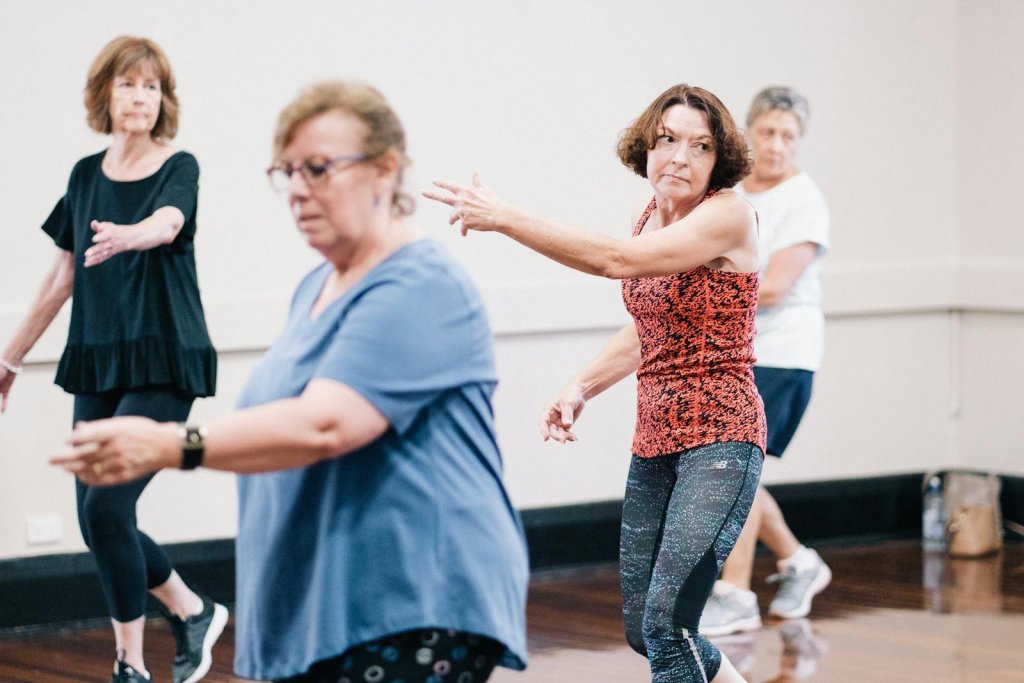
This guide explains the safest, most practical coordination drills you can do at home, how to progress them, and how to build a weekly plan. It also follows prevention-focused guidance supported by major recommendations like the U.S. Preventive Services Task Force (USPSTF), which finds exercise interventions provide a moderate net benefit for preventing falls in older adults at increased risk (Jun 4, 2024).
What coordination exercises for seniors are
Coordination exercises train how well your brain and body work together during real-life movement—stepping, turning, reaching, and shifting weight without losing balance. They often combine:
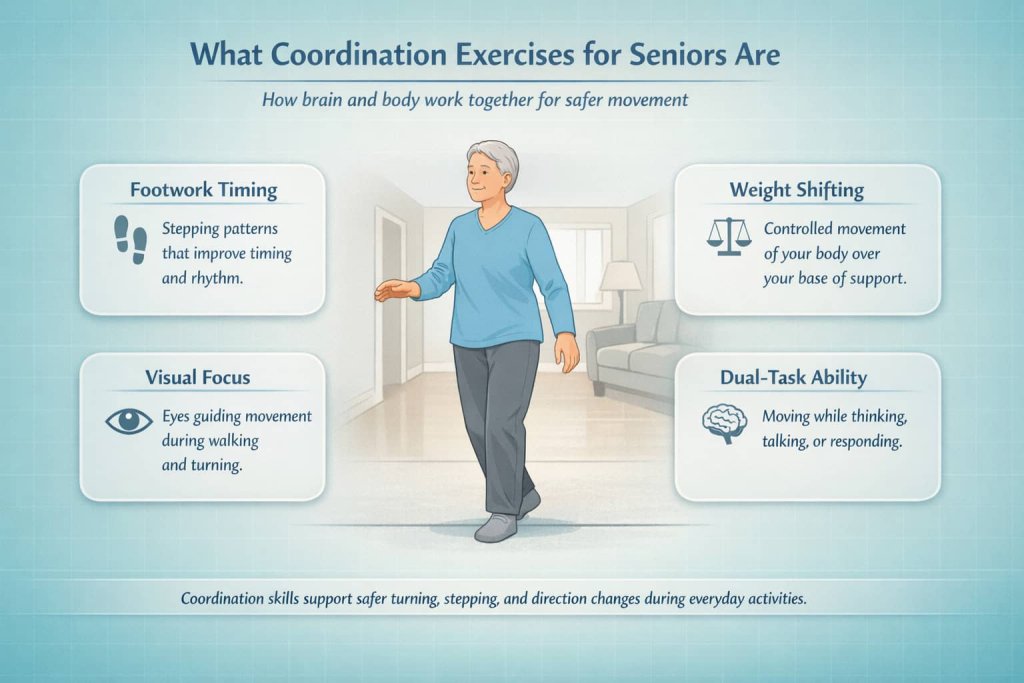
- Footwork timing (stepping patterns)
- Weight shifting (control over your center of mass)
- Visual focus (eyes guiding movement)
- Dual-task ability (moving while thinking or responding)
These skills matter because many falls happen during everyday transitions—turning, changing direction, stepping over obstacles, or getting up too quickly.
Why Coordination Exercises Matter for Seniors
Coordination exercises matter for seniors because they improve how the brain and body work together during everyday movements like walking, turning, and reaching. These movements are when many falls happen.
According to the Centers for Disease Control and Prevention (CDC), more than 1 in 4 adults age 65 and older falls each year. Improving coordination can support safer movement and better balance control.
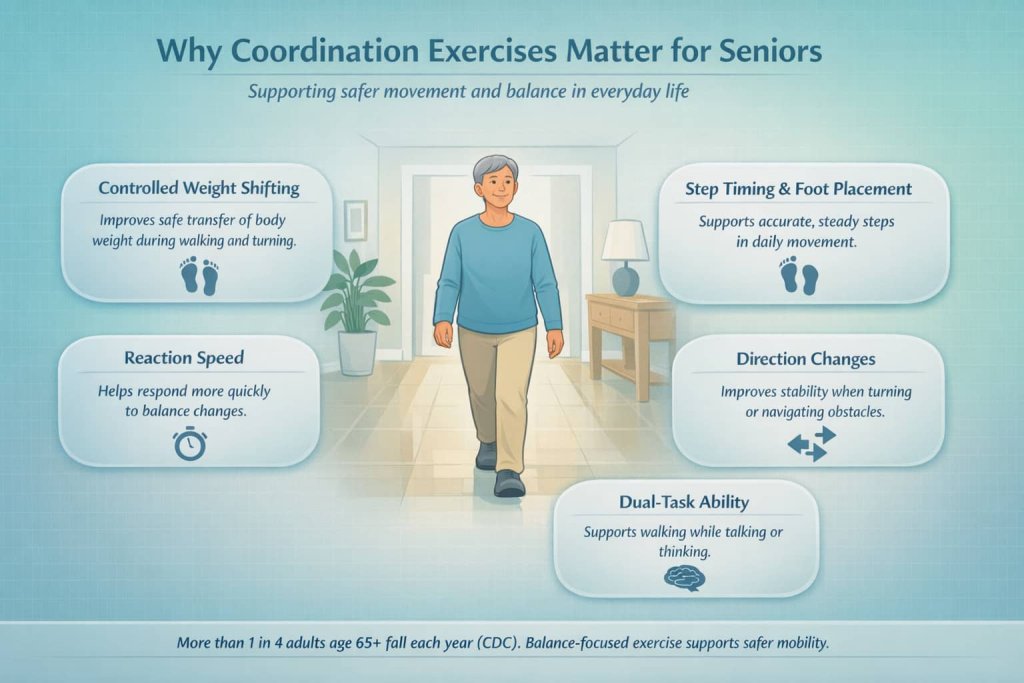
Coordination training helps improve:
- Controlled weight shifting
- Step timing and foot placement
- Reaction speed
- Direction changes
- Walking while talking (dual-task ability)
Regular practice supports steadier movement, greater confidence, and safer mobility when done consistently and safely.
9 Best Coordination Exercises for Seniors
Improving coordination is one of the most effective ways seniors can support balance, stability, and safer everyday movement. These 9 exercises focus on controlled stepping, weight shifting, and timing to help reduce fall risk when practiced consistently and safely.
1) Weight Shift Clock
How to do it:
- Stand tall behind a counter, feet hip-width
- Shift weight forward and back (12 and 6 o’clock) without bending at the waist
- Then shift side-to-side (3 and 9 o’clock)
- Keep the movement slow and controlled
- Do 5–8 shifts each direction
Why it works:
Builds controlled weight transfer—one of the most important coordination skills for walking, turning, and recovering balance. It trains your body to move your center of mass safely over your base of support.
Muscles worked:
Glutes, quads, calves, core stabilizers, ankles, and feet.
Trainer Tip:
Think “move the hips, not the shoulders.” Keep your ribcage stacked over your pelvis.
2) Heel-to-Toe Line Walk (Tandem Walk)
How to do it:
- Stand near a wall or counter
- Place one foot directly in front of the other (heel touching toes)
- Take 6–10 slow steps forward
- Turn carefully and repeat 1–2 more times
Why it works:
Narrows your base of support, forcing the brain and ankles to coordinate fine balance corrections. This improves steady walking and direction control.
Muscles worked:
Ankles and feet, calves, glutes, hip stabilizers, core.
Trainer Tip:
If full heel-to-toe is too hard, leave a small gap between heel and toes.
3) Side Step With Pause
How to do it:
- Stand tall, lightly holding a counter
- Step to the side and pause for 2 seconds
- Bring the other foot in without dragging
- Do 6–10 steps each direction
Why it works:
Trains lateral control, improving stability when stepping around obstacles or shifting sideways. Side-to-side strength is essential for preventing loss of balance.
Muscles worked:
Glute medius, quads, calves, core.
Trainer Tip:
Keep toes pointed forward to make the hips do the work.
4) Forward Step and Return (Step Tap)
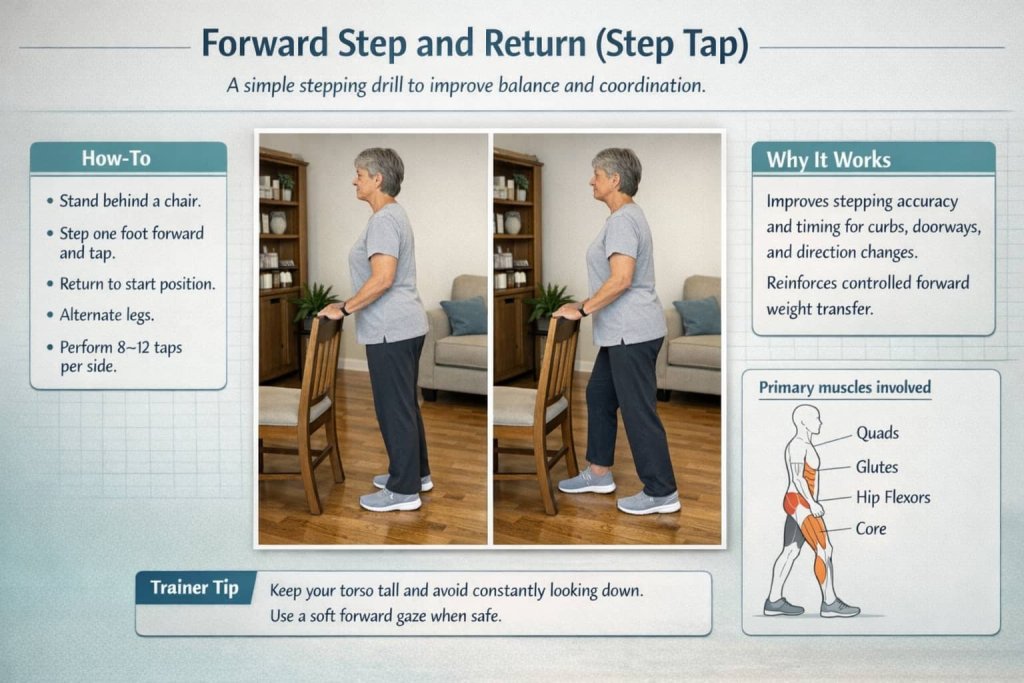
How to do it:
- Stand behind a chair or counter
- Step one foot forward, tap, then step back to start
- Alternate legs
- Do 8–12 taps per side
Why it works:
Improves stepping accuracy and timing—useful for curbs, doorways, and direction changes. It reinforces controlled forward weight transfer.
Muscles worked:
Quads, glutes, calves, hip flexors, core.
Trainer Tip:
Keep your torso tall and avoid constantly looking down—use a soft forward gaze when safe.
5) Grapevine Prep (Cross-Behind Step)
How to do it:
- Stand next to a counter with one hand on support
- Step right foot to the right
- Cross left foot behind and lightly tap
- Step right foot to the right again
- Repeat for 4–6 cycles, then switch direction
Why it works:
Crossing steps challenge coordination and hip control, helping with turning and navigating tight spaces. It improves multi-directional movement confidence.
Muscles worked:
Hip stabilizers, glutes, inner thighs, core.
Trainer Tip:
Start with small steps. Control matters more than range.
6) Sit-to-Stand With Reach
How to do it:
- Sit on a sturdy chair, feet under knees
- Stand up smoothly
- Reach both arms forward at chest height and pause
- Sit back down with control
- Do 6–10 reps
Why it works:
Combines functional lower-body strength with upper-body coordination and balance control. This mirrors everyday tasks like getting up from a chair safely.
Muscles worked:
Glutes, quads, hamstrings, core, upper back, and shoulders.
Trainer Tip:
If needed, use chair arms lightly at first, then reduce assistance over time.
7) Marching With Opposite Arm Swing
How to do it:
- Stand tall near support
- March in place slowly
- Swing the opposite arm with each knee lift
- Do 20–40 total marches
Why it works:
Trains cross-body coordination (right arm/left leg), supporting smoother walking mechanics and rhythm.
Muscles worked:
Hip flexors, glutes, calves, core, shoulders, and upper back.
Trainer Tip:
Keep steps quiet and controlled.
8) Head-Turn Walk (Only When Ready)
How to do it:
- Walk 10–15 steps along a clear hallway
- Slowly turn head left, return to center, then right
- Keep steps steady
- Repeat 2–3 passes
Why it works:
Walking while turning the head challenges coordination between vision and balance systems. This improves stability when scanning the environment while moving.
Muscles worked:
Legs, core stabilizers, and balance systems.
Trainer Tip:
If turning your head causes dizziness, stop and consult guidance from the National Institute on Aging (NIA), as some balance issues require individualized exercises.
9) Dual-Task Step Counts (Brain + Body)
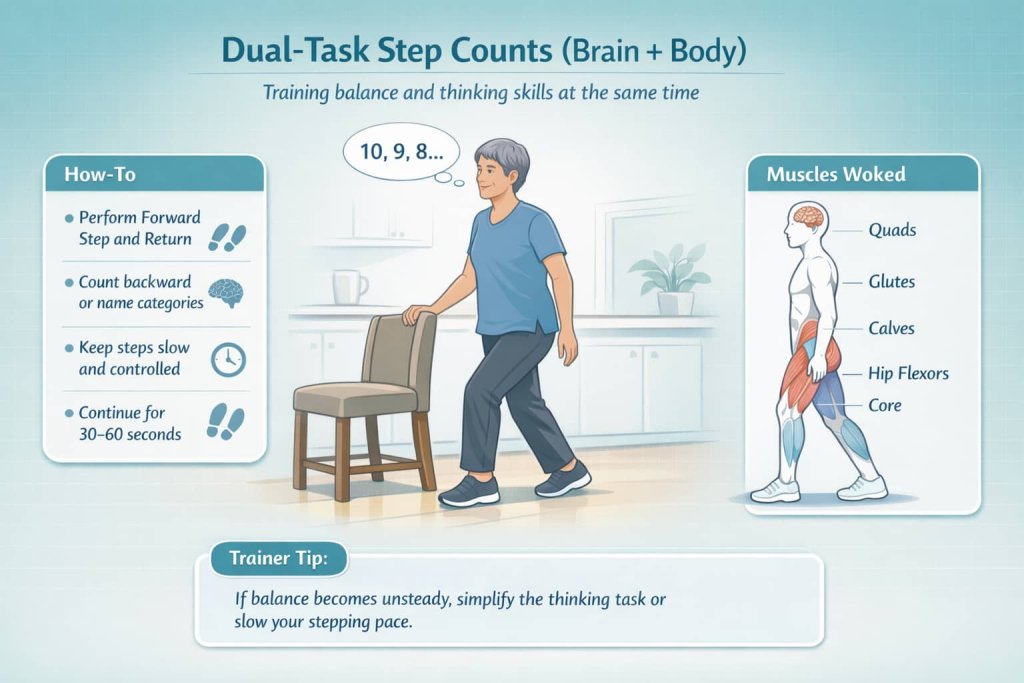
How to do it:
- Perform the Forward Step and Return exercise
- While stepping, count backward by ones or name categories
- Keep stepping slow and accurate
- Continue for 30–60 seconds
Why it works:
Many real-life falls happen while doing two things at once. Dual-task drills train safer movement under distraction and improve reaction timing.
Muscles worked:
Stepping muscles plus mental focus and reaction timing.
Trainer Tip:
If form breaks down, simplify the thinking task or slow the stepping pace.
How Often Should Seniors Do Coordination Exercises?
A practical goal is three days per week, building toward most days if tolerated. The World Guidelines for Falls Prevention and Management recommend balance-challenging functional exercise programs performed at least three times weekly, as described in the Age and Ageing Journal.
Sample Weekly Coordination Plan
- Day 1: Weight Shift Clock, Heel-to-Toe Walk, Step Tap, Sit-to-Stand
- Day 2: Weight Shift Clock, Side Step, Grapevine Prep, Marching
- Day 3: Heel-to-Toe Walk, Marching, Head-Turn Walk (if ready), Dual-Task Steps
Progress gradually over several weeks by reducing hand support and increasing duration only when steady.
Safety setup before you start
Use these rules to keep coordination exercises safe and senior-friendly:
- Do these near a kitchen counter, heavy table, or sturdy chair you can lightly hold.
- Wear supportive shoes and clear the floor (no loose rugs or cords).
- Keep sessions short at first (5–10 minutes), then build gradually.
- Progress in this order: two hands support → one hand → fingertips → hover → no hands.
- Stop and seek medical guidance if you have chest pain, fainting, severe dizziness, new weakness/numbness, or repeated falls.
For broader fall-safety guidance and home safety tips, see advice from the National Institute on Aging (NIA).
Why coordination training supports fall prevention
Fall-prevention exercise programs work best when they include balance-challenging and functional movements (like stepping and sit-to-stand patterns) and are done regularly. The World Guidelines for Falls Prevention and Management published in Age and Ageing recommend balance-challenging functional exercises performed three or more times per week, individualized and progressed over time, according to guidance from the Oxford Academic – Age and Ageing Journal.
The U.S. Preventive Services Task Force (USPSTF) also recommends exercise interventions for fall prevention in older adults at increased risk.
Who Should Modify or Seek Guidance?
Consult a healthcare professional before starting if you:
- Have had a recent fall with injury
- Experience frequent dizziness or fainting
- Notice new weakness, numbness, or vision changes
- Recently changed medications that affect alertness or blood pressure
The U.S. Preventive Services Task Force (USPSTF) notes that some individuals may benefit from individualized or multifactorial fall-prevention strategies.
FAQ
What are the safest coordination exercises for seniors?
Weight shifts, side steps with pauses, step taps, marching with arm swing, and sit-to-stand patterns are safe starting points when performed near stable support.
How long does it take to improve balance?
Many people notice better steadiness within a few weeks of consistent practice, especially when exercising at least three times per week.
Are coordination exercises different from balance exercises?
They overlap. Balance focuses on staying steady, while coordination emphasizes timing and movement control during activity.
Can seniors practice coordination daily?
Low-intensity coordination work can often be practiced most days, provided safety guidelines are followed.
What if I need to hold onto something the whole time?
That is completely appropriate. Gradual reduction of support is part of progression and should only happen when you feel steady.
Do coordination exercises really help prevent falls?
Major guidelines support exercise programs that include balance-challenging movements for reducing fall risk, including recommendations summarized by the Centers for Disease Control and Prevention (CDC).
Should I see a physical therapist for balance problems?
If you experience repeated falls or worsening balance, a physical therapist can assess contributing factors and provide individualized exercises.
Conclusion
Coordination exercises for seniors are a practical way to build steadier walking, improve reaction timing, and increase confidence during everyday movement. Start with stable support, practice consistently, and progress gradually. If balance problems persist or worsen, seek professional guidance to ensure the safest approach.
Reference
- Centers for Disease Control and Prevention. (2026, January 27). STEADI: Patient & Caregiver Resources (Older Adult Fall Prevention). Centers for Disease Control and Prevention (CDC)
- National Institute on Aging. (2022, September 12). Older Adults and Balance Problems. National Institute on Aging (NIA)
- Mayo Clinic Staff. (n.d.). Fall prevention: Simple tips to prevent falls. Mayo Clinic
- Office of Disease Prevention and Health Promotion. (n.d.). Falls Prevention in Community-Dwelling Older Adults: Interventions (evidence-based resource summary). Healthy People 2030 (ODPHP)