
Glute exercises for seniors are safe, low-impact strengthening movements that help improve balance, walking stability, and the ability to stand, climb stairs, and move confidently in daily life. Strong glutes support the hips and pelvis, which play a major role in fall prevention and overall mobility as we age.
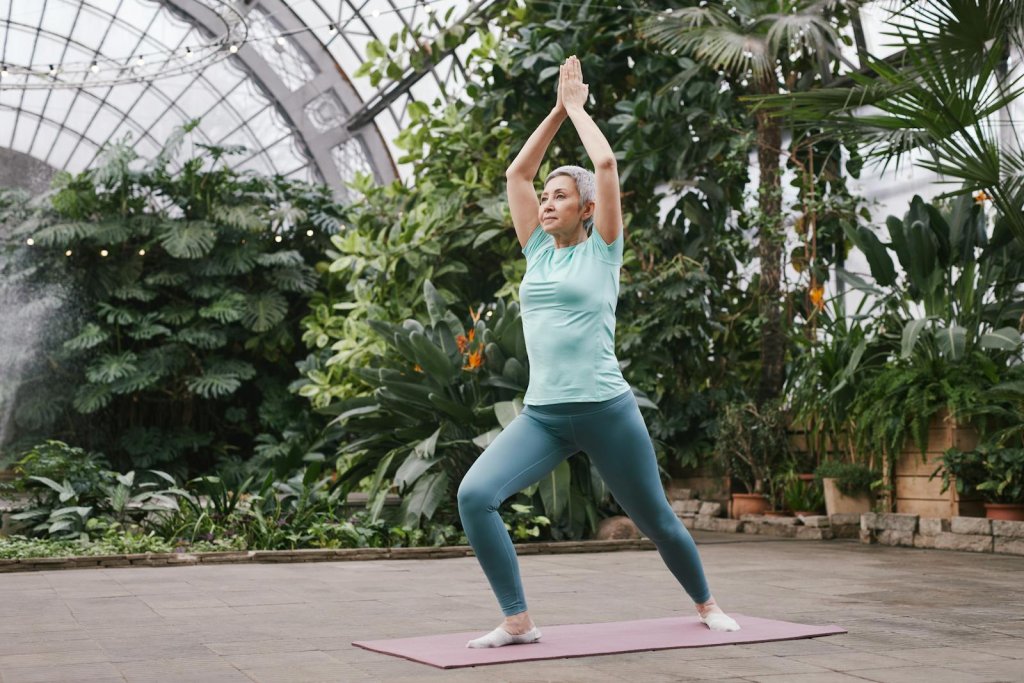
Understanding how to train the glute muscles correctly is important because age-related muscle loss (sarcopenia) and reduced balance can increase fall risk. The exercises below focus on controlled, joint-friendly movements that emphasize stability, posture, and functional strength rather than intensity or speed.
According to the CDC, older adults should perform muscle-strengthening activities at least 2 days per week, along with balance-focused exercises to support independence and reduce fall risk.
What Are the Glute Muscles?
The glutes are a group of three muscles located in the buttocks that work together to control hip movement and posture.
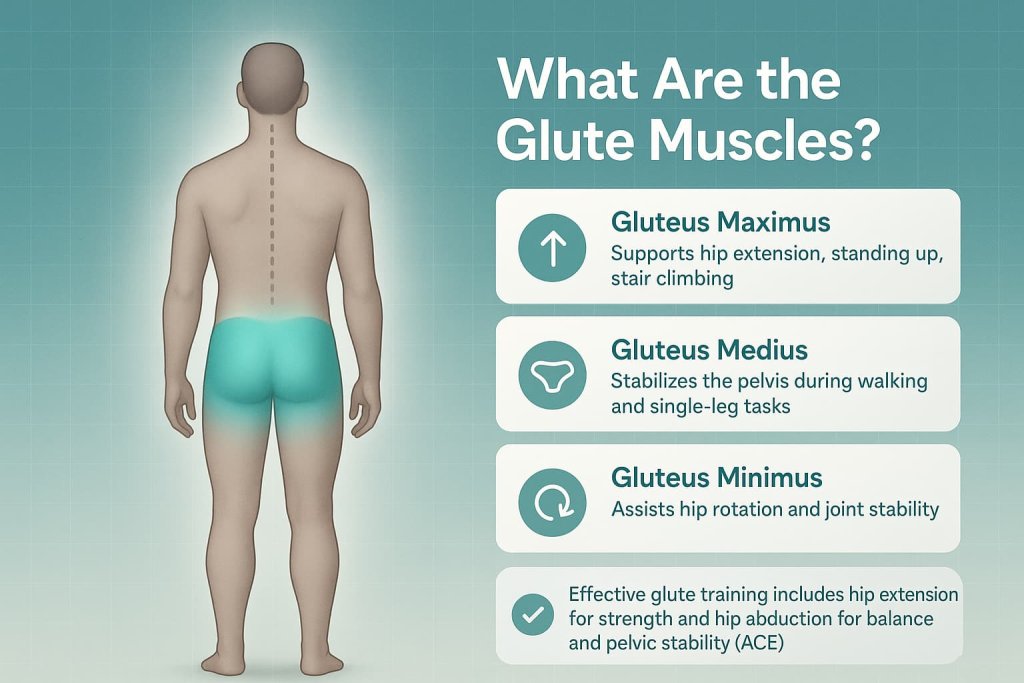
- Gluteus maximus – supports hip extension, standing up, and stair climbing
- Gluteus medius – stabilizes the pelvis during walking and single-leg movements
- Gluteus minimus – assists hip rotation and joint stability
The American Council on Exercise (ACE) notes that effective glute training should include both hip extension (strength and power) and hip abduction (balance and pelvic stability).
Why Glute Exercises Matter for Seniors
Glute exercises for seniors matter because weak hips are closely linked to balance issues and difficulty with everyday tasks.
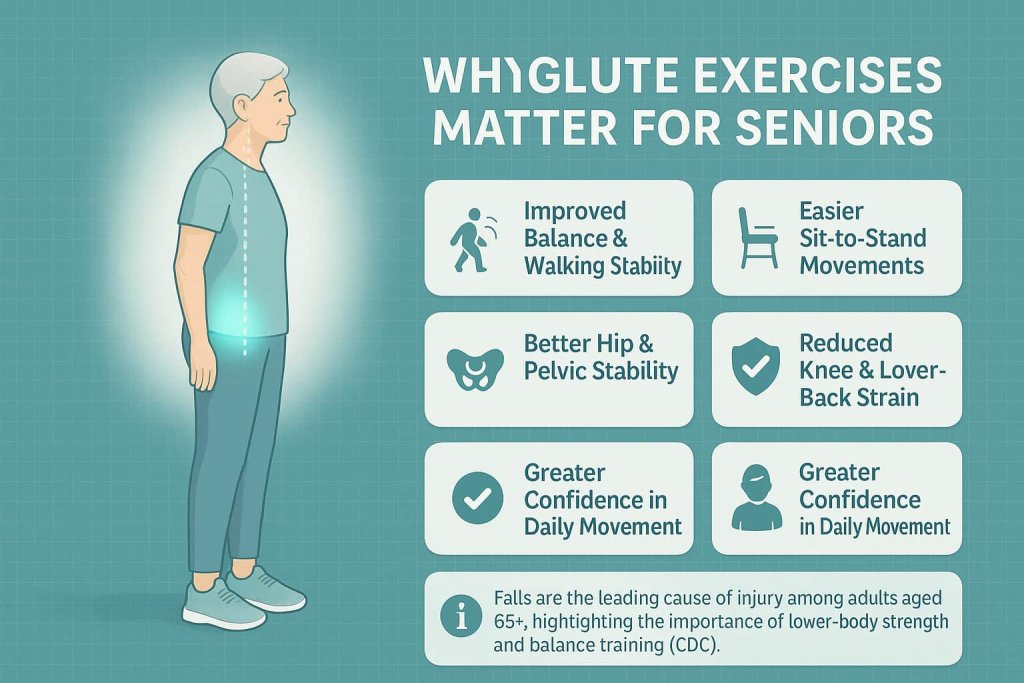
Key benefits include:
- Improved balance and steadier walking
- Easier transitions from sitting to standing
- Better hip and pelvic stability
- Reduced strain on knees and lower back
- Greater confidence during daily movement
The CDC reports that falls are the leading cause of injury among adults aged 65 and older, making lower-body strength and balance training especially important.
9 Best Glute Exercises for Seniors
Strengthens the glutes for standing up and sitting down with more control. Supports daily independence and lower-body strength.
1. Chair Squats (Sit-to-Stand)
Why it works:
Mimics standing up from a chair, strengthening glutes and thighs in a functional way.
Muscles worked:
Gluteus maximus, quadriceps, core stabilizers
How to do it:
- Sit on a sturdy chair with feet hip-width apart
- Lean slightly forward and press through your heels
- Stand up fully, then slowly sit back down
- Keep chest upright and knees tracking forward
Trainer tip:
Use armrests for assistance if needed.
2. Glute Bridges
Why it works:
Targets the glutes directly without stressing the knees or spine.
Muscles worked:
Gluteus maximus, hamstrings, core
How to do it:
- Lie on your back with knees bent and feet flat
- Tighten your glutes and lift hips slowly
- Pause briefly at the top
- Lower with control
Trainer tip:
Keep ribs down and avoid arching the lower back.
3. Standing Hip Extensions
Why it works:
Strengthens the glutes while improving standing balance.
Muscles worked:
Gluteus maximus
How to do it:
- Hold a chair or counter
- Extend one leg straight back
- Keep torso upright and hips level
- Return slowly and switch sides
Trainer tip:
Focus on squeezing the glute, not swinging the leg.
4. Side-Leg Raises
Why it works:
Builds hip stability critical for walking and balance.
Muscles worked:
Gluteus medius, gluteus minimus
How to do it:
- Stand holding support
- Lift one leg out to the side
- Keep toes facing forward
- Lower slowly
Trainer tip:
Small, controlled lifts are more effective than high kicks.
5. Clamshells
Why it works:
Improves lateral hip strength without standing balance demands.
Muscles worked:
Gluteus medius, external hip rotators
How to do it:
- Lie on your side with knees bent
- Keep feet together
- Open the top knee without rolling back
- Lower slowly
Trainer tip:
Place a pillow under your head for comfort.
6. Step-Ups (Low Height)
Why it works:
Builds glute strength for stairs and daily climbing tasks.
Muscles worked:
Gluteus maximus, quadriceps
How to do it:
- Step onto a low platform or stair
- Press through the heel to stand
- Step down carefully
Trainer tip:
Use a railing or wall for balance support.
7. Heel-to-Toe Weight Shifts
Why it works:
Combines glute engagement with balance training.
Muscles worked:
Glutes, calves, core stabilizers
How to do it:
- Stand tall holding support
- Shift weight onto one leg
- Maintain balance for 5–10 seconds
- Switch sides
Trainer tip:
Think “tall posture” throughout the movement.
8. Mini Hip Hinges
Why it works:
Reinforces safe bending mechanics using the glutes.
Muscles worked:
Glutes, hamstrings, lower-back stabilizers
How to do it:
- Stand holding support
- Push hips slightly back
- Keep spine neutral
- Return upright
Trainer tip:
Imagine closing a car door with your hips.
9. Single-Leg Stance (Supported)
Why it works:
Challenges balance while engaging hip stabilizers.
Muscles worked:
Gluteus medius, core
How to do it:
- Hold a chair
- Lift one foot slightly off the floor
- Hold 10–20 seconds
Trainer tip:
Quality balance matters more than time.
How Often Should Seniors Do Glute Exercises?
According to CDC and ACSM guidelines:
- 2–3 sessions per week
- 1–3 sets per exercise
- 8–12 controlled repetitions
- Allow 24–48 hours of rest between sessions
Common Mistakes to Avoid
- Rushing through movements
- Holding breath
- Using momentum instead of muscle control
- Skipping balance support when needed
Who Should Do Glute Exercises for Seniors
Glute exercises for seniors are appropriate for most older adults who want to maintain or improve lower-body strength, balance, and everyday mobility. These exercises are designed to be low-impact, controlled, and adaptable to different fitness levels.
They are especially suitable for:
- Adults aged 60 and older aiming to stay active and independent
- Seniors who want better balance and walking stability
- Individuals who find it harder to stand up from a chair or climb stairs
- Older adults looking to reduce fall risk through strength training
- Beginners returning to exercise after a period of inactivity
Most movements can be modified with chair support, reduced range of motion, or fewer repetitions to match individual comfort and ability.
Safety Guidelines Before You Start
Before beginning any glute exercise routine:
- Use a chair, wall, or countertop for support
- Move slowly and stay within a pain-free range
- Breathe normally—never hold your breath
- Stop if you feel sharp pain, dizziness, or joint discomfort
- Consult a healthcare professional if you have recent surgery, severe joint pain, or balance disorders
How to Progress Glute Exercises Safely as a Senior
Progression should always be gradual and based on comfort, control, and confidence—not speed or heavy resistance. The goal is to improve strength and balance without increasing joint stress or fall risk.
Safe progression guidelines include:
- Increase repetitions or hold time before adding resistance
- Add light resistance bands only after bodyweight exercises feel easy
- Progress from two-leg to single-leg variations slowly and with support
- Improve balance challenges gradually by reducing hand support
- Maintain slow, controlled movement throughout each exercise
If an exercise causes pain, instability, or loss of balance, return to an easier version.
When to Stop or Consult a Professional
While glute exercises are generally safe, certain situations require caution or professional guidance. Listening to your body is essential for injury prevention and long-term progress.
Stop exercising and consult a healthcare professional if you experience:
- Sharp or persistent hip, knee, or lower-back pain
- Dizziness, shortness of breath, or chest discomfort
- Recent falls or unexplained balance loss
- Recovery from recent surgery or joint replacement
- Worsening pain or symptoms that do not improve with rest
A physical therapist or qualified healthcare provider can help tailor exercises to individual needs and medical conditions.
This content is for informational purposes only and not medical advice.
Frequently Asked Questions
1.Are glute exercises safe for seniors?
Yes, when performed with proper support, slow tempo, and pain-free range.
2. Can seniors do glute exercises at home?
Absolutely. Most glute exercises for seniors require only a chair or wall.
3. How long before results are noticeable?
Many seniors notice improved balance and ease of movement within 4–6 weeks.
4. Are glute exercises good for fall prevention?
Yes. Strong glutes support pelvic stability and walking control.
5. Should seniors use resistance bands?
Optional. Bands can be added gradually once bodyweight feels easy.
6. Can seniors with knee pain do glute exercises?
Many glute exercises reduce knee strain, but modifications may be needed.
Conclusion
Glute exercises for seniors play a vital role in maintaining balance, strength, and independence. By focusing on controlled, supportive movements, older adults can safely build hip stability and confidence in daily activities. Start slow, stay consistent, and prioritize quality movement over intensity.
If you’re ready to improve mobility and reduce fall risk, begin with just a few of these exercises and progress gradually.
References
- CDC: Physical Activity for Older Adults
- CDC: Falls Data and Research
- National Institute on Aging: Exercise and Physical Activity
- Physical Activity Guidelines for Americans, 2nd Edition (PDF)
- ACSM Position Stand: Exercise and Physical Activity for Older Adults (PubMed)
- NSCA: Resistance Training for Older Adults Position Statement (PDF)
- EMG Analysis of Gluteus Medius/Maximus During Common Rehab Exercises (PMC)
- NCBI Bookshelf: Gluteus Medius (Anatomy and Function)