
The safest way to lose 30 pounds is to create a steady calorie deficit through better food choices, regular activity, strength training, sleep, and consistent habits. For most adults, this is not a quick 30-day goal. It usually takes several months of realistic changes you can maintain.
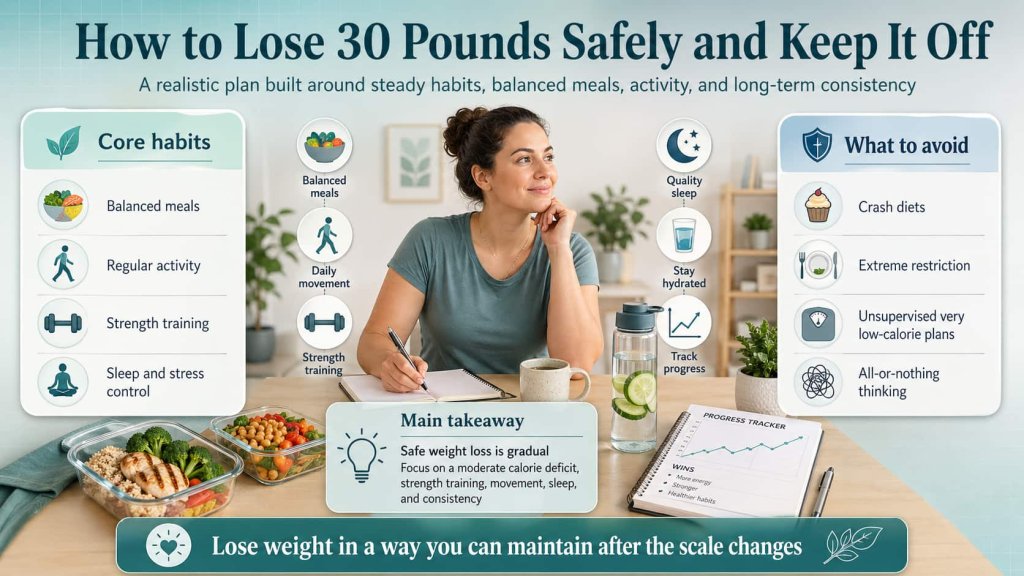
According to the CDC, healthy weight loss works best when it includes eating patterns, physical activity, sleep, and stress management—not just dieting harder for a few weeks. The goal is not to punish your body. It is to build a repeatable routine that helps you lose fat while protecting energy, strength, and overall health.
How to Lose 30 Pounds Safely
To lose 30 pounds safely, focus on a plan that reduces calories without extreme restriction. That usually means eating more filling, nutrient-rich foods, moving more often, lifting weights, and tracking your progress in a calm, flexible way.
A safe weight-loss plan should include:
- A realistic timeline
- A moderate calorie deficit
- Protein-rich, high-fiber meals
- Regular walking or cardio
- Strength training at least twice per week
- Good sleep and stress management
- Adjustments when progress stalls
- Medical guidance if you have health conditions or use weight-affecting medications
Losing 30 pounds is a meaningful goal. It should be handled like a health project, not a crash-diet challenge.
How Long Does It Take to Lose 30 Pounds?
A realistic timeline depends on your starting weight, current habits, age, activity level, health history, and how consistent your plan is.
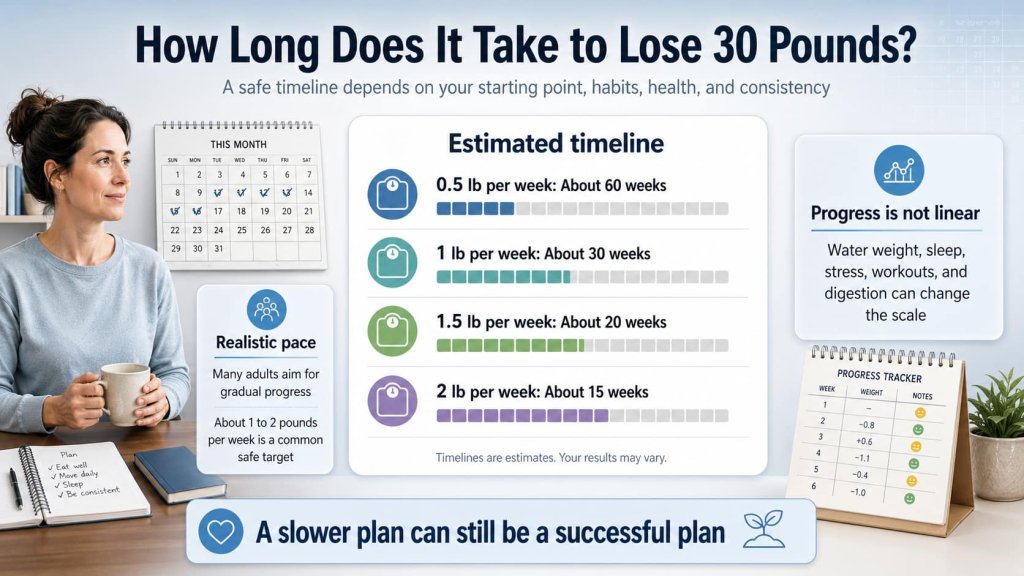
The CDC notes that people who lose weight gradually and steadily are more likely to keep it off. A common safe target is about 1 to 2 pounds per week. At that pace, losing 30 pounds may take around:
| Average Weekly Loss | Estimated Time to Lose 30 Pounds |
|---|---|
| 0.5 pound per week | About 60 weeks |
| 1 pound per week | About 30 weeks |
| 1.5 pounds per week | About 20 weeks |
| 2 pounds per week | About 15 weeks |
For many adults, a practical timeline is about 4 to 8 months, but slower progress can still be successful. If you are losing weight while building strength, improving fitness, or managing a medical condition, the scale may not move in a perfect straight line.
Step 1: Set a Realistic Calorie Deficit
Weight loss happens when your body uses more energy than you take in over time. That does not mean you need to starve, skip meals, or cut out entire food groups.
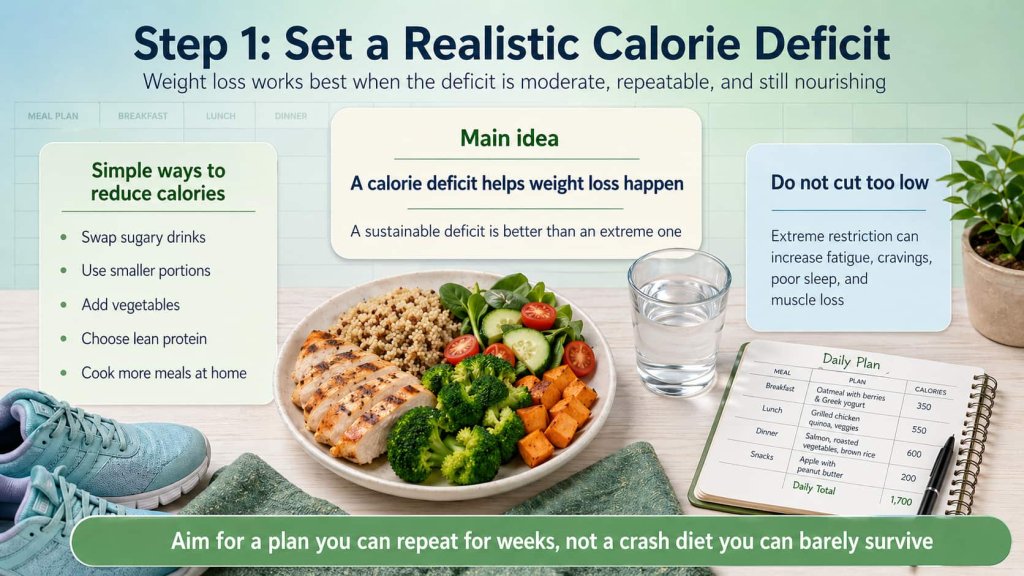
A moderate calorie deficit is usually more sustainable than an aggressive one. MedlinePlus explains that cutting about 500 calories per day can be a practical starting point for many people and may lead to about 1 pound of weight loss per week.
Simple ways to create a calorie deficit include:
- Swap sugary drinks for water, sparkling water, or unsweetened tea
- Use smaller portions of calorie-dense foods
- Eat more vegetables with lunch and dinner
- Choose lean protein more often
- Reduce frequent snacking when you are not hungry
- Limit ultra-processed foods that are easy to overeat
- Cook more meals at home when possible
The NIDDK Body Weight Planner can help estimate calorie needs based on your body size, activity level, goal weight, and timeline. It is more useful than guessing because calorie needs often change as weight changes.
Safety Note: Do Not Cut Calories Too Low
A bigger calorie deficit is not always better. Cutting calories too aggressively can make hunger, fatigue, cravings, poor sleep, and muscle loss more likely. It can also make the plan harder to stick with.
Very low-calorie diets are not meant to be casual do-it-yourself plans. The NIDDK explains that treatment for overweight and obesity may include lifestyle changes, structured programs, medications, devices, or surgery depending on the person’s health needs. If you think you need a very low-calorie diet, use it only with medical supervision.
A better starting point is usually a moderate deficit you can repeat for weeks, while still eating enough protein, fiber, vitamins, minerals, and fluids.
Step 2: Build Meals That Keep You Full
The best diet for losing 30 pounds is one you can actually follow. Instead of chasing a perfect meal plan, build meals that are filling, balanced, and realistic.
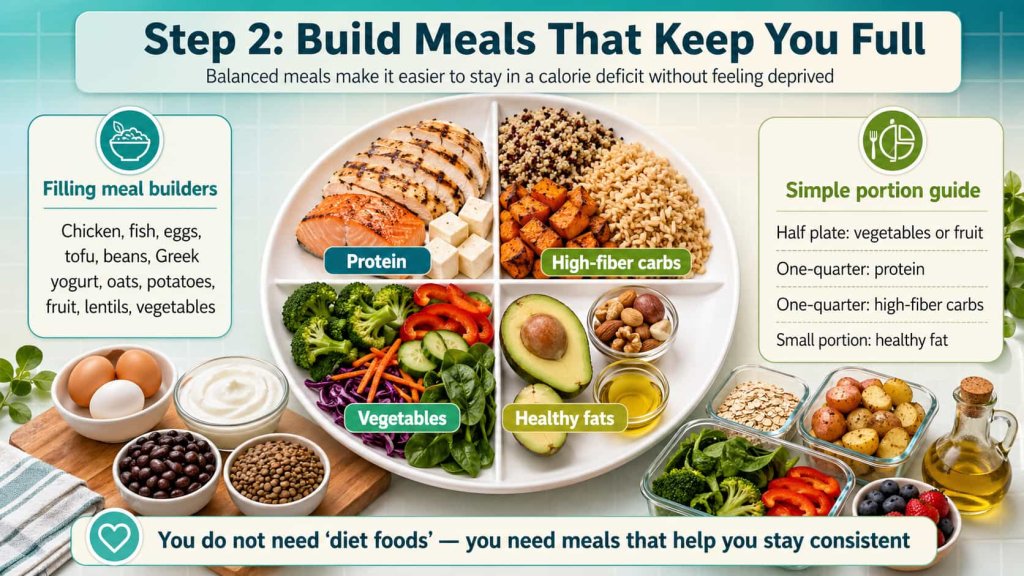
A helpful plate method is:
- Protein: chicken, fish, eggs, Greek yogurt, tofu, beans, lentils, lean meat, or cottage cheese
- High-fiber carbs: oats, potatoes, brown rice, whole-grain bread, quinoa, fruit, beans, or lentils
- Vegetables: leafy greens, broccoli, carrots, peppers, cucumbers, tomatoes, or mixed vegetables
- Healthy fats: avocado, olive oil, nuts, seeds, or nut butter in measured portions
The USDA MyPlate model encourages variety across fruits, vegetables, grains, protein foods, and dairy or fortified alternatives. For weight loss, the main idea is to choose foods that give you more fullness and nutrition for your calories.
Easy Meal Examples for Losing 30 Pounds
Here are simple meal ideas that can fit many weight-loss plans:
- Eggs with vegetables and whole-grain toast
- Greek yogurt with berries and oats
- Chicken salad bowl with beans and avocado
- Lentil soup with a side of fruit
- Grilled fish with potatoes and vegetables
- Tofu stir-fry with rice and mixed vegetables
- Turkey or bean chili with a side salad
You do not need “diet foods.” You need meals that keep you full enough to stay consistent.
Simple Portion Guide If You Do Not Want to Count Calories
You can lose weight without tracking every calorie if your portions are consistent. A simple plate method can make meals easier to manage:
- Fill half your plate with non-starchy vegetables or fruit.
- Fill one-quarter of your plate with protein.
- Fill one-quarter of your plate with whole grains, beans, potatoes, or another high-fiber carbohydrate.
- Add a small portion of healthy fat, such as olive oil, avocado, nuts, or seeds.
This approach works best when most meals are built from minimally processed foods. The Dietary Guidelines for Americans recommend limiting foods and drinks higher in added sugars, saturated fat, and sodium while focusing on nutrient-dense foods.
Step 3: Use Exercise to Support Fat Loss
Exercise helps with calorie burn, heart health, mood, strength, and long-term weight maintenance. But it works best when paired with food habits that match your goal.
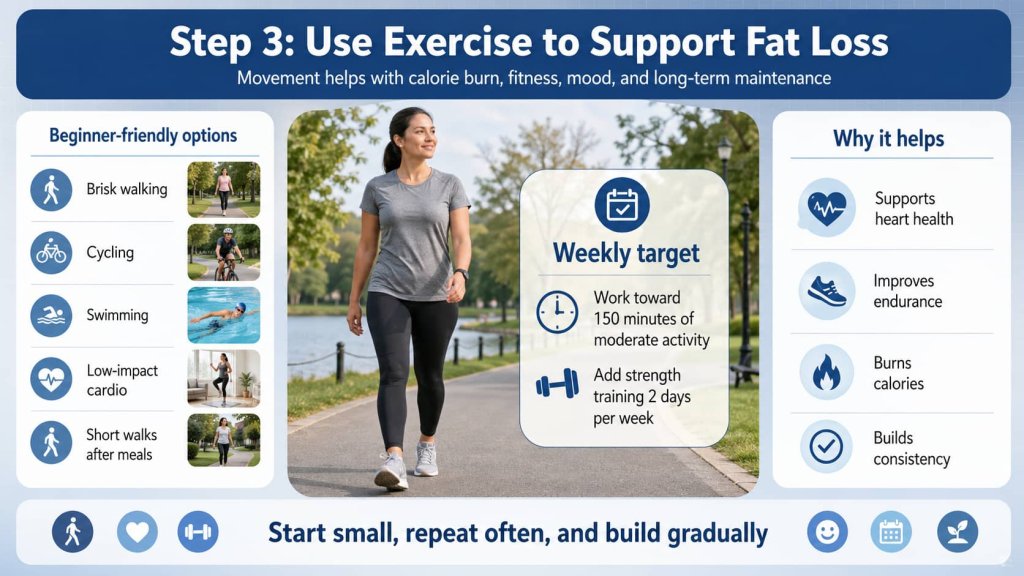
The CDC adult activity guidelines recommend at least 150 minutes of moderate-intensity activity per week, or 75 minutes of vigorous activity, plus 2 days of muscle-strengthening activity each week.
A beginner-friendly weekly plan could look like this:
| Day | Activity |
|---|---|
| Monday | 30-minute brisk walk |
| Tuesday | Full-body strength training |
| Wednesday | 30-minute walk or bike ride |
| Thursday | Rest or light mobility |
| Friday | Full-body strength training |
| Saturday | Longer walk, hike, swim, or sport |
| Sunday | Rest or easy movement |
If you are currently inactive, start smaller. A 10-minute walk after meals is still progress. The most important step is building a routine you can repeat.
Step 4: Strength Train to Protect Muscle
Strength training matters when losing 30 pounds because weight loss can include both fat and lean mass. Lifting weights or doing bodyweight exercises helps signal your body to keep muscle while you lose weight.
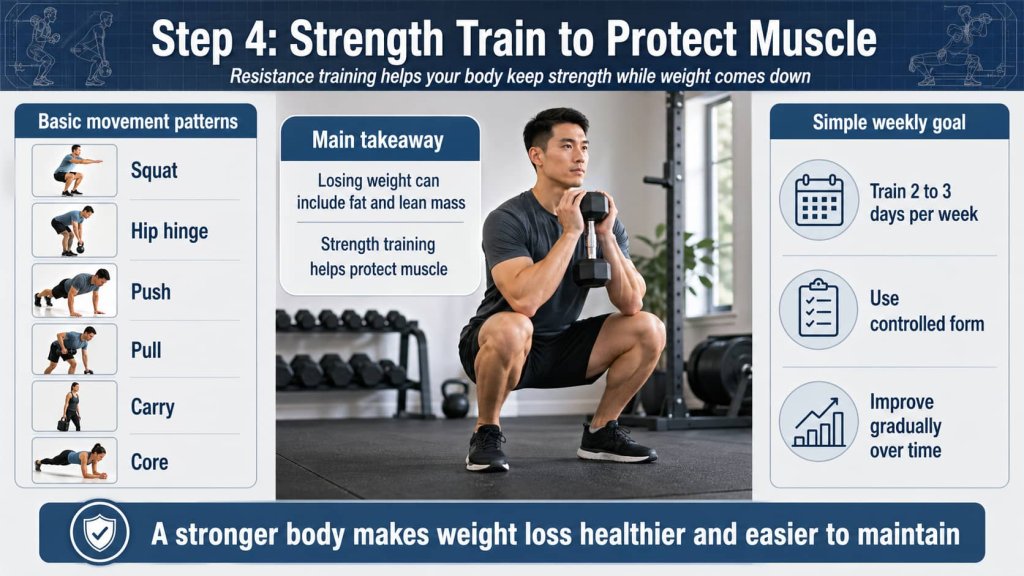
You do not need a complicated bodybuilding program. Start with basic movement patterns:
- Squat or leg press
- Hip hinge, such as Romanian deadlift or glute bridge
- Push, such as push-ups or chest press
- Pull, such as rows or pulldowns
- Carry or core work, such as farmer carries or planks
Train 2 to 3 days per week, using controlled form. Focus on gradually improving reps, resistance, or technique over time.
Step 5: Track Progress Without Obsessing Over the Scale
The scale is useful, but it is not the whole story. Weight can shift because of water, digestion, salt intake, menstrual cycle changes, stress, sleep, and hard workouts.
Better progress markers include:
- Weekly average body weight
- Waist measurement every 2 to 4 weeks
- Progress photos if they feel helpful
- How clothes fit
- Strength in the gym
- Daily energy
- Hunger and cravings
- Walking pace or endurance
- Blood pressure, blood sugar, or cholesterol if tracked by a clinician
Weighing once per week works for some people. Others prefer daily weigh-ins averaged across the week. Choose the method that helps you stay informed without becoming stressed or discouraged.
What to Do If Your Weight Loss Stalls
A weight-loss plateau does not mean your plan failed. As you lose weight, your body usually needs fewer calories than it did at your starting weight. Your routine may also become easier over time, which can reduce how much energy you burn from the same workouts.
If your weight has not changed for 2 to 4 weeks, check the basics before making big changes:
- Review portions, snacks, drinks, sauces, and weekend meals.
- Look at your weekly average weight, not one weigh-in.
- Increase daily steps or add 10 to 15 minutes of easy activity.
- Keep strength training so you protect muscle.
- Adjust calories slightly if your current intake no longer creates a deficit.
- Make sure sleep and stress are not making consistency harder.
Do not respond to a plateau by skipping meals or doubling your workouts overnight. Small adjustments are usually easier to maintain.
Step 6: Fix Sleep, Stress, and Weekend Habits
Many people know what to eat Monday through Thursday but struggle with sleep, stress, and weekend routines. These habits can quietly erase the calorie deficit.
The CDC includes sleep and stress management as part of healthy weight loss. Poor sleep and high stress can make appetite, cravings, energy, and consistency harder to manage.
Helpful changes include:
- Set a consistent bedtime and wake time
- Keep high-calorie snacks out of easy reach
- Plan weekend meals before you are hungry
- Avoid “saving calories” all day before a large meal
- Use walking as a stress-relief habit
- Keep alcohol and sugary drinks limited if you drink them
- Prep simple protein foods ahead of time
You do not need perfect weekends. You need weekends that do not undo the rest of your week.
Common Mistakes That Make Losing 30 Pounds Harder
Trying to Lose 30 Pounds Too Fast
Fast weight loss can feel motivating at first, but extreme plans are often hard to maintain. Very low-calorie diets should only be used with medical supervision. If a plan makes you feel weak, dizzy, constantly hungry, or unable to function normally, it is not a good long-term plan.
Cutting Too Much Protein
Protein supports fullness and helps maintain muscle during weight loss. Include a protein source in most meals instead of relying only on salads, fruit, or small snacks.
Drinking Too Many Calories
Sugary coffee drinks, soda, juice, energy drinks, alcohol, and large smoothies can add up quickly. You do not have to remove every drink you enjoy, but liquid calories are often one of the easiest places to make changes.
Doing Only Cardio
Cardio is helpful, but strength training gives your body a reason to keep muscle. A combination of walking, cardio, and resistance training is usually stronger than cardio alone.
Quitting After One Bad Day
One high-calorie meal does not ruin your progress. The bigger problem is turning one off-plan meal into an off-plan week. Return to your next normal meal and keep going.
Who Should Talk to a Doctor Before Losing 30 Pounds?
Some people should get medical guidance before starting a weight-loss plan, especially if the goal is large or health conditions are involved.
Talk to a qualified healthcare professional first if you:
- Are pregnant or breastfeeding
- Are a teen or still growing
- Have diabetes, kidney disease, heart disease, thyroid disease, or liver disease
- Take medications that affect appetite, blood sugar, blood pressure, or weight
- Have a history of an eating disorder or disordered eating
- Have unexplained weight changes
- Plan to follow a very low-calorie diet
- Feel out of control around food, restriction, or binge eating
Signs Your Weight-Loss Plan Is Too Aggressive
Your plan should help you feel more in control of your health, not drained or anxious. Slow down and speak with a qualified healthcare professional if you notice:
- Dizziness, weakness, or feeling faint
- Ongoing fatigue that affects daily life
- Hair loss, feeling unusually cold, or frequent headaches
- Trouble sleeping because of hunger
- Skipping meals to “make up” for eating
- Feeling guilty or panicked after normal meals
- Binge-restrict cycles
- Loss of menstrual cycle or major cycle changes
- Rapid weight loss that continues without trying
A safer plan should support your health while helping you lose weight gradually. If the process starts feeling extreme, it is worth getting support early.
The NIDDK recommends talking with a healthcare professional when choosing a weight-loss program, especially to review health conditions, medications, realistic goals, and safety.
Can Weight-Loss Medication Help You Lose 30 Pounds?
Weight-loss medication may help some adults, but it is not for everyone and should not be treated as a shortcut. These medications require medical screening, a prescription, follow-up care, and a long-term plan.
The NIDDK lists several FDA-approved prescription medications for chronic weight management, including orlistat, phentermine-topiramate, naltrexone-bupropion, liraglutide, semaglutide, and tirzepatide. Medication decisions depend on health history, BMI, side effects, cost, availability, and clinician guidance.
The FDA has also warned about unapproved GLP-1 products sold for weight loss. Do not buy “research use,” compounded, or unapproved weight-loss injections online without proper medical oversight.
How to Keep the Weight Off After Losing 30 Pounds
Losing 30 pounds is only part of the goal. Keeping it off requires a maintenance plan.
When you reach your goal, do not immediately return to your old habits. Instead:
- Increase calories slowly if needed
- Keep protein and fiber high
- Continue strength training
- Keep walking or doing cardio
- Weigh in occasionally
- Watch for old habits returning
- Keep easy meals in rotation
- Plan ahead for holidays, travel, and busy weeks
Maintenance is not a finish line. It is a more flexible version of the habits that helped you lose weight.
Sample Daily Routine for Losing 30 Pounds
Here is a simple example of what a realistic day might look like:
| Time | Habit |
|---|---|
| Morning | Protein-rich breakfast and water |
| Midday | Balanced lunch with vegetables and fiber |
| Afternoon | 10- to 20-minute walk |
| Dinner | Lean protein, vegetables, and a satisfying carb |
| Evening | Prepare tomorrow’s lunch or workout clothes |
| Night | Consistent bedtime routine |
This is not a strict rule. It is a template. The best routine is the one that fits your schedule, food preferences, budget, and health needs.
FAQ
Can I lose 30 pounds in 2 months?
Some people may lose weight faster at the beginning, especially if they have a higher starting weight, but losing 30 pounds in 2 months is aggressive for most adults. A safer and more realistic target is usually about 1 to 2 pounds per week.
What is the fastest safe way to lose 30 pounds?
The fastest safe approach is not an extreme diet. It is a consistent calorie deficit, high-protein and high-fiber meals, regular activity, strength training, enough sleep, and medical support when needed.
Do I need to count calories to lose 30 pounds?
Not always. Calorie tracking can help, but some people do better with portion control, meal planning, plate-method meals, or working with a dietitian. The key is creating a calorie deficit without extreme restriction.
What foods should I avoid to lose 30 pounds?
You do not need to ban specific foods unless advised by a healthcare professional. It usually helps to reduce foods and drinks that are high in calories but low in fullness, such as sugary drinks, frequent desserts, large portions of fried foods, and heavily processed snack foods.
How much exercise do I need to lose 30 pounds?
A good target is to work toward the CDC guideline of 150 minutes of moderate-intensity activity per week plus 2 days of strength training. If you are new to exercise, start with shorter sessions and build gradually.
Why am I not losing weight even though I am eating healthy?
Healthy foods still contain calories. Portions, snacks, drinks, weekends, restaurant meals, sleep, stress, medications, and medical conditions can all affect progress. Track your routine for 1 to 2 weeks and look for patterns before making changes.
Conclusion
Losing 30 pounds safely is possible for many adults, but the best plan is steady, not extreme. Focus on a moderate calorie deficit, filling meals, regular movement, strength training, sleep, and habits you can keep after the weight is gone.
Start with one or two changes this week. Build consistency first. The results become much easier to maintain when your plan fits real life.
This content is for informational purposes only and not medical advice.
References
- CDC — Steps for Losing Weight
- CDC — Adult Activity: An Overview
- NIDDK — Body Weight Planner
- NIDDK — Treatment for Overweight and Obesity
- NIDDK — Choosing a Safe and Successful Weight-loss Program
- NIDDK — Prescription Medications to Treat Overweight and Obesity
- MedlinePlus — 10 Ways to Cut 500 Calories a Day
- FDA — Concerns With Unapproved GLP-1 Drugs Used for Weight Loss
- USPSTF — Weight Loss to Prevent Obesity-Related Morbidity and Mortality in Adults