
For most adults, losing 20 pounds in 2 months is an aggressive goal, not the standard safe target. A better evidence-based approach is to lose weight as fast as you can safely and sustainably, because the usual recommended pace is about 1 to 2 pounds per week, and people who lose weight gradually are more likely to keep it off, according to the CDC.
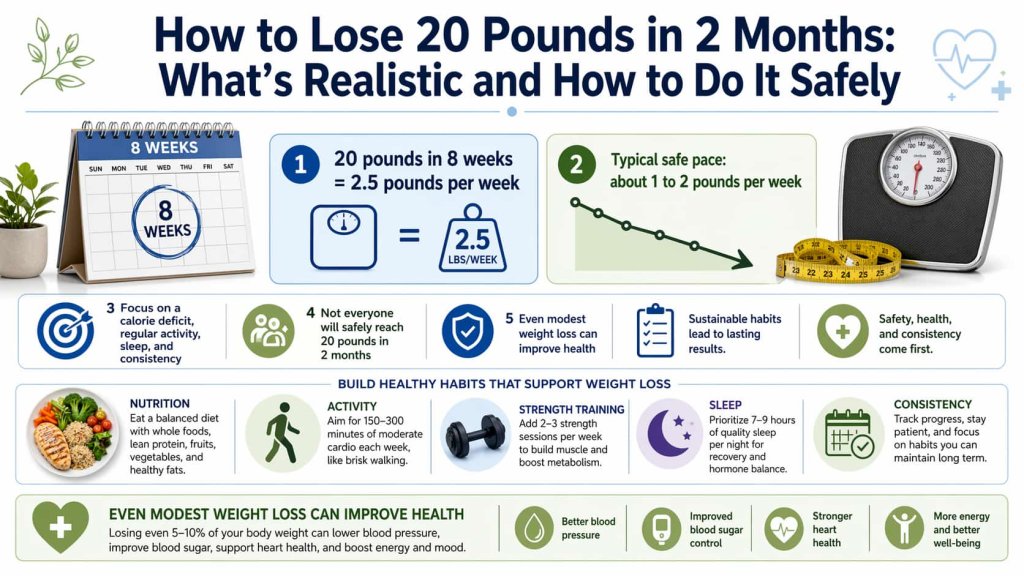
This matters because extra weight can raise the risk of problems such as type 2 diabetes, high blood pressure, heart disease, sleep apnea, fatty liver disease, kidney disease, and some cancers. Even modest weight loss can still improve health, so not reaching the full 20 pounds does not mean your effort failed. The National Institute of Diabetes and Digestive and Kidney Diseases explains that reaching and staying at a healthier weight can help prevent these problems or keep them from getting worse.
Is it realistic to lose 20 pounds in 2 months?
Sometimes, but not for everyone, and not as a blanket promise. Twenty pounds in 8 weeks works out to about 2.5 pounds per week, which is faster than the usual CDC guideline of about 1 to 2 pounds weekly for steady, maintainable loss. People with a higher starting weight may see bigger early drops, partly from water weight and glycogen changes, but that does not mean the same pace will continue through the full two months.
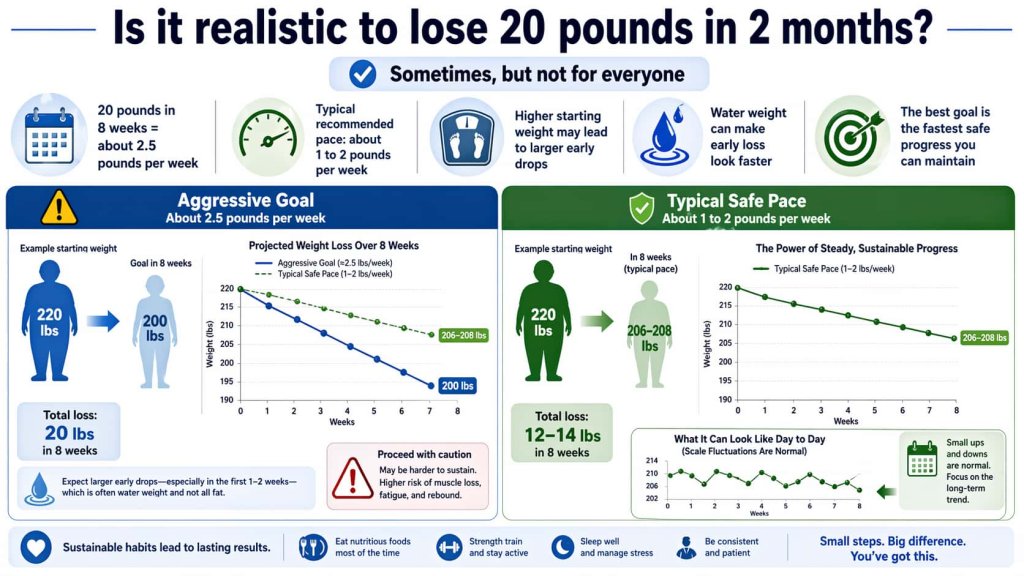
A more realistic benchmark comes from the NIDDK safe weight-loss program guidance and the National Heart, Lung, and Blood Institute, which emphasize an initial loss of about 5% to 10% of starting body weight over time, with even 3% to 5% able to improve some cardiometabolic markers. That is why the smartest version of this goal is not “I must lose exactly 20 pounds,” but “I want the fastest safe progress I can realistically maintain.”
What the safest effective plan looks like
The CDC says healthy weight loss is built on healthy eating patterns, regular physical activity, enough sleep, and stress management. The NIDDK adds that a credible program should include a reduced-calorie eating plan, a physical activity plan, guidance and support, and a plan for keeping the weight off after the loss phase.
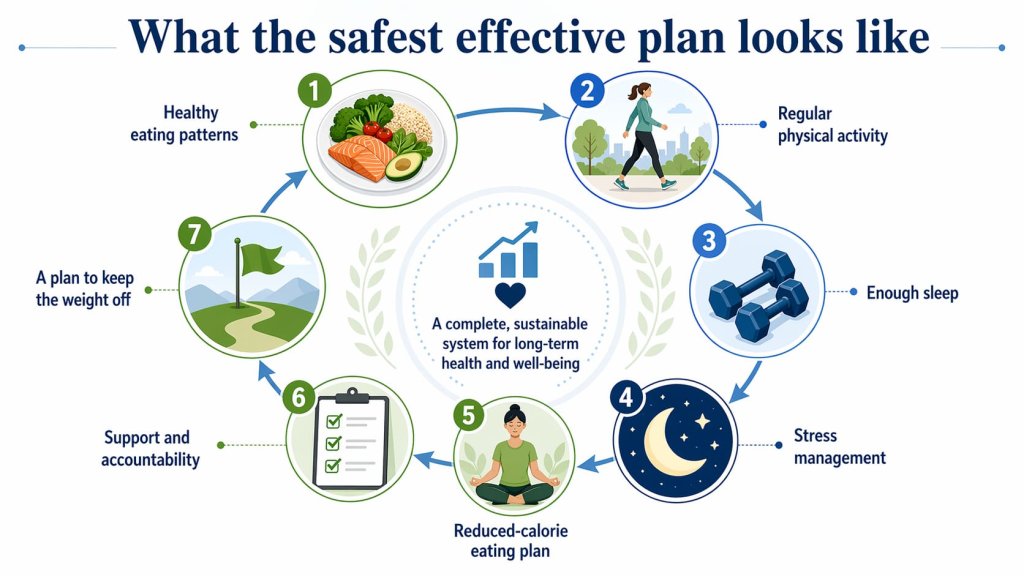
That means the goal is not to crash diet for 8 weeks. The goal is to create a measurable calorie deficit while keeping your food quality, training, recovery, and consistency high enough that you can stick with the plan.
Start with a personalized calorie target
Avoid guessing. The NIDDK Body Weight Planner is one of the best official tools for this topic because it creates a personalized calorie and physical activity plan based on your current weight, goal, timeline, sex, age, height, and activity. That is much more useful than copying someone else’s calories from social media.
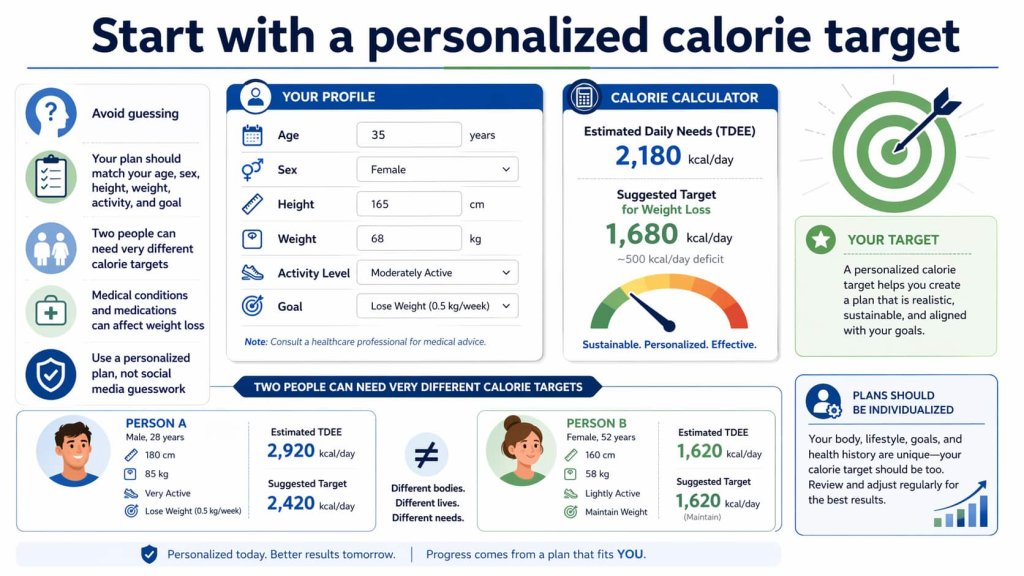
This matters because two people trying to lose 20 pounds in 2 months may need very different plans. Your starting weight, medications, sleep, medical conditions, age, and activity level all affect how quickly you can lose weight and how aggressive your plan can safely be. The CDC notes that medicines, medical conditions, stress, genes, hormones, environment, and age can all affect weight management.
How aggressive should your calorie deficit be?
A practical starting point is a moderate calorie deficit, not a crash diet. Traditional NHLBI obesity treatment guidance links a deficit of about 500 to 1,000 calories per day with roughly 1 to 2 pounds of weight loss per week, which fits the safer rate discussed earlier. That does not mean everyone should automatically cut that much. The smarter move is to use the NIDDK Body Weight Planner to estimate a personalized target based on your current weight, goal, and activity level.
If your calories are so low that you are constantly exhausted, overly hungry, irritable, or unable to train and function normally, the plan is probably too aggressive. The fastest useful plan is the hardest plan you can still follow consistently, not the harshest plan you can tolerate for a few days.
Build your meals around food quality, not just calorie math
A calorie deficit drives weight loss, but food quality strongly affects hunger, fullness, and how easy the plan feels. The Dietary Guidelines for Americans, 2020–2025 recommend a dietary pattern centered on nutrient-dense foods and beverages while staying within calorie limits and limiting foods higher in added sugars, saturated fat, and sodium.
A simple way to do that is the USDA MyPlate approach:
- make half your plate fruits and vegetables
- focus on whole fruits
- make half your grains whole grains
- vary your protein foods
- choose low-fat or fat-free dairy or fortified soy alternatives
- choose foods and drinks with less added sugars, saturated fat, and sodium
This works well for weight loss because fruits and vegetables are generally low in calories, and the CDC’s guidance on fruits and vegetables for weight management explains that their water and fiber add volume, which can help you feel full while eating fewer calories. Replacing some high-calorie ingredients with vegetables, legumes, fruit, or whole grains can lower total calories without making meals feel tiny.
Use protein, fiber, and portion size to control hunger
The easiest fat-loss meals are not necessarily tiny meals. They are meals that keep you full enough to stay consistent. A simple way to do that is to build most meals around a protein food, high-fiber carbohydrate sources, and plenty of fruits or vegetables. USDA MyPlate recommends making half your plate fruits and vegetables, making half your grains whole grains, and varying your protein routine.
Fiber matters more than many people realize. The Dietary Guidelines use a practical benchmark of about 14 grams of fiber per 1,000 calories, which helps explain why foods like beans, vegetables, fruit, and whole grains often make a calorie deficit easier to maintain. When you use packaged foods, check the label carefully. The FDA Nutrition Facts label guidance notes that serving size reflects how much people typically eat, not how much you personally should eat, and the label also shows added sugars, which can quietly increase calories without adding much fullness.
Cut liquid calories first
One of the fastest high-impact changes is reducing sugary drinks. The CDC’s Rethink Your Drink page explains that sugary drinks are the leading source of added sugars in the American diet and links them with weight gain, obesity, type 2 diabetes, heart disease, cavities, and gout. Its examples also show how quickly drink calories add up: a 12-ounce regular soda has about 10 teaspoons of sugar and about 155 calories.
Practical swaps:
- water or sparkling water instead of soda
- unsweetened tea instead of sweet tea
- lower-calorie coffee orders without flavored syrups and whipped cream
- whole fruit instead of juice drinks when possible
If you do only one nutrition change this week, make it this one.
Move enough to support fat loss and keep muscle
Exercise helps, but the most realistic approach is to combine it with nutrition, not rely on it alone. The CDC physical activity guidance for adults recommends at least 150 minutes per week of moderate-intensity aerobic activity or 75 minutes of vigorous activity, plus at least 2 days per week of muscle-strengthening activity.
For an 8-week fat-loss push, a practical setup is:
- cardio: brisk walking, cycling, or similar most days of the week
- strength training: at least 2 full-body sessions weekly
- daily movement: more steps, short walks after meals, and fewer long sedentary stretches
Strength training matters because it helps preserve lean mass during weight loss. Cardio helps increase total calorie burn and supports heart health. Together, they usually work better than trying to do endless cardio without resistance training. NIDDK also notes that physical activity has health benefits even when the scale change is smaller than you hoped.
Sleep is part of the fat-loss plan
Sleep is not a bonus habit. It is part of the plan. The CDC sleep guidance says adults age 18 to 60 generally need 7 or more hours per night, and getting enough sleep can help you stay at a healthy weight.
If you are trying to lose weight quickly, poor sleep can make the process harder by increasing fatigue, reducing training quality, and making food decisions worse. A simple target is:
- keep a regular sleep schedule
- limit bright screens before bed
- avoid large meals and alcohol close to bedtime
- avoid caffeine late in the day
Track the right things for 8 weeks
Fast but sensible progress usually comes from quick feedback, not perfectionism. Track:
- body weight on a consistent schedule
- waist measurement
- steps or weekly cardio minutes
- strength training sessions completed
- sleep hours
- liquid calories and snack frequency
The NIDDK notes that effective programs help people monitor eating, sleep, physical activity, and weekly weight, and that long-term maintenance often includes ongoing activity and regular self-monitoring.
A useful mindset is simple: if weight is not moving after two to three consistent weeks, adjust the plan. Do not wait until the full 8 weeks are over to discover nothing changed.
Expect setbacks and have a reset plan
Almost no one follows an 8-week fat-loss phase perfectly. A higher-calorie meal, missed workout, or rough weekend does not ruin the process unless it turns into a full stop. The NIDDK guidance on healthy eating and physical activity advises regrouping after setbacks and getting back to your healthy eating plan as soon as you can.
A simple reset plan works well:
- return to your normal meals at the very next eating opportunity
- resume your usual activity the same day or next morning
- keep weighing yourself regularly so a small slip does not turn into a rebound
- avoid the common mistake of “starting over Monday” after several off-plan days
If you finish the 8 weeks and want to hold onto the loss, maintenance usually requires ongoing structure too. NIDDK notes that many people may need to build toward about 300 minutes per week of moderate-intensity activity to help prevent weight regain.
An 8-week strategy that actually fits this goal
Weeks 1 and 2: Set the baseline
Use the Body Weight Planner, remove or sharply cut sugary drinks, build meals around MyPlate principles, and start logging your weight, sleep, and activity. Aim to establish consistency before trying to go harder.
Weeks 3 and 4: Build activity volume
Work toward the CDC minimum of 150 weekly minutes of moderate activity and at least 2 strength sessions. If you already meet that, gradually increase walking or cardio time.
Weeks 5 and 6: Tighten food quality
Look for repeat calorie leaks such as restaurant drinks, large portions, snack grazing, high-calorie sauces, and weekend overeating. Keep meals satisfying with fruit, vegetables, whole grains, and protein foods instead of trying to survive on tiny portions.
This is also a good time to check portions more honestly. The NIDDK portion guidance explains that portions and servings are not the same thing, and the FDA guide to understanding the Nutrition Facts label notes that serving sizes on labels are based on what people typically eat. If your healthy foods are still calorie-dense and your portions have drifted upward, progress can stall even when your food choices look good on paper.
Weeks 7 and 8: Protect adherence
This is where many people slip. Keep sleep steady, keep workouts scheduled, and plan ahead for social meals. Your goal is not a perfect final two weeks. Your goal is to finish the 8 weeks without a rebound.
What not to do
Do not rely on crash diets, detoxes, or “lose 20 pounds fast” promises. NIDDK lists extreme marketing claims such as “Lose 30 pounds in 30 days!” as a warning sign of programs to avoid.
Do not ignore the risks of very rapid weight loss. The NIDDK guidance on dieting and gallstones says losing weight very quickly may raise the chance of developing gallstones, and crash diets or very-low-calorie approaches are more likely to create problems than slower, steadier methods.
Do not assume more restriction is always better. The fastest plan that you cannot sustain usually turns into regain.
When medical support may make sense
If you have obesity, prediabetes, type 2 diabetes, high blood pressure, sleep apnea, or you have repeatedly tried and failed with lifestyle-only plans, it may be worth discussing a supervised program with a clinician. The NIDDK prescription weight-loss medication guidance says adults may be candidates for prescription weight-management medication if they have:
- a BMI of 30 or greater
- a BMI of 27 or greater with weight-related health problems such as high blood pressure or type 2 diabetes
That does not mean medication is for everyone. These medications should support, not replace, healthy eating and physical activity, and they can have side effects.
Safety box: Who should be careful with this goal?
Be more cautious and get individual medical advice first if any of these apply:
- you are pregnant, planning pregnancy, or breastfeeding
- you take medications that affect appetite, blood sugar, or weight
- you have diabetes, kidney disease, gallbladder disease, heart disease, or a history of eating disorders
- you are trying to use a very-low-calorie diet
- you are a teenager rather than an adult
NIDDK notes that pregnancy changes weight-management decisions, that rapid weight loss can raise gallstone risk, and that medications and medical conditions can affect weight management. Weight-loss medications are also not recommended during pregnancy.
What if you do not lose the full 20 pounds?
That does not mean the plan failed. A loss of even 3% to 5% of body weight can improve some health markers, and 5% to 10% is a meaningful initial goal in major national guidance. If you lose 8, 10, or 15 pounds in 2 months and your habits are actually sustainable, that is often a stronger long-term outcome than forcing a short-term crash.
FAQs
Is losing 20 pounds in 2 months safe?
For many adults, it is faster than the usual recommended rate. The CDC’s general pace for steady, maintainable loss is about 1 to 2 pounds per week, so 20 pounds in 8 weeks is more aggressive than standard guidance.
What is the fastest healthy way to lose weight?
The safest fast approach is usually a personalized calorie deficit, better food quality, fewer sugary drinks, enough activity, strength training, and good sleep. Official guidance does not support crash diets as the best long-term option.
Can I lose 20 pounds in 2 months without exercise?
You can lose weight without formal exercise if you create a calorie deficit, but exercise still matters for health, fitness, and maintaining muscle. National guidance recommends both aerobic activity and muscle-strengthening work.
Should I use a weight-loss medication to reach this goal faster?
Maybe, but only if you meet medical criteria and your clinician thinks it is appropriate. Medication is not a shortcut for everyone, and it should be combined with lifestyle treatment.
The bottom line
Trying to lose 20 pounds in 2 months can make sense as a motivation boost, but it should not be treated as a guaranteed or universally safe outcome. The strongest plan is to aim for the fastest pace you can maintain with a personalized calorie target, better meal structure, fewer liquid calories, regular cardio and strength training, and at least 7 hours of sleep most nights. Start with the official Body Weight Planner, follow it consistently for 8 weeks, and judge success by real progress you can keep.
This content is for informational purposes only and not medical advice.
References
- CDC — Steps for Losing Weight
- CDC — Fruits and Vegetables for Healthy Weight
- NIDDK — Health Risks of Overweight and Obesit
- NIDDK — Prescription Medications to Treat Overweight and Obesity
- NHLBI — Clinical Guidelines on the Identification, Evaluation, and Treatment of Overweight and Obesity in Adults
- Dietary Guidelines for Americans — Dietary Guidelines for Americans, 2020–2025
- FDA — How to Understand and Use the Nutrition Facts Label