
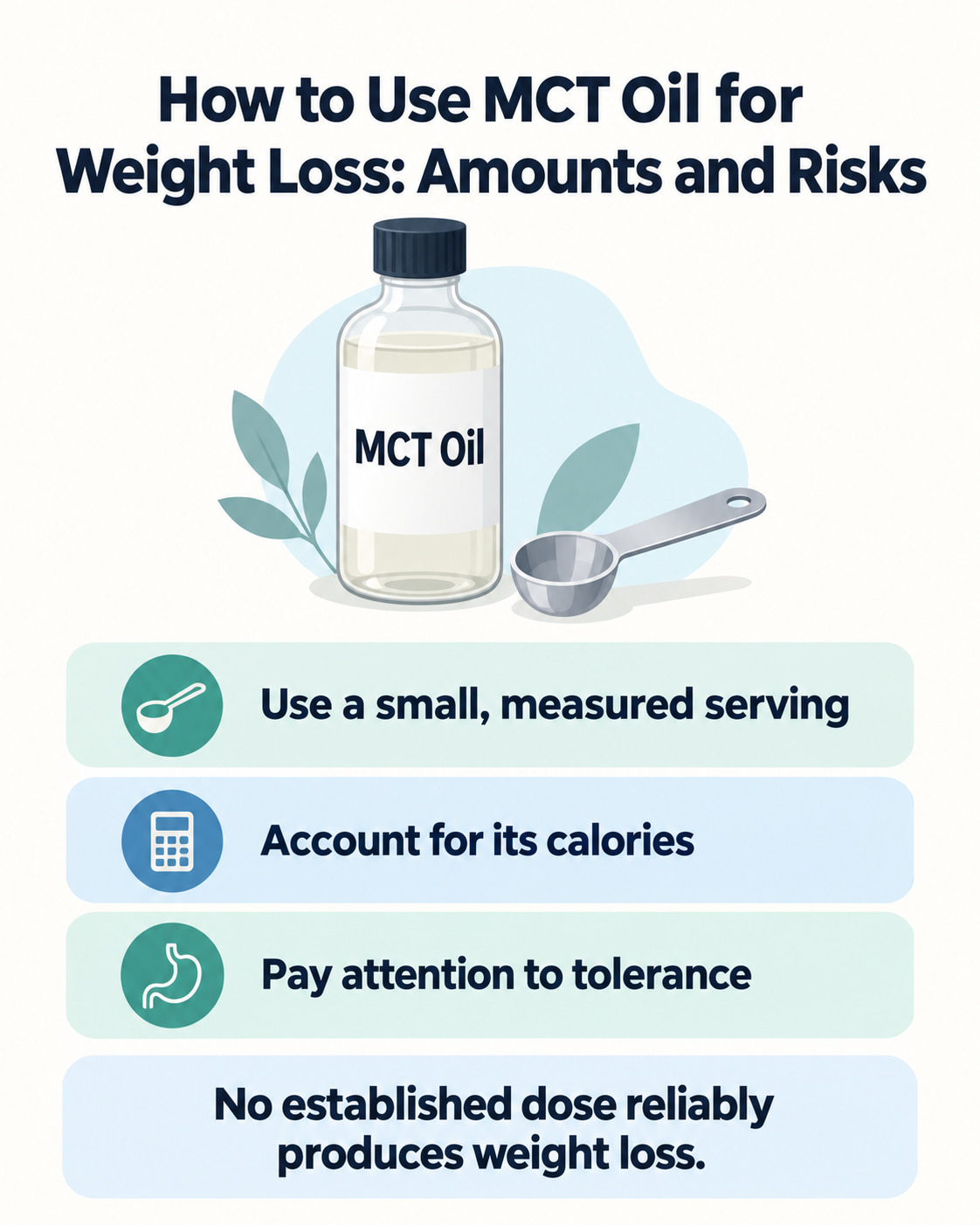
If you choose to try MCT oil for weight loss, use a small, measured serving and account for its calories within your usual food intake. A teaspoon can be a cautious starting example, but there is no established dose that reliably produces weight loss.
Understanding how to use MCT oil for weight loss matters because the potential benefit is modest, while extra calories and digestive symptoms can work against your goals. This guide explains practical amounts, ways to use it, and the risks to consider.
What Is MCT Oil?
MCT stands for medium-chain triglycerides, a type of dietary fat. Commercial MCT oil is commonly made from coconut or palm kernel oil and often contains concentrated caprylic acid, called C8, and capric acid, called C10.
Your body absorbs and processes these fats differently from many longer-chain fats. They reach the liver relatively quickly, where they can supply energy and contribute to ketone production.
However, producing ketones does not prove that you are losing stored body fat. MCT oil still supplies calories, and coconut oil has a different fatty-acid mixture from concentrated MCT oil.
Does MCT Oil Help With Weight Loss?
MCT oil may offer a small advantage when it replaces other dietary fats. In Clinical Nutrition, a 2024 systematic review and meta-analysis found that MCT-enriched diets produced greater weight reduction than diets enriched with long-chain triglycerides in adults with overweight or obesity. Results varied with the type of fat formulation.
That finding needs context. Comparing two types of dietary fat does not show that pouring extra oil into your existing diet will help you lose weight. Studies also differ in their participants, amounts, duration, and accompanying dietary changes.
MCT oil is therefore an optional ingredient, not a requirement for weight management. A sustainable eating pattern, appropriate portions, physical activity, and adequate sleep remain more useful priorities than finding a supplement routine.
How Much MCT Oil Should You Use for Weight Loss?
There is no proven daily MCT oil dose for weight loss. Separate a starting serving intended to assess tolerance from the amounts used in research.
For example, a 16-week randomized trial published in 2008 used 18–24 grams daily of MCT oil or olive oil within a structured weight-loss program. Only 31 of 49 participants completed the study. Those research amounts are not a universal recommendation.
If you decide to try it, 1 teaspoon, approximately 5 mL, is a cautious starting example. This amount is not a proven weight-loss dose, and you do not need to increase it to a particular tablespoon target.
MCT Oil Serving Sizes and Calories
The following examples use the 115 calories per tablespoon documented in a University of Virginia clinical nutrition review.
| Measured serving | Approximate volume | Example calories |
|---|---|---|
| 1 teaspoon | 5 mL | 38 |
| 2 teaspoons | 10 mL | 77 |
| 1 tablespoon | 15 mL | 115 |
| 2 tablespoons | 30 mL | 230 |
These are calorie comparisons, not daily targets. Check your product label because formulations and calorie declarations vary. Research amounts listed in grams cannot be exchanged directly for milliliters.
How to Use MCT Oil for Weight Loss
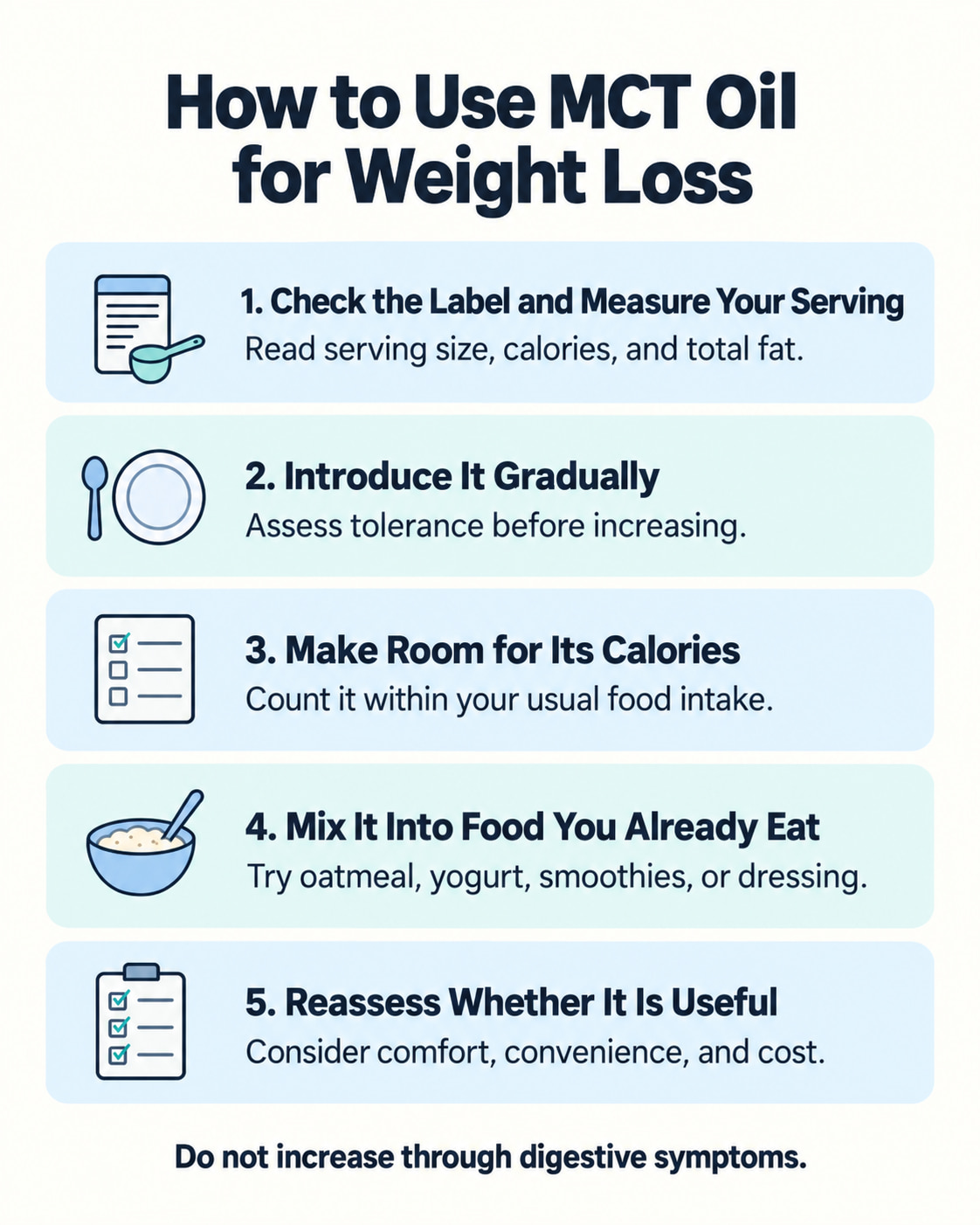
1. Check the Label and Measure Your Serving
Look at the ingredients, serving size, calories, and total fat. A scoop of MCT powder may contain other ingredients and a different amount of MCT from a spoonful of pure oil.
Use a measuring spoon rather than estimating a pour. Check how many servings you use across coffee, smoothies, and meals during the day.
2. Introduce It Gradually
Try a small serving with a meal and assess how you feel before considering an increase. There is no evidence-based schedule requiring you to add another teaspoon every day or reach two tablespoons within a week.
Taking it with food may be more comfortable for some people, but it does not guarantee that digestive symptoms will be avoided. Reduce the amount or stop if you develop cramping, nausea, or diarrhea.
3. Make Room for Its Calories
Consider where the oil fits within your existing meals. Simply adding two tablespoons to your usual intake could add about 230 calories, using the example above.
For instance, if you mix a measured teaspoon into a dressing, account for it as part of that dressing’s oil content. Avoid treating it as a calorie-free addition.
Keep a variety of nutritious fat sources in your diet. There is no need to replace all your olive oil, nuts, seeds, or other foods with MCT oil.
4. Mix It Into Food You Already Eat
Practical options include:
- Stirring a measured amount into oatmeal or yogurt.
- Blending it into a smoothie.
- Mixing it into a dressing.
- Adding it to soup after cooking.
Follow the manufacturer’s cooking instructions. Adding it after cooking is a simple way to avoid exposing it to high frying temperatures.
5. Reassess Whether It Is Useful
Notice whether MCT oil fits your meals comfortably, whether it causes symptoms, and whether its added cost feels worthwhile.
You do not need to continue using it if it makes eating less enjoyable or adds calories without helping your routine. A registered dietitian can help you assess your overall eating pattern when weight management feels difficult.
When Should You Take MCT Oil?
Research has not established a best time of day to take MCT oil for weight loss. Morning coffee, an evening meal, and taking it before exercise have no proven special advantage for long-term results.
Choose a convenient meal if you use it. Avoid experimenting with your first serving immediately before a workout or when bathroom access will be limited.
Coffee is an option, but the MCT oil and any cream, butter, or sweeteners still contribute calories. An oil-enriched coffee also provides little protein or fiber unless other ingredients supply them.
MCT Oil Side Effects and Risks
Digestive Discomfort
Diarrhea, abdominal pain, nausea, and discomfort are the main concerns. A systematic review published on August, 2026 examined 33 studies involving 1,100 participants and identified gastrointestinal symptoms as the most frequently reported side effects.
Some symptoms were substantial enough for participants to stop supplementation. Higher amounts were associated with worse tolerance in several studies, although reactions varied considerably. Long-term tolerability was insufficiently studied.
Changes in Blood Lipids
MCT oil should not automatically be considered beneficial for cholesterol. A 2021 systematic review of randomized trials found a small average increase in triglycerides of 0.14 mmol/L, approximately 12 mg/dL.
Overall changes in total, LDL, and HDL cholesterol were not statistically significant. However, comparisons specifically with predominantly unsaturated oils showed higher total and LDL cholesterol with MCT oil.
This does not mean everyone’s blood lipids will worsen. It means the fat being replaced matters, particularly if you already manage high triglycerides or cholesterol.
Displacing Other Nutrients
MCT oil does not supply protein, fiber, or essential fatty acids. Using it as your main fat source or relying on oil-based drinks in place of balanced meals can reduce dietary variety.
Continue to include foods that provide essential fats, such as appropriate plant oils, nuts, and seeds.
Who Should Get Advice Before Using MCT Oil?
Speak with a healthcare professional before using MCT oil for weight loss if you have liver disease, cardiovascular disease, significant digestive problems, or abnormal blood lipids.
Individual guidance also matters if you are pregnant or breastfeeding, have a condition affecting fat metabolism, or follow a prescribed nutrition plan. These situations should not be managed with a generic supplement schedule.
MCT products are sometimes used for specific medical nutrition needs. Instructions for those uses can differ substantially from advice for someone trying to lose weight.
When to Seek Medical Help
Stop taking MCT oil and seek medical advice if symptoms persist or worsen. Severe abdominal pain, repeated vomiting, or signs of dehydration—such as dizziness and very little urine—warrant prompt assessment.
Frequently Asked Questions
Is One Teaspoon of MCT Oil Enough for Weight Loss?
One teaspoon can be a starting serving for assessing tolerance, but research has not established it as an effective weight-loss dose. Increasing the amount does not guarantee a better result.
Can MCT Oil Reduce Belly Fat?
Some studies have measured changes in waist size or abdominal fat, but MCT oil cannot reliably target fat loss from one body area. Any change depends on your overall energy balance and individual circumstances.
Does MCT Oil Break a Fast?
MCT oil breaks a calorie-free fast because it provides energy. Its ability to support ketone production does not make it calorie-free. Follow your healthcare team’s instructions when fasting for a medical test or procedure.
Should You Take MCT Oil on an Empty Stomach?
There is no proven weight-loss advantage to taking it on an empty stomach. Mixing a small amount into a meal is a practical option, although food does not prevent side effects in everyone.
Do You Need a Keto Diet to Use MCT Oil?
No. MCT oil can be included in different eating patterns. Neither a ketogenic diet nor a high ketone reading is required for weight loss.
Is Coconut Oil the Same as MCT Oil?
No. Coconut oil contains a different mixture of fats, including substantial lauric acid, or C12. Concentrated MCT oils commonly emphasize C8 and C10, so findings about those products cannot simply be transferred to coconut oil.
How Long Does MCT Oil Take to Work for Weight Loss?
There is no reliable timeline. Weight-management studies generally examine changes over weeks or months, and a result seen in a study does not predict your outcome. Stop and reassess if using the oil causes symptoms or makes your eating plan harder to maintain.
Conclusion
Using MCT oil for weight loss requires realistic expectations. If you try it, measure a small serving, account for its calories, and pay attention to tolerance. Start by reviewing your usual meals and product label; consider a dietitian’s guidance if you need help deciding whether it fits your goals.
This content is for informational purposes only and not medical advice.
References
- He H, et al. Clinical Nutrition. 2024. The impact of medium-chain triglycerides on weight loss and metabolic health in individuals with overweight or obesity.
- St-Onge MP, Bosarge A. American Journal of Clinical Nutrition. 2008. Weight-loss diet that includes consumption of medium-chain triacylglycerol oil leads to a greater rate of weight and fat mass loss than does olive oil.
- Shah ND, Limketkai BN. Practical Gastroenterology. February 2017. The Use of Medium-Chain Triglycerides in Gastrointestinal Disorders.
- Scheller M, et al. Frontiers in Nutrition. Gastrointestinal issues predominate among side effects of medium-chain triglyceride consumption in humans.
- McKenzie KM, et al. The Journal of Nutrition. 2021. Medium-Chain Triglyceride Oil and Blood Lipids: A Systematic Review and Meta-Analysis of Randomized Trials.
- Cleveland Clinic. Is MCT Oil Worth the Hype?.