
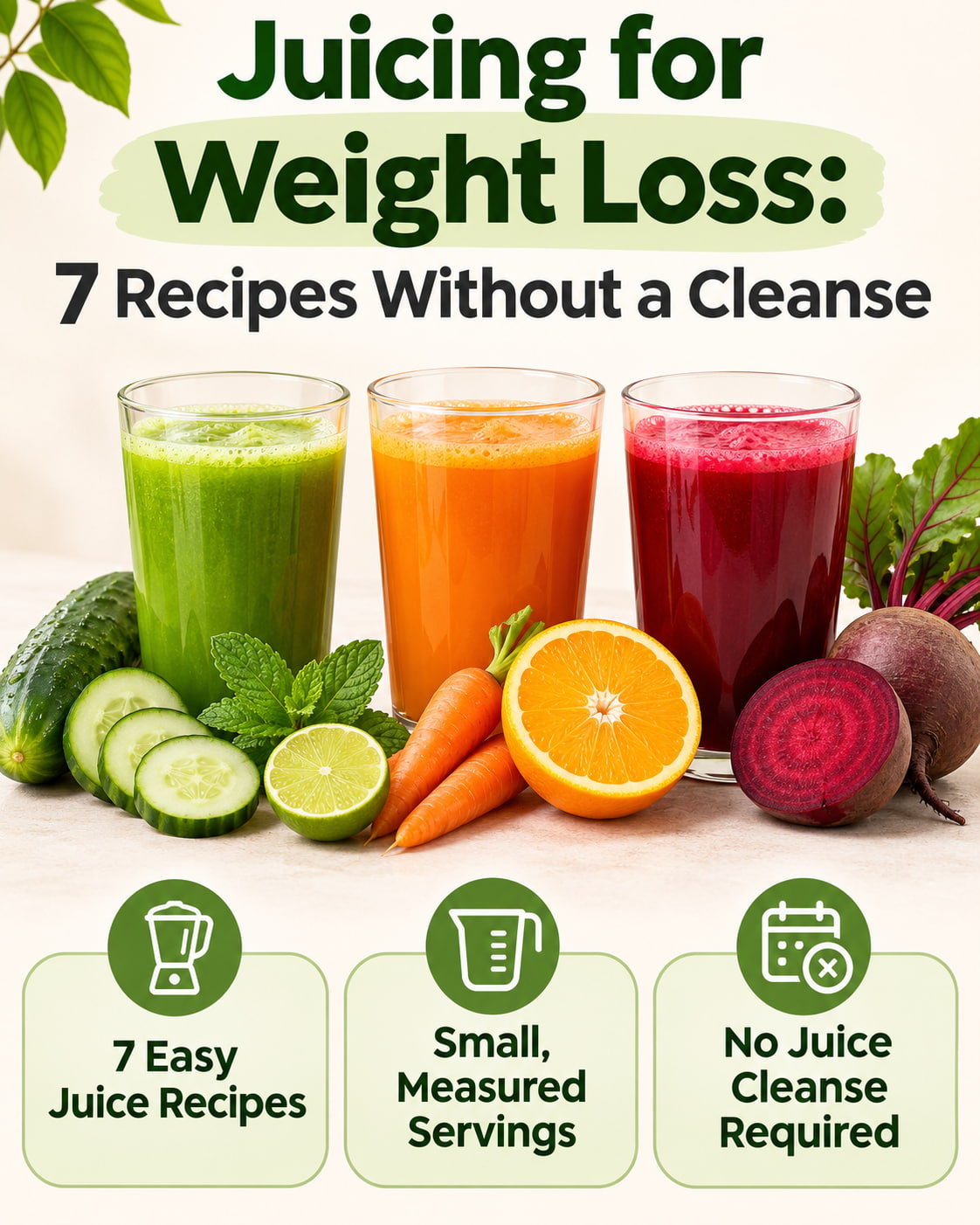
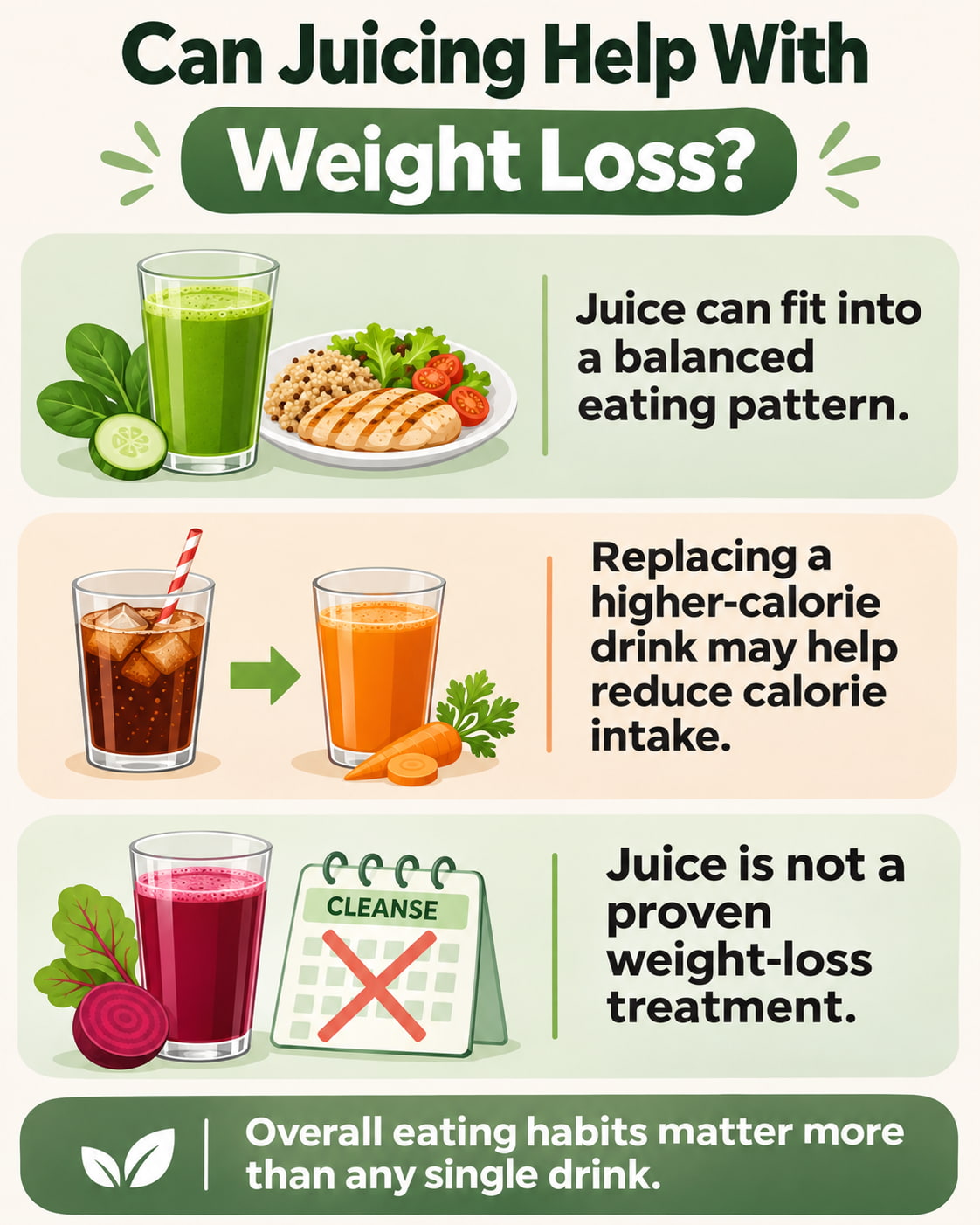
Juicing is not a proven weight-loss treatment, but a small serving can fit into a balanced eating pattern. Its usefulness depends partly on what it replaces: choosing a genuinely lower-calorie serving instead of a higher-calorie drink can reduce calorie intake. Adding juice to an otherwise unchanged diet does not create that same benefit. Research does not establish a special slimming effect from juice itself.
The seven recipes below offer different flavors without a juice-only diet, meal skipping, or a seven-day schedule. Think of them as optional drinks to enjoy with food—not formulas that burn fat.
Can Juicing Help With Weight Loss?
The evidence is more limited than many juicing claims suggest. A 2024 systematic review in JAMA Pediatrics included 19 adult randomized trials with 733 participants. Overall, drinking 100% fruit juice did not produce a statistically significant change in body weight compared with the control conditions. The trials were generally short, with a median duration of six weeks.
Some small vegetable-juice studies have reported benefits in particular settings. For example, a 2010 trial involving adults with metabolic syndrome found a preliminary weight-loss benefit when researchers combined the vegetable-juice groups. Participants also received calorie-restricted dietary counseling. Those findings do not establish that any homemade vegetable juice will produce lasting weight loss.
A cleanse is not a better-supported approach. The National Center for Complementary and Integrative Health’s review of detoxes and cleanses describes limited, low-quality research. Initial weight loss during highly restrictive programs can result from eating fewer calories, and weight may return when usual eating resumes.
The practical approach is less dramatic: keep regular meals, consider your overall food and drink intake, and choose habits you can maintain. That is consistent with NIDDK’s guidance on sustainable weight management.
What About Fiber and Fullness?
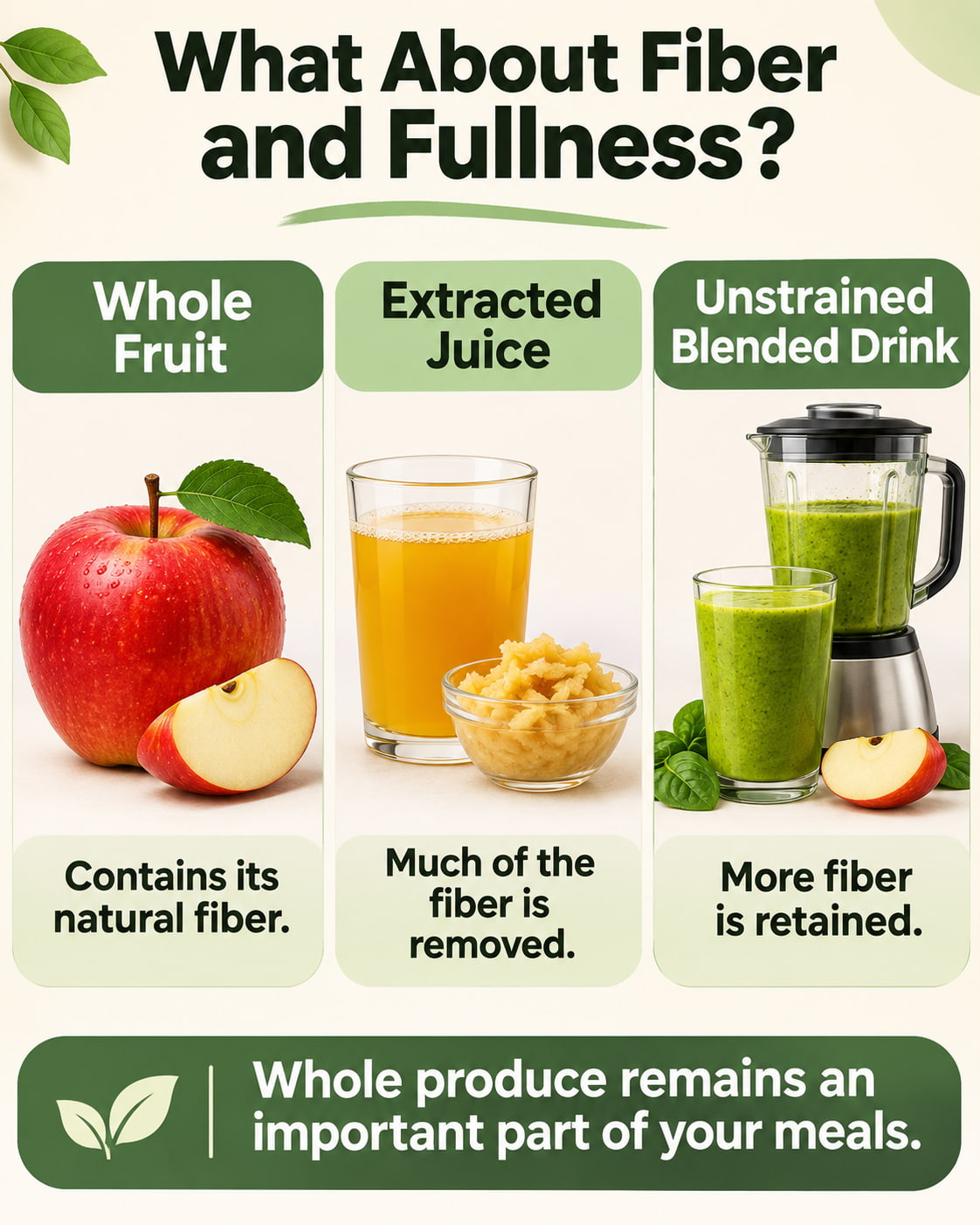
A juicer separates liquid from much of the pulp, removing much of the produce’s fiber. Blending the edible parts without straining retains more fiber, as Mayo Clinic explains in its juicing guidance. An extracted green juice is therefore not nutritionally interchangeable with the vegetables used to make it.
Food form can also affect fullness. In a controlled study of 58 adults published in Appetite, whole apple was more filling than apple juice and led to lower total calorie intake at the test meal. That was a short-term meal study—not proof of long-term weight loss—but it helps explain why juice should not replace all your whole fruit and vegetables.
Before You Start: Portions and Preparation
Use a Small, Measured Serving
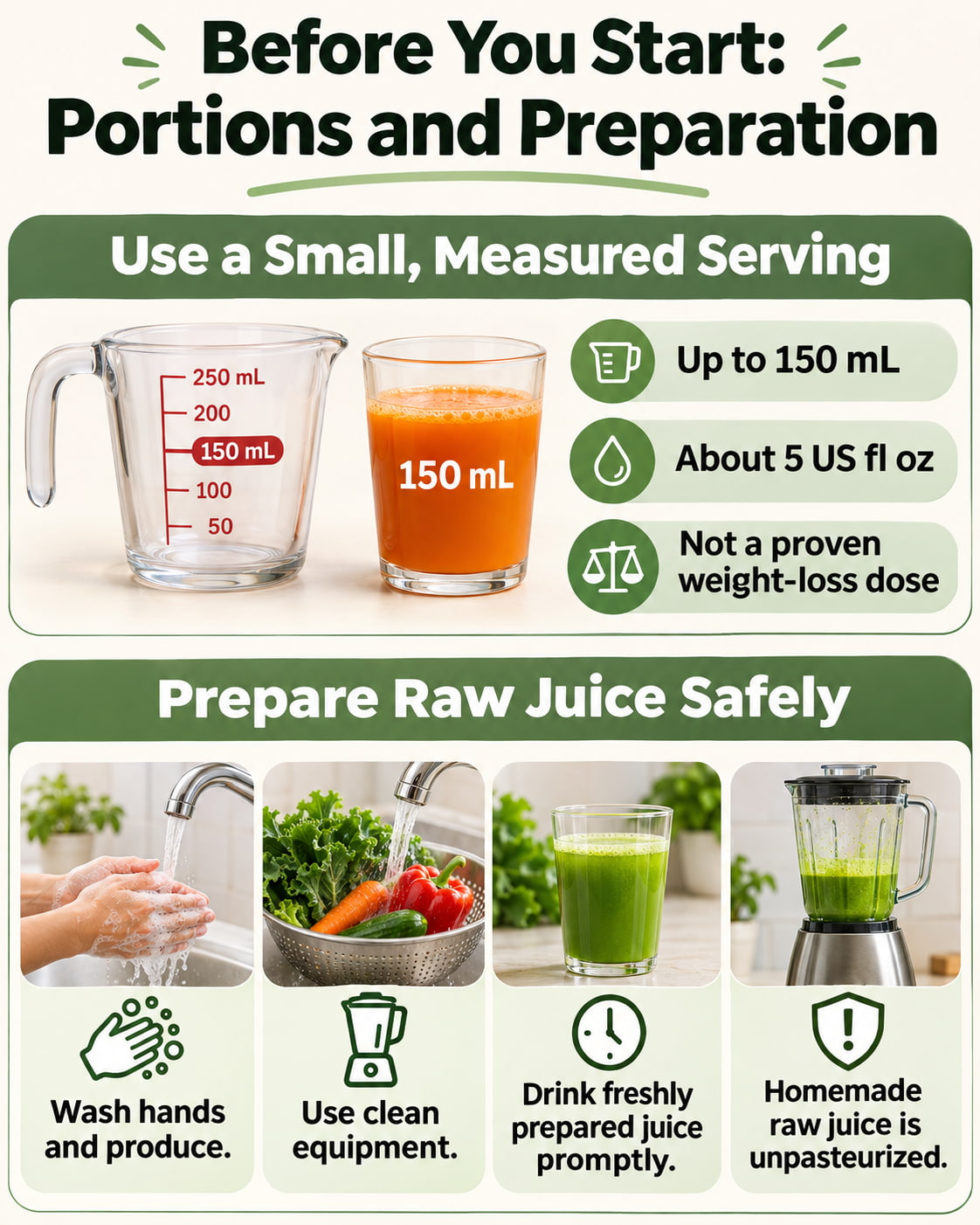
For these recipes, use up to 150 mL—about 5 US fluid ounces—of extracted juice per serving.
This is a practical small-serving reference, not a proven weight-loss dose. The UK NHS recommends limiting fruit juice, vegetable juice, and smoothies to a combined 150 mL a day. It also recommends drinking them with meals rather than between meals to reduce tooth-decay risk. This is UK guidance, not a universal prescription, and there is no requirement to drink juice daily.
Prepare Raw Juice Safely
These recipes make unpasteurized juice. Pregnant people, older adults, children, and people with diabetes or weakened immune systems are at greater risk of serious illness from untreated juice. Choose pasteurized or otherwise appropriately treated juice instead, following the FDA’s juice-safety guidance.
Before preparing any recipe, wash your hands with soap and water for at least 20 seconds. Rinse produce under running water before cutting or peeling, scrub firm produce such as cucumbers, and remove damaged areas. Discard rotten produce. Do not wash fruits or vegetables with soap or detergent. Washing reduces contamination but does not make raw juice equivalent to pasteurized juice.
Use clean equipment and make only enough for immediate consumption rather than preparing several days of raw juice at once. Mayo Clinic advises making only as much fresh juice as you can drink at one time.
Using a Juicer
Cut the prepared produce to fit the feed chute and follow your machine’s instructions, especially for hard vegetables, soft fruit, and leafy greens. Feed ingredients gradually using the supplied pusher. Stir the finished juice before measuring a serving.
The lemon and lime juice in these recipes is squeezed separately and stirred in afterward.
Using a Blender
A blender can make a version of each recipe without a separate juicer.
Chop the produce finely; grate firm carrot or beet pieces when necessary for your machine. Add the ingredients to a blender suitable for raw vegetables with about ¼ cup water, or 60 mL. Blend until smooth, adding more water a tablespoon at a time as needed.
For a juice-like texture, strain through a clean fine-mesh sieve. For a thicker drink, leave it unstrained. Keeping the pulp retains more fiber; straining removes some of that advantage. The unstrained version is a blended drink, not the same product as extracted juice.
7 Juice Recipes Without a Cleanse
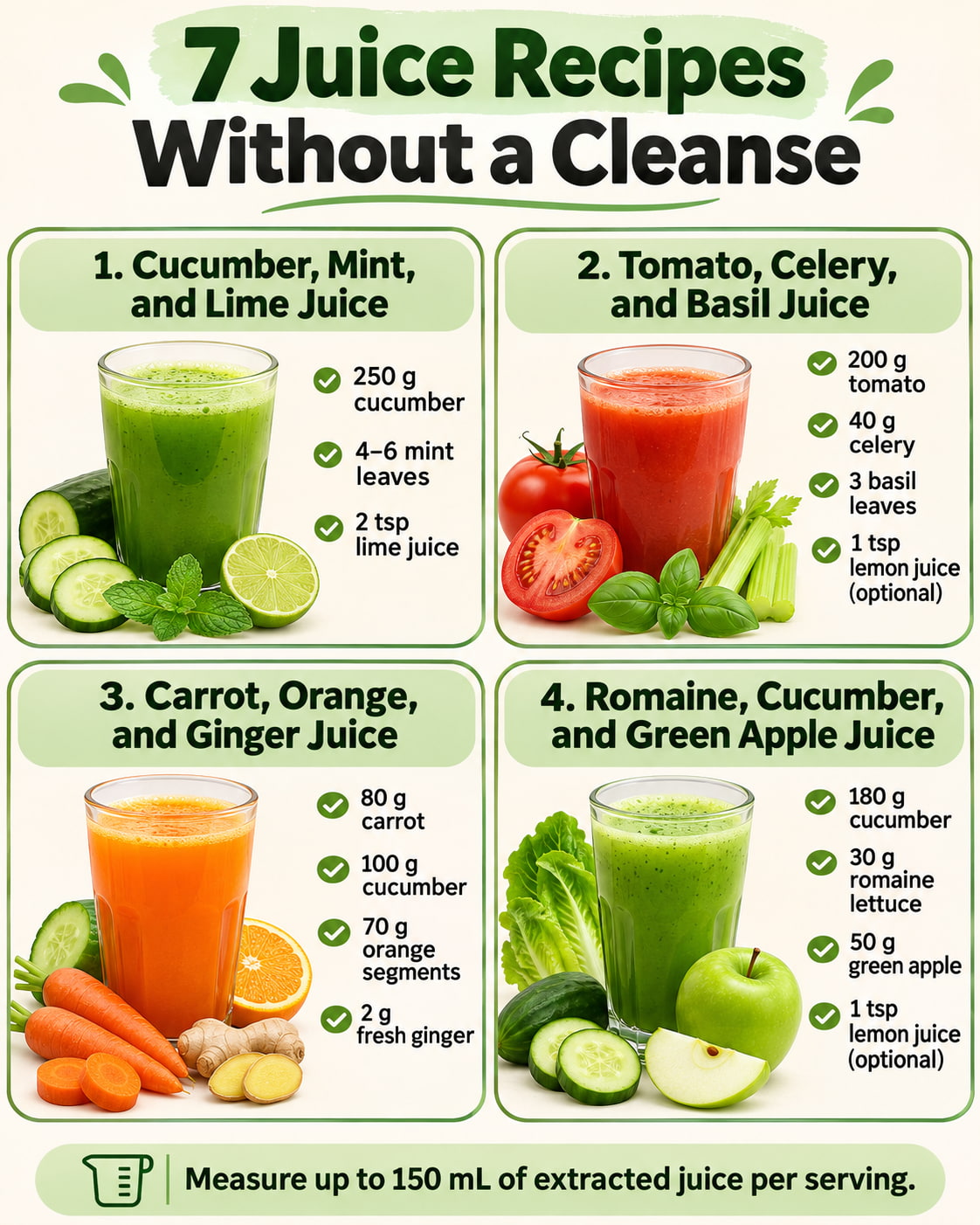
These are original recipe suggestions, not clinically tested weight-loss formulas. Each ingredient list makes a small batch, with an estimated juicer yield of roughly 150–225 mL, or about 5–7½ US fluid ounces. Actual yield depends on the produce and machine.
Measure out up to 150 mL of extracted juice and share any extra. A smaller yield is fine; add a little water for a milder drink rather than increasing the fruit automatically. Blender versions will generally make a larger batch because of the added water and, when unstrained, retained pulp.
Ingredient weights refer to the edible portions after removing any listed peel, core, stems, or seeds.
1. Cucumber, Mint, and Lime Juice
A crisp, tart combination for days when you would rather have an herbal drink than a sweet one.
Ingredients
- 250 g cucumber, about 9 oz, with the ends trimmed
- 4–6 fresh mint leaves
- 2 teaspoons fresh lime juice, 10 mL
Method: Cut the cucumber to fit your juicer. Juice it with the mint, alternating the leaves with cucumber pieces if your machine handles herbs. Stir in the lime juice, then measure your serving.
For a stronger mint flavor, gently crush an additional washed leaf in the glass. For a less tart drink, begin with 1 teaspoon of lime juice and adjust to taste.
2. Tomato, Celery, and Basil Juice
This savory option is designed without added salt.
Ingredients
- 200 g ripe tomato, about 7 oz, with the stem removed
- 40 g celery, about 1½ oz, trimmed
- 3 fresh basil leaves
- 1 teaspoon fresh lemon juice, 5 mL, optional
Method: Cut the tomato and celery into pieces suitable for your machine. Juice them with the basil, then stir in the optional lemon juice. Mix well before pouring a serving.
For the blender version, start with less water because the tomato may provide enough liquid to help the blades turn. Follow your blender’s minimum-liquid requirements.
3. Carrot, Orange, and Ginger Juice
Carrot and orange provide a sweeter flavor, while a small amount of ginger adds warmth.
Ingredients
- 80 g carrot, about 3 oz, trimmed
- 100 g cucumber, about 3½ oz, trimmed
- 70 g orange segments, about 2½ oz, with peel and seeds removed
- One thin slice of fresh ginger, about 2 g
Method: Cut the carrot, cucumber, and ginger to fit your juicer. Process them with the peeled orange segments, following your machine’s instructions for citrus. Stir and measure a serving.
For a blender, finely chop or grate the carrot and ginger first. Begin with the small ginger amount listed; add more only after tasting.
4. Romaine, Cucumber, and Green Apple Juice
A green combination with a measured amount of apple for tart sweetness.
Ingredients
- 180 g cucumber, about 6½ oz, trimmed
- 30 g romaine lettuce, about 1 oz
- 50 g green apple, about 1¾ oz, with the core and seeds removed
- 1 teaspoon fresh lemon juice, 5 mL, optional
Method: Separate and wash the romaine leaves. Cut the cucumber and apple into suitable pieces, then juice them with the romaine, alternating leafy and firmer ingredients. Stir in the optional lemon juice.
For the blender version, chop the romaine and blend it with the other ingredients and enough water for the blades to move freely.
5. Red Pepper, Tomato, and Lemon Juice
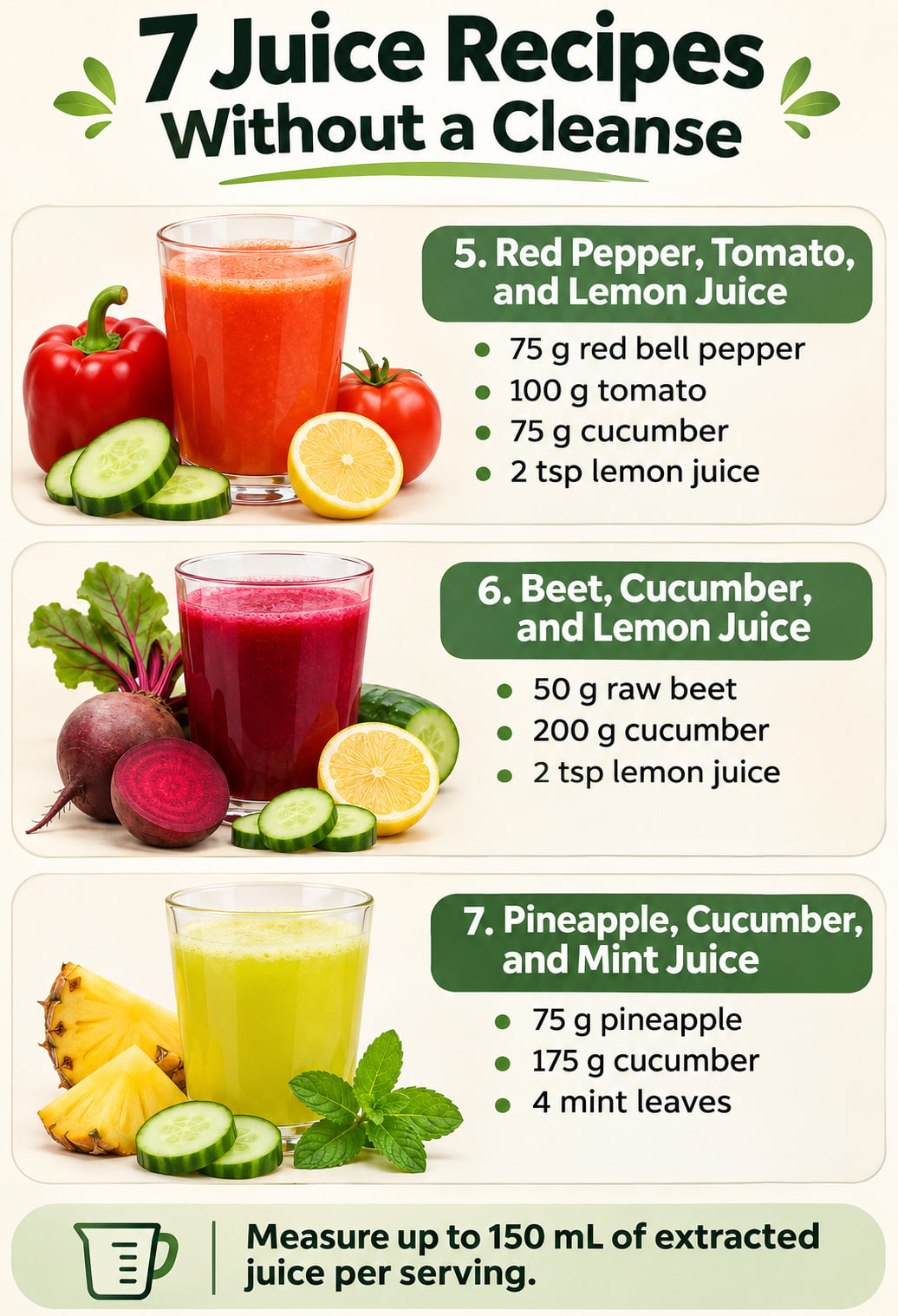
This combination offers a savory alternative to apple- or orange-based drinks.
Ingredients
- 75 g red bell pepper, about 2½ oz, with the stem and seeds removed
- 100 g ripe tomato, about 3½ oz, with the stem removed
- 75 g cucumber, about 2½ oz, trimmed
- 2 teaspoons fresh lemon juice, 10 mL
Method: Cut the pepper, tomato, and cucumber to fit your juicer. Process them, stir in the lemon juice, and mix before measuring a serving.
For a less sharp flavor, start with 1 teaspoon of lemon juice. A basil leaf can be added for a variation.
6. Beet, Cucumber, and Lemon Juice
A small amount of beet gives this drink an earthy flavor without making beet the entire base.
Ingredients
- 50 g raw beet, about 1¾ oz, scrubbed, trimmed, and peeled
- 200 g cucumber, about 7 oz, trimmed
- 2 teaspoons fresh lemon juice, 10 mL
Method: Cut the beet into pieces your juicer can handle. Juice it with the cucumber, then stir in the lemon juice. Mix thoroughly before measuring a serving.
For a blender, grate the beet first and use a machine suitable for raw root vegetables. See the kidney-stone guidance below before making beet juice a regular habit if you have been advised to limit oxalate.
7. Pineapple, Cucumber, and Mint Juice
A fruit-forward option with a modest pineapple portion rather than a full glass of pineapple juice.
Ingredients
- 75 g pineapple flesh, about 2½ oz, with the skin and tough core removed
- 175 g cucumber, about 6 oz, trimmed
- 4 fresh mint leaves
Method: Cut the pineapple and cucumber to fit your machine. Juice them with the mint, alternating the softer pineapple with cucumber pieces. Stir and measure a serving.
For a lighter-tasting drink, add still or sparkling water to the measured juice after preparation.
How to Fit Juice Into Balanced Meals
The most useful question is not “Which juice burns the most fat?” It is “What role will this drink play in my usual eating pattern?”
A small juice served with eggs or tofu and whole-grain toast is different from drinking juice instead of breakfast. These fruit-and-vegetable drinks are not nutritionally complete meal replacements. Keep a variety of foods in your meals, including protein foods, whole grains, and whole produce, as described in NIDDK’s healthy eating guidance.
When comparing drinks, consider the actual serving size and calories—not just whether a drink is homemade or labeled “natural.” A smaller juice may replace a higher-calorie beverage, but that is not guaranteed for every recipe or portion. Water and unsweetened tea are simpler choices when the goal is to avoid beverage calories. The CDC’s guidance on rethinking drinks also suggests adding a splash of juice to plain sparkling water.
Adding water changes the concentration, not the total sugar or calories in the juice you started with. Drinking 150 mL of juice mixed with water still means consuming that original 150 mL of juice.
There is no need to work through all seven recipes or drink one every day. Choose a combination you enjoy, keep the serving intentional, and leave room for the foods that make up your regular meals.
Who Should Check Before Making Juicing a Habit?
Beyond the raw-juice safety concerns above, a few conditions call for individual guidance.
Diabetes: “No added sugar” does not mean carbohydrate-free. Juice carbohydrates can raise blood glucose, and the amount needs to fit your eating plan. NIDDK’s diabetes guidance recommends considering total carbohydrates when planning meals. Use pasteurized juice, and ask your diabetes care team about portions rather than assuming a green drink will have little effect.
Kidney disease: Some people need limits on potassium or fluids. The National Kidney Foundation’s juicing guidance recommends discussing recipes with a kidney clinician or dietitian because suitable ingredients and quantities depend on individual needs.
A history of calcium oxalate kidney stones: Beets and some leafy vegetables can contribute substantial oxalate. Check whether these ingredients fit your plan before using them regularly in juice. Advice depends on the type of stone, as NIDDK’s kidney-stone nutrition guidance explains.
Warfarin use: A sudden increase in leafy-green drinks can change vitamin K intake. The NIH Office of Dietary Supplements advises maintaining a consistent vitamin K intake while taking warfarin. The goal is consistency—not automatically avoiding all greens.
The Takeaway
Juicing for weight loss does not require a cleanse—and juice itself is not a reliable weight-loss strategy. Enjoy a small serving because you like it, not because you expect it to burn fat. Keep whole produce and balanced meals in place, and judge any drink substitution by how it fits your overall eating pattern.
This content is for informational purposes only and not medical advice.