
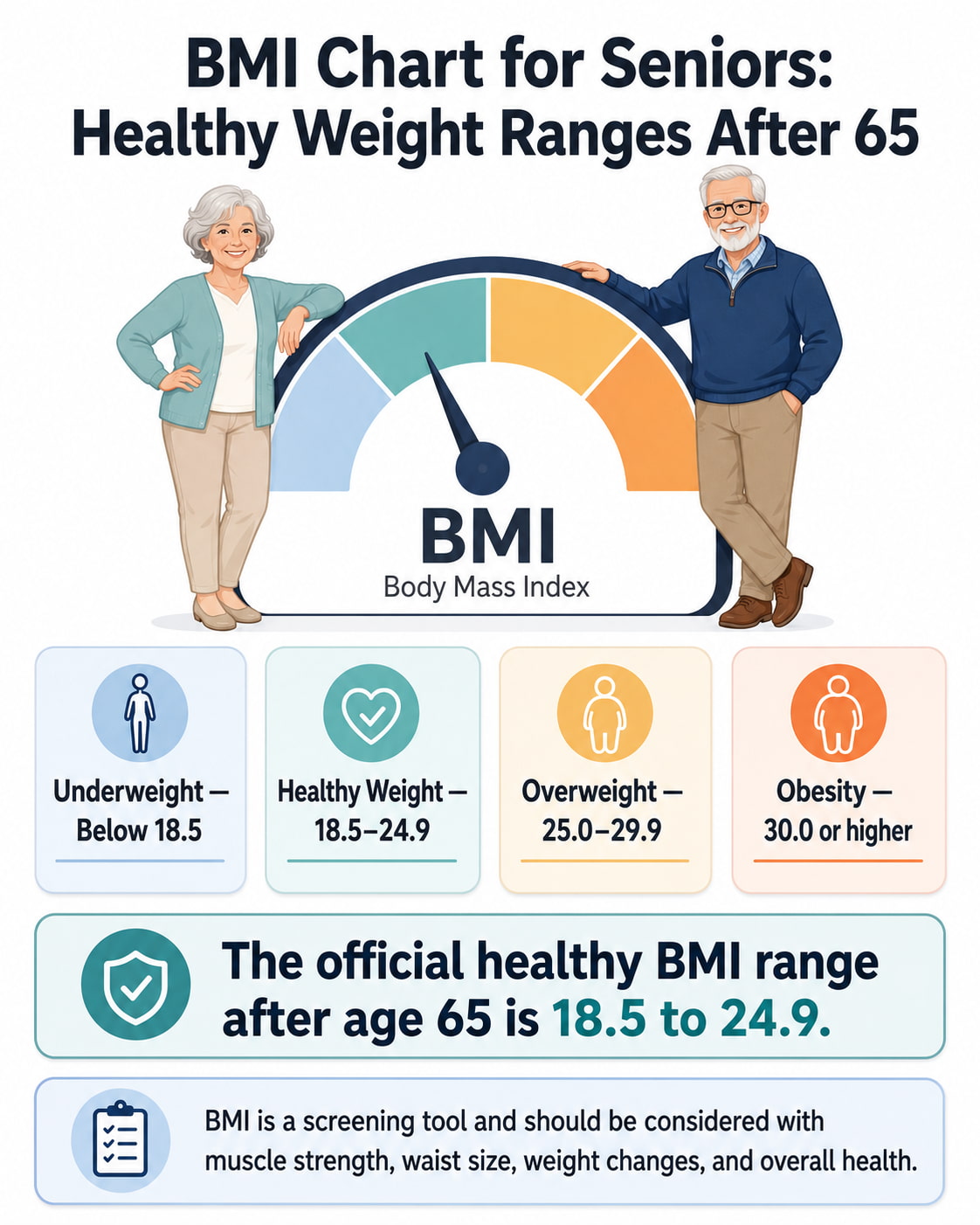
For adults age 65 and older, the official healthy BMI range is 18.5 to 24.9—the same range used for all adults age 20 and older. However, BMI should be interpreted carefully in seniors because it does not measure muscle mass, strength, abdominal fat, nutrition status, or recent weight changes.
A BMI chart for seniors can provide a useful starting point, but it cannot determine whether a specific weight is healthy for you. After 65, maintaining muscle, mobility, adequate nutrition, and a stable weight may be more important than reaching one exact BMI number.
BMI Chart for Seniors Over 65
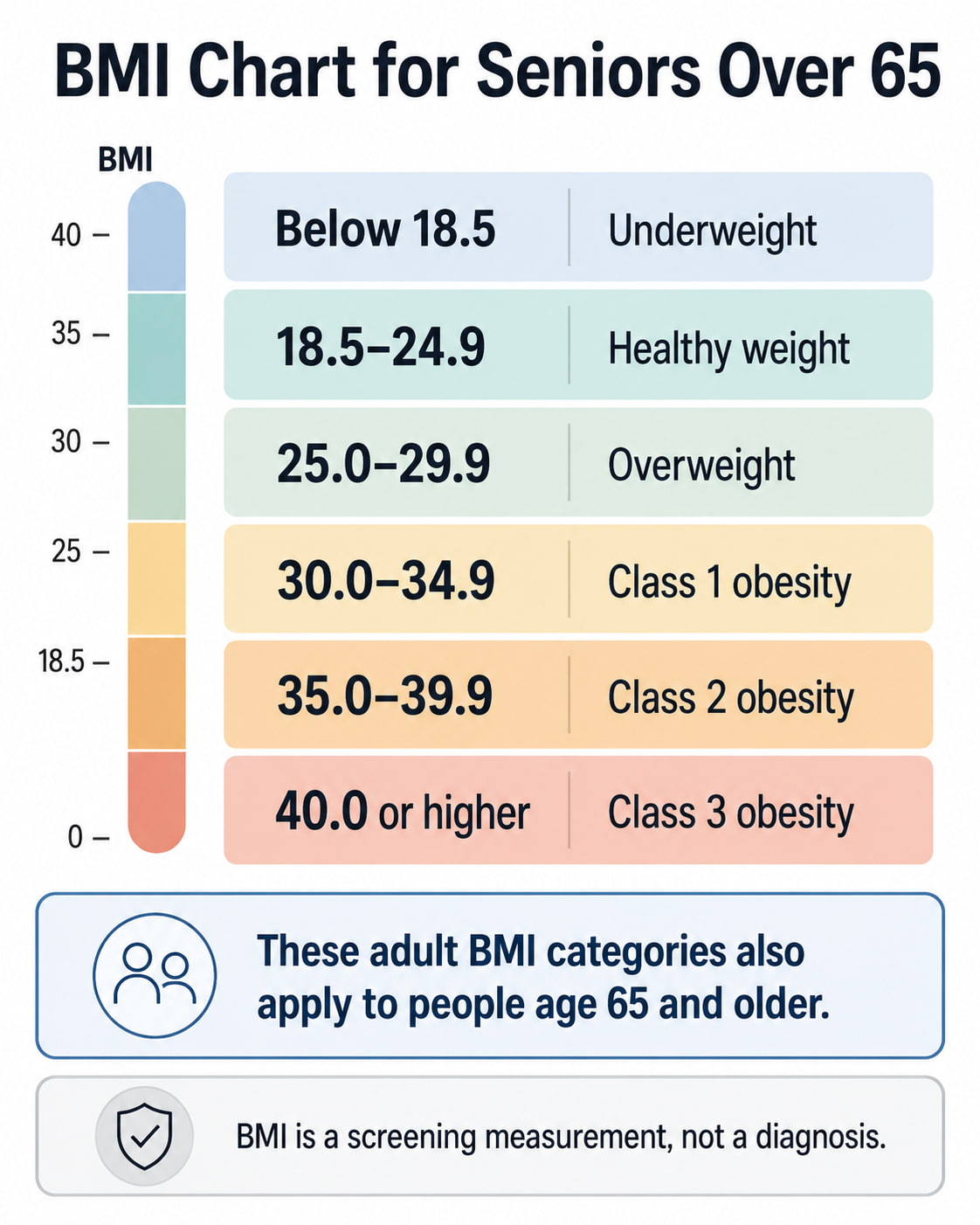
The Centers for Disease Control and Prevention’s adult BMI categories apply to adults of all ages, including people over 65.
| BMI | Weight category |
|---|---|
| Below 18.5 | Underweight |
| 18.5–24.9 | Healthy weight |
| 25.0–29.9 | Overweight |
| 30.0–34.9 | Class 1 obesity |
| 35.0–39.9 | Class 2 obesity |
| 40.0 or higher | Class 3 obesity, also called severe obesity |
BMI is a screening measurement, not a diagnosis. A healthcare professional may interpret it alongside your medical history, blood pressure, laboratory results, waist size, activity level, muscle strength, and changes in weight or appetite.
Healthy Weight Chart for Seniors by Height
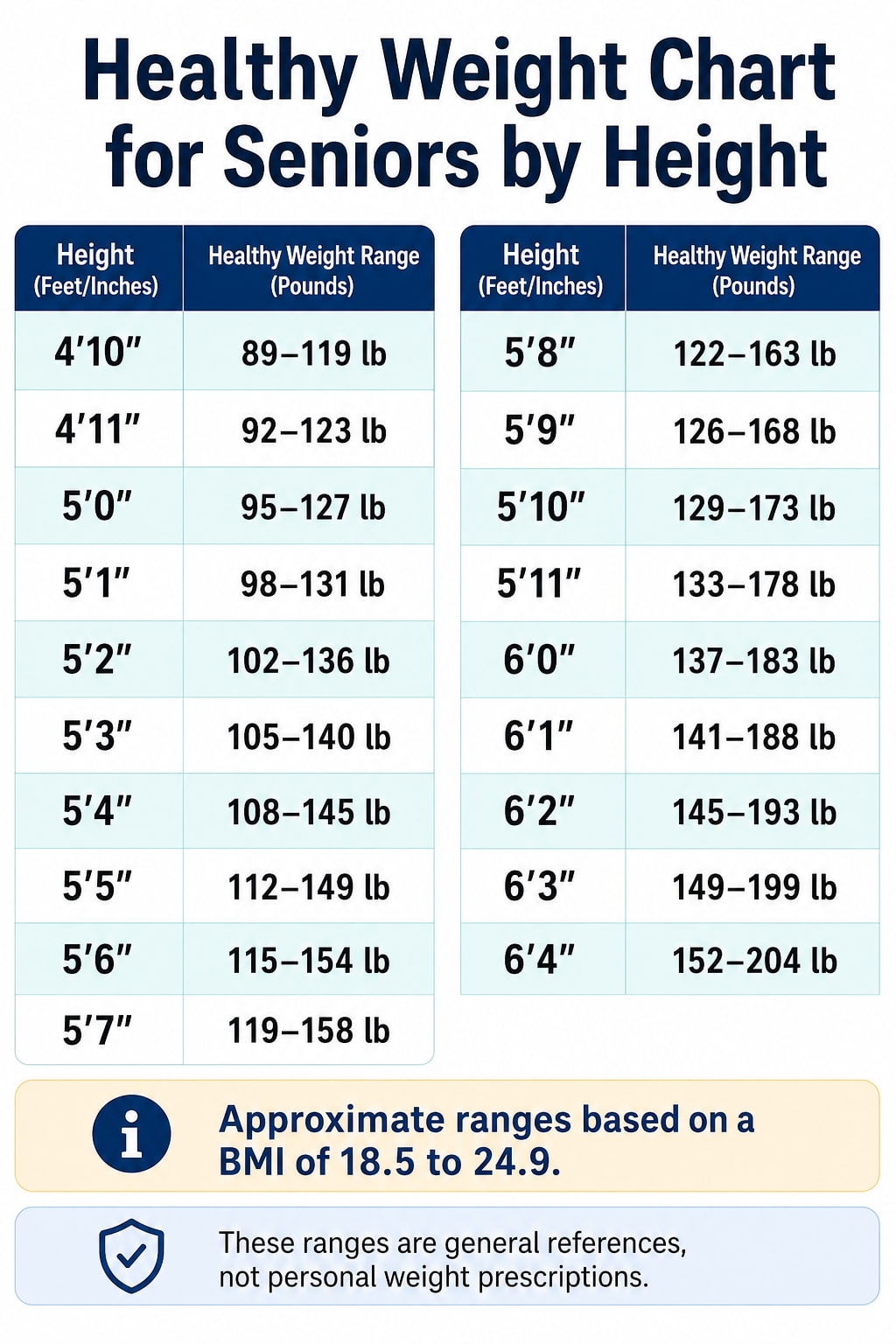
The following chart shows the approximate body-weight range associated with a BMI of 18.5 to 24.9.
| Height | Approximate healthy-weight range |
|---|---|
| 4′10″ | 89–119 lb |
| 4′11″ | 92–123 lb |
| 5′0″ | 95–127 lb |
| 5′1″ | 98–131 lb |
| 5′2″ | 102–136 lb |
| 5′3″ | 105–140 lb |
| 5′4″ | 108–145 lb |
| 5′5″ | 112–149 lb |
| 5′6″ | 115–154 lb |
| 5′7″ | 119–158 lb |
| 5′8″ | 122–163 lb |
| 5′9″ | 126–168 lb |
| 5′10″ | 129–173 lb |
| 5′11″ | 133–178 lb |
| 6′0″ | 137–183 lb |
| 6′1″ | 141–188 lb |
| 6′2″ | 145–193 lb |
| 6′3″ | 149–199 lb |
| 6′4″ | 152–204 lb |
These figures are approximate and should not be treated as personal weight targets. Two seniors of the same height and weight can have very different amounts of muscle, body fat, bone mass, and abdominal fat.
A person may also be healthy outside this range, depending on overall health and body composition. Conversely, being inside the range does not automatically mean that nutrition, muscle mass, or metabolic health is optimal.
How to Calculate BMI After Age 65
BMI is calculated from your height and weight.
For measurements in pounds and inches:
- BMI = weight in pounds ÷ height in inches² × 703
For example, a person who weighs 160 pounds and is 5 feet 7 inches tall would calculate BMI as follows:
- 160 ÷ 67² × 703 = 25.1
A BMI of 25.1 falls within the official overweight category.
You can also use the CDC adult BMI calculator. The calculation does not change according to age or sex.
Is There a Different Healthy BMI for Seniors?
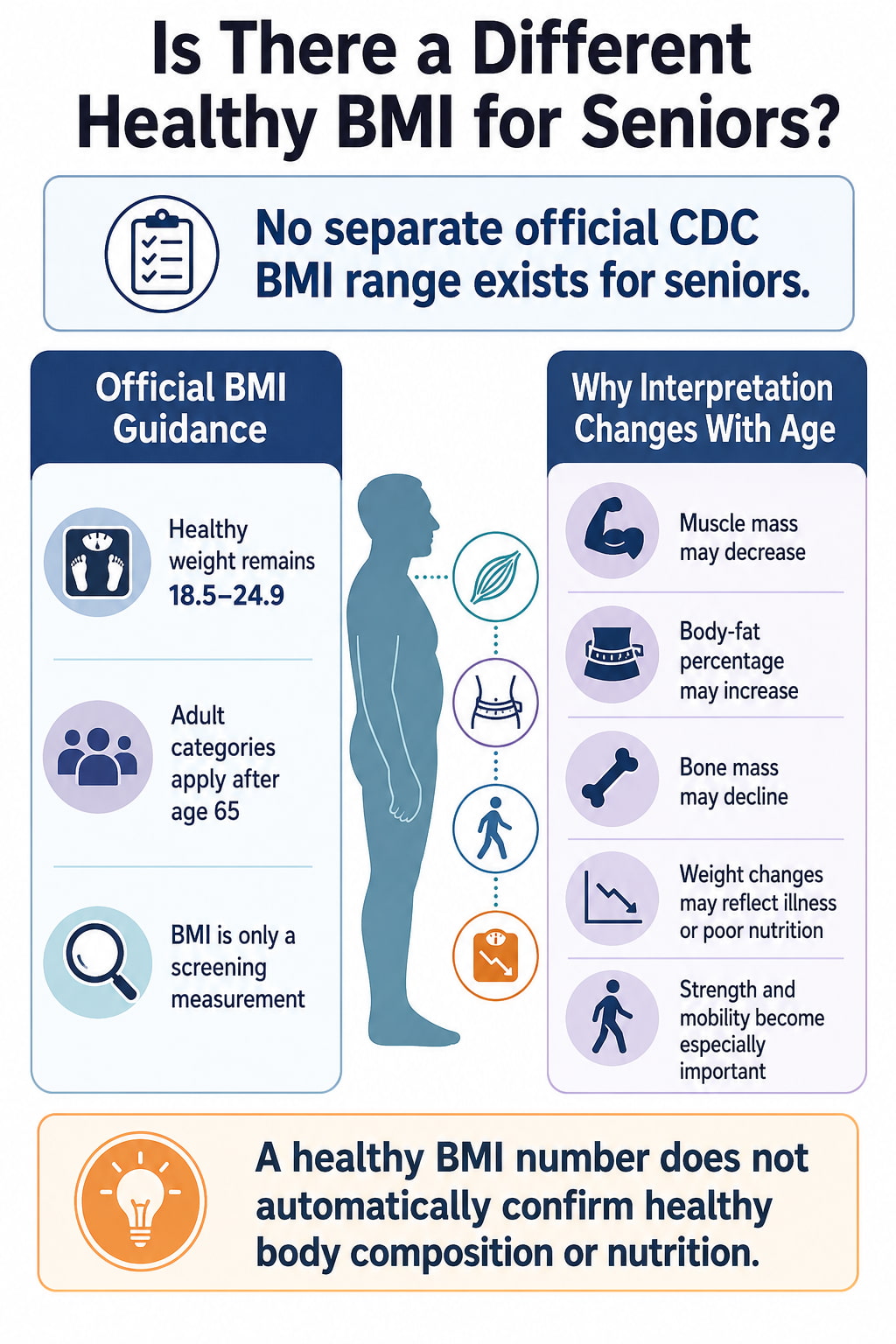
There is no separate official CDC BMI range specifically for seniors. The healthy-weight category remains 18.5 to 24.9.
However, the relationship between BMI and health can change with age. Older adults commonly lose muscle and bone mass while gaining a higher proportion of body fat. As a result, an older and younger person with the same BMI may have different body compositions.
The CDC notes that BMI cannot distinguish fat from muscle or bone and cannot show where body fat is stored. Older adults also tend to have more body fat than younger adults at the same BMI.
For this reason, clinicians may place more emphasis on:
- Whether your weight is stable
- Whether you are losing muscle or strength
- Your ability to walk and perform daily activities
- Your waist circumference
- Your appetite and food intake
- Blood pressure, blood glucose, and cholesterol
- Chronic medical conditions and medications
Is a BMI of 25 to 29.9 Healthy After 65?
A BMI between 25.0 and 29.9 is officially classified as overweight, including after age 65. However, research suggests that the relationship between BMI and mortality may be different in older populations.
A meta-analysis of nearly 198,000 community-living adults age 65 and older found a U-shaped association between BMI and mortality. The lowest mortality rates were observed across a broad BMI range of approximately 24 to 30.9, while risk increased more clearly at lower and substantially higher BMIs.
This finding does not prove that a BMI of 25 to 30 is ideal for every senior. Observational studies can be affected by factors such as:
- Illness-related weight loss before death
- Smoking history
- Chronic disease
- Differences in fitness and muscle mass
- Changes in appetite and mobility
- The inability of BMI to measure body-fat distribution
A BMI of 27 may be reasonable for one healthy, active older adult but concerning for another person who has diabetes, limited mobility, excess abdominal fat, or breathing problems.
The practical message is not that seniors should intentionally gain weight. It is that BMI should be interpreted in context rather than used as the only measure of health.
When Is BMI Too Low for a Senior?
The official underweight category begins below a BMI of 18.5. However, a BMI above 18.5 may still deserve attention when an older adult is losing weight, eating poorly, becoming weaker, or recovering from illness.
Some clinical nutrition guidelines use a BMI below 22 in adults older than 70 as one possible sign that a more detailed malnutrition assessment may be appropriate. This is not a replacement for the CDC categories and does not mean everyone over 70 with a BMI below 22 is malnourished. A diagnosis also considers weight loss, muscle mass, reduced food intake, inflammation, and underlying illness.
Signs that a low or falling BMI may need evaluation include:
- Clothes becoming noticeably looser
- Reduced appetite
- Difficulty chewing or swallowing
- Weakness or increasing fatigue
- Loss of muscle in the arms or legs
- Repeated falls
- Difficulty shopping for or preparing food
- Diarrhea, nausea, or digestive symptoms
- Depression, isolation, or memory difficulties
- Recent surgery, hospitalization, or serious illness
A low BMI is especially concerning when it represents a recent change rather than a person’s normal lifelong build.
Unintentional Weight Loss After 65
Unexpected weight loss can be important even when BMI remains within the healthy range.
According to MedlinePlus guidance on unintentional weight loss, losing more than 10 pounds or approximately 5% of your usual body weight within 6 to 12 months without trying is a reason to contact a healthcare professional.
Examples of a 5% weight loss include:
| Usual weight | 5% weight loss |
|---|---|
| 120 lb | 6 lb |
| 140 lb | 7 lb |
| 160 lb | 8 lb |
| 180 lb | 9 lb |
| 200 lb | 10 lb |
Possible causes range from medication side effects and dental problems to digestive disorders, depression, thyroid conditions, cancer, infection, or reduced ability to obtain and prepare food. The cause cannot be identified from BMI alone.
Seek prompt medical advice when unexplained weight loss occurs with symptoms such as persistent pain, difficulty swallowing, vomiting, blood in the stool, shortness of breath, fever, severe weakness, or a major change in bowel habits.
Why BMI Can Be Misleading for Seniors
BMI does not measure muscle
A person can lose muscle and gain fat without a major change in body weight. BMI may remain “normal” even as strength and mobility decline.
This matters because muscle supports balance, walking, stair climbing, recovery from illness, and the ability to live independently.
BMI does not show where fat is stored
Fat stored around the abdomen may be more closely associated with cardiometabolic risk than fat stored elsewhere. BMI cannot identify abdominal or visceral fat.
BMI may underestimate body fat
Age-related muscle and bone loss can reduce body weight. An older adult may therefore have a relatively high body-fat percentage without reaching the obesity BMI category.
BMI may overestimate risk in muscular adults
A physically active senior with substantial muscle may have a BMI above 25 without having the same level of body fat as a less active person at the same BMI.
These limitations do not make BMI useless. They mean it should be used as one part of a broader assessment. The CDC’s explanation of BMI limitations confirms that BMI cannot separate fat, muscle, and bone or identify body-fat location.
What to Measure Alongside BMI
Weight trend
Track whether your weight is generally stable. A gradual change may be expected, but rapid or unexplained changes deserve attention.
Weighing at the same time of day, under similar conditions, can make trends easier to interpret. Daily fluctuations may reflect hydration, meals, bowel movements, or clothing rather than a true change in body tissue.
Waist circumference
Waist circumference provides additional information about abdominal fat.
The National Heart, Lung, and Blood Institute states that a waist circumference above 35 inches for women or 40 inches for men is associated with greater risk for heart disease and type 2 diabetes. These general thresholds may not fit every person or population, but they can support a more complete assessment.
To measure your waist:
- Stand upright and relax your abdomen.
- Place a flexible tape around your middle just above the hipbones.
- Keep the tape level and snug without compressing the skin.
- Measure after breathing out normally.
Strength and physical function
Consider what your body can do, not only what it weighs.
Useful questions include:
- Can you rise from a chair without using your hands?
- Can you carry groceries safely?
- Can you climb stairs?
- Has your walking speed changed?
- Are daily activities becoming more difficult?
- Have you experienced repeated falls?
Reduced strength or mobility can be important even when BMI is within the standard healthy range.
Metabolic health
Blood pressure, blood glucose, A1C, cholesterol, triglycerides, liver health, sleep quality, and cardiovascular fitness may provide more useful information than BMI alone.
A person with a higher BMI and normal metabolic measurements may have different health needs from someone with the same BMI and uncontrolled blood pressure or diabetes.
BMI for Senior Women and Men
The official BMI categories are the same for senior women and men. There is no separate CDC BMI chart based on sex.
Body composition can still differ. Women generally carry a higher percentage of body fat, while men often carry more lean mass. Hormonal changes, activity level, medication use, chronic illness, and previous weight history can also affect how BMI relates to health.
For both women and men, the most useful interpretation considers:
- Weight history
- Waist measurement
- Muscle strength
- Physical activity
- Bone health
- Medical conditions
- Laboratory results
- Ability to perform daily activities
Should Seniors Try to Lose Weight?
Weight loss may support health for some older adults with obesity-related conditions. However, aggressive dieting can also cause muscle and bone loss, nutritional deficiencies, weakness, and reduced ability to recover from illness.
Before intentionally losing weight, speak with a healthcare professional when you:
- Are frail or underweight
- Have recently lost weight without trying
- Have kidney, heart, liver, or digestive disease
- Have diabetes or take glucose-lowering medication
- Have osteoporosis
- Have difficulty eating or swallowing
- Are recovering from surgery or hospitalization
- Need help maintaining muscle
When weight loss is appropriate, the plan should generally prioritize gradual progress, adequate nutrition, and resistance exercise rather than severe calorie restriction.
How to Maintain a Healthy Weight After 65
Include muscle-strengthening activity
The CDC’s physical activity recommendations for adults 65 and older include aerobic activity, muscle-strengthening exercise on at least two days per week, and regular balance activity. The exercises should be adapted to your abilities and health conditions.
Strength-building options may include:
- Sit-to-stand exercises
- Resistance bands
- Light dumbbells
- Weight machines
- Wall push-ups
- Step-ups
- Carrying appropriately sized household items
People with balance problems, pain, recent surgery, or significant medical conditions should ask a qualified professional how to begin safely.
Eat regular, nutrient-dense meals
Build meals around foods that provide protein, fiber, vitamins, minerals, and healthy fats.
Practical options include:
- Eggs, fish, poultry, beans, lentils, yogurt, or tofu
- Vegetables and fruit
- Whole grains
- Nuts, seeds, and nut butters
- Milk or fortified alternatives
- Olive oil, avocado, and other unsaturated fats
People with poor appetite may find smaller, more frequent meals easier than three large meals.
Address barriers to eating
Difficulty maintaining weight may result from dental problems, dry mouth, medication side effects, reduced taste or smell, limited income, loneliness, memory problems, or difficulty shopping and cooking.
These barriers should be addressed directly rather than assuming the person simply needs to “eat more.”
Monitor changes instead of chasing one number
Record your weight periodically and watch for a consistent upward or downward trend. Also note changes in appetite, strength, clothing fit, waist size, and daily function.
The goal after 65 is not always to reach the middle of the BMI chart. A more useful goal may be maintaining a stable weight, preserving muscle, moving comfortably, and managing existing health conditions.
When to Talk to a Healthcare Professional
Consider discussing your weight and BMI with a healthcare professional when:
- Your BMI is below 18.5
- Your BMI is 30 or higher and you have related health concerns
- You lose 5% of your weight without trying
- Your weight changes rapidly
- Your appetite has decreased
- You feel weaker or less steady
- You are struggling to eat enough
- You are considering a major weight-loss diet
- Your waist size is increasing despite stable weight
- You have swelling that may be affecting your weight
A clinician or registered dietitian can help determine whether your current weight supports your health, strength, nutrition, and quality of life.
Frequently Asked Questions
What is a healthy BMI for a 70-year-old?
The official healthy BMI range for a 70-year-old is 18.5 to 24.9. However, BMI should be considered with weight history, muscle strength, waist circumference, appetite, mobility, and medical conditions.
Is a BMI of 27 healthy for a senior?
A BMI of 27 is officially classified as overweight. It may still be compatible with good health in some active older adults, but it should not automatically be considered ideal. Abdominal fat, strength, blood pressure, glucose levels, and physical function provide additional context.
What BMI is too low for an older adult?
A BMI below 18.5 is officially underweight. In adults older than 70, a BMI below 22 may sometimes prompt a clinical nutrition assessment, especially when accompanied by weight loss, poor intake, illness, weakness, or reduced muscle mass.
Should seniors weigh more than younger adults?
There is no universal rule that seniors should weigh more. Some observational research has found lower mortality across an upper-normal to moderately overweight BMI range, but this does not prove that gaining weight improves health. Individual health and body composition matter more than age alone.
How much should a 65-year-old weigh?
A suitable weight depends on height, body composition, weight history, medical conditions, strength, and function. The height-and-weight chart above provides a general BMI-based range but cannot determine an ideal personal weight.
Is waist circumference more useful than BMI?
Waist circumference is not necessarily a replacement for BMI, but it provides information BMI cannot show—particularly the amount of fat carried around the abdomen. Using both measurements can provide a more complete picture.
Can a senior have a normal BMI and still be unhealthy?
Yes. A person may have a normal BMI while having low muscle mass, excess abdominal fat, poor nutrition, diabetes, high blood pressure, or limited mobility. BMI is only one screening measurement.
Conclusion
A BMI chart for seniors provides a useful starting point, and the official healthy range after 65 remains 18.5 to 24.9. However, the healthiest weight is not determined by BMI alone.
Pay attention to weight stability, muscle strength, mobility, waist circumference, appetite, and overall medical health. Contact a healthcare professional when weight changes unexpectedly, eating becomes difficult, or strength and daily function begin to decline.
Rather than pursuing one “perfect” BMI, focus on maintaining the nutrition, strength, and mobility needed to support an active and independent life.
This content is for informational purposes only and not medical advice.