
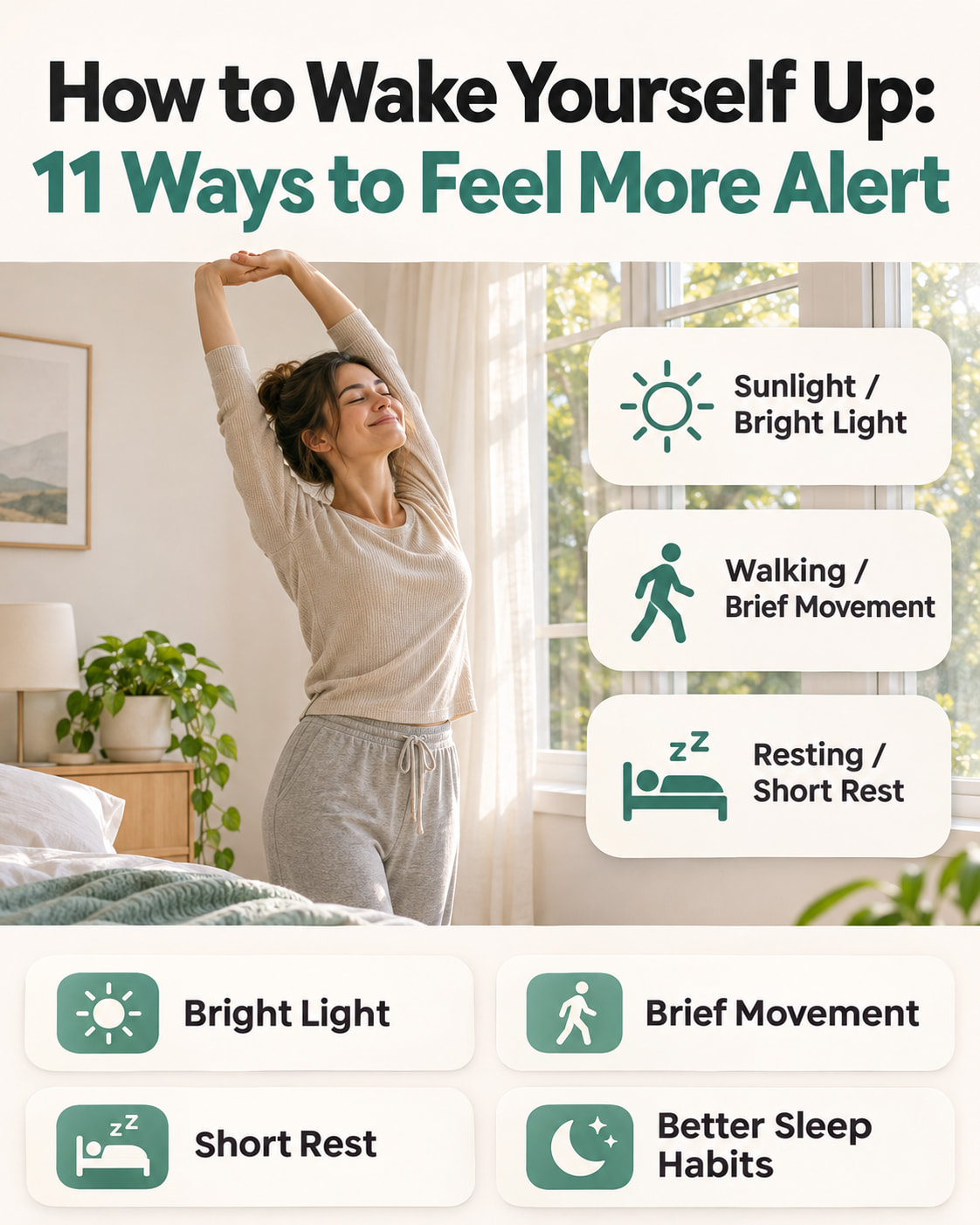
Brighter light, a short walk, a brief nap, or carefully timed caffeine may help you feel more alert temporarily. Knowing how to wake yourself up also means recognizing when your body needs more sleep.
The tips below can help with occasional morning grogginess or an afternoon slump. Some offer short-term support; others address habits that can leave you sleepy day after day.
If you feel sleepy while driving, pull over somewhere safe. Do not rely on wake-up tricks to keep driving.
Why Do You Feel Sleepy?
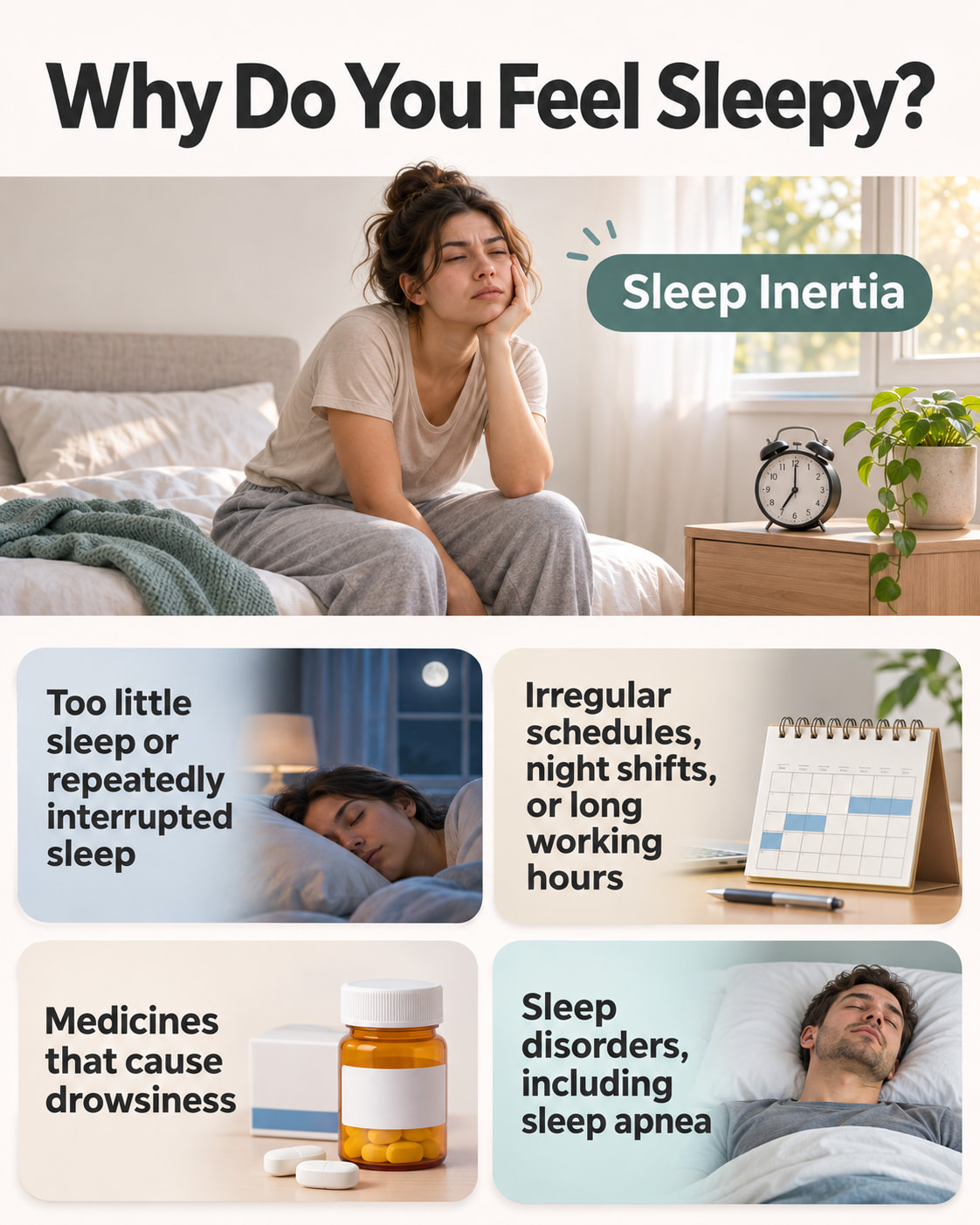
Grogginess just after waking is called sleep inertia. During this transition, your thinking and reactions may be slower. It can happen after nighttime sleep or a nap, and it may last longer when you have not slept enough.
Other contributors to daytime sleepiness include:
- Too little sleep or repeatedly interrupted sleep.
- Irregular schedules, night shifts, or long working hours.
- Medicines that cause drowsiness.
- Sleep disorders, including sleep apnea.
Sleepiness and fatigue also differ. Sleepiness means you feel likely to doze off. Fatigue is a sense of low energy or exhaustion, even when you do not feel able to sleep. That distinction matters when a problem keeps returning.
How to Wake Yourself Up: 11 Practical Ways
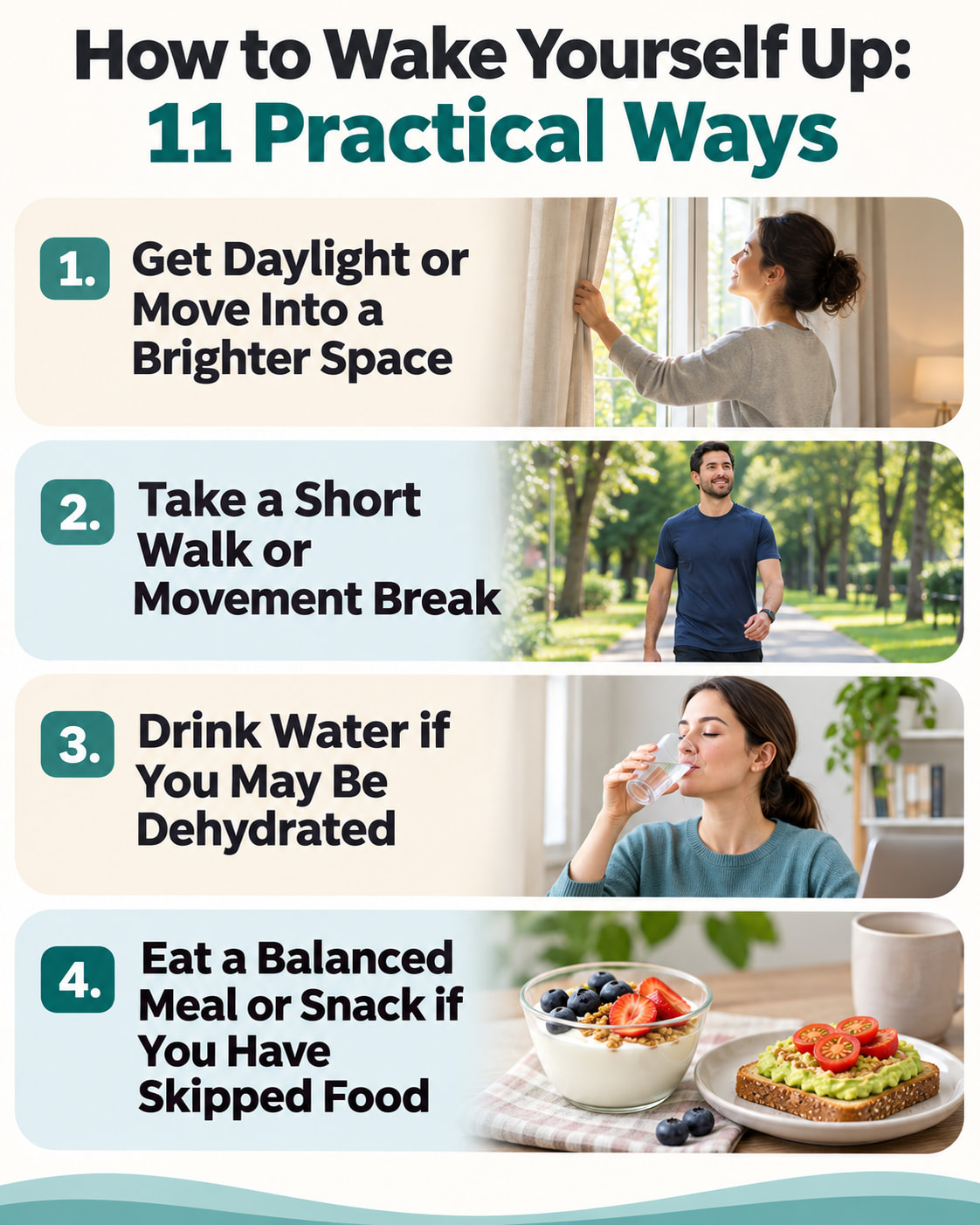
Start with an option that fits your situation. You do not need to try every tip, and the habits toward the end are intended to support alertness over time.
1. Get Daylight or Move Into a Brighter Space
Open your curtains, step outside during daylight, or move into a brighter room. Bright light can help increase alertness, including during an afternoon slump.
CDC/NIOSH guidance identifies brighter surroundings as a way to support wakefulness. You do not need to stare at the sun or a light source to benefit.
If you wake before sunrise, turn on suitable room lighting. When your next sleep period approaches, reduce bright light so your wake-up routine does not interfere with settling down.
2. Take a Short Walk or Movement Break
Try a brief walk around your home, office, or outside. Keep the pace comfortable; an exhausting workout is unnecessary.
Practical options include walking to refill your water, taking a short lap around the building, or moving gently after a long stretch of sitting. Choose movement that is comfortable for your abilities.
A brief walk may help you feel more energetic. However, feeling better after moving does not prove that your attention or reaction time has fully recovered from sleep loss.
3. Drink Water if You May Be Dehydrated
If you have had little to drink or have been sweating, have some water. Mild dehydration can contribute to tiredness, so replacing fluids may help when that is part of the problem.
Keep water within reach if you regularly forget to drink during work. You do not need to force a large amount at once.
Extra water is unlikely to solve sleepiness caused by a short night. Match this tip to your actual fluid needs.
4. Eat a Balanced Meal or Snack if You Have Skipped Food
If you are hungry or have missed a meal, make time to eat. Regular meals can help maintain energy through the day.
Simple choices include:
- Plain yogurt with fruit.
- An egg with whole-grain toast.
- Hummus with vegetables and whole-grain crackers.
Choose a portion that leaves you comfortable. Avoid assuming an afternoon slump means your blood sugar is low or that you need to cut out carbohydrates. Sleepiness after lunch can also reflect your body’s daily sleep–wake rhythm.
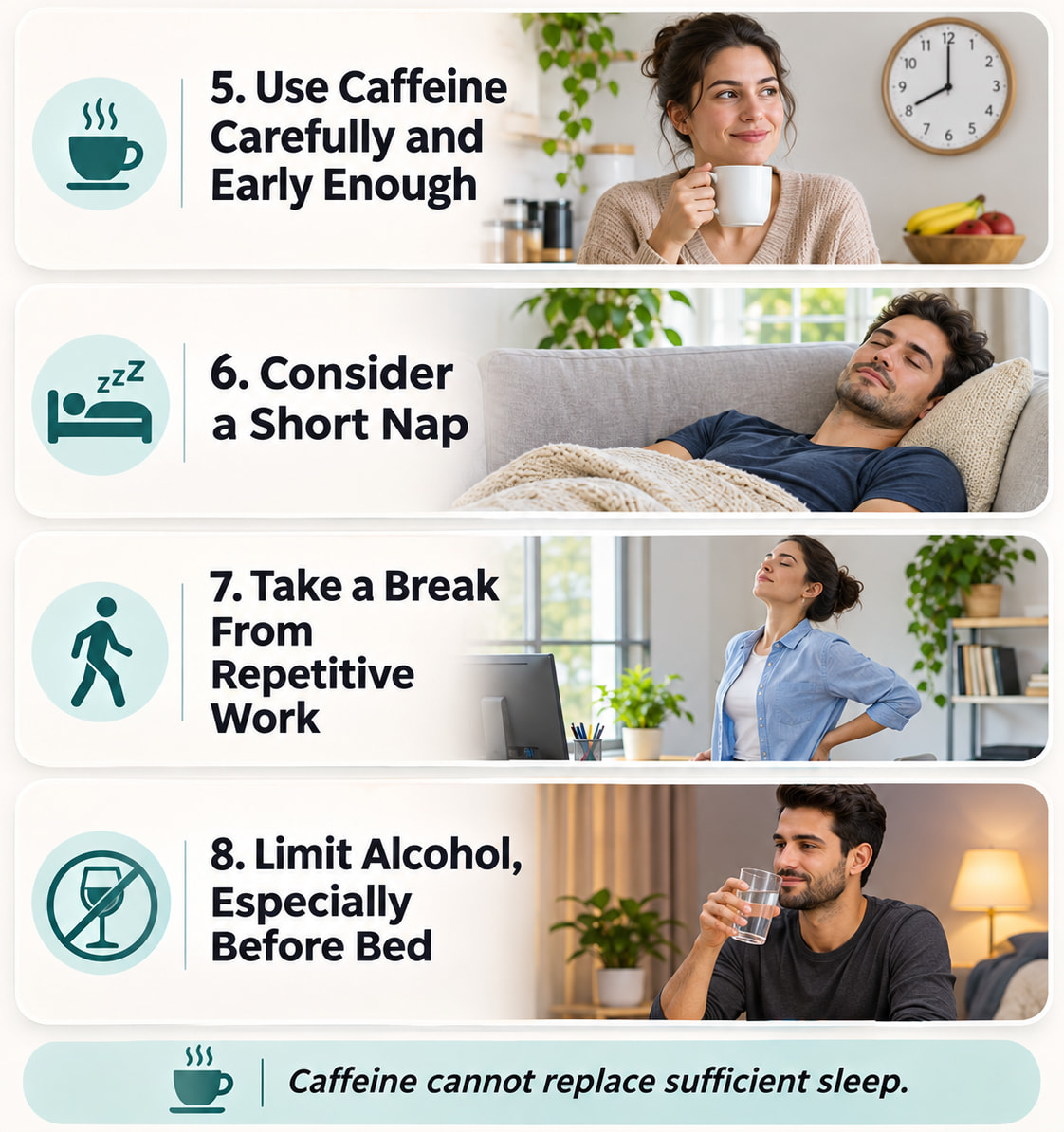
5. Use Caffeine Carefully and Early Enough
Coffee or tea may help you feel more awake temporarily. Check the serving size and caffeine content, especially when combining several drinks or supplements.
The FDA’s caffeine guidance cites 400 milligrams per day as an amount generally not associated with negative effects for most adults. That is a total daily amount, not a target or a suggested single dose. Some people experience anxiety, palpitations, or sleep problems at much lower amounts.
If you are pregnant, breastfeeding, taking medicines, or managing a health condition, ask a healthcare professional about an appropriate limit. The adult figure does not apply to children or teenagers.
Timing matters too. NHLBI notes that caffeine’s effects can last up to eight hours. A small randomized trial published in Sleep in April 2025 found that a single 400 mg dose disrupted aspects of sleep even when taken 12 hours before bedtime. The study involved 23 men, so it does not establish one cutoff for everyone.
Choose an earlier, smaller serving rather than repeatedly adding caffeine late in your waking day.
6. Consider a Short Nap
If your circumstances allow, consider a brief nap of about 20 minutes. Find a safe, quiet place and set an alarm so the nap does not unintentionally become much longer.
Give yourself time to become fully alert afterward. Grogginess can occur even after a short nap, particularly when you are sleep deprived.
If naps make it harder to fall asleep at night, take them earlier or limit them. A nap can offer temporary relief, but regularly needing one to get through ordinary activities is worth discussing with a healthcare professional.
7. Take a Break From Repetitive Work
When a task becomes monotonous, pause at a suitable stopping point. A brief change of activity may help you manage mental fatigue.
For example, step away from a long document, speak with a colleague, or switch briefly to a different task. Give yourself an actual break instead of replacing one demanding screen activity with another.
The benefit may be temporary. If you keep nodding off, repeatedly changing tasks is not enough.
8. Limit Alcohol, Especially Before Bed
Alcohol may make you feel sleepy initially, but it can interfere with the quality of your sleep. You may feel tired the next day despite spending enough hours in bed.
If evening drinking is part of your routine, consider an alcohol-free option and notice how you feel the following morning.
This step supports future sleep and alertness. It is not an immediate way to become more awake, and alcohol should not be used as a sleep aid.
9. Check Whether Medicines Are Making You Drowsy
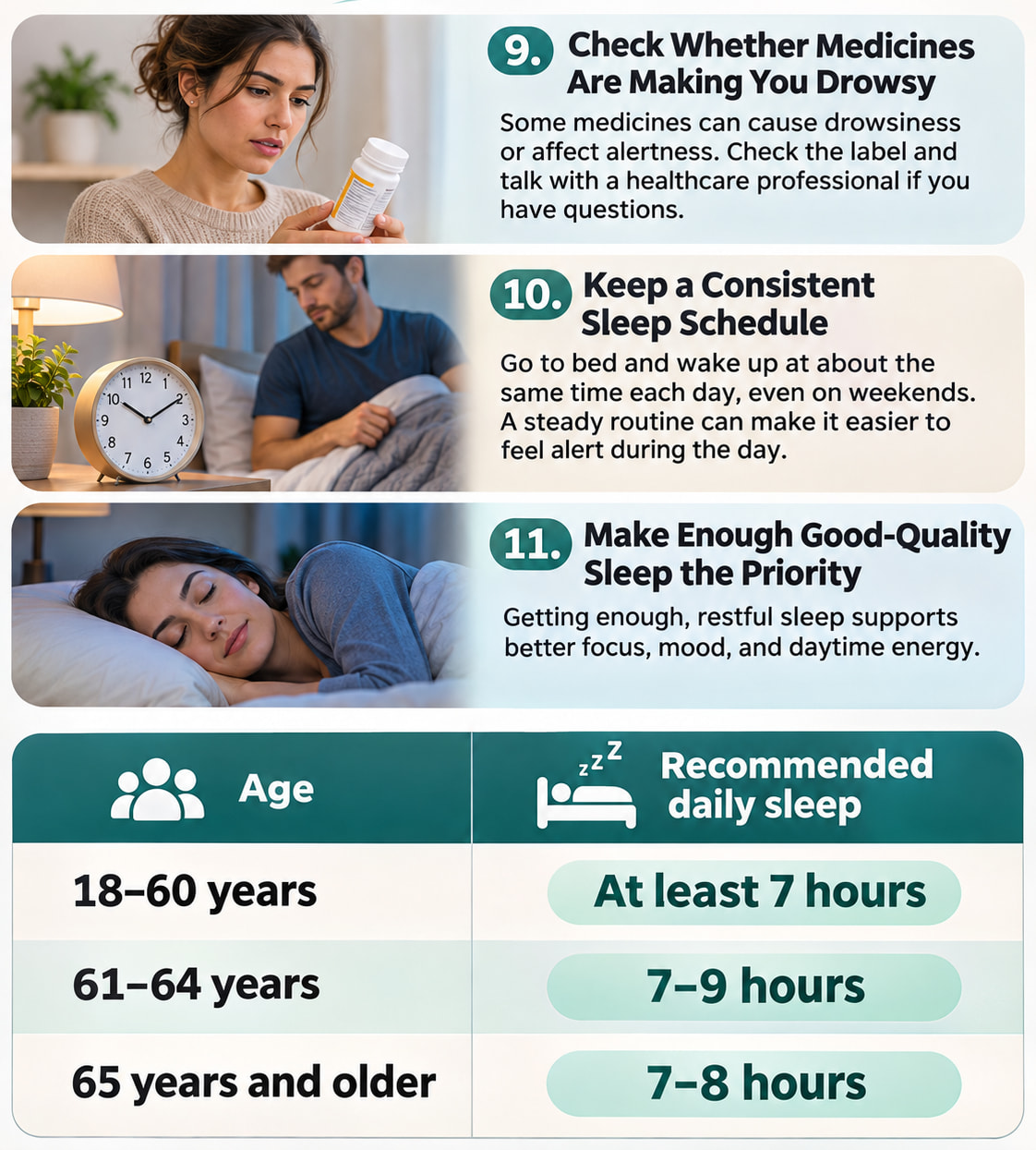
Some allergy medicines, nighttime cold remedies, sleep aids, pain medicines, and other products can cause drowsiness. Their effects may continue into the following day.
Read the FDA’s medicine safety guidance and the warnings on prescription and over-the-counter products. If your sleepiness began after starting a medicine or changing a dose, ask your pharmacist or prescribing clinician whether it could be contributing.
Do not stop or change prescribed medicine on your own. Ask about appropriate options instead of using extra caffeine to cover up the side effect.
10. Keep a Consistent Sleep Schedule
Aim to go to bed and wake up at similar times each day. Large shifts between workdays and days off can disrupt your sleep–wake pattern.
Start with a realistic wake-up time, then allow enough time before it for sleep. If your schedule changes frequently, identify the parts you can keep consistent, such as your wind-down routine and sleeping environment.
A consistent schedule still needs to provide sufficient sleep. Regularly sleeping too little will not become adequate simply because the timing is predictable.
11. Make Enough Good-Quality Sleep the Priority
If you regularly need several wake-up strategies, look first at how much sleep you actually get.
The CDC’s sleep recommendations list the following adult needs:
| Age | Recommended daily sleep |
|---|---|
| 18–60 years | At least 7 hours |
| 61–64 years | 7–9 hours |
| 65 years and older | 7–8 hours |
Time in bed and time asleep are not always the same. Repeated awakenings or unrefreshing sleep also matter.
Protect your sleep by keeping your bedroom dark, quiet, and comfortably cool. Set aside time to wind down, and avoid letting late work or scrolling repeatedly shorten your night.
How to Wake Yourself Up Without Caffeine
For a caffeine-free approach, combine a change in your surroundings with a brief change in activity. For example, step into daylight and take a comfortable walk before returning to your desk.
Add water if you have not had enough fluids, or a meal if you have skipped one. If you are struggling to stay awake and have a safe opportunity to rest, consider a short nap.
Choose the option that addresses your situation instead of trying to force yourself through mounting sleepiness.
What to Do if You Feel Sleepy While Driving
Pull over in a safe place as soon as you can. Heavy eyelids, drifting from your lane, or difficulty remembering the last part of a journey are reasons to stop.
NHTSA’s drowsy-driving guidance warns that coffee or energy drinks alone may not prevent microsleeps when someone is severely sleep deprived. A short nap after stopping safely may improve alertness temporarily, but it does not guarantee that driving is safe.
If you remain sleepy, arrange another driver, use another form of transportation, or delay the trip until you have had adequate rest. Apply the same caution to operating machinery or other tasks where a lapse in attention could cause harm.
When to Get Help for Daytime Sleepiness
Speak with a healthcare professional if you frequently fall asleep during the day, struggle to stay awake during ordinary activities, or remain sleepy despite allowing enough time for sleep. The NHS guidance on excessive daytime sleepiness recommends assessment when sleepiness affects daily life.
Also mention loud snoring, gasping during sleep, or breathing pauses noticed by someone else. These can be symptoms of sleep apnea and deserve evaluation.
A simple sleep diary can make the conversation more useful. Record your bedtime, wake time, nighttime awakenings, naps, caffeine, alcohol, and medicines. The goal is to help identify a pattern and possible contributors.
Frequently Asked Questions
How Can I Wake Myself Up Quickly in the Morning?
Turn on the lights or open your curtains, then move around gently. Allow time for grogginess to clear before demanding tasks. There is no guaranteed instant fix, especially after insufficient sleep.
Why Am I Still Sleepy After Eight Hours of Sleep?
Eight hours in bed may include time spent awake. Sleep can also be interrupted or unrefreshing. Medicines, an irregular schedule, or a sleep disorder may contribute. Persistent daytime sleepiness deserves assessment even when your sleep duration seems adequate.
Is a Short Nap Better Than More Coffee?
It depends on the situation. A brief nap provides actual sleep, while caffeine temporarily increases wakefulness. If another coffee is likely to interfere with your next sleep period, a short, appropriately timed nap may be a more useful choice.
Why Do I Feel Sleepy After Lunch?
Your body’s internal clock can produce an afternoon dip in alertness. Insufficient sleep and prolonged sitting may make it more noticeable. Lunch is not always the cause, so consider your sleep and activity patterns before blaming a specific food.
How Late Is Too Late to Drink Caffeine?
Work backward from your next bedtime. Caffeine can affect sleep for many hours, and the amount you consume matters. Move it earlier or reduce the amount if you have trouble falling asleep; no single cutoff works for everyone.
Can I Make Up for a Sleepless Night With Wake-Up Tricks?
No. Light, movement, naps, and caffeine may provide temporary support, but they cannot replace sufficient sleep. Prioritize recovery sleep and avoid driving or other risky tasks while drowsy.
Conclusion
Learning how to wake yourself up starts with matching the response to the cause. Try light or movement for occasional grogginess, address missed meals or inadequate fluids when relevant, and use naps or caffeine thoughtfully.
Choose one practical change today and protect enough time for sleep tonight. If sleepiness keeps returning or affects everyday life, make an appointment to discuss it with a healthcare professional.
This content is for informational purposes only and not medical advice.
References
- CDC: About Sleep.
- CDC/NIOSH: Using Light to Manage Alertness.
- CDC/NIOSH: Daytime Strategies to Increase Alertness.
- CDC/NIOSH: Sleep Inertia.
- CDC/NIOSH: Rest Breaks.
- NHLBI: Healthy Sleep Habits.
- FDA: How Much Caffeine Is Too Much?.
- NHS: Self-Help Tips to Fight Tiredness.
- MedlinePlus: Drowsiness.