
Practical stress relief tips include gentle breathing, relaxing tense muscles, taking a movement break, and talking with someone you trust. These approaches may help you feel calmer, although results vary from person to person. You do not need to try everything at once—start with one option that feels comfortable.
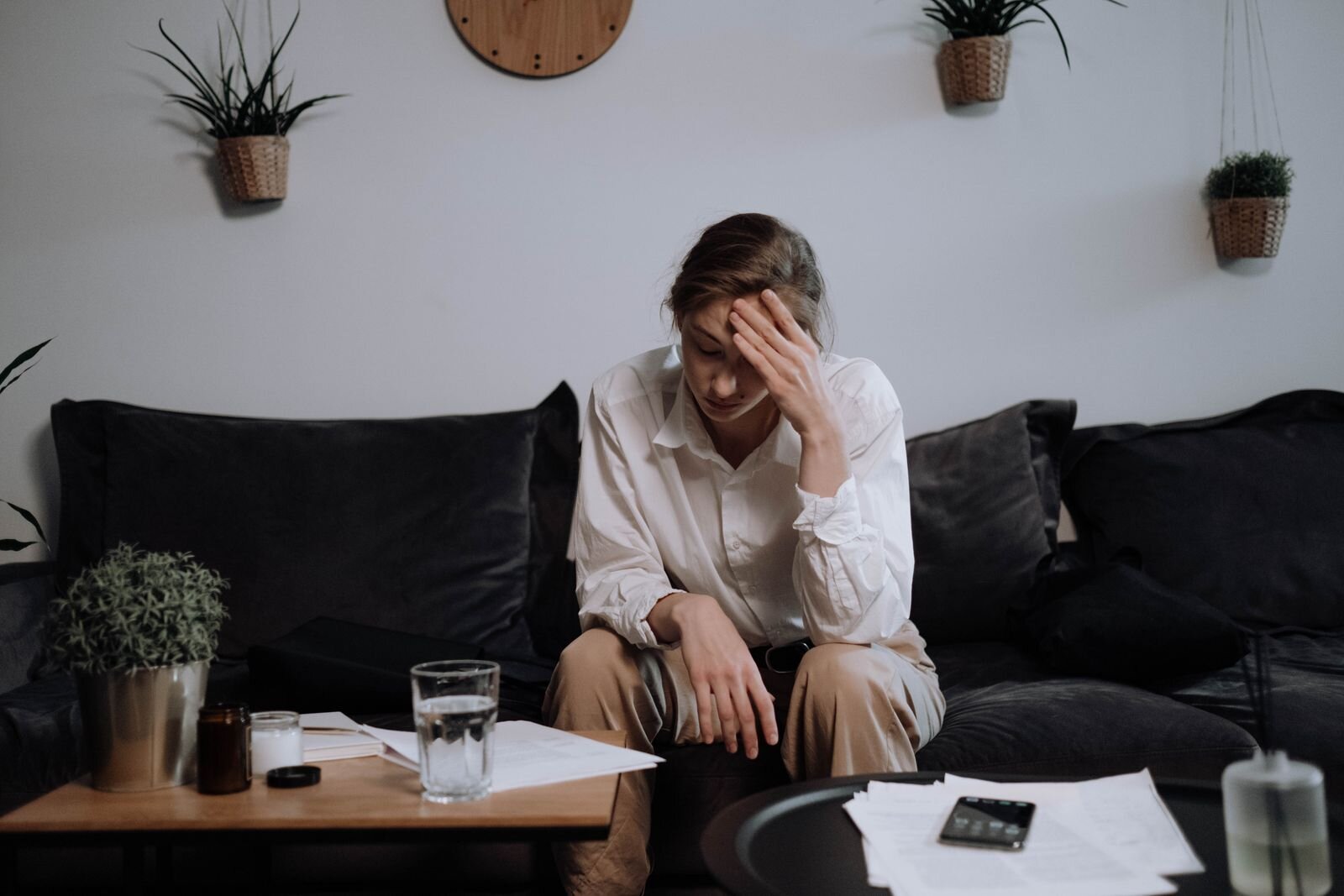
Managing stress matters because it can affect your sleep, concentration, mood, and daily responsibilities. In its May, 2026 guidance, the CDC recommends finding a combination of healthy coping strategies that works for you.
The tips below begin with techniques you can try during a stressful moment. The final three focus on everyday habits that support stress management over time.
15 Simple Stress Relief Tips to Try Today
1. Slow Your Breathing Without Forcing It
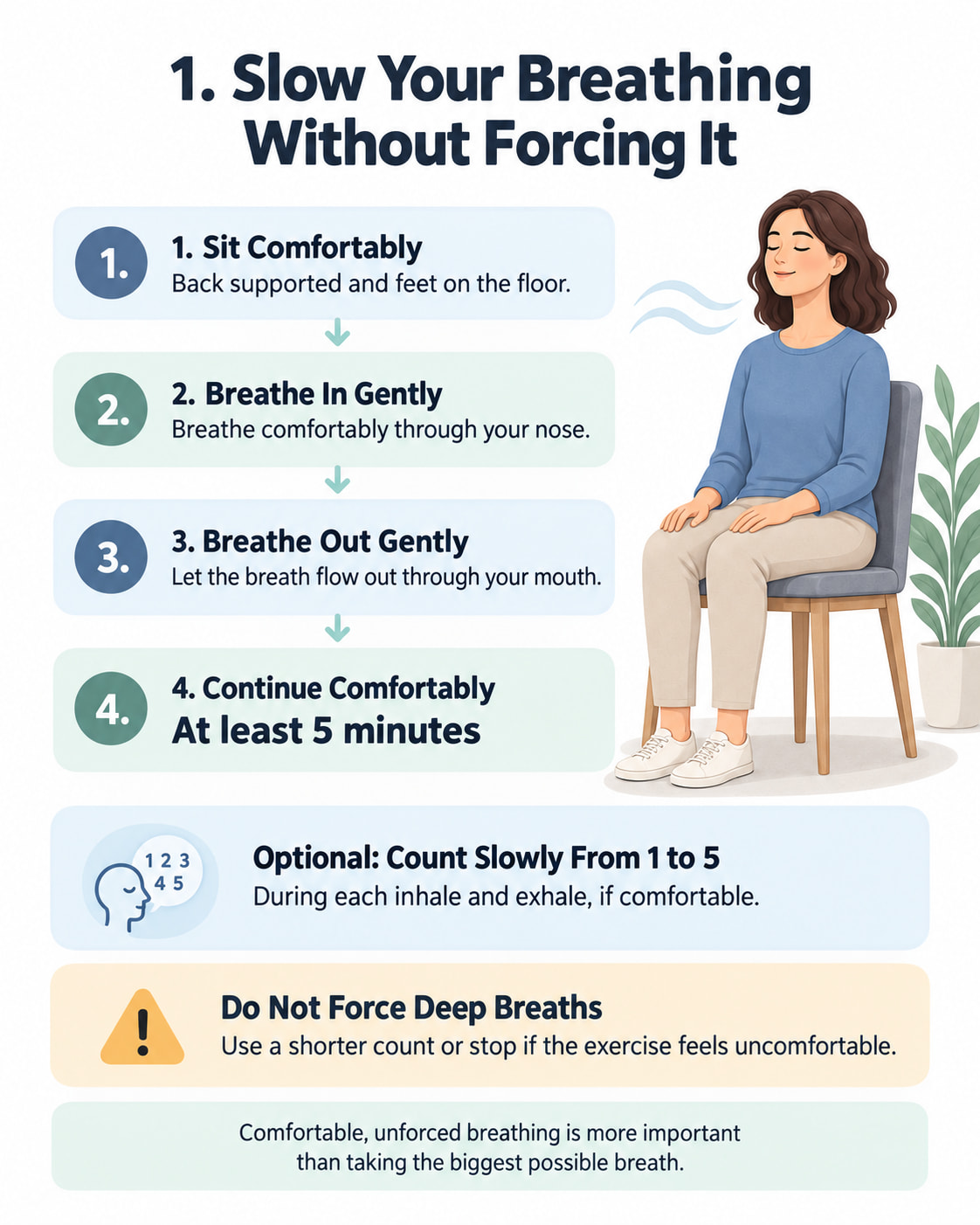
Start by sitting comfortably with your back supported and your feet on the floor. Loosen clothing that restricts your breathing.
Breathe gently through your nose, then let the breath flow out through your mouth. Counting slowly from one to five during each inhale and exhale is optional. Use a shorter count when that feels more comfortable.
The NHS recommends continuing this exercise for at least five minutes and practicing regularly. The important part is comfortable, unforced breathing—not taking the biggest possible breath.
Do not push through increasing discomfort or anxiety. Stop an exercise that makes you feel worse and choose another approach.
2. Try the 5-4-3-2-1 Grounding Method
Grounding gives you something concrete to notice when your attention keeps returning to worries.
The University of Rochester Medical Center describes this five-senses exercise:
- 5 things you can see: Look for everyday objects, colors, or shapes.
- 4 things you can feel: Notice your clothing, the chair, or your feet touching the floor.
- 3 things you can hear: Listen for sounds around you.
- 2 things you can smell: Notice familiar scents already present.
- 1 thing you can taste: Notice an existing taste in your mouth.
Adapt the exercise to the senses available to you. There is no need to find a perfect answer or taste anything unfamiliar. The goal is to practice paying attention to your surroundings, not complete a test.
3. Relax Tense Muscles
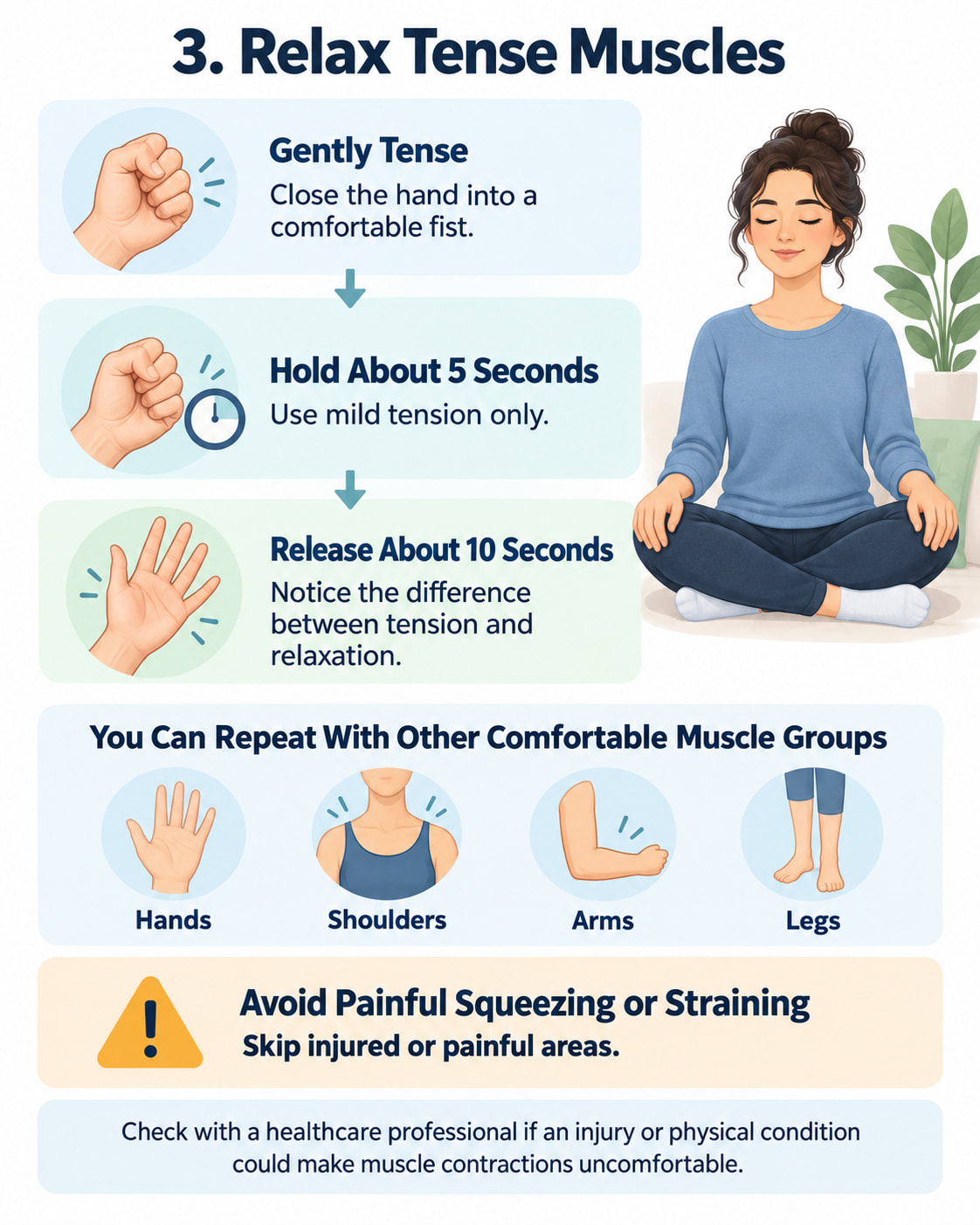
Progressive muscle relaxation involves briefly tightening a muscle group and then letting it relax. It may be useful when stress shows up as clenched hands or tight shoulders.
For a simple starting exercise, gently close one hand into a fist. Hold mild tension for about five seconds, then release it for about ten seconds. Notice the difference before repeating with the other hand.
You can move through additional comfortable muscle groups, but avoid painful squeezing or straining. Skip injured areas, and check with a healthcare professional before starting if an injury or physical condition could make muscle contractions uncomfortable. HealthyWA provides these timing and safety recommendations.
4. Take a Short Walk or Movement Break
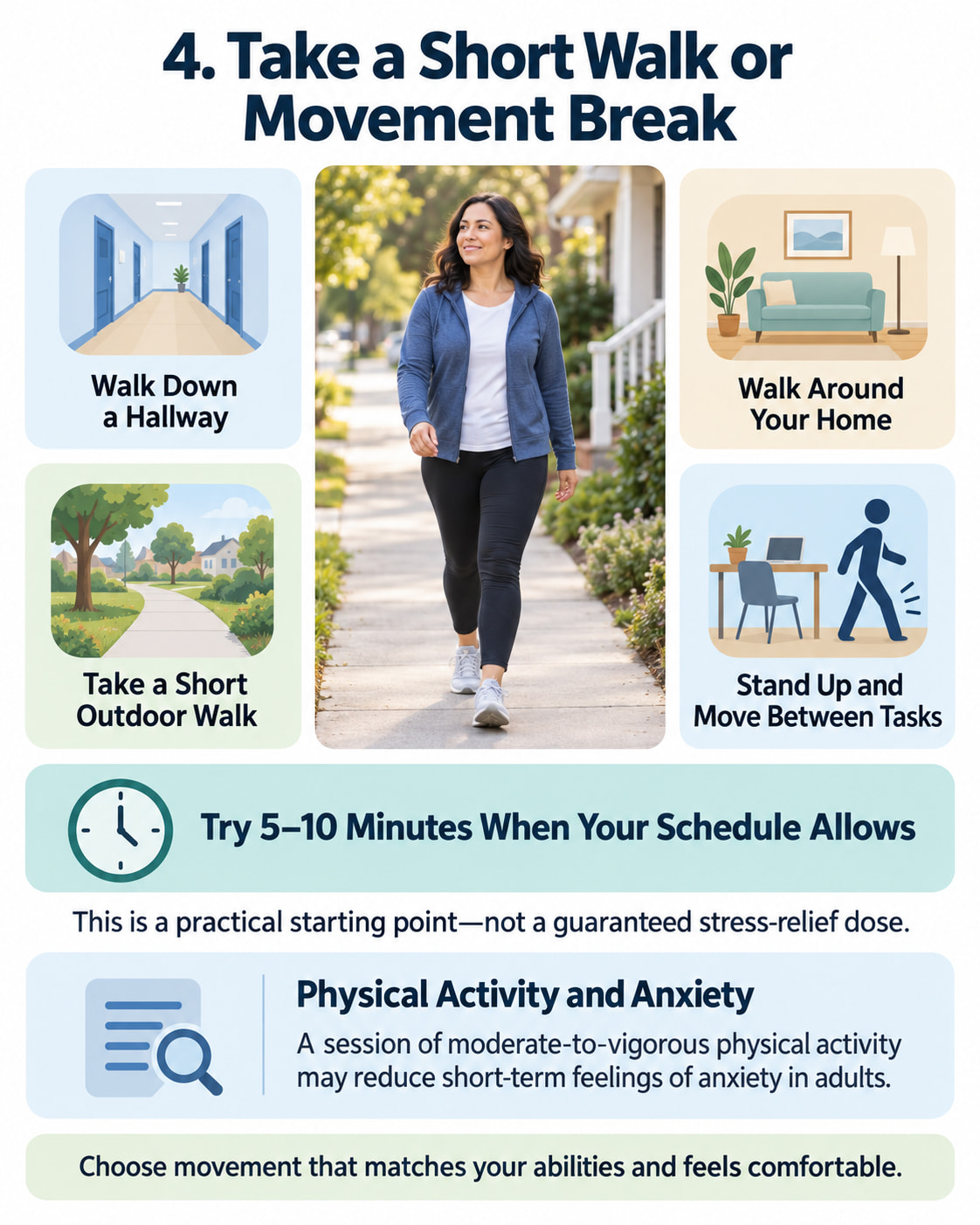
Step away from your task and move in a way that suits your abilities. That might mean walking down a hallway, around your home, or along a familiar outdoor route.
For example, try a five- to ten-minute walking break when your schedule allows. This is a practical starting point, not a guaranteed stress-relief dose.
CDC reports that a session of moderate-to-vigorous physical activity can reduce short-term feelings of anxiety in adults. That does not mean every brief, leisurely walk will have the same effect, but walking is an accessible way to begin adding movement.
5. Spend Some Time Outdoors
An outdoor break does not have to become a workout. You could sit on a porch, spend part of lunch outside, or rest in a nearby green space.
CDC includes spending time outdoors—either relaxing or being active—among its stress-management suggestions.
Choose somewhere safe and comfortable. For this break, try leaving work messages alone and noticing your surroundings instead. There is no need to travel somewhere special.
6. Practice a Brief Mindfulness Exercise
Mindfulness means paying attention to the present moment without judging what you notice.
Try listening to one sound for a minute. When a thought interrupts, acknowledge it and gently return your attention to the sound. You do not need to empty your mind or prevent thoughts from appearing.
NCCIH notes that mindfulness research shows potential benefits, but findings vary and some studies have important limitations. A brief exercise also should not be confused with a structured, multiweek mindfulness program.
If focusing inward increases your distress, stop and try a different activity. Relaxation practices are not comfortable for everyone.
7. Listen to Music You Find Calming
NIMH includes listening to music among enjoyable activities that can support mental health and stress management.
Choose something you already enjoy rather than searching for the “perfect” relaxation track. Try listening to one song without answering messages or doing another task.
An instrumental piece may suit one person; a familiar favorite may suit another. Treat this as a personal preference, not another wellness rule you have to follow. Silence is also an option.
8. Write Down What Is Bothering You
NIMH recommends journaling as one option for coping with stress and anxiety. You do not need a special notebook or a long writing session.
Try completing three short sentences:
“The situation bothering me is…”
“What I am worried might happen is…”
“One thing I can do or ask for is…”
For example: “I have two deadlines today. I am worried I cannot finish both. I can ask which task should come first.”
Use the page to clarify the problem—not to criticize yourself for feeling stressed.
9. Choose One Small Next Step
When several demands compete for your attention, choose a specific action rather than trying to solve everything immediately. NHS guidance recommends manageable targets and avoiding the pressure to do everything at once.
Replace “catch up on all my work” with “draft the first paragraph.” Replace “organize the whole house” with “clear the kitchen counter.”
A next step can also be a request: “Which deadline is the priority?” or “Could someone help with this task?”
Make the action small enough to begin. It does not have to resolve the entire situation.
10. Take a Break From News and Notifications
When news coverage or social media increases your distress, pause it. CDC recommends breaks from these sources because repeated exposure to negative events can be upsetting.
Try silencing nonessential alerts, closing extra tabs, or choosing a specific time to check the news again. Keep necessary safety alerts and important contacts available.
The goal is not to ignore responsibilities or stay uninformed. It is to make room for a break instead of checking continuously.
11. Talk to Someone You Trust
WHO recommends sharing concerns and feelings with trusted friends or family members as part of managing stress.
Be specific about the support you need. For example:
“I am feeling overwhelmed. Could you listen for a few minutes? I do not need advice right now.”
Or ask for something practical: “Could you help me think through these two options?”
You do not have to explain everything perfectly. Start with what feels manageable and choose someone you feel comfortable contacting.
12. Notice One Thing You Appreciate
NIMH recommends identifying specific things you are grateful for and writing them down or reflecting on them.
Keep it small: a helpful message, a comfortable place to sit, or someone who followed through on a promise.
This is not a demand to “look on the bright side.” You can appreciate something while also acknowledging that your circumstances are difficult.
13. Eat Regularly and Stay Hydrated
Regular meals and adequate fluids belong in your everyday stress-management routine. WHO recommends eating a balanced diet at regular intervals and drinking enough fluids.
During a busy day, check whether you have been postponing lunch or forgetting to drink. Choose a familiar, balanced meal or snack that fits your needs and preferences.
For example, keep an easy lunch available rather than relying on another coffee to get through the afternoon. Think of food and hydration as basic daily support—not an instant solution to a stressful situation.
14. Check Your Caffeine Intake
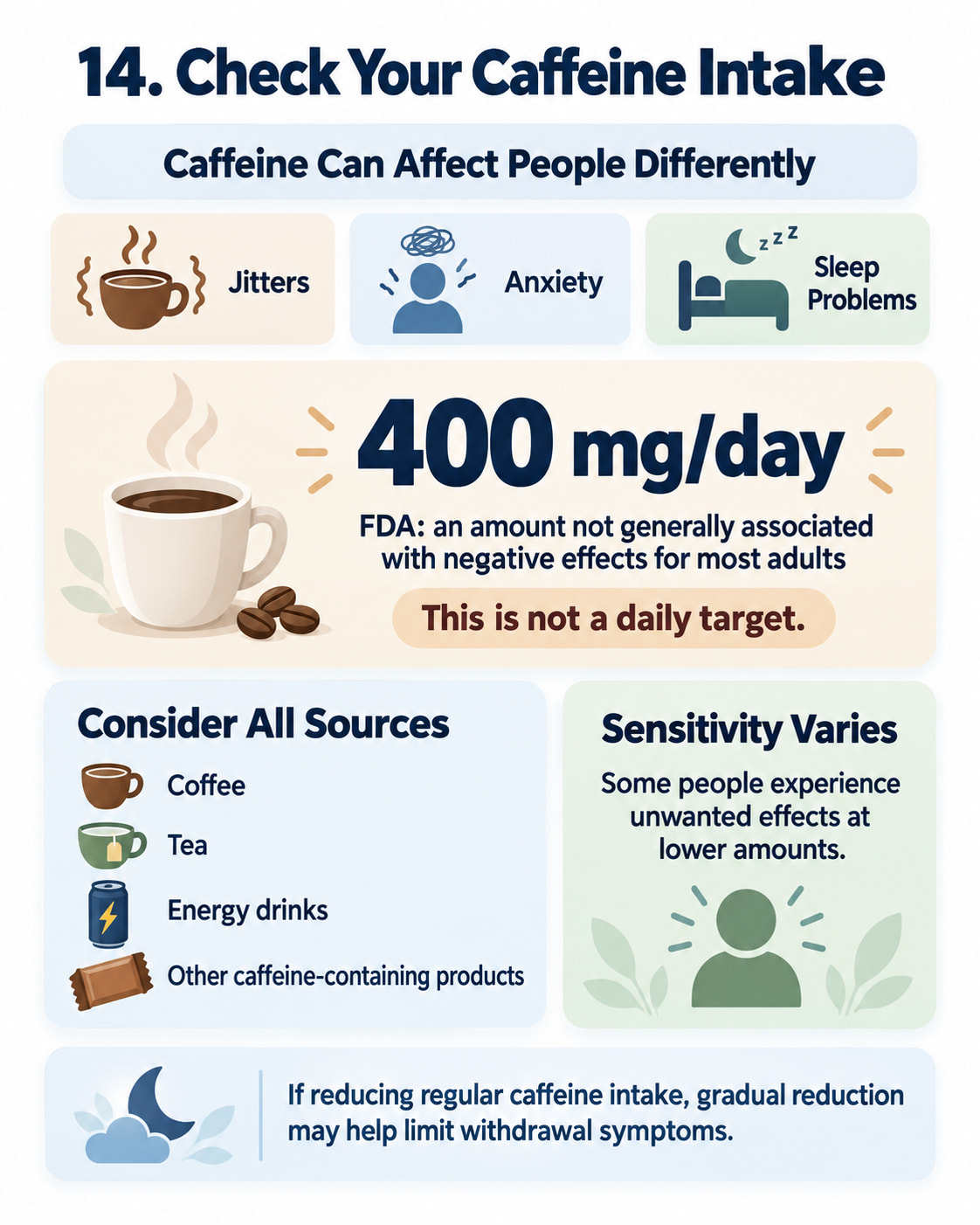
Too much caffeine can contribute to anxiety, jitters, and disrupted sleep. Pay attention to whether these effects appear after coffee, tea, energy drinks, or other caffeine-containing products.
The FDA cites 400 milligrams per day as an amount not generally associated with negative effects for most adults. However, sensitivity varies, and unwanted effects can occur at lower amounts.
That number is not a daily target. Check labels and consider all sources. If you regularly consume caffeine and decide to reduce it, do so gradually. Ask your healthcare professional about appropriate limits during pregnancy or when medications or medical conditions may affect your response.
15. Protect Your Sleep Routine
Adequate sleep supports mood and stress management. CDC gives the following adult sleep recommendations:
| Age group | Recommended sleep per day |
|---|---|
| 18–60 years | 7 or more hours |
| 61–64 years | 7–9 hours |
| 65 years and older | 7–8 hours |
Sleep quality matters as well as duration.
Begin with a consistent bedtime and wake-up time. Keep your bedroom quiet and comfortable, and turn off electronic devices at least 30 minutes before bed.
If you regularly struggle to fall asleep, wake repeatedly, or remain tired despite enough time in bed, discuss it with a healthcare professional. Sleep difficulties are not always something you can fix through willpower or a stricter routine.
When Stress Relief Tips Are Not Enough
Stress often involves a response to an external pressure. Anxiety can occur even without a current threat. Either deserves attention when it becomes persistent, difficult to manage, or disruptive to daily life.
The NIMH recommends seeking professional help for severe symptoms lasting two weeks or longer, including difficulty completing tasks, losing interest in usual activities, or significant changes in sleep or appetite.
You do not have to wait two weeks. Contact a healthcare professional sooner when symptoms worsen, self-care is not helping, or you are struggling to function.
In the United States, call or text 988 for a mental health crisis or thoughts of self-harm. Call 911 in a life-threatening emergency.
Do not automatically label new chest discomfort or unexplained shortness of breath as stress. These can be heart attack symptoms. Call 911 when a heart attack may be occurring, even when you are unsure.
Frequently Asked Questions About Stress Relief Tips
What Can I Do When I Feel Stressed Right Now?
Try a grounding exercise: notice objects around you and the feeling of your feet against the floor. Choose one manageable activity rather than several at once. Stop any relaxation practice that increases your distress.
What Is the 5-4-3-2-1 Grounding Method?
It involves noticing five things you see, four you feel, three you hear, two you smell, and one you taste. It is an attention-focusing exercise, not a guaranteed way to eliminate anxiety.
How Long Should I Practice Breathing Exercises for Stress?
The NHS recommends at least five minutes of comfortable, unforced breathing. Regular practice is encouraged. Do not force yourself to reach a particular breath count or continue an exercise that increases distress.
Can Walking Help With Stress?
Walking can be part of a stress-management routine. CDC reports that moderate-to-vigorous activity can reduce short-term anxiety after a session. Results vary, so a walk should be an option to try rather than a guaranteed immediate fix.
Can Caffeine Make Stress Feel Worse?
Caffeine can cause jitters, anxiety, and sleep problems, particularly when intake exceeds your tolerance. Some adults notice these effects below 400 milligrams daily. Reducing regular intake gradually can help avoid unpleasant withdrawal symptoms.
When Should I Seek Professional Help for Stress?
Seek support when stress interferes with daily functioning, keeps worsening, or does not improve with self-care. Severe symptoms lasting two weeks or more are another reason to reach out, but you can ask for help sooner.
Conclusion
Choose one of these stress relief tips to practice today rather than turning the whole list into another obligation. Start with something manageable, such as gentle breathing, grounding, or contacting a trusted person.
Notice what feels useful and what does not. Your next step can be a calming exercise, a practical request for help, or a conversation with a healthcare professional—you do not have to handle everything alone.
This content is for informational purposes only and not medical advice.
References
- NHS: Breathing Exercises for Stress and Getting Help With Stress.
- University of Rochester Medical Center: 5-4-3-2-1 Coping Technique for Anxiety.
- HealthyWA: Progressive Muscle Relaxation.
- World Health Organization: Stress: Questions and Answers.
- FDA: How Much Caffeine Is Too Much?.
- National Heart, Lung, and Blood Institute: Heart Attack Symptoms.