
Bodyweight core exercises can help you build a stronger, more stable midsection without any equipment. When you choose a mix of anti-extension, anti-rotation, flexion, and hip-stability drills, you can train the muscles around your abdomen, lower back, hips, and pelvis in a simple, practical way. Official guidance from Mayo Clinic and the CDC supports core training as part of a balanced exercise routine.
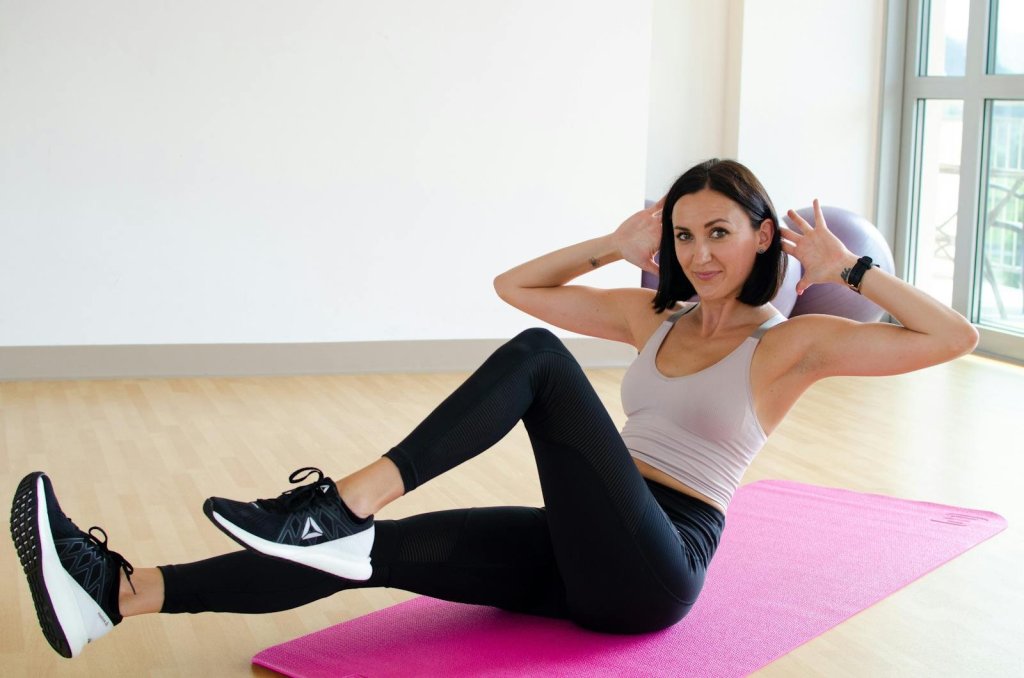
Understanding bodyweight core exercises matters because core strength supports posture, balance, movement control, and everyday tasks like lifting, carrying, and staying steady during exercise. Adults should still aim for at least 150 minutes of moderate-intensity aerobic activity per week plus muscle-strengthening work on 2 or more days each week, so core training works best as one part of a full plan rather than the only thing you do.
What Are Bodyweight Core Exercises?
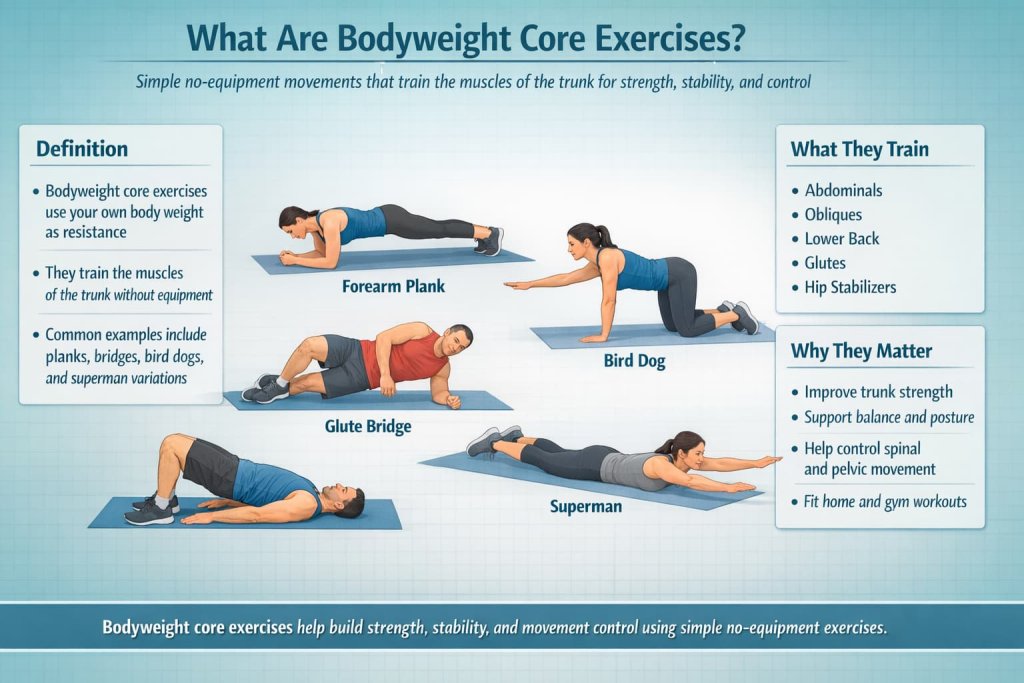
Bodyweight core exercises are movements that train the muscles of your trunk using your own body weight as resistance. That includes the abdominals, obliques, lower back, glutes, hip muscles, and other stabilizers that help transfer force and keep your spine and pelvis controlled during movement. Mayo Clinic highlights movements such as bridges, bird dogs, planks, side planks, and superman variations as simple ways to build core strength.
Why Bodyweight Core Exercises Work
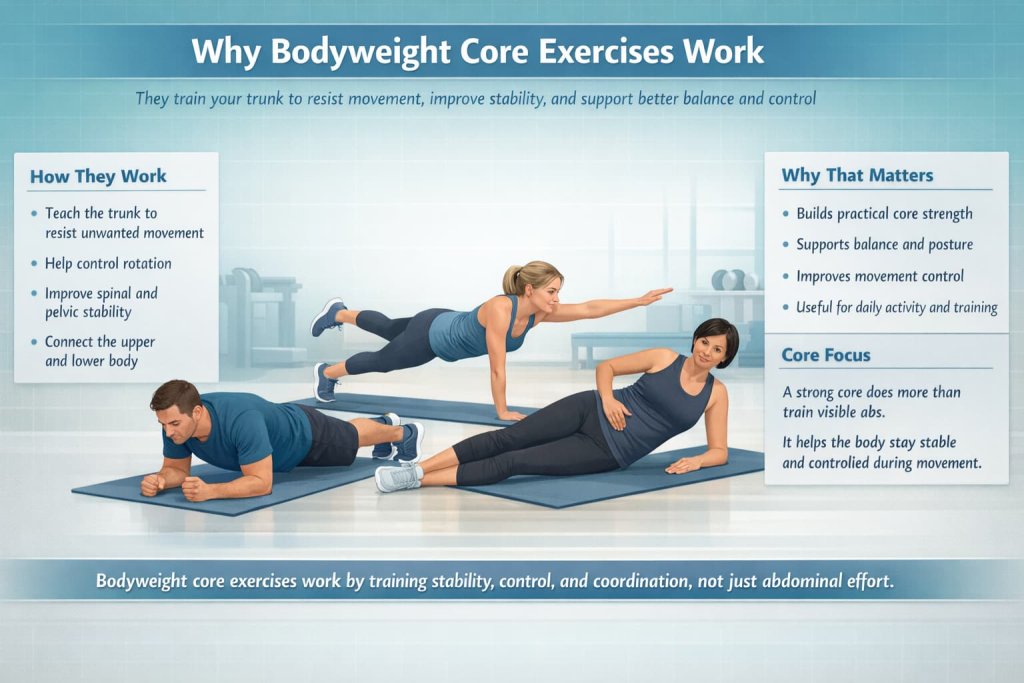
A good core program does more than train visible abs. It teaches your trunk to resist unwanted movement, control rotation, stabilize the spine, and connect the upper and lower body. Research reviews indexed by PubMed suggest core training can improve dynamic balance, making bodyweight core work useful for both general function and athletic control.
How to Use This Bodyweight Core Exercises List
Start with the easier stability drills and then progress to longer holds, more range of motion, or harder leverage. The American Council on Exercise notes that beginners often do well moving from bird dog to kneeling plank to harder plank variations over time. Focus on slow, controlled reps and stop if you cannot keep good form.
15 Best Bodyweight Core Exercises
Build a stronger, more stable core with these 15 bodyweight exercises that require no equipment and fit almost any fitness level. This list includes beginner-friendly and advanced moves to improve strength, balance, control, and everyday movement.
1. Forearm Plank
Why it works:
The forearm plank trains your core to resist extension. In simple terms, it teaches you to keep your trunk stiff while gravity tries to pull your hips down. This makes it one of the best entry-level bodyweight core exercises for overall trunk stability.
Muscles worked:
Rectus abdominis, transverse abdominis, obliques, glutes, shoulders.
How to do it:
- Lie face down and place your forearms on the floor.
- Set your elbows under your shoulders.
- Lift your body so you form a straight line from head to heels.
- Brace your abs and squeeze your glutes.
- Hold without letting your lower back sag.
Trainer Tip:
Think about pulling your ribs slightly down and keeping your hips level instead of letting them drift upward or downward.
2. High Plank
Why it works:
The high plank adds more shoulder demand while still training anti-extension control. It is a useful stepping stone if you want to build up to mountain climbers, shoulder taps, and push-up variations.
Muscles worked:
Abdominals, obliques, shoulders, chest, glutes.
How to do it:
- Start at the top of a push-up position.
- Place your hands under your shoulders.
- Keep your legs straight and feet about hip-width apart.
- Brace your core and hold your body in one line.
- Breathe steadily while keeping your neck neutral.
Trainer Tip:
Push the floor away so your upper back stays active instead of collapsing between the shoulders.
3. Side Plank
Why it works:
The side plank targets lateral core stability, which many people miss when they only do crunch-style movements. Mayo Clinic includes the side plank in its core-strength guidance.
Muscles worked:
Obliques, transverse abdominis, glute medius, shoulders.
How to do it:
- Lie on one side with your legs stacked.
- Prop yourself up on your forearm with the elbow under the shoulder.
- Lift your hips off the floor.
- Keep your body in a straight line from head to feet.
- Hold, then repeat on the other side.
Trainer Tip:
If the full version is too hard, bend your knees and do the side plank from your knees first.
4. Bird Dog
Why it works:
Bird dog is one of the best beginner-friendly bodyweight core exercises because it trains cross-body control, spinal stability, and balance without a heavy load. It is also a common starting point in core progressions recommended by the American Council on Exercise.
Muscles worked:
Deep core muscles, glutes, lower back, shoulders.
How to do it:
- Start on all fours with your hands under shoulders and knees under hips.
- Brace your midsection.
- Extend one arm forward and the opposite leg backward.
- Pause without twisting your hips.
- Return slowly and switch sides.
Trainer Tip:
Reach long rather than high. Your goal is control, not lifting the arm and leg as high as possible.
5. Dead Bug
Why it works:
The dead bug helps you train core stiffness while your arms and legs move. That makes it useful for learning how to keep your trunk stable during more dynamic exercises. The American Council on Exercise also points to dead bug style work as a solid low-pressure option in some populations.
Muscles worked:
Transverse abdominis, rectus abdominis, obliques, hip flexors.
How to do it:
- Lie on your back with your arms straight up.
- Lift your knees so they are bent at 90 degrees.
- Flatten your lower back gently into the floor.
- Lower one arm and the opposite leg slowly.
- Return and repeat on the other side.
Trainer Tip:
Only lower your leg as far as you can without your lower back arching off the floor.
6. Glute Bridge
Why it works:
The glute bridge is often treated as a glute exercise, but it is also a core stability drill because your trunk and pelvis must stay controlled while the hips extend. Mayo Clinic includes the bridge in its core-strength examples.
Muscles worked:
Glutes, hamstrings, abdominals, lower back.
How to do it:
- Lie on your back with your knees bent and feet flat.
- Keep your arms by your sides.
- Brace your abs lightly.
- Press through your heels and lift your hips.
- Pause at the top, then lower with control.
Trainer Tip:
Do not overarch at the top. Finish by squeezing the glutes, not by cranking through the lower back.
7. Marching Bridge
Why it works:
This is a harder bridge variation that adds anti-rotation demand. As soon as one foot leaves the floor, your core has to work harder to keep the pelvis from tipping.
Muscles worked:
Glutes, hamstrings, obliques, deep core stabilizers.
How to do it:
- Set up in a glute bridge position.
- Lift your hips until your body forms a straight line from shoulders to knees.
- Keep your hips steady.
- Lift one foot a few inches off the floor.
- Lower it and alternate sides.
Trainer Tip:
Make the movement smaller if your hips sway side to side.
8. Hollow Body Hold
Why it works:
The hollow hold challenges your ability to maintain a strong, tucked trunk under longer tension. It is one of the most effective bodyweight core exercises for learning full-body bracing.
Muscles worked:
Rectus abdominis, transverse abdominis, hip flexors, obliques.
How to do it:
- Lie on your back with your arms overhead.
- Gently press your lower back into the floor.
- Lift your shoulders and legs slightly.
- Hold the position while keeping your ribs down.
- Relax and reset when your back starts to arch.
Trainer Tip:
Bend your knees or keep your arms closer to your sides to make it easier.
9. Reverse Crunch
Why it works:
The reverse crunch adds controlled spinal flexion and pelvic tilt. It can help you train the front of the core without the neck strain that some people feel during regular crunches.
Muscles worked:
Lower portion of the rectus abdominis, obliques, hip flexors.
How to do it:
- Lie on your back with your knees bent and feet off the floor.
- Keep your hands by your sides.
- Brace your core.
- Curl your pelvis slightly off the floor by bringing your knees toward your chest.
- Lower slowly.
Trainer Tip:
Move with control. Swinging the legs turns it into momentum instead of core work.
10. Bicycle Crunch
Why it works:
This classic move combines trunk flexion with rotation, so it trains both the front of the core and the obliques. It works best when done slowly rather than as a speed drill.
Muscles worked:
Rectus abdominis, internal and external obliques, hip flexors.
How to do it:
- Lie on your back with your hands lightly behind your head.
- Lift your shoulders and legs off the floor.
- Bring one knee toward your chest.
- Rotate your torso so the opposite elbow moves toward that knee.
- Alternate sides in a smooth, controlled rhythm.
Trainer Tip:
Keep the twist coming from the torso, not by yanking on your neck.
11. Mountain Climber
Why it works:
Mountain climbers train anti-extension core control while adding a light conditioning element. They are useful when you want bodyweight core exercises that feel more athletic and time-efficient.
Muscles worked:
Abdominals, obliques, shoulders, hip flexors, chest.
How to do it:
- Start in a high plank.
- Brace your core.
- Drive one knee toward your chest.
- Switch legs smoothly.
- Keep your hips as steady as possible.
Trainer Tip:
Slow mountain climbers are often better than fast ones for actual core training.
12. Plank Shoulder Tap
Why it works:
Shoulder taps increase anti-rotation demand because your body has to resist shifting every time one hand leaves the floor. This makes them a strong progression from the standard high plank.
Muscles worked:
Abdominals, obliques, shoulders, glutes.
How to do it:
- Begin in a high plank.
- Widen your feet slightly for stability.
- Tap one shoulder with the opposite hand.
- Place the hand back down.
- Alternate sides without letting your hips rock.
Trainer Tip:
Move slowly and keep the pelvis quiet. Less sway means more core work.
13. Bear Hold
Why it works:
The bear hold challenges the front of the core, shoulders, and hip stabilizers at the same time. Because the knees hover just off the floor, small posture mistakes show up quickly.
Muscles worked:
Deep core muscles, shoulders, quads, hip flexors.
How to do it:
- Start on all fours.
- Tuck your toes under.
- Lift your knees one to two inches off the floor.
- Keep your back flat and core braced.
- Hold while breathing steadily.
Trainer Tip:
Do not let the shoulders shrug up toward your ears.
14. Superman Hold
Why it works:
A good core program should not ignore the back side of the trunk. Mayo Clinic includes the superman as a core-strength option because it trains the muscles along the back of the body.
Muscles worked:
Lower back, glutes, upper back, posterior shoulder muscles.
How to do it:
- Lie face down with your arms extended overhead.
- Brace lightly through your trunk.
- Lift your arms, chest, and legs slightly off the floor.
- Hold briefly.
- Lower with control.
Trainer Tip:
Think length first. You do not need to lift very high to make this effective.
15. Heel Taps
Why it works:
Heel taps are a simple, low-impact way to train trunk stability and controlled side-to-side movement. They are a solid regression for people who are not ready for harder rotational drills.
Muscles worked:
Rectus abdominis, obliques, deep core stabilizers.
How to do it:
- Lie on your back with your knees bent and feet flat.
- Lift your shoulders slightly.
- Reach one hand toward the same-side heel.
- Return to center.
- Alternate sides slowly.
Trainer Tip:
Keep the movement small and controlled instead of bouncing from side to side.
Best Way to Structure a Bodyweight Core Workout
For most people, 5 to 8 exercises per session is enough. Pick a mix of front-core, side-core, and posterior-chain drills. A simple structure could look like this:
- 1 plank variation
- 1 side-core variation
- 1 dead bug or bird dog variation
- 1 bridge variation
- 1 flexion or rotation drill
- 1 posterior-chain movement
You can do 2 to 4 sets of each exercise, using either reps or time. For example, hold planks for 15 to 40 seconds and perform dynamic moves for 6 to 15 controlled reps per side. Because muscle-strengthening work should be challenging enough to count, use progressions over time instead of repeating the easiest version forever, as explained by the CDC.
Common Mistakes With Bodyweight Core Exercises
Doing Only Crunch-Style Movements
A balanced core plan should include anti-extension, anti-rotation, and stability work, not just repeated spinal flexion.
Moving Too Fast
Fast reps often turn core work into momentum work. Slower, cleaner reps usually make bodyweight core exercises more effective.
Letting the Lower Back Take Over
If your lower back is doing most of the work, the exercise may be too advanced or your setup may need adjusting.
Ignoring Progression
The American Council on Exercise recommends progressing core training gradually. That can mean longer holds, better leverage, fewer contact points, or more controlled movement.
Who Should Start With Easier Core Variations?
Beginner-friendly drills such as bird dog, dead bug, bridge, and modified planks are usually the best starting point for people who are new to exercise, returning after time off, or rebuilding basic movement control. That progression-first approach lines up with guidance from Mayo Clinic and the American Council on Exercise.
Safety Tips Before You Begin
Use a pain-free range of motion and keep your breathing steady. Stop the set if you feel sharp pain, dizziness, numbness, or a clear loss of control. People with recent surgery, pregnancy-related exercise questions, pelvic floor concerns, or ongoing back issues should get individualized advice from a qualified clinician or exercise professional before starting a new program. The American Council on Exercise notes that lower-pressure options such as bird dog and dead bug can be useful alternatives in some situations.
Are Bodyweight Core Exercises Enough on Their Own?
They can be enough to improve beginner-level core strength, stability, and exercise tolerance, especially when you use progressive variations. But for broader fitness and health, they should sit inside a bigger routine that also includes aerobic activity and strength work for the rest of the body. The CDC makes it clear that adults need both regular aerobic activity and muscle-strengthening work during the week.
FAQ About Bodyweight Core Exercises
Can bodyweight core exercises build a strong core?
Yes. Bodyweight core exercises can improve trunk strength, stability, and balance when you practice them consistently and progress them over time. Research reviews available through PubMed support core training for dynamic balance improvements.
How often should I do bodyweight core exercises?
Two to four sessions per week works well for many people, depending on total training volume and recovery. That fits well within CDC guidance that adults perform muscle-strengthening work on 2 or more days each week.
What are the best beginner bodyweight core exercises?
Bird dog, dead bug, glute bridge, forearm plank, and side plank regressions are some of the best places to start because they teach control before harder movements, as shown in examples from Mayo Clinic.
Are planks better than crunches?
Not necessarily better in every situation, but planks train anti-extension control and full-trunk bracing, while crunches focus more on trunk flexion. Most people benefit from using both categories in a balanced plan.
Do bodyweight core exercises help with balance?
They may. A 2022 systematic review and meta-analysis available through PubMed found a moderate positive effect of core training on dynamic balance stability.
Can I do bodyweight core exercises every day?
You can do light core activation daily, but harder sessions usually work better when you leave room for recovery. Quality and progression matter more than doing core work every single day.
Do I need equipment for an effective core workout?
No. Many effective core drills, including planks, side planks, bird dogs, bridges, and superman variations, can be done with no equipment at all. Mayo Clinic specifically includes several of these in its core exercise guidance.
Conclusion
Bodyweight core exercises are one of the simplest ways to build better trunk strength, control, and stability without a gym or equipment. Start with clean, manageable movements, master the basics, and then progress gradually. If you are building your own routine, choose a mix of planks, side-core drills, bridges, and controlled dynamic moves so your core works from every angle.