
Cable shoulder exercises are one of the most effective ways to build strong, well-defined shoulders because they keep constant tension on the muscles through every phase of the movement. This makes them especially useful for developing all three heads of the deltoids while supporting better control and joint-friendly training.
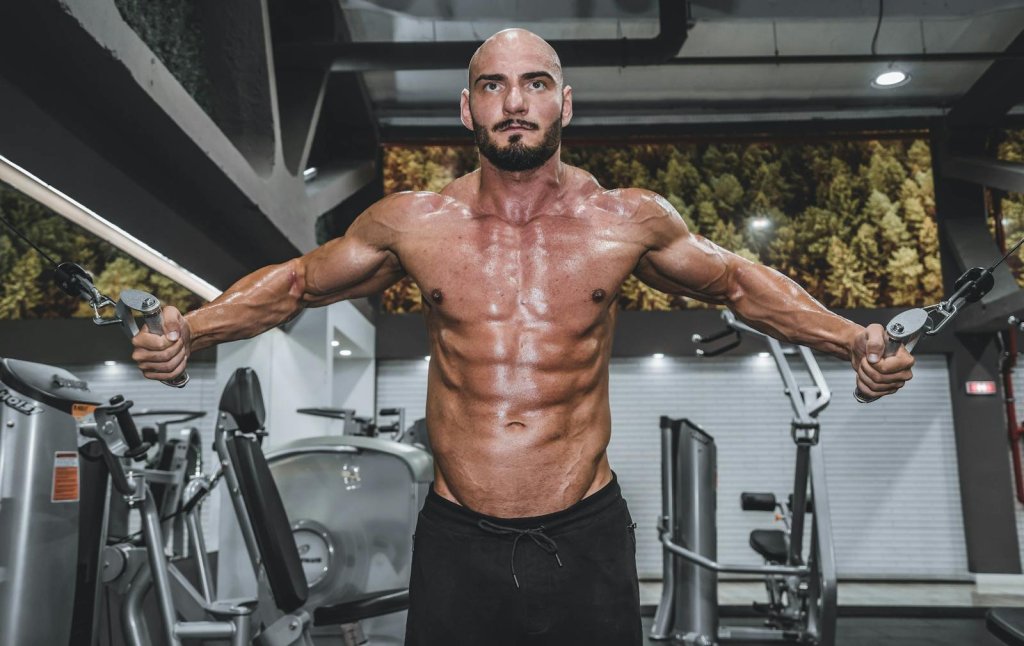
Understanding how to use cables correctly helps you train your shoulders more evenly, improve stability, and reduce momentum-driven strain compared to free weights. In this guide, you’ll learn the best cable shoulder exercises, how to perform them safely, and how to structure them into an effective workout.
11 Best Cable Shoulder Exercises
Build strong, defined delts using cable exercises that keep constant tension on the shoulders through every range of motion. This list targets all three deltoid heads while supporting controlled, joint-friendly shoulder training.
1. Cable Lateral Raise
A foundational movement for isolating the side delts with constant tension.
How to do it
- Set the pulley at the lowest position
- Stand sideways to the machine, holding the handle with the outside arm
- Keep a slight bend in the elbow and brace your core
- Raise the arm out to the side until it reaches shoulder height
- Pause briefly, then lower slowly under full control
Why it works
Unlike dumbbells, the cable maintains consistent resistance from the start to the end of the lift. This increases time under tension for the lateral deltoid and reduces reliance on momentum, which supports better muscle engagement and control.
Muscles worked
Lateral deltoid, upper trapezius (secondary)
Trainer Tip
If you feel your neck tightening or shoulders shrugging, the weight is too heavy. Slow the tempo and prioritize clean movement.
2. Single-Arm Cable Front Raise
Targets the anterior delts with precise control.
How to do it
- Set the pulley at the lowest position
- Face away from the machine holding the handle in one hand
- Keep your torso upright and core engaged
- Raise the arm straight forward to shoulder height
- Lower the handle slowly and repeat
Why it works
The cable’s resistance remains constant through the lift, which increases anterior delt activation without the “rest” that occurs at the bottom of dumbbell raises.
Muscles worked
Anterior deltoid, upper chest (secondary)
Trainer Tip
Stop at shoulder height. Raising higher shifts tension away from the delts and onto the traps.
3. Cable Rear Delt Fly
Essential for shoulder balance and posture.
How to do it
- Set both pulleys at shoulder height
- Stand in the center and grab opposite handles with arms crossed
- Keep arms slightly bent and chest tall
- Pull arms out and back in a wide arc
- Control the return to the start position
Why it works
This movement trains the often-neglected rear delts while reinforcing scapular control, which supports balanced shoulder development and posture.
Muscles worked
Posterior deltoid, rhomboids, mid-trapezius
Trainer Tip
Think about spreading the cables apart rather than pulling with your hands.
4. Cable Face Pull
A staple for shoulder health and rear-delt strength.
How to do it
- Set the pulley at face height and attach a rope
- Grip the rope with thumbs pointing backward
- Pull the rope toward your face while driving elbows out
- Squeeze the shoulder blades at the end
- Return slowly under control
Why it works
Face pulls combine rear delt activation with upper-back and rotator cuff engagement, making them valuable for shoulder balance and long-term joint health.
Muscles worked
Posterior deltoid, upper trapezius, rotator cuff
Trainer Tip
Keep your ribs down and avoid leaning back to maintain proper shoulder mechanics.
5. Cable Upright Row (Wide Grip)
Targets shoulders with reduced trap dominance.
How to do it
- Attach a straight bar to a low pulley
- Grip the bar wider than shoulder width
- Pull the bar upward toward chest height
- Keep elbows flared outward
- Lower the bar slowly
Why it works
Using a wide grip shifts emphasis away from the upper traps and places more load on the lateral delts compared to narrow-grip upright rows.
Muscles worked
Lateral deltoid, upper trapezius
Trainer Tip
Never pull above chest level to avoid unnecessary shoulder strain.
6. Cable Overhead Press
A compound cable-based shoulder press variation.
How to do it
- Set both pulleys at shoulder height
- Hold the handles at shoulder level
- Press upward until arms are fully extended
- Lower slowly back to the start
Why it works
The cable provides constant resistance throughout the pressing motion, encouraging steady force production and improved shoulder control.
Muscles worked
Anterior deltoid, triceps
Trainer Tip
Brace your core and glutes to prevent excessive lower-back arching.
7. Cable Arnold Press
Adds rotation for greater anterior delt involvement.
How to do it
- Start with palms facing you at shoulder height
- Press upward while rotating palms forward
- Finish with arms overhead and palms facing out
- Reverse the rotation on the way down
Why it works
The rotational component increases time under tension and challenges shoulder coordination through a longer movement path.
Muscles worked
Anterior deltoid, lateral deltoid
Trainer Tip
Control the rotation—rushing the movement reduces its effectiveness.
8. Cable Y Raise
Great for shoulder stability and posture.
How to do it
- Set pulleys at the lowest position
- Hold handles with arms slightly bent
- Raise arms diagonally upward into a “Y” shape
- Pause briefly, then lower slowly
Why it works
This exercise emphasizes controlled shoulder elevation and scapular stability, which supports healthy shoulder mechanics.
Muscles worked
Anterior deltoid, upper back
Trainer Tip
Focus on lengthening your arms upward rather than lifting heavy weight.
9. Cable External Rotation
Supports rotator cuff strength.
How to do it
- Set the pulley at elbow height
- Keep elbow tucked firmly against your side
- Rotate your forearm outward away from the body
- Return slowly with control
Why it works
This movement directly targets the rotator cuff, which plays a key role in shoulder stability and injury prevention.
Muscles worked
Rotator cuff, posterior deltoid
Trainer Tip
Light weight and slow reps are far more effective than heavy resistance.
10. Cable Reverse Fly (Low to High)
Adds a different angle to rear-delt training.
How to do it
- Set pulleys at the lowest position
- Hold handles with arms crossed
- Pull arms upward and outward
- Squeeze shoulder blades at the top
Why it works
The low-to-high path increases rear-delt engagement across a longer range of motion.
Muscles worked
Posterior deltoid, upper back
Trainer Tip
Avoid shrugging to keep tension on the rear delts.
11. Single-Arm Cable Press-Out
A shoulder-stability focused finisher.
How to do it
- Stand sideways to the cable machine
- Hold the handle close to your chest
- Press the handle straight forward
- Resist rotation through the torso
Why it works
This exercise challenges the shoulder’s ability to stabilize against rotational forces while also engaging the core.
Muscles worked
Anterior deltoid, core stabilizers
Trainer Tip
Move slowly and keep hips and shoulders square throughout the set.
How to Structure a Cable Shoulder Workout
- Perform 6–8 exercises total
- 2–4 sets per exercise
- 8–15 reps depending on load
- Train shoulders 1–2 times per week
Start with compound presses, then progress to isolation and stability work.
Common Mistakes to Avoid During Cable Shoulder Exercises
Avoiding these common errors can help keep cable shoulder training effective and joint-friendly.
- Using excessive weight and relying on momentum
- Shrugging the shoulders during lateral and front raises
- Locking out the elbows aggressively at the top of presses
- Allowing the torso to lean or twist during single-arm movements
- Skipping rear delt and rotator cuff exercises
Trainer Tip
If form breaks down, reduce the load and slow the tempo to maintain control.
When to Modify or Stop Cable Shoulder Exercises
Cable shoulder exercises should feel controlled and challenging—not painful.
You should modify or pause the exercise if you notice:
- Sharp or sudden shoulder pain
- Loss of control through the movement
- Pain that increases with each repetition
- Discomfort that persists after the workout
Trainer Tip
Adjust the range of motion, reduce resistance, or switch to lighter isolation movements. If shoulder discomfort continues over time, seek guidance from a qualified fitness or healthcare professional.
Frequently Asked Questions
Are cable shoulder exercises better than dumbbells?
They are not better or worse, but cables provide more constant tension.
Can beginners do cable shoulder exercises?
Yes, cables are beginner-friendly due to controlled resistance.
Do cable exercises help shoulder stability?
Yes, especially when using slow tempo and unilateral movements.
How heavy should I go on cable shoulder raises?
Use a weight that allows strict control for all reps.
Are cable face pulls necessary?
They are highly recommended for shoulder balance and posture.
Can I train shoulders only with cables?
Yes, cables alone can provide complete shoulder training.
Conclusion
Cable shoulder exercises are a powerful tool for building strong, defined delts with precision and control. By using constant tension and adjustable angles, cables help you train all parts of the shoulder while supporting better joint mechanics.
If your goal is balanced shoulder development, improved stability, and cleaner reps, incorporating cable shoulder exercises into your weekly routine is a smart move.
Next step: Add 2–3 of these movements to your next shoulder workout and focus on slow, controlled execution.
References
- CDC: Adult Physical Activity Guidelines Overview
- American Heart Association: Strength and Resistance Training Exercise
- ACSM Position Stand: Progression Models in Resistance Training for Healthy Adults (PubMed)
- Nuzzo JL (2024): Resistance Exercise Minimal Dose Strategies (PubMed)
- AAOS OrthoInfo: Rotator Cuff and Shoulder Conditioning Program (PDF)
- ACE Exercise Library: Single-Arm Cable Lateral Raise
- Coratella et al. (2020): EMG Analysis of Lateral Raise Variations (PMC)