
Chair exercises can help you “burn belly fat” by raising your heart rate and building core and full-body muscle, which supports overall fat loss over time. The key is doing them consistently as a seated cardio-and-strength routine, because spot-reducing fat from the belly isn’t how the body works.
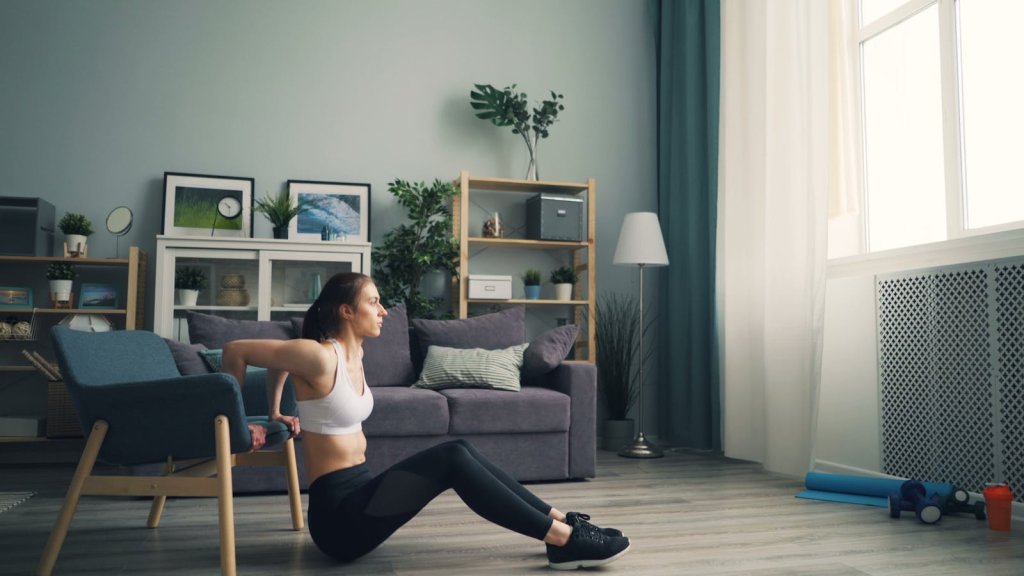
Understanding this matters because belly fat is linked with higher health risk, and the safest, most sustainable approach is regular movement plus sensible nutrition habits. Guidance from the Centers for Disease Control and Prevention (CDC), the World Health Organization (WHO), and the Mayo Clinic consistently emphasizes weekly aerobic activity plus strength work.
What Does “Burn Belly Fat” Really Mean?
“Burn belly fat” usually means reducing excess fat around the stomach. However, you cannot target fat loss in just one area. The body loses fat overall through consistent calorie balance and regular activity.
Belly fat includes:
- Subcutaneous fat (under the skin)
- Visceral fat (around internal organs)
Regular exercise helps by:
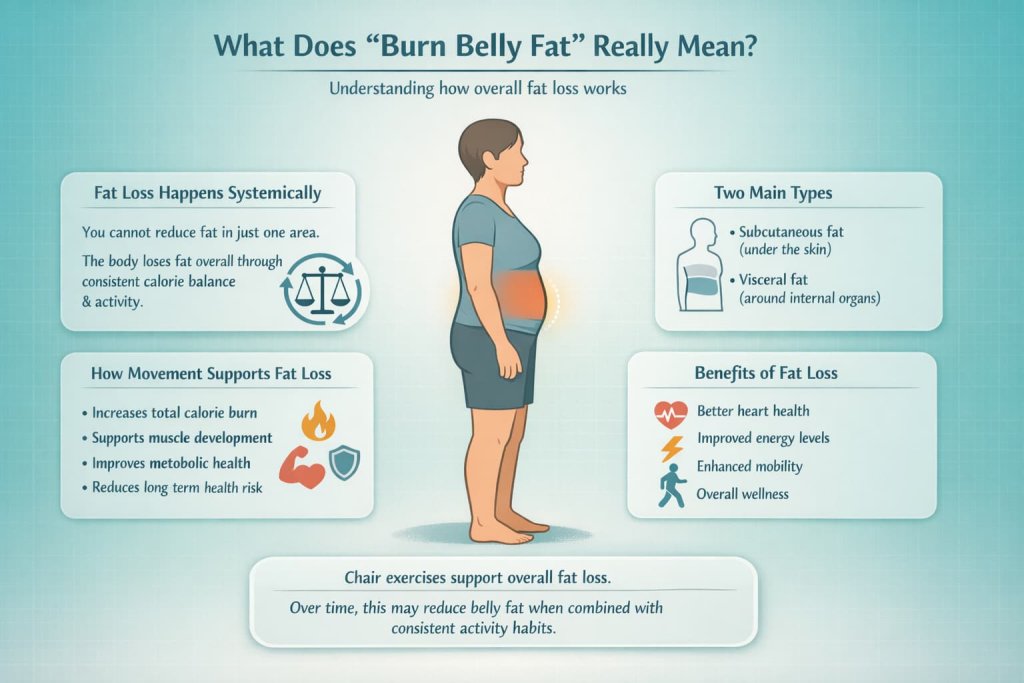
- Increasing total calorie burn
- Supporting muscle development
- Improving metabolic health
- Reducing long-term health risk
Chair exercises support overall fat loss — and over time, that may reduce belly fat.
Are Chair Exercises Effective for Belly Fat Loss?
Yes, chair exercises can support belly fat loss when done consistently and at moderate intensity.
They are effective because they:
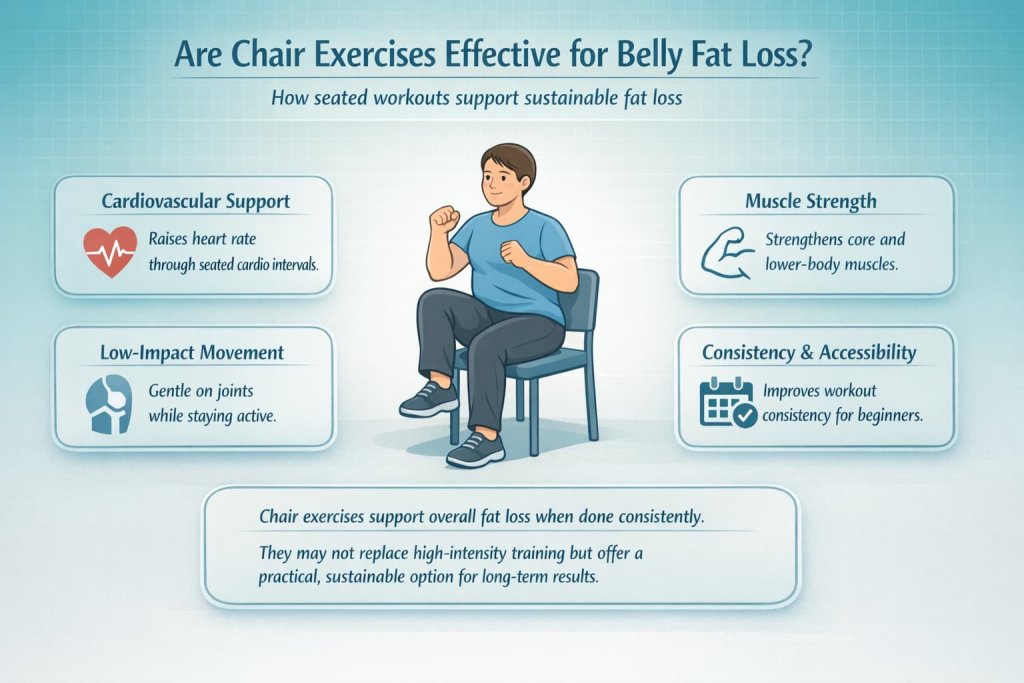
- Raise heart rate through seated cardio intervals
- Strengthen core and lower-body muscles
- Provide low-impact movement
- Improve exercise consistency for beginners
They may not replace high-intensity workouts, but they are practical and sustainable — which matters most for long-term results.
10 Best Chair Exercises to Burn Belly Fat Fast at home
Do these as a circuit. Move to the next exercise with minimal rest. Choose a pace that elevates your breathing but allows proper form.
1) Seated Marching with Arm Drive
Why it works:
This movement combines lower-body marching with upper-body arm drive to create a simple but effective seated cardio drill. Moving both arms and legs together increases heart rate, improves coordination, and engages the core for stability. When done at a steady pace, it supports calorie burn while remaining low impact.
Muscles worked:
Hip flexors, quadriceps, glutes, core stabilizers, shoulders, and upper back.
How to do it:
- Sit tall near the front edge of a sturdy chair
- Plant both feet flat on the floor, hip-width apart
- Lift one knee toward hip height
- Lower it with control and lift the opposite knee
- Pump your arms forward and back like brisk walking
- Keep your torso upright and avoid leaning back
- Continue for 30–60 seconds at a steady pace
Trainer Tip:
If your hip flexors fatigue quickly, reduce knee height slightly and focus on posture and controlled breathing.
2) Seated Knee-to-Elbow Crunch
Why it works:
This exercise activates the front core muscles while adding a light rotational component. When performed continuously, it keeps the abdominal muscles under tension and can elevate heart rate for additional metabolic demand.
Muscles worked:
Rectus abdominis, obliques, hip flexors.
How to do it:
- Sit tall with feet flat on the floor
- Place hands lightly behind your head or at your temples
- Lift your right knee toward your chest
- Rotate your torso slightly so your left elbow moves toward that knee
- Return to center with control
- Switch sides and repeat
- Continue alternating for 30–45 seconds
Trainer Tip:
Rotate from your ribs and torso, not by pulling on your neck.
3) Seated Bicycle (Fast Feet)
Why it works:
This higher-tempo movement combines alternating leg extension with core stabilization. It challenges coordination and can function like seated interval cardio when performed continuously.
Muscles worked:
Hip flexors, lower abdominals, quadriceps.
How to do it:
- Sit tall and hold the sides of the chair for support
- Lift one knee while extending the opposite leg forward
- Switch legs in a smooth pedaling motion
- Keep your chest lifted and spine tall
- Avoid collapsing through the lower back
- Continue for 30–45 seconds
Trainer Tip:
If you feel lower-back strain, reduce the speed and keep the knees slightly lower.
4) Seated Alternating Knee Tucks
Why it works:
This movement strengthens the lower abdominals while improving core control and hip stability. Alternating legs reduces strain on the lower back and makes it more beginner-friendly while still challenging the midsection.
Muscles worked:
Lower abs, hip flexors, deep core stabilizers.
How to do it:
- Sit tall near the front edge of the chair
- Grip the sides of the chair for support
- Lift one or two knee toward your chest
- Pause briefly at the top
- Lower the foot slowly back to the floor
- Switch sides and repeat
- Continue alternating for 30–45 seconds
Trainer Tip:
Avoid leaning backward. Stay upright and focus on controlled movement rather than speed.
5) Seated Heel Taps
Why it works:
This low-impact drill strengthens deep core stabilizers while improving muscular endurance. It’s gentle but effective for building abdominal control.
Muscles worked:
Deep core stabilizers, hip flexors.
How to do it:
- Sit tall and lightly brace your core
- Lift one foot a few inches off the floor
- Tap your heel gently down
- Alternate sides at a steady pace
- Keep your chest lifted
- Continue for 45–60 seconds
Trainer Tip:
Imagine growing taller through the crown of your head to maintain posture.
6) Seated Punches
Why it works:
Upper-body punching intervals can quickly elevate heart rate while engaging the core to resist rotation. It adds a cardio effect without impact.
Muscles worked:
Shoulders, arms, upper back, core stabilizers.
How to do it:
- Sit tall with fists near chin level
- Keep shoulders relaxed
- Punch one arm forward
- Alternate arms quickly but with control
- Maintain a light core brace
- Continue for 30–60 seconds
Trainer Tip:
Exhale lightly with each punch to engage your core more effectively.
7) Seated Wood-Chop
Why it works:
This controlled rotational movement strengthens the obliques and improves trunk stability. It supports functional movement patterns.
Muscles worked:
Obliques, transverse abdominis, shoulders.
How to do it:
- Sit upright with feet flat
- Clasp hands together in front of your chest
- Move your hands diagonally across your body
- Rotate your torso slightly as you move
- Return slowly to center
- Perform 8–12 reps, then switch sides
Trainer Tip:
Keep hips facing forward and rotate only within a comfortable range.
8) Seated Leg Extension with Hold
Why it works:
Adding strength work to your seated routine helps build lower-body muscle, which supports overall metabolism and fat-loss efforts.
Muscles worked:
Quadriceps, hip flexors, core stabilizers.
How to do it:
- Sit tall near the edge of the chair
- Extend one leg forward until nearly straight
- Hold for 2–3 seconds
- Lower the leg slowly
- Repeat 10–12 reps per side
Trainer Tip:
Focus on controlling the lowering phase for better muscle engagement.
9) Seated Chair Jacks
Why it works:
This movement mimics the rhythm of jumping jacks without impact. It combines upper and lower body for a cardio-style effect.
Muscles worked:
Shoulders, hips, quadriceps, core.
How to do it:
- Sit tall with feet together
- Step one foot out to the side
- Raise both arms out and up
- Return arms and foot to center
- Alternate sides briskly
- Continue for 30–60 seconds
Trainer Tip:
Keep movements light and rhythmic rather than exaggerated.
10) Seated Reverse Crunch
Why it works:
This exercise emphasizes lower-ab control and pelvic stability. It helps build strength in the muscles that support trunk stability.
Muscles worked:
Lower abdominals, hip flexors.
How to do it:
- Sit tall and hold the chair sides
- Lift both knees slightly off the floor
- Gently tuck knees toward your chest
- Avoid rounding excessively
- Return slowly to starting position
- Perform 8–12 controlled reps
Trainer Tip:
If lifting both legs feels too challenging, perform alternating single-leg knee tucks.
How to actually burn belly fat with chair workouts
“Burn belly fat” really means improving overall energy balance while keeping activity consistent.
- Aerobic-style chair intervals help you burn calories and improve fitness.
- Strength-style chair moves help preserve or build muscle, which supports metabolism and body composition.
- A realistic target for most adults is at least 150 minutes per week of moderate activity plus 2 days per week of muscle-strengthening, which you can build toward using short seated sessions, according to the CDC and the American Heart Association (AHA).
- For additional weight-management support, higher weekly activity volumes may provide further benefits as outlined in guidance from the American College of Sports Medicine (ACSM).
Chair exercises to burn belly fat safely
Before you start, set yourself up for success:
- Use a sturdy chair that does not roll (no wheels)
- Sit tall with feet flat and knees about hip-width
- Keep your core gently braced (think “ribs stacked over hips”)
- Move at a pace that feels challenging but controlled
- Stop if you feel sharp pain, dizziness, chest pain, or unusual shortness of breath
Who should modify or avoid these chair exercises?
Chair workouts are often helpful if you want lower-impact training, but you should modify or get medical clearance first if you have:
- Recent surgery, uncontrolled blood pressure, or a heart condition not cleared for exercise
- Severe joint pain that worsens with movement
- Significant balance issues even while seated
- New or unexplained symptoms (chest pain, fainting, sudden weakness)
If anything feels “wrong,” it’s better to pause and get guidance from a clinician or physical therapist.
Simple 15-minute chair workout plan
- Warm-up: 2 minutes marching + punches
- Circuit: 40 seconds work, 20 seconds rest per move
- Strength finisher: leg extensions + wood-chops
Aim for 3–5 days per week and gradually increase intensity.
Common Mistakes That Slow Belly Fat Results
Progress often slows because of simple but common mistakes:
- Expecting spot reduction from ab exercises
- Not increasing intensity enough
- Exercising inconsistently
- Ignoring nutrition habits
- Slouching and losing core engagement
Fixing these habits improves results without needing extreme workouts.
How Often Should You Do Chair Exercises?
For fat-loss support and general health, aim for:
- 150 minutes per week of moderate activity
- 2 days per week of muscle-strengthening
You can do:
- 15–20 minute sessions, 3–5 days per week
- Or shorter sessions split throughout the day
Consistency over months matters more than doing intense workouts for a short time.
Nutrition habits that support belly fat loss
Chair workouts work best with sustainable nutrition habits:
- Prioritize protein and fiber
- Reduce sugary drinks
- Maintain consistent portions
- Support sleep and stress management
For additional evidence-based guidance on belly fat risk and long-term weight management, educational resources from the Mayo Clinic and Johns Hopkins Medicine provide helpful overviews.
FAQs
Can chair exercises really burn belly fat?
They support overall fat loss when done consistently but do not directly target belly fat.
How long should I do them daily?
10–20 minutes can be effective. Short sessions add up according to the CDC.
Are chair exercises good for beginners?
Yes. They are lower impact and often easier on joints.
How soon will I see results?
Stamina may improve in a few weeks. Visible fat-loss changes take longer and depend on overall habits.
Do I need equipment?
No. A sturdy chair is enough.
Conclusion
Chair exercises offer a practical, low-impact way to increase activity, strengthen your core, and support overall fat loss at home. Stay consistent, follow established activity guidelines from trusted health institutions, and focus on sustainable habits for long-term success.