
The seated cable row is the best overall chest supported row alternative because it provides a stable horizontal pulling pattern with easily adjustable resistance. However, one-arm dumbbell rows, machine rows, inverted rows, and several other exercises can also train the lats and upper back effectively.
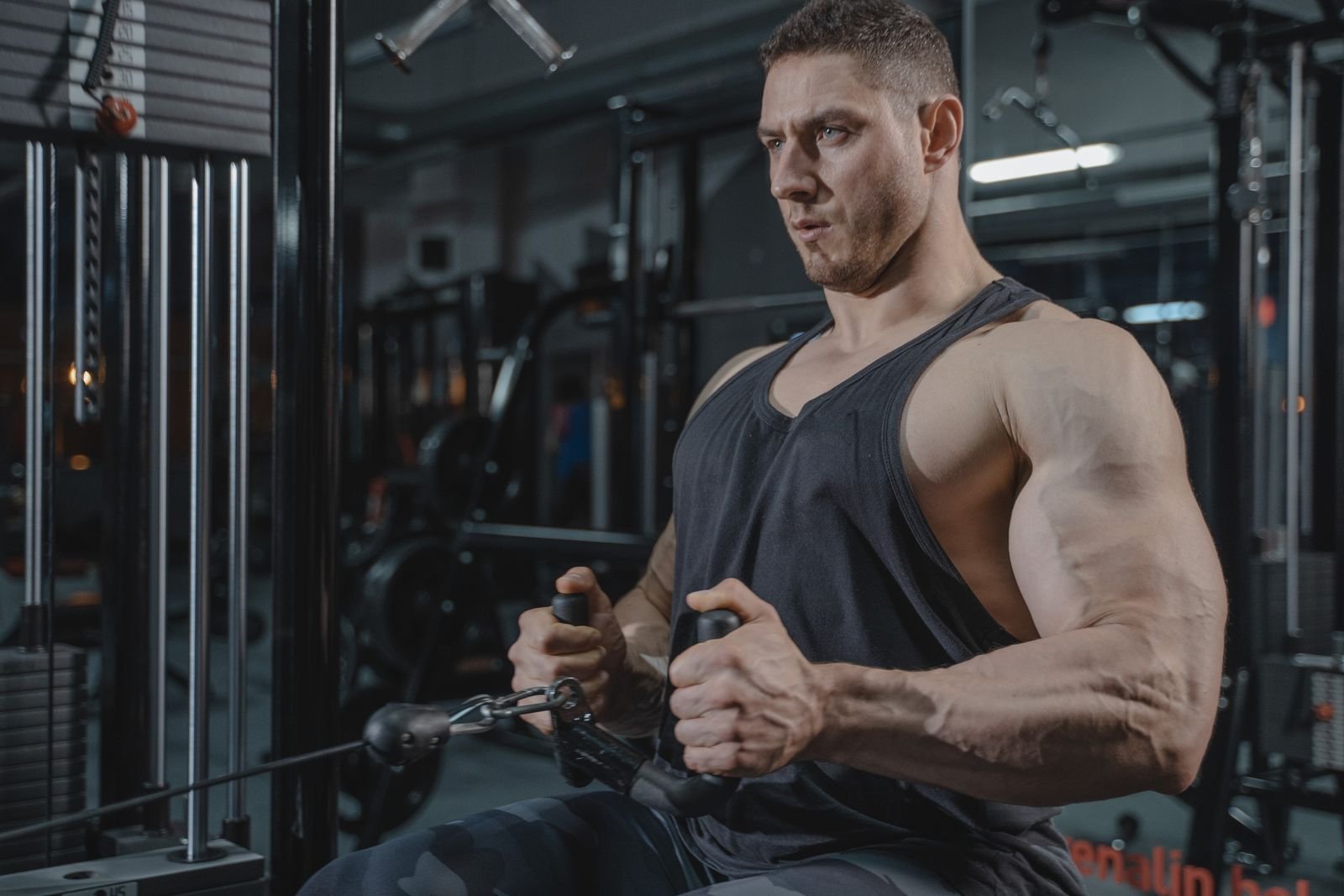
The right substitute depends on your equipment, experience, and ability to maintain a stable torso. Some alternatives closely reproduce the supported position, while others place greater demands on your core, hips, and lower back.
What Makes a Good Chest Supported Row Alternative?
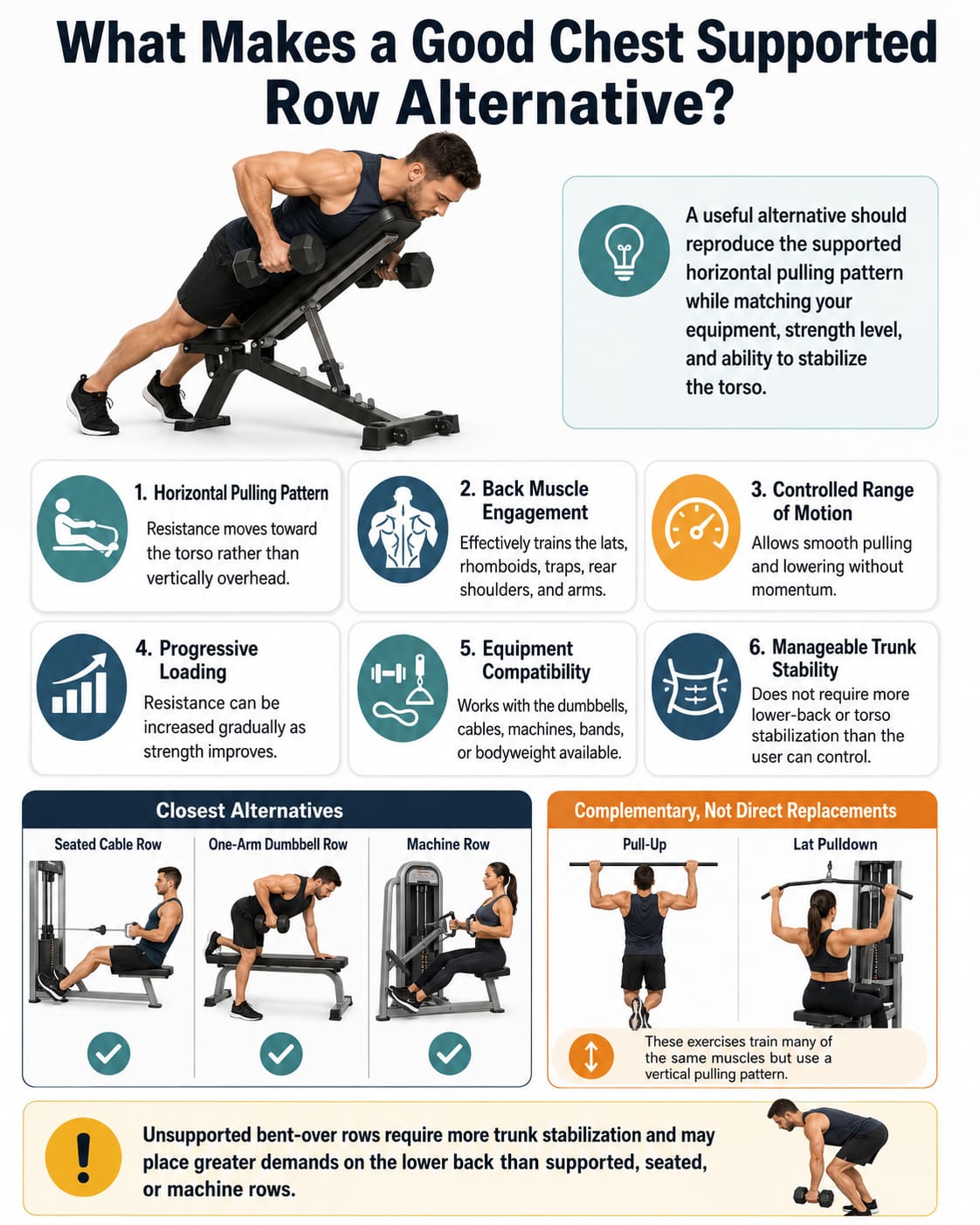
A chest-supported row holds your torso against a pad while you pull resistance toward your body. This support reduces how much effort is required to maintain a prolonged hip-hinge position, allowing you to concentrate on your back and arm muscles.
A useful alternative should provide several of the following features:
- A horizontal or nearly horizontal pulling pattern
- Effective resistance for the lats and upper back
- A controlled range of motion
- Progressive loading as you become stronger
- A setup that matches your available equipment
- A manageable level of trunk stabilization
Not every back exercise is a direct replacement. Pull-ups and lat pulldowns work many of the same muscles, but they use a vertical pulling pattern. They can complement rows, but they do not reproduce the movement as closely as cable, dumbbell, machine, or bodyweight rows.
Research comparing different row exercises shows that exercise selection affects trunk-muscle activity and spinal demands. Free-weight bent-over rows generally require more torso stabilization than seated cable or machine rows, which is an important consideration when replacing a supported exercise.
Muscles Worked by Chest Supported Row Alternatives
Most chest supported row alternatives primarily train the muscles responsible for pulling the upper arms backward and moving the shoulder blades toward the spine.
The main muscles include:
| Muscle | Main role during rowing |
|---|---|
| Latissimus dorsi | Pulls the upper arm backward and toward the torso |
| Rhomboids | Draw the shoulder blades toward the spine |
| Middle trapezius | Supports shoulder-blade retraction |
| Lower trapezius | Assists shoulder-blade control |
| Posterior deltoids | Help move the upper arms backward |
| Biceps | Bend the elbows during the pull |
| Forearms | Maintain grip on the handle or weight |
Unsupported variations also require the spinal erectors, abdominal muscles, glutes, and hamstrings to help maintain position.
9 Best Chest Supported Row Alternatives for Back Strength
These nine chest supported row alternatives train the lats, rhomboids, traps, rear delts, and arms using cables, dumbbells, barbells, machines, bands, or bodyweight. Choose the option that best matches your equipment, experience, and ability to maintain a stable torso.
1. Seated Cable Row
How to do it:
- Sit at the cable station with your feet supported and your knees slightly bent.
- Hold the attachment with your arms extended.
- Sit tall and brace your core without excessively arching your back.
- Pull the handle toward your lower ribs or upper abdomen.
- Drive your elbows backward without flaring them excessively.
- Pause briefly while keeping your shoulders away from your ears.
- Extend your arms slowly and repeat.
Why it works: The seated cable row closely matches the horizontal pulling pattern of a chest-supported row. The seated setup reduces the need to maintain a deep hip hinge, while the cable provides continuous resistance through the pulling and returning phases. Different attachments also allow you to adjust your grip and pulling angle.
Muscles worked: The seated cable row primarily trains the latissimus dorsi, rhomboids, middle trapezius, and posterior deltoids. The biceps and forearms assist with elbow flexion and grip.
Trainer Tip: Think about driving your elbows behind your body rather than pulling only with your hands. Keep your torso still instead of leaning backward to move more weight.
2. One-Arm Dumbbell Row
How to do it:
- Place one hand and the same-side knee on a stable bench.
- Plant your opposite foot firmly on the floor.
- Hold the dumbbell with your free arm extended beneath your shoulder.
- Brace your core and keep your back in a neutral position.
- Pull the dumbbell toward your hip or lower ribs.
- Keep your elbow relatively close to your torso.
- Lower the dumbbell slowly until your arm is extended.
- Complete all repetitions before changing sides.
Why it works: Supporting one hand and knee on a bench gives you more stability than a fully unsupported row. The unilateral setup allows each side of your back to work independently, making it useful for identifying and addressing side-to-side strength differences.
Muscles worked: The one-arm dumbbell row trains the latissimus dorsi, rhomboids, trapezius, posterior deltoids, biceps, and forearms. Your abdominal muscles and other trunk stabilizers work to limit unwanted rotation.
Trainer Tip: Imagine pulling the dumbbell toward your back pocket. Keep your shoulders and hips facing the floor instead of rotating your torso upward.
3. T-Bar or Landmine Row
How to do it:
- Stand over the bar with your feet approximately shoulder-width apart.
- Push your hips backward and bend your knees slightly.
- Hold the row handle or bar securely with both hands.
- Brace your core and keep your spine neutral.
- Pull the handle toward your lower chest or upper abdomen.
- Drive your elbows backward without jerking your torso upward.
- Lower the weight until your arms are extended.
- Maintain the same torso angle throughout the set.
Why it works: The T-bar or landmine row allows you to train the back with relatively heavy resistance. Its angled bar path can feel more stable than a free barbell row, while still providing enough loading potential for building back strength.
Muscles worked: This exercise targets the latissimus dorsi, rhomboids, middle trapezius, posterior deltoids, and biceps. The spinal erectors, glutes, hamstrings, and abdominal muscles help stabilize the hip-hinged position.
Trainer Tip: Establish your torso angle before beginning the first repetition and keep it consistent. If your chest rises with every pull, reduce the weight.
4. Bent-Over Barbell Row
How to do it:
- Stand with the bar positioned over your midfoot.
- Hold the bar slightly wider than shoulder width.
- Push your hips backward and bend your knees slightly.
- Lower your torso while maintaining a neutral spine.
- Brace your core and allow the bar to hang beneath your shoulders.
- Pull the bar toward your upper abdomen.
- Keep your torso stable as your elbows move backward.
- Lower the bar slowly until your arms are straight.
Why it works: The bent-over barbell row trains many of the same muscles as a chest-supported row while allowing substantial progressive loading. Because your torso is unsupported, it also requires greater contribution from your hips, core, and lower-back muscles.
Muscles worked: The primary muscles include the latissimus dorsi, rhomboids, trapezius, posterior deltoids, and biceps. The forearms, spinal erectors, glutes, hamstrings, and abdominal muscles support the movement.
Trainer Tip: Use a weight that allows you to hold the same hip-hinge position throughout the set. Avoid turning each repetition into a partial deadlift.
5. Inverted Row
How to do it:
- Set a secure bar at an appropriate height.
- Lie beneath the bar and hold it slightly wider than shoulder width.
- Place your heels on the floor and straighten your body.
- Brace your core and squeeze your glutes.
- Pull your chest toward the bar.
- Keep your shoulders away from your ears.
- Pause briefly near the top.
- Lower yourself until your arms are extended.
Why it works: The inverted row provides a horizontal pulling movement using your body weight as resistance. Its difficulty is easy to adjust: raising the bar or bending your knees makes it easier, while lowering the bar or elevating your feet makes it harder.
Muscles worked: The inverted row trains the latissimus dorsi, rhomboids, trapezius, posterior deltoids, biceps, and forearms. The abdominal muscles and glutes work isometrically to keep your body aligned.
Trainer Tip: Keep your body straight from your shoulders to your heels. Adjust your body angle before adding external weight or attempting advanced variations.
6. Suspension Trainer Row
How to do it:
- Secure the suspension trainer to a manufacturer-approved anchor.
- Hold one handle in each hand and face the anchor.
- Walk your feet forward until the straps are tight.
- Lean backward while keeping your body in a straight line.
- Pull your chest toward the handles.
- Keep your shoulders down and your wrists neutral.
- Extend your arms slowly to return to the starting position.
- Maintain tension in the straps throughout the set.
Why it works: The suspension trainer row follows the same basic horizontal pulling pattern as an inverted row. Independent handles allow your wrists and shoulders to move naturally, while changing your foot position provides a simple way to increase or decrease resistance.
Muscles worked: This exercise works the latissimus dorsi, rhomboids, trapezius, posterior deltoids, biceps, and forearms. Your core and glutes help maintain a rigid body position.
Trainer Tip: Mark or remember your foot position so you can repeat the same level of difficulty during future workouts. Always check the anchor before starting.
7. Seated Machine Row
How to do it:
- Adjust the seat so the handles align with your preferred pulling path.
- Place your feet securely on the machine’s supports.
- Hold the handles and sit tall.
- Keep your chest against the pad when one is provided.
- Pull your elbows backward until the handles approach your torso.
- Pause briefly without shrugging.
- Return the handles slowly until your arms are extended.
- Keep the weight controlled between repetitions.
Why it works: The seated machine row provides a guided and stable pulling path. A chest pad, when available, reduces the need for torso stabilization and makes it easier to focus on the back muscles without balancing free weights.
Muscles worked: The seated machine row primarily targets the latissimus dorsi, rhomboids, middle trapezius, and posterior deltoids. The biceps and forearms assist with pulling and gripping.
Trainer Tip: Adjust the seat before selecting a challenging weight. The handles should be reachable without rounding your back or lifting your chest away from the pad.
8. Resistance-Band Row
How to do it:
- Attach the resistance band to a secure anchor at approximately waist height.
- Hold the handles or ends and step backward until the band has light tension.
- Stand or sit tall with your arms extended.
- Brace your core and relax your shoulders.
- Pull your hands toward your lower ribs.
- Gently draw your shoulder blades toward each other.
- Extend your arms slowly without allowing the band to snap forward.
- Maintain control throughout the set.
Why it works: Resistance-band rows provide an accessible horizontal pulling exercise for home, travel, and warm-up sessions. Band resistance increases as the band stretches, creating the greatest challenge near the end of the pulling phase.
Muscles worked: Resistance-band rows train the latissimus dorsi, rhomboids, trapezius, posterior deltoids, biceps, and forearms.
Trainer Tip: Inspect the band and anchor before every workout. Replace bands that show cracks, thinning, or other damage, and never attach them to unstable furniture.
9. Seal Row
How to do it:
- Position a flat bench high enough for the weights to hang without touching the floor.
- Confirm that the bench and every supporting surface are stable.
- Lie face down with your chest and abdomen supported.
- Hold the dumbbells or barbell with your arms extended.
- Keep your neck in a neutral position.
- Pull the weights toward your lower chest or upper abdomen.
- Pause without lifting your torso from the bench.
- Lower the weights slowly until your arms are extended.
Why it works: The seal row closely reproduces the supported position of a chest-supported row. Lying face down limits momentum from the hips and torso, forcing the back and arm muscles to perform the pulling movement with strict form.
Muscles worked: The seal row primarily trains the latissimus dorsi, rhomboids, middle trapezius, posterior deltoids, biceps, and forearms.
Trainer Tip: Prioritize a secure setup over heavy resistance. Use purpose-built equipment or sturdy benches rather than unstable or improvised platforms.
How to Choose the Right Chest Supported Row Alternative
The best exercise is one that fits your equipment and allows you to perform controlled repetitions without unwanted discomfort.
Choose a seated cable row when:
You want the best balance of stability, adjustability, and progressive resistance.
Choose a one-arm dumbbell row when:
You have dumbbells and want to train each side independently.
Choose a machine row when:
You prefer a guided movement or find unsupported rows difficult to stabilize.
Choose an inverted or suspension row when:
You want a bodyweight exercise whose difficulty can be changed through body position.
Choose a band row when:
You train at home, travel regularly, or have limited equipment.
Choose a T-bar or barbell row when:
You are comfortable maintaining a strong hip hinge and want more involvement from the trunk and posterior chain.
Choose a seal row when:
You want strict technique and have access to a safe, stable elevated bench setup.
How to Program Row Alternatives
A practical starting point is to train one or two rowing movements during each upper-body or back workout.
For general muscle and strength development:
- Perform 2–4 working sets per exercise.
- Use approximately 6–10 repetitions for heavier strength-focused work.
- Use approximately 8–15 repetitions for general muscle-building work.
- Use 12–20 repetitions for lighter band or accessory exercises.
- Finish most sets with one to three controlled repetitions still possible.
- Increase weight only after you can complete the target range with consistent form.
The American College of Sports Medicine published updated resistance-training guidance on 2026. The organization emphasizes that regular participation and individualization matter more than complicated programs. It recommends training major muscle groups at least twice per week and notes that bands, bodyweight, machines, and free weights can all support strength and muscle development. The update also reports that training to complete muscular failure is not required for most healthy adults. See the ACSM 2026 resistance-training guidelines for the complete overview.
Example Back Workout Using Row Alternatives
Use one primary row and one lighter secondary row rather than performing every alternative in the same workout.
| Exercise | Sets | Reps |
|---|---|---|
| Seated cable row | 3 | 8–12 |
| Lat pulldown or assisted pull-up | 3 | 8–12 |
| One-arm dumbbell row | 2 | 10–15 per arm |
| Rear-delt raise | 2 | 12–20 |
Beginners can start with two sets per exercise. More experienced lifters can add volume gradually based on recovery, goals, and the rest of their weekly program.
Common Rowing Mistakes to Avoid
Using too much momentum
Rocking the torso may help move more weight, but it can reduce control and change the exercise. Lower the resistance if you cannot maintain your intended position.
Shrugging the shoulders
Keep the shoulders away from the ears. Excessive shrugging often shifts attention away from the desired rowing pattern.
Pulling only with the hands
Think about moving your elbows backward and controlling your shoulder blades rather than squeezing the handle as hard as possible.
Rounding the lower back
Unsupported rows require a stable hip hinge. Switch to a cable or machine variation if you cannot maintain the position comfortably.
Dropping the weight
The lowering phase is part of the repetition. Return the weight or your body slowly instead of allowing resistance to pull you forward.
Using an incomplete range
Use the longest comfortable range you can control. Do not shorten every repetition simply to lift more weight.
Safety Considerations
Warm up with several minutes of easy movement and one or two lighter preparation sets before using challenging resistance.
Inspect cables, bands, benches, machines, bars, and suspension anchors before starting. Do not use unstable furniture or improvised supports.
Stop the exercise if you experience sharp pain, dizziness, numbness, unusual weakness, or another unexpected symptom. General muscle effort is expected during resistance training, but pain should not be treated as a sign that an exercise is working.
People with a current shoulder, elbow, back, or other musculoskeletal condition should ask an appropriately qualified healthcare professional whether a particular rowing variation is suitable.
Frequently Asked Questions
What is the best alternative to a chest-supported row?
The seated cable row is the best overall option for most people. It provides a stable horizontal pull, adjustable resistance, and several grip choices without requiring a chest-supported machine.
Can seated cable rows replace chest-supported rows?
Yes. Seated cable rows train many of the same back and arm muscles. However, you must stabilize your torso more because your chest is not held against a pad.
What can I do instead of chest-supported rows without a bench?
Use seated cable rows, machine rows, inverted rows, suspension rows, resistance-band rows, or landmine rows. None requires an incline bench.
Which row alternative places less demand on the lower back?
A chest-padded machine row generally requires the least active torso stabilization. Seated cable rows may also be easier to stabilize than bent-over barbell rows, although individual comfort and technique vary. Studies comparing rows show that free-weight bent-over variations produce different and often greater trunk-muscle demands than seated cable or machine rows.
Can dumbbell rows replace chest-supported rows?
Yes. A one-arm dumbbell row trains similar muscles and provides some support through the hand and knee placed on a bench. It still requires more anti-rotation control than a fully chest-supported row.
Are chest-supported rows better than bent-over rows?
Neither is universally better. Chest-supported rows allow greater torso support and may make it easier to isolate the pulling movement. Bent-over rows train similar back muscles while requiring greater contribution from the hips, core, and spinal erectors.
Can pull-ups replace chest-supported rows?
Pull-ups are valuable back exercises, but they are not direct replacements. Pull-ups use a vertical pulling pattern, while chest-supported rows use a horizontal pulling pattern. Many balanced programs include both.
Conclusion
The best chest supported row alternative depends on your equipment and training needs. For most people, the seated cable row offers the closest combination of stability, adjustable resistance, and horizontal pulling.
Choose one alternative that allows a comfortable range of motion and consistent technique. Practice it regularly, progress the resistance gradually, and use another rowing variation only when it adds a clear benefit to your program.