
Compound leg exercises are multi-joint movements that train the quads, glutes, hamstrings, and supporting muscles at the same time, making them the most efficient way to build lower-body strength, muscle mass, and functional power. Understanding how these exercises work—and how to program them correctly—helps you get better results from leg day while following evidence-based training principles recommended by major health and fitness organizations.
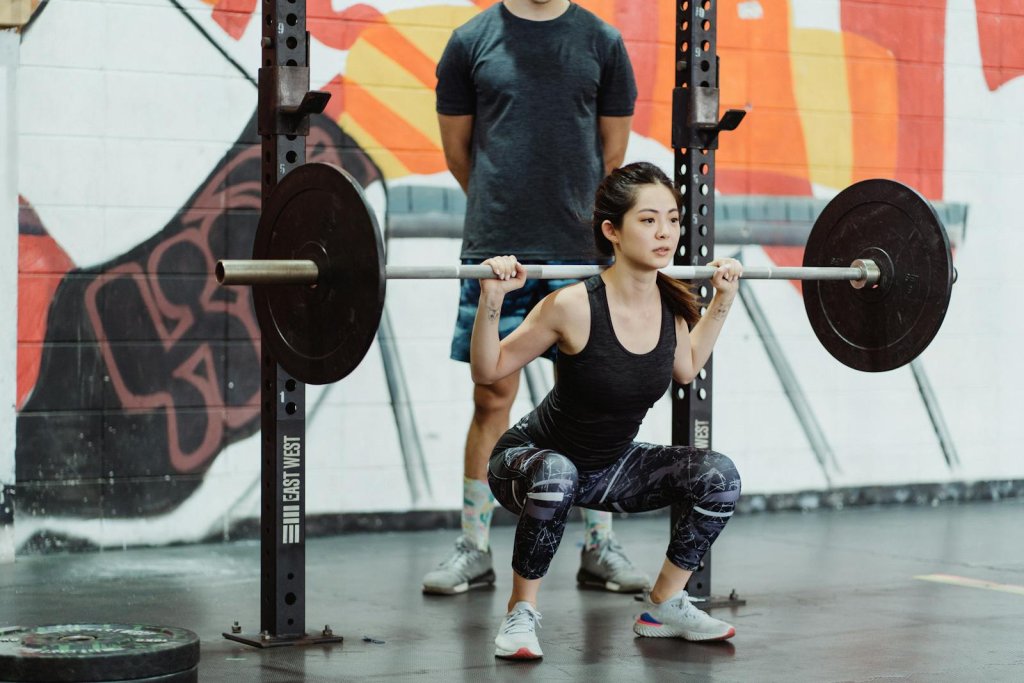
This guide explains what compound leg exercises are, why they matter, and which movements deliver the greatest return for strength and performance—whether your goal is muscle growth, athletic power, or long-term joint health.
What Are Compound Leg Exercises?
Compound leg exercises are lower-body movements that involve two or more joints moving together, typically the hips, knees, and ankles. Because they recruit multiple muscle groups at once, they allow heavier loads, greater muscle activation, and higher overall training efficiency than isolation exercises.
According to strength-training guidance from the American College of Sports Medicine (ACSM), multiple-joint exercises should form the foundation of resistance-training programs because they train large portions of the body and support real-world movement patterns.
Common compound leg patterns include:
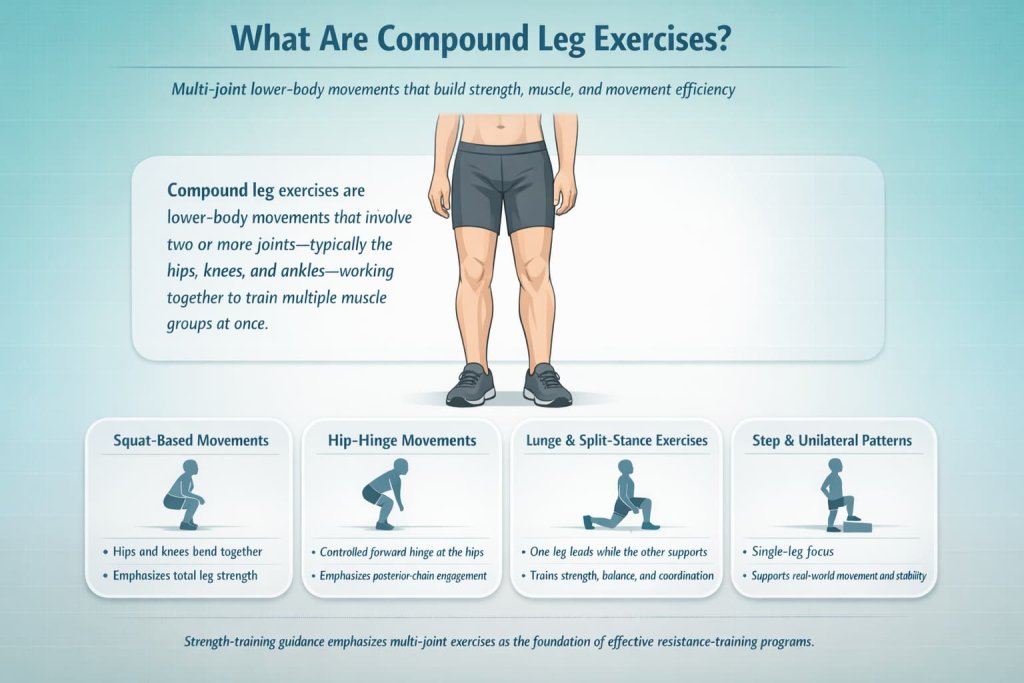
- Squat-based movements
- Hip-hinge movements
- Lunge and split-stance exercises
- Step and unilateral strength patterns
12 Best Compound Leg Exercises
Below are the most effective compound leg exercises, based on movement patterns commonly used in evidence-based strength programs.
1. Back Squat
How to do it:
- Stand with feet shoulder-width apart and barbell resting across the upper back
- Brace your core and keep your chest tall
- Sit the hips back and bend the knees to lower into a squat
- Descend until thighs are at least parallel to the floor
- Push through the mid-foot to return to standing
Why it works:
The back squat trains the hips and knees together under load, allowing significant resistance to be used. This makes it one of the most effective movements for building total lower-body strength and muscle mass.
Muscles worked:
Quadriceps, gluteus maximus, hamstrings, adductors, spinal erectors, core stabilizers
Trainer Tip:
Focus on maintaining a neutral spine and steady tempo—depth should be controlled, not forced.
2. Front Squat
How to do it:
- Hold the barbell across the front of the shoulders with elbows high
- Stand with feet shoulder-width apart
- Brace the core and descend straight down
- Keep the torso upright throughout the movement
- Drive upward through the legs to stand
Why it works:
The front-loaded position increases quadriceps demand while requiring greater core engagement. It also reduces forward lean, which can decrease lower-back stress for some lifters.
Muscles worked:
Quadriceps, glutes, core musculature, upper back stabilizers
Trainer Tip:
If wrist mobility is limited, use a cross-arm grip or lifting straps to support the bar.
3. Goblet Squat
How to do it:
- Hold a dumbbell or kettlebell close to the chest
- Stand with feet slightly wider than hip-width
- Lower into a squat while keeping elbows inside the knees
- Reach comfortable depth with an upright torso
- Push through the heels to stand
Why it works:
The goblet squat encourages proper squat mechanics by counterbalancing the body, making it ideal for learning depth, posture, and controlled movement.
Muscles worked:
Quadriceps, glutes, hamstrings, core
Trainer Tip:
Use this exercise to refine technique before progressing to barbell squats.
4. Trap Bar Deadlift
How to do it:
- Step inside the trap bar with feet hip-width apart
- Grip the handles and brace the core
- Push through the legs to lift the bar while keeping the chest tall
- Extend hips and knees together
- Lower the bar with control
Why it works:
The neutral grip and centered load reduce shear stress on the spine while still allowing heavy loading, blending squat and hinge mechanics.
Muscles worked:
Glutes, quadriceps, hamstrings, calves, core
Trainer Tip:
Think “push the floor away” rather than pulling with the back.
5. Conventional Deadlift
How to do it:
- Stand with mid-foot under the barbell
- Grip the bar just outside the knees
- Brace the core and flatten the back
- Push through the floor to lift the bar
- Lock out by extending hips and knees
Why it works:
The conventional deadlift trains the posterior chain through a powerful hip hinge, reinforcing real-world lifting mechanics.
Muscles worked:
Glutes, hamstrings, spinal erectors, lats, core
Trainer Tip:
Keep the bar close to the body throughout the lift to reduce unnecessary strain.
6. Romanian Deadlift
How to do it:
- Hold a barbell or dumbbells at hip level
- Push the hips back while keeping knees slightly bent
- Lower the weight until a stretch is felt in the hamstrings
- Maintain a neutral spine
- Drive hips forward to stand
Why it works:
This movement emphasizes eccentric control of the hamstrings, supporting posterior-chain strength and hip stability.
Muscles worked:
Hamstrings, glutes, spinal stabilizers
Trainer Tip:
Stop lowering once spinal position begins to change—range matters less than control.
7. Walking Lunge
How to do it:
- Step forward into a long stride
- Lower until both knees bend to about 90 degrees
- Push through the front foot to step forward again
- Maintain upright posture throughout
Why it works:
Walking lunges load each leg independently while challenging balance and coordination, closely mimicking everyday movement patterns.
Muscles worked:
Quadriceps, glutes, hamstrings, calves, core
Trainer Tip:
Keep strides controlled rather than rushing forward for better stability.
8. Reverse Lunge
How to do it:
- Stand tall with feet together
- Step one leg backward into a lunge
- Lower under control
- Push through the front leg to return to standing
- Alternate sides
Why it works:
Stepping backward reduces forward knee stress while still delivering strong glute and quad activation.
Muscles worked:
Glutes, quadriceps, hamstrings
Trainer Tip:
Use reverse lunges if forward lunges aggravate the knees.
9. Bulgarian Split Squat
How to do it:
- Place rear foot on a bench behind you
- Stand tall with front foot planted
- Lower straight down under control
- Push through the front heel to rise
Why it works:
This unilateral exercise increases muscle activation by placing most of the load on one leg, supporting strength symmetry and balance.
Muscles worked:
Quadriceps, glutes, hamstrings, core
Trainer Tip:
Start with bodyweight before adding external load.
10. Step-Ups
How to do it:
- Stand in front of a sturdy platform
- Step one foot onto the surface
- Push through the elevated leg to stand
- Step down with control
- Alternate sides
Why it works:
Step-ups reinforce functional single-leg strength and closely resemble stair climbing and daily movement.
Muscles worked:
Quadriceps, glutes, hamstrings, calves
Trainer Tip:
Choose a box height that allows full control without excessive momentum.
11. Leg Press
How to do it:
- Sit in the leg press machine with feet shoulder-width apart
- Lower the platform with controlled knee bend
- Stop before hips lift off the seat
- Push the platform away through the feet
Why it works:
The leg press allows heavy loading with minimal balance demands, making it useful for hypertrophy-focused training.
Muscles worked:
Quadriceps, glutes, hamstrings
Trainer Tip:
Avoid locking the knees at the top of the movement.
12. Hip Thrust
How to do it:
- Sit with upper back supported on a bench
- Place barbell across the hips
- Drive hips upward until torso is parallel to the floor
- Squeeze glutes at the top
- Lower with control
Why it works:
Hip thrusts directly train hip extension, a key movement for sprinting, jumping, and lifting performance.
Muscles worked:
Gluteus maximus, hamstrings, core
Trainer Tip:
Pause briefly at the top to reinforce glute engagement.
How Compound Leg Exercises Build Strength, Muscle, and Power
Compound leg exercises involve multiple joints and large muscle groups, allowing greater overall force production.
They help build results by:
- Allowing heavier loads for strength development
- Activating more muscle fibers for growth support
- Improving coordination between hips, knees, and ankles
- Reinforcing movement patterns used in daily and athletic tasks
How to Program Compound Leg Exercises Safely
Safe programming emphasizes control, proper sequencing, and gradual progression.
General principles include:
- Performing compound exercises early in the workout
- Training legs at least two days per week with rest
- Using loads that allow consistent, controlled technique
- Progressing volume or resistance gradually
Who Should Be Cautious With Compound Leg Exercises
Some individuals may need modified approaches or added guidance.
Extra caution may be needed for:
- Beginners without established movement control
- Older adults with balance or mobility limitations
- People with joint discomfort or previous lower-body injuries
Common Mistakes With Compound Leg Exercises
Avoiding common errors helps improve effectiveness and safety.
- Frequent mistakes include:
- Ignoring unilateral leg training
- Using excessive weight too soon
- Rushing repetitions or using momentum
- Losing posture or range control
Frequently Asked Questions (FAQs)
Are compound leg exercises better than isolation exercises?
Compound leg exercises are generally more efficient because they train multiple muscles at once, but isolation exercises can still be useful as accessories.
How many compound leg exercises should I do per workout?
Most effective leg workouts include 2–4 compound movements, depending on training experience and intensity.
Can beginners do compound leg exercises?
Yes. Beginner-friendly options like goblet squats, step-ups, and supported lunges are commonly recommended.
Do compound leg exercises help with muscle growth?
Yes. They allow heavier loading and higher muscle activation, which supports hypertrophy when programmed correctly.
Are compound leg exercises safe for older adults?
They can be, when appropriately modified and performed with good technique and proper supervision.
Should I do compound leg exercises before cardio?
For strength and muscle goals, compound leg exercises are typically performed before cardio to avoid fatigue-related form breakdown.
Conclusion
Compound leg exercises form the backbone of effective lower-body training. By training multiple joints and muscle groups together, they deliver greater strength, muscle development, and functional carryover than single-joint movements alone. When programmed correctly and progressed gradually, these exercises support long-term performance, mobility, and overall fitness.
If you’re building a leg routine, start with compound movements—and let everything else support them.
References
- CDC: Adult Physical Activity Guidelines (includes 2+ days muscle-strengthening)
- WHO: Physical Activity Recommendations (muscle-strengthening guidance)
- Physical Activity Guidelines for Americans, 2nd Edition (Official PDF)
- ACSM (PubMed): Progression Models in Resistance Training for Healthy Adults
- NSCA: Teaching Fundamental Resistance Training Movement Patterns
- HPRC: Choosing the Right Exercises to Optimize Resistance Training (exercise order)
- Mayo Clinic: Weight Training Basics (form, progression, safety)