
Yes — resistance band back exercises can effectively build strength, improve posture, and support a healthier spine.
They activate your lats, rhomboids, rear delts, and spinal stabilizers without the need for heavy weights or machines.
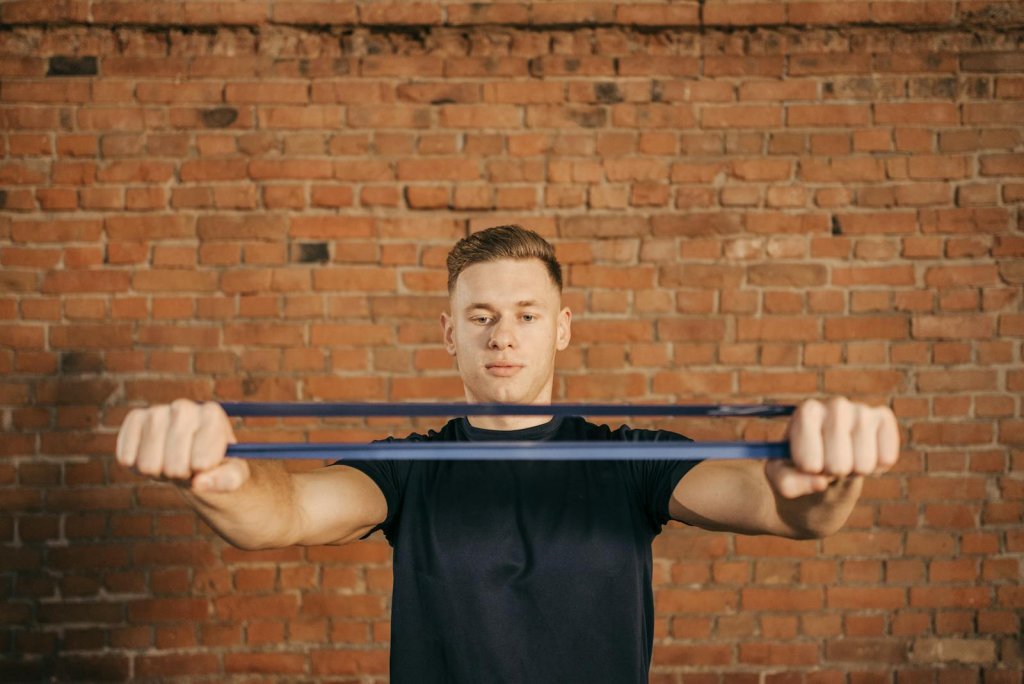
Understanding how to train your back with bands is important because it helps correct posture, reduce stiffness caused by long sitting, and build functional pulling strength — all while keeping joints safe.
In this guide, you’ll learn the 15 best resistance band back exercises, proper form, benefits, sets/reps, safety tips, and FAQ answers.
The 15 Best Resistance Band Back Exercises
These 15 resistance band back exercises target every major muscle group in your upper, mid, and lower back using simple, joint-friendly movements. They help build strength, improve posture, and support a healthier spine — all without needing machines or heavy weights.
1. Standing Resistance Band Row
Why it works:
This exercise strengthens the entire mid-back by teaching proper scapular retraction, which is essential for posture correction and balanced upper-body strength. It helps counteract the rounded-shoulder posture caused by long hours of sitting. The standing position also activates your core as you stabilize the band’s tension.
Muscles worked:
Rhomboids, middle trapezius, rear deltoids, latissimus dorsi, forearms.
How to do it:
- Anchor the band at chest height using a door anchor or sturdy pole.
- Hold the handles or ends with both hands and step back until you feel light tension.
- Keep your chest tall and ribs down.
- Pull your elbows straight back toward your ribs.
- Squeeze your shoulder blades together at the end of the movement.
- Slowly return to the starting position.
Trainer Tip:
Avoid shrugging. Think about pulling your shoulder blades back and slightly down to keep tension in the correct muscles.
2. Seated Band Row
Why it works:
Seated rowing removes balance demands and allows better mind-muscle focus on mid-back engagement. It enhances postural endurance, supports spinal alignment, and provides a stable setup ideal for beginners or home workouts.
Muscles worked:
Lats, rhomboids, middle trapezius, rear delts.
How to do it:
- Sit tall with legs extended or slightly bent.
- Loop the band securely around your feet.
- Hold both ends and sit upright without rounding your back.
- Pull handles toward your mid-stomach.
- Pause briefly and control the return.
Trainer Tip:
Imagine creating length in your spine. A neutral, tall posture ensures tension stays in the back, not the lower back.
3. Resistance Band Lat Pulldown (Overhead Anchor)
Why it works:
The movement mimics the lat pulldown machine by training vertical pulling strength. It helps build a wider, stronger back and improves shoulder stability, making it ideal for home workouts without equipment.
Muscles worked:
Lats, teres major, rear delts, biceps, upper back stabilizers.
How to do it:
- Anchor the band above head height.
- Sit, kneel, or stand depending on anchor location.
- Grip the band with both hands.
- Pull elbows down toward your ribcage.
- Stop when your hands reach shoulder level.
- Slowly return overhead.
Trainer Tip:
Drive elbows downward, not backward. This ensures the lats do the majority of the work.
4. Straight-Arm Band Pulldown
Why it works:
A pure lat-focused exercise that removes elbow flexion, forcing your back muscles to generate the movement. It improves shoulder control and teaches proper engagement of the lats—critical for rows and pullups.
Muscles worked:
Lats, triceps long head, upper back stabilizers, serratus anterior.
How to do it:
- Stand facing an overhead-anchored band.
- Hold the band with straight arms.
- Pull your arms down in an arc toward your thighs.
- Keep your torso still.
- Return with control.
Trainer Tip:
Do not bend your elbows. Think about “pushing the air down” to activate your lats effectively.
5. Resistance Band Face Pull
Why it works:
Face pulls are one of the best exercises for posture and shoulder health. They strengthen the rotator cuff and upper back while training external rotation—something most people lack from daily sitting.
Muscles worked:
Rear delts, middle traps, external rotators (infraspinatus, teres minor).
How to do it:
- Anchor the band at eye height.
- Hold handles with palms facing down or neutral.
- Pull the band toward your forehead.
- Lead the movement with your elbows.
- Rotate your hands outward slightly at the end.
Trainer Tip:
Picture “pulling the band apart” at the peak. This ensures proper upper-back activation.
6. Band Pull-Apart (Overhand Grip)
Why it works:
This simple movement builds endurance in the upper back and improves scapular control. It is excellent for undoing rounded-shoulder posture and strengthening the muscles that hold your shoulder blades in the correct position.
Muscles worked:
Rear delts, rhomboids, mid traps, posterior shoulder stabilizers.
How to do it:
- Hold the band shoulder-width apart at chest height.
- Keep arms straight but relaxed.
- Pull the band apart until it touches your chest.
- Pause and return slowly.
Trainer Tip:
Do not arch your back. Keep ribs tucked to isolate the upper back.
7. Underhand Band Pull-Apart
Why it works:
Changing to an underhand grip shifts emphasis to the lower traps and external rotators. This version is excellent for shoulder stabilization and aligns the shoulder blades into a healthier downward rotation pattern.
Muscles worked:
Lower traps, rear delts, rotator cuff muscles.
How to do it:
- Hold the band with palms up.
- Keep elbows slightly bent.
- Pull hands apart until the band stretches fully.
- Return with control.
Trainer Tip:
Lift your chest slightly and keep shoulders low to maintain better lower-trap engagement.
8. Bent-Over Band Row
Why it works:
This movement mimics free-weight rowing but with safer joint loading. Because you hinge forward, the back muscles must work harder to stabilize the spine while pulling—developing both strength and control.
Muscles worked:
Lats, rhomboids, rear delts, spinal erectors, mid traps.
How to do it:
- Stand on the band with feet hip-width apart.
- Hinge forward at hips with a flat back.
- Hold handles or ends and row them toward your ribs.
- Lower slowly.
Trainer Tip:
Do not round your spine. A strong hip hinge ensures proper back activation.
9. Good Mornings with Resistance Band
Why it works:
This posterior-chain dominant exercise strengthens your spinal erectors, glutes, and hamstrings. It improves hip hinge mechanics and supports lower-back endurance without heavy weights.
Muscles worked:
Spinal erectors, glutes, hamstrings, core stabilizers.
How to do it:
- Stand on the band and place the opposite end behind your neck or upper back.
- Hold the band lightly.
- Hinge forward with a flat back.
- Push hips backward until you feel hamstring stretch.
- Return to standing.
Trainer Tip:
The movement should come from your hips, not your spine. Keep knees soft and weight on heels.
10. Single-Arm Band Row
Why it works:
Unilateral rowing improves muscle imbalances and enhances core stabilization. It mimics real-life pulling patterns and increases coordination on each side of the body.
Muscles worked:
Lats, rear delts, rhomboids, obliques, core stabilizers.
How to do it:
- Anchor the band at chest height.
- Hold the handle in one hand.
- Row your elbow toward your ribs.
- Keep hips square and avoid rotating.
- Return slowly.
Trainer Tip:
Think “pull with your elbow,” not your hand. This reduces biceps dominance.
11. Resistance Band T-Raise
Why it works:
This precise movement targets the mid traps and strengthens scapular retraction. It’s crucial for shoulder health, posture, and balanced upper-body training.
Muscles worked:
Middle trapezius, rear delts, rhomboids.
How to do it:
- Hold the band in both hands with slight tension.
- Lift arms outward until they form a “T” shape.
- Keep shoulders down.
- Return slowly.
Trainer Tip:
Slow tempo is essential — focus on quality, not speed.
12. Resistance Band Y-Raise
Why it works:
This exercise emphasizes the lower traps, which stabilize the shoulder blades and reduce shoulder impingement risk. Great for posture and shoulder mobility.
Muscles worked:
Lower traps, rotator cuff, upper back stabilizers.
How to do it:
- Hold the band in front with slight tension.
- Raise arms diagonally overhead to create a “Y.”
- Keep arms straight and ribs down.
- Lower with control.
Trainer Tip:
Avoid arching your lower back. Keep the core lightly engaged.
13. Band W-Raise
Why it works:
This activation drill strengthens the rotator cuff and mid-back muscles responsible for shoulder stability. It is commonly used in rehab and posture correction programs.
Muscles worked:
Rear delts, infraspinatus, teres minor, mid traps.
How to do it:
- Hold the band at chest height with elbows bent.
- Pull elbows back while externally rotating arms into a “W.”
- Pause briefly.
- Return slowly.
Trainer Tip:
Keep movement smooth and controlled. Avoid using momentum.
14. Band-Resisted Superman
Why it works:
A gentle but effective way to strengthen spinal extensors and improve upper-back control. Adding band tension increases challenge without stressing joints.
Muscles worked:
Lower back, spinal erectors, glutes, upper back stabilizers, rear delts.
How to do it:
- Lie face-down on the floor.
- Hold the ends of a band with arms extended.
- Lift your chest, arms, and legs slightly off the ground.
- Hold briefly.
- Lower with control.
Trainer Tip:
Focus on length, not height. A small lift is enough to activate your back safely.
15. Overhead Band Row
Why it works:
This high-angle row trains the upper and mid-back through a unique pulling pattern. It strengthens the lats and rear delts while challenging scapular control.
Muscles worked:
Lats, rear delts, upper traps, mid traps.
How to do it:
- Anchor the band overhead.
- Grip the handles and lean back slightly.
- Pull elbows down and behind your body.
- Pause and return slowly.
Trainer Tip:
Keep your neck long and shoulders relaxed to avoid upper-trap dominance.
How Often Should You Do Resistance Band Back Workouts?
According to ACSM and CDC guidelines:
- 2–3 days per week
- 1–3 sets per exercise
- 8–12 reps for strength
- 15–20 reps for endurance
Avoid training the same back muscles intensely two days in a row.
Beginner-Friendly Resistance Band Back Workout
A simple routine to get started:
- Standing Band Row – 12 reps
- Face Pull – 12 reps
- Straight-Arm Pulldown – 12 reps
- Band Pull-Apart – 15 reps
- Bent-Over Band Row – 12 reps
Repeat 2–3 rounds with slow, controlled movement.
Safety Tips
- Always inspect resistance bands for cracks or thinning.
- Anchor securely to avoid recoil injuries.
- Move slowly, especially during the lowering phase.
- Maintain a neutral spine.
- Stop immediately if you feel sharp pain, numbness, or tingling.
- Consult a healthcare provider if you have disc herniation, acute back pain, or recent surgery.
Who Should Avoid or Modify These Exercises?
For safety, the following individuals should avoid or modify:
- Those with acute low back pain
- Individuals with disc herniation or nerve compression
- Those with severe osteoporosis
- People recovering from recent spinal or shoulder surgery
- Anyone experiencing numbness, tingling, or radiating pain
Always consult a qualified healthcare professional before starting a new program if you have medical conditions.
FAQ — Resistance Band Back Exercises
1. Can resistance bands build a strong back?
Yes. Research shows elastic resistance can match traditional weights for strength gains when intensity is appropriate.
2. Are resistance band back exercises safe for beginners?
Yes — bands are beginner-friendly because the resistance is adjustable and joint-safe.
3. What resistance band is best for back workouts?
Long-loop bands and tube bands with handles are best for rows, pulldowns, and face pulls.
4. How long does it take to see results?
Most people notice improved posture and back endurance within 3–4 weeks of consistent training.
5. Can resistance bands help reduce back pain?
They may help improve posture and muscular endurance, but they do not treat medical back conditions. Consult a clinician if you have pain.
6. Can I build muscle with bands only?
Yes — as long as resistance is progressive and exercises are performed with control.
7. Are bands enough for posture correction?
They can strengthen key postural muscles, but results also depend on daily habits and ergonomics.
Conclusion
Resistance band back exercises are one of the easiest, most accessible ways to build strength, improve posture, and support spinal health — all without equipment or a gym. The 15 exercises above target every major back muscle group and can be done anywhere.
To get started, pick 5–7 exercises, perform them 2–3 times per week, and gradually increase resistance.