
The best core exercises for men are the ones that strengthen your abs, obliques, lower back, and deep stabilizers at the same time. These muscles work together to support posture, protect your spine, and improve performance in everything from lifting to running.
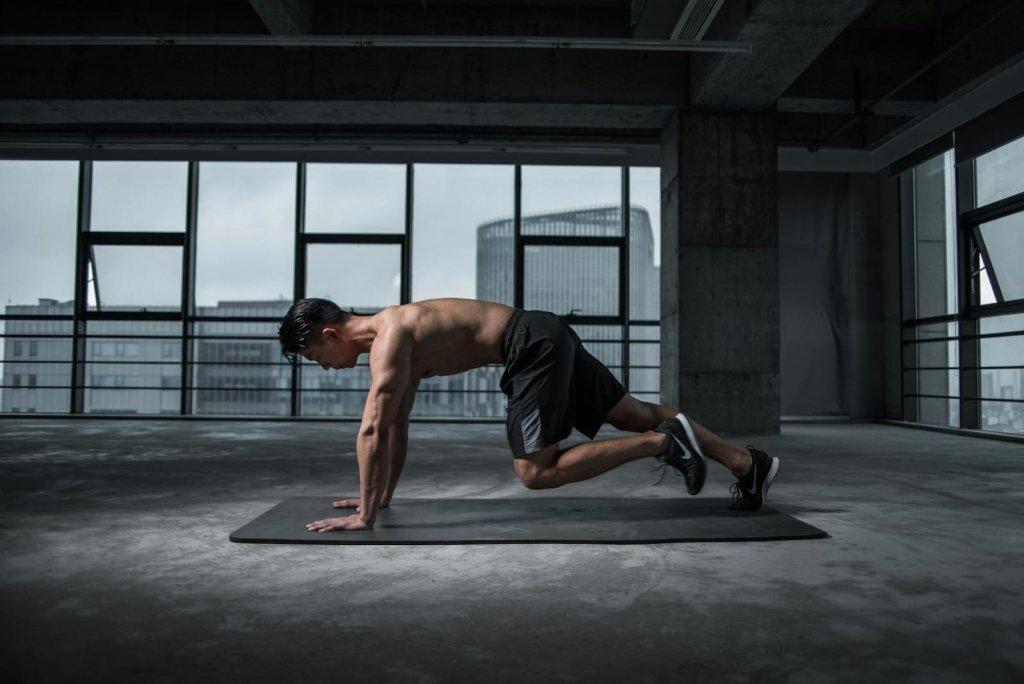
Understanding core training is essential because many men focus only on “ab exercises,” while true core strength requires anti-rotation, anti-extension, hip stability, and full-torso control.
In this guide, you’ll learn the 27 most effective core exercises for men—beginner to advanced—plus how to perform them safely, how often to train, and what research says about core strength.
Why Core Exercises for Men Matter
Core exercises are essential for men because they strengthen the muscles that stabilize the spine, support everyday movement, and boost overall athletic performance. A strong core improves the way you lift, run, twist, stand, and even breathe. It also helps reduce unnecessary strain on the lower back — a common issue for many men due to sitting, heavy lifting, or poor posture.
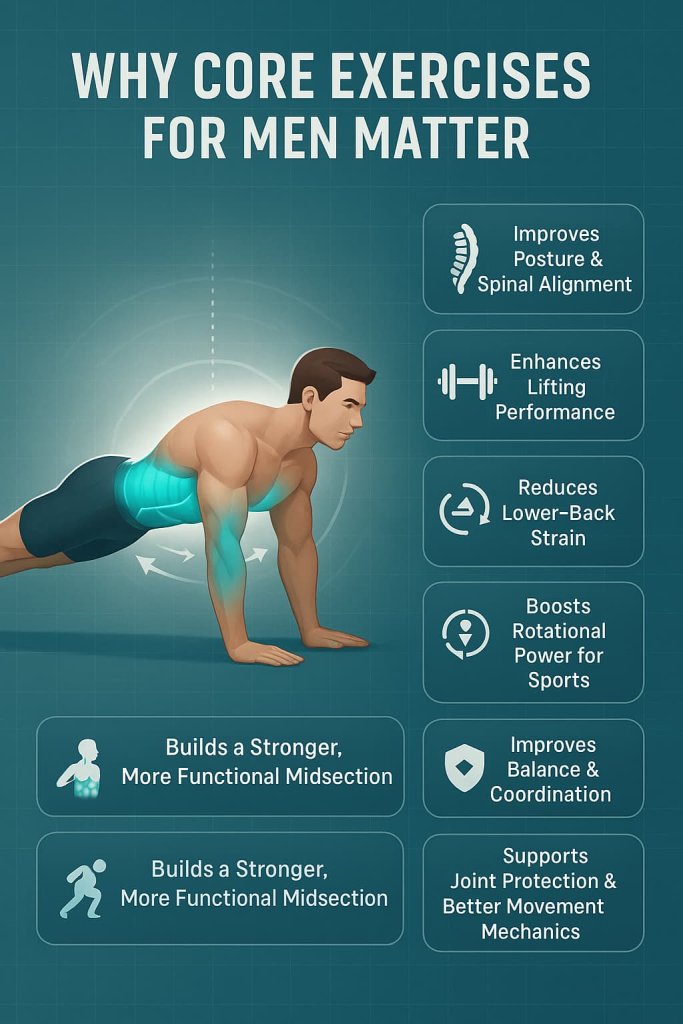
Core training matters because it helps men:
- Improve posture and spinal alignment for daily activity and desk work
- Enhance lifting performance by increasing stability during squats, deadlifts, and presses
- Reduce lower-back strain by strengthening the deep stabilizing muscles
- Increase rotational power for sports like tennis, golf, baseball, and martial arts
- Boost balance and coordination by training anti-rotation and anti-extension control
- Build a stronger midsection that supports long-term functional health
- Protect joints by improving movement mechanics and force transfer
Building core strength isn’t just about visible abs — it’s about supporting the entire body, improving resilience, and performing better in every physical task. For most men, a consistent and well-rounded core program becomes a foundation for total-body strength.
How to Warm Up Before Core Workouts
A short warm-up boosts circulation and activates your deep stabilizers.
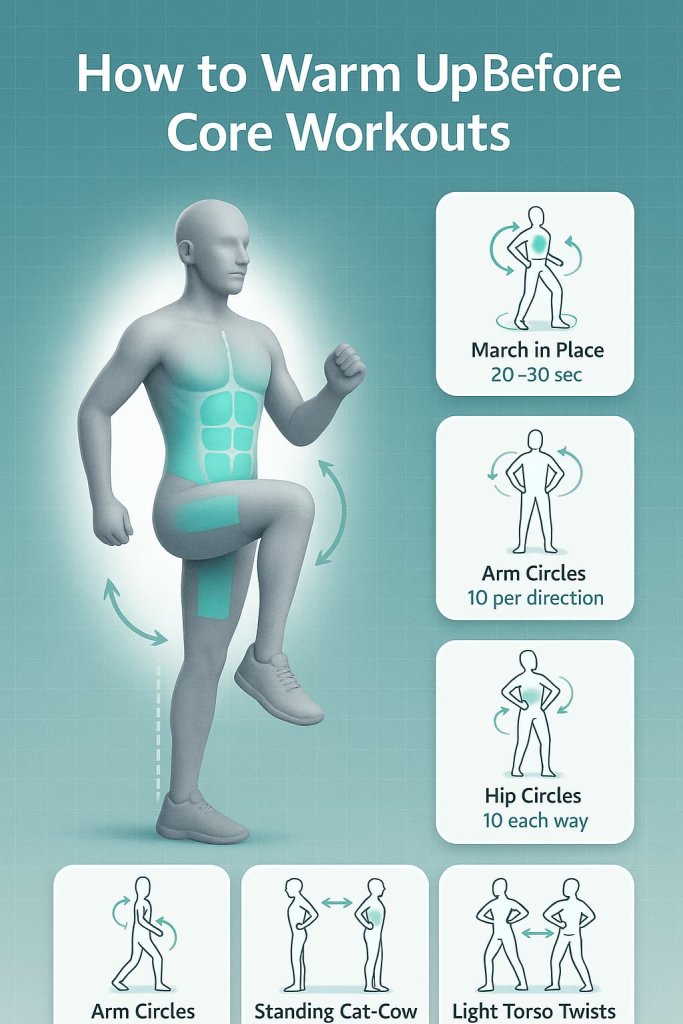
Quick 2–3 Minute Warm-Up
- March in place — 20–30 seconds
- Arm circles — 10 per direction
- Hip circles — 10 each way
- Standing cat-cow — 8–10 reps
- Light torso twists — 10 per side
Warm-up prepares your muscles and joints for safe movement.
27 Best Core Exercises for Men
The 27 best core exercises for men strengthen every part of your midsection — including the abs, obliques, lower back, and deep stabilizers that protect your spine. These movements improve strength, posture, power, and athletic performance while supporting safer lifting and better everyday movement.
1. Plank
Why it works:
The plank strengthens the entire anterior core by forcing your abs, obliques, and deep stabilizers to maintain a rigid position. It teaches spinal alignment and helps men build endurance needed for lifting, running, and posture control.
Muscles worked:
Rectus abdominis, transverse abdominis, internal/external obliques, lower back, shoulders, glutes.
How to do it:
- Place forearms on the floor, elbows directly under shoulders.
- Extend legs behind you with feet hip-width apart.
- Engage your abs, squeeze your glutes, and create a straight line from head to heels.
- Maintain steady breathing while keeping your ribs pulled down and pelvis neutral.
Trainer Tip:
Think about “pulling your elbows toward your toes” without moving — this increases core tension instantly.
2. Side Plank
Why it works:
Side planks target lateral core muscles responsible for preventing unwanted side bending. These muscles are essential for athletic movements like sprinting, cutting, and lifting heavy loads safely.
Muscles worked:
Internal/external obliques, QL (quadratus lumborum), deep core, hip abductors, shoulder stabilizers.
How to do it:
- Lie on your side, elbow under shoulder, legs straight and stacked.
- Lift hips until your body forms a straight line.
- Keep your top shoulder, hip, and ankle aligned.
- Hold without letting hips sag.
Trainer Tip:
Imagine “lifting your bottom oblique toward the ceiling” to maintain proper engagement.
3. Dead Bug
Why it works:
Dead bugs teach your core to stabilize while your arms and legs move — a key skill for injury prevention and athletic performance. This reduces excessive arching in the lower back.
Muscles worked:
Deep core (TVA), hip flexors, rectus abdominis, lower back stabilizers.
How to do it:
- Lie on your back with arms straight up and knees stacked over hips.
- Inhale; as you exhale, lower the opposite arm and leg.
- Keep your ribcage down and low back gently pressed into the floor.
- Return and switch sides without losing control.
Trainer Tip:
If your back lifts off the floor, shorten the range of motion — control is more important than height.
4. Bird Dog
Why it works:
This exercise improves stability along the spine by training cross-body patterns (opposite arm + leg). It enhances balance and strengthens the posterior chain without compressing the lower back.
Muscles worked:
Core stabilizers, lower back, glutes, shoulders.
How to do it:
- Start on hands and knees, wrists under shoulders, knees under hips.
- Extend opposite arm and leg in a straight line.
- Pause briefly while engaging your core.
- Switch without rocking your hips.
Trainer Tip:
Place a water bottle on your lower back — if it falls, you’re rotating too much.
5. McGill Curl-Up
Why it works:
Designed by spine expert Dr. Stuart McGill, this curl-up activates the abs while minimizing spinal flexion, making it safer for those prone to back sensitivity.
Muscles worked:
Rectus abdominis, deeper ab muscles.
How to do it:
- Lie on your back with one knee bent and one straight.
- Slide both hands under your lower back to keep its natural curve.
- Lift only your head and shoulders a few inches off the ground.
- Hold briefly, then lower with control.
Trainer Tip:
Focus on “bracing” your core before lifting — not pulling your head with your hands.
6. Glute Bridge
Why it works:
A strong posterior chain is crucial for overall core balance. Glute bridges activate your glutes, which help stabilize your pelvis and reduce strain on the lower back.
Muscles worked:
Glutes, hamstrings, lower back, deep core.
How to do it:
- Lie on your back, feet shoulder-width apart.
- Press through heels as you lift hips upward.
- Keep ribs down and core tight.
- Lower slowly with control.
Trainer Tip:
Push knees slightly outward as you lift to activate lateral glutes.
7. Hip Thrust
Why it works:
Hip thrusts build advanced glute strength, improving hip extension and supporting spinal stability during heavy lifts like squats and deadlifts.
Muscles worked:
Glutes (maximus + medius), hamstrings, core stabilizers.
How to do it:
- Sit with upper back against a bench, barbell or bodyweight on hips.
- Drive hips upward while keeping chin tucked.
- Pause at full extension; lower slowly.
Trainer Tip:
Think “ribs down, pelvis slightly tucked” — prevents lower-back arching.
8. Hollow Hold
Why it works:
A gymnastics staple, this move strengthens the deep core responsible for resisting extension — useful for lifting, sprinting, and maintaining posture.
Muscles worked:
TVA, rectus abdominis, hip flexors.
How to do it:
- Lie on your back and lift arms, shoulders, and legs off the floor.
- Keep lower back pressed down at all times.
- Hold without letting chest flare.
Trainer Tip:
Start by bending knees or keeping arms down until you build enough strength.
9. Bicycle Crunch
Why it works:
Increases oblique activation and improves rotational mobility and coordination.
Muscles worked:
Obliques, abs, hip flexors.
How to do it:
- Lie on your back, hands behind head.
- Bring opposite elbow to knee while straightening the other leg.
- Switch sides smoothly.
Trainer Tip:
Keep elbows wide — avoid pulling or compressing the neck.
10. Russian Twist
Why it works:
Targets rotational control, helping men improve power for sports that involve swinging or turning.
Muscles worked:
Obliques, TVA, rectus abdominis.
How to do it:
- Sit with torso leaning back, spine long.
- Rotate ribs (not just arms) side to side.
- Keep hips still as you twist.
Trainer Tip:
Press your heels into the floor to stabilize your pelvis.
11. Mountain Climbers
Why it works:
Dynamic core training that also elevates heart rate, improving coordination and endurance.
Muscles worked:
Abs, hip flexors, shoulders.
How to do it:
- Begin in a strong plank position.
- Drive knees toward chest alternately.
- Maintain a steady rhythm without bouncing.
Trainer Tip:
Pretend the floor is hot — quick, controlled steps.
12. Leg Raises
Why it works:
Targets the lower abs by resisting spinal extension while your legs move.
Muscles worked:
Lower abs, hip flexors, TVA.
How to do it:
- Lie on your back, legs straight.
- Raise legs to 90 degrees, then lower slowly.
- Keep back pressed down.
Trainer Tip:
Place hands under glutes for support if your back arches.
13. Hanging Knee Raise
Why it works:
Trains the lower abs intensely while also strengthening grip and shoulder stability.
Muscles worked:
Lower abs, hip flexors, lats, forearms.
How to do it:
- Hang from a pull-up bar with straight arms.
- Bring knees toward chest and lower with control.
Trainer Tip:
Pause at the top for a stronger contraction.
14. Ab Wheel Rollout
Why it works:
A high-level anti-extension exercise that forces the core to resist arching as the body moves forward.
Muscles worked:
Abs, deep core, lats, shoulders.
How to do it:
- Kneel with hands on the wheel.
- Roll forward while maintaining a hollow core.
- Pull back using your abs, not arms.
Trainer Tip:
Imagine “zipping up” your core from pelvis to ribs before each rep.
15. TRX Body Saw
Why it works:
Suspension instability intensifies the core demand while improving shoulder stability.
Muscles worked:
Abs, obliques, shoulders, TVA.
How to do it:
- Place feet in TRX straps, forearms on floor.
- Shift body forward/back a few inches.
Trainer Tip:
Small, slow motions give you the most benefit.
16. Pallof Press
Why it works:
One of the most effective anti-rotation exercises; teaches bracing against external force.
Muscles worked:
Obliques, TVA, deep stabilizers.
How to do it:
- Stand sideways to a band/cable.
- Hold handle at chest, press forward, resist rotation.
Trainer Tip:
Slightly bend your knees and squeeze glutes for rock-solid stability.
17. Cable Wood Chop
Why it works:
Builds functional strength for rotational movement patterns used in sports.
Muscles worked:
Obliques, hips, abs, lats.
How to do it:
- Stand sideways to cable.
- Pull handle diagonally across your body.
- Rotate from ribs and hips together.
Trainer Tip:
Keep arms straight to emphasize core instead of biceps.
18. Reverse Crunch
Why it works:
Emphasizes lower abdominal curling and reduces neck involvement.
Muscles worked:
Lower abs, TVA.
How to do it:
- Lie on your back and lift knees toward chest.
- Lift hips slightly off the ground.
Trainer Tip:
Think of “rolling the spine” one segment at a time rather than swinging legs.
19. Suitcase Carry
Why it works:
Teaches your core to prevent side-bending — excellent for real-world strength and posture.
Muscles worked:
Obliques, QL, grip, deep core stabilizers.
How to do it:
- Hold a dumbbell/kettlebell in one hand.
- Walk slowly while staying upright.
Trainer Tip:
Walk heel-to-toe to prevent swaying.
20. Farmer’s Carry
Why it works:
Enhances total-body stability, grip strength, and postural control.
Muscles worked:
Core, shoulders, traps, grip.
How to do it:
- Hold weights in both hands.
- Walk with tall posture and tight core.
Trainer Tip:
Imagine “pulling your ribs toward your pelvis” as you walk.
21. Superman
Why it works:
Strengthens the posterior chain, improving posture and reducing muscular imbalances from too many front-side movements.
Muscles worked:
Lower back, glutes, hamstrings, shoulders.
How to do it:
- Lie face down, arms forward.
- Lift arms, chest, and legs simultaneously.
- Pause briefly.
Trainer Tip:
Keep the lift small — quality beats height.
22. Plank with Shoulder Tap
Why it works:
Challenges the core to resist rotation each time you lift a hand.
Muscles worked:
Abs, obliques, shoulders.
How to do it:
- Start in high plank, feet wider for stability.
- Tap opposite shoulder without shifting hips.
Trainer Tip:
Slow the tempo for more anti-rotation control.
23. Bear Crawl Hold
Why it works:
Engages deep core muscles while improving shoulder loading tolerance.
Muscles worked:
Deep core, quads, shoulders, glutes.
How to do it:
- Start on all fours and lift knees an inch off the floor.
- Hold position with neutral spine.
Trainer Tip:
Push the floor away to keep your back flat.
24. V-Sit Hold
Why it works:
Targets abdominal endurance and hip flexor strength, improving trunk control.
Muscles worked:
Abs, hip flexors, obliques.
How to do it:
- Sit back slightly and lift legs off ground.
- Hold a V-position without rounding your back.
Trainer Tip:
Focus on lifting your chest rather than leaning back excessively.
25. Plank Jacks
Why it works:
A dynamic plank variation that adds cardio and lateral hip activation.
Muscles worked:
Abs, glutes, hip stabilizers.
How to do it:
- Begin in a plank position.
- Jump feet out and in like a jumping jack.
Trainer Tip:
Keep upper body still — movement should be in the legs only.
26. Flutter Kicks
Why it works:
Builds lower-ab muscular endurance and strengthens hip flexors.
Muscles worked:
Lower abs, hip flexors, TVA.
How to do it:
- Lie on your back; raise legs slightly.
- Kick legs up and down in alternating fashion.
Trainer Tip:
Keep your core braced so your lower back never lifts.
27. Stability Ball Crunch
Why it works:
The ball increases range of motion and forces your core to stabilize through the movement.
Muscles worked:
Rectus abdominis, obliques (light).
How to do it:
- Sit on ball and walk out until lower back is supported.
- Crunch upward slowly while keeping hips stable.
Trainer Tip:
Exhale fully at the top of each rep to engage deep core muscles.
How Often Should Men Do Core Workouts?
General guidelines (based on ACSM recommendations):
- 2–4 core sessions per week
- 8–15 reps or 20–40-second holds
- 2–4 sets per exercise
- Rest 48 hours between sessions if soreness is high
For best results, combine stability, anti-rotation, and hip-dominant movements.
Common Mistakes Men Make During Core Workouts
Men often weaken their results or increase back strain by repeating a few common errors. Fixing these improves strength, stability, and safety.
Key Mistakes to Avoid
- Overarching the lower back: shifts tension from abs to spine.
- Using momentum: reduces muscle activation and increases injury risk.
- Training only the “six-pack” muscles: ignores obliques, deep core, and back stabilizers.
- Holding breath: raises blood pressure and decreases stability.
- Doing core every day: prevents proper recovery and weakens progress.
- Skipping deep-core activation: leads to poor bracing and weak posture.
- Poor posture/alignment: flared ribs or rounded shoulders limit engagement.
Who Should Avoid Certain Core Exercises?
Some exercises may not be appropriate for everyone, especially if you have pain, injuries, or specific medical conditions. Choosing the right variations helps protect your spine and joints.
Who Should Use Caution
- Men with active lower-back pain: avoid high-flexion exercises; choose McGill curl-up, dead bug, bird dog.
- Men with herniated or bulging discs: avoid twisting work (Russian twists, heavy cable rotation).
- Those with hypertension: avoid long breath-holds and intense isometric holds.
- Those with shoulder injuries: modify or avoid planks, mountain climbers, TRX work.
- Beginners with low core strength: skip advanced moves like ab wheel rollouts or hanging leg raises.
- Anyone experiencing sharp or radiating pain: stop the exercise and switch to pain-free alternatives.
Safety Guidelines
- Avoid exercises that cause sharp back pain.
- Start with stability exercises before advanced moves.
- Men with disc issues or chronic low-back pain should consult medical or physiotherapy professionals before beginning new routines.
- Keep movements controlled; avoid excessive twisting or arching.
This content is for informational purposes only and not medical advice.
FAQ
1. Are core exercises good for back pain?
Core exercises may help support posture and reduce discomfort, but they are not a treatment.
2. How long should a core workout be?
Most men benefit from 5–15 minutes of focused core training.
3. Should men avoid crunches?
Crunches are fine when performed correctly, but stability exercises offer more overall benefit.
4. Is it okay to train abs every day?
No—muscles need rest. Aim for 2–4 days per week.
5. Do core exercises help build visible abs?
They strengthen ab muscles, but body-fat levels determine visibility.
6. Are planks better than sit-ups?
Planks challenge more stabilizers and are generally more spine-friendly.
7. Which exercise is best for beginners?
Dead bug, bird dog, and planks are ideal starting points.
Conclusion
Core training is one of the most valuable investments in a man’s fitness routine. By combining stability, strength, anti-rotation, and functional movements, you build a stronger midsection that supports posture, lifting power, and long-term performance.
Start with the basics, progress steadily, and train consistently. Strong core, strong body.
References
- Rodríguez-Perea Á. et al. (2023). Core training and performance: a systematic review with meta-analysis. Biology of Sport.
https://pmc.ncbi.nlm.nih.gov/articles/PMC10588579/ - Bustos-Carvajal J. et al. (2025). Exploring the role of the core in sports performance: a systematic review of the effects of core muscle training. Frontiers in Sports and Active Living.
https://www.frontiersin.org/journals/sports-and-active-living/articles/10.3389/fspor.2025.1630584/full - American College of Sports Medicine (2009). Progression models in resistance training for healthy adults (Position Stand). Medicine & Science in Sports & Exercise.
https://tourniquets.org/wp-content/uploads/PDFs/ACSM-Progression-models-in-resistance-training-for-healthy-adults-2009.pdf