
The best decline bench press alternatives include the decline dumbbell press, forward-leaning dips, high-to-low cable presses, flat dumbbell presses, and hands-elevated push-ups. These exercises train the chest through similar pressing or arm-adduction patterns while giving you options for different equipment, strength levels, and training goals.
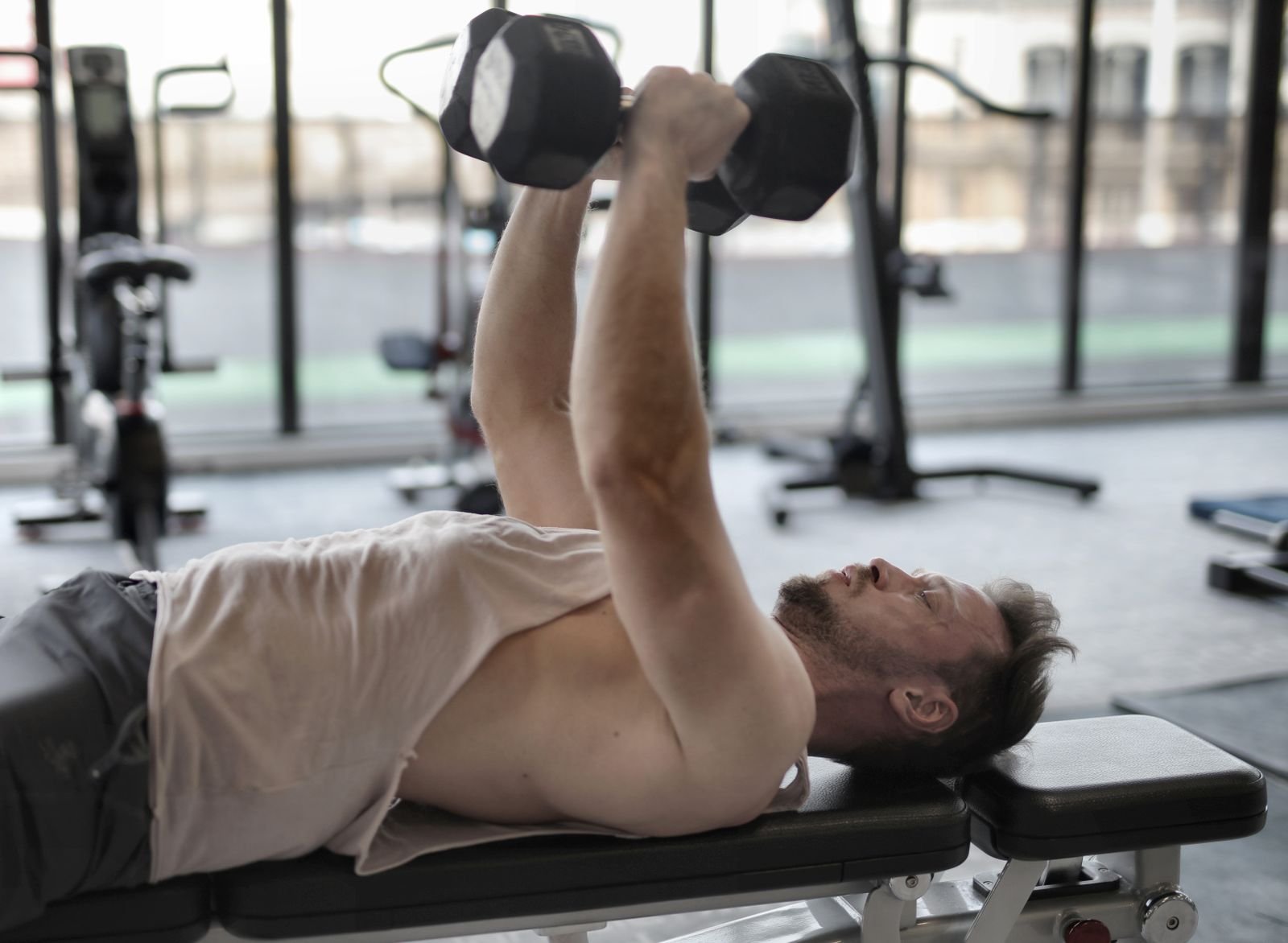
You do not need a decline barbell bench press to build a strong, muscular chest. Choose an alternative that feels comfortable, allows controlled repetitions, and can be made gradually harder over time.
Decline Bench Press Alternatives at a Glance
| Exercise | Best for | Equipment | Difficulty |
|---|---|---|---|
| Decline dumbbell bench press | Closest barbell replacement | Decline bench, dumbbells | Intermediate |
| Decline chest press machine | Stable heavy pressing | Machine | Beginner to advanced |
| Forward-leaning parallel-bar dip | Bodyweight strength | Dip bars | Intermediate |
| High-to-low cable chest press | Adjustable pressing path | Cable station | Beginner to advanced |
| Flat dumbbell bench press | Overall chest strength and size | Bench, dumbbells | Beginner to advanced |
| High-to-low cable fly | Chest isolation work | Cable station | Beginner to advanced |
| Hands-elevated push-up | Home workouts and beginners | Bench or sturdy platform | Beginner |
| High-to-low resistance-band press | Home and travel training | Resistance band | Beginner to intermediate |
| Dumbbell glute-bridge floor press | No-bench dumbbell training | Dumbbells | Intermediate |
9 Best Decline Bench Press Alternatives
These nine decline bench press alternatives can help build chest strength and size without relying on the standard barbell decline press. Choose the option that best matches your equipment, experience level, and comfort.
1. Decline Dumbbell Bench Press
Why it works: The decline dumbbell press is the closest alternative when you still have access to a decline bench but want to replace the barbell. Each arm moves independently, which lets you adjust your wrist and elbow position while still using a decline pressing angle.
Muscles worked: This exercise primarily trains the pectoralis major, with assistance from the triceps and anterior deltoids. Your forearms, shoulders, and upper back also help stabilize the dumbbells.
How to do it:
- Secure your feet under the decline bench pads.
- Hold a dumbbell in each hand and carefully lie back.
- Position the dumbbells beside your lower chest with palms facing forward or slightly inward.
- Pull your shoulder blades gently down and back.
- Press the dumbbells upward until your arms are extended without forcefully locking your elbows.
- Lower the weights slowly until your elbows reach a comfortable depth.
- Press back up while keeping both dumbbells controlled.
- Carefully return the weights before leaving the bench.
Trainer Tip: Start lighter than you would on a flat dumbbell press because getting into and out of position can be awkward. Use 3–4 sets of 6–12 controlled repetitions.
2. Decline Chest Press Machine
Why it works: A decline chest press machine provides a fixed movement path and a supported body position. This can make it easier to focus on pressing hard without spending as much effort balancing free weights.
Muscles worked: The pectoralis major performs most of the work, while the triceps and anterior deltoids assist the pressing movement.
How to do it:
- Adjust the seat so the handles line up with your lower-to-mid chest.
- Sit with your back and head supported by the pad.
- Plant your feet firmly on the floor or machine platform.
- Grip the handles with straight wrists.
- Press forward until your arms are nearly extended.
- Pause briefly without locking your elbows.
- Return the handles slowly until you feel a comfortable chest stretch.
- Repeat without letting the weight stack slam down.
Trainer Tip: Choose a seat position that lets your forearms remain roughly in line with the handles. Use 3–4 sets of 6–12 repetitions for strength and muscle-building work.
3. Forward-Leaning Parallel-Bar Dip
Why it works: Dips train the chest, shoulders, and triceps using your body weight. A modest forward torso lean and controlled elbow position generally place more demand on the chest than an upright, triceps-focused dip.
Muscles worked: The main muscles are the pectoralis major, triceps, and anterior deltoids. The upper back, forearms, abdominal muscles, and shoulder stabilizers help control your body.
How to do it:
- Grip the parallel bars and support your body with straight arms.
- Keep your shoulders down rather than shrugged toward your ears.
- Bend your knees if needed and lean slightly forward.
- Lower yourself by bending your elbows.
- Stop at the deepest position you can control comfortably.
- Press through the bars to return to the starting position.
- Maintain the same torso angle throughout the repetition.
Trainer Tip: Use an assisted-dip machine or resistance band if full bodyweight dips are too difficult. Once you can perform clean repetitions, add load gradually. Aim for 3 sets of 5–12 repetitions.
4. High-to-Low Cable Chest Press
Why it works: The high-to-low cable press combines a chest press with a slightly downward movement path. The cables maintain resistance throughout the repetition and allow you to adjust your stance and arm path.
Muscles worked: This movement trains the pectoralis major, triceps, and anterior deltoids. Your core and lower body work to maintain a stable standing position.
How to do it:
- Set both cable pulleys slightly above shoulder height.
- Hold one handle in each hand and step forward.
- Use a staggered stance with your knees slightly bent.
- Position your hands beside your chest.
- Brace your core and keep your ribs controlled.
- Press the handles forward and slightly downward.
- Bring your hands closer together without forcefully touching them.
- Slowly return until your elbows reach a comfortable position.
Trainer Tip: Do not turn the movement into a standing crunch. Keep your torso stable and let your arms create the downward pressing path. Perform 3–4 sets of 8–15 repetitions.
5. Flat Dumbbell Bench Press
Why it works: The flat dumbbell bench press is one of the most practical substitutes for decline pressing. It allows substantial loading, independent arm movement, and a strong range of motion while training the entire chest.
Research comparing bench angles found that the flat bench produced relatively balanced activity across the measured portions of the pectoralis major.
Muscles worked: The pectoralis major is the primary muscle, with assistance from the triceps and anterior deltoids. The upper back and rotator-cuff muscles help stabilize the shoulders.
How to do it:
- Sit on a flat bench with a dumbbell resting on each thigh.
- Use your thighs to help guide the weights into position as you lie back.
- Plant your feet firmly on the floor.
- Hold the dumbbells beside your chest with straight wrists.
- Keep your shoulder blades gently retracted against the bench.
- Press the dumbbells upward and slightly inward.
- Lower them slowly until you reach a comfortable depth.
- Press back up without bouncing or losing shoulder position.
Trainer Tip: A neutral or slightly angled grip may feel more comfortable than forcing your palms directly forward. Use 3–4 sets of 5–12 repetitions.
6. High-to-Low Cable Fly
Why it works: The high-to-low cable fly trains the chest through horizontal adduction, meaning the arms move inward across the body. It is better suited to controlled muscle-building work than maximal strength training.
Muscles worked: The pectoralis major performs most of the movement. The anterior deltoids, biceps, forearms, and core assist with control and stability.
How to do it:
- Set the cable pulleys above shoulder height.
- Hold one handle in each hand and step forward.
- Use a staggered stance and brace your core.
- Begin with your arms open and elbows slightly bent.
- Sweep your hands forward and downward in a wide arc.
- Bring the handles together in front of your lower chest or upper abdomen.
- Pause briefly while keeping your shoulders down.
- Return slowly without allowing the weight to pull your arms too far back.
Trainer Tip: Keep the elbow angle mostly fixed. If your elbows repeatedly bend and straighten, the movement is becoming more like a press. Use 2–4 sets of 10–20 repetitions.
7. Hands-Elevated Push-Up
Why it works: Placing your hands on a raised surface reduces the percentage of body weight you must press, making this a useful decline bench alternative for beginners and home workouts. Despite its name, the hands-elevated position is often called an incline push-up because your body slopes upward.
Push-ups can provide meaningful chest training when they are sufficiently challenging and performed with good control. A 2023 review found strong pectoralis activity in push-up comparisons, although exercise setup and resistance level matter.
Muscles worked: The pectoralis major, triceps, and anterior deltoids perform the pressing action. The abdominal muscles, glutes, and upper back help keep the body stable.
How to do it:
- Place your hands on a secure bench, box, or countertop.
- Position your hands slightly wider than shoulder-width.
- Walk your feet back until your body forms a straight line.
- Brace your abdominal muscles and squeeze your glutes.
- Bend your elbows and lower your chest toward the surface.
- Keep your elbows angled slightly back rather than flared directly outward.
- Press the surface away to return to the starting position.
- Maintain a straight body position throughout the set.
Trainer Tip: Lower the hand position as you become stronger. Progress from a countertop to a bench, then to floor push-ups. Perform 3–4 sets of 8–20 repetitions.
8. High-to-Low Resistance-Band Chest Press
Why it works: A resistance band provides a portable way to perform a downward-angled chest press without a bench or cable machine. Band resistance increases as the band stretches, making the final part of the press especially challenging.
Muscles worked: The movement mainly trains the pectoralis major, triceps, and anterior deltoids. The core and lower body help stabilize your stance.
How to do it:
- Secure the band to a strong anchor above shoulder height.
- Face away from the anchor and hold one end in each hand.
- Step forward until the band has light tension.
- Use a staggered stance and brace your core.
- Begin with your hands beside your chest.
- Press forward and slightly downward.
- Extend your arms without locking your elbows forcefully.
- Return slowly while maintaining control of the band.
Trainer Tip: Confirm that the band and anchor are undamaged and secure before every set. Shorten the band, step farther forward, or use a stronger band to progress. Aim for 3–4 sets of 10–20 repetitions.
9. Dumbbell Glute-Bridge Floor Press
Why it works: Raising your hips during a dumbbell floor press creates a mild decline-like torso position without requiring a bench. The floor also limits how far the elbows can travel behind the body, which some people find easier to control.
Muscles worked: The pectoralis major, triceps, and anterior deltoids perform the pressing action. The glutes, hamstrings, abdominal muscles, and spinal stabilizers maintain the bridge position.
How to do it:
- Sit on the floor with a dumbbell beside each thigh.
- Lie back carefully and position the dumbbells beside your chest.
- Bend your knees and place your feet flat on the floor.
- Lift your hips into a controlled glute bridge.
- Keep your ribs down and avoid excessively arching your lower back.
- Press the dumbbells upward until your arms are nearly straight.
- Lower them until your upper arms lightly contact the floor.
- Complete the set before lowering your hips and returning the weights safely.
Trainer Tip: Do not sacrifice hip position simply to lift heavier dumbbells. Use 3 sets of 8–15 repetitions, or perform a regular floor press if holding the bridge causes your form to break down.
How to Choose the Right Decline Bench Press Alternative
For Maximum Strength
Choose an exercise that permits heavier loading and clear progression:
- Decline dumbbell bench press
- Decline chest press machine
- Weighted parallel-bar dip
- Flat dumbbell bench press
The 2026 ACSM guidance suggests that strength-focused training generally benefits from heavier loads—around 80% of one-repetition maximum—and approximately two to three working sets per exercise. Individual experience, technique, and recovery still matter.
For Muscle Size
Combine one compound press with one controlled accessory movement. Good pairings include:
- Flat dumbbell press plus high-to-low cable fly
- Machine decline press plus cable chest press
- Dips plus band presses
- Decline dumbbell press plus cable flies
ACSM’s updated guidance points to higher total weekly volume—approximately 10 working sets per muscle group—as a useful hypertrophy target. This refers to total chest work across your week, not 10 sets of every exercise.
For Home Workouts
The most practical home choices are:
- Hands-elevated push-ups
- Resistance-band chest presses
- Dumbbell floor presses
- Glute-bridge floor presses
You can make them harder by adding repetitions, using stronger bands, slowing the lowering phase, increasing dumbbell weight, or selecting a more challenging push-up position.
For Beginners
Beginners usually benefit from stable exercises that are easy to learn:
- Decline chest press machine
- Hands-elevated push-up
- Flat dumbbell bench press
- Resistance-band chest press
Start with a comfortable range of motion and stop each set while you can still maintain good technique.
Sample Decline Bench Alternative Workouts
Strength-Focused Chest Workout
| Exercise | Sets | Reps |
|---|---|---|
| Flat dumbbell bench press | 3–4 | 5–8 |
| Weighted or assisted dip | 3 | 6–10 |
| High-to-low cable press | 2–3 | 8–12 |
Rest about two to three minutes after demanding compound sets and 60–90 seconds after lighter accessory work.
Muscle-Building Chest Workout
| Exercise | Sets | Reps |
|---|---|---|
| Decline dumbbell press | 3 | 8–12 |
| High-to-low cable press | 3 | 10–15 |
| High-to-low cable fly | 2–3 | 12–20 |
Choose weights that make the final repetitions challenging while leaving approximately one to three controlled repetitions available.
Home Chest Workout
| Exercise | Sets | Reps |
|---|---|---|
| Hands-elevated or floor push-up | 3 | 8–20 |
| Resistance-band chest press | 3 | 10–20 |
| Glute-bridge floor press | 3 | 8–15 |
Progress by improving technique first, then adding resistance or repetitions.
Common Mistakes to Avoid
Choosing an Exercise Only Because It “Targets the Lower Chest”
No exercise completely isolates the lower portion of the pectoralis major. Select movements based on overall chest training, comfort, available equipment, and progression—not anatomy marketing alone.
Using an Unstable Decline Setup
Do not raise one end of a bench with loose weight plates, blocks, or other makeshift objects. Use equipment designed to remain secure under load.
Lowering Too Deeply
A larger range of motion is not automatically better. Lower only as far as you can maintain shoulder control without pain or unwanted movement.
Flaring the Elbows Directly Outward
Extreme elbow flare may make it harder to keep your shoulders stable. A slightly tucked or diagonal elbow position is often easier to control.
Progressing Weight Before Technique
Add resistance only after you can repeat the same controlled movement path throughout every set. More weight is not useful if it reduces your range, balance, or joint comfort.
Taking Every Set to Failure
Training close to failure can be useful, but reaching complete failure on every set is not necessary for most people. ACSM’s 2026 update found that momentary failure was not consistently required for results in average healthy adults.
Frequently Asked Questions
What is the best decline bench press alternative?
The decline dumbbell bench press is the closest replacement when you have a decline bench. Dips, high-to-low cable presses, and flat dumbbell presses are better choices when you want a different setup or movement pattern.
Can dips replace the decline bench press?
Yes. Forward-leaning dips can serve as a compound chest exercise and can be progressed with assistance, added repetitions, or external weight. However, they require more body control and may not feel comfortable for everyone.
Is the decline bench press necessary for chest growth?
No. Flat presses, dumbbell presses, machines, push-ups, cables, and bands can all contribute to chest development when you train consistently and progressively.
What exercise emphasizes the lower chest without a decline bench?
High-to-low cable presses, high-to-low cable flies, dips, and resistance-band presses use movement paths commonly selected to emphasize the sternocostal chest region. They still involve the chest as a whole.
Are hands-elevated push-ups good for the lower chest?
Hands-elevated push-ups can train the chest effectively, especially for beginners. Their main advantage is adjustable difficulty rather than guaranteed isolation of one chest region.
Is a flat bench press enough for the chest?
A flat press can train the major regions of the chest effectively. Adding other angles or movement types can provide variety, address preferences, and distribute training stress, but decline pressing is not mandatory.
How often should I train my chest?
Most people can train the chest two times per week, depending on workout volume, effort, experience, and recovery. ACSM’s 2026 guidance recommends training the major muscle groups at least twice weekly as a practical general target.
Conclusion
The best decline bench press alternative is the one that matches your equipment, goals, and ability to train with consistent form.
Choose the decline dumbbell press or machine press when you want a close replacement. Use flat dumbbell presses and dips for compound strength, cable movements for controlled muscle-building work, or push-ups and bands for home training.
Start with one main press, add one accessory movement if needed, and progress gradually through better technique, more repetitions, or additional resistance.
References
- American College of Sports Medicine: 2026 Resistance Training Guidelines
- NCBI Bookshelf: Anatomy of the Pectoralis Major
- Applied Sciences: Pectoralis Major Activity During Bench Press Variations
- International Journal of Environmental Research and Public Health: Effects of Bench Inclination
This content is for informational purposes only and not medical advice.