
Dumbbell core exercises are strength-training movements that use dumbbells to challenge your abs, obliques, and deep stabilizer muscles. These exercises go beyond traditional crunches by training your core to resist rotation, bending, and arching—key actions that support daily movement and total-body strength.
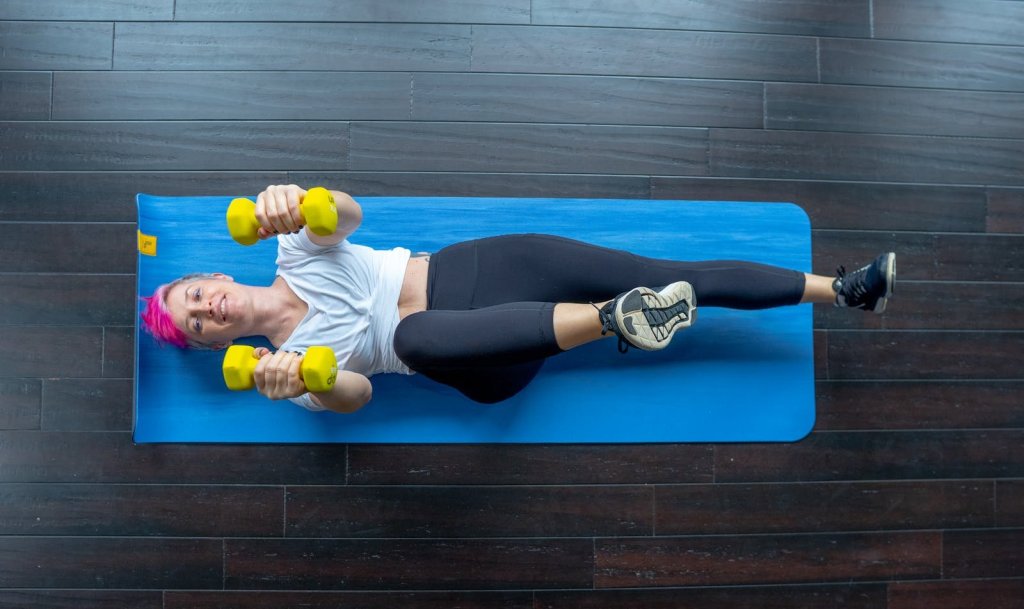
Understanding dumbbell-based core work is important because your core isn’t just “abs.” It includes deeper stabilizers that protect your spine, support posture, and improve performance in lifting, running, and everyday tasks. With dumbbells, you can safely add resistance, increase muscle activation, and build strength more efficiently.
Most effective routines include a mix of:
- Anti-rotation exercises
- Anti-lateral flexion
- Anti-extension
- Standing and functional patterns
- Loaded carries for stability
10 Best Dumbbell Core Exercises for a Strong, Defined Midsection
These dumbbell core exercises target your abs, obliques, and stabilizer muscles through functional movements that build real-world strength. Each exercise is designed to improve stability, posture, and definition using simple, progressive resistance.
1. Dumbbell Renegade Row
Why it works:
This movement forces your core to resist rotation as you shift your weight from side to side, making it one of the most powerful anti-rotation core exercises. The dumbbell row adds upper-body pulling strength, while the plank position challenges trunk stability, shoulder stability, and full-body tension.
Muscles worked:
Abdominals, obliques, lats, mid-back, shoulders, glutes, deep stabilizers.
How to do it:
- Start in a strong high plank with hands gripping dumbbells on the floor.
- Keep feet wider than hip-width for balance and brace your core.
- Row one dumbbell straight upward, keeping elbow close to your ribcage.
- Lower the dumbbell slowly without shifting your hips.
- Repeat on the other side while maintaining a rigid plank.
Trainer Tip:
Imagine your hips are balancing a glass of water—minimize all movement to maximize core activation.
2. Dumbbell Dead Bug Press
Why it works:
The overhead dumbbell load increases anti-extension demand, forcing your deep core muscles to stabilize your spine as your limbs move. This creates a safer, more effective way to strengthen lower abs and improve coordination.
Muscles worked:
Transverse abdominis, rectus abdominis, hip flexors, deep spinal stabilizers.
How to do it:
- Lie on your back with knees over hips and a dumbbell pressed straight above your chest.
- Keep your lower back gently braced against the floor.
- Extend the opposite leg toward the ground while maintaining the dumbbell press.
- Return to the start, then switch sides.
- Move slowly—control is more important than range.
Trainer Tip:
If your ribcage flares upward or your back arches, shorten the leg range or use a lighter weight.
3. Dumbbell Farmer’s Carry
Why it works:
This simple loaded walk strengthens your entire trunk from every angle. It challenges posture, teaches proper ribcage alignment, improves grip strength, and forces your core to stabilize during movement—one of the most functional ways to build real-life strength.
Muscles worked:
Obliques, erector spinae, upper traps, forearms, glutes, hips, shoulders.
How to do it:
- Stand tall with a dumbbell in each hand.
- Engage your core and keep shoulders down and back.
- Take slow, deliberate steps while maintaining an upright torso.
- Walk for time or distance without letting the weights pull you forward.
Trainer Tip:
Think “tall and tight”—keep ribs stacked over hips for maximum core benefit.
4. Single-Arm Farmer’s Carry (Anti-Lateral Flexion)
Why it works:
By loading only one side, your core must work harder to prevent the torso from tilting. This makes it an excellent anti-lateral-flexion exercise and one of the most effective ways to strengthen the obliques and quadratus lumborum safely.
Muscles worked:
Obliques, quadratus lumborum, erector spinae, hips, deep trunk stabilizers.
How to do it:
- Hold one dumbbell at your side.
- Stand tall and begin walking slowly while keeping your torso perfectly upright.
- Avoid leaning toward or away from the weight.
- Switch sides after completing your distance or time.
Trainer Tip:
Imagine lifting the ribcage on the unloaded side—this keeps your torso level and fully activates the obliques.
5. Dumbbell Russian Twist (Controlled)
Why it works:
This rotational exercise strengthens the obliques and improves torso control. When done slowly, it trains controlled rotation instead of rapid twisting, which is safer and more effective for building stability through the midsection.
Muscles worked:
Obliques, rectus abdominis, hip stabilizers.
How to do it:
- Sit with knees bent and lean back slightly to engage your core.
- Hold a dumbbell with both hands at chest level.
- Rotate your torso gently to one side, then to the other.
- Keep chest open and avoid rounding your back.
Trainer Tip:
Keep your feet grounded and move only your torso—avoid swinging your arms.
6. Dumbbell Plank Drag
Why it works:
Pulling a dumbbell across your body forces your core to resist rotation while maintaining plank alignment. This enhances oblique strength, shoulder stability, and full-body control.
Muscles worked:
Obliques, abs, shoulders, glutes, transverse abdominis.
How to do it:
- Begin in a high plank with a dumbbell placed just outside one hand.
- Reach under your body with the opposite hand and drag the dumbbell across.
- Reset your plank after each drag and alternate sides.
- Keep hips low and square to the floor.
Trainer Tip:
A wide foot stance gives more stability, allowing you to keep hips perfectly level.
7. Dumbbell Wood Chop (Diagonal Lift)
Why it works:
This diagonal movement patterns trains rotational power and core stability through multiple planes of motion. It strengthens your torso, hips, and shoulders in a way that mimics lifting or turning motions used in daily life and sports.
Muscles worked:
Obliques, lats, shoulders, hips, upper abs.
How to do it:
- Hold a dumbbell with both hands at one hip.
- Rotate your torso and lift the dumbbell diagonally across your body.
- Finish the motion above your opposite shoulder.
- Lower back down with slow control and repeat.
Trainer Tip:
Keep your abs braced—rotate through the torso rather than letting your arms do all the work.
8. Standing Dumbbell Halo
Why it works:
Moving the dumbbell around your head challenges your core to maintain stability as the weight shifts. This enhances shoulder mobility, posture, and trunk control, making it an excellent warm-up or stability drill.
Muscles worked:
Deltoids, abs, upper back, deep core stabilizers, serratus anterior.
How to do it:
- Hold one dumbbell vertically by the ends.
- Circle it slowly around your head while maintaining a tall, tight stance.
- Complete all reps in one direction, then switch.
- Keep the movement smooth and controlled.
Trainer Tip:
Press your ribs down gently and engage your glutes to avoid leaning or arching as the weight rotates.
9. Dumbbell Overhead March
Why it works:
Holding a weight overhead increases anti-extension demand while marching enhances balance and coordination. This combination builds functional core strength and shoulder stability at the same time.
Muscles worked:
Abs, obliques, hip flexors, shoulders, deep stabilizers.
How to do it:
- Press one or two dumbbells overhead with arms fully extended.
- Keep your ribs down and core braced.
- March slowly, lifting knees to hip height.
- Maintain a tall torso and steady breathing.
Trainer Tip:
Use lighter weights than you expect—the goal is stability, not heavy pressing.
10. Dumbbell Windmill
Why it works:
The windmill trains the obliques, shoulders, and hips together while challenging mobility and stability. The overhead load forces your trunk to remain aligned as you hinge sideways, improving control and functional strength.
Muscles worked:
Obliques, shoulders, glutes, hamstrings, spinal stabilizers.
How to do it:
- Hold a dumbbell overhead with one arm locked out.
- Turn your feet slightly away from the dumbbell side.
- Push your hips to the opposite side and reach your free hand toward the floor.
- Keep eyes on the weight and maintain straight alignment through the lifted arm.
Trainer Tip:
Move slowly and prioritize perfect alignment—depth matters less than controlled technique.
How Often Should You Do Dumbbell Core Workouts?
General expert-aligned guidelines:
- 2–3 days per week
- 2–3 sets per exercise
- 8–12 reps per movement (or 20–30 seconds for carries/planks)
- Increase weight by 2–10% when reps become easier
- Rest 60–90 seconds between sets
This schedule supports strength, stability, and visible muscle development when combined with overall activity and nutrition.
Sample Dumbbell Core Workout (Beginner–Intermediate)
Circuit — 2–3 Rounds
- Renegade Row – 8 reps/side
- Overhead March – 20 steps
- Dead Bug Press – 8 reps/side
- Single-Arm Farmer’s Carry – 20–30 seconds/side
- Wood Chop – 10 reps/side
Rest 60–90 seconds between rounds.
Safety Tips Before You Begin
- Start with light dumbbells and add weight gradually.
- Move slowly and maintain a neutral spine throughout.
- Stop if you feel sharp, pinching, or radiating pain.
- People with spinal, hip, or shoulder concerns should consult a qualified professional before beginning weighted core training.
- Maintain controlled breathing—avoid holding breath.
FAQs About Dumbbell Core Exercises
1. Are dumbbells good for core training?
Yes. Dumbbells increase resistance and activate stabilizing muscles that bodyweight alone may not challenge.
2. Can beginners do dumbbell core exercises?
Absolutely—start light and focus on slow, controlled form.
3. How many times a week should I train my core?
2–3 days per week is effective for most adults.
4. Are standing dumbbell core exercises better than crunches?
Standing movements train the entire trunk, hips, and posture muscles, offering a more functional approach.
5. Can dumbbell core exercises help with fat loss?
They support muscle building and calorie burn, but fat loss depends on overall activity, nutrition, and consistency.
6. What weight should I choose?
Choose a load that allows 8–12 controlled reps without losing form.
7. Are side bends safe?
Many coaches prefer anti-lateral-flexion moves (like single-arm carries) because they train obliques without compressing the spine.
Conclusion
These 10 dumbbell core exercises help you build real strength, stability, and muscle definition—not just surface-level abs. Focus on controlled reps, proper alignment, and gradual progression for the best results.
Stay consistent, train with good form, and combine core work with full-body strength and balanced nutrition to develop a strong, defined midsection over time.
References
- Tsartsapakis I, et al. (2025).
Development and Implementation of a Core Training Protocol. Read on PubMed Central - Taylor J. (NSCA Coach).
Increase Hip and Trunk Stability with Loaded Carries for Injury Prevention, Rehabilitation, and Performance. National Strength and Conditioning Association. Read on NSCA - NSCA Coach (Core Training Article).
Implementing Core Training Concepts into Strength Training for Sport. National Strength and Conditioning Association. Read the NSCA PDF - American College of Sports Medicine (2009).
Progression Models in Resistance Training for Healthy Adults (ACSM Position Stand). Medicine & Science in Sports & Exercise. Read the ACSM Position Stand (PDF) - Piercy K.L., et al. (2018).
The Physical Activity Guidelines for Americans, 2nd Edition. JAMA. Read on JAMA