
The best leg press alternatives are the hack squat, barbell back squat, Smith machine squat, belt squat, Bulgarian split squat, reverse lunge, step-up, and goblet squat. Each exercise can help build lower-body strength and muscle when performed with controlled form and progressive resistance.
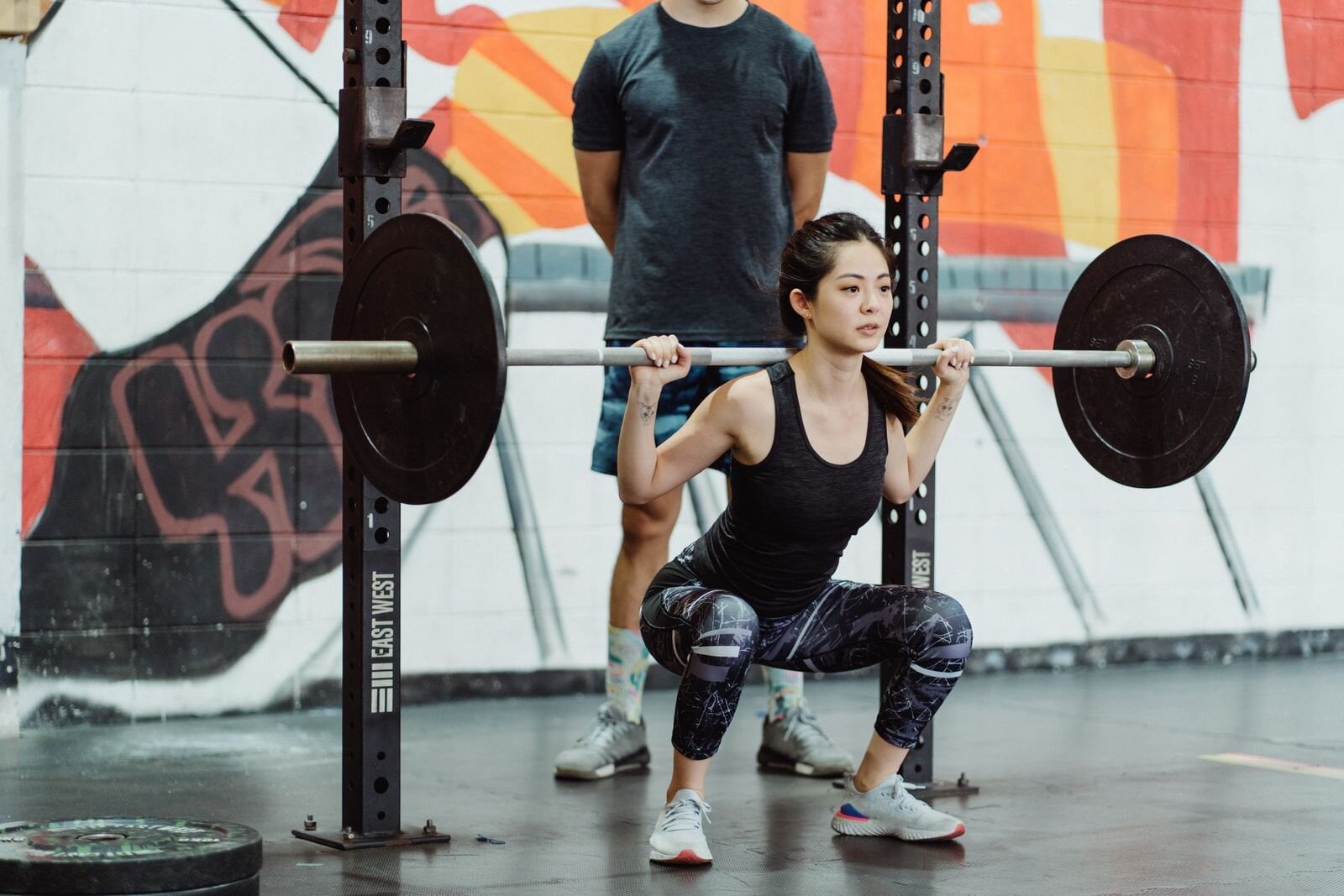
The hack squat is the closest machine-based substitute for the leg press. Barbell squats are a stronger choice for developing free-weight strength and whole-body coordination. Split squats, lunges, step-ups, and goblet squats are practical alternatives when you have limited equipment.
In March 2026, the American College of Sports Medicine’s updated resistance-training guidelines reviewed 137 systematic reviews involving more than 30,000 participants. The main takeaway was that consistent training, sufficient effort, and a program matched to your goals matter more than using one supposedly perfect type of equipment.
This guide explains how each leg press alternative works, who it suits, how to perform it, and how to add it to your workout.
What Makes a Good Leg Press Alternative?
The leg press is a supported compound exercise. It trains knee and hip extension while allowing you to push against substantial resistance without needing much balance or upper-body stabilization.
A useful alternative should provide several of the same benefits:
- Train the quadriceps and glutes
- Allow gradual increases in resistance
- Use a comfortable range of knee and hip motion
- Fit your available equipment
- Match your strength, muscle-building, or performance goals
- Feel stable enough to perform with consistent technique
No exercise perfectly recreates every feature of the leg press. For example, a barbell squat requires more balance and trunk involvement, while a Bulgarian split squat places most of the work on one leg.
That does not make either exercise better or worse. It simply means the right replacement depends on why you were using the leg press.
8 Best Leg Press Alternatives
1. Hack Squat
- Best for: The closest machine-based leg press alternative
- Primary muscles: Quadriceps, glutes, and adductors
- Equipment: Hack squat machine
The hack squat is usually the closest substitute for a leg press because your torso remains supported while your legs push against a loaded platform.
It offers more stability than a free-weight squat and can be loaded progressively for both strength and muscle growth. The movement also allows significant knee and hip flexion, making it useful for training the quadriceps and glutes.
How to Do a Hack Squat
- Position your shoulders beneath the pads and place your back firmly against the support.
- Set your feet approximately shoulder-width apart on the platform.
- Brace your midsection and release the machine’s safety handles.
- Bend your knees and hips, lowering under control.
- Descend as far as you can while keeping your feet planted and your pelvis against the pad.
- Push through your whole foot to return to the starting position.
Form Tips
- Keep your knees moving in the same general direction as your toes.
- Avoid allowing your heels to lift from the platform.
- Do not bounce out of the bottom position.
- Finish each repetition with control instead of forcefully locking your knees.
The exact feel of a hack squat varies between machines. Adjust your foot position until you can move through a stable, comfortable range without forcing your hips or knees into an awkward path.
2. Barbell Back Squat
- Best for: Overall lower-body strength and athletic transfer
- Primary muscles: Quadriceps, glutes, adductors, and trunk muscles
- Equipment: Barbell, weight plates, and squat rack
The barbell back squat is one of the most effective leg press alternatives for people who want to improve free-weight strength.
Unlike the leg press, the back squat requires you to support and stabilize the load. This increases the involvement of the trunk, upper back, hips, and other stabilizing muscles.
A randomized trial comparing parallel squats with the 45-degree leg press found that both exercises improved strength in the movement that participants practiced. However, the squat group experienced greater improvements in several jump-performance measures, suggesting better transfer when jumping or athletic performance is the goal. This does not prove that squats build more muscle than leg presses in every situation.
How to Do a Barbell Back Squat
- Set the bar in a squat rack at approximately upper-chest height.
- Position the bar securely across your upper back and grip it firmly.
- Step away from the rack and place your feet in a comfortable squat stance.
- Brace your trunk before beginning the repetition.
- Bend your knees and hips, lowering your body between your feet.
- Descend to the deepest position you can control without pain or loss of posture.
- Push through your feet and stand back up.
Form Tips
- Use the rack’s safety bars whenever possible.
- Keep the bar balanced over the middle of your feet.
- Maintain pressure through your heels, forefoot, and outside edge of each foot.
- Do not force a specific depth if your mobility or control does not allow it.
- Begin with an empty bar or light load while learning the movement.
The back squat is more technically demanding than the leg press. If balance, trunk fatigue, or bar positioning prevents you from training your legs effectively, a Smith machine or hack squat may be a better choice.
3. Smith Machine Squat
- Best for: Stable, progressively loaded squatting
- Primary muscles: Quadriceps, glutes, and adductors
- Equipment: Smith machine
The Smith machine squat provides a guided bar path, reducing the balance requirement compared with a free-weight back squat.
This can help you focus more attention on your legs, especially when training for muscle growth. It also allows you to use adjustable safety stops and rerack the bar without walking it back into a squat rack.
A 2023 systematic review and meta-analysis found no meaningful overall difference in muscle growth between machine-based and free-weight resistance training. Strength gains tended to favor the specific equipment and movement participants practiced.
How to Do a Smith Machine Squat
- Position the bar across your upper back, not directly on your neck.
- Place your feet in a comfortable position under or slightly in front of the bar.
- Rotate the bar to release the hooks.
- Brace your trunk and lower yourself by bending your knees and hips.
- Keep your feet planted and descend through a controlled range.
- Push the platform away and stand back up.
- Rotate the bar securely into the hooks after the set.
Form Tips
- Set the safety stops just below your lowest controlled position.
- Experiment with your foot position before adding substantial weight.
- Do not force your feet directly beneath the bar if that position feels awkward.
- Keep your hips and shoulders moving together instead of allowing your torso to collapse forward.
Because Smith machines have different bar angles and movement paths, the ideal stance may vary from one machine to another.
4. Belt Squat
- Best for: Training the legs with less external load across the shoulders
- Primary muscles: Quadriceps, glutes, and adductors
- Equipment: Belt squat machine or belt squat attachment
A belt squat places the resistance around your hips rather than across your upper back. This allows you to train the lower body without supporting a barbell on your shoulders.
Research comparing belt squats with back squats suggests that belt squats can train the lower-body muscles while reducing the involvement of several trunk and back muscles. This makes the exercise useful when upper-body or trunk fatigue limits conventional squatting. It does not mean belt squats are completely free of spinal or joint stress.
How to Do a Belt Squat
- Secure the belt around your hips and connect it to the machine’s cable or loading point.
- Stand evenly on the platform with your feet in a comfortable squat stance.
- Stand tall, brace your midsection, and release the safety mechanism.
- Bend your knees and hips to lower into a squat.
- Keep the resistance centered beneath you.
- Push through both feet to stand back up.
Form Tips
- Position the belt around the hips rather than high around the abdomen.
- Use the handles lightly for balance instead of pulling yourself upward.
- Keep the cable or loading point centered between your feet.
- Begin with a moderate depth and increase your range gradually.
Belt squat machines differ considerably in design. Cable, lever-arm, and plate-loaded versions may each feel different.
5. Bulgarian Split Squat
- Best for: Single-leg strength and muscle growth
- Primary muscles: Quadriceps, glutes, and adductors
- Equipment: Bench or box; optional dumbbells or barbell
The Bulgarian split squat trains one leg at a time while the rear foot rests on an elevated surface.
Because most of the resistance is placed on the front leg, you can challenge your quadriceps and glutes without using the same total weight required for a two-leg squat. It is also useful for identifying and addressing noticeable differences between sides.
A 2025 systematic review and meta-analysis of unilateral and bilateral resistance training found no significant difference in muscle growth between the two approaches. Strength improvements were movement-specific: bilateral training improved bilateral strength more, while unilateral training improved unilateral strength more.
How to Do a Bulgarian Split Squat
- Stand a few feet in front of a stable bench.
- Place the top of your rear foot on the bench.
- Keep most of your body weight over the front leg.
- Bend both knees and lower your rear knee toward the floor.
- Descend until you reach a controlled, comfortable depth.
- Push through your front foot to return to the starting position.
- Complete all repetitions before switching sides.
Form Tips
- Place your front foot far enough forward that you do not feel cramped.
- Keep the front heel planted.
- Avoid pushing strongly through the rear foot.
- Hold a rack or stable support with one hand if balance limits the exercise.
- Start with body weight before adding dumbbells.
Using support is not cheating. Reducing the balance demand may help you place more useful tension on the working leg.
6. Reverse Lunge
- Best for: Accessible single-leg training with minimal equipment
- Primary muscles: Quadriceps, glutes, and adductors
- Equipment: Body weight, dumbbells, kettlebells, or barbell
The reverse lunge is a practical leg press substitute that can be performed almost anywhere.
Stepping backward may feel easier to control than stepping forward because the front foot remains planted throughout the repetition. However, no lunge variation is universally comfortable or appropriate for every knee.
How to Do a Reverse Lunge
- Stand upright with your feet approximately hip-width apart.
- Step one foot backward and place the ball of that foot on the floor.
- Bend both knees and lower your rear knee toward the ground.
- Keep your front foot firmly planted.
- Push through the front leg to return to standing.
- Alternate legs or complete all repetitions on one side.
Form Tips
- Step back far enough to create room for both knees to bend.
- Keep most of the effort in the front leg.
- Avoid slamming the rear knee into the floor.
- Use a wall or rack for balance when needed.
- Add dumbbells only after you can control the movement with body weight.
A slightly longer step generally creates more hip flexion, while a shorter—but still comfortable—step tends to create more knee motion. Use the stride that best matches your goals and feels controlled.
7. Step-Up
- Best for: Home workouts and functional single-leg strength
- Primary muscles: Quadriceps and glutes
- Equipment: Stable bench, box, or step
Step-ups train the legs through a movement similar to climbing stairs. They require little equipment and can be progressed with dumbbells, kettlebells, a weighted vest, or a loaded backpack.
The exercise also allows each leg to work independently, making it useful for unilateral strength and coordination.
How to Do a Step-Up
- Stand in front of a stable platform.
- Place your entire working foot on top of it.
- Lean forward slightly from the hips while keeping your spine controlled.
- Push through the elevated foot and stand on the platform.
- Bring the trailing foot up without using it to create momentum.
- Lower yourself slowly to the starting position.
- Complete the set before changing legs.
Form Tips
- Start with a platform below knee height.
- Keep your working foot completely on the surface.
- Avoid jumping or pushing forcefully from the trailing leg.
- Keep your pelvis level instead of shifting excessively to one side.
- Lower under control rather than dropping quickly.
A box that is too high may cause you to twist, push off the floor, or lose pelvic control. Increase the height only when you can perform every repetition smoothly.
8. Goblet Squat
- Best for: Beginners and home workouts
- Primary muscles: Quadriceps, glutes, and adductors
- Equipment: Dumbbell or kettlebell
The goblet squat is one of the easiest weighted squat variations to learn. Holding the weight in front of your chest acts as a counterbalance, which can help you maintain a more upright position.
It is a useful leg press alternative for beginners and people who do not have access to a squat rack or large exercise machine.
How to Do a Goblet Squat
- Hold a dumbbell or kettlebell close to your chest.
- Place your feet in a comfortable squat stance.
- Brace your trunk and keep the weight close to your body.
- Bend your knees and hips, lowering between your feet.
- Keep your whole foot in contact with the floor.
- Push through both feet and return to standing.
Form Tips
- Keep the weight close to your chest instead of holding it away from your body.
- Avoid allowing your elbows or the weight to pull your torso forward.
- Use a load that does not strain your wrists or grip.
- Increase repetitions before moving to a much heavier weight.
The main limitation is loading potential. Your legs may eventually become stronger than the amount of weight you can comfortably hold at your chest. When that happens, move to a Smith machine, hack squat, belt squat, or barbell variation.
Leg Press Alternatives Compared
| Exercise | Best Use | Stability | Equipment Needed | Main Trade-Off |
|---|---|---|---|---|
| Hack squat | Closest machine replacement | High | Hack squat machine | Machine design affects comfort |
| Barbell back squat | Maximum free-weight strength | Moderate | Barbell and rack | Greater skill and trunk demand |
| Smith machine squat | Stable strength and muscle training | High | Smith machine | Fixed bar path may not suit everyone |
| Belt squat | Less external loading across the shoulders | High | Belt squat machine | Limited availability |
| Bulgarian split squat | Single-leg strength and muscle | Moderate | Bench; optional weights | Balance can limit performance |
| Reverse lunge | Simple unilateral training | Moderate | Optional weights | Requires coordination |
| Step-up | Home and functional training | Moderate | Stable platform | Easy to push off with trailing leg |
| Goblet squat | Beginners and limited equipment | Moderate | Dumbbell or kettlebell | Load may become limited |
How to Choose the Right Leg Press Alternative
Best Alternative for Building Strength
Choose the barbell back squat when your main goal is improving barbell squat strength, trunk control, and general free-weight performance.
Choose a hack squat or Smith machine squat when you want to lift challenging loads with less balance demand.
Strength improvements are specific. Practicing barbell squats will make you better at barbell squats, while practicing machine exercises will make you stronger on those machines.
Best Alternative for Muscle Growth
The hack squat, Smith machine squat, belt squat, and Bulgarian split squat are all strong muscle-building options.
For hypertrophy, choose an exercise that:
- Feels stable
- Allows a useful range of motion
- Places the target muscles under meaningful resistance
- Can be progressed over time
- Does not end because your grip or balance fails first
Machines are not automatically better than free weights, and free weights are not automatically better than machines. Your training volume, effort, consistency, and ability to progress matter more.
Best Alternative for Home Workouts
The goblet squat is the simplest weighted option for home training.
You can combine it with one unilateral exercise:
- Bulgarian split squat
- Reverse lunge
- Step-up
When a single dumbbell becomes too light for goblet squats, using it for one-leg exercises can make the same weight more challenging.
Best Alternative With Less External Spinal Loading
The belt squat is usually the most direct choice because the resistance is attached around the hips instead of resting across the shoulders.
A supported Bulgarian split squat may also allow you to train each leg with less total external weight than a bilateral barbell squat.
Less external spinal loading does not guarantee that an exercise will be comfortable for someone with back pain. Individual symptoms, technique, equipment design, and medical history still matter.
Best Single-Leg Alternative
- Choose the Bulgarian split squat when you want a stationary exercise with substantial loading potential.
- Choose the reverse lunge when you prefer stepping and returning to a standing position.
- Choose the step-up when you want an exercise that resembles climbing stairs and can be performed with simple home equipment.
How to Replace the Leg Press in Your Workout
Begin by identifying the role the leg press had in your program.
Was it:
- Your main heavy lower-body exercise?
- A quadriceps-focused exercise after squats?
- A high-repetition muscle-building exercise?
- A stable option used when you were fatigued?
- A replacement for barbell squatting?
Choose an alternative that serves the same purpose instead of selecting one only because it looks similar.
Practical Sets and Reps
The following are flexible starting points rather than mandatory rules:
| Goal | Working Sets | Repetitions | Suggested Effort | Rest |
|---|---|---|---|---|
| Beginner or general fitness | 2–3 | 8–12 | Finish with 2–4 controlled reps still possible | 90–180 seconds |
| Muscle growth | 3–4 | 6–15 | Finish with 1–3 good reps still possible | 90–180 seconds |
| Strength | 2–4 | 3–8 | Use a challenging load without technical breakdown | 2–4 minutes |
The 2026 ACSM position stand recommends training all major muscle groups at least twice per week. For people prioritizing muscle growth, it identifies approximately 10 weekly sets per muscle group as a useful higher-volume target. Beginners do not need to begin with that much work and should increase volume gradually.
Progress Gradually
Do not compare the amount of weight used on one machine with the weight used on another exercise. Machine angles, pulley systems, lever arms, and movement paths can make the same listed weight feel completely different.
Instead, progress by:
- Adding one or two repetitions
- Using a slightly heavier load
- Improving your range of motion
- Performing each repetition with better control
- Adding a set when recovery is adequate
Once you can reach the top of your planned repetition range with consistent form, increase the resistance by the smallest practical amount.
Training to complete muscular failure is not required for most sets. Stopping while one to three technically sound repetitions remain can still provide a strong training stimulus while making it easier to maintain form.
Sample Leg Workout Without a Leg Press
This workout combines one primary leg press alternative with unilateral, hamstring, and calf training.
| Exercise | Sets | Repetitions |
|---|---|---|
| Hack squat, Smith squat, back squat, or goblet squat | 3 | 6–10 |
| Bulgarian split squat, reverse lunge, or step-up | 3 | 8–12 per leg |
| Romanian deadlift | 3 | 8–12 |
| Leg curl or sliding hamstring curl | 2–3 | 10–15 |
| Standing or seated calf raise | 3 | 10–20 |
Perform several lighter warm-up sets before your primary squat exercise. Warm-up sets prepare you for the working weight and normally do not count toward your listed working sets.
The Romanian deadlift and leg curl are included because squat and leg press alternatives do not fully train every function of the hamstrings.
Common Leg Press Alternative Mistakes
Using Too Much Weight Too Soon
The amount you can leg press does not predict how much you can safely squat, lunge, or step up. Begin conservatively when learning a new exercise.
Allowing Balance to Limit the Working Muscles
If your set ends because you are losing balance rather than because your legs are becoming fatigued, use a more stable variation or hold a support.
A supported split squat can be more productive than an unsupported version performed with constant wobbling.
Copying the Same Foot Position for Every Exercise
Your ideal stance depends on your proportions, mobility, equipment, and chosen movement. Do not force the exact stance you used on the leg press when performing a squat or lunge.
Cutting the Range of Motion Only to Lift More Weight
Use the deepest range you can control while keeping your feet stable and avoiding pain. More weight is not automatically better if it requires uncontrolled, shortened repetitions.
Allowing the Heels to Lift
Keep pressure through the whole foot. If your heels rise, reduce the load, adjust your stance, or use a range you can control.
Forcing the Knees to Stay Behind the Toes
The knees may naturally move forward during squats, lunges, and step-ups. Forward knee movement is not automatically a mistake.
Focus on keeping your feet planted, moving with control, and allowing your knees to follow the same general direction as your toes.
Replacing Leg Press Volume Too Aggressively
Free-weight squats and unilateral exercises may create more balance, coordination, and overall fatigue than a supported leg press.
Consider beginning with one fewer working set when changing exercises. Add volume only after seeing how well you recover.
Neglecting the Hamstrings
Most leg press alternatives primarily emphasize the quadriceps and glutes. Include a hip-hinge exercise, leg curl, or both for more complete lower-body training.
Training Through Sharp Pain
Normal muscular effort and fatigue are different from sharp, sudden, or worsening joint pain.
Stop the exercise if you experience sharp pain, instability, sudden swelling, numbness, or pain that radiates down a limb. A qualified healthcare or exercise professional can help you select an appropriate movement when symptoms persist.
Frequently Asked Questions
What Is the Closest Alternative to the Leg Press?
The hack squat is generally the closest alternative because it provides a supported torso, a stable movement path, and substantial loading potential.
The Smith machine squat is another good option when a hack squat machine is unavailable.
Can Squats Completely Replace the Leg Press?
Yes, squats can replace the leg press in a general strength or muscle-building program.
However, they are not identical. Squats demand more balance and trunk control, while the leg press provides more external stability. Your squat weight will also be much lower than your leg press weight.
What Is the Best Leg Press Alternative at Home?
The goblet squat is the best general home alternative when you have a dumbbell or kettlebell.
Reverse lunges, Bulgarian split squats, and step-ups are also effective because they can challenge one leg at a time with little equipment.
Which Leg Press Alternative Is Best for the Quads?
Hack squats and Smith machine squats are strong choices because their stability makes it easier to focus on knee extension and train close to muscular fatigue.
Goblet squats, Bulgarian split squats, and controlled step-ups can also train the quadriceps effectively. The best option is the one that allows substantial knee motion without discomfort or loss of foot stability.
Which Leg Press Alternative Is Best for Sensitive Knees?
There is no single exercise that is universally safe or comfortable for every person with knee symptoms.
Some people find supported squats, reverse lunges, or low step-ups easier to control. Start with a light load and a comfortable range. Stop if pain becomes sharp or progressively worsens.
Anyone recovering from surgery or managing an existing knee condition should seek individualized guidance from a qualified healthcare professional.
Can Leg Extensions Replace the Leg Press?
Leg extensions can strengthen and develop the quadriceps, but they are not a complete replacement for the leg press.
The leg press trains both knee and hip extension. Leg extensions train knee extension without meaningfully loading the glutes. A better approach is to combine leg extensions with a squat, lunge, or step-up variation.
How Often Should I Train Leg Press Alternatives?
Most adults can train the major lower-body muscle groups at least twice per week, provided the total workload matches their training experience and recovery.
You do not need to perform the same alternative in every workout. For example, you might use Smith machine squats during one session and Bulgarian split squats during another.
Conclusion
The best leg press alternative depends on your goal, equipment, and ability to perform the movement comfortably.
Choose the hack squat for the closest machine substitute, the barbell back squat for free-weight strength, the Smith machine squat for stable loading, or the belt squat when you want less external load across your shoulders.
For home workouts and unilateral training, choose the Bulgarian split squat, reverse lunge, step-up, or goblet squat.
Start with a manageable resistance, record your sets and repetitions, and progress gradually. The exercise you can perform consistently with good control will be more useful than an theoretically perfect movement that does not suit your body or training environment.
References
- American College of Sports Medicine — 2026 Resistance Training Guidelines
- PubMed — Resistance Training Prescription for Healthy Adults
- PMC — Free-Weight vs. Machine-Based Strength Training Meta-Analysis
- PubMed — Unilateral vs. Bilateral Resistance Training Meta-Analysis
- PubMed — Back Squat vs. Leg Press for Strength and Jump Performance
- PMC — Belt Squat and Back Squat Muscle Activity
- PubMed — Forward vs. Backward Lunge Patellofemoral Loading
- PubMed — Muscle Forces During Squats, Split Squats, and Step-Ups