
Bicep exercises for women are one of the most effective ways to build lean, defined arms when trained consistently with proper form and progressive resistance. Strong biceps support everyday lifting, improve arm shape, and balance shoulder and back training. Understanding which exercises target different parts of the biceps—and how to program them—helps you get visible results without overtraining.
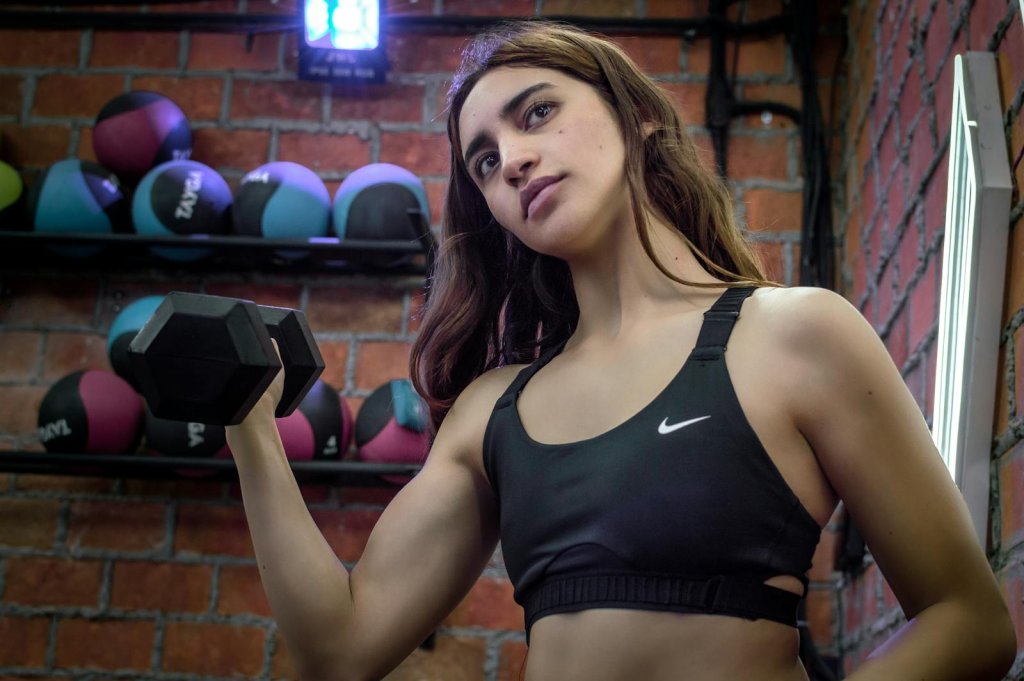
This guide explains what bicep exercises for women are, why they matter, how often to train, and the 12 best movements to include.
12 Best Bicep Exercises for Women
These exercises are designed to help build lean, defined arms by targeting all areas of the biceps through strength, control, and balanced muscle engagement.
1. Dumbbell Bicep Curl
How to do it
- Stand or sit upright holding a dumbbell in each hand, arms fully extended, palms facing forward
- Keep elbows close to your sides and shoulders relaxed
- Curl the dumbbells upward until they reach shoulder height
- Pause briefly at the top, then lower slowly with control
Why it works
This classic movement allows each arm to work independently, helping correct strength imbalances and improve overall biceps symmetry.
Muscles worked
Biceps brachii (long and short heads), brachialis
Trainer Tip
Move slowly on the way down to increase time under tension and avoid swinging the weights.
2. Hammer Curl
How to do it
- Hold dumbbells at your sides with palms facing each other
- Keep wrists neutral and elbows tucked in
- Curl the dumbbells upward without rotating your hands
- Lower under control back to the starting position
Why it works
The neutral grip shifts more emphasis to the brachialis and brachioradialis, which helps add arm thickness and supports elbow stability.
Muscles worked
Brachialis, biceps brachii, brachioradialis
Trainer Tip
Avoid letting the shoulders roll forward—keep your chest tall throughout the movement.
3. Incline Dumbbell Curl
How to do it
- Sit on an incline bench set at about 45–60 degrees
- Let arms hang fully extended with dumbbells, palms facing forward
- Curl the dumbbells upward without moving the shoulders
- Lower slowly until arms are fully extended again
Why it works
Starting from a stretched position increases activation of the long head of the biceps, which contributes to a more elongated arm appearance.
Muscles worked
Biceps brachii (long head emphasis), brachialis
Trainer Tip
Use lighter weights than standing curls to protect the shoulder joint and maintain strict form.
4. Concentration Curl
How to do it
- Sit on a bench with feet flat on the floor
- Hold a dumbbell in one hand and rest your elbow against the inside of your thigh
- Curl the dumbbell upward toward your shoulder
- Slowly lower back to full extension before switching arms
Why it works
This setup minimizes momentum and improves mind–muscle connection, helping you focus on peak biceps contraction.
Muscles worked
Biceps brachii (short head emphasis), brachialis
Trainer Tip
Pause for one second at the top of each rep to reinforce control and muscle engagement.
5. Preacher Curl
How to do it
- Sit at a preacher bench with upper arms supported on the pad
- Hold a barbell or dumbbells with arms extended
- Curl the weight upward while keeping upper arms fixed
- Lower slowly until elbows are almost fully straight
Why it works
By eliminating body movement and shoulder involvement, this exercise isolates the biceps through a strict range of motion.
Muscles worked
Biceps brachii (short head emphasis), brachialis
Trainer Tip
Do not lock out the elbows at the bottom to reduce joint strain.
6. Barbell Curl
How to do it
- Stand holding a barbell with hands shoulder-width apart, palms facing up
- Keep knees slightly bent and core engaged
- Curl the bar toward your chest without leaning back
- Lower the bar under control to the starting position
Why it works
Using both arms together allows heavier loads, making this exercise effective for progressive overload and strength development.
Muscles worked
Biceps brachii, brachialis
Trainer Tip
If your lower back starts arching, reduce the weight and reset your posture.
7. Cable Bicep Curl
How to do it
- Attach a straight bar or handle to a low pulley
- Stand upright and grasp the handle with palms facing up
- Curl the handle toward your shoulders
- Lower slowly while maintaining constant tension
Why it works
Cables keep consistent resistance throughout the movement, which can enhance muscle engagement across the full range.
Muscles worked
Biceps brachii, brachialis
Trainer Tip
Step slightly back from the machine to maintain tension even at the bottom.
8. Bayesian Cable Curl (Behind-the-Body Curl)
How to do it
- Attach a single handle to a low cable
- Stand facing away from the machine with the working arm slightly behind your torso
- Curl the handle upward while keeping the shoulder stable
- Lower slowly to a full stretch position
Why it works
The arm-behind-the-body position places greater tension on the long head of the biceps, supporting improved arm shape.
Muscles worked
Biceps brachii (long head emphasis), brachialis
Trainer Tip
Keep your elbow fixed in space—avoid letting it drift forward during the curl.
9. Resistance Band Curl
How to do it
- Stand on the center of a resistance band
- Hold the handles with palms facing forward
- Curl upward against the band’s resistance
- Slowly return to the start position
Why it works
Bands increase resistance as they stretch, creating strong tension at the top of the movement while being joint-friendly.
Muscles worked
Biceps brachii, brachialis
Trainer Tip
Control the band on the way down to prevent snapping tension on the elbows.
10. Zottman Curl
How to do it
- Hold dumbbells with palms facing up at your sides
- Curl the weights up with palms up
- Rotate palms downward at the top
- Lower the dumbbells slowly with palms facing down
Why it works
This variation combines traditional and reverse curl mechanics, training both the biceps and forearms in one movement.
Muscles worked
Biceps brachii, brachialis, forearm flexors and extensors
Trainer Tip
Use lighter weights—this exercise is more demanding than it looks.
11. Reverse Curl
How to do it
- Hold a barbell or dumbbells with palms facing down
- Keep elbows close to your sides
- Curl the weight upward without wrist movement
- Lower under control to full extension
Why it works
The pronated grip reduces biceps dominance and increases emphasis on the brachialis and forearm muscles.
Muscles worked
Brachialis, brachioradialis, biceps brachii (secondary)
Trainer Tip
Focus on smooth reps rather than height—range of motion matters more than load here.
12. Chin-Up (Assisted or Bodyweight)
How to do it
- Grab a bar with an underhand (palms-toward-you) grip
- Start from a dead hang with shoulders engaged
- Pull your chest toward the bar by bending the elbows
- Lower slowly back to the starting position
Why it works
As a compound pulling movement, chin-ups strongly recruit the biceps while also strengthening the upper back.
Muscles worked
Biceps brachii, latissimus dorsi, upper back muscles
Trainer Tip
Use an assisted machine or resistance band if needed to maintain good form.
How Often Should Women Train Biceps?
Most women see good results with:
- 2–3 bicep-focused sessions per week
- 48 hours of rest between hard bicep workouts
- 2–4 exercises per session
- 8–12 reps for moderate loads (definition-focused)
- 12–15+ reps for lighter, endurance-focused sets
Progress gradually by increasing reps, resistance, or total sets over time.
Can Women Build Defined Biceps Without Bulking?
Yes. Women can build defined, sculpted biceps without getting bulky. Muscle definition comes from gradual strength gains, not excessive size.
Key points to understand
- Definition comes from muscle firmness + overall body composition
- Women typically gain muscle slowly and progressively
- Bulking usually requires very high volume, heavy loads, and a calorie surplus
- Consistent training improves shape before noticeable size changes
To support lean, defined arms
- Train biceps 2–3 times per week
- Use controlled reps and full range of motion
- Combine biceps with back, shoulders, and triceps training
- Allow proper recovery between sessions
If pain is sharp or persistent, reduce load and seek professional guidance.
Sample Bicep Workout for Women
- Dumbbell Curl – 3 × 10–12
- Incline Dumbbell Curl – 3 × 8–10
- Hammer Curl – 3 × 10–12
- Cable or Band Curl – 2 × 12–15
Rest 60–90 seconds between sets.
Why Bicep Exercises Important for Lean, Defined Arms
Regular bicep training may help support:
- Improved arm definition through muscle development
- Stronger pulling ability for daily tasks
- Better elbow and shoulder stability
- Balanced upper-body aesthetics
- Long-term bone and joint health when combined with full-body strength training
Strength training at least two days per week for major muscle groups is widely recommended for adults, including women.
Common Mistakes to Avoid
- Swinging weights or using momentum
- Flaring elbows excessively
- Ignoring the eccentric (lowering) phase
- Training biceps hard every day without recovery
- Neglecting overall nutrition and recovery
Who Should Be Careful with Bicep Training?
Women with:
- Current elbow or shoulder pain
- Tendon irritation
- Recent upper-body injuries
should reduce load, prioritize controlled movement, and consult a qualified professional if pain persists.
Frequently Asked Questions
Are light weights better than heavy weights for toned arms?
Not necessarily. Muscle definition comes from building muscle and overall body composition, which can be achieved with a range of loads when effort and consistency are present.
Can women build noticeable biceps without bulking?
Yes. Women generally gain muscle more gradually, making it possible to build firm, defined arms without excessive size.
How long does it take to see results?
With consistent training and nutrition, many women notice changes in 4–8 weeks.
Are bicep exercises enough for arm definition?
No. Triceps, shoulders, and overall fat balance also play major roles in arm appearance.
Can I do bicep exercises at home?
Yes. Dumbbells, resistance bands, or bodyweight chin-ups are effective at home.
Should beginners train biceps separately?
Beginners can include biceps within full-body or upper-body workouts before progressing to isolation-focused routines.
Conclusion
Bicep exercises for women are a powerful tool for building lean, sculpted arms and improving upper-body strength. By choosing a mix of curl variations, training 2–3 times per week, and progressing gradually, you can develop defined arms that support both performance and daily life.
Start with a few key movements, focus on form, and stay consistent—your results will follow.
References
- CDC — Adult Physical Activity Guidelines (muscle-strengthening 2+ days/week)
- WHO — Guidelines on Physical Activity and Sedentary Behaviour (official publication page, 2020)
- ACSM Position Stand — Progression Models in Resistance Training for Healthy Adults (PubMed, 2009)
- Schoenfeld et al. — Low- vs High-Load Resistance Training Systematic Review & Meta-Analysis (PubMed, 2017)
- Schoenfeld et al. — Resistance Training Frequency and Muscle Hypertrophy Meta-Analysis (PubMed, 2016)
- Refalo et al. — Sex Differences in Muscle Size Changes After Resistance Training (Full text on PMC, 2025)
- ACE — Study Reveals Best Biceps Exercises (EMG-based comparison)
- Parpa et al. — EMG: Traditional Dumbbell Curl vs Bayesian Cable Curl (MDPI, 2025)