
Low impact core exercises are controlled, no-jump movements that strengthen your abs and deep core muscles by improving stability, bracing, and posture. They’re a smart choice if you want core strength without high-impact stress on your joints—especially when you’re training at home with limited space.
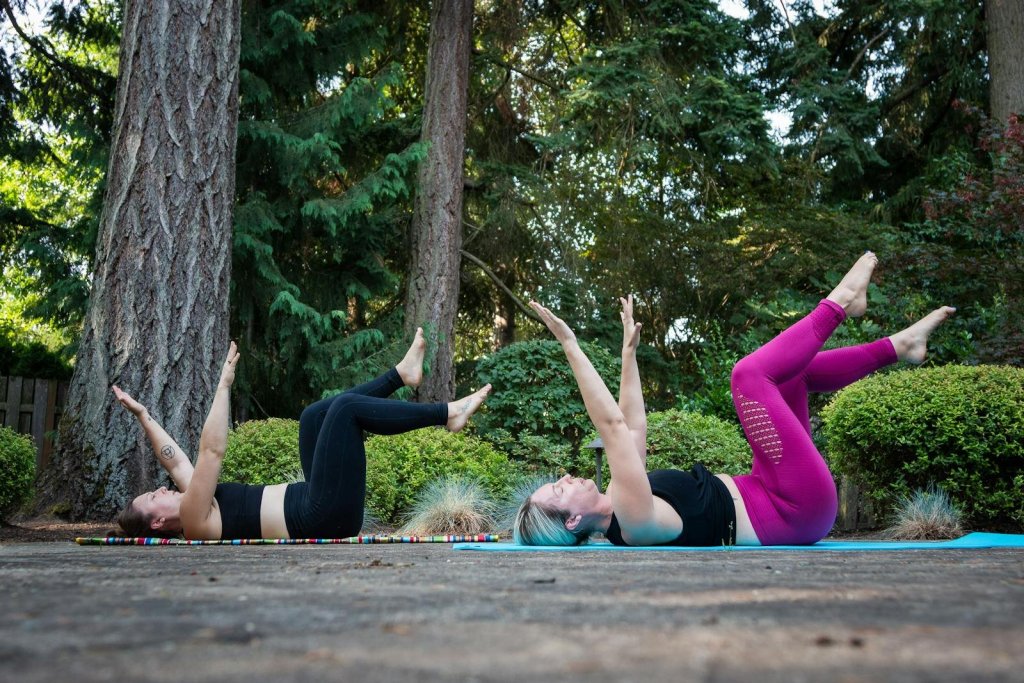
Core stability training is widely recommended because it supports the spine and helps you move better in daily life, as explained by the American Council on Exercise (ACE).
This guide shares 7 beginner-friendly, no-jumping exercises you can do at home, plus a simple routine, form cues, and safety notes.
What “low impact core exercises” really mean
Low impact doesn’t mean “easy.” It means:
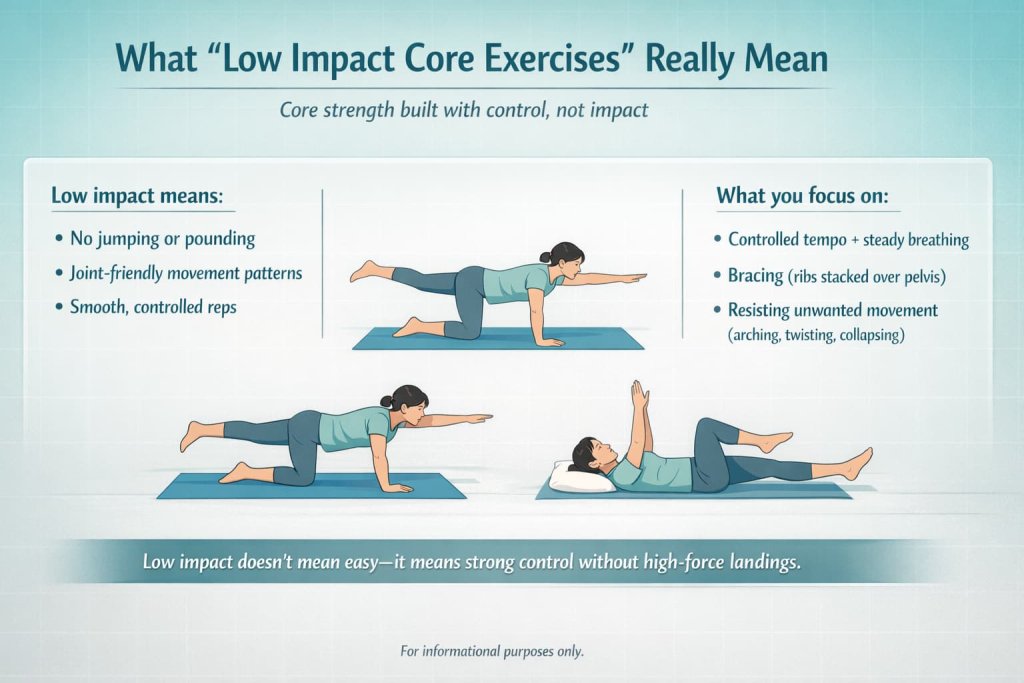
- No jumping, pounding, or high-force landings
- Controlled tempo and steady breathing
- Core strength built through bracing and resisting unwanted movement (like arching, twisting, or collapsing)
Many reputable training resources emphasize core stability (planks, bird dogs, dead bugs, bridges) because it builds control and posture without needing high-impact moves.
7 best low impact core exercises at home (no jumping)
Strengthen your core at home with these 7 low impact, no-jumping exercises that focus on control, stability, and steady breathing. They’re beginner-friendly, joint-friendly, and easy to modify for your level.
1) Dead Bug
How to do it:
- Lie on your back with knees bent at 90 degrees over hips and arms up
- Flatten your low back gently into the floor (no arch)
- Slowly extend one leg and the opposite arm away from you
- Pause briefly, then return and switch sides
- Keep breathing—exhale as you extend
Why it works:
Dead bugs train “anti-extension,” meaning your core learns to prevent your low back from arching while your arms and legs move.
Muscles worked:
Deep core (transverse abdominis), rectus abdominis, obliques, hip flexors (light), spinal stabilizers.
Trainer Tip:
If your back arches, shorten the range—only extend as far as you can control.
2) Bird Dog
How to do it:
- Start on hands and knees with a neutral spine
- Brace your core as if preparing for a gentle poke
- Extend one leg straight back (hip level), then reach the opposite arm forward
- Pause briefly, return under control, then switch sides
- Keep hips square to the floor (don’t rotate)
Why it works:
Bird dog trains core stability and anti-rotation control—great for posture and trunk control during everyday movement patterns.
Muscles worked:
Core stabilizers, glutes, spinal erectors, shoulders (stabilizers).
Trainer Tip:
Think “steady table.” If you wobble, do legs-only first, then arms-only.
3) Forearm Plank (Knees-Down Option Included)
How to do it:
- Place forearms on the floor, elbows under shoulders
- Step feet back into a straight line from head to heels (or drop knees for an easier version)
- Squeeze glutes, brace abs, and keep ribs down
- Hold while breathing slowly (no breath-holding)
Why it works:
Planks build full-core bracing endurance and teach you to keep a neutral spine under tension.
Muscles worked:
Abs, obliques, deep core, shoulders, glutes.
Trainer Tip:
A “good” plank is one you can hold without shaking your lower back into an arch.
4) Side Plank (Knee-Supported)
How to do it:
- Lie on your side with elbow under shoulder
- Bend knees and stack them, then lift hips to make a straight line from head to knees
- Keep chest open and hips forward (not rolled back)
- Hold, then switch sides
Why it works:
Side planks strengthen lateral core stability—important for posture and resisting side-bending.
Muscles worked:
Obliques, glute medius, deep core, shoulder stabilizers.
Trainer Tip:
If your shoulder feels stressed, push the floor away and keep the neck long.
5) Glute Bridge Hold
How to do it:
- Lie on your back with knees bent and feet flat, hip-width apart
- Brace core, then lift hips until your body forms a straight line from shoulders to knees
- Hold at the top while breathing
- Lower slowly with control
Why it works:
Bridges train the posterior chain while reinforcing pelvic control—often helpful for people who feel their low back taking over core work.
Muscles worked:
Glutes, hamstrings, deep core, lower-back stabilizers (support role).
Trainer Tip:
Keep ribs down—don’t “flare” up as you lift.
6) Heel Taps (Supine Toe Tap Variation)
How to do it:
- Lie on your back with knees at 90 degrees over hips
- Brace core and keep low back gently pressed to the floor
- Slowly tap one heel toward the floor and return
- Alternate sides without rushing
Why it works:
Heel taps strengthen anti-extension control (similar to dead bug) with simpler coordination.
Muscles worked:
Deep core, abs, obliques.
Trainer Tip:
Only tap as low as you can without losing your low-back contact.
7) Plank Shoulder Taps (Slow, No-Rock)
How to do it:
- Start in a high plank (hands under shoulders) or incline plank (hands on a bench/couch)
- Widen feet slightly for balance
- Tap one shoulder with the opposite hand, then switch
- Keep hips as still as possible
Why it works:
Shoulder taps train anti-rotation—your core resists twisting as you shift weight side to side.
Muscles worked:
Obliques, deep core, shoulders, serratus anterior.
Trainer Tip:
If hips rock a lot, elevate hands on a sturdy surface to reduce intensity.
Quick safety checklist before you start
Stop and modify if you feel sharp pain, tingling, numbness, or symptoms that worsen.
Use these form rules:
- Keep ribs stacked over pelvis (avoid big low-back arching)
- Move slowly enough to stay in control
- Start with shorter holds and fewer reps, then build gradually
If you’re dealing with back discomfort, the exercise guidance from NHS Inform also emphasizes starting gently and building up over time as tolerated.
Beginner routine using these 7 low impact core exercises
Do this 2–3 times per week, leaving at least a day between sessions if you’re new.
- Dead Bug: 6–10 reps per side
- Bird Dog: 6–10 reps per side
- Forearm Plank: 15–30 seconds
- Side Plank (knees): 15–30 seconds per side
- Glute Bridge Hold: 20–40 seconds
- Heel Taps: 8–12 taps per side
- Plank Shoulder Taps: 6–10 taps per side
Rest 30–60 seconds between moves. Keep every rep controlled.
For general health, adults are encouraged to combine strength work with weekly aerobic activity (for example, 150 minutes of moderate-intensity activity) as outlined by the Centers for Disease Control and Prevention (CDC).
How to Progress These Low Impact Core Exercises (Without Adding Impact)
- Add 5–10 seconds to planks/side planks/bridge holds
- Add 1–2 reps per side to dead bug, bird dog, heel taps, shoulder taps
- Slow the tempo (3 seconds down/return)
- Pause 1–2 seconds at the hardest position
- Progress leverage, not speed (incline plank → floor plank; knees side plank → straight-leg)
- Only progress if form stays strict (no back arch, no hip twist, steady breathing)
Modifications and low-impact alternatives
If something feels too hard, try these regressions:
- Planks: do knees-down or incline plank on a couch/bench
- Side plank: keep bottom knee down (as written) and shorten hold time
- Dead bug/heel taps: reduce range of motion
- Shoulder taps: elevate hands and widen feet
If you need more challenge (still low impact):
- Increase hold times by 5–10 seconds
- Add a 2–3 second pause at the hardest position
- Slow down the lowering phase (3 seconds down)
Who should avoid or get guidance first
Consider getting guidance from a qualified health professional if you:
- Recently had surgery, a significant injury, or new/worsening back pain
- Have symptoms like numbness, tingling, radiating pain, or weakness
- Are pregnant or postpartum and unsure how to brace safely
- Cannot maintain a neutral spine even with easy modifications
If you’re managing back pain, guidance from the American College of Sports Medicine (ACSM) supports using appropriate progressions and strength training principles, while staying within your tolerance.
Common mistakes that make low impact core exercises less effective
- Holding your breath (reduces control and can spike tension)
- Letting the low back arch during dead bugs/heel taps
- Rushing reps and using momentum
- Shrugging shoulders during planks
- Twisting hips during bird dogs and shoulder taps
FAQs
Are low impact core exercises effective for abs?
Yes—they build core strength through stability and bracing, which directly trains your abs and deep core muscles without needing jumping or high-impact moves.
How often should I do low impact core workouts?
A good starting point is 2–3 sessions per week, with at least one rest day between sessions if you’re new or sore.
Can I do these exercises if I have back discomfort?
Many people prefer stability-based core drills, but you should start gently, keep a neutral spine, and progress gradually. If pain worsens or you have nerve symptoms, get professional guidance.
Do I need equipment?
No—everything here is bodyweight. An exercise mat can make it more comfortable.
What’s the best low impact core exercise for beginners?
Dead bug, heel taps, and bird dog are usually the easiest to learn because they’re slow, controlled, and easy to scale.
How long does it take to see results?
Many people notice better control and posture within a few weeks if they train consistently. Visible changes vary based on sleep, nutrition, and overall activity.
Are crunches “bad” compared to these?
Crunches aren’t automatically bad, but many beginners do them with poor form or discomfort. Stability-based exercises are often a simpler, spine-friendly place to start.
Conclusion
Low impact core exercises are one of the safest ways to build real core strength at home—no jumping required. Start with short holds, stay strict with form, and progress gradually. If you want, I can turn these 7 moves into a 7-day beginner plan with exact sets, rest times, and progression rules.