
The best skull crusher alternatives build your triceps just as effectively—without wrecking your elbows.
Skull crushers (lying triceps extensions) are a proven muscle builder, but they’re also notorious for causing elbow pain and joint strain when performed incorrectly or too frequently.
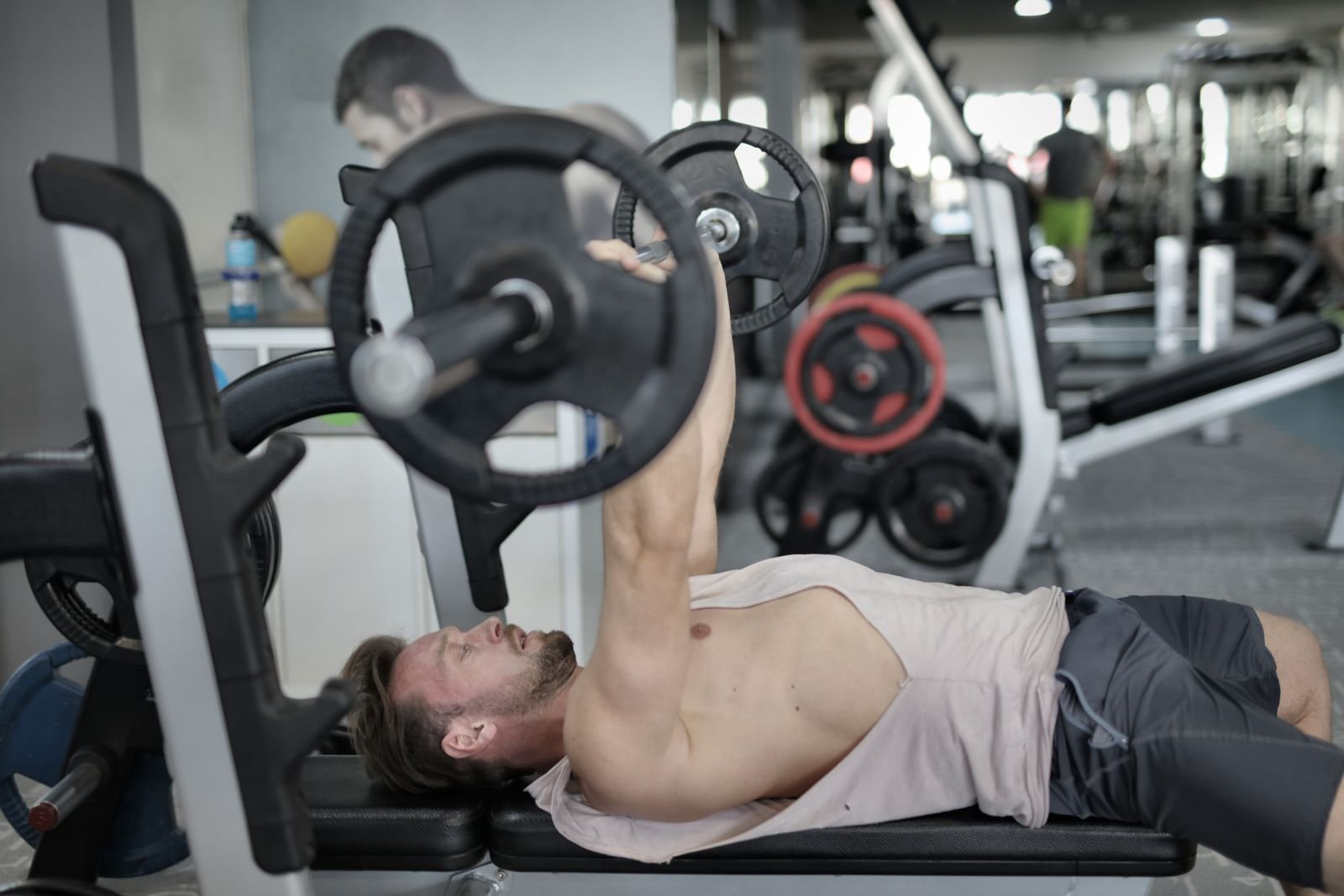
Understanding safer and equally powerful replacements can help you keep building bigger, stronger arms—minus the discomfort. These exercises mimic or enhance the triceps activation of skull crushers while offering better joint alignment and control.
In this guide, you’ll learn the 15 best skull crusher alternatives that target all three triceps heads, protect your elbows, and keep your workouts pain-free.
Why Replace the Skull Crusher?
While skull crushers isolate the triceps effectively, they’re not ideal for everyone. Common reasons to look for alternatives include:
- Elbow and wrist pain: High joint stress from repeated extensions.
- Form breakdown: Difficult to maintain proper elbow angle under heavy load.
- Equipment limits: Not everyone has access to an EZ-curl bar or bench.
- Plateaus: Limited movement variety can stall muscle growth.
Research from the Journal of Strength & Conditioning Research (2022) confirms that varying elbow-extension exercises improves triceps hypertrophy by engaging different activation angles and load vectors.
Key Muscles Targeted
All skull crusher alternatives primarily work the triceps brachii — long, lateral, and medial heads.
Secondary muscles engaged include:
- Deltoids (stabilization)
- Core (during compound or overhead movements)
- Forearms (grip and support)
15 Best Skull Crusher Alternatives
1. Close-Grip Bench Press
Why it works:
This compound lift mimics the elbow-extension phase of skull crushers but distributes the load across your chest and shoulders, allowing heavier resistance without overstressing the elbows. It builds mass and strength in the triceps’ lateral and medial heads while enhancing overall pressing power.
Muscles worked: Triceps brachii, pectoralis major, anterior deltoids
How to do it:
- Lie on a flat bench with feet planted and grip the bar shoulder-width apart.
- Lower the bar slowly to your mid-chest, keeping elbows close to your sides.
- Press upward explosively, focusing on triceps engagement.
Trainer Tip:
Avoid flaring your elbows — keep them tucked at a 45° angle to minimize shoulder strain and maximize triceps tension.
2. Dumbbell Floor Press
Why it works:
By eliminating the bottom portion of a traditional press, this move reduces shoulder and elbow stress while keeping constant tension on the triceps. The floor acts as a natural safety stop, making it excellent for those with joint issues.
Muscles worked: Triceps, chest, front deltoids
How to do it:
- Lie flat on the floor with a dumbbell in each hand.
- Lower until elbows gently touch the ground.
- Press back up without locking out completely.
Trainer Tip:
Pause briefly when elbows touch the floor to increase time under tension and improve muscle control.
3. Cable Triceps Pushdown
Why it works:
Cables deliver continuous tension through the full range of motion — something free weights can’t match. This isolation move directly targets the triceps and minimizes elbow strain when performed with good form.
Muscles worked: Triceps (all three heads)
How to do it:
- Attach a rope or straight bar to a high pulley.
- Keep elbows fixed by your sides and extend arms down.
- Slowly return to the start position without letting the weight stack touch.
Trainer Tip:
Use a slow 2–3 second lowering phase (eccentric) to boost activation and muscle growth.
4. Overhead Cable Extension
Why it works:
Placing the arms overhead increases stretch and activation of the long head of the triceps — an area underworked in many push movements.
Muscles worked: Triceps (long head emphasis)
How to do it:
- Face away from a low cable pulley and grip the rope attachment.
- Step forward to create tension and bring hands behind your head.
- Extend your arms forward and up until fully straight.
Trainer Tip:
Engage your core to avoid arching your lower back — this maintains proper alignment and safety.
5. Dumbbell Overhead Extension
Why it works:
This joint-friendly isolation exercise mirrors the skull crusher movement but allows natural wrist rotation for pain-free training.
Muscles worked: Triceps (long head focus)
How to do it:
- Sit upright or stand tall holding a dumbbell with both hands above your head.
- Lower it behind your head, keeping elbows tight and upper arms stable.
- Extend arms until fully straight.
Trainer Tip:
Control the descent — rushing increases elbow stress and reduces effectiveness.
6. Triceps Dips
Why it works:
A powerful bodyweight movement that builds strength and size across all triceps heads while recruiting shoulders and chest.
Muscles worked: Triceps, anterior deltoids, chest
How to do it:
- Use parallel bars or chair and hold your body upright.
- Lower yourself until elbows reach 90°.
- Press back up to full extension.
Trainer Tip:
Stay vertical to hit the triceps more directly; leaning forward shifts tension to the chest.
7. Diamond Push-Up
Why it works:
This bodyweight variation narrows your hand placement to emphasize triceps activation while sparing the wrists and elbows from heavy loading.
Muscles worked: Triceps, chest, core stabilizers
How to do it:
- Position hands under your chest forming a diamond shape with thumbs and index fingers.
- Lower until your chest nearly touches your hands.
- Press up, maintaining a straight line from head to heels.
Trainer Tip:
If full push-ups are difficult, perform them on your knees until you build strength.
8. Barbell JM Press
Why it works:
A hybrid lift between the close-grip bench and skull crusher. It develops pressing power while reducing the shoulder stress of full skull crushers.
Muscles worked: Triceps, chest, front deltoids
How to do it:
- Lie on a flat bench with a narrow grip.
- Lower the bar halfway toward your upper chest.
- Pause briefly, then drive it back up using triceps strength.
Trainer Tip:
Start light and focus on perfect form — it’s a technical lift that rewards precision.
9. Triceps Kickback
Why it works:
An isolation move emphasizing peak contraction and control, ideal for defining the triceps’ outer head.
Muscles worked: Triceps (lateral and long head)
How to do it:
- Hinge at the hips and keep your upper arms parallel to the floor.
- Extend elbows fully backward.
- Slowly return to start without swinging.
Trainer Tip:
Squeeze at the top for one second to maximize tension.
10. Incline Dumbbell Press
Why it works:
Changing the pressing angle increases triceps involvement by reducing shoulder dominance, offering a safer, functional compound option.
Muscles worked: Chest, triceps, shoulders
How to do it:
- Set a bench to a 30–45° incline.
- Lower dumbbells slowly to chest level.
- Press upward, stopping just short of lockout.
Trainer Tip:
Keep wrists neutral and avoid bouncing weights off the chest.
11. Resistance Band Triceps Extension
Why it works:
An excellent low-impact movement for home training that builds endurance, control, and stability.
Muscles worked: Triceps (all heads)
How to do it:
- Anchor a resistance band overhead.
- Grip the handles and extend elbows downward until arms are straight.
- Return slowly to the starting point.
Trainer Tip:
Vary resistance by stepping back or using a thicker band for progressive overload.
12. Bodyweight Bench Dip
Why it works:
Minimal equipment needed — this bodyweight classic emphasizes triceps strength through deep flexion and extension.
Muscles worked: Triceps, shoulders, chest
How to do it:
- Sit on a bench with hands beside your hips.
- Walk your feet forward and lower your body until elbows are bent to 90°.
- Press up to full arm extension.
Trainer Tip:
Avoid dropping too low — excessive range can strain the shoulders.
13. Reverse Grip Pushdown
Why it works:
The underhand (supinated) grip targets the medial head of the triceps — often neglected in traditional pushdowns.
Muscles worked: Triceps (medial and long head)
How to do it:
- Attach a straight bar to a high pulley.
- Grip palms up and pull down by extending elbows.
- Return slowly to the start.
Trainer Tip:
Keep elbows close and upper arms locked to isolate the triceps fully.
14. Dumbbell Tate Press
Why it works:
A unique inward pressing pattern that minimizes elbow stress while isolating the triceps’ inner fibers.
Muscles worked: Triceps, chest stabilizers
How to do it:
- Lie flat with dumbbells held above chest, palms facing feet.
- Bend elbows outward and lower weights toward chest.
- Extend back up, keeping dumbbells angled inward.
Trainer Tip:
Use moderate weight — control matters more than load here.
15. Landmine Press
Why it works:
Combines triceps and shoulder development through a controlled arc, ideal for those avoiding overhead positions due to joint limitations.
Muscles worked: Triceps, deltoids, core
How to do it:
- Anchor a barbell in a landmine attachment or corner.
- Hold the bar at shoulder height with one hand.
- Press upward and slightly forward until your arm is extended.
Trainer Tip:
Maintain a tight core and avoid leaning backward during the press.
Programming Tips
- Perform 2–3 triceps exercises per session, 2–3 times weekly.
- Combine one compound (e.g., close-grip press) and one isolation move (e.g., rope pushdown).
- Keep reps in the 8–15 range for hypertrophy.
- Focus on controlled eccentrics (lowering phase) to reduce joint impact.
Common Mistakes to Avoid
- Using excessive weight leading to elbow flare.
- Neglecting warm-ups — triceps and elbows need joint prep.
- Locking out harshly at the top of presses.
- Ignoring wrist alignment in overhead moves.
FAQs
1. Are skull crushers bad for your elbows?
They’re not inherently bad, but poor form or overuse can cause irritation in the elbow tendons.
2. Which skull crusher alternative is best for beginners?
The diamond push-up and band triceps extension are perfect low-impact options.
3. Can I still do skull crushers occasionally?
Yes—just rotate them weekly with safer alternatives to avoid overuse.
4. Do cables work better than dumbbells for triceps?
Cables provide constant tension, which can improve activation and control.
5. How many triceps exercises should I do per workout?
Two or three quality movements are enough for optimal growth.
6. What’s the best exercise for the triceps long head?
Overhead extensions (dumbbell or cable) best target the long head.
7. Can women do these skull crusher alternatives?
Absolutely — these are effective and joint-safe for all fitness levels.
Conclusion
Skull crushers build impressive arms, but they’re not your only path to strong triceps. By swapping in smart alternatives like close-grip presses, dips, and cable pushdowns, you’ll grow your arms faster, train safer, and stay pain-free for the long run.
Start mixing 2–3 of these exercises into your next upper-body day to keep your triceps growing without beating up your joints.
References
- ACSM Position Stand: Progression Models in Resistance Training for Healthy Adults (2009)
- Schoenfeld, B.J. (2010). The Mechanisms of Muscle Hypertrophy and Their Application to Resistance Training (JSCR)
- Schoenfeld, B.J., Grgic, J., et al. (2021). Loading Recommendations for Muscle Strength/Hypertrophy (Sports, MDPI)
- ACE-Sponsored EMG Study: Best Triceps Exercises (Triangle Push-Ups, Dips, Kickbacks)
- Youdas, J.W. et al. (2010). An Electromyographic Analysis of Push-Up Hand Positions (JSCR)
- Cogley, R.M. et al. (2005). Comparison of Muscle Activation Using Various Hand Positions in Push-Ups
- Kholinne, E. et al. (2018). The Triceps Brachii Anatomy and Function (Orthopedic Research & Reviews, PMC)