
The best alternatives to the sissy squat are exercises that build your quadriceps without putting excessive strain on your knees.
While sissy squats deliver incredible quad isolation, they’re not ideal for everyone. The deep knee flexion and backward lean can cause discomfort or injury — especially if you lack mobility or experience knee pain. Understanding safer, more effective substitutes helps you strengthen your legs, improve stability, and prevent joint issues.
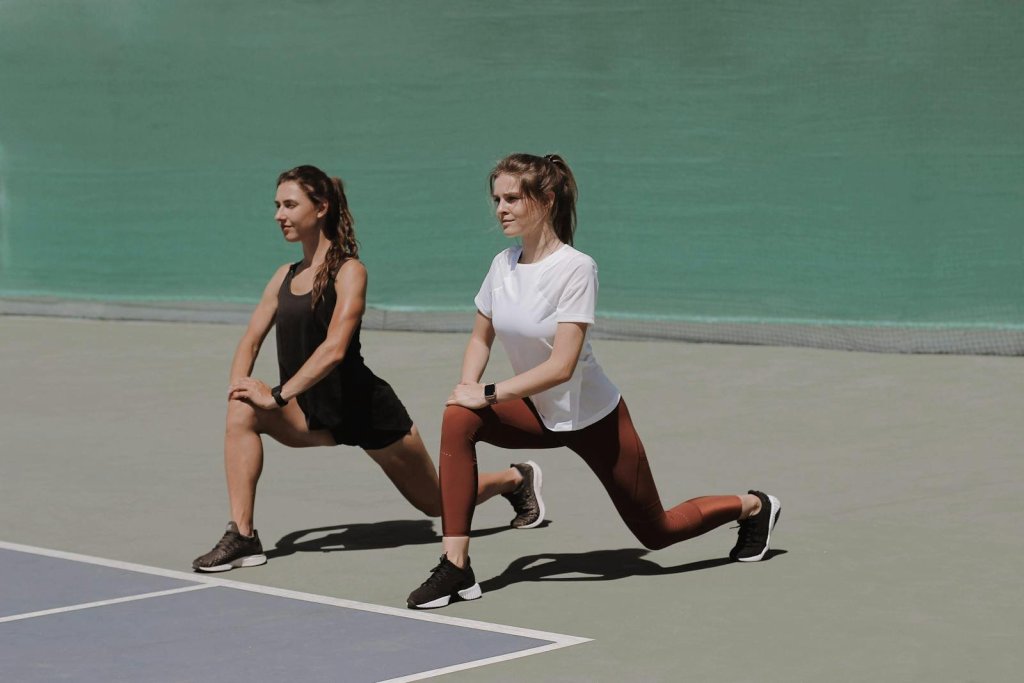
In this guide, you’ll learn 20 science-backed sissy squat alternatives that build strength, size, and resilience — whether you train at home or in the gym.
Why Replace the Sissy Squat?
While the sissy squat emphasizes quad hypertrophy, it comes with limitations:
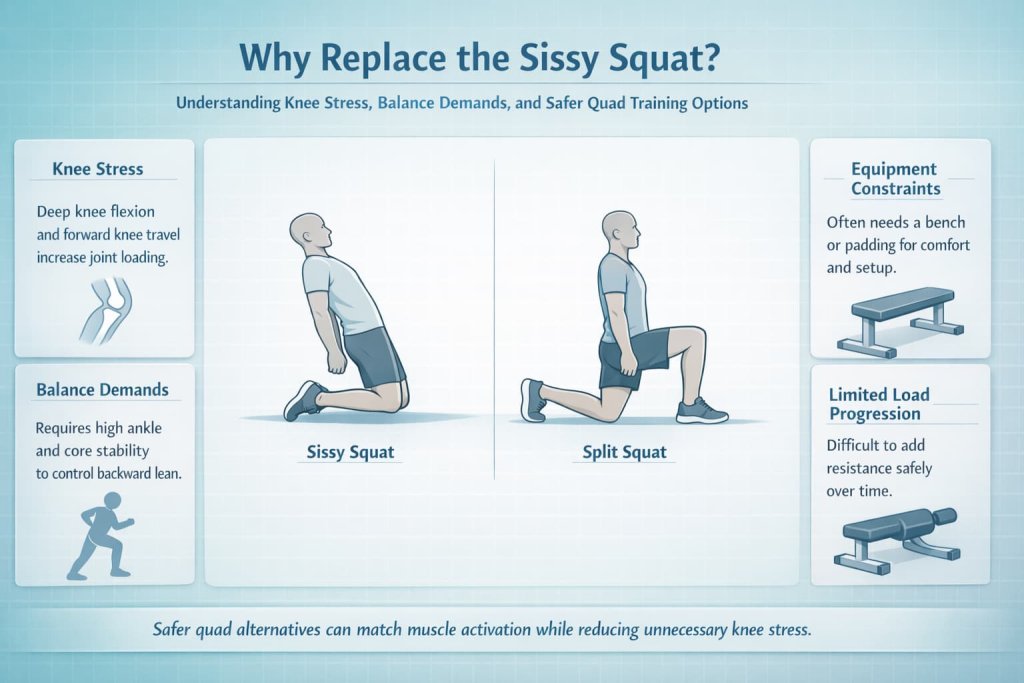
- Knee Stress: Excessive forward knee travel increases patellar tendon load.
- Balance Issues: The backward lean demands strong ankle and core stability.
- Limited Load Progression: Hard to progressively overload safely.
- Equipment or Setup Constraints: Often requires a sissy squat bench or pad for comfort.
A 2023 analysis in the Journal of Strength & Conditioning Research highlighted that knee-dominant movements involving deep flexion can elevate shear forces on the joint. Replacing the sissy squat with safer, controlled options allows similar or even greater quad activation — without the same stress.
20 Best Sissy Squat Alternatives
Below are twenty joint-friendly exercises that match or surpass the sissy squat’s effectiveness for quad development.
1. Heel-Elevated Goblet Squat
Why it works: Elevating your heels increases knee flexion and shifts emphasis toward the quads while reducing hip and lower back involvement. This position mimics the sissy squat’s upright torso and deep knee angle but with greater control and stability.
Muscles worked: Quadriceps, glutes, core stabilizers.
How to do it:
- Stand with your heels elevated 2–3 inches on small plates or wedges.
- Hold a dumbbell or kettlebell at chest height.
- Keep your torso tall and squat slowly until thighs are below parallel.
- Drive through your midfoot to return to standing
Trainer Tip: Maintain core tension and avoid letting your heels lift off the platform. Use a 3-second descent for maximum quad tension.
2. Hack Squat (Machine or Barbell)
Why it works: Promotes an upright torso with fixed back support, enabling deeper knee flexion and full quad activation while minimizing stress on the lower back.
Muscles worked: Quadriceps, glutes, adductors.
How to do it:
- Position shoulders under pads, feet shoulder-width apart, toes slightly outward.
- Descend under control until thighs reach parallel or slightly below.
- Press upward through heels, avoiding knee lockout.
Trainer Tip: Keep knees tracking in line with your toes and avoid bouncing out of the bottom.
3. Leg Press (High Rep for Quads)
Why it works: Provides a controlled environment for heavy loading, emphasizing knee extension over hip drive when foot placement is low on the platform.
Muscles worked: Quadriceps, glutes.
How to do it:
- Sit back, feet low and shoulder-width apart on the platform.
- Lower the sled slowly until knees reach 90°.
- Push upward without locking knees fully.
Trainer Tip: Focus on slow negatives (2–3 seconds) and 12–15 reps to maximize quad pump and protect the knees.
4. Bodyweight Wall Sit
Why it works: Builds muscular endurance and joint stability by maintaining isometric contraction through the quads.
Muscles worked: Quadriceps, glutes, core.
How to do it:
- Stand with back against a wall, feet about two feet forward.
- Slide down until thighs are parallel to the floor.
- Hold for 30–60 seconds.
Trainer Tip: Add a resistance band around the knees or hold a weight plate to increase difficulty.
5. Spanish Squat
Why it works: Uses a resistance band looped behind the knees to reduce shear forces while keeping the torso upright, isolating the quads effectively.
Muscles worked: Quadriceps, glutes, hamstrings.
How to do it:
- Anchor a heavy resistance band behind you at knee height.
- Step into the loop so it rests behind your knees.
- Squat back while keeping shins vertical.
- Return to standing under control.
Trainer Tip: Focus on maintaining tension in the band throughout — you should feel the quads working continuously.
6. Front Squat
Why it works: Shifts the center of gravity forward, forcing the quads to take more load compared to the posterior chain.
Muscles worked: Quads, glutes, core, upper back.
How to do it:
- Rest the barbell across your front shoulders with elbows high.
- Inhale deeply, brace your core, and descend with an upright torso.
- Push up through the midfoot to return to standing.
Trainer Tip: Keep elbows high to prevent the bar from rolling forward. Use lighter weight until you master balance.
7. Cyclist Squat
Why it works: Closely replicates the knee angles of a sissy squat but with better safety and balance using heel elevation.
Muscles worked: Quads, calves, core.
How to do it:
- Stand with heels raised on a wedge or plates, feet 4–6 inches apart.
- Squat straight down while keeping your torso upright.
- Pause at the bottom, then drive up through toes.
Trainer Tip: Perform with a slow eccentric phase (3–4 seconds) to increase quad time under tension.
8. Step-Up
Why it works: Builds unilateral leg strength, balance, and coordination while emphasizing the quads during upward drive.
Muscles worked: Quads, glutes, adductors, calves.
How to do it:
- Step onto a bench with one foot, keeping chest upright.
- Push through the front heel to rise.
- Lower back down under control.
Trainer Tip: Don’t push off the trailing leg — let the working leg do all the effort.
9. Walking Lunge
Why it works: Improves quad development, coordination, and hip-knee stability with dynamic movement.
Muscles worked: Quads, glutes, hamstrings, core.
How to do it:
- Step forward into a deep lunge, lowering the rear knee toward the floor.
- Push through the front foot and move into the next step.
Trainer Tip: Use controlled strides and avoid leaning forward excessively.
10. Split Squat
Why it works: Replicates knee angles of the sissy squat but offers greater stability and less joint stress.
Muscles worked: Quads, glutes, hip stabilizers.
How to do it:
- Take a staggered stance with one foot forward.
- Lower until rear knee nearly touches the floor.
- Press through the front leg to stand.
Trainer Tip: Keep your torso vertical and avoid pushing your front knee far past your toes.
11. Bulgarian Split Squat
Why it works: Enhances unilateral control and deep quad activation by elevating the rear leg.
Muscles worked: Quads, glutes, hamstrings, core.
How to do it:
- Place back foot on a bench.
- Lower until front thigh is parallel to the ground.
- Drive upward through front heel.
Trainer Tip: Keep chest tall and core tight — avoid bouncing at the bottom.
12. Pendulum Squat (Machine)
Why it works: Uses an arcing load path that maintains constant quad tension through the full range while minimizing joint compression.
Muscles worked: Quads, glutes.
How to do it:
- Step into the machine and position shoulders under pads.
- Descend deeply, then press through heels to stand.
Trainer Tip: Maintain constant tension; don’t rest at the top.
13. Landmine Squat
Why it works: Promotes upright posture and forward balance, reducing knee and back stress while targeting quads.
Muscles worked: Quads, glutes, core.
How to do it:
- Hold the landmine bar at chest level.
- Squat straight down with heels planted.
- Push up through midfoot.
Trainer Tip: Keep elbows close to the body for stability.
14. Belt Squat
Why it works: Loads the hips through a belt, eliminating spinal compression and allowing pain-free quad training.
Muscles worked: Quads, glutes, adductors.
How to do it:
- Strap on the belt, attach weight plates.
- Squat down under control and drive upward.
Trainer Tip: Maintain upright posture and let hips drop between your legs.
15. Reverse Nordic Curl
Why it works: Excellent for eccentric quad loading and flexibility, strengthening the knee through its full range.
Muscles worked: Quads, hip flexors, core.
How to do it:
- Kneel with torso tall and toes pointed.
- Lean backward slowly, keeping body straight.
- Return using quad strength.
Trainer Tip: Move slowly; even shallow reps build serious quad strength.
16. Smith Machine Squat (Narrow Stance)
Why it works: Stabilized bar path lets you focus purely on quad contraction with an upright torso.
Muscles worked: Quads, glutes.
How to do it:
- Stand with feet slightly forward, shoulder-width apart.
- Lower under control until thighs are parallel.
- Press upward through heels.
Trainer Tip: Avoid locking out knees — keep constant tension.
17. Lying Leg Extension (Machine)
Why it works: Isolates the quadriceps directly for peak contraction, ideal for hypertrophy or rehab phases.
Muscles worked: Quadriceps.
How to do it:
- Sit with shins under the pad.
- Extend legs until nearly straight, then lower slowly.
Trainer Tip: Pause for 1 second at the top for maximal activation.
18. Box Squat
Why it works: Builds control and power while teaching consistent depth.
Muscles worked: Quads, glutes, hamstrings.
How to do it:
- Stand before a box slightly below knee height.
- Lower until you lightly touch the box, then drive up.
Trainer Tip: Don’t fully sit — maintain tension throughout.
19. Resistance Band Squat
Why it works: Provides ascending resistance, activating the quads more at lockout while being joint-friendly.
Muscles worked: Quads, glutes, core.
How to do it:
- Stand on a resistance band and hold handles at shoulder height.
- Squat slowly, keeping tension throughout.
Trainer Tip: Keep elbows high and band taut from start to finish.
20. Single-Leg Leg Press
Why it works: Targets each leg independently to correct imbalances and enhance knee stability.
Muscles worked: Quads, glutes, adductors, hamstrings.
How to do it:
- Sit on the machine and place one foot on the platform.
- Lower under control, keeping hips square.
- Press up without locking the knee.
Trainer Tip: Focus on controlled tempo — no bouncing at the bottom.
Programming Tips
- Perform 3–4 of these exercises per lower-body session.
- Mix bilateral (squats, presses) and unilateral (lunges, split squats) variations.
- Train quads 2× per week for optimal growth.
- Keep reps in the 8–15 range and focus on tempo control for safety.
Safety & Form Notes
- Warm up with dynamic stretches and knee mobilization.
- Don’t let knees collapse inward (“valgus”).
- Prioritize range of motion over heavy load.
- Progress gradually to protect connective tissues.
FAQs
1. Are sissy squats bad for your knees?
Not inherently, but improper form or excessive depth can stress the patellar tendon.
2. What’s the best beginner alternative?
The heel-elevated goblet squat and Spanish squat are ideal for starters.
3. Can I build quads without sissy squats?
Yes — research shows compound moves like front squats and lunges offer equal hypertrophy potential.
4. Do I need special equipment?
No. You can perform most of these with dumbbells, resistance bands, or bodyweight.
5. How often should I train quads?
Twice per week allows muscle growth and recovery.
6. Which alternative mimics the sissy squat best?
The cyclist squat offers similar knee flexion and quad activation safely.
7. Can these exercises prevent knee pain?
They may help support knee stability and strength, but consult a professional if pain persists.
Conclusion
The sissy squat isolates your quads but isn’t ideal for everyone. Whether you’re protecting your knees, training at home, or just seeking variety, these 20 alternatives build strength and size safely. Choose a few, focus on perfect form, and progress steadily — your legs will thank you.
References
- Gullett JC et al., 2009 — Front vs. Back Squat Biomechanics
Front squats reduce knee extensor moments and compressive forces vs. back squats—useful when choosing quad-dominant but knee-friendlier options. PubMed - Martín-Fuentes I et al., 2020 — EMG in Leg Press & Squat Variations
Reports high quadriceps EMG on leg press and shows how setup affects recruitment—supports leg press as a smart sissy-squat substitute. PMC - Joseph L et al., 2020 — Belt Squat vs. Back Squat
Belt squats yield similar quad/hamstring demands with lower trunk loading—excellent for knee/back-friendly quad training. PMC - Lee T et al., 2016 — Heel Wedge Increases VMO Activity
Heel-elevated squats show higher VMO EMG—supports cyclist/heel-elevated goblet squats for quad emphasis. PMC - Bouguezzi R et al., 2024 — Reverse Nordic Exercise Training
An 8-week RNE program improved lower-limb performance in youth athletes—backs Reverse Nordic as a quad-centric option. PMC - Basas C et al., 2023 — Spanish Squat in Patellar Tendon Rehab Context
Highlights Spanish squat (with e-stim) as promising for patellar tendinopathy—supports Spanish squat as a knee-tolerant quad builder. PMC - Martín-Fuentes I et al., 2022 — Inclined Leg Press Activation
Inclined leg press shows highest vastus medialis activation across conditions—reinforces leg-press variants for quad focus. SAGE Journals