
Spondylolisthesis exercises are typically stability-focused movements that train your core and hips to support a more neutral spine and reduce unnecessary low-back strain. The goal is not to force the spine into a new position, but to improve control and tolerance for daily movement using approaches commonly recommended in physical therapy, as outlined by the Cleveland Clinic.
Understanding the right exercise direction matters because spondylolisthesis varies by type, severity, and symptoms. Evidence-based spine care resources consistently emphasize strengthening, flexibility work, and activity modification as part of nonsurgical management, according to OrthoInfo by the American Academy of Orthopaedic Surgeons.
What Are Spondylolisthesis Exercises?
Spondylolisthesis exercises are controlled strengthening and mobility drills designed to help:
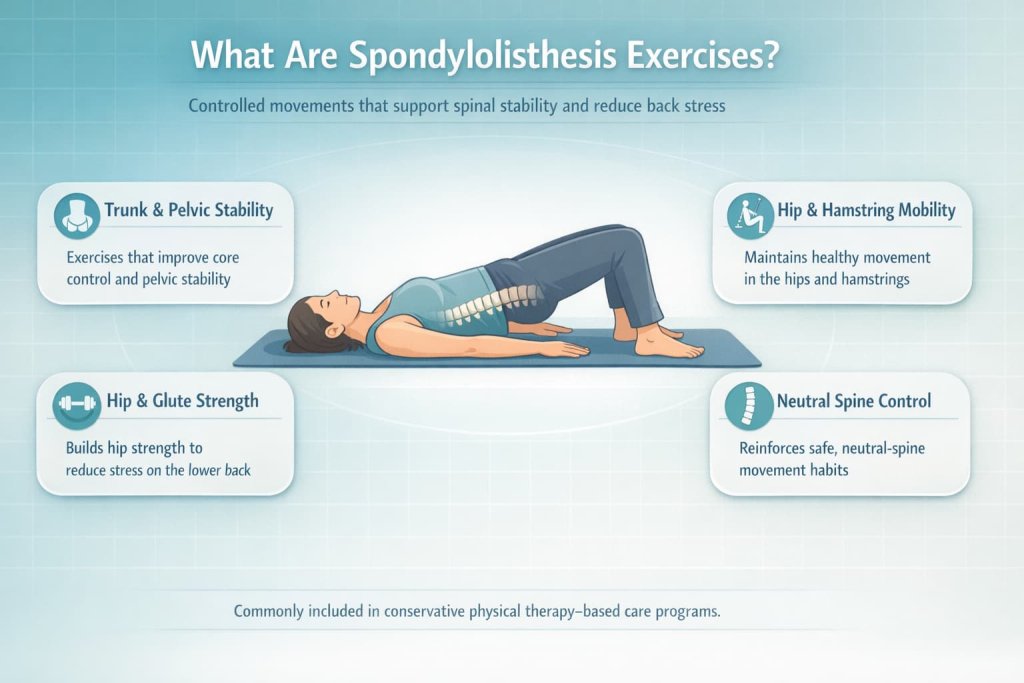
- Improve trunk and pelvic stability
- Build hip and glute strength to reduce spinal overload
- Maintain mobility in the hips and hamstrings
- Reinforce neutral-spine movement habits
Conservative care plans frequently include physical therapy focused on strengthening muscles around the spine to improve support and movement efficiency, as described by the Cleveland Clinic.
Who Should Be Careful With Spondylolisthesis Exercises
Most people benefit from gentle, well-selected exercises, but extra caution is needed in certain situations. You should avoid following a generic program without guidance if you have:
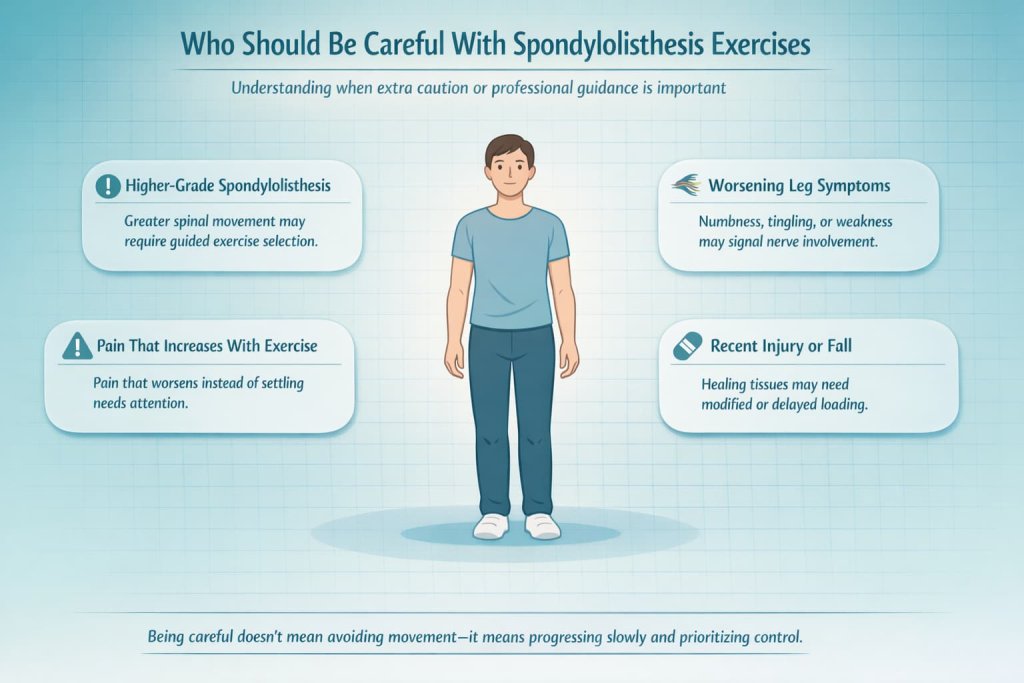
- Higher-grade spondylolisthesis
- Worsening leg symptoms such as numbness, tingling, or weakness
- Pain that increases during or after exercise instead of settling
- A recent back injury, fall, or accident
- A history of spinal surgery
Being careful does not mean avoiding movement. It means progressing slowly, staying within symptom-tolerant ranges, and prioritizing control over intensity.
7 Best Spondylolisthesis Exercises
These exercises emphasize core control, hip strength, and neutral-spine stability, which are common elements of conservative rehabilitation programs.
1) Diaphragmatic Breathing With Brace
Why it works:
Diaphragmatic breathing with a gentle brace trains coordinated activation between the diaphragm, deep core, and pelvic floor. This creates 360-degree trunk tension that supports the spine without forcing it into flexion or extension. For spondylolisthesis, this breathing-based control helps reduce unnecessary spinal motion and prepares the body for more demanding stability exercises.
How to do it:
- Lie on your back with knees bent and feet flat on the floor
- Place one hand on your chest and one on your abdomen
- Inhale slowly through your nose, allowing the ribcage to expand
- Exhale while gently tightening the abdominal wall as if preparing to lift
- Keep the spine in a comfortable neutral position
- Perform 5–8 slow breaths for 2–3 rounds
Trainer Tip:
Avoid flattening your lower back or flaring your ribs—aim for even pressure around the waist rather than pulling the stomach inward.
2) Dead Bug (Modified)
Why it works:
The modified dead bug develops anti-extension control, meaning the core learns to resist arching while the arms or legs move. This is especially important for spondylolisthesis, where excessive lumbar extension can increase stress at the involved spinal segment. The slow, controlled pattern reinforces stability during everyday movements like walking or reaching.
How to do it:
- Lie on your back with arms pointing upward and knees bent
- Brace your core lightly without flattening the spine
- Slowly lower one heel toward the floor while maintaining control
- Return to the starting position
- Alternate sides for 6–10 repetitions per side
Trainer Tip:
Only move as far as you can without losing spinal control—smaller, cleaner reps are more effective than larger unstable ones.
3) Bird Dog (Controlled Reach)
Why it works:
Bird dogs challenge spinal stability while the limbs move in opposite directions, mimicking real-world demands such as walking or carrying objects. The exercise promotes coordinated activation of deep spinal muscles and glutes, helping limit unwanted rotation or sagging through the lower back.
How to do it:
- Start on hands and knees with the spine in neutral alignment
- Brace the core gently
- Extend one leg straight back while keeping hips level
- Add the opposite arm reach if stability allows
- Hold briefly, then switch sides for 6–10 repetitions
Trainer Tip:
Imagine balancing a glass of water on your back—control and stillness matter more than range of motion.
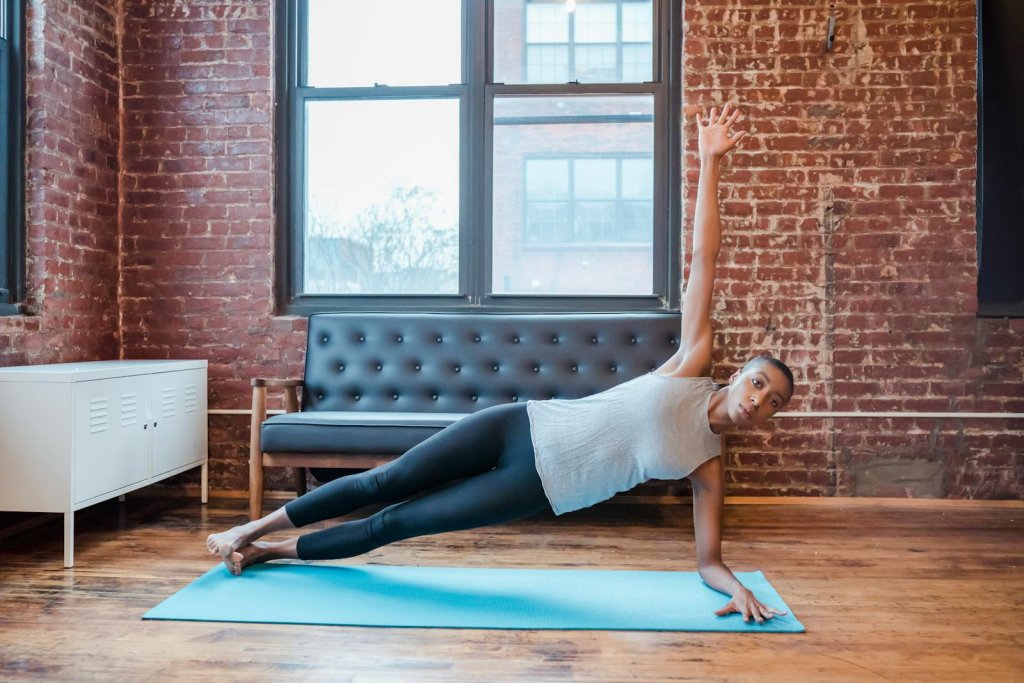
4) Side Plank (Bent-Knee)
Why it works:
The bent-knee side plank strengthens the lateral core muscles that help keep the pelvis level during standing, walking, and single-leg tasks. Improved lateral stability can reduce compensatory movement through the lumbar spine, which is particularly helpful for managing spondylolisthesis-related stress.
How to do it:
- Lie on your side with knees bent and elbow under the shoulder
- Brace the core and lift hips off the floor
- Form a straight line from shoulders to knees
- Hold for 10–20 seconds
- Repeat 2–4 times per side
Trainer Tip:
If the shoulder feels strained, reposition the elbow slightly and focus on pushing the floor away to stay stable.
5) Glute Bridge
Why it works:
Glute bridges strengthen the hips so they can absorb more load during standing and movement. Stronger glutes reduce reliance on the lower back for extension and stabilization, which can help decrease mechanical stress at the affected spinal level.
How to do it:
- Lie on your back with feet hip-width apart and knees bent
- Brace the core gently
- Press through the heels to lift the hips
- Stop when the torso and thighs align without arching
- Lower slowly and perform 8–12 repetitions
Trainer Tip:
Think “hips up, ribs down” to avoid over-extending through the lower back at the top.
6) Hip Hinge to Wall
Why it works:
This drill retrains proper hip movement patterns, encouraging bending from the hips rather than the spine. Learning to hinge correctly helps reduce repeated spinal shear and extension forces during daily tasks such as lifting, reaching, or standing up from a chair.
How to do it:
- Stand a few inches away from a wall
- Soften the knees slightly
- Push hips back to touch the wall
- Keep the spine neutral throughout
- Return to standing and repeat for 8–12 repetitions
Trainer Tip:
If you feel your lower back working more than your hips, reduce the range and slow the movement.
7) Hamstring Stretch (Gentle)
Why it works:
Tight hamstrings can influence pelvic position and increase strain on the lumbar spine. Gentle, symptom-tolerant stretching may help reduce excessive tension without placing the spine in risky positions, supporting overall movement comfort.
How to do it:
- Lie on your back and lift one leg using a towel or strap
- Keep the knee slightly bent if needed
- Raise the leg until a mild stretch is felt
- Hold for 20–30 seconds
- Repeat 2–3 times per side
Trainer Tip:
Stretch only to mild tension—stop immediately if you feel nerve-type symptoms such as tingling or sharp pain.
How to Use These Exercises in a Weekly Routine
For spondylolisthesis, consistency matters more than volume or intensity. Keep the routine simple and repeatable.
- Strength and stability work: 2–4 days per week
Focus on core bracing, dead bugs, bird dogs, side planks, glute bridges, and hip hinge drills. - Mobility and light activity: Most days
Gentle hamstring stretching and comfortable walking work well. - Sets and effort:
1–3 sets per exercise, stopping before fatigue affects form. - Progression:
Increase reps or hold times only when symptoms stay calm for multiple sessions.
A routine that feels manageable and controlled is far more effective long term than one that pushes through discomfort.
Simple Weekly Beginner Plan
- 3 days per week:
Core bracing, dead bug, bird dog, side plank, glute bridge - Most days:
Gentle hamstring stretching and walking
Consistency over several weeks is commonly emphasized in conservative spine programs.
Safety First Before You Start
Because symptoms and severity differ, follow these safety principles:
- Aim for mild effort, not pain
- Stop exercises that cause sharp pain, worsening leg symptoms, or lingering flare-ups
- Many rehab protocols recommend avoiding symptom-provoking lumbar extension, heavy spinal loading, and impact, especially during early phases of recovery, based on non-operative spine rehabilitation guidelines.
If you have a higher-grade slip, nerve symptoms, or persistent pain, working with a clinician or physical therapist is strongly advised.
Common Mistakes to Avoid
- Training through sharp pain
- Over-arching during “core” exercises
- Progressing to heavy lifts without proper control
- Repeated extension-based movements that worsen symptoms, as cautioned in non-operative spine rehabilitation frameworks.
When to Seek Medical Guidance
Consult a healthcare professional if you experience:
- Progressive weakness or numbness
- Loss of bowel or bladder control
- Pain that does not improve with conservative care
- Symptoms following trauma
The Cleveland Clinic notes that treatment may include physical therapy, activity modification, and in some cases bracing or surgery depending on severity.
Frequently Asked Questions
Are spondylolisthesis exercises safe?
When chosen appropriately and performed with good form, they are commonly part of nonsurgical care.
What exercises should I avoid?
Exercises that provoke symptoms, especially repetitive lumbar extension or heavy loading, are often limited early on.
Is walking helpful?
Walking is generally considered a low-impact way to stay active if it does not increase symptoms.
How often should I exercise?
Strength work is often done 2–4 days per week, with mobility practiced more frequently.
Can physical therapy help?
Yes. Physical therapy is frequently recommended to improve strength, control, and movement tolerance.
How long does improvement take?
Many people notice gradual improvement over several weeks of consistent, well-tolerated exercise.
Conclusion
Spondylolisthesis exercises are most effective when they emphasize control, stability, and hip-driven movement rather than pushing into painful ranges. Start with these seven exercises, progress gradually, and prioritize consistency. For individualized guidance, working with a physical therapist can help ensure exercises match your specific condition and goals.
This content is for informational purposes only and not medical advice.
References
- North American Spine Society (NASS) – Diagnosis and Treatment of Adult Isthmic Spondylolisthesis (Guideline PDF, 2016)
- American Academy of Orthopaedic Surgeons (AAOS) OrthoInfo – Adult Spondylolisthesis of the Low Back
- PubMed Central – Lumbar Spondylolisthesis: Evidence-Based “Masterclass” on Assessment and Conservative Treatment (2021)
- PubMed – Stabilization Exercises Versus Flexion Exercises in Degenerative Spondylolisthesis: Randomized Controlled Trial (Physical Therapy, 2021)
- Journal of Orthopaedic & Sports Physical Therapy (JOSPT) – Low Back Pain Clinical Practice Guideline (2021)